Konstantinos Anastassiadis is a Professor at the Center for Molecular and Cellular Bioengineering (CMCB) of Dresden University of Technology , leading the Stem Cell Engineering group at the Biotechnology Center (BIOTEC) . His research focuses on unraveling molecular pathways regulating stem cell self-renewal and lineage commitment, with a strong emphasis on genetic engineering tool development and epigenetic mechanisms during cellular reprogramming. The lab utilizes mouse and human embryonic stem cells, neural stem cells, mesenchymal stromal cells, and induced pluripotent stem cells (iPSCs) in their investigations. Core Research Areas: Molecular regulation of stem cell fate Epigenetic mechanisms (e.g., UTX/UTY histone demethylases) Genetic engineering tool development (Flp, Dre, Vika recombinases, CRISPR protocols) Conditional immortalization systems for rare cell expansion Publications highlight his contributions to understanding: Role of histone methyltransferases (MLL1, MLL2, Setd1b) in hematopoiesis and cancer Epigenetic regulation during mouse development and spermatogenesis Genetic tools for protein tagging, transposon-mediated BAC transgenesis Interactions between stem cells and niche microenvironments Transcriptional and mechanical markers during reprogramming Collaborations span immunology , developmental biology , and bioinformatics . The lab actively participates in teaching activities at CMCB and maintains a focus on translational applications of stem cell research.
Onur Güntürkün serves as Professor for Psychology at Ruhr University Bochum and holds a Permanent Fellowship at the Wissenschaftskolleg zu Berlin (Institute for Advanced Study). His academic career spans decades of pioneering research in comparative cognition, with a focus on evolutionary parallels between avian and mammalian cognitive systems. As a Permanent Fellow, he leads the "One Cognition" project investigating convergent evolution of cognitive abilities across species with vastly different neuroanatomies. Academic Background: Diploma in Psychology, Ruhr University Bochum Dr. phil. in Psychology, Ruhr University Bochum Güntürkün's research centers on the paradox of equivalent cognitive abilities emerging from radically different neural architectures—specifically how birds with tiny brains (3-25g) and no neocortex achieve cognitive feats matching chimpanzees. His work demonstrates that corvids and parrots exhibit identical cognitive capabilities to primates in working memory, problem-solving, and social cognition. He investigates whether algorithmic constraints or neural implementation bottlenecks drive this convergence, using working memory as a model system due to its well-defined parameters across species. His experimental approach integrates behavioral studies with neural circuit analysis to uncover universal principles of cognitive evolution. Analysis of his publication history reveals a consistent trajectory from foundational neuroanatomical studies toward theoretical frameworks for cognitive convergence. The most recent works (2021-2024) emphasize circuit-level homologies between avian pallium and mammalian neocortex, while earlier publications established birds as valid models for complex cognition. Key thematic clusters include neural lateralization mechanisms, sensory modality effects on cognition, and evolutionary constraints on information processing. His 2024 Trends in Cognitive Sciences paper synthesizes two decades of evidence showing birds solve mental problems using cognitive mechanisms nearly identical to mammals despite 300 million years of divergent evolution. Professional Recognition: Honorary Doctorate (Dr. h.c.) Güntürkün actively contributes to scientific discourse through invited colloquia, including an upcoming presentation at Wiko on November 25, 2025. While specific grant details aren't documented in the source material, his sustained research output and leadership in major projects indicate significant funding acquisition. His work bridges neuroscience, evolutionary biology, and cognitive psychology, fostering interdisciplinary collaborations evident in co-authored publications with researchers from diverse fields. As Principal Investigator of the "One Cognition" project, Güntürkün directs a research initiative examining why evolution repeatedly produces similar cognitive solutions across phylogenetically distant species. This work involves comparative analysis of neural circuits across avian and mammalian models, with particular focus on working memory constraints and neural implementation strategies. His laboratory at Ruhr University Bochum collaborates with international teams studying bird cognition, contributing to the growing paradigm shift recognizing avian intelligence as a powerful model for understanding universal cognitive principles.
Mareike Albert is a Professor of Epigenomics of Neural Development at the Faculty of Biology, Center for Regenerative Therapies Dresden (CRTD), TU Dresden. Her research focuses on understanding the epigenetic mechanisms regulating neural stem cells during human neocortex development and evolution, with implications for neurodevelopmental disorders. She leads the Albert Group, which utilizes in vivo models and in vitro human iPSC-derived 3D brain organoids. Education: PhD (2008, Friedrich Miescher Institute, Basel), MSc (2003, Curtin University), Diploma (2001, Friedrich Schiller University) Positions: Professor (2024-), Research Group Leader (2019-), Staff Scientist (2013-2018, MPI-CBG) Her work explores neocortex evolution through species-specific gene regulatory elements like ARHGAP11B and NOTCH2NL, differential chromatin dynamics, and the role of epigenetic mis-regulation in neuropathologies. Recent publications investigate EPIREGULIN's role in primate-specific progenitor proliferation and CRISPR/Cas9-based epigenome manipulation. Research methodologies include: Human cortical organoid generation CRISPR/Cas9 genome/epigenome editing Single-cell epigenomic analysis (Epi-CyTOF) Multi-omics profiling (RNA-seq, ChIP-seq, ATAC-seq)
Dr. Michael Heide is a Junior Research Group Leader at the German Primate Center in Göttingen, funded by an ERC Starting Grant. His research focuses on the developmental and evolutionary basis of primate neocortex morphology, particularly the genetic mechanisms underlying differences in size and folding across species. He holds a PhD from the University of Heidelberg and completed postdoctoral training at the Max Planck Institute of Molecular Cell Biology and Genetics in Dresden. His work employs brain organoid models to study species-specific genes like ARHGAP11B, comparing human, chimpanzee, and other primate species. Key research themes include neural stem/progenitor cell biology, evolutionary genetics, and comparative neuroanatomy. His ERC grant supports investigations into how primate-specific genes influence neocortex development. Recent publications highlight discoveries about ARHGAP11B’s role in cortical expansion and folding, as well as single-cell genomic analyses of human brain development. His group collaborates with institutions like the MPI-CBG and the Max Planck Society. Dr. Heide’s research integrates molecular genetics, developmental biology, and evolutionary perspectives to bridge gaps in understanding primate brain evolution. His lab is affiliated with the German Primate Center’s neurosciences and molecular biology programs.
Matthias Kaschube is a Senior Fellow at the Frankfurt Institute for Advanced Studies (FIAS) and a Professor of Computational Neuroscience and Computational Vision at Goethe University Frankfurt. His research focuses on the functional organization and development of the neocortex, particularly exploring how cortical networks form and adapt through developmental and experiential processes. He leads a research group studying dynamic neural representations, including the emergence of cortical maps, flexible cognitive processes, and advanced neural data analysis techniques. Education: Studied physics at Goethe University Frankfurt and Georg-August-University Göttingen (B.Sc. 2000, Ph.D. 2005). Postdoctoral work at the Max Planck Institute and Princeton University. Academic roles include Professorships at Goethe University since 2011 and FIAS Fellowships since 2011, becoming Senior Fellow in 2020. Research Interests: Developmental neurobiology, neural coding mechanisms, computational models of cortical circuits, and the interplay between innate and experiential factors shaping cortical organization. Notable projects include studying modular network dynamics in early visual cortex, cuttlefish skin patterning, and predictive models of cognitive abilities from brain connectivity. Awards: Lewis Sigler Theory Fellowship (2006–2011), Bernstein Fellowship (2005). Students: Supervises multiple PhD students in computational neuroscience and neuroimaging. Active in mentoring and graduate programs at FIAS and Goethe University. Labs/Teams: Heads the Kaschube Research Group at FIAS, collaborating with institutions like MPFI, UC Denver, and MIT. Develops tools for neural data analysis and computational modeling.
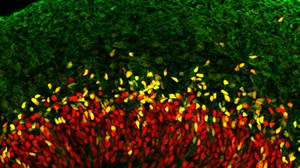
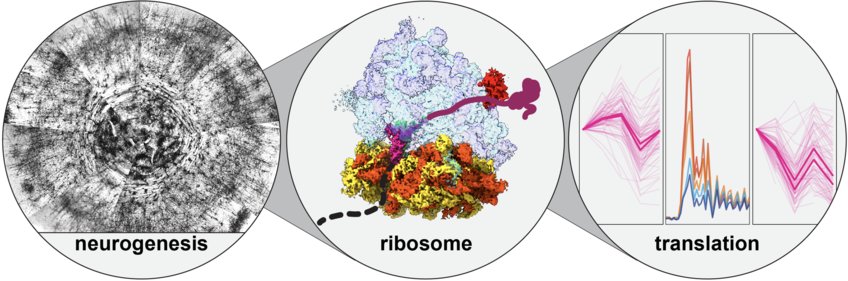
Dr. Matthew Kraushar is a Research Group Leader at the Max Planck Institute for Molecular Genetics (MPIMG) in Berlin, Germany, where he has been leading his lab since 2021. His research combines neuroscience, biochemistry, bioinformatics, and biophysics to investigate the fundamental mechanisms underlying neurodevelopment and translation control.
Christof Koch is a renowned neuroscientist serving as Meritorious Investigator at the Allen Institute for Brain Science and Chief Scientist at the Tiny Blue Dot Foundation. His primary research explores the neural mechanisms underlying consciousness, integrating theoretical neuroscience with experimental approaches. With over 300 publications, his work spans neurophysiology, computational modeling, and clinical applications of consciousness research. His research focuses on understanding how neuronal activity gives rise to subjective experience, utilizing techniques ranging from single-cell recordings to large-scale brain mapping. Koch investigates neural correlates of consciousness through integrated information theory and develops neurotechnological approaches for brain disorders. Koch's recent publications demonstrate a strong focus on cortical circuit mechanisms, consciousness assessment methodologies, and comparative neuroanatomy. His work combines advanced neuroimaging, electrophysiological techniques, and theoretical modeling to unravel brain complexity. The research consistently bridges fundamental neuroscience with clinical applications, particularly in neuromonitoring and brain-computer interfaces. He leads multidisciplinary teams at the Allen Institute and collaborates internationally, driving innovations in brain mapping and consciousness research. Koch mentors numerous early-career neuroscientists through the MindScope program and various institutional initiatives.
Dennis Pauls is a Research Professor in the Department of Animal and Behavioral Physiology at the Institute of Biology, University of Leipzig. He leads his own research group (PAULS LAB) focusing on neurobiological mechanisms underlying behavior, memory formation, and decision-making processes, primarily using Drosophila as a model organism. His work bridges molecular neuroscience, behavioral physiology, and systems neuroscience to understand fundamental neural processes. Dr. Pauls completed his biology studies (Diplom) at the University of Gießen and University of Würzburg (2001-2006), followed by a PhD (Dr. rer. nat.) at the University of Fribourg, Switzerland (2006-2010). He conducted postdoctoral research at the University of Marburg (2010-2011) before becoming a scientific staff member and later group leader at the Theodor-Boveri Institute, University of Würzburg (2011-2019). Since July 2019, he has been a group leader at the University of Leipzig, and completed his Habilitation (Dr. rer. nat. habil, PD) in December 2020. His research focuses on two primary areas: (1) the integration of time in memories, investigating how essential information is encoded as lasting physical changes through synaptic plasticity, and (2) the neurometabolic mechanisms underlying poor food decisions, exploring how animals overcome innate aversions to potentially harmful foods under hunger conditions. His laboratory employs neuro- and optogenetic approaches, electrophysiology, behavioral analyses, and high-resolution light microscopy to address these questions. Analysis of Dr. Pauls' recent publications reveals a strong emphasis on octopamine signaling in learning and memory circuits, time integration mechanisms in neural systems, and the metabolic regulation of feeding behavior. His work demonstrates how neuromodulators influence memory formation, how temporal information is incorporated into neural representations, and how metabolic states affect decision-making processes in Drosophila models. Dr. Pauls currently leads three major DFG-funded research projects: (1) The function of octopamine in reward processing in Drosophila larvae (2019-2023), (2) Neurobiological foundations of integrating time into memories (2023-2026), and (3) Metabolic signatures and neurophysiological mechanisms of poor food intake decisions (2024-2027). He collaborates extensively with the Kittel Lab and other neuroscience groups at the University of Leipzig, contributing to the NeuroTune Graduate School and other interdisciplinary initiatives focused on brain dynamics and neurological disorders. His laboratory is part of the Integrated Research and Treatment Center (IFB) for Adiposity-Related Disorders for his research on food decision-making, demonstrating the translational potential of his basic neuroscience research. Dr. Pauls' work provides fundamental insights into neural circuit function with implications for understanding memory disorders and eating behaviors in humans.
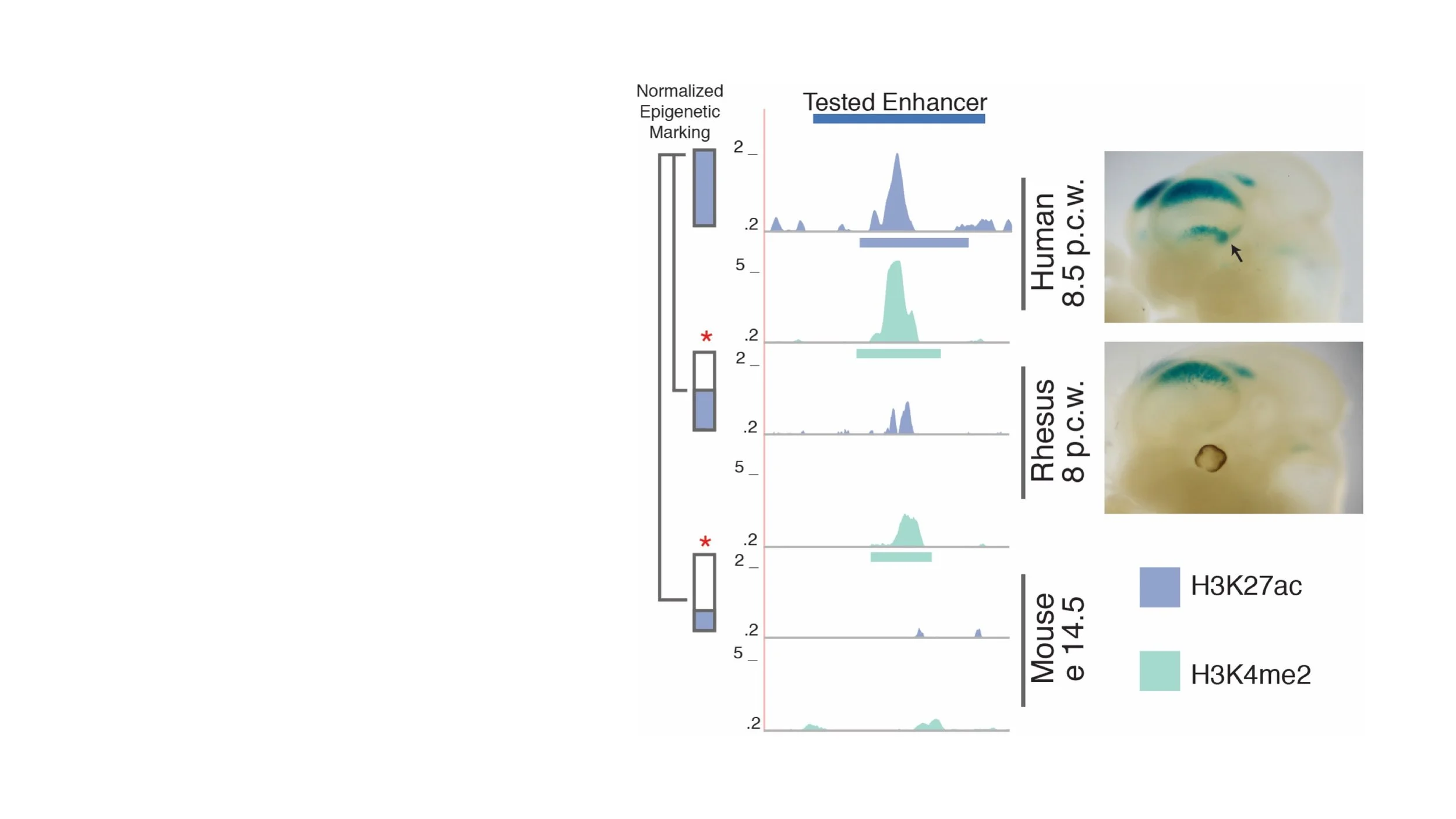
James Noonan is the Albert E. Kent Professor of Genetics and Professor of Neuroscience at Yale University School of Medicine, where he also serves as co-Director of Graduate Studies in Genetics. His primary appointment is in the Department of Genetics, with secondary appointments in the Department of Ecology & Evolutionary Biology and Neuroscience. He maintains extensive affiliations across Yale, including the Yale Cancer Center, Yale Center for Genomic Health, Yale Stem Cell Center, Wu Tsai Institute, and Kavli Institute for Neuroscience. Dr. Noonan's research focuses on understanding human-specific gene regulation and its role in evolution and development. His lab pioneered the discovery that Human Accelerated Regions (HARs) encode transcriptional enhancers with human-specific activity in the developing embryo. The lab has developed innovative approaches including humanized mouse models to study how HARs alter developmental gene expression and drive the evolution of novel phenotypes. They also pioneered massively parallel screening approaches to characterize gene regulatory functions in human brain development and evolution. The lab's recent publications reveal significant insights into how uniquely human sequence changes affect enhancer activity, how HARs contribute to cortical development, and how autism risk genes like CHD8 regulate neurodevelopmental pathways. Their work demonstrates that HARs have clear biological functions in neurodevelopment and has identified specific regulatory innovations contributing to the emergence of the mammalian neocortex. Mallinckrodt Foundation Fellowship (2008) Professor Noonan has mentored at least 11 PhD students to completion, with his most recent student (Atreyo Pal) defending in 2025. His lab maintains multiple active grants from NIH, SFARI, NOMIS Foundation, and other major funding agencies. Students in the lab gain training in cutting-edge genomic techniques including CRISPR genome editing, single-cell genomics, and comparative epigenomics. The lab's interdisciplinary approach provides students with opportunities to work across multiple departments and research centers at Yale, with recent students winning prestigious awards like the Carolyn Slayman Prize in Genetics. The Noonan Lab (noonanlab.org) maintains an active presence in the scientific community, regularly sharing research updates and engaging with broader issues affecting biomedical research. Their work continues to advance our understanding of what makes us uniquely human at the molecular level.