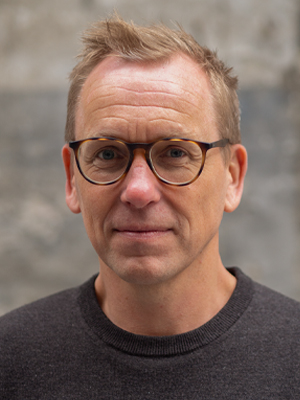
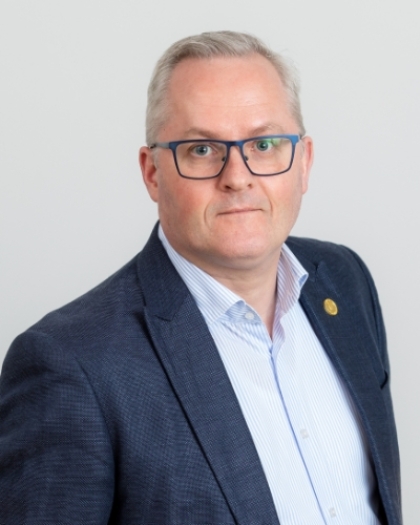
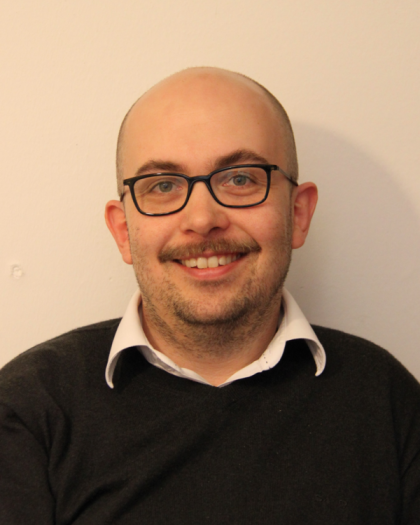
Oleksandr Kapranov is an Associate Professor of English at NLA University College's Teacher Education program. His work intersects discourse analysis, climate change communication, and English language teaching (ELT), with a focus on sustainable development education and intercultural communication. Research areas include political speeches (e.g., Keir Starmer, Rishi Sunak), corporate disclosures (Bank of England, Vedanta Resources), and media framing (Greenpeace branches, King Charles III). Key pedagogical interests: digital competence, beginner EFL training, and discourse markers in academic writing. His recent publications analyze climate change discourse through syntactic structures, metonymy, modality, and evidentiality, emphasizing institutional and political narratives. While no formal awards are listed, his work spans interdisciplinary collaborations with NGOs, governments, and universities.
Marianne Nordli Hansen is a Professor at the Department of Sociology and Human Geography , University of Oslo. With a career spanning decades, her research focuses on social stratification , class and inequality , labor market conditions , economic inequality , and elites . She has taught courses like Sociological Theory (SOS4001), Theory Specialization in Sociology (SOS4011), and Inequality: Class, Gender and Ethnicity (SOS4100). Education: MA in Sociology (University of Oslo, 1984), Dr. philos in Sociology (University of Oslo, 1996) Positions: Associate Professor (ISS, UiO, 1996), Professor (ISS, UiO, 1999) Her research explores wealth accumulation , intergenerational mobility , social networks , and educational policy . Key collaborators include Professor Olav Korsnes and Associate Professor Johannes Hjellbrekke at the University of Bergen. Current projects focus on social inequality in Norway , with publications analyzing elite professions, wealth distribution, and class-based educational disparities. She has contributed to significant works on Nordic welfare models and public sector impacts on segregation and equality.
Norwegian University of Science And TechnologyNorway
Toril Aalberg is a Professor and Head of the Department of Sociology and Political Science at the Norwegian University of Science and Technology (NTNU) in Trondheim. She was previously Head of the same department from 2017-2021 and serves as Guest Professor at Mid Sweden University in 2024-2025. Aalberg is a member of the research networks NEPOCS (Network of European Political Communication Scholars) and EVPOC (Elections, Values and Political Communication). Her research interests include comparative politics , election campaigns , media effects , public opinion , and stereotypes in political contexts. She has led major projects like the COST Action IS1308: Populist Political Communication in Europe (2014-2018). Toril Aalberg has authored or co-authored 9 books, including Populist Political Communication in Europe (2016) and Communicating Populism (2019). Her recent articles focus on misinformation during crises , media’s role in political efficacy , and cross-national disinformation studies , often analyzing data from 17-19 democracies. She has conducted extensive research on media polarization , immigrant attitudes , and news consumption patterns . Aalberg has held visiting appointments at institutions including the University of California, Berkeley , Stanford University , and University of Oslo , with current affiliations at the Centre for Advanced Studies in Oslo and Mid Sweden University . Her work spans political communication theory , media sociology , and democratic processes .
Western Norway University of Applied SciencesNorway
Professor Kjetil Grimastad Lundberg serves at the Institute for Welfare and Participation, Western Norway University of Applied Sciences (HVL), appointed Professor of Welfare Sociology in 2020 after joining HVL in 2018. A University of Bergen PhD graduate (2012), he previously worked as Researcher II at Uni Research Rokkansenteret (2011-2018). His academic credentials include: PhD in Sociology, University of Bergen, 2012 Master's in Sociology, University of Bergen, 2007 Lundberg's research critically examines intersections of welfare systems, poverty, and marginalization through institutional ethnography. He investigates street-level bureaucracy in NAV (Norwegian Labour and Welfare Administration), digitalization impacts, and child/family perspectives in low-income contexts, emphasizing stigma, power dynamics, and activation policies. His work bridges theoretical sociology with practical welfare challenges. His 15 most recent publications (2017-2024) reveal consistent focus on welfare-state dynamics, with recurring themes of work inclusion mechanisms, user experiences in complex interventions, and poverty's structural dimensions. Methodologically, he employs qualitative institutional ethnography across European Societies, European Journal of Social Work, and Social Policy and Society, demonstrating longitudinal analysis of policy evolution. Lundberg supervises multiple PhD candidates on work inclusion and poverty interventions while leading the NAV-funded project 'Barneperspektiv i Nav' (2023-2027) and participating in three additional studies addressing long-term poverty effects and cross-sectoral coordination. His grant portfolio spans NAV-FOU, Sparebankstiftelsen, and NFR funding. He contributes to HVL's 'Rights, Democracy and Welfare' research group, advancing critical welfare sociology through teaching in social science, sociology, and social work programs while examining urban poverty, bureaucratic practices, and marginalized family experiences.
Sveinung Sandberg is a Professor at the Department of Criminology and Sociology of Law, University of Oslo. His research spans marginalization, illegal drug markets, radicalization, and narrative criminology, combining theoretical frameworks from Bourdieu and narrative analysis. Academic Interests: Marginalisation, Legal & Illegal Drugs, Violence, Radicalization, Bourdieusian Criminology, Narrative Criminology, Latin American Studies, Social Movements Education: PhD from University of Bergen Research Focus includes: Street capital theory in criminology Drug market cultural dynamics Narrative approaches to extremism Latin American criminal trajectories Recent Publications examine pandemic-related crime shifts, gendered drug use patterns, and narrative mechanisms in criminal justice. His 2021-2025 projects Radicalization and Resistance and Crime in Latin America (CRIMLA) involve cross-country life-story analyses. Scientific Awards: Fridtjof Nansen's Award for Young Researchers (2011) The Meltzer Prize for Young Researchers (2010) Editorial Roles include board memberships at Theoretical Criminology , Deviant Behavior , and International Criminal Justice Review . He has conducted fieldwork in Mexico and held visiting positions at institutions including CIDE (Mexico City) and European Monitoring Centre for Drugs and Drug Addiction (Lisbon).
Britt Kramvig is a Professor at the School of Business and Economics , part of the Faculty of Biosciences, Fisheries and Economics (BFE) at UiT The Arctic University of Norway. Her research intersects decolonization , Indigenous (Sámi) studies, and creative industries , with a focus on storytelling, archive decolonization, and Arctic land-seascapes. She coordinates PhD studies in Tourism and Northern Studies and teaches courses on qualitative methods, climate change impacts on tourism, and knowledge co-production. Research Interests: Kramvig explores the decolonial potential of Indigenous archives , creative industries as decolonial praxis , and Arctic environmental humanities . Her work emphasizes ontology over epistemology , art-science collaborations (e.g., Dark Ecology, BAT), and indigenous survivance in tourism and cultural policy. She actively disrupts appropriation processes in Arctic landscapes through pluriversal storytelling. Key Collaborations: Kramvig contributes to international projects like Surviving the Unthinkable and The New Sámi Renaissance , advocating for indigenous data sovereignty and decolonial research ethics . She leads interdisciplinary efforts to integrate Sámi epistemologies into environmental science and policymaking. Recent Publications: Her 2023-2025 works address Arctic decolonization , indigenous archival practices , and co-creation in tourism , often published in journals like Environmental Research Letters and GeoHumanities . Notable topics include counter-mapping , indigenous survivance , and collaborative listening in Arctic soundscapes. Academic Affiliations: Member of the Norwegian Scientific Academy for Polar Research and the Indigenous Voices research group at UiT. She participates in the OKTA - Sami Art and Friction-Filled Communities on Festivals project.
Jan Oskar Engene is an Associate Professor in the Department of Comparative Politics at the University of Bergen, Norway. His academic career spans several decades with significant contributions to both terrorism studies and heraldry research. Engene's research interests have evolved significantly over time, beginning with a strong focus on terrorism, political violence, and European security. His early work centered on the TWEED (Terrorism in Western Europe: Explaining the Trends) dataset, which documented terrorist incidents across Western Europe from 1950 onward. Over the years, his research expanded to include political symbolism, heraldry, and flag history, particularly regarding Norwegian political symbols and their evolution. His work demonstrates a unique interdisciplinary approach, bridging political science with historical and symbolic analysis. Analysis of Engene's publication trends reveals a clear evolution from predominantly terrorism-focused research in the 1990s and early 2000s toward increasing engagement with heraldry, political symbolism, and Norwegian historical identity markers in recent years. The earlier works focus on quantitative terrorism analysis, counterterrorism policy, and European security frameworks, while more recent publications examine municipal heraldry, county coats of arms, and historical political symbols. This shift demonstrates Engene's ability to apply political science methodologies to diverse research areas while maintaining a consistent focus on political symbolism and identity. Engene has supervised numerous Master's theses at the University of Bergen, primarily in the areas of terrorism studies, European politics, and political identity. His supervision record includes students researching topics such as state responses to terrorism in Italy, Nordic political systems, and regional identity in Western Europe. While specific grant information isn't detailed in the available materials, his TWEED project represents a significant research undertaking that likely involved external funding. Engene maintains active engagement with public discourse through media appearances, having participated in numerous television and radio programs discussing terrorism, security policy, and political symbolism. His work with the TWEED project established him as a leading expert on European terrorism patterns, while his more recent heraldry research has positioned him as a specialist in Norwegian political symbolism and historical iconography.
Vladimir Tikhonov is a Professor at the Department of Culture Studies and Oriental Languages, Faculty of Humanities, University of Oslo. Specializing in Korean history, his research focuses on Korean Buddhism, nationalism, modernity in East Asia, and labor movements. He holds a PhD from Moscow State University (1996) and has taught at KyungHee University (1997-2000). Current roles include co-leadership of the 'Militarism and Religions in Modern Asia' project and responsibility for the MA program in East Asian Culture and History. Research interests span colonial-era Korean perceptions of Japan and Russia, religious militarism, and the intersection of nationalism with Buddhist thought. Notable works include Buddhism and Violence (2012) and Modern Korea and Its Others (2015). Ongoing projects explore Korean communist movements and critical biographies of nationalist figures like Han Yongun. Teaching covers East Asian culture, history, and politics, with courses like EAST4510 and KOR4504. His publications combine historical analysis with transnational perspectives, addressing topics from colonial-era intellectual debates to contemporary South Korean military chaplaincy dynamics.
Mikaela Vasstrøm (b.1977) is an Associate Professor at the Department of Global Development and Planning, University of Agder. She holds a PhD from the University of Copenhagen and leads significant research projects including the Norwegian Research Council-funded WINDPLAN initiative, which analyzes social acceptance and governance challenges in onshore wind power development across Norway, Scotland, and Denmark. She co-leads work packages in the WINDREG project focusing on procedural justice and knowledge co-production for energy transitions. Her research examines: Just energy transitions and energy democracy Governance challenges in renewable energy deployment Public participation in environmental conflicts Local/regional development implications of energy policies She co-directs UiA's participation in the Empowered Futures research school, developing PhD-level expertise in energy policy frameworks. Publications focus on wind energy governance, policy legitimacy, and spatial planning conflicts, with consistent themes of: Energy justice in policy design Local government capacity in energy transitions Participatory approaches in sustainability planning Research group affiliations include: Energy and Society Urban and Regional Planning (URPLAN)
Dr. Alexander Kofod-Jensen is a researcher at the University of Agder's Department of Nordic and Media Studies, specializing in Holocaust perpetrator fiction through comparative studies of French and Scandinavian literature. Associated with the Research Council of Norway-funded project "Unfinished Past: Norway and World War II in Contemporary Aesthetic Memory Culture" (Project #324738), his work examines contemporary representations of WWII criminals and their cultural implications. Education: Ph.D. in Literature, Karlstad University (Sweden), focusing on Jonathan Littell's Les Bienveillantes Research Expertise: Comparative Holocaust perpetrator fiction Scandinavian war crime literature Memory studies and trauma representation Postmodern narrative ethics 20th-century literary theory Historiographic metafiction Publication Trends: His recent scholarship (2024-2025) analyzes evolving fictional portrayals of Nazis in Danish literature and the ethical risks of perpetrator perspectives. Earlier works explore Kafka's narrative structures (2012), Fredrika Bremer's literary realism (2017), and Sebald's memory archeology (2017). Project Affiliation: "Unfinished Past: Norway and World War II in Contemporary Aesthetic Memory Culture" (Research Council of Norway)
Mona Baker is an Affiliate Professor at the Centre for Sustainable Healthcare Education (SHE) , University of Oslo, and a renowned scholar in translation studies. Her work bridges political, cultural, and social dimensions of translation, with a focus on conflict, activism, and corpus-based methodologies. She holds a BA in English and Comparative Literature from the American University in Cairo (1976), an MA in Special Applications of Linguistics from the University of Birmingham (1987), and a Higher Doctorate from UMIST (1999). Baker has also held prestigious roles, including founding the Baker Centre for Translation and Intercultural Studies at Jiao Tong University and Beijing Foreign Studies University. Her research interests span translation and conflict , activist translation , corpus-based studies , and the role of translation in social movements . Key projects include the Genealogies of Knowledge initiative, which examines conceptual evolution through translation, and studies on subtitling during the Egyptian Revolution. Baker's recent publications highlight the intersection of technology and activist translation , including analyses of evidence-based medicine narratives and solidarity in global protest movements. She has received notable scientific awards, such as the Kuwait Foundation for the Advancement of Sciences Award (2015) and the Abdullah Bin Abdulaziz International Award (2011). Her academic leadership includes advisory roles at institutions like the Qatar Foundation and Shanghai International Studies University , as well as participation in critical research groups such as the Antibiotic Resistance and Complexity in Health Education network. Baker continues to influence debates on global health, citizen media, and the ethics of translation through her work and mentorship.
Øyvind Gjerstad is an Associate Professor of French Linguistics in the Department of Foreign Languages at the University of Bergen. His academic work focuses on the intersection of language, narrative, and climate change discourse, with particular emphasis on comparative analyses between French and Norwegian contexts. As a core member of the LINGCLIM research group (Language, Climate and Lifestyle), he contributes to interdisciplinary investigations of how linguistic structures shape public understanding of environmental issues. Gjerstad's research interests center on linguistic polyphony, narrative analysis, and discourse structures as applied to climate communication. His work examines how narratives about climate change are constructed linguistically, how different voices are represented in climate discourse, and how narrative frameworks influence public perception and willingness to act. He has developed methodological approaches that combine narrative analysis with polyphonic theory to reveal complex storylines in climate-related texts, particularly focusing on how negation, reported speech, and rhetorical devices function in climate communication. His publication record demonstrates consistent scholarly output examining climate narratives across various text genres including political documents, media coverage, and public surveys. Recent work has increasingly focused on the combination of narrative and polyphonic analysis ('polynarrativity') to uncover intersecting storylines in climate discourse. His research spans both descriptive analyses of existing narratives and explorations of how normative narratives might be constructed to motivate climate action. Gjerstad has supervised graduate students, including Taran Marie Hoel Stabell's Master's thesis on French temporal prepositions. His research has been supported by funding from the Research Council of Norway (projects 220654 and 301103), indicating sustained institutional support for his work on climate discourse analysis. He actively participates in academic conferences across Europe, presenting his findings to both linguistics and climate studies audiences. As part of the LINGCLIM research group, Gjerstad collaborates closely with Kjersti Fløttum and other colleagues on projects examining how language shapes climate perceptions and actions. His work bridges theoretical linguistics with practical applications in climate communication, contributing to interdisciplinary efforts to understand and address the climate crisis through the lens of language and narrative.
Jan Buts is an Associate Professor at the Sustainable Health Unit within the Faculty of Medicine at the University of Oslo, specializing in the intersection of translation theory, medical humanities, and corpus linguistics with a focus on sustainable health and development discourses. His academic background includes: Linguistics and Literature studies at KU Leuven (Belgium) PhD in Translation and Intercultural Studies from the University of Manchester (UK) Postdoctoral research at Trinity College Dublin (Ireland) Assistant Professor position at Boğaziçi University (Turkey) Buts' research centers on corpus-assisted discourse analysis applied to translation theory, medical humanities, and sustainable development. He actively develops the Sustainability and Health Corpus to analyze how language shapes public health narratives, gender discourses in development aid, and conceptual frameworks around sustainability. His work bridges linguistic analysis with critical perspectives on social justice and health equity. Analysis of his recent publications reveals a strong trajectory toward integrating corpus linguistics with medical humanities and sustainable development goals. Key trends include examining gendered vulnerabilities in policy discourse, translation's role in knowledge dissemination for sustainability, and digital media's impact on health communication – all characterized by methodological innovation in corpus construction and conceptual analysis. His scientific recognition includes: Runner-up for the Martha Cheung Award (2023) Buts serves on the executive council of IATIS (International Association for Translation and Intercultural Studies) and leads multiple research initiatives including the SHE Corpus project. His grant activities focus on interdisciplinary collaborations between translation studies and medical humanities, particularly through projects like KNOWIT (Knowledge in Translation) and MEDRA (Medicalisation of Democratic Rights in Abortion debates). He directs the Sustainable Health Unit, fostering cross-disciplinary teams that combine linguists, medical researchers, and public health experts to advance data-driven critical analysis of health and sustainability discourses through innovative corpus methodologies.
Jay Rajiva is an Associate Professor of Global Anglophone Literature at Georgia State University. Working at the disciplinary intersection of postcolonial literature and trauma theory, Rajiva is a comparative scholar with a regional focus in Caribbean, pan-African, and South Asian fiction. Their scholarship interrogates the relationship between reading practices and ethical responses to trauma in postcolonial contexts. Key research areas include Postcolonial Literature, Transnational and Diasporic Literatures, Trauma Theory, Caribbean Literatures, African Literatures, and South Asian Fiction. Rajiva’s work explores how animist frameworks and nonhuman matter interact with traumatic representation in literary texts. Rajiva’s publications span books, peer-reviewed journal articles, book chapters, and reviews. Their work engages with authors like Chinua Achebe, Jhumpa Lahiri, Nnedi Okorafor, and Arundhati Roy, analyzing trauma through animism, intertextuality, and aesthetic innovation.
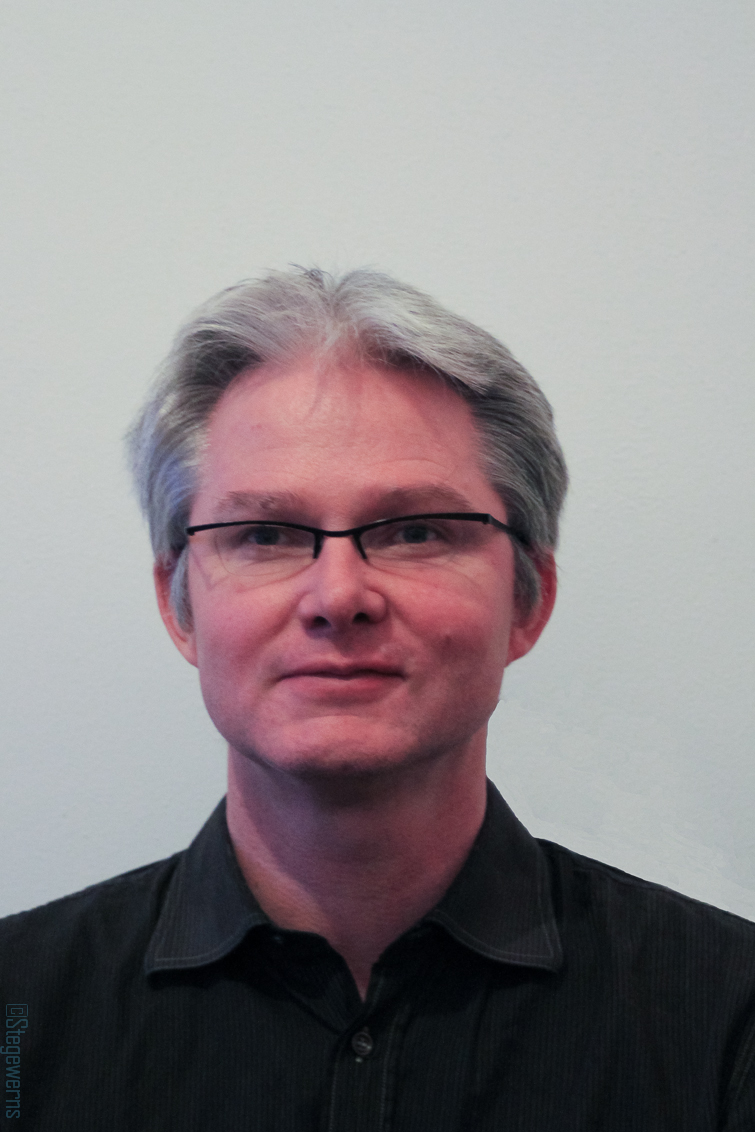
Dick Stegewerns is an Associate Professor in Japanese Studies at the University of Oslo. His research spans the political, intellectual, and diplomatic history of modern Japan, with a focus on East Asia's international relations, war memory, and cultural identity. He also explores Japanese cinema and popular culture, including sake's historical significance. Research Interests: Nationalism, regionalism, Japanese film studies, food studies, and transnational cultural perspectives. Current Projects: Monographs on Japanese self-perception, collaborative research on postwar Japanese cinema, sake globalization, and visualization of history in media. Publications cover topics like East-West civilization discourse, postwar war films, sake industry dynamics, and Hiroshima's transnational memory. His work integrates film studies, history, and cultural analysis.