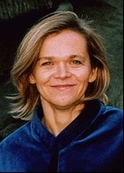
Katherine White is a Professor of Marketing and Behavioural Science at the Sauder School of Business, University of British Columbia, and holds the Watkinson Professorship in Sustainability. She also serves as Senior Associate Dean for Strategy and Responsible Business. Her research explores how social contexts, identities, and emotions influence ethical, prosocial, and sustainable consumer choices. She holds degrees from Simon Fraser University (BA), University of Waterloo (MA), and UBC (PhD). Her research focuses on sustainability marketing, prosocial consumption, and corporate social responsibility. Notable projects include collaborations with Lululemon, Starbucks, and the SPCA to design behavior change initiatives. She has authored over 60 articles, including 'The Elusive Green Consumer' in Harvard Business Review, and been honored as one of the world's top 5 marketing researchers by the American Marketing Association. Key awards include the Canada Clean 50 Award (2024) for sustainability thought leadership and induction into the Royal Society of Canada's College of Arts and Sciences. She serves as Associate Editor for Journal of Marketing Research and Journal of Consumer Psychology, and contributes to editorial boards for top-tier journals. Her work emphasizes bridging academic research with real-world impact through industry partnerships. Current research trends highlight behavioral nudges for sustainability, identity-based consumption patterns, and the psychological drivers behind charitable giving.
Orwin Martin is an Associate Professor of Somali Language and Literature at the University of Naples 'L'Orientale', Department of Asia, Africa and Mediterranean. He holds a First Class Honors degree in Arabic and Amharic from SOAS (1986) and a PhD in Somali Phonology (1994). Previously, he served as Senior Lecturer at SOAS (2008–2020) and held various administrative roles including Head of Department (2011–2014). His research focuses on Somali poetry's linguistic and aesthetic dimensions, including meter analysis, Arabic influences, and literary translation. He has published extensively on Somali poets like Hadraawi and Weedhsame, and collaborates with international institutions like the Poetry Translation Centre. Teaching spans Somali language at all levels, comparative literature, and translation studies. He has organized conferences, including the 2018 Somali Studies Congress in Hargeysa, and contributed to academic roles such as editorial boards for African Languages and Cultures and the Journal of Somali Studies. Awards include a certificate from Hargeisa Youth Development Association for outreach work.
Daniel Kidane is a British composer and Visiting Tutor in Composition at the Royal Northern College of Music and University of Cambridge. His works blend multicultural influences with contemporary classical techniques, exploring themes of identity, conflict, and social justice. Key roles include commissions from major orchestras like the BBC Symphony and London Symphony Orchestra, alongside awards such as the Paul Hamlyn Award (2016) and an honorary doctorate from Coventry University (2022). Education: Began violin at age 8, composition studies at Royal College of Music Junior Department Private study in St. Petersburg with Sergey Slonimsky BMus and postgraduate studies at Royal Northern College of Music under Gary Carpenter and David Horne Research Interests: Kidane’s music merges traditional orchestration with modernist innovation. Key themes include multiculturalism (evident in works like Aloud reflecting his Russian-Ukrainian heritage), pandemic reflections ( Be Still ), and socio-political commentary ( Dream Song setting MLK’s texts). His compositional style draws from Russian chant, Messiaen, and Janáček, creating vivid soundscapes that balance tension and resolution. Awards: Royal Philharmonic Society Prize (2013) Paul Hamlyn Award for Artists (2016) Jerwood Composer+ (2018) Coventry University Honorary Doctorate (2022) Current Projects: 2024 violin concerto Aloud with Julia Fischer and London Philharmonic Orchestra. Upcoming works include a cello piece Sarabande and continued exploration of pandemic-era compositions. Labs/Teams: Collaborates with ensembles like Chineke! Orchestra (pioneering BAME representation) and mentors through Music Masters charity.
Liam Cross is a Lecturer in Psychology at the School of Psychology, University of Bath. His research focuses on social psychology, particularly how synchronized movement (e.g., dancing, drumming) fosters prosocial behavior, affiliation, and group cohesion. He also investigates autism, theory of mind, deception, media effects on prejudice, and the therapeutic potential of games. His research interests span Social Psychology, Prosocial Behavior, Synchronization, Theory of Mind, Autism, Nonverbal Communication, Media Effects, and Gamification . He explores how rhythmic coordination influences social bonding and identity, and how digital and tabletop games can support individuals with autism. His work integrates experimental, virtual reality, and qualitative methods to understand complex social dynamics. The recent articles highlight a strong trend in using technology—especially virtual reality and games—to study and enhance empathy, reduce prejudice, and improve social interaction. Key themes include the Proteus Effect, synchronized movement in VR, video games for refugee empathy, and board games for understanding autistic experiences . These works reflect interdisciplinary approaches bridging psychology, human-computer interaction, and social intervention. Liam Cross has no explicitly listed scientific awards in the provided text. While no direct mention of student advising or grants is made, his collaborative publications suggest active mentorship and research leadership. He is affiliated with the NeuroPlay Lab , indicating involvement in a dedicated research team focused on play, technology, and social cognition. His work contributes to UN Sustainable Development Goals related to well-being and reduced inequalities. He is actively involved in research and teaching in Social Psychology, Research Methods, and Statistics , and leads innovative projects using immersive technologies and games to address social challenges. The NeuroPlay Lab serves as a hub for experimental and applied research in prosocial technology and autism interventions.
Dr. Mohammed Mazumder is a faculty member at Newcastle Business School, Northumbria University, where he has been contributing since January 2020. He leads the MSc Forensic Accounting programme and serves as the Departmental Research Ethics Lead. He teaches Management Accounting and Analytics at the undergraduate level and Financial Planning and Control at the postgraduate level. His educational background includes a PhD from Tohoku University and an MBA in Accounting from the University of Dhaka, where he also taught for over ten years. He is a Fellow of the Cost and Management Accountant (FCMA) and a Fellow of the Higher Education Academy (FHEA), reflecting his dual expertise in professional accounting and academic teaching. Dr. Mazumder’s research focuses on corporate reporting, sustainability accounting, CSR, corporate governance, and forensic accounting , with empirical studies centered on Bangladesh and Japan. His work explores board composition, gender diversity, cybersecurity disclosures, anti-corruption reporting, and SDG disclosures in emerging economies. The research employs discourse analysis, impression management theory, and quantitative methods to assess disclosure quality and governance effectiveness. His recent publications (2021–2025) reveal a strong trend toward ethical, environmental, and governance-related disclosures in banking and insurance sectors of developing economies. Topics include climate change rhetoric, post-cyber heist disclosures, and SDG reporting, indicating a growing emphasis on transparency and accountability in corporate narratives. His scholarly contributions have appeared in reputable journals such as Asian Review of Accounting , International Journal of Disclosure and Governance , Journal of Accounting in Emerging Economies , and Business Ethics: A European Review . While no specific awards are mentioned, his publication record in CABS/ABDC-ranked journals reflects significant academic recognition. Dr. Mazumder actively contributes to academic governance as Research Ethics Lead and programme director. Though no current students are listed, his leadership roles suggest involvement in postgraduate supervision and curriculum development. He has not indicated part-time status and appears to be a full-time, active academic with no signs of retirement or former staff status. He is associated with no named research labs or teams, but his work is highly interdisciplinary, bridging accounting, ethics, sustainability, and governance. Future research directions likely include expanding comparative studies between Japan and South Asia, deepening analysis of SDG disclosures, and exploring digital risk reporting in financial institutions.
Prof. Dr. Ulrich Mücke is Professor of Latin American and Iberian Peninsula History at the University of Hamburg , Faculty of Humanities, Department of Global History. His research focuses on Latin America's political culture, self-testimony, and colonial/postcolonial memory. Education: Studied history, political science, and philosophy at University of Hamburg (1988-1994) Doctorate at University of Hamburg (1997) Research interests span Latin America's political systems, autobiographical writing in colonial contexts, and transnational migration. His 2025 work examines Peruvian memory politics post-civil conflict, while 2024 collaborative research investigates Cuban contract workers in GDR. Earlier articles analyze voting patterns, conservative thought, and indigenous representation. Key trends in his 15 most recent publications include: 19th-century political culture in Peru, colonial self-representation, conservative ideologies in Iberian Atlantic, German-Peruvian migration, and critical analysis of historical textbooks. Notable keywords: Political History , Autobiography , Migration Studies , Colonialism . Awards: Kurt-Hartwig-Siemers-Prize (1997) from Hamburg Scientific Foundation Current work includes editorial leadership of the Yearbook for Latin American History and a 2025 lecture series on international cooperation.
Prof. Dr. Julia Bernstein is a Professor of Discrimination and Inclusion in Immigration Society at Frankfurt University of Applied Sciences (since 2015), affiliated with the Department of Social Work and Health. Her academic background includes a B.A. in Sociology, Cultural Anthropology, and Art History (1992–1995), an M.A. in Sociology and Cultural Anthropology (1996–2000) from the University of Haifa, Israel, and a Ph.D. in Cultural Anthropology from Goethe University Frankfurt (2009). She leads the research area Social Legacy of National Socialism and coordinates international projects on antisemitism prevention. Bernstein's research examines discrimination through interdisciplinary lenses, focusing on: Antisemitism in institutional and everyday contexts Migration, identity, and transnationalism among Russian-speaking Jews Stereotyping mechanisms and racialization processes Holocaust memory and its societal repercussions Food sociology as a marker of cultural identity Her recent publications (2020–2022) demonstrate a strong focus on antisemitism in educational settings, analyzing victim perspectives, teacher training gaps, and pedagogical counter-strategies. She frequently addresses media representations of Jewish communities and the normalization of Israel-related antisemitism. Honors include the Barbara-und-Piergiuseppe-Scardigli-Preis for her dissertation (2011) and nomination for the WISAG-Preis (2010). Bernstein directs federally funded projects like Mach mal keine Judenaktion! (2017–2019) and collaborates with institutions including the German Federal Anti-Discrimination Agency, Anne Frank Educational Center, and Tel Aviv University's Kantor Center. At Frankfurt UAS, she teaches courses on antisemitism, social inequality, and Holocaust legacy in Bachelor of Social Work and Master of Diversity and Inclusion programs. She mentors emerging scholars through the Ernst Ludwig Ehrlich Studienwerk and co-leads the Frankfurt meets Haifa academic exchange initiative.
Ida Zilio-Grandi is an Associate Professor in the Department of Asian and North African Studies at Ca' Foscari University of Venice, where she specializes in Arabic Language and Literature (SSD L/OR-12). She also holds teaching responsibilities in Islamic Thought and Theology (SSD L/OR-10) and has been actively involved in multiple interdisciplinary programs, including Master’s degrees in Interfaith Dialogue, Islamic Philosophy, and Mediterranean Studies. From 2019 to 2023, she served as Director of the Italian Cultural Institute in Abu Dhabi under the Ministry of Foreign Affairs, reflecting her deep engagement with cultural diplomacy. Education Graduated in Oriental Languages and Literatures (Arabic) from Ca' Foscari University of Venice. PhD in “Studies on the Middle East and the Maghreb from the founding of Islam to the Present day” at the University of Naples “L’Orientale”. Research Interests Her scholarly work centers on Quranic studies, Islamic ethics, and Arabic literature. She investigates religious figures in the Quran (e.g., Mary, Cain, Pharaoh, Jonah), Islamic moral concepts such as gratitude (šukr), patience (ṣabr), tolerance, and mercy, and the ethical dimensions of employment, speech, and hospitality. Her research draws on classical exegesis, adab literature, and contemporary Islamic thought, bridging historical analysis with modern applications. She also explores interfaith dialogue, particularly between Islam, Christianity, and Judaism, and cultural relations between the Islamic world and the West. Publication Trends Her recent publications (2020–2025) reflect a sustained focus on Islamic virtues, ethics, and Quranic interpretation. These include monographs on the moral life of Muslims, studies on Sufism in the UAE, Abraham’s legacy, and environmental ethics in Islam. Her work combines rigorous philological analysis with philosophical insight, often published in high-impact journals and academic volumes. Scientific Service and Recognition Member of the “Committee for Islam in Italy” at the Ministry of Interior (since 2015). Member of the Scientific Committee of the “Dialogue méditerranéen sur la modernité et le religieux” at Collège des Bernardins, Paris. Sits on the editorial boards of Annali di Ca’ Foscari , Islamo-Christiana , and L’opera Comune . Invited Researcher at the Pontificio Istituto di Studi Arabi e d’Islamistica (PISAI), Rome (since 2017). Advising, Grants, and Leadership She has coordinated several Master’s programs at Ca' Foscari, including the LM “Languages, Economies and Societies of Asia and Mediterranean Africa (LEISAAM)” and the international LM “MIM – Crossing the Mediterranean.” She is the Erasmus+ Coordinator for partnerships with the University of Jordan and Mohammed V University in Rabat. She led the research project The Languages of the Absolute (2011–2015), funded by Ca' Foscari University. Though no formal students are listed, her mentorship is evident through her academic leadership and editorial roles. Labs and Research Groups She is affiliated with several research centers, including the Ca' Foscari Center for Studies on Human Rights (CESTUDIR), the Center for Contemporary Middle East Studies (CEM), and the Religion, Law and Economy in the Mediterranean Area Center (REDESM). She is also a member of the Arab-Christian Research Group (GRAC) and the Lay Association for Biblical Culture “Biblia.”
Gary Gilbert is an Associate Professor in the Department of Religious Studies, with scholarly expertise in Ancient Jewish History, Jewish/Christian relations, Jewish art, synagogue studies, and the development of early Christianity. His academic work bridges historical, religious, and cultural analyses of Second Temple and early rabbinic Judaism, as well as the origins of Christianity within its Roman and Jewish contexts. B.A., Haverford College M.A., Columbia University Ph.D., Columbia University His research focuses on the intersection of Jewish life with broader civic and imperial structures in antiquity. Key interests include gentile participation in Jewish communities, the influence of Roman political ideology on early Christian texts, and the evolution of Jewish-Christian relations. He also investigates Jewish visual culture, particularly the symbolism of the menorah in ancient art. His publications reflect a strong engagement with textual and material evidence from the ancient Mediterranean world. Themes across his recent and forthcoming articles include Jewish urban life, the representation of Jewish identity in art and literature, and the theological and political dimensions of New Testament writings—especially the Acts of the Apostles. His scholarship often employs interdisciplinary methods combining history, archaeology, and literary analysis. Israel Institute, Course Development Grant (2023) Summer Fellow, Schusterman Center for Israel Studies (2019) Visiting Lecturer, University of Warsaw (2019) Visiting Scholar, Oxford Centre for Hebrew and Jewish Studies (2005–2006) Claremont Graduate University, Humanities Electronic Media Project (2000) Salo and Jeanette Baron Dissertation Prize nomination (1992) Gilbert has contributed significantly to pedagogical innovation, particularly through integrating technology into religious studies education. He has advised on digital humanities projects and developed curricula on Jewish and Christian origins. Though no formal advisees are listed, his academic mentorship extends through collaborative research, guest lectureships, and participation in scholarly centers. He has secured external funding for research and course development, demonstrating sustained scholarly productivity and institutional engagement. His affiliations with leading centers such as Oxford, the Schusterman Center, and the University of Warsaw highlight his international scholarly presence. He continues to publish in major academic venues and contribute to authoritative reference works like The Jewish Annotated New Testament .
Suzy Kim is an Associate Professor of Korean History in the Department of Asian Languages and Cultures at Rutgers University–New Brunswick, within the School of Arts and Sciences. Her research focuses on modern Korean history, particularly North Korea, with interdisciplinary engagement in gender studies, social and cultural history, oral history, and social theory. She is the author of two major books and serves as senior editor of positions: asia critique and on the editorial boards of Journal of Korean Studies and Yŏsŏng kwa yŏksa (Women and History). She is also an active public scholar and human rights advocate. Ph.D., University of Chicago M.A., University of Chicago B.A., University of California, Los Angeles Her research interests span modern Korean history, the global Cold War, transnational feminisms, gender and sexuality, comparative revolutions, visual cultures, and environmental humanities. She critically examines North Korean society through the lenses of everyday life, mass mobilization, and gendered subject formation. Her work bridges academic rigor with public advocacy, emphasizing social justice and peace in Korea. The 15 most recent publications reflect a sustained scholarly engagement with North Korea’s social and cultural history, particularly focusing on gender, revolution, memory, and transnational connections. Her articles appear in leading journals such as Gender & History , Comparative Studies in Society and History , and positions: asia critique . Thematically, her work explores the intersections of state ideology, personal agency, and global Cold War dynamics, often challenging dominant narratives about North Korea through nuanced historical analysis. Fulbright, 2020-2021 National Endowment for the Humanities, 2016 James B. Palais Book Prize, 2015 Kim has advised and mentored students in Korean studies, gender studies, and history, though specific names are not listed. She has received significant research funding, including from the Fulbright Program and NEH. She previously served as a visiting professor at Boston College and has worked with human rights organizations such as Amnesty International USA, Truth Foundation, and Women Cross DMZ. Her public scholarship emphasizes dialogue, peacebuilding, and ethical representation of North Korea. She is actively involved in academic communities, serving on professional boards including the American Historical Association, Association for Asian Studies, and National Women’s Studies Association. Her editorial leadership in positions: asia critique and other journals underscores her role in shaping critical discourse in Asian studies. She teaches courses such as Global East Asia, Gender and Social Change in Korea, and North Korea in the Socialist and Post-Socialist Worlds.
Professor Murray Phillips is a Senior Lecturer at the School of Human Movement and Nutrition Sciences , University of Queensland , specializing in the historical and contemporary dimensions of sport . He has held academic roles at the Universities of Canberra, South Australia, and Queensland, joining UQ in 2000. His research spans sport history , Indigenous sport , digital history , and socio-cultural analyses of sport . Education: PhD in Sport History (University of Queensland, 1992) Key Research Areas: Sport and war, gender in sport, rugby league history, sport coaching, Indigenous public history, and sport-related brain trauma. His recent work focuses on brain trauma in sport , including editing the 2025 book Head in the Game , and analyzing Indigenous sport history in Cherbourg and Torres Strait. He has secured funding from the Australian Research Council, Australian Sports Commission, and other institutions. Professor Phillips is also a prominent editor and reviewer for journals like Sporting Traditions and Journal of Football Studies .
Dr. Rohini Rai is a Lecturer in the Sociology of Race at Brunel University London's Department of Social and Political Sciences, within the College of Business, Arts and Social Sciences. Her work critically examines racialization, global racisms, and decolonial praxis in educational and urban contexts. PhD from University of Manchester (2019) MA and BA in Sociology from University of Manchester and Miranda House (University of Delhi) respectively Research Focus: Engages with postcolonial and decolonial theories to analyze racialized identities in the Himalayas and Northeast India, urban spatial dynamics in Delhi, and the 'Decolonial turn' in British academia. Her scholarship bridges Global South urbanisms with critical race studies. Publications span journals like Ethnic and Racial Studies and Asian Ethnicity , addressing topics from racialized microaggressions to the political economy of 'world-class' city narratives. She also explores the transformation of colonial racial categories into contemporary neoliberal frameworks.
Camilo Bogoya serves as an Associate Professor of Latin American Literature (14th section) at Artois University's School of Languages. He teaches Hispanic-American literature, Spanish contemporary literature, and cultural studies across undergraduate and graduate programs, including preparation for the French national CAPES teaching examination. As an active member of the Texts and Cultures Research Center, he organizes academic events and serves on national examination juries for Spanish language teaching credentials. His educational foundation includes a Doctorate in French Language and Literature from Sorbonne Nouvelle University (2011), an External Spanish Aggregation (2015), External CAPES in Spanish (2014), DEA in General and Comparative Literature (2004), and a Master's in Philology from Colombia's National University (2002). PhD: Sorbonne Nouvelle University (2011) DEA: Sorbonne Nouvelle University (2004) Master's: National University of Colombia (2002) Bogoya's research centers on three interconnected domains: the essayist-writer figure bridging novel and essay genres; literary transfers between Latin American and French traditions; and music's role as structural element and thematic concern in literature. His work examines how authors like García Márquez, Borges, and contemporary Colombian writers negotiate cultural identity through genre experimentation and cross-Atlantic dialogues, with particular focus on León de Greiff's poetic legacy and Quignard's musical aesthetics. His scholarly contributions reveal evolving engagement with Colombian literary identity, shifting from historical analysis of independence narratives toward contemporary explorations of globalization's impact on regional literature. His scientific recognition includes: National Literature Prize, University of Antioquia (2020) National Literature Prize, Central University of Bogotá (2008) As academic supervisor, Bogoya directs Master's research theses and oversees professional internships for Languages and International Business students. His editorial leadership spans journals including L'Autre Amérique , Ojo Vulgar , and Colombia's Literatura: teoría, historia, crítica , while his organizational work features doctoral seminars on literary diaries and writer interviews. The Texts and Cultures Research Center provides Bogoya's primary academic home, where he coordinates interdisciplinary projects examining Latin American-French literary connections through study days, edited volumes, and collaborative publications that bridge historical and contemporary perspectives.
Professor Marilyn A. Walker is a leading academic in Natural Language Processing and Dialogue Systems at the University of California Santa Cruz , with significant contributions to conversational agents, personality modeling, and narrative analysis. She has held visiting roles at Google Research and leadership positions at University of Sheffield and AT&T Labs. Education : Ph.D. in Computer and Information Science (University of Pennsylvania, 1993), M.A. in Linguistics (University of Pennsylvania, 1993), M.S. in Computer Science (Stanford, 1988), B.A. in Computer and Information Science (UC Santa Cruz, 1984). Research Interests include Natural Language Processing , Conversational Agents , Dialogue Systems , and Personality Modeling . Her work bridges machine learning with linguistic theory to enhance dialogue adaptivity and expressive language generation. Scientific Awards include ACL Fellow (2016) Best Paper Awards at SIGDIAL 2016 and 2014 Royal Society Wolfson Research Merit Award (2003-2009) Grants exceed $2.5M, including NSF awards for projects like Interactive Dialog Agents for Social Language Development (2017) and Processing Opinion Sharing Dialog in Social Media (2011). She has also received corporate funding from Amazon , Fujitsu , and Hitachi .
Prof. Dr. hab. Marzena Górecka is a Full Professor at the Department of German-Language Literature and Culture , Faculty of Humanities , John Paul II Catholic University of Lublin . Her academic career includes habilitation (2006), Erasmus teaching assignments at the University of Freiburg (Switzerland), and leadership of the INTERREG III C project Language Bridges (2004-2006). Education: University of Lublin (Humanities), University of Zurich (Germanic Philology), University of Perugia (Italian Studies) Degree: Licentiata Philosophiae (1995), Doctorate in German Medieval Literature (1999) Research Focus: German medieval mysticism (Mechthild von Magdeburg, Hildegard von Bingen), Swiss German-language literature of the 20th century (Meinrad Inglin, Albin Zollinger), and literary translation theory with emphasis on Joseph Ratzinger/Benedict XVI's Opera Omnia . She explores mystical anthropology, cultural boundaries, and the interplay between theology and literature. Recent Trends: Analysis of postmodern literary spirituality, translation challenges of theological texts, and cultural memory in European border regions. Her 2023 publications examine educational crises through religious pedagogy and contemporary social critique in Swiss literature. Key Awards: Feniks National Literary Award (2014, 2013), Ministerial Individual Scholarship (MEiN), Landes&Gyr Foundation Research Stipend (Switzerland) Academic Service: Active in international research (SNSF Berlin evaluation), editorial leadership for Opera Omnia Ratzinger , and conference organization on European values and migration. She serves on the Polish Ministerial Expert Panel for academic promotions.