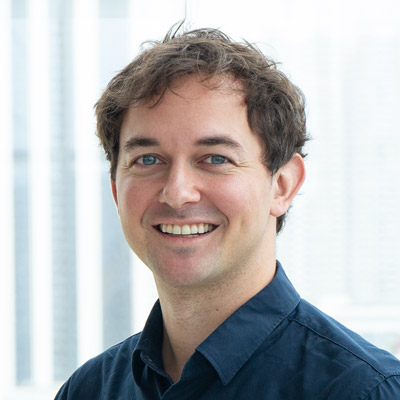
Andrew Holle is an Assistant Professor at the Mechanobiology Institute , National University of Singapore , where he leads the Confinement Mechanobiology Lab within the Department of Biomedical Engineering . His work spans mechanobiology, stem cell differentiation, cancer mechanobiology, and microfluidics, with a focus on understanding how physical confinement influences cellular behavior. Education: B.S.E. in Bioengineering (Minor in Statistics), Arizona State University (2008) Ph.D. in Bioengineering, University of California San Diego (2013) Research in the Confinement Mechanobiology Lab centers on the hypothesis that stem cell differentiation is driven by mechanical cues during migration through confined extracellular matrix (ECM) environments. The lab develops microfluidic systems to mimic ECM confinement and studies its impact on osteogenic differentiation , cancer cell migration , and cellular condensates . Recent publications highlight interdisciplinary approaches combining mechanobiology , nanotechnology , and microfluidics to explore nuclear morphological changes, volume regulation, and ligand signaling in confined cellular environments. Laboratory Members: Privita Edwina (Research Fellow) Vaishnavi Rangaraj (Research Assistant) Sriram Muthukumar (Research Fellow) Chang Ye Ji (PhD Student) Gao Xu (PhD Student) Lim Yuan Bin (PhD Student) Shinny Sunny (PhD Student) Lee Jia Wen Nicole (PhD Student) Li Yixuan (PhD Student)
Bradley D. Olsen is a full professor in the Department of Chemical Engineering at the Massachusetts Institute of Technology (MIT), where he leads research at the intersection of polymer science, soft matter physics, and bioengineering. His work focuses on designing materials for critical applications in biotechnology, hemostasis, and sustainable polymer development while advancing fundamental understanding of polymer network mechanics and self-assembly. Education: Ph.D. in Chemical Engineering, University of California Berkeley (2007) S.B. in Chemical Engineering, Massachusetts Institute of Technology (2003) Olsen's research spans protein-based materials, block copolymer phase behavior, and mechanochemical hydrogels. He has pioneered methods for quantifying polymer network topology, developing hemostatic nanoparticles, and creating bio-inspired materials for selective biomolecular transport and medical applications. His recent publications emphasize data-driven approaches to polymer characterization and educational outreach in materials science. Scientific Awards: American Physical Society (APS) Fellow (2023) Fulbright Amazonia Scholar (2023) Alexander and I. Michael Kasser Chair in Chemical Engineering (2021) ACS Macro Letters Young Investigator Award (2021) MIT Committed to Caring Honor (2019) AIChE Owens Corning Early Career Award (2019) APS Dillon Medal (2018) Kavli Emerging Leader in Chemistry (2017) ACS Polymer Division Fellow (2016) Camille Dreyfus-Teacher Scholar (2015) Alfred P. Sloan Research Fellow (2014) NSF Career Grant (2013) NIH Postdoctoral Fellowship (2008-2009) Hertz Fellow (2003-2007) Barry M. Goldwater Scholarship (2002) Olsen has received significant grant support including NSF Career (2013) and AFOSR (2012) awards. His teaching activities include innovative international outreach like the 2025 soccer-themed science camp in Brazil. The Olsen Group at MIT explores advanced materials with applications ranging from trauma care to sustainable polymers.
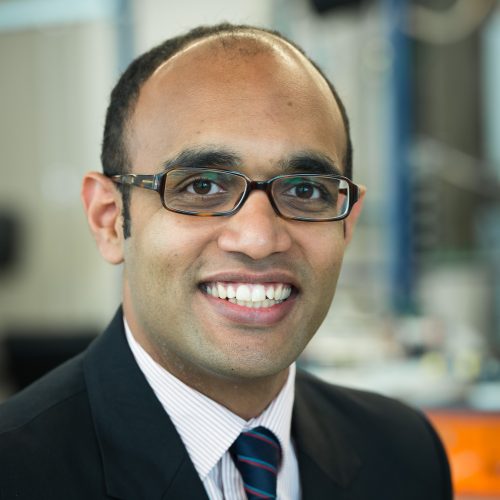
Vikramaditya G. Yadav is an Associate Professor at the University of British Columbia (UBC) in the Department of Chemical and Biological Engineering, Faculty of Applied Science. He directs the Master of Engineering Leadership (MEL) Program in Sustainable Process Engineering and leads the BioFoundry research group. Education: B.A.Sc., University of Waterloo (2007) Ph.D., Massachusetts Institute of Technology (2013) Postdoctoral Associate, Harvard University (2014) His research spans sustainable chemical manufacturing, metabolic engineering, and biotechnology. Key areas include: Designing biosynthetic enzymes for biomass valorization Developing bioremediation strategies for industrial water quality Creating innovative drug delivery systems and tissue engineering solutions Advancing synthetic biology for pharmaceutical and bioenergy applications His recent work focuses on ocular drug delivery, cannabinoid biosynthesis in E. coli, lignin-based nanoparticles for cancer therapy, and computational analysis of plant secondary metabolites. Collaborations with start-ups, industry, and medical labs drive innovation in Canada's bioeconomy. Professional Leadership: Chair, Biotechnology Division of the Chemical Institute of Canada Associate Editor, The Canadian Journal of Chemical Engineering He is affiliated with UBC's BioProducts Institute and contributes to project-based learning pedagogy.
Michael McAlpine is a Professor in the Mechanical Engineering department at the University of Minnesota . He also holds affiliations with the Biomedical Engineering and Electrical and Computer Engineering departments. His research focuses on 3D printing functional materials & devices , Nanoscale inks , Biomedical devices , Bioelectronics , and Flexible Microsystems . Research Interests : 3D Printing, Biomedical Engineering, Nanotechnology, Flexible Electronics, Microfluidics Labs : ME 361/363 Contact : mcalpine@umn.edu , (612) 626-3303, ME 117 Recent Research Trends include 3D Printed Biomedical Devices , Flexible Electronics , and Bioprinting Applications . His work spans from Spinal Organoid Formation to Programmable Drug Release Capsules . Scientific Award : Circulation Research 2020 Best Manuscript Award
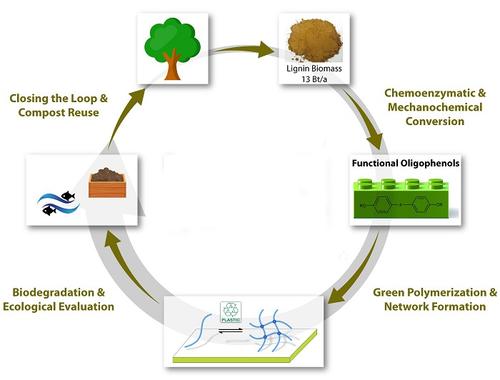
Rainer Haag is a Professor at the Department of Chemistry, Freie Universität Berlin, leading the Haag Group in the Institute of Chemistry and Biochemistry. His research focuses on biodegradable and sustainable materials, dynamic hydrogels, and polymeric nanosystems for biomedical applications. Department of Chemistry, Freie Universität Berlin Member of SFB 1449: Dynamic Hydrogels at Biointerfaces Collaborator in the StemGel startup project Co-founder of CSR|Berlin interdisciplinary research institute Research Interests: Development of stimuli-responsive polymers, multivalent virus inhibitors, and functional biointerfaces. Key projects include: Antiviral coatings using heteromultivalent polymers Thermoresponsive hydrogels for stem cell expansion Graphene derivatives for bacterial capture and disinfection Lignin upcycling for sustainable resin materials Supramolecular nanosystems for drug delivery Publication Trends highlight interdisciplinary work in polymer chemistry, nanotechnology, and biomedical applications. Recent articles focus on: 2D polyglycerols for virus interactions Redox-responsive nanogels Mucus-inspired adhesive hydrogels Tumor-targeting micelles Bacterial disinfection using graphene composites Labs & Collaborations include the Polymeric and Supramolecular Nanosystems subgroup, the Dynamic Hydrogels and Biointerfaces team, and partnerships with MIT in developing bioinspired adhesives. His group contributes to DFG-funded SFB 1449 and CSR|Berlin initiatives.
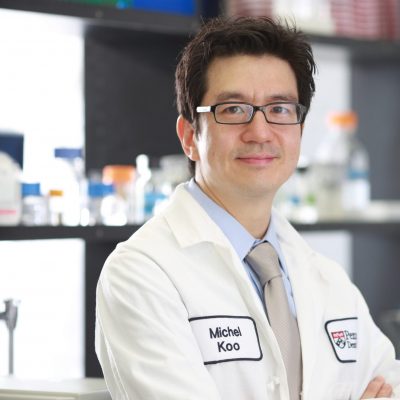
Hyun (Michel) Koo is a Professor at the University of Pennsylvania School of Dental Medicine , with affiliations in the Department of Orthodontics , Division of Community Oral Health , and Division of Pediatric Dentistry . As Co-Founder and Co-Director of the Center for Innovation & Precision Dentistry (CiPD) , he leads interdisciplinary efforts merging bioengineering, nanotechnology, and oral health research. Education : DDS and PhD Research Focus : Biofilms, bacterial-fungal interactions, and nanotechnology for oral disease prevention Leadership : Co-Director of CiPD; key roles in training programs like NIDCR-sponsored R90 and T90/R90 Dr. Koo’s research explores biofilm mechanisms in oral infectious diseases, particularly childhood caries, through engineering methods and microrobotics . His team developed micron-scale robots for automated biofilm eradication and FDA-approved nanoparticles for caries prevention. Collaborations with Penn Engineering, including Dr. Daeyeon Lee and Dr. Kacy Cullen, emphasize translational approaches. The 15 most recent publications highlight his work in nanorobotics , interkingdom biofilms , and precision diagnostics . Articles span 2025–2024 and address topics like adaptive micromotors , biofilm matrix degradation , and single-cell microbial interactions . These emphasize his focus on targeted therapies and biofilm microenvironment engineering . Key Awards : Elected Fellow, American Association for the Advancement of Science (AAAS) IADR Distinguished Scientist Award for innovative dental research Dr. Koo trains next-generation researchers through the CiPD NIDCR T90/R90 Postdoctoral Training Program , mentoring fellows like Smruti Nair (ACE2 Chewing Gum development) and Zhi Ren (K99 awardee). His work intersects with Penn Health-Tech, CT3N , and Penn Institute for Biomedical Informatics , fostering transdisciplinary innovation.
Justin D. Holmes is Professor of Nanochemistry in the School of Chemistry at University College Cork (UCC) and serves as a Principal Investigator at the Environmental Research Institute. He holds the position of Deputy Director at the Advanced Materials and Bioengineering Research (AMBER) centre, a Science Foundation Ireland-funded initiative that bridges academic research with industry applications. With more than 400 peer-reviewed publications in materials science, Professor Holmes has established himself as a leading figure in nanochemistry research and development. Professor Holmes' research program centers on developing chemical methods to synthesize and assemble nanostructured materials for environmental and energy applications. His work spans three primary domains: atmospheric sensors for detecting radicals and gases (RADICAL project), energy conversion through nanofluidic platforms for waste heat conversion (TRANSLATE project) and solar-to-chemical energy conversion (FreeHydroCells project), and sustainability through chemical recycling of waste plastics (AMBER project). His interdisciplinary approach integrates chemistry, materials science, and environmental engineering to address critical sustainability challenges through nanoscale innovation. Analysis of Professor Holmes' recent publications reveals a strong emphasis on sustainable materials development and energy applications. His research demonstrates consistent focus on germanium-based nanomaterials for electronics and energy storage, innovative polymer recycling techniques, and sustainable nanomaterial synthesis. The progression of his work shows increasing integration of circular economy principles, with significant contributions to plastic waste management and green chemistry approaches. Professor Holmes has received significant recognition for his contributions to science: Member of the Royal Irish Academy Fellow of the Royal Society of Chemistry His research is supported through substantial funding mechanisms, including his leadership role in the AMBER centre. Professor Holmes has successfully translated research into commercial applications through co-founding Glantreo Ltd., a UCC spin-out company. His work demonstrates a strong commitment to both fundamental scientific advancement and practical applications that address environmental challenges. Professor Holmes leads an active research group within the School of Chemistry at UCC, collaborating extensively through the Environmental Research Institute and the AMBER centre. His team maintains strong interdisciplinary connections across chemistry, materials science, and engineering disciplines, with sophisticated capabilities in nanomaterials synthesis, characterization, and application development. The research environment fosters innovation in environmental sensing, energy conversion technologies, and sustainable materials development.
Mark Wallace is a Professor of Chemistry at King's College London, affiliated with the Department of Chemistry and the Faculty of Natural, Mathematical & Engineering Sciences. He holds a Royal Society University Research Fellowship (2005–2016) and has been a lecturer at Oxford University before joining King's in 2016. His research focuses on membrane protein function and artificial membrane mimics, combining optical microscopy and nanotechnology. He earned a PhD from the University of Cambridge (2002) and postdoctoral training at Stanford University and the National Institute for Medical Research. Key research interests include membrane protein dynamics, lipid bilayer engineering, and single-molecule imaging. He has pioneered techniques like droplet interface bilayers and interferometric scattering microscopy. His work has led to patents and applications in molecular sensing and medical research. Awards include the 2002 Gregorio Weber Prize and the 2015 RSC Norman Heatley Award. He is actively involved in public outreach, including video podcasts and educational competitions. Recent publications emphasize artificial ion channels, nanoparticle formation monitoring, and mitochondrial protein dynamics. His lab collaborates with institutions like the London Centre for Nanotechnology and the Rosalind Franklin Institute. Over 30 students and researchers have been mentored, with active grants from EPSRC, Wellcome Trust, and BBSRC.
Professor Hala Zreiqat AM is a leading biomedical engineer at The University of Sydney , serving as the Director of the ARC Training Centre for Innovative BioEngineering . A Fellow of all major Australian academies (AAS, ATSE, FAHMS, FRSN), she develops 3D printed bioceramics for bone regeneration while championing diversity through initiatives like the IDEAL Society and BIOTech Futures mentorship program. Her work bridges academia, clinical practice, and industry in musculoskeletal research . Research Focus: Her lab creates synthetic bone scaffolds that mimic natural bone architecture, strength, and porosity, enabling non-rejected bone regeneration via patient-matched implants. Key applications include orthopaedic, dental, and maxillofacial repair , with over $18M in competitive funding and multiple patents. Current projects explore AI-driven scaffold performance prediction and anti-senescence strategies for aging-related bone loss. Scientific Trends: Recent publications highlight 3D printed nanovoxelated ceramics , antisenescence biomaterials , and multifunctional theranostic platforms . Her team integrates machine learning for scaffold design, atom probe tomography for interface analysis, and two-photon imaging for cellular monitoring in 3D environments. 2021-2022 Fulbright Senior Scholar 2018 NSW Premier's Woman of the Year 2019 Eureka Prize for Innovative Use of Technology Fellow of Australian Academy of Science (2021) Over $18M in research funding Teaching & Leadership: She designed core courses like Tissue Engineering and Nanomaterials in Medicine , mentoring 158 students in 2020 alone. As Chair of CAAR (2020-2023), she strengthens Australia-Arab collaborations. Her lab trains early-career researchers , with alumni now in academia and industry.
JIANG Xingyu is Chair Professor and Head of the Department of Biomedical Engineering at the Southern University of Science and Technology (SUSTech) . Since 2018 he has led a multidisciplinary team developing advanced micro- and nano-scale tools for analytical chemistry, microfluidics and nanomedicine. Education Postdoctoral Research, Harvard University (2004–2005) Ph.D. in Chemistry, Harvard University (2004) B.S. in Chemistry, University of Chicago (1999) Research Interests Professor Jiang’s research integrates analytical chemistry , microfluidics , biomedical engineering and nanomedicine . His laboratory designs microfluidic chips for point-of-care diagnostics, engineers gold nanoclusters and nanoparticles for antimicrobial and anticancer therapy, and develops soft flexible bio-electronics for neural interfaces and wearable health monitoring. Across 400+ publications, recent work demonstrates a clear trend toward translational nanomedicine : point-of-care viral variant detection, nanoantibiotic strategies against multidrug-resistant bacteria, CRISPR delivery systems for cancer therapy, and conformal electronic tattoos for human-machine interfaces. Scientific Awards & Honours Fellow, American Institute for Medical and Biological Engineering (2020) Fellow, Royal Society of Chemistry (2016) Tencent Science Exploration Award (2019) Chief Scientist, National Key R&D Program (2019–) National Science Fund for Distinguished Young Scholars (2010) Young Investigator Award, Human Frontier Science Program (2007) Research Funding & Teams He currently directs the Nanoscience Laboratory at SUSTech, hosts National Key R&D Program projects as Chief Scientist, and serves on editorial boards of Advanced Healthcare Materials , Lab on a Chip , Nanoscale Horizons , Nanoscale and Nanoscale Advances . The group is actively recruiting post-docs, research professors and technicians across chemistry, materials, biology and medical engineering disciplines.
Dr. Daniel Roxbury is an Associate Professor and Graduate Director at the Department of Chemical, Biomolecular and Materials Engineering within the University of Rhode Island's College of Engineering. With expertise in nanoscience and carbon nanomaterials, his research focuses on nano-bio interactions, developing functionalized nanotubes for biomedical applications and environmental monitoring through his NanoBio Engineering Laboratory. His work spans multiple disciplines including: Biomedical nanosensors Smart wearable biomaterials Targeted drug delivery systems Environmental nanotechnology Single-molecule imaging Nanotoxicology Recent publications emphasize machine learning-enhanced spectral analysis, coral reef conservation nanotechnology, and wearable stress monitoring textiles. His 2024 ACS Nano study introduces AI-driven macrophage phenotyping, while 2023 Nature Nanotechnology work explores coral reef restoration strategies using nanomaterials. Awarded the 2019 NSF CAREER grant for cellular nanometrology, he leads multiple NIH-funded projects including: $820,000 NSF CAREER: Spectral Imaging for Sub-Cellular Nanometrology $140,000 Miriam Hospital COBRE: Cortisol Detection Textiles $700,000 NSF EAGER: Multiplexed Wound Biomarker Detection His laboratory houses state-of-the-art equipment including: Near Infrared Hyperspectral Microscope Custom NIR Fluorescence Spectrometer Jasco UV/VIS/NIR Spectrophotometer Biosafety Cabinet Cell Culture Incubator Cryo-Storage System
Mohammad Peydayesh is a Lecturer and Senior Researcher at the Department of Health Sciences and Technology , ETH Zürich. He works in the Food and Soft Material Laboratory , focusing on sustainable materials derived from food waste and agri-food byproducts. PhD in Chemical Engineering (2018, Iran University of Science and Technology) Postdoctoral Fellow at ETH Zürich under Prof. Dr. Mezzenga Senior Assistant at ETH Zürich since 2021 His research spans soft matter , self-assembly phenomena , and amyloid fibril applications in: Environmental engineering (water purification, heavy metal removal) CO2 conversion and storage Smart packaging and bioplastics development Biorefinery concepts and circular economy Nanomaterials for waste valorization Recent publications highlight trends in amyloid-based hybrid materials for: Metal recovery from e-waste and contaminated water CO2 capture and conversion Bioplastic production from agricultural waste Antiviral and detoxification applications Water desalination and purification Photonic and catalytic materials He contributes to the Laboratory of Food & Soft Materials , advancing sustainable solutions through interdisciplinary material science.
Li Tang is an Associate Professor with tenure at École polytechnique fédérale de Lausanne (EPFL), affiliated with the Institute of Bioengineering (IBI) and the Institute of Materials Science and Engineering (IMX) within the School of Engineering (STI). She leads the Laboratory of Biomaterials for Immunoengineering, focusing on developing innovative strategies at the intersection of immunology, materials science, and cancer therapy. Her work bridges fundamental research and clinical translation, with multiple ongoing clinical trials based on CAR-T cell therapies developed in her lab. B.S. in Chemistry, Peking University (2003–2007) Ph.D. in Materials Science and Engineering, University of Illinois at Urbana-Champaign (2007–2012) Postdoctoral Fellow, MIT (2013–2016) Her research lies at the forefront of immunoengineering, integrating chemical, metabolic, and mechanical approaches to modulate immune responses. Key areas include cancer immunotherapy, immune metabolism, mechano-immunology, and biomaterials. She investigates how physical and biochemical cues can reprogram T cells, overcome exhaustion, and enhance tumor targeting. Her work emphasizes multidimensional immunity-disease interactions, aiming to develop safer and more effective therapies for cancer and autoimmune diseases. The recent publications highlight a strong trend in engineering immune cells (especially CAR-T) for enhanced durability and function, using advanced biomaterials and metabolic reprogramming. There is a clear focus on overcoming challenges in solid tumors, modulating the tumor microenvironment, and translating findings into clinical applications. The use of nanoparticle delivery, single-cell analysis, and biomechanical cues are recurring themes across her work. Notable scientific awards include: Friedrich Miescher Award (2025) ERC Starting Grant (2018) MIT TR35 Innovators Under 35 (China Region, 2020) Nano Research Young Innovator Award (2018) Biomaterials Science Emerging Investigator (2019) Materials Horizons Emerging Investigator (2020) Li Tang actively mentors PhD students across multiple doctoral programs (EDBB, EDMS, EDMX) and has advised numerous graduates who have gone on to prestigious postdoctoral and faculty positions. She is involved in significant research grants, including an Innosuisse project with Novochizol SA, and her lab is supported by competitive funding. She teaches core courses such as Immunoengineering and Next-Generation Biomaterials, shaping the next generation of scientists. Her lab fosters interdisciplinary collaboration and innovation, with active projects in chemical, metabolic, and mechanical immunoengineering, as well as CAR-T cell development. She is the Principal Investigator of the Tang Lab, which includes postdoctoral fellows, PhD students, and technical staff. The lab is actively recruiting and has a strong publication and clinical translation record. Tang Lab is also involved in multiple MA/BA training projects and promotes student engagement in cutting-edge research. The lab’s discoveries are being translated into clinical trials, reflecting a strong commitment to translational science.
Dr. G.K. Knopf is a Professor in the Department of Mechanical & Materials Engineering at Western University, Canada. He holds a Ph.D. (1991), M.Sc. (1987), and B.E. (1984) from the University of Saskatchewan. His work bridges product design, advanced manufacturing, and bio-inspired technologies. Research Focus: Dr. Knopf’s research spans 3D shape reconstruction , laser microfabrication , micro-optics , and bioelectronic imaging arrays . Recent projects emphasize light-driven actuators , flexible electronics , and graphene-based inks for printing circuits on unconventional substrates like silk and paper. Publications: Over 150 peer-reviewed works, including two edited CRC Press volumes ( Smart Biosensor Technology , Optical Nano and Micro Actuator Technology ). Key contributions involve non-lithographic fabrication , bacteriorhodopsin photodetectors , and self-organizing feature maps for data visualization. Awards/Patents: Co-inventor of two U.S. patents (6,542,249 for 3D surface measurement; 7,573,024 for bioelectronic imaging arrays). Teaching: Leads graduate courses in Medical Device Design and Optomechatronic Systems , as well as undergraduate Mechatronics and Medical Device Development courses.
W. Hong Yeo is a Professor in the Woodruff School of Mechanical Engineering and Program Faculty in Bioengineering at the Georgia Institute of Technology, where he also directs the WISH Center. He holds adjunct appointments in the Wallace H. Coulter Department of Biomedical Engineering. Previously, he was an Assistant Professor at Virginia Commonwealth University (2014-2016) and a postdoctoral fellow at the University of Illinois Urbana-Champaign's Beckman Institute. Dr. Yeo's research integrates nanomechanics, soft materials, and nano-microfabrication to develop bio-interfaced systems. Key areas include: Flexible Bioelectronics : Wearable/implantable sensors for health monitoring Human-Machine Interfaces : Neural prosthetics and soft robotics Translational Nanoengineering : Nanoparticle biosensing and diagnostics His publications (2023-2025) demonstrate strong focus on wireless health technologies, including multi-modal wearable systems, implantable sensors for cardiovascular/neurological monitoring, and AI-integrated diagnostics. Trends show increasing emphasis on closed-loop therapeutic systems and scalable manufacturing. Awards & Recognition : BMES Innovation and Career Development Award Virginia Commercialization Award Blavatnik Award Nominee NSF Summer Institute Fellowship Research funding sources include MEDARVA Foundation, NIH, DARPA, and industry partners like CooperVision. He leads the Center for Human-Centric Interfaces & Engineering , developing next-generation bio-interfaced systems.