Prof. Dr. Martin Middendorf is a faculty member at the Department of Computer Science , Faculty of Mathematics and Computer Science , Leipzig University , Germany. He leads the Swarm Intelligence and Complex Systems Group and focuses on interdisciplinary research at the intersection of computational methods and biological systems. Fields of Interest Swarm Intelligence Bioinformatics Genome Rearrangement Analysis Combinatorial Optimization Evolutionary Algorithms Task Allocation in Multi-Agent Systems His recent research emphasizes mitochondrial genome annotation , predator-prey dynamics in swarm systems , and metaheuristic algorithms for dynamic optimization . Key trends include de-Bruijn graph applications , pheromone-dependent movement modeling , and automated behavior tracking in social insects . Supervised Students Dr. Nicolas Wieseke Dr. Hoang Thanh Le Dr. Fatma Turna Tobias Jagla Carsten Seemann Prof. Middendorf's group develops tools like DeGeCI 1.1 for mitochondrial gene annotation and explores swarm-controlled emergence in ant clustering systems. They apply swarm intelligence principles to solve real-world problems in vehicle routing , sewer network design , and biomedical signal processing .
Janne Ravantti is a University Lecturer at the University of Helsinki, affiliated with the Molecular and Integrative Biosciences Research Program and the Doctoral Programme in Integrative Life Science. His research focuses on bioinformatics, structural bioinformatics, NGS analysis, computational methods for Cryo-EM, and BioPython. He has contributed to collaborations in structural biology, virology, and cancer research. Department: Molecular and Integrative Biosciences Research Program Supervision: Co-supervisor for PhD theses and member of thesis committees Collaborations: Center of Excellence in Virus Research (CoE_VIRRES), Okinawa Institute of Science and Technology (OIST) Ravantti's recent publications examine topics such as giant virus characterization, cancer risk factors, and RNA processing mechanisms. He has co-authored studies on colorectal cancer, viral structural analysis, and epidemiological modeling of disease incidence. His activities include participation in academic conferences, peer review for journals, and collaborative projects with international researchers. He has also served as a preliminary reviewer and committee member for doctoral dissertations.
Dr. Eng. Joanna Strug is a lecturer at the Department of Automation and Computer Science within the Faculty of Electrical and Computer Engineering at Cracow University of Technology. Her research focuses on software testing methodologies, machine learning applications in test automation, and database technologies. Specialization in mutation testing and fault injection Expertise in UML/OC validation and business process testing Active researcher in relational and non-relational database modeling Recent research trends indicate a focus on database technology performance analysis, including: Comparative benchmarking of relational vs. NoSQL databases Cost optimization in mutation testing using machine learning Structural similarity applications for test classification Validation frameworks for service-oriented architectures Model-based testing of business processes Bytecode-level mutant classification Her work appears in prominent venues including: Information Systems Architecture and Technology Artificial Intelligence and Soft Computing Journal of Engineering International Conference on Software Engineering (ENASE)
Rachel T. Cox, Ph.D., serves as an Associate Professor (Tenured) in the Department of Biochemistry and Molecular Biology at the Uniformed Services University of the Health Sciences (USUHS) School of Medicine, Bethesda, MD. Her research focuses on mitochondrial dynamics and quality control mechanisms during development and disease using Drosophila melanogaster as a primary model system. Her academic training includes: B.A. in Biology from the University of Pennsylvania, Philadelphia, PA Ph.D. in Genetics and Molecular Biology from the University of North Carolina - Chapel Hill, Chapel Hill, NC Postdoctoral Fellowship at the Department of Embryology, Carnegie Institute for Science, Baltimore, MD Dr. Cox's research program integrates Mitochondrial Biology , Molecular Genetics , and Developmental Neuroscience to investigate fundamental mechanisms governing mitochondrial movement, function, and quality control. Her work examines how proteins like Clueless regulate mitochondrial subcellular localization and interact with pathways such as PINK1-Parkin, with direct implications for understanding neurodegenerative disorders and mitochondrial diseases. Analysis of her publication record reveals consistent exploration of mitochondrial RNA processing, tRNA maturation defects in disease models, and conserved mechanisms of mitochondrial quality control across species. Her research bridges basic molecular mechanisms with translational applications in human disease modeling. Dr. Cox has received significant recognition including: Helen Hay Whitney Postdoctoral Research Fellowship (1999-2002) Hébert School of Medicine Faculty Impact Award (2015 and 2017) Outstanding Biomedical Educator Award (2018) While specific grant details are not provided in source materials, her sustained research program since 2008 demonstrates successful funding for mitochondrial studies. Dr. Cox actively contributes to biomedical education at USUHS, as evidenced by her 2018 educator award. Her laboratory employs Drosophila genetics and molecular techniques to dissect mitochondrial dynamics during oogenesis and neurodevelopment, with particular emphasis on how mitochondrial dysfunction contributes to disease pathogenesis and potential therapeutic interventions.
Gordon Fraser is a Professor at the University of Passau, where he leads the Chair of Software Engineering II. His research focuses on software testing, automated test generation, and software engineering education, with particular emphasis on gamification techniques to improve testing practices and educational approaches for novice programmers. His research interests span multiple areas of software engineering, with a strong focus on practical testing solutions. He has made significant contributions to automated test generation, particularly for Android applications and block-based programming environments like Scratch. His work on gamification in software testing has led to innovative educational tools that engage students and professional developers alike. Fraser's research also addresses challenges in continuous integration, mutation testing, and flaky test detection, contributing to more reliable software development processes. Fraser has received recognition through his extensive publication record in top software engineering venues including ASE, ICSE, ISSTA, and ESEC/FSE. His work on tools like Pynguin (for Python test generation), Gamekins (for gamifying testing in Jenkins), and Code Critters (for teaching testing through games) demonstrates his commitment to bridging research and practical applications. Extensive research on automated test generation techniques Pioneering work in gamification of software testing education Significant contributions to testing block-based programming environments Active development of practical testing tools used by researchers and practitioners As an educator, Fraser has developed innovative approaches to teaching software testing concepts, particularly to young learners and novice programmers. His work integrates game design principles with software engineering education to create engaging learning experiences that improve comprehension and retention of testing concepts.
Linda J. Richards is the Chair of the Department of Neuroscience and Edison Professor of Neuroscience at Washington University School of Medicine in St. Louis. She leads the Brain Development and Disorders Laboratory, focusing on understanding how brain circuits are formed during development and how these circuits mediate behavior, particularly studying interhemispheric connections of the mammalian brain. Dr. Richards earned her Bachelor of Science Degree (Honours) from The University of Melbourne in 1990, followed by a Doctorate of Philosophy from the same institution between 1991-1994. Her educational background provided the foundation for her distinguished career in neuroscience research. Dr. Richards' research primarily focuses on the development, plasticity, and function of long-range connections of the cerebral cortex, with particular emphasis on the corpus callosum - the largest fiber tract in the brain of placental mammals that connects neurons in each cortical hemisphere. Her laboratory investigates how cellular and molecular/genetic mechanisms regulate brain wiring during development and how brain wiring is altered in congenital corpus callosum dysgenesis (CCD), which occurs in approximately 1 in 4,000 people. The lab examines the underlying causes of CCD, how long-range axonal plasticity occurs, and how these structural changes in brain wiring impact cognition and behavior. Analysis of Dr. Richards' recent publications reveals a strong focus on corpus callosum development and disorders, neural connectivity, and the genetic underpinnings of brain wiring abnormalities. Her work spans multiple disciplines including developmental neuroscience, neurogenetics, cognitive neuroscience, and neuroimaging, with particular attention to how structural brain abnormalities affect cognitive and behavioral outcomes. She frequently collaborates with international researchers through the International Research Consortium for the Corpus Callosum and Cerebral Connectivity (IRC5). Dr. Richards has received numerous prestigious awards and honors throughout her career, including: Officer (AO) of the Order of Australia (2019) for "distinguished service to medical research and education in the field of developmental neurobiology, and to science and community engagement in science" Fellow of the Australian Academy of Health and Medical Sciences (2016) Fellow of the Australian Academy of Science (2015) President of the Australasian Neuroscience Society (2017-2018) Nina Kondelos Prize from the Australasian Neuroscience Society (2010) Charles Judson Herrick Award from the American Association of Anatomists (2004) Krieg Cortical Kudos Discoverer Award (2020) As an academic leader and mentor, Dr. Richards has supervised numerous graduate students and postdoctoral researchers through her laboratory at Washington University. She has secured substantial grant funding to support her research on brain development and disorders. Beyond her laboratory research, Dr. Richards is a passionate advocate for neuroscience, having contributed to establishing the International Brain Initiative, the Australian Brain Alliance, and the Australian Brain Bee Challenge. She serves as a board member of the International Brain Bee and is a member of the Dana Alliance for Brain Initiatives. Dr. Richards leads the Brain Development and Disorders Laboratory, which conducts research on three main projects: activity-dependent mechanisms of early brain wiring, cellular and molecular mechanisms of early brain wiring (particularly studying nuclear factor one (Nfi) transcription factors), and human corpus callosum disorders. Her lab works in partnership with people who have corpus callosum disorders to understand how these conditions impact cognitive, social, and emotional function.
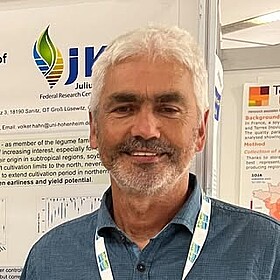
Dr. Volker Hahn is a leading agricultural scientist specializing in plant breeding at the University of Hohenheim's State Seed Breeding Institute in Stuttgart, Germany. Holding a PhD in molecular genetics from Justus Liebig University Giessen (1993) for work on cytoplasmic pollen sterility in sunflowers , he established the institute's sunflower breeding program and now leads soybean breeding with complementary work on chia, buckwheat, and chickpeas. His research focuses on drone-based phenotyping , NIR quality characterization , and phenomic selection as innovative breeding methodologies. Key Research Areas: Soybean and legume crop improvement Drone-assisted phenotyping systems Phenomic selection techniques Plant-based protein development Climate change adaptation in breeding Major Projects: Legume Generation (EU-funded) SENSOJA (Sensor-assisted soybean breeding) InnoSun (Oil yield enhancement in sunflowers) His recent publications (2021-2025) demonstrate expertise in genomic and phenomic selection , QTL mapping , and climate-adapted breeding for soybean and sunflower. The work shows increasing focus on transcontinental genetic comparisons and non-destructive field phenotyping through LED-controlled speed breeding and multi-sensor platforms . Current efforts emphasize biogas feedstock optimization , disease resistance , and nutrient efficiency in crops. Technical Expertise: Utilizes advanced genotyping arrays (25K SNP), DArT markers , and phenomic prediction algorithms in breeding programs. Maintains laboratory facilities at the State Seed Breeding Institute (Fruwirthstr. 21, Stuttgart) with a team specializing in genetic mapping , molecular screening , and agroecosystem optimization .
Ludmil Alexandrov serves as an Assistant Professor in the Department of Cellular and Molecular Medicine at the University of California, San Diego (UCSD), a position held since August 2017. He is an early-career scientist with interdisciplinary training and a strong computational background focused on cancer research. His work leverages large-scale omics data to decipher mutational processes driving human cancer, identify prevention strategies, and develop targeted treatments. Primary research areas include Cancer Genomics, Mutational Signatures, and Computational Biology, with applications spanning Oncology, Genetics, and Bioinformatics. His methodologies integrate Data Mining and Machine Learning for genomic pattern recognition. Dr. Alexandrov contributes significantly as an Editorial Board Member for PeerJ - the Journal of Life & Environmental Sciences, with 635 editorial points in domains including Bioinformatics, Genomics, and Oncology. His editorial portfolio from 2018 includes publications on cancer biomarkers, tumor immunity, and genomic data analysis.
Patrick Griffin is a Professor and Scientific Director at The Scripps Research Institute (TSRI) Scripps Florida, where he serves as the founding Chair of the Department of Molecular Therapeutics. With over 25 years of experience in drug discovery and development, Dr. Griffin has made significant contributions to protein structure research, particularly focusing on nuclear receptors and the development of synthetic small molecules to modulate protein function. Dr. Griffin received his Ph.D. in Chemistry from the University of Virginia under Professor Donald F. Hunt, where he worked on methodology development in Biological Mass Spectrometry. He then completed a postdoctoral fellowship with Professor Leroy Hood at Caltech, applying mass spectrometry to systems biology. Prior to joining Scripps, he held leadership positions at ExSAR Corporation as Chief Science Officer and at Merck Research Laboratories as Senior Director of Chemistry. Dr. Griffin's research program focuses on protein structure and function, particularly on mutational- and ligand-mediated alterations in protein structural plasticity. Using techniques including mutagenesis, HDX-MS, crystallography, proteomics and genomics, his lab investigates nuclear receptors, enzymes, and G protein coupled receptors (GPCRs). His work has significantly advanced understanding of nuclear receptor signaling mechanisms for proteins like PPARs, RORs, REV-ERBs, LRH1, VDR, ER, GR, and PR. The Griffin lab is particularly known for developing biophysical methods including HDX and XL-MS platforms for analyzing protein plasticity. Analysis of Dr. Griffin's recent publications reveals a strong focus on nuclear receptor signaling, particularly PPAR family members and their role in metabolic disorders, bone biology, and cancer. His work combines structural biology approaches with chemical biology to develop functionally selective modulators targeting diseases including diabetes, obesity, and autoimmune conditions. A significant portion of his recent work involves applying and advancing hydrogen/deuterium exchange mass spectrometry (HDX-MS) techniques to understand protein dynamics and ligand interactions. Dr. Griffin has served as PI, Co-PI, and co-investigator on numerous NIH-funded grants. Highlights include being consortium PI of "The Comprehensive Center for Chemical Probe Discovery and Optimization at Scripps," a 6-year U54 MLPCN Roadmap initiative. He co-founded Ember Therapeutics with Bruce Spiegelman based on work from a RC4 program focused on obesity and diabetes treatments. Dr. Griffin also serves as PI on a 13-year collaboration with Eli Lilly and is involved in multiple other industry partnerships and biotech ventures including Myosin Therapeutics. The Griffin laboratory maintains state-of-the-art facilities for structural proteomics, including advanced HDX-MS and XL-MS platforms. His research team works at the intersection of chemistry, biology, and pharmacology to develop novel approaches for understanding protein function and developing therapeutic interventions. The lab's work spans from basic protein structure research to translational drug discovery efforts, with several compounds developed in the lab advancing toward clinical applications.
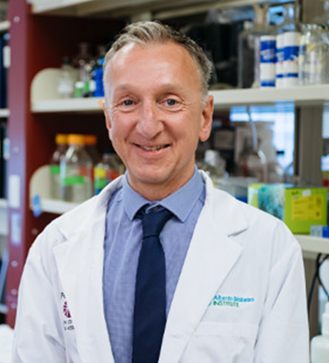
Peter Light is a Full Professor in the Department of Pharmacology within the Faculty of Medicine and Dentistry at the University of Alberta. He serves as Chair of Pharmacology (since July 2023) and Director of the Alberta Diabetes Institute (since July 2010). He holds the prestigious Dr. Charles A. Allard Chair in Diabetes Research and leads an active research laboratory located in the Alberta Diabetes Institute. BSc-Honours (Biological Sciences/Cell Physiology), University of Birmingham, UK, 1986 PhD (Biological Sciences/Cell Physiology), University of Birmingham, UK, 1990 Post-doctoral training at University of Calgary and University of Ottawa Dr. Light's research focuses on molecular pharmacology and new therapeutics for diabetes and heart disease. His laboratory investigates ion transport processes controlling cellular excitability using electrophysiological, live-cell imaging, biochemical and molecular techniques. Current research areas include ionic and metabolic events leading to cellular dysfunction in the heart and endocrine pancreas, incretin biology in pancreatic islets, development of small molecules for treating heart failure and diabetes, ATP-sensitive potassium channel function, anti-diabetic drug safety, and non-invasive glucose monitoring systems. His lab has pioneered research on endogenous light-sensitive signaling pathways in adipocytes and optogenetic applications for diabetes treatment. Analysis of Dr. Light's recent publications reveals a strong focus on the intersection of diabetes and cardiovascular disease, particularly the cardiac effects of SGLT2 inhibitors. His work spans from molecular studies of ion channels to clinical applications of diabetes medications, with increasing emphasis on novel glucose monitoring technologies and optogenetic approaches for metabolic disorders. Dr. Charles A. Allard Chair in Diabetes Research Dr. Light's research program is funded by the Canadian Institutes of Health Research and the Alberta Diabetes Foundation. He has mentored numerous graduate students, post-doctoral fellows, and research associates across multiple projects. His laboratory team includes specialists in electrophysiology, molecular biology, and biomedical engineering working collaboratively on diabetes and cardiovascular research. The Light Lab is part of the Alberta Diabetes Institute, a world-class research facility housing the IsletCore human islet isolation and research facility that Dr. Light helped establish in 2010 with joint funding from the Alberta Diabetes Foundation and the University of Alberta. Dr. Light's laboratory occupies space in the Li Ka Shing Centre, with both office (6-126A) and lab (6-040) facilities. The lab maintains an active presence through its website (thelightlab.ca) and continues to recruit highly qualified researchers for positions in diabetes and cardiovascular pharmacology.
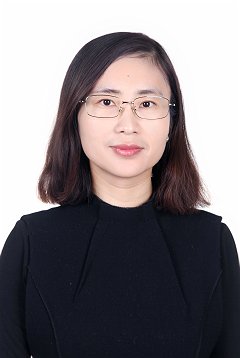
Xiang Chen is an Associate Professor at the Department of Software Engineering, School of Artificial Intelligence and Computer Science, Nantong University, China. He received his B.Sc. degree from Xi'an Jiaotong University in 2002 and his M.Sc. and Ph.D. degrees in computer software and theory from Nanjing University in 2008 and 2011 respectively. He is an editorial board member of Information and Software Technology and serves as a program committee member for prestigious conferences including FSE 2026 and ASE 2025. Chen is also a senior member of the China Computer Federation (CCF) and active in various academic committees. Chen's research focuses on empirical software engineering, mining software repositories, and software testing and maintenance, with particular emphasis on applying AI techniques to software engineering problems. His work spans large language models for software engineering, security vulnerability analysis, code change representation, and regression testing. He has published over 110 papers in top-tier journals and conferences including IEEE Transactions on Software Engineering and ACM Transactions on Software Engineering and Methodology. His recent publications demonstrate a strong trend toward integrating AI techniques, particularly large language models, with traditional software engineering practices. The research spans code generation evaluation, deep learning framework testing, vulnerability detection, and automated program repair, showing a consistent focus on improving software quality through innovative testing and analysis techniques. ACM SIGSOFT Distinguished Paper Award (ICSE 2021) ACM SIGSOFT Distinguished Paper Award (ICPC 2023) Top 1% CNKI Highly Cited Scholar (2024) Top 2% Scientist by Stanford University (2023-2025) NASAC 2019 Prototype Competition First Prize Chen has successfully advised numerous graduate and undergraduate students who have gone on to prestigious institutions including Nanjing University, Tsinghua University, and Zhejiang University. Many of his students have won national programming competitions and received scholarships. His research group, smartSE, actively works on projects funded by the Natural Science Foundation of China and various provincial research programs. Chen also serves as a reviewer for top journals including IEEE Transactions on Software Engineering and ACM Transactions on Software Engineering and Methodology.
Rebecca Switzer is an Associate Professor in the Department of Chemistry at Bucknell University. Her research focuses on understanding enzyme function, particularly in biochemical processes that sustain life and their roles in human diseases. Dr. Switzer's scholarly interests include: Biochemistry Enzyme kinetics and mechanisms Enzyme inhibition DNA methylation processes Epigenetic regulation The Switzer lab investigates enzyme mechanisms in detail to understand biological function and disease implications. Her work specifically examines DNA methyltransferases (DNMT1), exploring how disease-associated mutations disrupt normal autoinhibition mechanisms and developing methods to screen for potential inhibitors. Recent publications have detailed the impact of mutations like A554V, G589A, and V590F on DNMT1 function. Dr. Switzer actively mentors undergraduate researchers, with numerous students contributing as co-authors on her publications. Her students have received competitive summer research funding through Bucknell's Program in Undergraduate Research (PUR) fellowships and the Clare Boothe Luce Research Scholars Program. She regularly acknowledges student achievements including honors thesis completions and PhD defenses by former students. Her laboratory maintains an active research program with recent publications in journals including DNA, Journal of Visualized Experiments, Biochemistry, and PLoS ONE, demonstrating ongoing contributions to the field of enzymology and epigenetic regulation.
Professor Dan Hao is a distinguished faculty member at the Institute of Software, School of Computer Science, Peking University, where he has established himself as a leading researcher in software engineering. His extensive service to the academic community includes membership on the Steering Committee for The International Conference on Automated Software Engineering (ASE) since 2021, The ACM SIGSOFT International Symposium on Software Testing and Analysis since 2025, and The International Systems and Software Product Line Conference (SPLC) from 2018-2022. He has served as Program Co-Chair for multiple major conferences including ISSTA 2027, ICSME 2025, ICST 2023, SANER 2022, and ASE 2021. Professor Hao received his Bachelor's degree from Harbin Institute of Technology in 2002 and completed his Ph.D. at Peking University in 2008, followed by post-doctoral research at the same institution until 2009. His academic journey reflects a deep commitment to advancing software engineering research and education in China. Professor Hao's research primarily focuses on software testing and debugging, program comprehension, and software maintenance. His work has significantly contributed to compiler testing, fault localization, regression testing, and automated program repair. He has pioneered approaches in compiler auto-tuning, test-case prioritization, and history-guided testing techniques. His research bridges theoretical foundations with practical applications, addressing real-world challenges in large-scale software systems, particularly in online service environments. His publication record demonstrates a consistent trajectory of high-impact research in top-tier software engineering venues. Professor Hao's work shows increasing integration of machine learning techniques with traditional software engineering problems, particularly evident in his recent publications on LLM applications for code generation, neural theorem proving, and contrastive learning for vulnerability detection. His research maintains strong connections between theoretical rigor and practical applicability in industrial settings. ACM SIGSOFT Distinguished Paper Award for PDCAT: Preference-Driven Compiler Auto-Tuning at FSE 2025 Distinguished Paper Award for Formalizing, Mechanizing, and Verifying Class-Based Refinement Types at ECOOP 2024 ACM SIGSOFT Distinguished Paper Award for History-Guided Configuration Diversification for Compiler Test-Program Generation at ASE 2019 ACM SIGSOFT Distinguished Paper Award for History-driven Build Failure Fixing: How Far Are We? at ISSTA 2019 As an advisor, Professor Hao has mentored numerous graduate students, currently supervising 9 Ph.D. students and 7 Master's students. His former students have gone on to prestigious positions at institutions including King's College London, Tianjin University, Fudan University, and major technology companies like Huawei and China Construction Bank. His academic leadership extends through editorial roles as Deputy Editor-in-Chief of Software Testing, Verification and Reliability (STVR) and membership on the editorial boards of several premier journals including ACM Transactions on Software Engineering and Methodology, ACM Computing Surveys, and Empirical Software Engineering. Professor Hao leads a vibrant research group at Peking University's Institute of Software, focusing on cutting-edge problems at the intersection of traditional software engineering and artificial intelligence. His team actively collaborates with both academic institutions and industry partners to address practical challenges in software development and maintenance processes.
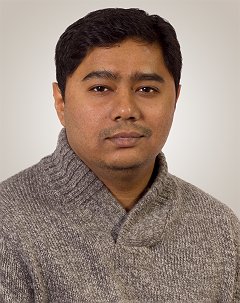
Iftekhar Ahmed is an Associate Professor in Informatics at the Donald Bren School of Information and Computer Science, University of California, Irvine. His research focuses on software engineering, particularly combining software testing, static analysis, and machine learning to develop better tools and techniques for software quality assurance. His educational background includes: PhD in Computer Science (2018) from Oregon State University, advised by Carlos Jensen BSc in Computer Science & Engineering (2007) from Shahjalal University of Science and Technology Dr. Ahmed's research interests center on software testing, static analysis, and the application of machine learning to software engineering problems. He has made significant contributions to mutation analysis, particularly in scaling this technique for real-world software systems. His work often bridges theoretical advances with practical applications, focusing on how to make software testing more effective and efficient for developers. He leads the STAIRS (Software Engineering & Testing Using Artificial Intelligence for Reliable Software) research group at UCI, where his team explores innovative approaches to software reliability through AI and machine learning. His recent publications demonstrate a strong trend toward integrating artificial intelligence with traditional software engineering practices. There's a clear focus on applying machine learning to code analysis, commit message generation, and bug detection, while maintaining rigorous empirical validation through studies of real-world software projects and developer practices. His work spans multiple domains including web accessibility, quantum computing, and Jupyter notebooks, showing both depth in core software engineering topics and breadth across application areas. Dr. Ahmed has received several prestigious awards: IBM Ph.D. Fellowship for academic year 2016-2017 Graduate School tuition relief Scholarship for academic year 2016-2017 IBM Ph.D. Fellowship for academic year 2017-2018 Actively involved in the academic community, Dr. Ahmed serves on program committees for major software engineering conferences including ASE, ICSE, and ESEC/FSE. He is currently accepting PhD students into his research group and emphasizes mentorship and professional development. His research has been supported by various grants that enable his team to explore innovative approaches to software testing and analysis. Dr. Ahmed leads the STAIRS research group at UCI, which focuses on developing AI-powered techniques for software testing and reliability. The group collaborates with industry partners and academic institutions to ensure their research addresses real-world challenges in software development. Current projects include improving mutation testing scalability, analyzing code smells in emerging domains like quantum computing, and developing tools for accessibility testing.
Kacper Maciszewski is a researcher at the Faculty of Biology, University of Warsaw, specializing in the evolution of eukaryotic microorganisms, particularly focusing on plastid and mitochondrial genomes. His work emphasizes endosymbiosis, horizontal gene transfer, and genome structure dynamics in algae and protists. He leads projects funded by the National Science Centre (NCN), including a PLN 210,000 grant on inverted repeats in Euglenophyta plastid genomes (2019–2022), and has conducted research at the University of Alberta through the Iwanowska Programme. Key research interests include the evolutionary mechanisms behind plastid genome conservation/variability, the role of inverted repeats in mutation repair, and the genomic adaptations of non-photosynthetic lineages. He has published on topics such as reduced plastid genomes in Prototheca, maturase gene complexity in euglenophytes, and spatio-temporal microbial community dynamics in lakes. Grants: NCN Preludium 16 (2019–2022), Faculty of Biology UW grants (2018–2020), NAWA internship (2021–2022) Awards: Holz-Conner Travel Grant (2019) Publications: Over 15 peer-reviewed articles in journals like Molecular Biology and Evolution , BMC Biology , and Frontiers in Plant Science Maciszewski is an active member of the International Society of Protistologists (ISOP) and has presented at conferences such as the European Congress of Protistology and the Jirovec’s Protozoological Days. His work bridges genomics, evolutionary biology, and microbial ecology, contributing to understanding plastid genome evolution across diverse eukaryotic lineages.