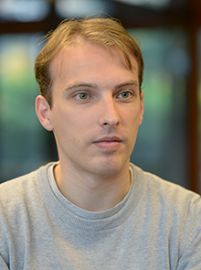
Helge Langseth is a Professor at the Department of Computer Technology and Informatics , within the Faculty of Information Technology and Electrical Engineering at the Norwegian University of Science and Technology (NTNU). His research focuses on Artificial Intelligence , Machine Learning , and Probabilistic Graphical Models , particularly Bayesian Networks and their applications in Decision Support Systems . Langseth's work addresses Explainable AI (XAI) , Reinforcement Learning , and Recommender Systems . He has contributed to Bayesian Optimization , Probabilistic Modeling , and Robotic Control in oceanic environments. His recent publications emphasize transparency , fairness , and scalability in AI systems, with applications spanning maritime trade, migraine diagnosis, and power grid management. He is affiliated with the Intelligent Systems Research Group at NTNU and actively mentors doctoral and master's students. Co-authored works with Yanzhe Bekkemoen , Sverre Herland , and Jørgen Hanssen reflect his role in advising the next generation of AI researchers.
Pierluigi Salvo Rossi is a Professor at the Department of Electronic Systems , Norwegian University of Science and Technology ( NTNU ), with additional roles as Deputy Head of Department (since 2021) and Deputy Manager at the Center for Green Shift in the Built Environment (since 2022). He also serves as a part-time Research Scientist at SINTEF Energy's Gas Technology department. Education: Ph.D. in Computer Engineering, University of Naples “Federico II”, Italy (2005) Dr.Eng. (cum laude) in Telecommunications Engineering, University of Naples “Federico II”, Italy (2002) Research Interests span Wireless Communications , Digital Twins , Machine Learning , and Statistical Signal Processing , focusing on applications like Industrial IoT , Fault Detection , and Energy Systems . His recent Publications highlight trends in Federated Learning , Graph Signal Processing , and Multi-Sensor Anomaly Detection across domains from Natural Gas Pipelines to Subsea Leakages . Scientific Awards include: Exemplary Senior Editor, IEEE Communications Letters (2018) Department Ambassador, NTNU (2016) IEEE Senior Member (since 2011) Professional Roles encompass editorial leadership (e.g., IEEE Sensors Journal) and conference organization (e.g., General Chair for IEEE Sensor Array and Multichannel Signal Processing Workshop, 2022). He leads major funded research projects like PREFERENCE (RCN, 2023-2027) and AUTOSHIP (RCN, 2020-2028).
Xuan Zhang is an Associate Professor at the Department of Information and Communication Technology, University of Agder. His research focuses on Tsetlin Machines, learning automata, and their applications in machine learning, computer vision, and hyperspectral imaging. Research Trends: Zhang’s recent work includes developing interpretable machine learning models (e.g., Tsetlin Machines), optimizing convolutional architectures for image processing, and applying automata theory to solve multi-armed bandit problems and channel selection in cognitive networks. His field spans theoretical analysis and practical implementations in AI, remote sensing, and health informatics. Scientific Contributions Co-developed advanced Tsetlin Machine variants for XOR/NOT operator convergence, disease forecasting, and image restoration Published in journals like IEEE Transactions on Pattern Analysis and Machine Intelligence , Information Sciences , and Applied Intelligence Explored Bayesian pursuit algorithms, hierarchical learning automata, and particle swarm optimization techniques Contact: xuan.zhang@uia.no
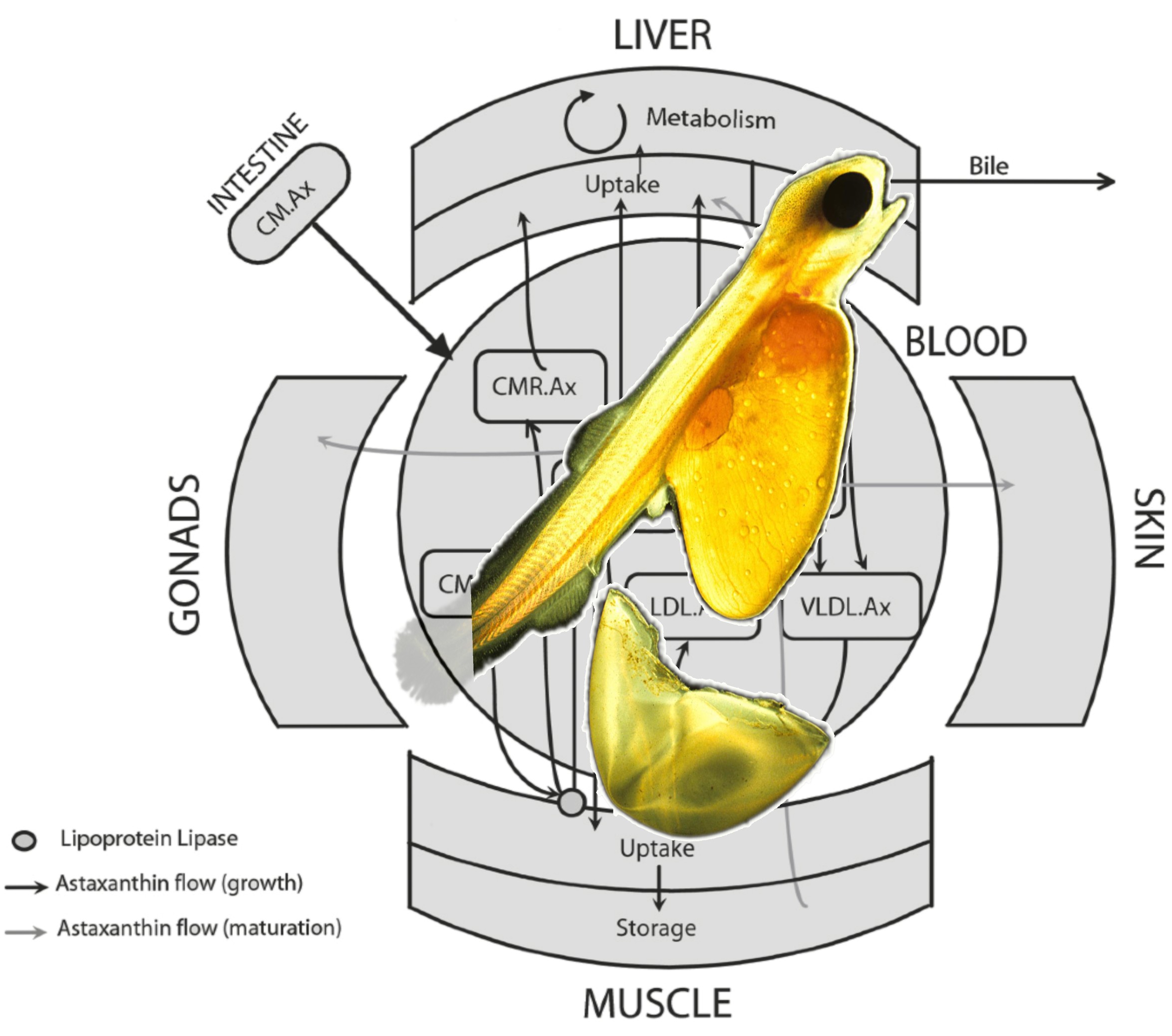
Jon Olav Vik is a Professor at the Norwegian University of Life Sciences (NMBU), affiliated with the Department of Mathematical Sciences and Technology within the Faculty of Science and Technology. He leads the DigiSal project—"Towards the Digital Salmon: From a reactive to a pre-emptive research strategy in aquaculture"—funded under the Research Council of Norway’s Digital Life initiative. He is also a lead modeller in the GenoSysFat project, which aims to enhance omega-3 content in farmed salmon through integrated genomics and systems biology approaches. His research spans systems biology , computational physiology , genotype-phenotype modeling , and ecological dynamics . He works at the intersection of biology, mathematics, and computer programming, developing models to understand how genetics, nutrition, and environment interact in fish and ecological systems. His pedagogical focus includes biostatistics and programming in R, and he teaches courses such as STIN100, STIN300, and STAT100. The 15 most recent publications reflect a consistent focus on systems-level understanding in biology, particularly in salmon aquaculture, metabolic regulation, and genotype-phenotype relationships. These works appear in high-impact journals like Nature , Science , PLOS Computational Biology , and Journal of The Royal Society Interface , demonstrating interdisciplinary reach across computational biology, genomics, ecology, and biostatistics. Key themes include metabolic modeling, microbiome stability, lipidome remodeling, and sensitivity analysis in dynamic models. Jon Olav Vik has contributed to major collaborative efforts including the Infrastructure for Systems Biology Europe (ISBE) , where he helped develop frameworks for "modelling as a service." He has also authored book chapters and technical deliverables on systems biology and modeling practices. He actively supervises students and invites master’s thesis candidates with interests in quantitative biology. While no specific awards are listed, his leadership in national and international research projects underscores his scientific impact. His work supports both fundamental science and sustainable aquaculture innovation.
Professor Adil Rasheed is affiliated with the Department of Engineering Cybernetics at the Faculty of Information Technology and Electrical Engineering , Norwegian University of Science and Technology (NTNU). His work focuses on integrating data-driven methods with physics-based modeling to create reliable hybrid systems for high-stakes applications. Research Interests : Bigdata Cybernetics, Hybrid Analytics / Modeling, Artificial Intelligence, Reduced Order Modeling, Computational Fluid Dynamics, Wind Energy, Autonomous Vessels, and Safe Reinforcement Learning. Digital Twin Applications : Professor Rasheed leads projects in Digital Twin technology for wind energy and smart greenhouses. His work includes autonomous marine navigation, federated learning for Industrial IoT, and predictive maintenance in offshore wind turbines using integrated data-driven models. Collaborative Efforts : He collaborates with industry partners on digital twin syncing for autonomous vessels, thermal zoning algorithms for building control, and anomaly detection in multivariate time series. His publications highlight the use of transformers, federated transfer learning, and corrective source terms in hybrid modeling.
Bjørge Hermann Hansen is a postdoctoral researcher at the Department of Sport Medicine, Norwegian School of Sport Sciences (NIH), actively engaged in national physical activity surveillance and the International Children's Accelerometer Database (ICAD). His work bridges epidemiology, statistics, and device-based measurement to investigate activity patterns across diverse populations including children, cancer survivors, and clinical cohorts like Duchenne Muscular Dystrophy patients. Previously referenced in 2020-2023 materials as a University of Agder professor, NIH's December 2023 employee page confirms his current research role at Norway's premier sport science institution. Hansen's research focuses on physical activity epidemiology and measurement validity, specializing in accelerometer data analysis. He investigates intensity distribution, sedentary behavior, and their health associations across lifespan stages. His methodological expertise includes harmonizing multi-cohort data, validating self-report tools against objective measures, and developing protocols for reliable activity monitoring. Current projects address environmental determinants like family car ownership and school policies on screen time. Recent publications reveal a dominant trend: large-scale meta-analyses using pooled international data (ICAD) to establish dose-response relationships between activity patterns and mortality. He also examines secular trends in Norwegian youth activity, methodological challenges in measurement, and the impact of clinical conditions on movement behaviors. Key journals include The Lancet, British Journal of Sports Medicine, and PLOS ONE. Scientific awards: None explicitly mentioned in source materials. Hansen teaches Statistics, Epidemiology, and Scientific Methods at NIH, translating complex concepts through podcasts like Fysioformidlingen. While no specific grants or student advising records are provided, his leadership in national surveillance projects (e.g., Kan3 reports for Folkehelseinstituttet) indicates active grant-funded research. He advocates for evidence-based policies such as school mobile phone bans to increase recess activity. He collaborates with the ICAD consortium and Norwegian Institute of Public Health on population monitoring. His work with the Kan3 project involves nationwide data collection on adult physical activity and fitness. Recent Folkehelseinstituttet reports (2023-2024) demonstrate his role in national health surveillance systems.
Daumantas Bloznelis is an Associate Professor of Business Analytics at the Norwegian University of Life Sciences (Ås, Norway) and an Adjunct Associate Professor at the University of Inland Norway (Rena, Norway). He holds a PhD in Economics from the Norwegian University of Life Sciences, with visiting scholar experience at Cornell University (USA). His research focuses on financial econometrics, commodity markets, and statistical price modeling, with particular emphasis on risk management and forecasting in aquaculture sectors. Bloznelis has extensive experience in academia, including teaching courses on machine learning, econometrics, and quantitative methods across multiple universities. He has supervised numerous PhD and Master’s theses, contributing to the development of future scholars in finance and management. His work also extends to applied research, such as cross-hedging carbon risk and portfolio optimization in electric vehicle sectors. Bloznelis has received several accolades, including scholarships from the Norwegian Research Council and Vilnius University, and awards for academic excellence in Lithuania. Education: PhD in Economics/Finance (2011–2016), Norwegian University of Life Sciences MSc in Statistics/Econometrics (2009–2011), Vilnius University BSc in Statistics/Econometrics (2005–2009), Vilnius University Research Interests: Bloznelis specializes in statistical price modeling, forecasting methodologies, and risk management in financial and commodity markets. His work integrates machine learning and econometric techniques to address practical challenges in sectors like salmon farming and electric vehicles. He also explores the application of copula models and factor analysis to portfolio optimization and market dynamics. Key Awards: 3rd prize in International Econometric Team Competition (2010) PRESIDENT OF LITHUANIA AWARD for dictation contest (2007) Prime Minister of Lithuania Award for matriculation excellence (2005) Professional Contributions: Bloznelis has presented at over 30 international conferences, including NCCC commodity price analysis meetings and CEMA annual conferences. He serves on the Board of Advisors for Vilnius University’s Faculty of Mathematics and Informatics. His research outputs include influential papers on futures market biases, hedging strategies, and factor models in commodity pricing.
Dr. Ngoc Nha Vi Tran is an Associate Professor of Computer Science at UiT The Arctic University of Norway. She holds a PhD from UiT and was a visiting scholar at Rutgers University, USA. Her research focuses on high-performance and energy-efficient computing, machine learning, and bioinformatics. She is a member of the NORA.startup Steering Group and leads the Arctic Green Computing Group. Education: PhD in Computer Science (UiT), M.Sc. in Software Engineering via Erasmus Mundus (Blekinge Institute of Technology, Sweden & Technical University of Kaiserslautern, Germany). Research interests include energy-efficient algorithms, bioinformatics tools (e.g., vCOMBAT), and applications of machine learning in healthcare and robotics. She teaches courses such as INF-2200 Computer Architecture, INF-2900 Software Engineering, and INF-2202 Concurrent Programming. Her work spans computational models for antibiotic target-binding, runtime energy optimization (REOH framework), and power models for embedded systems (RTHpower/ICE). She contributed to the EXCESS project on energy-efficient computing systems. Labs/Teams: Arctic Green Computing Group, EXCESS consortium.
Tobias Kaufmann is a Full Professor of Neurotechnology and Computational Psychiatry at the University of Tübingen, Germany, and a Senior Researcher at the Norwegian Centre for Mental Disorders Research (NORMENT) at the University of Oslo, Norway. His research focuses on investigating the pathophysiological changes in brain structure and function, particularly exploring their genetic underpinnings through computational analysis of large-scale neuroimaging and genetic datasets. He has contributed to understanding the genetic architecture of brain regions like the thalamus and brainstem, their roles in psychiatric and neurological disorders, and the development of neuroimaging tools such as ARTiiFACT for artifact processing. His work bridges neurotechnology, computational methods, and clinical psychiatry to advance precision medicine approaches in mental health. His research interests include neuroimaging genetics, brain aging, and the application of machine learning to neuroimaging data. He has developed software tools for analyzing brain connectivity and functional networks, with a focus on schizophrenia, Alzheimer’s disease, and other psychiatric disorders. Kaufmann is also involved in collaborative initiatives like the ECNP NeuroImaging Network to promote open science and data-sharing in mental health research. His lab at NORMENT focuses on integrating multimodal data (e.g., MRI, genetics) to study brain disorders, while his role at the University of Tübingen emphasizes advancing neurotechnological methods. He has no listed awards but has published extensively in top journals like Nature Neuroscience and NeuroImage, with a strong emphasis on computational psychiatry and neuroimaging methodologies.
Dag Johansen is a Professor in the Department of Informatics at UiT The Arctic University of Norway, Tromso campus. His work spans multiple research areas at the intersection of computer science, sports science, medicine, health technology, and nutrition science. He leads the interdisciplinary "Corpore Sano" research center and is actively involved in several research groups including the Cyber Security Group (CSG) and Crime Control and Security Law. Professor Johansen's research focuses on developing fundamental software solutions for secure and error-free data processing in heterogeneous distributed systems, ranging from lightweight "Internet of Things" devices and mobile phones to large-scale cloud solutions. His work particularly emphasizes applications in sports technology, edge computing, and compliance technology. His research interests include distributed systems, cybersecurity, sports technology, edge computing, data privacy, AI for sports analytics, multimedia forensics, and compliance technology. His recent publication trends show a strong focus on AI applications for sports video analysis, particularly in soccer and ice hockey, where his team has developed AI-based cropping systems for social media representations. He also has significant work in data privacy and GDPR compliance, especially regarding the "third country problem," as well as applications of AI in sustainable fishing practices. His 2024-2025 publications demonstrate continued work in self-healing microservices, lightweight encryption for video feeds, and virtual reality training environments. Professor Johansen is actively involved in mentoring students and research collaborators, as evidenced by his extensive publication record with numerous co-authors including doctoral students and postdoctoral researchers. His work has received funding through various research projects focused on data analytics, privacy technology, cybersecurity, and sports technology applications. He leads the interdisciplinary "Corpore Sano" center, which brings together researchers from computer science, sports science, medicine, health technology, and nutrition science. His work also involves collaboration with the "Njord" project focused on sustainable fishing through AI applications, and he's involved in developing the "Áika" distributed edge system for AI inference.
Ingrid Hobæk Haff is an Associate Professor in insurance mathematics and statistics at the Department of Mathematics, University of Oslo since 2015. She holds a master's degree in Industrial Mathematics from NTNU (2002) and a PhD from the Statistics for Innovation center (2008–2012), with a 20% position as a research scientist at the Norwegian Computing Centre. Previously, she worked there as a research scientist and senior scientist. Her research interests focus on multivariate statistics, copulae, skew and heavy-tailed distributions, and applications in insurance and finance. She has contributed to advancements in statistical modeling, particularly in copula constructions and their applications to risk assessment and extreme value analysis. Key awards include the Sverdrup award for young scientists and the mathematical award of Hanna og John Olav Stubban . She is affiliated with the Statistics and Data Science research group and the completed Stochastics of Renewable Energy Markets (STORE) project. Her work spans interdisciplinary collaborations, including applications in immunology and bioinformatics, leveraging machine learning for antibody-antigen interaction studies and synthetic data generation.
Jelena Veletic is a Postdoctoral Fellow at the Institute for Educational Research within the Faculty of Educational Sciences at the University of Oslo, specializing in large-scale educational assessment and school leadership analysis using international datasets. Her educational qualifications include: PhD in Educational Measurement from the Centre for Educational Measurement (CEMO), University of Oslo (2023) with thesis "Challenges and Opportunities in Measuring School Leadership. An analysis of data from the Teaching and Learning International Survey (TALIS)" Master of Science in Psychology from the Department of Psychology, University of Banja Luka, Bosnia and Herzegovina (2012) Veletic's research focuses on the intersection of school leadership practices, organizational climate, and teacher well-being, employing advanced statistical methodologies including multilevel modeling and structural equation modeling. Her work examines how leadership styles influence school environments across diverse cultural contexts, particularly through analysis of TIMSS and TALIS datasets. She contributes significantly to measurement model development in educational leadership research. Her publication record reveals a concentrated trajectory in international comparative leadership studies, with increasing emphasis on Nordic educational systems and methodological innovation in cluster analysis for leadership profiling. Recent work demonstrates sophisticated applications of multilevel SEM to unpack complex relationships between distributed leadership and teacher satisfaction. Scientific recognition includes: Marie Skłodowska-Curie Fellowship under EU Horizon 2020 Veletic actively participates in EU-funded research initiatives including the OCCAM project, collaborating with international scholars on secondary analysis of TALIS data. Her work involves substantial grant-funded research in educational measurement and cross-national leadership studies. She maintains active membership in the EKVA and Large-scale Educational Assessment (LEA) research groups at the Institute for Educational Research, contributing to methodological advancements in international educational surveys and leadership assessment frameworks.
Professor Hoai Phuong Ha is affiliated with UiT The Arctic University of Norway's Department of Computer Science. A leading expert in green computing and cyber-physical systems, they contribute to Arctic research through the Distributed Arctic Observatory (DAO) and Arctic Green Computing (AGC) group. Founded ARC (Arctic Center for Sustainable Energy) PI in EU FP7 EXCESS and H2020 TAILOR projects WP-leader in EEA POLNOR HAPADS and RCN PREAPP projects Their research focuses on energy-efficient computing, including IoT systems, edge computing, and parallel algorithms. Recent work addresses wireless charging trajectories (eU2U, 2025), smart grid networks (GridWatch, 2024), and pollution monitoring (2024). Publications span cyber-physical observatories, sensor calibration, and distributed systems optimization. Key trends in their 15 most recent articles (2017-2025) include: energy-aware data structures, Arctic-adapted IoT deployments, and sustainable computing methods. Collaborations span EU and Norwegian grants with applications in smart grids, environmental sensing, and high-performance computing. Co-founder of Arctic Center for Sustainable Energy (2017) Active in EEA POLNOR (2019-2023) and RCN eX3 infrastructure project Their lab (Realfagbygget A237) develops systems for Arctic tundra monitoring, including UAV-powered networks and energy-harvesting protocols. Students include researchers from multiple international collaborations.
Manuela Zucknick is Professor and Director of the Oslo Centre for Biostatistics and Epidemiology at the University of Oslo's Faculty of Medicine, Department of Biostatistics. Her research integrates statistical learning with translational cancer research to advance personalized medicine through multi-omics data integration. PhD Biostatistics, Imperial College London (2008) MSc Bioinformatics, Imperial College London (2004) Diplom Statistik, University of Dortmund (2003) Her research focuses on Bayesian methods for integrating heterogeneous data sources in cancer research, particularly for drug response prediction in pharmacogenomic screens and patient prognosis. She develops structured high-dimensional regression models for 'large p, small n' problems in molecular medicine, with emphasis on incorporating prior biological knowledge into risk prediction frameworks. Her work bridges statistical methodology with clinical applications in personalized cancer therapies. Her recent publications demonstrate consistent contributions to multi-omics integration and survival modeling across diverse clinical contexts including cancer, pregnancy complications, and rheumatoid arthritis. The research shows strong methodological innovation in handling high-dimensional biological data while maintaining clinical relevance. Through the Oslo Centre for Biostatistics and Epidemiology, she leads collaborative projects spanning oncology, obstetrics, and rheumatology. Her work frequently involves designing statistical frameworks for pharmacogenomic screens and developing tools for biomarker discovery in complex disease settings.
Johan Braeken is a Professor at the University of Oslo's Centre for Educational Measurement (CEMO). He holds expertise in psychometric modeling, particularly in modern test design, including computerized adaptive testing (CAT) and item response theory (IRT). His research focuses on improving assessment methodologies in education and large-scale evaluations. Education: PhD in Psychology (Psychometrics) from K.U.Leuven, Belgium (2008). Previous roles include Associate Professor (2014–2017) and Assistant Professor positions at Wageningen University and Tilburg University in the Netherlands. He has also worked as a psychometrician at CITO (2008–2009). Research Interests: Development and application of latent variable models, CAT optimization, and evaluation of international educational assessments. He explores statistical methods for improving measurement precision and addressing model violations. Software Contributions: Creator of the 'Empirical Kaiser Criterion' app for factor analysis, 'Fixed-precision MCAT selection rules' for R's mirtCAT package, and an Item Characteristic Curve visualization tool. Labs/Groups: Active in the CREATE and FREMO research groups, focusing on educational measurement and frontier research in psychometrics.