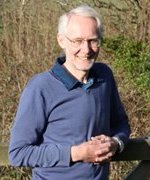
Michael Hassell is a British ecologist and Professor at Imperial College London, where he has held leadership roles including Principal of the Faculty of Life Sciences (2001), Head of the Department of Biology and Biochemistry (1993), and Dean of the Silwood Park campus (1988). His research focuses on population ecology, particularly insect populations and host-parasitoid dynamics. Key research themes include metapopulation biology , predator-prey interactions , and ecological trade-offs . Scientific awards include: Fellow of the Royal Society (1987) Fellow of the Academia Europaea (1998) Commander of the Order of the British Empire (2002) His publications (15 most recent) span topics like metapopulation persistence, indirect interactions, and spatial ecology, primarily in journals such as Proceedings of the Royal Society B and Science . Collaborators include Michael Bonsall, Helen Wilson, and Matthew J. Crawley. His work emphasizes theoretical models validated through empirical studies of insect communities.
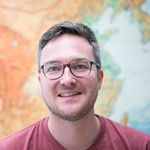
Simon Laurin-Lemay is a Postdoctoral Fellow in the Department of Biology at Carleton University's Faculty of Science, specializing in evolutionary genetics and computational biology. His research focuses on CpG hypermutability in vertebrates, mutation-selection models, and phylogenetic methods development. Education : B.Sc. (Université de Montréal) M.Sc. (Université de Montréal) Ph.D. (Université de Montréal) His work employs simulation-based approaches like Conditional Approximate Bayesian Computation to address challenges in molecular phylogenetics, including site interdependencies, Darwinian selection detection, and genomic context effects on mutation rates. Publications highlight his contributions to resolving confounding factors in codon usage analysis and revisiting land plant evolution through data quality frameworks.
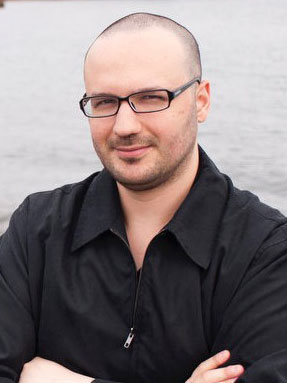
Steffen Seitz is a Researcher affiliated with the University of Tübingen's Department of Soil Science and Geomorphology. His roles include serving as a PhD student in projects like the New Integrated Litter Experiment (NILEx) and SP06e on soil erosion mechanisms. He is also a Principle Investigator for the MultiTroph project, focusing on soil-plant interactions and ecosystem stoichiometry. His research spans subtropical forest ecosystems, biodiversity effects on soil processes, and erosion dynamics. Key projects include studying litter decomposition's role in soil erosion (NILEx), investigating canopy effects on rainfall kinetic energy (SP06e), and leading MultiTroph to explore biodiversity-ecosystem function linkages. His work integrates field experiments, lab analyses (e.g., soil chemistry, microbial communities), and spatial modeling to address challenges in sustainable land management. Notable contributions include linking functional traits to erosion processes, analyzing throughfall kinetic energy, and exploring soil fertility-topography interactions in tree growth. His research emphasizes interdisciplinary approaches, combining ecology, geomorphology, and environmental engineering to advance understanding of ecosystem services in subtropical forests.
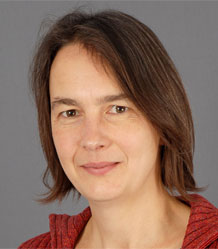
Dr. Eleonora Egidi is a Research Fellow in Microbial Ecology and Environmental Sustainability at the Hawkesbury Institute for the Environment (HIE), Western Sydney University, and an ARC DECRA Fellow (2021–2025). Her research focuses on microbial biogeography, plant-soil-microbe interactions, and responses to environmental stressors, employing metagenomics and functional trait analyses. She leads projects exploring drought tolerance in grasses and bioremediation technologies. Dr. Egidi actively promotes equity in science, co-convening the Ecological Society of Australia’s Plant-Soil Ecology network and participating in SAGE Athena Swan initiatives. Her research interests include microbial ecology, sustainable agriculture, and ecosystem restoration. Key projects involve identifying microbial functions enhancing plant drought resilience and understanding soil microbiome dynamics in Australian ecosystems. She has secured grants totaling over AUD 15 million, including an ARC DECRA for her drought tolerance research and a CRC-CARE-funded bioremediation project. Dr. Egidi’s awards include a 2021 Highly Commended Early Career Researcher Award and a 2019 Excellence in Professional Service Award. She collaborates extensively, with over 200 publications in journals like Nature Communications , Soil Biology & Biochemistry , and Global Change Biology . Her work bridges fundamental and applied research, addressing global challenges in environmental sustainability and agricultural productivity.
Marc Verdegem is an Associate Professor in Aquaculture and Fisheries at Wageningen University & Research. His research focuses on advancing sustainable aquaculture practices through innovative technologies like biofloc systems, nutrient utilization optimization, and integrated multi-trophic approaches. Key areas include improving feed efficiency, microbial community dynamics, and environmental resilience in aquaculture systems, particularly for tilapia and shrimp. He has supervised 26 PhD candidates, including notable research on nutrient retention in ponds, polyculture strategies, and mangrove conservation in aquaculture. His projects emphasize circular economy principles, such as reusing plant residues and exploring enzyme/probiotics to enhance low-quality diets. Collaborations span institutions like WorldFish and involve field experiments in Vietnam and Bangladesh. Verdegem contributes to datasets on sustainable feed formulation and biofloc microbiome studies. His work bridges theoretical modeling (e.g., nutrient cycling, microbial interactions) with applied practice, aiming to reduce aquaculture's carbon footprint and support small-scale farmers. Activities include organizing conferences like Aquaculture Europe 2020 and delivering expert commentary on aquaculture challenges and solutions.
Adam Hughes is a Senior Lecturer in Sustainable Aquaculture at the Scottish Association for Marine Science (SAMS), part of the University of the Highlands and Islands (UHI). He leads the SAMS Centre for Aquaculture and holds an Honorary Research Fellow position at the University of Seychelles. His research focuses on sustainable marine production systems, the blue economy, and climate change mitigation through aquaculture innovation. Education: PhD in Marine Ecology (2006, supervised by Prof. Kelly and Barnes at OU/Aberdeen). Professional roles include coordinating the €5.7M EU FP7 project IDREEM and editorial roles for Aquaculture Environment Interactions . Notable projects include investigations into offshore fish farm policy and marine rewilding investment. Research interests span seaweed farming for carbon sequestration, biofuel potential of brown seaweed, and sustainable aquaculture policy. Recent work addresses marine planning expansion in Scotland and climate resilience strategies. Media engagement includes coverage in environmental policy debates and scientific advancements.
Dr. Georgina Robinson is a Post-Doctoral Research Fellow specializing in Tropical Ecology at the Scottish Association for Marine Science (SAMS) within the University of the Highlands and Islands (UHI). Her work focuses on sustainable aquaculture technologies and bioremediation systems in Small Island Developing States. Education : PhD in Microbial – deposit feeder aquaculture bioremediation systems (Newcastle University, 2017) MSc in Marine Science with French (University of Southampton, 2003) MSc in Environmental Oceanography (University of Bordeaux, 2002) Research Interests : Dr. Robinson’s research emphasizes the integration of aquaculture systems with bioremediation, particularly using sea cucumbers and microbial communities to process aquaculture waste. She explores nitrogen cycling, microbiome dynamics, and sustainable aquaculture practices in tropical and temperate environments. Awards : Converge Challenge 2023 - winner Advising & Grants : Accepting PhD students and leading projects such as the N-ovatio-N spin-out and the Barcaldine Hatchery Project. Her work has been supported by organizations like WWF and FAO through consultancy projects and grants. Labs/Teams : Part of the SAMS UHI Aquaculture Research Network, collaborating globally on aquaculture development and bioremediation solutions.
Tarik Gouhier is an Associate Professor in Marine and Environmental Sciences at Northeastern University, affiliated with the College of Engineering's Civil and Environmental Engineering department. He is based at the Marine Science Center in Nahant, Massachusetts. His research focuses on population biology, ecology, and the impacts of climate change on marine ecosystems. Education: PhD in Marine Biology from McGill University (2010). Research Interests : Dr. Gouhier’s work addresses biodiversity dynamics, ecosystem stability, and climate-driven shifts in species distribution. He investigates spatial and temporal patterns in marine communities, particularly how environmental variability influences population resilience and extinction risk. Key areas include coastal upwelling, temperature fluctuations, and the role of microbial interactions in host systems. Recent Research Projects : Principal Investigator: NSF-funded study on keystone predator loss in intertidal communities. Co-PI: NSF projects on extreme ocean temperatures and desiccation effects on marine species distributions. Grants & Collaborations : Collaborates with Auroop Ganguly (CEE) on climate change impacts. Has secured NSF grants totaling $1.2M, including interdisciplinary Cyber SEES funding. Advises graduate students like Udit Bhatia (PhD’18). Labs & Teams : Affiliated with Northeastern’s Marine Science Center and interdisciplinary teams focused on coastal and environmental systems. Engages in meta-ecosystem dynamics research, linking oceanographic and benthic ecological processes.
Dr Julia Ferrari is a Senior Lecturer in the Department of Biology at the University of York. Her research focuses on the ecology and evolution of interspecific interactions, particularly symbiotic relationships between insects and microbial symbionts. She uses pea aphids as a model system to study how symbionts influence host resistance to natural enemies, thermal stress, and nutrient acquisition. Ferrari emphasizes active learning in teaching, covering evolutionary biology, ecological genetics, and fieldwork skills. Research highlights include investigating symbiont co-infections, symbiont-mediated protection against parasitoids, and nitrogen transfer via arbuscular mycorrhizal fungi. Her work bridges microbe-plant interactions and aboveground aphid dynamics. She has secured grants from NERC and BBSRC for projects on aphid symbiont cooperation, host association genetics, and chemosensory gene evolution. Teaching activities include lectures on ecological and evolutionary dynamics, tutorials on insect symbiont evolution, and student-led research projects. Advising focuses on experimental design and molecular techniques. Collaborations span microbial ecology, plant-insect interactions, and conservation biology.
Zhi-Shu Xiao is a Professor affiliated with the Chinese Academy of Sciences. He is currently engaged in postdoctoral research within the MultiTroph project funded by the German Research Foundation (DFG), focusing on trophic interactions across tree regeneration stages and broader biodiversity-ecosystem functioning relationships. His work bridges functional biodiversity, population, and community ecology in forest systems. As part of the MultiTroph initiative (2022–2026), Xiao contributes to interdisciplinary research exploring mechanisms underlying trophic relationships and their impacts on forest dynamics. His research emphasizes observational and experimental approaches to understand species interactions, resource allocation, and the ecological consequences of biodiversity loss. Though no specific grants or awards are explicitly mentioned, his involvement in high-profile collaborative projects underscores his active role in advancing ecological science. His current projects aim to elucidate how species diversity influences ecosystem processes, particularly in subtropical forest environments.
Prof. Teja Tscharntke is a leading ecologist at Georg-August University of Göttingen, heading the Department of Agroecology since 1993. He holds professorial appointments in the Faculty of Agricultural Sciences and the Faculty of Biology. His research focuses on biodiversity patterns, ecosystem functions, and socio-ecological interactions in agricultural and tropical landscapes. Education: Diplomas in Sociology (1978) and Biology (1981), University of Marburg; PhD (1986) and Habilitation (1992) in Zoology/Biology. Leadership: Spokesperson for the 'Resource Management' program (2000–2020) and Collaborative Research Center STORMA (2005–2009). His research emphasizes multitrophic interactions, pollination, and biodiversity conservation, with notable contributions to agroecology and tropical forest margins. Awards include the Marsh Ecology Award and recognition as a top-cited scientist globally. He serves on editorial boards (e.g., Basic and Applied Ecology ), national advisory committees (e.g., German Ministry), and international organizations like WWF Germany. Awards: Over 15 major recognitions, including lifetime contributions to insect conservation and ecological research. Grants: Led large-scale projects like STORMA and SAFE, focusing on ecosystem stability in altered landscapes. Active in mentoring (e.g., Dorothea-Schlözer Program) and national policy, Tscharntke bridges ecological science with socio-economic sustainability.
Professor Mark Fellowes is a prominent ecologist and evolutionary biologist at the University of Reading, affiliated with the School of Biological Sciences and the Division of Ecology and Evolutionary Biology. His research spans urban ecology, insect-plant interactions, and evolutionary responses to environmental change, with a strong focus on anthropogenic impacts. His research interests include urban ecology, insect-plant-pathogen dynamics, host-parasitoid coevolution, and conservation biology. He investigates how urbanization alters species interactions, ranging from aphid responses to plant pathogens to the behavior of urban mammals such as cats and moles. His work combines field studies, experimental ecology, and global comparative analyses. Recent publications reveal a strong trend toward understanding global urban environmental change, particularly through large-scale collaborative studies on plant adaptation in cities and human-wildlife interactions. His research often integrates behavioral, ecological, and evolutionary perspectives to address conservation challenges in human-modified landscapes. Global urban environmental change drives adaptation in white clover (Science, 2022) Pet cats from urban boundaries have larger home ranges and higher predation (Landscape and Urban Planning, 2022) Urbanization alters ecological interactions involving ants and insect predators (Scientific Reports, 2020) He has contributed to major synthetic works as editor and author, including books such as 30-Second Ecology , 30-Second Evolution , and Insect Evolutionary Ecology . These reflect his commitment to science communication and academic leadership. Professor Fellowes has collaborated with researchers across Europe, Africa, and the Americas, mentoring early-career scientists and contributing to international research initiatives. He has not received explicitly listed scientific awards in the provided text, but his editorial roles and high-impact publications indicate significant academic recognition. His work frequently involves interdisciplinary teams studying urban greenspace management, biodiversity, and human attitudes toward nature, contributing to both scientific understanding and practical conservation policy.
Dr. Michael Staab is a Professor for Animal Ecology and Trophic Interactions at Leuphana University Lüneburg since 2025. Previously, he served as a Postdoc at TU Darmstadt (2020-2025) and as a Lecturer/Postdoc (equivalent to Assistant Professor) at the University of Freiburg (2014-2020), where he also held a Junior Fellow position at FRIAS (2017-2018). His research spans Biodiversity Exploratories , BEF-China , and the MultiTroph DFG Research Unit , focusing on insect-plant interactions , community ecology , and land-use impacts on forest and grassland ecosystems . His academic journey includes a summa cum laude PhD (Leuphana University Lüneburg, 2011-2014) and a Diploma in Biology (University of Würzburg, 2005-2010) with distinction . He has contributed to 53+ journals as a reviewer and served on editorial boards for Biotropica and Zoological Systematics . Research Trends from his 15 most recent articles highlight: Systematic analysis of insect decline in forests using long-term biodiversity monitoring Development of novel indices like ForMIX for quantifying land-use intensity Investigation of urbanization effects on nocturnal arthropods Advances in automated insect monitoring via Raspberry Pi-based camera systems Multi-trophic responses to forest gap creation and deadwood management Scientific Awards : Earned summa cum laude and Junior Fellow recognition Featured in Top 10 New Species 2015 Media coverage in National Geographic , Daily Mail , and ZDF documentaries Advising & Grants : Mentoring students like Katharina Wittmann (camera system development) and Joshua Spitz (MultiTroph project) Secured DFG funding for MultiTroph research unit Contributed to BEF-China and Biodiversity Exploratories infrastructure programs
Dr. Timothy Craig is a Professor at the University of Minnesota Duluth's Swenson College of Science and Engineering. His research focuses on evolutionary ecology, particularly plant-insect interactions, speciation mechanisms, and population dynamics. He holds a B.S. from Kansas State University (1980), an M.S. (1984) and Ph.D. (1987) from Northern Arizona University. Research Interests: Speciation : Mechanisms driving evolutionary divergence in insects. Plant-Insect-Parasitoid Interactions : Trophic relationships in goldenrod ecosystems. Population Dynamics : Factors influencing insect community structures. Insect Behavior : Adaptive strategies in herbivorous species. His recent publications (2010-2014) center on ecological speciation, multitrophic interactions, and climate adaptation in model systems like Solidago altissima and Eurosta solidaginis , often integrating genetic, behavioral, and community-level analyses. Advising & Projects: Supervised 8 graduate students (e.g., Claire Hafdahl's work on floral adaptation, Michael Dixon's trophic divergence research). Mentored 20+ undergraduate researchers through UROP/BURST projects on topics like gallfly evolution and pollinator ecology.
Dr. Nathaly Rokssana Guerrero Ramírez is a Postdoctoral Researcher at the University of Göttingen, affiliated with the Department of Biodiversity, Macroecology and Biogeography. Her work focuses on scaling biodiversity-ecosystem functioning relationships, integrating belowground biotic/abiotic components and linking micro- to macro-ecological patterns. Education: Doctor of Natural Sciences (Dr. rer. nat., Summa Cum Laude, 2018), Universität Leipzig Master of Biology (2014), Université du Québec à Montréal Bachelor of Environmental Biology (2009), Universidad Jorge Tadeo Lozano Her research spans taxonomic/functional/phylogenetic diversity, above-belowground interactions, and spatial-temporal frameworks for ecological complexity. She contributes to global initiatives like the Tropical Root Trait Initiative (TropiRoot) and Global Root Traits (GRooT) Database. Dr. Guerrero Ramírez serves as a Board Member for the Society for Tropical Ecology (Gtö) and the Society of Island Biology (SIB). Her methodological approach combines multi-taxa diversity analysis, multitrophic dynamics, and ecosystem service assessments.