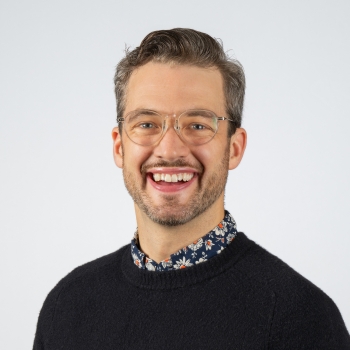
Dr. Igor Berinskii is a Senior Lecturer at the Iby and Aladar Fleischman Faculty of Engineering , Tel Aviv University, affiliated with the School of Mechanical Engineering . He leads the Multiscale Mechanics of Solids (MSMS) Lab , focusing on the relationship between microstructure and macroscopic mechanical behavior through analytical and computational methods. His research aims to explain unconventional mechanical properties and predict novel features for engineering applications. 2005 : B.S. (Cum laude) in Applied Mechanics, Peter the Great Polytechnic University 2007 : M.S. (Cum laude) in Applied Mechanics, Peter the Great Polytechnic University 2010 : Ph.D. in Mechanics of Solids, Institute for Problems in Mechanical Engineering, Russian Academy of Sciences His research spans Mechanics of media with microstructure , Cellular materials/Metamaterials , Nanomechanics/NEMS/MEMS , and Micromechanics of fracture . Recent publications highlight work on origami-inspired structures , graphene and MoS2 mechanics , bio-inspired metamaterials , and computational homogenization , with a focus on multiscale modeling and dynamic systems. The MSMS Lab employs HiDRA (Hierarchical Deformable and Rigid Assemblages) for coarse-grained modeling, contributing to advancements in lattice materials and elastic wave propagation.
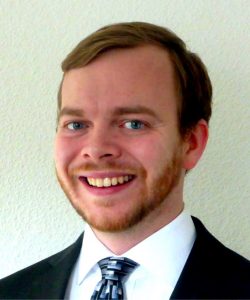
Silvina Matysiak is an Associate Professor in the Fischell Department of Bioengineering at the University of Maryland's A. James Clark School of Engineering. Her research integrates computational modeling with biophysical principles to investigate fundamental biomolecular processes relevant to neurodegenerative diseases and biomaterial design. Education: Ph.D. in Bioengineering, Rice University (2007) B.S. in Bioengineering, Instituto Tecnologico de Buenos Aires Research Focus: Professor Matysiak's work centers on protein folding landscapes, misfolding mechanisms in neurodegenerative disorders , and multiscale simulation techniques . Her group employs advanced molecular modeling to study how water mediates protein stability, how membranes influence amyloid aggregation, and the molecular basis of Huntington's and Alzheimer's diseases. Key innovations include coarse-grained models that bridge computational gaps across time and length scales. Publication Trends: Analysis of her recent work (2022-2024) reveals three dominant themes: (1) Environmental modulation of amyloid aggregation by lipids, ionic liquids, and sugars; (2) Allosteric mechanisms in protein signaling networks; (3) Development of computational frameworks like ProMPT for multiscale biomolecular simulation. These studies consistently link molecular dynamics to disease pathology and therapeutic design. Awards: National Science Foundation CAREER Award ($650,000, 5-year grant for neurodegenerative disease research) Advising and Funding: Professor Matysiak currently mentors 4 Ph.D. students and has guided 6 doctoral graduates to successful careers in academia and industry (Google, Schrödinger, Flatiron Institute). Her lab receives primary support through her NSF CAREER award, with additional funding from collaborative grants focused on computational biomaterials and neurodegenerative mechanisms. She actively participates in interdisciplinary initiatives within Maryland's Biophysics and Chemical Physics Programs. Research Group: The Biomolecular Modeling Group operates within the Fischell Department, maintaining strong ties to the university's Biophysics and Chemical Physics Programs. The lab develops open-source simulation tools (including ProMPT) and maintains active collaborations with experimental groups studying protein aggregation, membrane biophysics, and biomaterials. Current projects focus on curvature-sensing peptides, metalloprotein allostery, and chitosan-based hydrogels for biomedical applications.
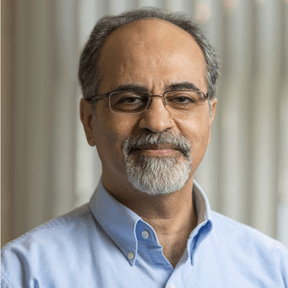
Dr. Craig Douglas is a Professor of Mathematics and Statistics at the University of Wyoming's College of Engineering and Physical Sciences, with an Adjunct Professor appointment in Computer Science. He earned his Ph.D. from Yale University and is globally recognized for pioneering research in Dynamic Data-Driven Application Systems (DDDAS) for Big Data, high-performance computing, and multigrid algorithms for partial differential equations. He co-developed the first commercial DDDAS for oil and gas pipeline monitoring, deployed across 100+ countries. His work bridges theoretical mathematics and practical engineering challenges. Research Interests Dynamic Data-Driven Application Systems (DDDAS) High-Performance Computing (HPC) Multigrid Algorithms Big Data Analytics for Energy and Environment Computational Science Applications Recent Publications Advances in DDDAS frameworks Computational wildfire modeling CO 2 sequestration simulation Finite-difference and finite-element methods Cache optimization for multigrid algorithms Email: cdougla6@uwyo.edu
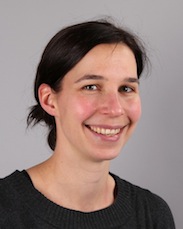
J. Guo is a Researcher in the Computer Graphics and Visualisation Department at Delft University of Technology , affiliated with the Electrical Engineering Mathematics and Computer Science Faculty . Their work bridges computational graphics and realistic image synthesis with a strong focus on Monte Carlo methods and sampling techniques. Research Interests Computer Graphics Image Synthesis Monte Carlo Integration Light Transport Simulation Optical Coherence Tomography Texture Filtering Research Output Trends J. Guo’s publications since 2020 emphasize efficient light transport simulation , realistic image synthesis , and advanced sampling techniques . Notable contributions include geometric sample reweighting for Monte Carlo integration and multi-scale imaging of historical artworks like Vermeer’s Girl with a Pearl Earring . Their 2024 conference paper on sheared polygonal texture filtering highlights ongoing innovation in graphics hardware optimization. Conference Activities Guo actively presents at leading graphics conferences such as Graphics Interface (2024) and EGSR (2018), and has organized events like Eurographics 2018 . Their work has been cited across optics and computer science domains, with significant downloads and open-access engagement. Collaborations Guo collaborates with institutions and researchers in optics , art conservation , and rendering algorithms , as evidenced by co-authorships with experts like Eisemann and Kalkman in both computational graphics and interdisciplinary projects.
Dr. Mingfei Zhao is an Assistant Professor in the Department of Chemical and Biological Engineering at the University of Alabama's College of Engineering, having joined in August 2024. Her research employs multiscale computational modeling (atomistic to continuum) to design bioinspired nanomaterials, focusing on peptoid self-assembly for drug delivery and nanofabrication. Education: B.S. in Energy and Power Engineering, Shandong University (2012) M.S. in Power Engineering Thermodynamics, Shandong University (2015) Ph.D. in Mechanical Engineering, State University of New York at Binghamton (2019) Postdoctoral Training: Molecular Engineering, University of Chicago (2022) Postdoctoral Training: Theoretical Biology and Biophysics, Los Alamos National Laboratory (2024) Research Interests: Dr. Zhao specializes in computational design of biomaterials using machine learning, molecular dynamics, and high-performance computing. Key areas include peptoid nanostructures for biomedical applications, data-driven biopolymer design, and colloidal assembly. Her work bridges chemical engineering, biophysics, and nanomaterials science. Publication Trends: Recent articles (2021-2025) reveal a strong focus on multiscale simulations of biological systems—SARS-CoV-2 spike proteins, B cell receptors, and HIV fusion peptides—alongside methodological advances in coarse-grained force fields. Dominant themes include controllable peptoid self-assembly, viral infection mechanisms, and nanostructure stability. Awards: 2024: CoMSEF Postdoctoral Scholar Award (AIChE) 2022: FOMMS Early Career Researcher Award (U.S. DOE) 2018: Graduate Research Ambassador Award (Binghamton University) Affiliations: Dr. Zhao leads research at the Poly-SM Research Center, focusing on polymers and soft materials. Her lab develops computational tools for advanced nanomaterial design.
Torsten Hopp is a Research Associate at the Institute for Data Processing and Electronics (IPE) at Karlsruhe Institute of Technology (KIT). His work focuses on advanced medical imaging technologies, particularly 3D ultrasound computer tomography (USCT) and its integration with MRI and X-ray modalities for breast cancer diagnosis. Research Interests: Ultrasound tomography system development Image registration algorithms Machine learning applications in medical imaging Biomechanical and computational modeling GPU-accelerated image reconstruction Multimodal imaging for clinical workflows Publication Trends: Torsten Hopp has contributed extensively to the evolution of 3D USCT, with recent work emphasizing deep learning integration , refraction correction , and patient-specific modeling . His research bridges hardware innovation (e.g., PtQube device) with computational methods for clinical translation. Labs & Teams: Affiliated with KIT's Institute for Data Processing and Electronics , he collaborates on projects like the High Data Rate Processing and Analysis Initiative , advancing ultrasound tomography for breast cancer screening.
Benjamin Wheatley is an Associate Professor of Mechanical Engineering at Bucknell University, where he leads the Mechanics and Modeling of Orthopaedic Tissues Laboratory (MMOT Lab) . His research integrates experimental and computational biomechanics to understand soft-tissue and musculoskeletal mechanics, with applications spanning orthopaedics, rehabilitation engineering, and bio-inspired design. Education B.S. in Engineering, Trinity College, 2011 Ph.D. in Mechanical Engineering, Colorado State University, 2017 Research Interests Wheatley’s work centers on finite-element modeling and experimental characterization of biological soft tissues, particularly skeletal muscle, tendon, and bone. He investigates structure–function relationships in orthopaedic tissues, neuromuscular biomechanics, and bio-inspired protective structures such as bighorn sheep horns. Applications include improving prosthetic gait, understanding knee-joint loading, and designing impact-mitigating materials. Publication Trends Across more than 30 peer-reviewed articles since 2015, Wheatley’s scholarship exhibits two dominant trajectories: (1) high-fidelity computational modeling of skeletal muscle and orthopaedic tissues under multiaxial loading, and (2) experimental biomechanics studies combining motion capture, EMG, imaging, and mechanical testing. Recent work increasingly couples optimal-control theory with gait simulations to predict clinical outcomes for individuals with limb loss. Scientific Awards & Honors (none explicitly listed in provided text) Advising & Funding Wheatley actively mentors undergraduate and graduate researchers in the MMOT Lab; interested students are invited to attend weekly lab meetings after contacting him via email. Grant and funding details are not provided in the supplied text. Laboratory & Team He directs the Mechanics and Modeling of Orthopaedic Tissues Laboratory located in Academic East 302, Bucknell University. The lab emphasizes student-led collaborative research that bridges mechanical engineering, orthopaedics, and biology.
Dr. Albert A. Smith-Penzel is a Principal Investigator at the Institute for Medical Physics and Biophysics , University of Leipzig Medical Faculty . He leads a DFG-funded project titled "Disentangling dynamics in biomolecules with experiment and simulation" since 2021, following his 2019-2020 Research Associate position at the same institution. B.Sc. in Physics, University of Mount Union (2007) Ph.D. in Chemistry, Massachusetts Institute of Technology (2012) Postdoctoral Researcher at ETH-Zürich (2012-2018) His research focuses on biomolecular dynamics characterization through advanced NMR relaxation techniques combined with molecular dynamics simulations. He pioneered detector analysis methods for correlating experimental and computational dynamics data, addressing challenges in motion amplitude quantification across multiple timescales. Recent publications highlight his work on: Dynamic landscapes of bio-membranes Energy landscapes of GPCRs Model-free analysis of protein fibrils Software development for NMR analysis (INFOS, DIFRATE) He actively develops open-source tools for dynamics analysis and contributes to understanding how distributed motions influence macromolecular function.
Masoud Rais-Rohani is the Richard C. Hill Professor and Chair of the Department of Mechanical Engineering at the University of Maine, within the Maine College of Engineering and Computing. He holds a Ph.D. in Aerospace Engineering from Virginia Tech (1991) and is a licensed Professional Engineer (P.E.). Prior to joining the University of Maine, he served as Assistant/Associate/Full Professor in the Department of Aerospace Engineering at Mississippi State University from 1991 to 2016. His research focuses on Structural and Multidisciplinary Design Optimization , Design Optimization of Multiscale Systems , Design under Uncertainty , Mechanics of Thin-Walled Structures , and Reduced Order and Surrogate Modeling . His work is supported by major sponsors including the Department of Energy (DOE), National Science Foundation (NSF), National Aeronautics and Space Administration (NASA), Naval Surface Warfare Center Carderock Division (NSWCCD), Engineer Research and Development Center (ERDC), and National Space Science Center (NSSC). Rais-Rohani's recent publications demonstrate a strong trend toward applying optimization techniques to complex structural problems, with increasing emphasis on uncertainty quantification, multiscale systems, and deployable structures. His work spans theoretical development of optimization algorithms to practical applications in aerospace, automotive, and civil engineering contexts. Among his professional recognitions are: Boeing Welliver Faculty Fellow (2008) Summer Faculty Fellow at NASA Marshall Space Flight Center (2004) Summer Faculty Fellow at NASA Langley Research Center (1993, 1994) Graduate Intern at NASA Langley Research Center (1990) As an educator, Rais-Rohani teaches Engineering Optimization and Aircraft & Automobile Structures. He has advised numerous graduate students whose work appears in his publications, with research spanning vehicle crashworthiness, structural optimization, and deployable shelter systems. His department receives funding from various federal agencies for research in structural optimization and design under uncertainty. Within professional organizations, Rais-Rohani serves as Associate Fellow of AIAA (Deputy Director of Aerospace Design and Structures Technical Group, 2014-2023) and as an active member of ASEE where he has held leadership positions including Mechanics Division Program Chair (2019-2020) and Division Chair (2020-2021), and Aerospace Division Program Chair (2015-2016) and Division Chair (2018-2020).
Mayr Felix is a researcher at the Associate Professorship Simulation of Nanosystems for Energy Conversion at the Technical University of Munich (TUM) within the TUM School of Computation, Information and Technology. His work focuses on computational materials science and machine learning for energy applications. Research Interests : Machine learning algorithms, metal-organic frameworks (MOFs), perovskite materials, electrocatalysis, and multiscale modeling. His studies emphasize adsorption mechanisms, charge distribution, and materials discovery for energy conversion. Publications Trends : Recent work explores adsorption site optimization through novel algorithms, partial charge prediction in MOFs using active learning, and machine learning applications for analyzing perovskite stability and catalytic activity. Collaborations : Active in DFG e-Conversion Clusters and TUM Innovation Network ARTEMIS, focusing on solid-solid interfaces and multiscale simulations. Contact : Email felix.mayr@tum.de or visit the TUM campus in Garching, Germany.
Michael Presho is an Associate Professor in the Department of Mathematics at Southeast Missouri State University. He holds a Ph.D. in Applied Mathematics from the University of Wyoming (2010) and has held post-doctoral positions at The University of Texas at Austin, Texas A&M University, and Colorado State University. His research focuses on numerical solutions to differential equations and statistical analysis, with applications to tracer flow, two-phase flow in heterogeneous porous media, and uncertainty quantification. He has published over 20 peer-reviewed journal articles and a book chapter. Recent publications emphasize multiscale finite element/volume methods, measure theory, and stochastic collocation. He has presented at institutions such as the University of California at Berkeley, Oberwolfach (Germany), and Auburn University. 2013 Oberwolfach Junior Fellowship 2011 Outstanding Dissertation Award His teaching philosophy centers on practical mastery of mathematics through repetition and active engagement, covering courses from Precalculus to Differential Equations.
David Sanchez is an Associate Professor at the Institut National des Sciences Appliquées (INSA) of Toulouse in the Department of Mathematical Engineering and Modeling. He holds multiple affiliations including membership in the Toulouse Institute of Mathematics (IMT) PDE Team and an associate researcher position at the Center for Integrative Biology (CBI) in the Molecular Cellular and Developmental Biology Laboratory (MCD) DEMO team. His research spans several interconnected fields of mathematical analysis and modeling. Professor Sanchez specializes in the analysis of partial differential equations, with focus on nonlinear and asymptotic analysis of parabolic and elliptic systems. His work in ferromagnetism involves developing asymptotic models for spintronics and studying magnetization configurations in nanowires. He also conducts significant research on biological fluids, particularly mathematical models of mucus flow in lungs and mucociliary clearance processes. The trends in his publications show consistent work in mathematical physics, with increasing interdisciplinary applications in biology and computer science over time. His recent publications (2019-2025) demonstrate strong activity in both theoretical mathematics and applied biological modeling, with research spanning from ferromagnetic nanowires to zebrafish embryonic development. Professor Sanchez has received recognition through his extensive publication record in high-quality journals including ESAIM: Mathematical Modeling and Numerical Analysis, Journal of Computational Physics, and Journal of Differential Equations. His interdisciplinary approach connects mathematical theory with practical applications across physics, biology, and computer science. His advising and research activities involve collaborations across multiple institutions including Université Toulouse III - Paul Sabatier, Université Bordeaux, and international partners. His work bridges theoretical mathematics with applications in physics, biology, and computer science through interdisciplinary research teams. Professor Sanchez maintains an active research laboratory focused on mathematical modeling, with particular emphasis on partial differential equations and their applications to physical and biological systems. His team works on both theoretical analysis and numerical implementation of mathematical models across multiple application domains.
Prof. Dr.-Ing. Julia Mergheim is a Professor at the Chair of Engineering Mechanics (LTM) within the Department of Mechanical Engineering at Friedrich Alexander University Erlangen-Nuremberg (FAU). She leads the Numerical Mechanics Working Group and maintains an active research program in computational mechanics with significant contributions to the field. Her research focuses on Nonlinear Finite Element Methods , Multiscale Modeling and Simulation , and Crack Propagation Simulation . Her work spans various applications including additive manufacturing, material failure analysis, energy harvesting systems, and computational fracture mechanics. Prof. Mergheim has developed advanced numerical techniques for modeling complex material behaviors, particularly in the areas of ductile damage, fracture mechanics, and multiphysics systems. Her recent publications demonstrate strong research activity across multiple domains, with particular emphasis on clinch joining processes, additive manufacturing optimization, energy harvesting systems, and advanced computational methods for material failure prediction. Her work shows consistent collaboration with researchers across Germany and internationally. Prof. Mergheim maintains an active presence in the computational mechanics community through her extensive publication record and participation in conferences. Her research group continues to produce high-impact work that bridges theoretical developments with practical engineering applications.
Burkhard Dünweg is a theoretical physicist and group leader at the Max Planck Institute for Polymer Research in Mainz, Germany. He also holds an Associate Professor position in the Department of Chemical Engineering at Monash University, Australia, where he has maintained a long-standing research collaboration since 2010. Dünweg serves as Director of the Statistical Mechanics and Soft Matter (SMSM) CECAM Node and acts as the institute's ombudsperson since 2013. Dünweg received his diploma in theoretical physics in 1987, his doctorate in 1991 (with Kurt Binder at Mainz University), and completed his habilitation in 2000 at the University of Mainz, where he was appointed associate professor in 2008. His academic journey includes a postdoctoral period from 1991 to 1993 at the Center for Simulational Physics in Athens, Georgia, USA (funded by the Humboldt Foundation), and visiting professorships at Saarbrücken University (2005) and Darmstadt University (2014-15). Professor Dünweg's research focuses on computational statistical mechanics and soft matter physics. He has made pioneering contributions to simulation methods, particularly in developing the lattice Boltzmann method for studying hydrodynamic interactions in soft matter systems. His key innovations include inventing a dissipative coupling scheme for particle systems interacting with lattice Boltzmann backgrounds, advancing understanding of thermal fluctuations in lattice Boltzmann simulations, and constructing field-based algorithms for the nonlinear Poisson-Boltzmann equation. His work spans polymer physics, colloidal systems, and electrokinetics, with particular emphasis on semi-dilute polymer solutions and charged colloidal dispersions driven by fields or flows. Dünweg's recent publications reveal a consistent trajectory toward increasingly sophisticated computational approaches for soft matter systems. His work demonstrates strong integration of theoretical development with practical applications, addressing challenges in multiscale modeling, hydrodynamic interactions, and phase transitions. The research shows particular strength in bridging molecular-scale phenomena with macroscopic material properties, with growing interest in biological applications like chromatin structure. From 2004 to 2013, Dünweg served as Associate Editor for Physical Review E (Polymer Physics, Computational Physics), contributing significantly to the scholarly communication in his field. His research has been supported through extensive international collaborations, most notably with J. Ravi Prakash's group at Monash University, with whom he has co-authored numerous publications spanning polymer dynamics and electrokinetics. Dünweg leads a research group within the Biomolecular Mechanics Group at the Max Planck Institute for Polymer Research. The group specializes in developing and applying advanced simulation techniques to understand complex soft matter behavior. They maintain strong international connections, particularly with Australian institutions, and contribute to advancing computational methodologies that bridge molecular dynamics with continuum hydrodynamics.
Gianmarco Munaò is a Full-time fixed-term researcher (type B) at the Department of Mathematical and Computer Sciences, Physical Sciences and Earth Sciences (MIFT) at the University of Messina, specializing in Theoretical Physics of Matter. He serves as Lecturer for the course "Analysis and models of biomedical signals" in the Master's Degree in Physics program. His educational background includes: PhD in Physics from the University of Messina (2009), with thesis on "Improvements of RISM theory in molecular liquids investigations" Graduation with honors in Physics from the University of Messina (2005), with thesis on "Theoretical and simulative study of structural properties of mixtures of molecular liquids" Munaò's research focuses on theoretical and simulation studies of condensed matter physics, particularly soft matter systems including colloidal, polymeric, and biological systems. He employs numerical simulations based on Molecular Dynamics and Monte Carlo methods, along with theoretical tools based on integral equations, to investigate structural and thermodynamic properties of complex systems. His work has significant applications in nanotechnology, materials science, and biophysics. His recent publications demonstrate expertise across multiple domains including colloidal physics, polymer nanocomposites, molecular dynamics simulations, and statistical mechanics. The research shows a consistent focus on understanding self-assembly processes, phase behavior, and structural properties of complex fluid systems. Scientific qualifications: National scientific qualification for associate professor in sector 02/B2 (Theoretical Physics of Matter) (2018-2027) National scientific qualification for associate professor in sector 03/A2 (Models and Methodologies for Chemical Sciences) (2018-2027) Munaò has participated in numerous research projects, including ERC projects and PRIN MIUR grants. He has collaborated extensively with research groups at Sapienza University of Rome, University of Salerno, and other international institutions. As a referee, he has reviewed for prestigious journals including Soft Matter, Physical Review E, and Journal of Chemical Physics. He is active in the scientific community, regularly presenting at conferences such as the International Soft Matter Conference and Fismat.