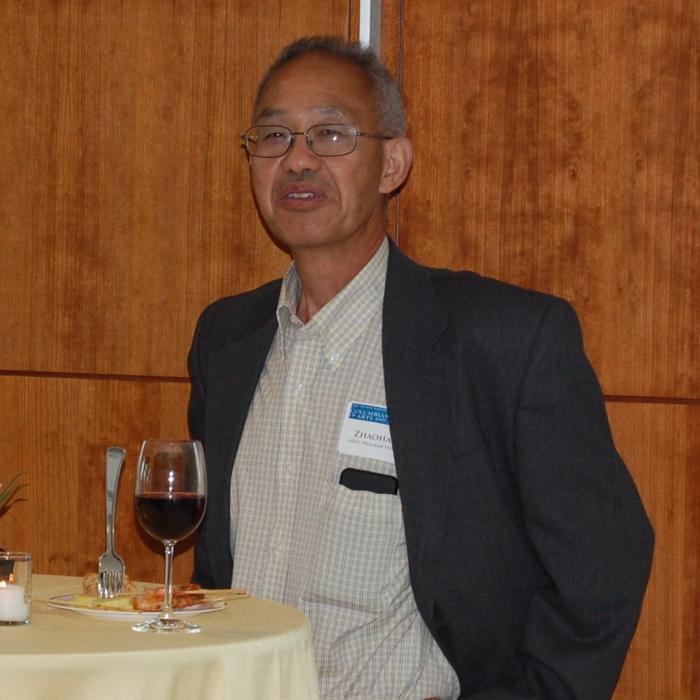
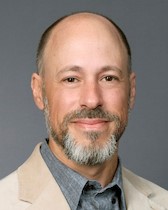
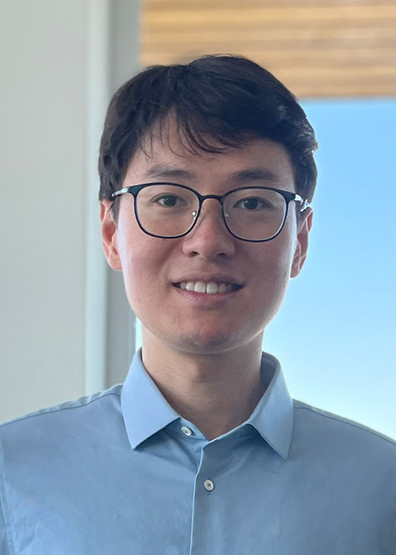
Yingli Qin is an Associate Professor in the Department of Statistics and Actuarial Science at the University of Waterloo, part of the Faculty of Mathematics. His research focuses on high-dimensional statistics and random matrix theory, with applications to covariance matrix analysis and hypothesis testing. He holds a PhD in Statistics from Iowa State University, alongside MA and BSc degrees in Mathematics and Statistics from Iowa State University and Northeast Normal University, China. Education : PhD in Statistics, Iowa State University, USA MA in Statistics, Iowa State University, USA BSc in Applied Mathematics, Northeast Normal University, China Research Interests : Qin’s work emphasizes high-dimensional statistical methodologies, including covariance matrix estimation, spectral distribution analysis, and the application of random matrix theory to address challenges in large-scale data. His contributions include developing bias-reduced estimators and testing frameworks for high-dimensional datasets. Publications : Qin has published extensively in top-tier journals such as the Annals of Statistics , Journal of Multivariate Analysis , and Biometrika , with a focus on advancing statistical theory for high-dimensional settings. Teaching : He teaches advanced courses including Multivariate Analysis (Stat 923), Estimation and Hypothesis Testing (Stat 850/450), and Mathematical Statistics (Stat 330).
Sadaf Salehkalaibar is an Assistant Professor in the Department of Computer Science at the University of Manitoba, Winnipeg, Canada. She holds an office in the EITC building (E2-416) and has previously held academic positions at the University of Tehran, University of Toronto as a research associate, and visiting roles at McMaster University, Telecom Paristech, and National University of Singapore. Her research focuses on explainable artificial intelligence, generative models, and information theory with an emphasis on rate-distortion-perception tradeoffs in video and image processing. Her educational background includes teaching courses such as Signals and Systems, Digital Signal Processing, and Network Security at the University of Tehran. She currently teaches COMP4190 (Artificial Intelligence) at the University of Manitoba. Research interests revolve around developing efficient algorithms for AI systems, with key contributions in learned video compression, federated learning, and privacy-preserving techniques. Notable work includes the M22 algorithm for communication-efficient federated learning and the NSERC Discovery Grant-funded project on data-driven learning efficiency. Recent publications highlight advancements in perception loss functions, Gaussian vector source analysis, and secure distributed hypothesis testing. She actively serves on editorial boards (e.g., IEEE Transactions on Communications) and conferences (ISIT, ITW). Awards include the prestigious NSERC Discovery Grant (2025). Supervision highlights 13 MSc students at the University of Tehran, focusing on topics like privacy-preserving systems and distributed learning. Labs/teams: Leads research group at University of Manitoba focusing on AI and information theory applications in multimedia systems.
Geoffrey Cook is a Senior Lecturer at the Scripps Institution of Oceanography, UC San Diego, within the VC Marine Sciences school and Geosciences Research Division. He holds a PhD in Geology from Washington State University (2009), an M.S. from Boise State University (2002), and a B.A. from Franklin and Marshall College (2000). His research focuses on physical volcanology, including the volcanic evolution of large calderas, petrogenesis of magmas, and geoscience education. Notable projects include studies on the Otowi Member of the Bandelier Tuff and crustal assimilation processes in Iceland’s Fagradalsfjall Fires (2021). He emphasizes innovative teaching methods, such as active learning and experiential education, to address student misconceptions in geoscience. Dr. Cook has received multiple teaching awards, including the 2023 Scripps Outstanding Undergraduate Teaching Award and the 2018 UCSD Panhellenic Chapters Outstanding Faculty Award. His publications span volcanology, geochemistry, and educational pedagogy, with recent work in Nature (2024) and active learning strategies in STEM education. His academic profile reflects a commitment to both advancing geoscience research and improving undergraduate education through evidence-based practices.
John G. Lynch, Jr. is University of Colorado Distinguished Professor at the Leeds School of Business, University of Colorado-Boulder. He also serves as Inaugural Director of the Initiative for Global Business Impact and is affiliated with the Center for Research on Consumer Financial Decision Making. Previously, from 2022-2024, he served as Executive Director of the Marketing Science Institute, a nonprofit think tank bridging industry and academia. He has held prestigious faculty positions at University of Florida (1979-1996) as Graduate Research Professor and at Duke University's Fuqua School of Business (1996-2009) as Roy J. Bostock Professor of Marketing. Lynch received his BA in economics, MA in psychology, and PhD in psychology from the University of Illinois at Urbana-Champaign. His academic journey spans over four decades with significant contributions to consumer behavior research. He is the founding Director of the Center for Research on Consumer Financial Decision Making and founding co-chair of the Boulder Summer Conference on Consumer Financial Decision Making. He served on the Academic Research Council of the US Consumer Financial Protection Bureau from 2017-2020. Lynch's research focuses on the cognitive psychology of consumer decision-making, particularly consumer financial decision-making since joining CU in 2009. His work spans consumer financial decision making, financial knowledge and well-being, planning for money and time, and research methodology validity. His publications reveal a strong emphasis on financial education effectiveness, couples' financial responsibility division, retirement savings behavior, and methodological rigor in marketing research. The recent publications show increasing focus on financial education, privacy regulation, statistical methodology, and the intersection of financial and physical health. Lynch has received numerous prestigious awards including the 2025 American Marketing Association-Irwin-McGraw Hill Award for Distinguished Marketing Educator of the Year (the highest honor in academic marketing), Paul D. Converse Award for Outstanding Contributions to Marketing Science, and the Society for Consumer Psychology's Distinguished Scientific Achievement Award. He is a Fellow of the American Marketing Association, Association for Consumer Research, and American Psychological Association/Society for Consumer Psychology - one of only six scholars worldwide to achieve this triple distinction. As an educator, Lynch has taught undergraduate Principles of Marketing, Marketing Research, and Senior Seminar in Marketing at CU. He has also taught MBA electives on market intelligence and PhD courses on marketing strategy and experimental design. He has supervised or co-supervised 100 PhD dissertations, with former students now on faculties of leading business schools worldwide. His teaching excellence has been recognized with multiple awards including Leeds MBA Elective Teaching Excellence Awards in 2011 and 2013.
Hassan Z. Ashtiani is an Associate Professor in the Department of Computing and Software within the Faculty of Engineering at McMaster University. His academic profile shows consistent engagement in both teaching and research activities, with evidence of active participation in major machine learning conferences and journals through 2025. Dr. Ashtiani's research focuses on the theoretical foundations of machine learning, with particular expertise in privacy-preserving algorithms, Gaussian mixture models, and adversarial robustness. His work bridges statistical learning theory with practical algorithm design, often addressing fundamental questions about sample complexity and computational efficiency in learning systems. A significant portion of his recent work explores the intersection of differential privacy with statistical learning, developing methods for private density estimation and distribution learning. Analysis of his publication record reveals a strong trend toward increasingly sophisticated theoretical frameworks for private and robust learning. His work consistently appears in top-tier venues including NeurIPS, ICML, COLT, and ALT, with recent contributions extending into agnostic private density estimation and robust learning with tolerance. The research demonstrates progression from foundational work on nearest neighbor search and clustering algorithms toward more complex problems in private learning of high-dimensional distributions. Dr. Ashtiani teaches across multiple levels of computer science education, including undergraduate courses in Automata and Computability (COMPSCI 2AC3) and Principles of Programming (COMPSCI 2S03), as well as graduate-level courses such as Fundamentals of Machine Learning (COMPSCI 4ML3) and Theoretical Foundations of Unsupervised Learning (CAS 775). His teaching portfolio shows consistent involvement in machine learning education since at least 2019, with evidence of teaching multiple sections each academic year. His scholarly impact is reflected in mentions across 3 news outlets, reference in 1 policy source, engagement from 7 X users, and 90 readers on Mendeley, suggesting growing recognition of his contributions to theoretical machine learning.
Betsy Foxman serves as the Hunein F. and Hilda Maassab Professor of Epidemiology at the University of Michigan School of Public Health. She directs three major initiatives: the Center for Molecular and Clinical Epidemiology of Infectious Diseases, the Integrated Training in Microbial Systems program, and the Certificate in Healthcare Infection Prevention & Control. Her academic leadership spans decades with continuous research contributions. Dr. Foxman earned her PhD and MSPH from UCLA (1983, 1980) and BS from UC Berkeley (1977). Her research centers on infectious disease transmission, microbiome ecology, antibiotic resistance, and wastewater surveillance . Key projects include analyzing the oral microbiome in dental caries using genomic methods, studying nose/throat microbiome associations with respiratory infections in nursing facilities, and developing wastewater monitoring for antibiotic-resistant pathogens. Her work integrates next-generation sequencing with epidemiological analysis to identify novel interventions. Publication trends reveal consistent focus on microbiome-pathogen interactions across multiple body sites (oral, vaginal, gut, respiratory). Recent articles demonstrate methodological innovation in wastewater epidemiology (2024 Norovirus GII monitoring) and clinical applications like predicting vancomycin-resistant enterococci contamination (2023 Lancet study). Her research bridges molecular microbiology with population health, emphasizing translational potential for diagnostics and public health interventions. Fellow of the Infectious Disease Society of America Fellow of the American College of Epidemiology Fellow of the American Academy of Microbiology Dr. Foxman's advising portfolio includes numerous NIH-funded projects on microbiome dynamics and infection control. Her leadership in the Center for Molecular and Clinical Epidemiology drives collaborative research across departments. Current initiatives focus on wastewater surveillance standardization and microbiome-based diagnostics for infection prevention. She maintains active laboratories for genomic analysis of microbial communities and clinical sample processing.
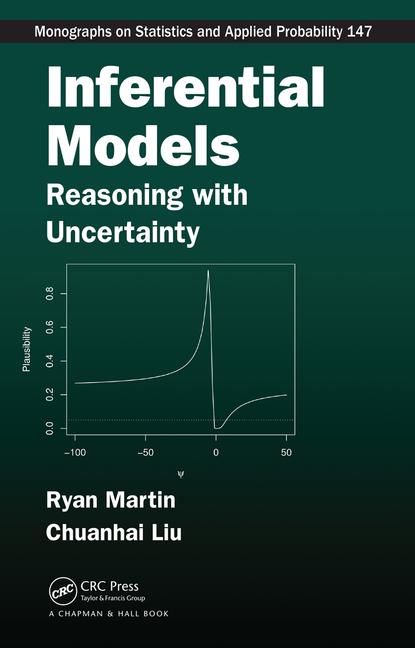
Chuanhai Liu is an Associate Head and Professor of Statistics at Purdue University’s Department of Statistics. He specializes in computational methods for statistical inference, Bayesian analysis, and big data computing systems. His research emphasizes robust algorithms, inferential models, and probabilistic methods. Education: M.S., Wuhan University, Probability and Statistics (1987) M.A., Harvard University, Statistics (1990) Ph.D., Harvard University, Statistics (1994) Research Interests: Computational methods (EM algorithms, MCMC), statistical software systems for big data, theoretical foundations of inference, and prior-free probabilistic modeling. His work bridges computational efficiency and statistical validity, with applications in network analysis, environmental data, and machine learning. Awards: Fellow of the American Statistical Association (2007) Elected Member of the International Statistical Institute (2006) Frank Wilcoxon Prize (2000) Advising & Grants: Supervised 9 Ph.D. students, including interdisciplinary collaborations. His grants focus on distributed statistical computing and inferential frameworks. Active in software development for large-scale data analysis. Labs/Teams: Leads statistical computing initiatives at Purdue, contributing to scalable algorithms and probabilistic inference systems.
Joel Greenhouse is a Professor of Statistics at Carnegie Mellon University (CMU), affiliated with the Department of Statistics & Data Science. He has been on the faculty since 1983 and held leadership roles, including serving as Associate Dean of the College of Humanities and Social Sciences from 1997 to 2002. He also holds an adjunct appointment as Professor of Epidemiology and Psychiatry at the University of Pittsburgh. His expertise spans statistical methodology, clinical trial design, and meta-analysis, with a focus on integrating data from multiple sources to address complex healthcare and public health challenges. Greenhouse earned his Ph.D. in Biostatistics from the University of Michigan and completed a postdoctoral fellowship at CMU. His research emphasizes developing statistical tools for observational studies, clinical trials, and meta-analytic frameworks, particularly in neurology, mental health, and public policy contexts. Notable contributions include analyzing the impact of media on youth suicide rates, improving aphasia classification through automated speech analysis, and evaluating highway safety through driver health data. Education: Ph.D. in Biostatistics, University of Michigan Affiliations: Adjunct Professor at University of Pittsburgh, Member of National Academy of Sciences’ committees Professional Service: Data and safety monitoring boards for NIH/VA studies, co-chair of Federal Motor Carrier Safety Administration review panels His awards include CMU’s Doherty Award for Education, Ryan Teaching Award, and E. Dunlop Smith Award for teaching excellence. His work bridges theoretical statistics with real-world applications, particularly in interdisciplinary collaborations across medicine, psychology, and public policy. Greenhouse’s recent articles highlight trends in leveraging large datasets for clinical insights (e.g., aphasiaBank), re-evaluating environmental and behavioral health associations, and advancing causal inference methods. His interdisciplinary approach ensures statistical rigor addresses societal challenges, from suicide prevention to highway safety.
Dr. Zhaohai Li Professor of Statistics at George Washington University, specializing in statistical methodologies for genetic epidemiology and clinical biostatistics. His research focuses on meta-analysis techniques, empirical Bayes methods, and population-based study designs. He has contributed extensively to improving statistical approaches in clinical trials and addressing challenges in genetic association studies. Education: Ph.D. in Statistics, Columbia University, 1989 Research Interests: His work addresses critical issues in modern biostatistics including: Population stratification in genetic studies Hardy-Weinberg equilibrium testing Optimal experimental design for case-control studies Handling missing data in genetic linkage analysis Development of robust statistical tests for complex survey data Publications Overview: Dr. Li's recent work emphasizes methodological advancements in: Bayesian approaches to population genetics Meta-analytic frameworks for combining study results Statistical solutions for multi-stage clinical trials Algorithmic improvements for genome-wide association analyses Professional Contributions: His articles consistently address practical challenges in biomedical research, bridging theoretical statistics with real-world genetic and clinical applications.
Bin Nan serves as Chancellor's Professor in the Department of Statistics at the University of California, Irvine, where he develops statistical and machine learning methodologies to advance biomedical research and improve human health outcomes through rigorous data analysis. His educational credentials demonstrate a strong quantitative foundation: Ph.D. in Biostatistics, University of Washington (2001) M.S. in Biostatistics, University of Washington (1999) M.S. in Statistics, Virginia Commonwealth University (1997) M.S. in Aerospace Engineering, Beijing University of Aeronautics & Astronautics (1987) B.S. in Aerospace Engineering, Beijing University of Aeronautics & Astronautics (1984) Nan's research program focuses on developing cutting-edge statistical methods for survival analysis, longitudinal data, high-dimensional inference, and machine learning, with direct applications to epidemiology, bioinformatics, and brain imaging. His work addresses critical challenges in biomedical data such as temporal dependence in neuroimaging sequences, estimation of large correlation matrices, and analysis of disease onset with terminal events, all aimed at identifying biomarkers for earlier disease diagnosis. Analysis of his recent publications (2015-2023) reveals a consistent trajectory toward methodological innovation in handling complex biomedical data structures, particularly through de-biased lasso techniques for survival models, neural network applications to censored data, and specialized approaches for longitudinal data with terminal events. These advances predominantly support Alzheimer's disease research and transplant outcome studies. No specific scientific awards were documented in the source material. His research program maintains continuous funding through National Science Foundation and National Institutes of Health grants, including a recent $1.8 million award for Alzheimer's disease methodology development. Nan actively collaborates with the UCI Alzheimer's Disease Research Center and UCI Center for the Neurobiology of Learning and Memory, though student advising details were not provided. His teaching portfolio includes advanced graduate courses in probability theory, survival analysis, and high-dimensional inference. Nan operates within interdisciplinary biomedical research teams focused on translating statistical innovation into clinical applications, particularly through brain imaging analysis and biomarker identification for neurodegenerative diseases.
Professor Ashish Sharma is a Professor of Hydrology and Water Resources in the School of Civil and Environmental Engineering at the University of New South Wales, Sydney, Australia. With a PhD in Civil Engineering from Utah State University and extensive experience in hydrological research, he has established himself as a leading expert in his field. Dr. Sharma's research focuses on hydrological uncertainty, with particular emphasis on the impact of climate change and variability on hydrological practice. His work spans multiple areas including remote sensing applications, stochastic hydrological modeling approaches, development of hydrological models, and addressing key hydrology challenges such as design flood estimation and water resources management. He has made significant contributions to understanding how climate change affects hydrological extremes and water availability. His publications reveal a strong trend toward advanced modeling techniques for climate change impact assessment, with recent work focusing on spectral transformation methods, multivariate bias correction in climate models, flood forecasting improvements, and the relationship between temperature and precipitation extremes. His research increasingly integrates remote sensing data with hydrological modeling to address challenges in data-scarce regions. Professor Sharma has held significant leadership positions including President of the International Commission of Hydrologic Sciences (IAHS) Commission on Statistical Hydrology (STAHY) since 2016, service on the Australian Research Council's College of Experts twice, and participation on the Technical Committee for the Australian Rainfall and Runoff Design Flood Estimation guidelines (ARR2016). In addition to his research leadership, Professor Sharma actively mentors students and collaborates with researchers globally, as evidenced by his extensive publication record across top hydrology and climate journals. His work bridges theoretical hydrology with practical applications for water resources management under changing climate conditions.
Ivan Canay is a Professor of Economics and Director of the Mathematical Methods in the Social Sciences Program at Northwestern University’s Weinberg College of Arts & Sciences. He holds a PhD from the University of Wisconsin, Madison (2008). His research focuses on econometric theory, particularly developing statistical methods for assessing partially identified models, including tests for moment inequalities and randomization-based inference techniques. Recent work addresses challenges in clustered data analysis, covariate-adaptive randomization, and regression discontinuity designs. Canay’s academic contributions include advancing methodologies for handling non-ignorable cluster sizes and improving the robustness of inference in settings with limited data. He serves as an associate editor for the Journal of Econometrics , Journal of Business and Economic Statistics , and Econometrics Journal . His work bridges theoretical econometrics with practical applications in policy evaluation and causal inference. Key research themes include: Partially identified models and moment inequality frameworks Bootstrap methods for clustered data Covariate-adaptive randomization in clinical trials Statistical software development (e.g., Stata modules) His publications emphasize methodological rigor while addressing real-world complexities in economic data. Current projects likely expand his work on inference under structural constraints and improving accessibility of econometric tools for applied researchers.
Guanghao Qi is an Assistant Professor in the Department of Biostatistics at the University of Washington. His research focuses on developing statistical and machine learning methods for multi-omics approaches in genetic studies, particularly integrating single-cell RNA-seq, GWAS, and functional genomic data. Key areas include single-cell eQTL analysis, Mendelian randomization, and multi-trait genetic association analyses. Education: PhD in Biostatistics from Johns Hopkins Bloomberg School of Public Health (2020), BS in Mathematics from Fudan University (2015). Research interests emphasize high-dimensional data analysis, allele-specific expression in single cells, and causal inference using genetic variants. Notable achievements include a 2025 NIH K01 award for developing methods to integrate single-cell eQTL and GWAS data, and the development of the TWiST method for single-cell transcriptome-wide association studies. Recent work highlights advancements in computational tools like SURGE for context-specific genetic regulation analysis, and evaluations of Mendelian randomization methods in studies of type 2 diabetes and cardiovascular disease. His work often bridges computational biology and statistical theory to address challenges in interpreting large-scale genomic datasets. Awards: NIH K01 Award (2025) Key Contributions: TWiST method (2025), SURGE framework (2024), HIPO power optimization (2018) Labs/Teams: Active collaborations in genomic epidemiology and statistical genetics, with a focus on single-cell multi-omics integration and causal inference methodologies.
Chen Liu is an Assistant Professor in the Department of Computer Science at City University of Hong Kong and the Principal Investigator (PI) of the Machine Learning and Optimization (MLO) group. His research focuses on building reliable machine learning models, particularly studying robustness and privacy properties of deep neural networks from an optimization perspective. University: City University of Hong Kong Academic Rank: Assistant Professor Students: Supervises multiple PhD, MPhil, and postdoctoral researchers. Education: Holds a Ph.D. (2022) and MSc (2017) in Computer Science from École Polytechnique Fédérale de Lausanne (EPFL), and a BSc (2015) in Computer Science from Tsinghua University. Research Interests: Adversarial robustness, privacy-preserving machine learning, optimization algorithms, dataset distillation, generative models, and theoretical analysis of loss landscapes. His work addresses challenges like catastrophic overfitting, architecture overfitting in distilled data, and stable adversarial training methods. Article Trends: Recent publications explore adversarial robustness under l0/l1 norms, gradient inversion for data reconstruction, evolutionary factor searching in finance, and meta-tuning for out-of-domain few-shot learning. These works emphasize optimization techniques to enhance model reliability and generalization. Scientific Awards: Microsoft Research Ph.D. Scholarship Programme (2017–2019) Advising and Grants: Supervises a diverse team of current and former students, with collaborations across institutions like George Mason University and Zhejiang University. Research supported by academic and industry grants. Labs and Teams: Leads the MLO group, which investigates fundamental ML theory and algorithms to improve system reliability. The group's work spans adversarial training, dataset distillation, and generative model optimization.
Professor Lyudmila Mihaylova is a distinguished academic at the University of Sheffield's School of Electrical and Electronic Engineering, where she holds the position of Professor of Signal Processing and Control. She has established herself as a leading researcher in the fields of signal processing, Bayesian methods, and autonomous systems, with significant contributions to particle filtering techniques for intelligent transportation systems. Her work bridges theoretical developments with practical applications across multiple domains including transportation, healthcare, and industrial automation. Prof. Mihaylova's research interests center on nonlinear filtering, sequential Monte Carlo methods, statistical signal processing, and sensor data fusion. Her work spans both theoretical advancements and practical implementations, with particular focus on high-dimensional problems including vehicular traffic flow estimation, image processing, and localization in sensor networks. She has extensive experience with various image modalities such as optical, thermal, LIDAR, SAR, and hyperspectral imaging. Her group actively develops novel methods for autonomous intelligent systems focusing on sensing, tracking, decision making, and machine learning applications. Analysis of Prof. Mihaylova's recent publications reveals a strong trend toward uncertainty quantification in machine learning models, particularly for safety-critical applications. Her work increasingly integrates traditional signal processing techniques with modern deep learning approaches, with applications spanning sewer inspection robotics, medical diagnostics (particularly sleep apnea detection), UAV swarm tracking, industrial manufacturing, and autonomous vehicle systems. A significant portion of her recent research focuses on developing robust methods that can handle incomplete or outlier-corrupted data while providing reliable uncertainty estimates. Among her notable professional achievements: President of the International Society of Information Fusion (ISIF) Senior member of the IEEE Signal Processing Society Associate Editor for IEEE Transactions on Aerospace and Electronic Systems Associate Editor for Elsevier Signal Processing Journal Prof. Mihaylova has successfully mentored numerous PhD students and postdoctoral researchers, many of whom have gone on to prominent academic and industry positions. Her research has been supported by major funding bodies including EPSRC, EU, MOD/DSTL, and industry partners, with recent projects including 'Protecting Environments with UAV Swarms' (InnovateUK, 2022-2024), 'ShiRAS: Towards Safe and Reliable Autonomy in Sensor Driven Systems' (NSF-EPSRC, 2019-2023), and 'Confident safety integration for Cobots' (Lloyd's Register Foundation, 2019-2020). Her research group follows a collaborative approach with the philosophy 'We share knowledge, we grow.' Prof. Mihaylova maintains active research collaborations with institutions worldwide and has held previous academic positions at Lancaster University (2006-2013) and University of Bristol (2004-2006), along with research visiting positions at the University of Ghent, Katholic University of Leuven, and the Bulgarian Academy of Sciences.