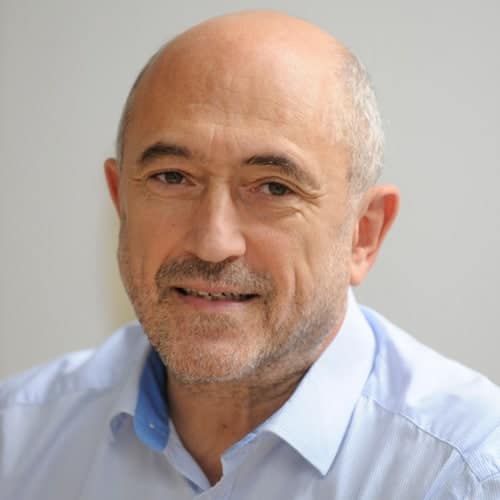
Anders Søgaard is a Professor at the University of Copenhagen , affiliated with both the Department of Computer Science and the Department of Communication. His research bridges Natural Language Processing and Machine Learning with a focus on AI ethics , explainability , and human-AI interaction . Primary Affiliation: Department of Computer Science, University of Copenhagen Secondary Affiliation: Department of Communication, University of Copenhagen Email: soegaard@di.ku.dk, soegaard@hum.ku.dk Research Interests His work spans Natural Language Processing , Machine Learning , and AI ethics , with recent studies addressing: Trustworthiness in AI systems Explainable AI (XAI) frameworks Multilingual model fairness and alignment Human-AI collaboration in reasoning tasks Ethical implications of social robots Mental health analytics using ML Recent Publications His 2025 output highlights trends in: AI ethics (e.g., fairness metrics, trustworthy systems) Multilingual model analysis (knowledge retention, cross-lingual transfer) Human-centric AI (gaze data, cultural considerations) Applications in healthcare and social good
Martin Nordal Petersen is an Associate Professor at the Department of Electrical and Photonics Engineering , Technical University of Denmark (DTU) . His work spans Internet of Things (IoT) , optical networking , and wireless communication systems, with notable contributions to LoRa , NB-IoT , and LPWAN technologies. He actively supervises PhD projects on topics such as machine learning in IoT edge devices , secure 5G communication , and smart community architectures . Active projects (2024–2027): Machine Learning in IoT Edge Devices , Deterministic and Secure 5G Communication Finished projects (2021–2024; 2018–2021; 2015–2018): Reliable M2M/IoT Communication , Smart Communities , IoT 100% , Network Slicing His research explores: IoT Reliability : Multi-RAT communication, backup systems, and signal propagation Optical Networks : Alien wavelength integration, SDN control, and network emulation platforms Wireless Innovation : GPS-free geolocation, maritime NB-IoT use cases, and multimode fiber distribution Current collaborations emphasize cross-disciplinary applications of IoT in healthcare , industrial ergonomics , and smart environments .
Stefan Iversen is Associate Professor at the School of Communication and Culture, Aarhus University, where he also serves as Director of the PhD programme for Art, Literature and Cultural Studies. His academic work bridges literary studies, rhetoric, and digital media, focusing on the evolving role of narratives in contemporary society. His research centers on narrative theory, rhetorical analysis, and the cultural implications of digital media. Key areas include fictionality , metanoic reflexivity , visual and multimodal rhetoric , political discourse , and cultural memory . He investigates how narratives shape identity, public debate, and democratic processes, especially in digital environments involving memes, AI-generated content, and campaign rhetoric. The trends across his recent publications reveal a sustained engagement with narrative disruption in politics, quantified storytelling on social media, and the theoretical foundations of fictionality. His work integrates literary theory with communication studies and digital humanities, reflecting an interdisciplinary approach to modern narrative forms. Aarhus University PhD Prize for 2008 He has supervised over 80 master’s theses and currently advises three PhD students in rhetorical studies. He teaches in the Rhetoric, Scandinavian Studies, and Humanistic Conflict Studies programs, and leads the international Summer Course in Narrative Studies. He is also a member of the national examination corps for Danish and Rhetoric. Stefan Iversen is actively involved in major research projects including the Center for Fictionality Studies , Humanistiske Konfliktstudier , and Globalisering og Kulturel Identitet , which reflect his commitment to interdisciplinary humanistic inquiry into contemporary societal challenges.
Chenjuan Guo is an Associate Professor at the Department of Computer Science, Aalborg University, within The Technical Faculty of IT and Design. She is affiliated with the Data Engineering, Science and Systems group and the AI for the People initiative, and is part of the Daisy - Center for Data-intensive Systems. Her research focuses on machine learning, data engineering, spatio-temporal data analysis, and time series forecasting. Key projects include the Villum Foundation-funded 'Explainable AI for Complex Microbial Community Interactions and Predictions' (2021-2024) and the Astra project on time series analytics in spatial networks (2018-2021). Her research interests span representation learning, autoencoders, path representation, outlier detection, trajectory data analysis, and time series modeling. She has supervised 3 PhD students and contributed to over 60 publications, with a recent emphasis on transformer-based forecasting, neural architecture search, and continuous learning frameworks for spatio-temporal data. Her work bridges theoretical advancements with practical applications in environmental science, cloud computing, and urban mobility systems. Key achievements include developing frameworks like AutoCTS++ for automated time series forecasting and LightGTS for lightweight models. She actively collaborates internationally, contributing to conferences like ECML PKDD and CVPR. Her research is supported by grants from the Villum Foundation and other institutions.
Daniel Spikol is an Associate Professor at the Department of Computer Science , University of Copenhagen , affiliated with the Center for Digital Education and Human-Centred Computing section. His research focuses on multimodal learning analytics, computational thinking, and physical computing technologies that enhance learning, play, and reflection. Keywords: Learning Analytics, Human-Computer Interaction, Computational Thinking His recent work examines: Collaborative task design impacts on knowledge construction AI trust dynamics in educational contexts across six countries Smart learning environment integration with MMLA Design frameworks for multimodal analytics systems Key publications (2023-2025) analyze: Cultural factors in AI adoption Collaborative learning metrics Speech analytics for language acquisition He leads research bridging ambient computing, social signal processing, and educational innovation through physical computing toolkits like Talkoo (2016) and mBox (2024).
Mohammad Naser Sabet Jahromi is an Assistant Professor at the Department of Architecture, Design and Media Technology, Aalborg University, Denmark. He is affiliated with the Visual Analysis and Perception Centre for AI Ethics, Law and Policy. His research focuses on explainable AI (XAI), biometrics, machine learning, and ethical AI applications in legal and medical domains. He actively participates in interdisciplinary projects like REPAI: Responsible AI for Value Creation (2023-2027), which explores AI ethics, computational discourse analysis, and value-driven AI systems. His educational background is not explicitly detailed in the provided text, but his research trajectory indicates strong expertise in computer science and AI systems. Key research interests include interpretable machine learning models, privacy-preserving biometric systems, and AI applications in asylum adjudication and educational assessment. Recent work emphasizes developing XAI frameworks like SIDU-TXT for NLP, verifying machine unlearning mechanisms, and automating large-classroom assessments. His projects bridge technical AI advancements with societal implications through collaborations with legal and ethical scholars. Notable contributions include datasets evaluating XAI methods in medicine and methodologies for transparent AI decision-making. He has participated in conferences such as ICPR 2024 and JURISIN 2023, showcasing interdisciplinary research impact.
William Henrich Due serves as a Lecturer at the Department of Computer Science (DIKU), University of Copenhagen, within the Machine Learning section. His work intersects with the SCIENCE AI Centre and leverages the department's high-performance compute cluster for research in quantum computing, sustainable AI, and medical applications. Research focuses span quantum machine learning (biomolecular simulations, photonic processors), sustainable AI systems (energy efficiency, climate impact), and clinical applications (EEG analysis, medical imaging). His recent publications reveal strong activity in quantum-classical hybrid systems, with 8/15 recent papers addressing quantum computing challenges. The work emphasizes practical implementations in medical imaging and resource-constrained environments. His research aligns with DIKU's Machine Learning section priorities including medical imaging biomarkers and sustainable computing. Key infrastructure includes TreeSense for remote sensing and the department's dedicated compute cluster. No scientific awards were explicitly documented in the provided materials. Due contributes to DIKU's teaching mission as a Lecturer while engaging with the SCIENCE AI Centre's interdisciplinary initiatives. His work connects with medical imaging applications and quantum computing infrastructure development. Active in the Machine Learning section's research ecosystem, his work intersects with medical imaging analysis and quantum computing applications, utilizing specialized resources like TreeSense for environmental monitoring.
Lukas Esterle is Associate Professor at Aarhus University's Department of Electrical and Computer Engineering. His research focuses on enabling collaboration among autonomous systems through computational self-awareness, collective learning, and autonomous decision-making. His work draws inspiration from natural systems, psychology, and anthropology to develop resilient distributed systems. Key research areas include: autonomous multi-agent coordination, digital twin architectures, computational trust models, and distributed learning frameworks for robotic systems. His investigations target applications in smart cities, industrial automation, and edge computing environments. Professor Esterle teaches courses in Software Engineering, Computer Games Technologies, and Autonomous Agents & Multi-Agent Systems. He coordinates multiple European research projects including DIAMOND (Developing Personalized Capabilities), FLOCKD (Federated Learning for Collaborative Knowledge), and MARVEL (Multimodal Data Analytics for Smart Cities).
Rikke Gade is an Associate Professor at the Department of Architecture, Design and Media Technology within The Technical Faculty of IT and Design at Aalborg University. Her research focuses on Visual Analysis and Perception, AI for the People, and Mobility and Tracking Technologies. She has established herself as a leading researcher in computer vision applications across multiple domains including sports analytics, animal welfare, and human-computer interaction. Dr. Gade earned her PhD in Computer Vision from Aalborg University in 2015 with her dissertation "Taking the Temperature of Sports Arenas - Automatic Analysis of People." Prior to this, she completed her M.Sc. in Informatics with specialization in Vision, Graphics and Interactive Systems in 2011, and her B.Sc. in Electronic and Electrical Engineering in 2009. Her research interests span Computer Vision, Image Processing, Robot Vision, and Thermal Imaging with applications in diverse fields. She has pioneered work in using thermal imaging for sports analytics, developing systems for tracking athletes and analyzing movement patterns in sports arenas. More recently, her research has expanded into AI applications for animal welfare, particularly developing computer vision systems for detecting pain and stress in horses through facial expression analysis. Dr. Gade's publications reveal a clear progression from foundational work in thermal imaging and sports analytics toward more complex applications in healthcare, animal welfare, and smart building systems. Her most recent work shows increasing focus on ethical AI applications that serve societal needs, as evidenced by projects like "AI for the People" and research on equine pain detection. Best Paper Award at Conference CISBAT 2021 (Lausanne, Switzerland) Dr. Gade actively supervises PhD students, including Alves, J.M. on equine affective state assessment. She has secured significant research funding, including a major grant from the Independent Research Fund Denmark for developing AI systems to detect pain in horses. Her collaborative approach is evident in her involvement in multiple interdisciplinary projects spanning computer science, veterinary medicine, and building science. She leads the Visual Analysis and Perception research group at Aalborg University, focusing on practical applications of computer vision technologies. Her team works closely with industry partners on real-world implementations, particularly in sports analytics and animal welfare applications. Current projects include developing AI systems for road damage detection in collaboration with Faxe Kommune and creating advanced tracking systems for sports performance analysis.
János Kertész is a Professor and Head of the Department of Network and Data Science at the Central European University (CEU), currently based in Vienna. He is also an elected member of the Hungarian Academy of Sciences. Previously, he held professorial and research positions at the Budapest University of Technology and Economics and the Hungarian Academy of Sciences, where he served as Director of the Institute of Physics. His research lies at the intersection of statistical physics and social sciences, with major contributions to network science, econophysics, computational social science, and algorithmic fairness. He investigates systemic risks in economic networks, opinion dynamics in algorithmically biased environments, poverty mapping using big data, and the role of automation in online extremism. The most recent articles highlight a strong trend in applying complex systems methodologies to real-world socioeconomic problems—particularly through large-scale network analysis, multimodal data integration, and policy-relevant modeling in inequality, supply chains, and digital fairness. His collaborative work spans institutions like the Complexity Science Hub (CSH) in Vienna. Elected member of the Hungarian Academy of Sciences He has advised numerous researchers and contributed to major interdisciplinary grants, particularly in complexity science and data-driven social science. His leadership in organizing NetSci 2023, the largest network science conference, underscores his role in fostering global scientific collaboration. He is central to projects involving high-resolution poverty mapping, economic systemic risk, and ethical AI applications. He is actively involved with the Complexity Science Hub (CSH), where CEU is a partner institution, and contributes to interdisciplinary teams working on economic modeling, social network analysis, and crisis preparedness using granular supply chain and VAT data.
Ashutosh Dhar Dwivedi is an Assistant Professor in the Cybersecurity Group at Aalborg University, Copenhagen, Denmark. He specializes in blockchain security, applied cryptography, post-quantum cryptography, and advanced cybersecurity. His interdisciplinary research spans cryptography, IoT security, and AI-driven security analytics. Education: PhD in Cryptography, with postdoctoral research at institutions including the University of Waterloo, Technical University of Denmark, and the Polish Academy of Sciences. His pedagogical focus includes professional upskilling in cyber defense and post-quantum resilience. Research interests include post-quantum cryptographic protocols, privacy-preserving blockchain systems, and machine learning for security. His work has yielded over 50 peer-reviewed papers, including contributions to high-impact journals and conferences. Notable achievements: 2023 and 2024 Stanford University Top 2% Scientist ranking. Contributions: Editorial roles in international journals, program committees for premier conferences, and leadership in academic-industry collaborations like the Quantum Communication Infrastructure (QCI) consortium. Active in developing quantum-secure systems for national and industrial infrastructure.
Tomer Sagi is an Associate Professor in the Department of Computer Science at Aalborg University (AAU), Denmark. He is affiliated with The Technical Faculty of IT and Design and leads projects in the AI for the People and BLUE – Marine & Maritime Research groups. His research focuses on data integration, ontology engineering, artificial intelligence applications in healthcare and environmental science, and knowledge graph development. PhD in Information Systems from Technion-Israel Institute of Technology (2015) Former Lecturer at University of Haifa (2017–2022) Principal Investigator/Co-PI in projects like ODINI (AI-based Data Integration), MEHDIE (Middle Eastern Heritage Knowledge Graph), and DarkScience (Microbial Data Science) Research Interests: Data Integration, AI for Ocean Science, Medical Informatics, Ontology Evaluation, Multilingual Knowledge Systems, and Explainable AI. His work contributes to UN Sustainable Development Goals related to innovation and infrastructure. Key Projects (2022–2025): DarkScience: Metagenomic data analysis funded by Villum Foundation ODINI: AI-driven ocean data fusion and 3D reconstruction MEHDIE: Multilingual historical knowledge graphs for Middle Eastern heritage Awards: Received NLP4KGC Best Paper Award (2023) and AIME 2020 Best Paper Nomination. His contributions span 46+ publications, 8 datasets, and media coverage on AI applications in healthcare and environmental science. Labs/Teams: Active in AI for the People (applied AI solutions) and BLUE (marine data science). Collaborations include work on virtual twin technology for stroke management and medical data analytics.
Christos Tachtatzis is a Professor in Applied Artificial Intelligence in the Department of Electronic and Electrical Engineering at the University of Strathclyde. He rejoined the university in 2011, was awarded a Chancellor’s Fellow in 2016, promoted to Senior Lecturer in 2018, Reader in 2021, and Professor in 2024. He leads key strategic initiatives including the Measurement, Digital and Enabling Technologies (MDET) Strategic Theme, co-directs the Laboratory for Innovation in Autism, and serves as Strathclyde lead for the UKRI AI CDT SUSTAIN. He is also a member of the HealthTech Cluster and advises The Data Lab and the Scottish Government on AI applications in agriculture and natural resources. Research Interests: His research spans applied AI with focus on computer vision, multimodal learning, domain adaptation, and explainability. These are applied to sustainable agri-food systems (livestock and arable), digital health, advanced manufacturing, and cybersecurity. His technical expertise includes deep learning, time series analysis, anomaly detection, remote sensing, hyperspectral imaging, and edge/cloud computing analytics. Recent Research Trends: His recent publications reflect a strong trend toward interdisciplinary AI applications, including environmental monitoring via satellite imagery inpainting, urban CO2 emission modeling, synthetic data generation for power grids, infant behavioral analysis, and precision livestock farming using monocular depth estimation. These works highlight his focus on real-world, data-driven solutions across environmental, health, and industrial domains. Scientific Awards: Innovate UK KTP Engineering Excellence Award (2021) Finalist, Herald Higher Education Awards – Outstanding Business Engagement (2022) Strathclyde Team Medal for Innovation in Autism (2018) SIN 2014 Best Paper Award Advising and Grants: He is actively involved in supervising research and leading externally funded projects from UKRI, InnovateUK, and H2020. He is Principal Investigator on multiple grants including Deep Learning for Woodland Soil Biodiversity, FLORA-SAGE (federated learning in agriculture), and the UKRI AI CDT SUSTAIN. He is a co-investigator on projects in digital dairy, infant interaction, and species assessment. He welcomes PhD students and regularly advertises opportunities through SUSTAIN and his professional networks. Labs and Teams: He co-directs the Laboratory for Innovation in Autism and leads the MDET Strategic Theme. He is embedded in the SUSTAIN CDT and collaborates extensively with the HealthTech Cluster, contributing to interdisciplinary research at the intersection of AI, engineering, and societal challenges.
Martin Lillholm is a Professor at the Department of Computer Science , University of Copenhagen, specializing in Image Analysis, Computational Modelling, and Geometry . His research focuses on leveraging machine learning and deep learning for medical imaging , particularly in breast cancer risk stratification and COVID-19 adverse outcome prediction . He has co-authored numerous high-impact journal articles in Radiology , Scientific Reports , and other venues, often collaborating with clinical researchers. Research Trends & Fields Lillholm’s work bridges computer science and healthcare , with recent publications emphasizing: AI-driven mammography screening for early breast cancer detection Texture analysis in medical images to enhance risk prediction Domain adaptation for robust cross-vendor imaging systems Health registry analysis using machine learning for recurrent cancer identification Pandemic risk modeling for COVID-19 outcomes Collaborations & Impact He collaborates across disciplines, including with Department of Clinical Medicine researchers and international partners . His studies have been widely cited, with significant visibility via Mendeley , X , and news outlets . While no formal awards are listed, his research has driven clinical protocol innovations and policy discussions.
Rico Krueger is an Associate Professor at the Department of Technology, Management and Economics within the Transport Division at the Technical University of Denmark (DTU). His research focuses on developing models and technologies at the intersection of behavioral modeling, machine learning, and simulation to improve human-centric and sustainable transport systems. Key areas include travel demand forecasting, multimodal systems, and emerging technologies like virtual reality for understanding human decision-making. Education: Ph.D. in Civil and Environmental Engineering from UNSW Sydney (Australia), followed by postdoctoral research at École Polytechnique Fédérale de Lausanne (EPFL), Switzerland. He holds a prestigious European Research Council Starting Grant (2024–2029) for his project IMMERSION , exploring human decision-making through choice and process data integration. Research emphasizes interdisciplinary approaches, combining data science with behavioral theories to address challenges in urban mobility, sustainability, and public health. His work bridges theoretical advancements with practical applications, such as optimizing policy interventions during pandemics and enhancing ride-sourcing systems. Awards: ERC Starting Grant for IMMERSION project. Grants: Focus on behavioral modeling and pandemic-related transport policies. Labs/Teams: Active in DTU’s Intelligent Transport Systems Section, leading interdisciplinary projects on mobility and health.