Hanife Rexhepi is an Associate Professor of Informatics at the University of Skövde , specifically affiliated with the School of Informatics and Department of Information Technology. She actively contributes to research on eHealth systems , patient online record access , and health information technology . Her research focuses on digital health innovations , particularly examining privacy and security in online medical records , patient empowerment through eHealth , and age-related technology adoption . She leads projects like "Predicting Elderly Healthcare Needs Using AI" (2024-2027) and "GPS Alarms for Elderly Independence" (2023-2026). Key research areas: Health Informatics, Medical Information Systems, Human-Computer Interaction Current projects: AI-driven elderly care, Nordic patient portal benchmarking Recent publications analyze cross-national eHealth implementations , adolescent health data privacy , and ethical implications of open medical records . Collaborations span institutions in Sweden, Norway, Finland, and Estonia through the DOME consortium.
Ing. Petr Schwarz, Ph.D. , is an Assistant Professor at the Department of Computer Graphics and Multimedia, Faculty of Information Technology, Brno University of Technology. He specializes in speech recognition and biometric systems, with a focus on robustness in real-world conditions. Current roles: Assistant Professor, Researcher, Project Lead Key affiliations: Brno University of Technology (FIT), EU Horizon Europe, Czech Defense Research Program His research spans speech recognition , language identification , and multimodal datasets for security applications. Recent work includes AI-driven emergency call systems and tools to combat voice deepfakes. Notable projects include: Multilingual and Cross-cultural Dialogue Systems (EU Horizon Europe, 2024-2026) Voice Deepfake Detection (Czech Sectech Program, 2024-2026) His publications analyze Gaussian mixture models, i-vector migration, and phonetic search techniques. Trends emphasize robust algorithms for security-critical domains . Scientific accolades include the Silver Medal from BUT Rector (2006) and Brno FIT Bronze Medal (2022). He has contributed to open-source tools like Kaldi and developed systems for NIST evaluations.
Amy J. Ko is a Professor and Associate Dean for Academics at the Paul G. Allen School of Computer Science & Engineering and The Information School at the University of Washington, Seattle . She serves as Editor-in-Chief of ACM TOCE , co-directs Reciprocal Reviews and CS for All Washington , and leads the CENSOR Research Lab . Her work prioritizes equitable, liberatory computing education , bridging human-computer interaction and social justice . Research Focus: Equity in CS education, AI literacy, inclusive design, developer productivity, and ethical technology use Awards: Best Paper Award (2024, 2022) Diversity + Inclusion Award (2024) Most Influential Paper Honorable Mention (2014) Honorable Mention (2024, 2023) Publications: Over 184 works spanning program comprehension, assessment design, ethical pedagogy, and democratizing computing education Books: Foundations of Information , Critically Conscious Computing , and Teaching Accessible Computing Her Google Scholar profile reflects citations under her deadname, which she advocates to correct. She emphasizes student agency and community collaboration , particularly with marginalized groups in computing spaces.
Dr. Denis Paperno is an Assistant Professor of Computational Linguistics at Utrecht University in the Department of Languages, Literature and Communication within the Humanities faculty. He maintains a dual affiliation, working at Utrecht University while on détachement from a researcher position at CNRS (the National Center of Scientific Research). His academic background includes a PhD in Linguistics from the University of California Los Angeles and prior work at the University of Trento in Marco Baroni's research group. Dr. Paperno's research expertise spans several critical domains in computational linguistics: Semantics and meaning representation Artificial Intelligence applications to language Distributional and neural semantic models Word embeddings and semantic compositionality Cross-modal and cross-lingual language understanding Language typology and lexical semantics His research program investigates fundamental questions about computational meaning representation, exploring how word meanings interact to form complex expressions and how to integrate diverse information sources like images, knowledge bases, and linguistic resources into unified frameworks. He has developed significant benchmarks for evaluating language models and made important contributions to semantic typology and quantification theory. Dr. Paperno's publication record demonstrates consistent contributions to top-tier computational linguistics venues, with recent work spanning theoretical linguistics to practical deep learning applications. His articles reveal expertise bridging formal semantic theory and cutting-edge neural network approaches to linguistic problems. He is actively involved in teaching courses including 'Formal and Natural Languages,' 'Machine Learning I,' 'Models for Language Processing,' and 'Semantics.' Current research projects include work with Pablo Mosteiro funded by an Applied Data Science research grant from Utrecht University, and he is scheduled to deliver a keynote at the 16th International Conference on Computational Semantics (IWCS) in Düsseldorf in September 2025.
Joanna Rutkowska is a postdoctoral researcher at the Jacobs Center for Productive Youth Development, Department of Psychology, University of Zurich (since 2023). Her academic journey includes a PhD in Brain, Behaviour and Cognition (Radboud University, 2018-2023), MSc in Evolutionary and Comparative Psychology (University of St Andrews, 2017-2018), and MA in Psychology (University of St Andrews, 2013-2017). PhD, Donders Institute for Brain, Behaviour and Cognition, Radboud University MSc, Evolutionary and Comparative Psychology, University of St Andrews MA, Psychology, University of St Andrews Her research focuses on social-cognitive development across mono-, bi-, and multilingual children, communicative behavior evolution, and action perception-motor development relationships. She employs multimodal methodologies including movement kinematics analysis, facial EMG processing, and biological motion sensitivity assessments. Recent publications examine how infants decode emotional expressions through visual/manual exploration (2025), data-driven EMG processing (2024), biological motion intention sensitivity (2022), and adult kinematic interpretation limitations (2021). These works span developmental psychology, computational affective science, and cognitive neuroscience.
Dilip K. Prasad is a Professor at the Department of Informatics, UiT The Arctic University of Norway. His work bridges Artificial Intelligence and Medical Imaging , with a focus on Interpretable AI , Scalable AI , and Life Science Applications . He has contributed to Maritime Technology and Biomedical Engineering . Ph.D. and B.Tech from Nanyang Technological University and IIT Dhanbad Senior Research Fellow at NTU (2015-2019), Research Fellow at NUS (2012-2015) Industry experience at IBM, Infosys, Mediatek, Philips His research explores Image Processing , Machine Learning , and AI Applications in Biomedicine . Recent work includes Dense Video Captioning , 3D Mitochondrial Modeling , and Physics-Guided Loss Functions . Articles span Neurocomputing , Optics Express , and top AI conferences like CVPR and NeurIPS . Prasad has received the Rolls-Royce Inventor Award (2016) and Best Paper Award (IJCIE 2017) . He has reviewed for 50+ journals and 30+ conferences, serving as Area Chair for NeurIPS 2022-23 and Organizer Chair for ICCV Workshop 2023 .
Dr. Leesa Lin is an Associate Professor at the London School of Hygiene & Tropical Medicine (LSHTM) and serves as Co-Director and Behavioural and Digital Innovations Lead of the Vaccine Confidence Project, focusing on the Asia Pacific region. She leads a multidisciplinary team employing artificial intelligence, big data analytics, and statistical modeling to address public health risks including pandemics, antimicrobial resistance, and infodemics. Education PhD in Implementation Science and Social Epidemiology, Harvard School of Public Health ScM in Global Health and Population, Harvard School of Public Health BA in Psychology and Asian Studies, University of British Columbia Research Focus Dr. Lin's work integrates behavioural sciences, digital innovations, and epidemiology to strengthen public health systems. Key domains include: AI-driven analysis of misinformation and vaccine hesitancy patterns Behavioural interventions for antimicrobial stewardship Digital tools for crisis communication during health emergencies Social determinants affecting vulnerable populations' health access Publication Trends Recent articles (2022-2023) demonstrate her focus on digital health solutions for vaccination challenges, including AI chatbots for vaccine communication, social media's role in COVID-19 responses, and behavioural factors influencing antibiotic misuse. Methodologies emphasize systematic reviews, large-scale surveys, and risk analysis frameworks. Active Projects Multilingual COVID-19 vaccine chatbot effectiveness evaluation (2022-present) HPV vaccine misinformation countermeasures in Asia (2022-present) Digital communication strategies for HPV vaccination in East Asia (2021-present) Asia-Pacific COVID-19 vaccine perception mapping (2021-2022) Leadership She directs the Vaccine Confidence Project's innovation team, developing AI-powered tools for real-time infodemic management and personalized health interventions.
Dr. Adam Crymble is an Associate Professor in Digital Humanities at University College London's Department of Information Studies, where he also serves as co-director of the UCL Centre for Digital Humanities. His academic career focuses on the intersection of historical research and digital methodologies, with particular emphasis on migration history, London's social history, and the application of technology to historical inquiry. Dr. Crymble's educational background includes: PhD in History & Digital Humanities from King's College London (2015-2020) MA in Public History from University of Western Ontario (2007-2008) BA in History from University of Western Ontario (2002-2007) PGCERT in Learning and Teaching in Higher Education from University of Hertfordshire (2014-2016) Certificate in Writing & Communication from University of Western Ontario (2002-2007) His research interests center on the study of migration and community formation, particularly how technology creates both challenges and opportunities for historical research. Dr. Crymble is currently leading a major cultural study analyzing over 40,000 dishes served in the Royal Households of King George III and IV to understand foreign influences on British cuisine during the 18th and 19th centuries. This work reveals previously obscured German, French, and Italian migrant influences on British culture, as well as the British Empire's extractive approach to food culture from colonial territories. He is also a strong advocate for Global Digital Humanities, working with communities worldwide to develop context-appropriate digital humanities solutions and empower communities to control their own historical narratives through technology. Dr. Crymble's publication record demonstrates consistent focus on migration history, digital methodologies, and cultural exchange. His recent work shows increasing attention to food history as a lens for understanding cultural identity and migration patterns, alongside continued development of digital tools and methods for historical research. He has also been increasingly focused on global perspectives in digital humanities, examining how digital tools function differently across cultural contexts. His notable achievements include: Open Publishing Award from Coko Foundation (2021) Open Scholarship Award from Canadian Social Knowledge Institute (2020) Fellow of the Royal Historical Society (2019) Senior Fellow of the Higher Education Academy (2019) Fellow of the Software Sustainability Institute (2014) As an educator, Dr. Crymble serves as Programme Lead for the 'Information in Society' BSc and contributes to the Digital Humanities MA/MSc program. He supervises PhD students working on projects related to migration, cultural heritage, and technology. He is also a long-time contributor to the 'Programming Historian' suite of journals, which publishes digital methods papers in multiple languages, having worked on this project for over ten years. His teaching philosophy emphasizes the importance of understanding local contexts when applying technology across cultural boundaries. Dr. Crymble co-directs the UCL Centre for Digital Humanities, which serves as a hub for interdisciplinary research at the intersection of computing, information studies, and humanities disciplines. Through this center, he facilitates collaborations between historians, computer scientists, linguists, and other scholars to develop innovative approaches to historical research.
Anna Geppert is Professor of Urban and Regional Planning at Sorbonne University, specializing in spatial development and planning systems. She served as President of the Association of European Schools of Planning (AESOP) from 2016 to 2018 and maintains active roles in international planning discourse through scientific advisory boards of journals including European Spatial Research and Policy and Raumforschnung und Raumordnung . Her academic credentials include a doctorate (1996) and Habilitation à diriger les recherches (2008), both in urban planning and spatial development. These qualifications underpin her expertise in French and European planning frameworks. Geppert's research centers on the evolution of French strategic planning, European spatial policy implementation, and cohesion policy dynamics. She investigates territorial governance rescaling, pandemic impacts on urban spaces, and the pedagogical dimensions of planning education. Her comparative studies across Austria, France, Poland, and other European contexts reveal critical insights into policy translation and spatial justice. Recent publications demonstrate her engagement with EU territorial agendas, metropolitan governance challenges, and reflections on academic practice. Her work spans empirical analyses of Integrated Territorial Investments in Paris to theoretical contributions on the New Leipzig Charter, while pandemic-related research examines spatial behavior under lockdown conditions across three European nations. Geppert actively participates in international research collaborations and serves on editorial boards for leading planning journals. Her multilingual scholarship (published in French, English, Polish, Slovak, and Korean) bridges theoretical and practical dimensions of spatial planning across diverse institutional contexts.
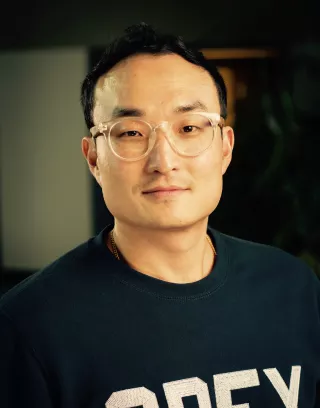
Dr. Wootae Chun is an Associate Professor of Marketing at the University of Northern British Columbia (UNBC). He specializes in international marketing, global branding, cross-cultural strategies, digital marketing, and corporate social responsibility. His research addresses global business challenges, cultural adaptation in marketing, and sustainable business practices. Dr. Chun holds a PhD from Saint Louis University, an MBA from the University of Texas Rio Grande Valley, and a BS from Ohio State University. Education: PhD in International Business and Marketing, John Cook School of Business, Saint Louis University (USA) MBA, University of Texas-Pan American (now UTRGV, USA) BS in Business Administration, Fisher College of Business, Ohio State University (USA) Research Focus: Dr. Chun’s work explores international business management, digital marketing strategies, cross-cultural advertising, and CSR’s impact on brand value. He emphasizes localization in global markets, cultural sensitivity in digital platforms, and ethical business practices. Advising and Grants: He currently supervises MSc and MBA students in research areas aligned with his expertise. While no specific grants are listed, his work often intersects with global business challenges and sustainability. Labs/Teams: No dedicated labs are mentioned, but collaborations may occur through UNBC’s business programs.
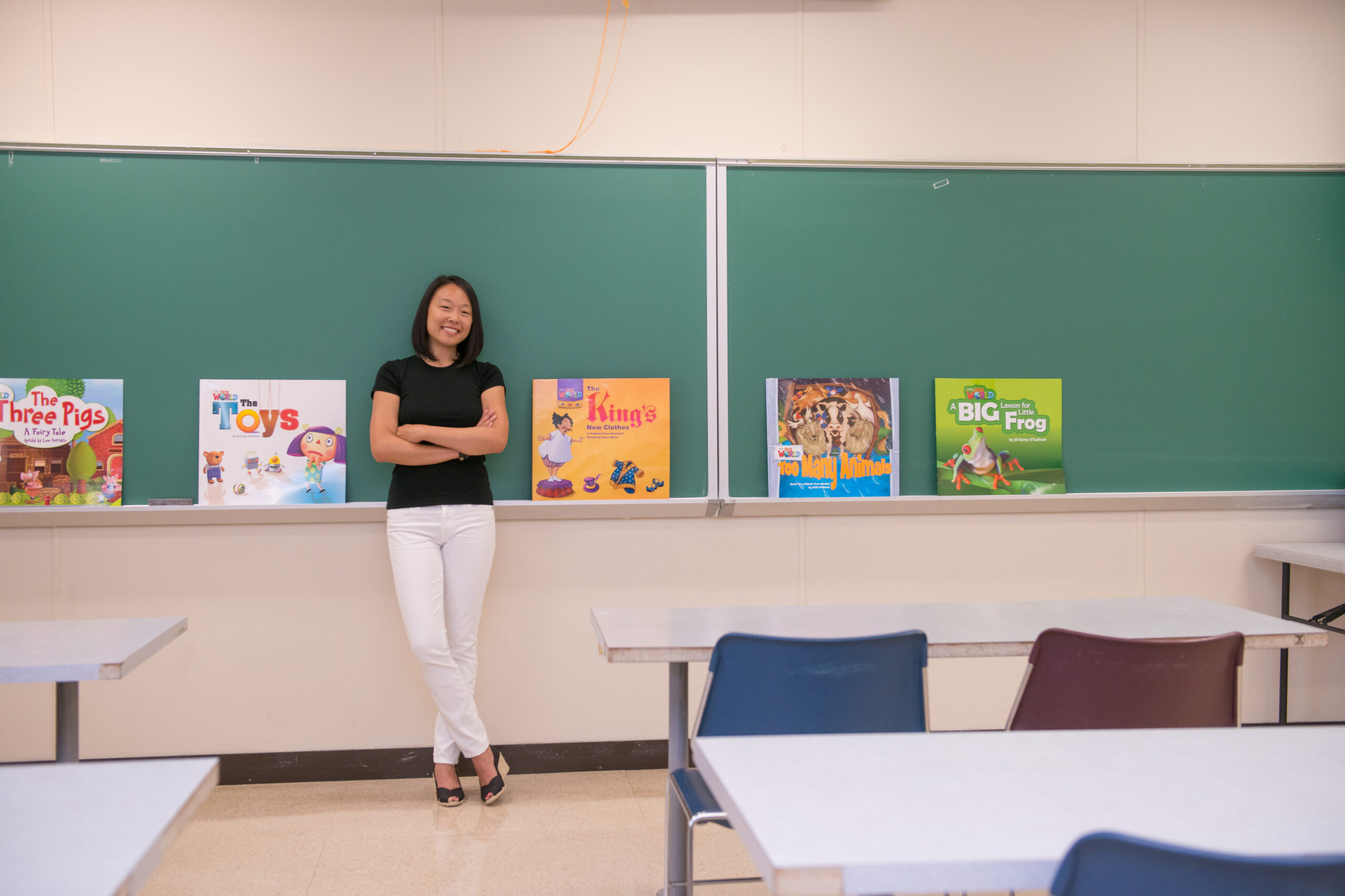
Dr. Joan K. Shin is a Professor of Education at George Mason University's College of Education and Human Development (CEHD). Currently serving as Associate Dean for Faculty Success and Director of CEHD's Global Online Teacher Education Center (GOTEC), she specializes in ESL/EFL/EAL education for young learners and teenagers. With professional development programs in over 100 countries, her work bridges in-person and online teacher training to build international virtual communities of practice. PhD in Language, Literacy & Culture from University of Maryland, Baltimore County (UMBC) MA in Bilingual/ESOL Education from UMBC BA in Economics from Cornell University Her research focuses on: Online TESOL education and MOOCs Visual and multimodal literacy for language learners Intercultural communication through storytelling Technology integration in teacher professional development Global virtual communities of practice Recent publications highlight trends in pandemic-era teacher training, MOOC camp effectiveness, and blended learning frameworks. She has secured over $12 million in grants, including Department of State-funded initiatives through FHI 360. Awards include: TESOL International Association's 30 Up and Coming Leaders (2016) U.S. State Department's Top 30 English Language Specialists (2021) Ben Warren International House Trust Prize (2013) HRH Duke of Edinburgh English Language Book Award (2014) As an English Language Specialist, she has conducted training across 20+ countries. Her full description outlines her Korean-American heritage, educational philosophy, and contributions to National Geographic Learning's award-winning textbook series.
Kristina Fagan Bidwell is a Full Professor in the Department of English at the University of Saskatchewan, holding a Tier 2 Canada Research Chair in Indigenous Storytelling since 2001. She served as the inaugural Associate Dean of Aboriginal Affairs in the College of Arts and Science from 2011 to 2018 and currently serves as President of the Indigenous Literary Studies Association. Her research program investigates how stories interact across cultural boundaries—between Indigenous communities and between Indigenous and settler communities—with particular focus on how narratives create meaning, circulate, and influence actions in high-stakes conflicts over land, identity, and knowledge. Bidwell conceptualizes storytelling broadly to include oral narratives, literary texts, and everyday personal/public narratives, operating on the principle that stories both 'mean' and 'do' things by shaping cognition, emotion, and behavior. Current SSHRC-funded projects examine Indigenous-led literary collaborations and inter-Indigenous conflicts regarding territory and identity. Her publication portfolio demonstrates consistent engagement with Indigenous literary theory, Métis identity, Cree storytelling traditions, and Labrador Inuit literary heritage. Recurring analytical frameworks include narrative sovereignty, intercultural communication, and the political dimensions of storytelling. Methodologically, her work emphasizes community-based, collaborative approaches that center Indigenous perspectives and knowledge systems. Her primary recognition is the Tier 2 Canada Research Chair in Indigenous Storytelling. Bidwell has supervised twelve graduate students across PhD and MA programs, with research spanning ethical settler engagements with Indigenous literature, Anishinaabe sense of place, Indigenous erotica, and Aboriginal realism. Her SSHRC-funded research on Indigenous literary collaborations represents significant grant achievement. She leads research teams focused on narrative analysis and intercultural communication, maintaining active partnerships with Indigenous communities and organizations through community-based participatory research frameworks.
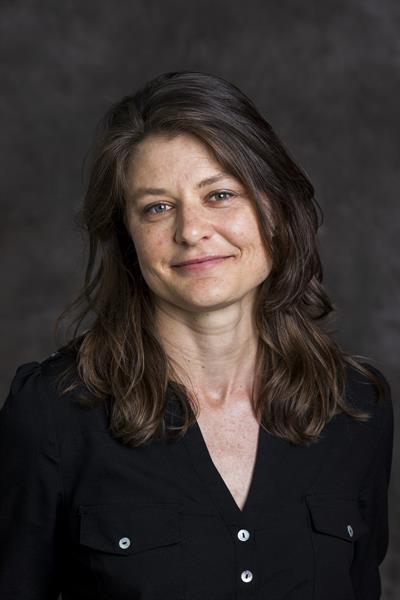
Julia Svoboda is an Associate Professor in the Department of Education and holds a secondary appointment in the Department of Biology at Tufts University's School of Arts and Sciences. She earned her PhD in Science Education from the University of California, Davis (2010), MA in Population Biology (2006), and BA in Ecology and Evolutionary Biology from Princeton University (2003). Her research focuses on model-based reasoning in biology education, exploring how students and teachers engage with scientific practices across disciplines. She emphasizes interdisciplinary approaches, integrating philosophy of biology with STEM education to address equity and complex problem-solving. Her work spans K-16 education, including studies on student reasoning in natural selection, computational biology, and ethical uses of AI in teaching. Key themes include fostering scientific literacy, equity in STEM, and leveraging technology to enhance learning. She has secured grants from the National Science Foundation and Davis Educational Foundation for projects like the EMBERS initiative on model-based reasoning in environmental science. Dr. Svoboda teaches courses in science education, research design, and graduate writing. She actively participates in professional organizations, such as the National Association for Research in Science Teaching and the Society for the Advancement of Biology Education Research. Her recent publications highlight innovations in lab instruction, antiracism in genetics education, and the role of emotion in teacher professional development.
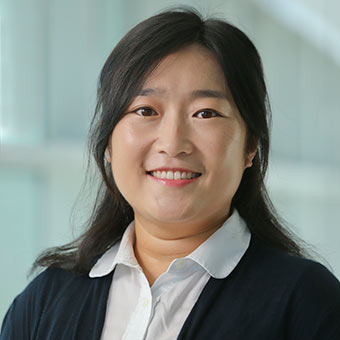
Jung-ran Park is an Associate Professor in the Department of Information Science at Drexel University's College of Computing & Informatics. Her research focuses on knowledge organization systems, metadata standards, multilingual information access, and cross-cultural communication in digital environments. She holds a Ph.D. in Linguistics (University of Hawaii, 2003) and an MLIS (2000), along with prior degrees from institutions in South Korea. Her work bridges linguistics and information science, addressing challenges in semantic interoperability, metadata quality, and professional development for cataloging and metadata specialists. Notable projects include studies on BIBFRAME implementation, RDA adoption barriers, and automated metadata generation systems for digital repositories. Research trends in her publications emphasize: 1) Metadata standardization (e.g., BIBFRAME, Dublin Core) and their practical applications; 2) Cross-cultural communication dynamics in social media and virtual reference services; 3) Professional training needs for evolving library technologies. Though no formal awards are listed, her contributions to metadata education and digital library systems are significant. Her advising focuses on preparing professionals for evolving information organization challenges, reflected in collaborative projects like metadata harvesting tools and continuing education resource repositories. Labs/Teams: Involved in digital repository development initiatives, metadata workflow optimization studies, and cross-cultural communication analysis teams within the College of Computing & Informatics.
Xiwen Lu is an Assistant Professor in Chinese at Brandeis University, serving as Director of the Chinese Language Program, Undergraduate Advising Head, Study Abroad Liaison, and Co-Director of the Master of Arts Program in Chinese Language and Culture (Language Track). She holds a Ph.D. (Candidate) in Learning Sciences and Technology from Worcester Polytechnic Institute, an MA from Beijing Language and Culture University, and a BA from PLA University of Foreign Languages. Her research focuses on Teaching Chinese as a Second Language (TCSSL) , with specialties in Learning Sciences and Technology , Computer-Based Language Education , and Secondary Chinese Curriculum Design . She has developed innovative online platforms and textbooks, including Journeys (启程) and a computer-based advanced intermediate Chinese course pack. Dr. Lu has received significant recognition, including the 2019–2020 Provost’s Teaching Innovation Grant and multiple teaching fellowships. She teaches a broad range of courses from foundational to advanced levels, emphasizing conversation, composition, pedagogy, and practicum in the Chinese language curriculum. Her publications explore topics like handwriting efficiency in language learning, feedback mechanisms in online assignments, and bridging K-12 to college curricula. She has contributed to conferences globally, including the ACM Conference on Learning at Scale and the International Conference on Computer Supported Education.