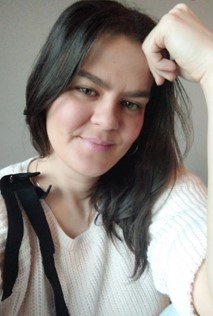
Dr. Ivana Tomić is a Senior Professional Associate at the Institute for Language at the University of Tuzla, with a Ph.D. in Linguistics from the Faculty of Philosophy, University of Tuzla (2024). Her roles include research, educational program development, and literary promotion. Education: Doctor of Humanities in Linguistics (2024), Master of Bosnian Language and Literature (2017), Bachelor of Bosnian Language and Literature (2012). Research Interests center on Bosnian language history, Franciscan literary traditions, stylistic analysis, and sociolinguistic dynamics. Her work explores language's role in cultural identity and historical texts. Scientific Awards include two Silver Plaques from the Faculty of Philosophy, University of Tuzla, for academic excellence. 2011 – Silver plaque (average grade 9.14) 2008 – Silver plaque (average grade 9.42) Her projects include documentary production on language functions, textbook development for Bosnian diaspora students, and linguistic analysis of Franciscan authors like Antun Knežević.
Professor Urszula Paprocka-Piotrowska works at the John Paul II Catholic University of Lublin , where she leads the Department of Language Acquisition and Didactics within the Faculty of Humanities. With a habilitation thesis on bilingual narrative structures and French-Polish language acquisition, she received the academic title of professor in 2016. Her scientific work includes the monograph Construction du récit dans la communication en langue étrangère (2013). Education: MA in Romance Philology (KUL), DEA in Linguistics (Paris X), PhD in French-Polish language acquisition (co-tutelle KUL-Paris X) Academic Leadership: Head of Department since 2009, former Director of Institute of Romance Philology (2009-2012), Vice-Rector for Promotion and International Relations (2013-2016) Her research focuses on foreign language acquisition , didactic methods , and intercultural communication . She has supervised numerous theses on topics including: Temporal and spatial expression in L2 learners Cultural content in language textbooks Motivation and teaching strategies Language anxiety and learning barriers Audiovisual translation techniques Intercultural stereotypes in language learning Her scientific work reveals trends in: Comparative studies of Polish and French language acquisition Didactic approaches for different age groups Role of cultural elements in language education Impact of modern teaching tools Development of communicative competence Analysis of grammatical errors in interlanguage Scientific recognition includes: French Order of Academic Palms (2013) Postdoctoral degree (habilitation) in linguistics (2009) Administrative and organizational roles include: Head of Department of Language Acquisition and Teaching (2009-2019) Vice-Rector for Promotion and International Relations (2013-2016) Rector's Plenipotentiary for Educational Quality (2012-2013) President of Prof-Europe and French Teachers Association
Margarita María Alonso Ramos is a Professor in the Department of Letters at the Faculty of Philology, University of A Coruña. She serves as Coordinator of the Language and Information Society research group and has been actively teaching various linguistics courses including General Linguistics, Languages and Technologies, and Languages of the World across multiple degree programs in Spanish, Galician-Portuguese, and English Linguistic and Literary Studies. General Linguistics (36 hours) Languages and Technologies (31.5 hours) Languages of the World (15.5 hours) Models and Methods in Current Linguistics (21 hours) Her research focuses on lexicography, Spanish as a foreign language, and computational linguistics, with particular emphasis on phraseology, lexical combinations, and corpus-based linguistic analysis. Her work bridges theoretical linguistics with practical language teaching applications, especially in the context of Spanish language learning. Analysis of her publication record shows a strong focus on lexicography and phraseology across multiple languages, with particular attention to Spanish language resources and computational approaches. Her research demonstrates consistent collaboration with international scholars, reflecting the global nature of linguistic research in the digital age. Professor Alonso Ramos has directed doctoral theses for students including Ana Orol González, Eleonora Guzzi, Orsolya Vincze, and Marta Rebolledo Lemus. She has secured numerous research grants from national and regional funding bodies including the Ministry of Education, Science, Universities and Vocational Training, and the Ministry of Science and Innovation. She coordinates the Language and Information Society research group, which focuses on the intersection of linguistic theory, language teaching, and digital technologies. Her work has significant implications for language teaching methodologies, dictionary compilation, and natural language processing applications for Spanish and related languages.
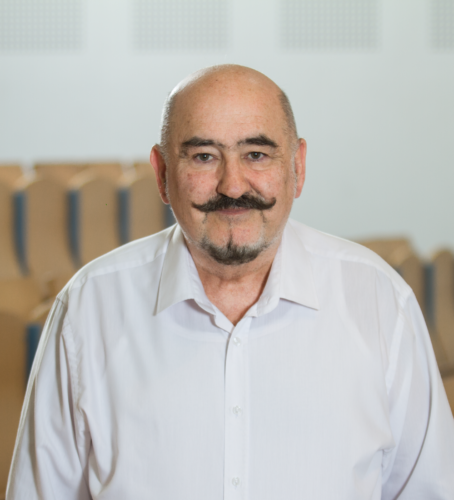
Stanislav Benčič is a Professor at the Institute of Media Design within the Faculty of Mass Media at Paneuropean University. He specializes in media linguistics, marketing communication, and intercultural competence, with a focus on language competences in media, tourism, and international relations. Scientific Focus: Media linguistics, marketing communication, linguistic expertise, multicultural terminology Teaching: Applied marketing, International marketing, Marketing management International Engagement: Lectured in France, Austria, Kazakhstan, and the UK; collaborates on global research projects Publications: 15+ works on tourism economics, digital economy, and intercultural communication Other Activities: Journalist, interpreter, tourist guide, and drama club professional
Dr. hab. Magdalena Charzyńska-Wójcik is Associate Professor at the John Paul II Catholic University of Lublin, where she chairs the Department of the History of English and Translation Studies (2014-) and previously served as Dean of the Faculty of Humanities (2016-2021). She held a visiting fellowship at the University of York during 2021/2022. Her research focuses on historical linguistics , translation studies , and medieval manuscript analysis , with specializations in Old/Middle English syntax, Psalter translations, and historical semantics. She advocates for manuscript-based research over digital editions. Key publication themes include: 15th-17th century Psalter translations (English & Polish) Experiencer verb syntax in early Germanic languages Time-keeping terminology evolution in medieval texts Digital humanities applications for manuscript studies She employs computational methods like cosine distance analysis for textual affinity tracing and has contributed to Polish-English comparative translation studies.
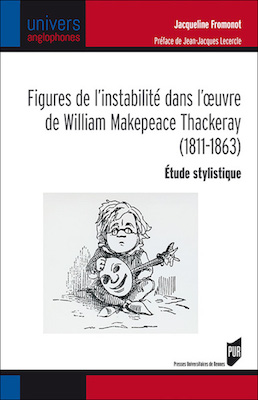
Jacqueline Claire Fromonot is a Lecturer at the University of Paris 8 Vincennes-Saint-Denis since 2002. She holds an agrégation in English and a doctorate in 19th-century British literature, specializing in interdisciplinary studies at the intersection of literature, linguistics, and stylistics. Her work focuses on Victorian novels, particularly the stylistic and rhetorical techniques of authors like William Makepeace Thackeray, Charles Dickens, and Anthony Trollope. She is affiliated with the Department of English Literature and the TransCrit laboratory. Recent publications include her monograph *Figures of Instability in the Work of William Makepeace Thackeray (2021)*, which explores Thackeray’s stylistic use of instability, irony, and narrative disruption. Her research examines themes such as language fluidity, rhetorical figures, and sociocultural critique in Victorian fiction. She has contributed to journals like *Studies in English Stylistics* and *Cahiers Victoriens et Edouardiens*, analyzing topics ranging from negation in Oscar Wilde’s plays to the role of metaphor in 19th-century literature. Her academic contributions also include collaborative works like *Pratique de l’anglais contemporain*, a reference guide for English vocabulary, and numerous essays on Victorian narrative techniques, stylistic analysis, and linguistic pragmatics. She currently teaches at the Faculty of Arts and Humanities, where her research emphasizes interdisciplinary approaches to literary studies.
Italo Cosentino holds a PhD in Arts and Humanities specializing in Spanish Language. He serves as Adjunct Professor at the Army's Foreign Language School (Perugia/Rome) and the Financial Police School of the Guardia di Finanza, while also being a contract professor at UNINT University of International Studies in Rome since 2017, teaching Spanish Language and Translation, Culture and Society of Spanish-Speaking Countries, and ES-IT Translation. He is a freelance interpreter/translator registered with Arca/Aria (Lombardy Region) and MEPA, collaborating with public/private entities across Italy, Spain, and Russia. Educations: PhD in Arts and Humanities (Spanish Language) His research focuses on historical linguistics, Spanish language variation, Soviet linguistic influence, operational grammar analysis, and the intersection of language and cultural memory. He explores topics such as adverbial syntax, archival documentation analysis, and the impact of political systems on language evolution. He is affiliated with AJIHLE (young researchers in historiography) and AIGrE (International Association of Enunciative Grammar). His recent publications (2021–2024) examine Soviet linguistic legacy, adverbial structures in historical texts, and the role of language in cultural memory. Articles span from medieval notarial records to modern translation ethics, reflecting his interdisciplinary approach. No scientific awards listed. His professional work combines academic teaching with high-demand translation/interpretation services for governmental and private clients.
Machteld Claire MEULLEMAN is a Lecturer in Language Sciences at the Université de Reims Champagne-Ardenne, affiliated with the Interdisciplinary Research Center on Languages and Thought (CIRLEP). Her research focuses on general and comparative linguistics, existential and meteorological verbs, thetic/impersonal constructions, grammaticalization, multilingualism, and intercomprehension strategies between Germanic and Romance languages. She has published extensively on topics such as weather verbs, gendered noun usage in sports discourse, and language choice in media contexts. Education: Specializes in French linguistics, typology, multilingualism, and FLE (French as a Foreign Language) pedagogy. Her recent publications include studies on existential constructions across languages, lexical pragmatics in sports terminology, and the sociolinguistic implications of language policy in multilingual contexts. She has co-edited volumes on football discourse and intercomprehension strategies, reflecting her interdisciplinary approach to language and culture. Her work bridges theoretical linguistics with applied research, particularly in areas like gastronomic discourse analysis and the role of intercomprehension in mobility scenarios. She actively participates in international conferences and has collaborated with institutions such as the University of Ghent and the Free University of Brussels.
Prof. Lorena Lazarić is an Associate Professor at the Faculty of Educational Sciences (FOOZ) at the University of Pula, Croatia. She specializes in Italian language education and intercultural pedagogy, teaching courses such as Contemporary Italian Language , Speech Communication Methodology , and Italian Language Teaching Methodology . Her research focuses on multilingual education, intercultural child development, and translation studies between Italian and Croatian. She actively contributes to 19th Mate Demarin Days conferences and co-edits academic volumes on educational paradigms. Her academic career includes extensive work on bilingualism in multicultural communities, particularly in Istria, and the role of regional cultural heritage in early education. She has published widely on teacher competencies, CLIL (Content and Language Integrated Learning), and the sociolinguistic dynamics of Italian-Croatian language contact. Her teaching spans undergraduate, graduate, and doctoral programs, emphasizing practical skills and theoretical foundations in language pedagogy. Research highlights include comparative studies on pre-primary multilingual practices in Europe, translation ethics in literary works, and the interplay between classroom atmosphere and student outcomes. She collaborates with institutions to enhance teacher training and regional cultural awareness, reflecting her commitment to bridging educational theory and practice.
Dr. Vanessa Vitković Marčeta is an Assistant Professor at the Faculty of Humanities in Pula, Croatia, specializing in Croatian language studies. She holds a PhD (2015) and teaches courses such as Croatian Standard Language, Lexicology, and Linguistic Advising. Her research focuses on historical linguistics, language policy, and dialectology, with particular emphasis on Istrian language dynamics and 19th-20th century periodicals. Key areas include Croatian-Italian language contact, lexical analysis, and the role of language in national identity formation. Her notable work examines Naša sloga periodical’s linguistic evolution (2024) and the influence of English on Dubravka Ugrešić’s works (2022). She has published extensively on orthography history, phraseology, and sociolinguistic phenomena like anglicisms and talijanizmi. Teaching responsibilities span undergraduate and graduate levels, including courses on Croatian writing culture and lexicography for translators. Recent research highlights include studies on Istrian dialect preservation (2024), Slavenska misao journal communication strategies (2022), and the role of language in socialist-era periodicals (2017). Academic activities include organizing conferences like the 2020 Naša sloga centenary symposium and contributing to interdisciplinary projects on cultural heritage.
Katja Dobrić Basaneže is an Assistant Professor at the Department of English, Faculty of Humanities in Pula, University of Primorska. She holds a doctoral degree (PhD) obtained in 2017. Her research focuses on legal translation, corpus linguistics, metaphor analysis, and EU legal terminology. She specializes in studying phraseological units in contracts, metaphorical collocations, and translation strategies in multilingual legal contexts. Her academic work includes over 40 publications in prestigious journals like The Translator , Meta , and Journal of Specialised Translation . Key areas of investigation include term variation in EU directives, metaphorical networks in financial language, and cross-cultural legal terminology comparisons between English and Croatian. Teaching responsibilities span undergraduate and graduate courses such as British Literature , Translation Exercises , and Lexicography . She has been actively involved in professional practice modules for translation students. Her research demonstrates particular interest in challenges of translating extended multi-word expressions, legal phraseology preservation, and maintaining textual coherence in multilingual legal systems.
Dr. Ahmet Cihan BULUNDU is an Assistant Professor at Adiyaman University, Faculty of Education, Department of Turkish and Social Sciences Education. His academic journey includes a PhD from Inonu University (2022) with a corpus-based study on Turkish as a Foreign Language vocabulary prioritization, an MA from Mersin University (2016), and a BA from Adiyaman University (2012). He has held research positions at multiple universities since 2014, including a 2019 Erasmus mobility assignment to the University of Tartu. Education: Bachelor’s: Adiyaman University, Turkish Language Teaching (2012) Master’s: Mersin University, Turkish Education (2016) PhD: Inonu University, Turkish Education (2022) Research Interests: Focuses on corpus linguistics applications in Turkish education, children’s literature analysis, and language pedagogy for foreign learners. His work bridges literary analysis with corpus-based methodologies to explore lexical patterns, narrative structures, and educational content effectiveness. Recent Publications Trends: His articles emphasize corpus-driven analyses of children’s literature texts, ideological discourse in historical works, and vocabulary prioritization in language education. Recent studies apply computational linguistics to evaluate educational materials and political texts. Grants & Projects: Participated in TÜBİTAK-funded projects including refugee discourse analysis (2015-2017) and Turkish as a Foreign Language curriculum development. Authored a textbook on Turkish language instruction methodologies. Labs/Teams: Currently directs Adiyaman University’s Turkish and Foreign Language Teaching Application and Research Center, focusing on multilingual education initiatives and corpus-based pedagogical tools.
Ersilia Amedea Incelli is an Associate Professor at the Department of Methods and Models for Economy, Territory and Finance within Sapienza University of Rome , affiliated with the Faculty of Economics . She specializes in Corpus Linguistics , Discourse Analysis , and English for Specific Purposes (ESP) , with a focus on interrcultural communication , language policy , and multimodal literacy for academic and professional contexts. Research Interests : Her work bridges Corpus Linguistics , Critical Discourse Analysis , and language education , examining topics like economic inequality in media , multimodal parliamentary debates , and language management in SMEs . Publications : Recent articles analyze dialogic framing in corporate energy transitions , AI’s impact on corpus linguistics , and historical coffee house discourses . She co-edited The Research-Practice Interface in ESP (2022) and Argumentation, Ideology and Discourse (2021). Teaching : Coordinates B2 English courses for undergraduates and part-time students, emphasizing multimodal literacy and academic writing . Email : ersilia.incelli@uniroma1.it Office Hours : Wednesdays 12:00–14:00 in Room 451 or via Google Meet.
Elda Morlicchio is a full Professor of German Linguistics and Language History at the University of Naples L'Orientale, where she served as Rector from November 2014 to October 2020 and as Pro-Rector for Teaching from July 2008 to November 2014. Her distinguished academic career spans over four decades, beginning as a Researcher in Germanic Philology at the University of Naples Federico II in 1983, progressing to Associate Professor in 1992, and achieving full Professor status in 2000. She has held significant leadership positions including President of the University Teaching Pole (2012-2014) and member of numerous doctoral committees at prestigious institutions including the University of Siena and the Italian Institute of Human Sciences in Florence. Professor Morlicchio's research focuses on language contact phenomena between Italian and Germanic languages from the Middle Ages to the present, with particular emphasis on lexical interference. Her work encompasses historical linguistics in second language teaching (especially German), linguistic contact in Germanic areas, multilingualism, interculturality, and foreign language education. She also investigates Old High German lexicon and glossaries, Germanic onomastics in Italy (particularly Lombard anthroponymy), and the syntax of Middle High German and Early New High German. Her research bridges historical linguistic analysis with contemporary language teaching methodologies. Her extensive publication record reflects her expertise in Germanic-Italian linguistic relations, with recent works examining Romance-Germanic contact, etymological research, and historical linguistics. She has made significant contributions to the LEI (Lessico Etimologico Italiano) project as head of the Germanisms Section since 1995, and currently leads the 'LeGeRe - LEI Germanismi Reloaded' PRIN project (2022-2024). Her scholarly output demonstrates a consistent focus on how Germanic elements have influenced Italian and other Romance languages across historical periods. Among her numerous honors are the Knight's Cross of the Order of Merit of the Federal Republic of Germany (2017), Knight of the National Order of Merit of the French Republic (2020), and Commander of the Order of Merit of the Italian Republic (2021). She has also received the international 'Guido Dorso' Prize (2021) and the NapoliCittàLibro Prize (2018). Professor Morlicchio is a member of prestigious academies including the Pontanian Academy of Naples and the National Society of Sciences, Letters and Arts in Naples. She has supervised numerous doctoral students and research fellows, including MICCOLI PAOLO, DI MATTEO Giorgia Cinzia, RESMINI CRISTINA, and Tessitore Luigia. Her research leadership extends to significant national and international grants, particularly in the fields of lexicography and language contact. She serves on multiple scientific committees including the Editorial Board of 'Rivista del Dizionario Etimologico e Storico del Napoletano' and as Director of the 'Annali dell'Università di Napoli L'Orientale' - Germanic Section since 2018. Professor Morlicchio maintains active international collaborations, having delivered lectures at universities across Germany, France, the United States, Sweden, Switzerland, Japan, China, Austria, and England. She serves in various ministerial capacities including as national representative in the Horizon Europe Program Committee configuration 'Culture, creativity and Inclusive society' (2021-2027) and as member of the Commission for ASN 2021-2023 for competitive sector 10/M1.
Dr. Maria Pia Di Buono is a Researcher in Modern Language Teaching (L-LIN/02) at the University of Naples 'L'Orientale' , where she teaches General Translation Studies and Language Technologies . She directs the UNIOR NLP Research Group and co-founded Dahlia srl , the university's first spin-off focused on NLP and AI solutions. Her research spans natural language processing , machine translation , semantic representation , and linguistic resource creation . Recent publications focus on gender representation in political discourse , LLM evaluation for idiomatic translation , and MWE processing for medical domains . Scientific Awards: Best Poster Award (2023) EuropeanaTech Challenge Winner (2021) EU DATATHON Third Place (2022) She has participated in international projects including PARSEME COST Action (2013-2017) and is involved in UNIOR NLP Research Group initiatives. Her work aligns with ERC sectors PE6_7 (Artificial Intelligence) and SH4_9 (Theoretical Linguistics) .