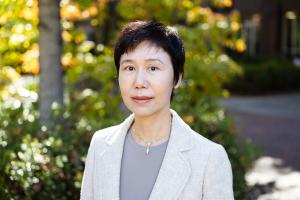
Amy R Greenwald is a Professor of Computer Science at Brown University. Her research spans artificial intelligence, algorithmic game theory, and computational economics, with a focus on multiagent reinforcement learning and market equilibrium computation. Education PhD, New York University (1999) MS, Cornell University (1995) MS, Oxford University (1992) BS, University of Pennsylvania (1991) Research Focus Greenwald's work explores strategic interactions in computational systems, including: Game-theoretic modeling of multiagent systems Algorithmic approaches to market equilibrium Simulation-based equilibrium learning Stackelberg game formulations for hierarchical decision making Applications to supply chain negotiations and economic design Her recent publications emphasize tractable equilibrium computation, social influence in economic models, and advanced reinforcement learning techniques for strategic settings. Teaching CSCI 0100 - Data Fluency for All CSCI 0180 - Computer Science: An Integrated Introduction CSCI 1440 - Algorithmic Game Theory CSCI 2440 - Advanced Algorithmic Game Theory CSCI 2951Z - Advanced Algorithmic Game Theory
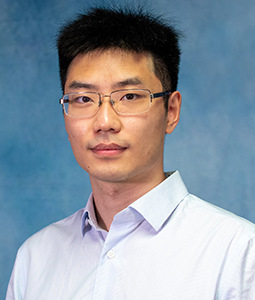
Qing (Cindy) Chang is a Professor in the Department of Mechanical Engineering at the University of Virginia. Her research focuses on cyber-physical systems for smart manufacturing, real-time production control, and human-robot collaboration. Prior to academia, she worked at General Motors, earning three Boss Kettering Awards for innovation. She holds an M.S. from the University of Wisconsin-Madison and a Ph.D. in Manufacturing from the University of Michigan. Education: M.S. in Mechanical Engineering, University of Wisconsin - Madison Ph.D. in Manufacturing, University of Michigan – Ann Arbor Research Interests: Cyber-Physical Systems for Smart Manufacturing Real-time Production Control Knowledge-guided Machine Learning-based Control Human-Robot Collaboration in Industrial Settings Intelligent Maintenance and Energy Management Awards: 20 most influential professors in smart manufacturing (2020) NSF CAREER Award (2014) General Motors Boss Kettering Awards (2005, 2006, 2008) GM R&D Charles L. McCuen Special Achievement Awards (2005, 2006, 2008) Leadership & Grants: She serves on the board of NAMRI/SME and holds editorial roles in ASME, IEEE, and SME journals. Her work bridges AI, robotics, and manufacturing systems, with notable grants including the NSF CAREER Award. Labs & Teams: Her Intelligent Systems Lab develops AI-driven solutions for manufacturing efficiency and sustainability, focusing on energy management, predictive analytics, and human-robot collaboration.
University of Illinois Urbana-ChampaignUnited States
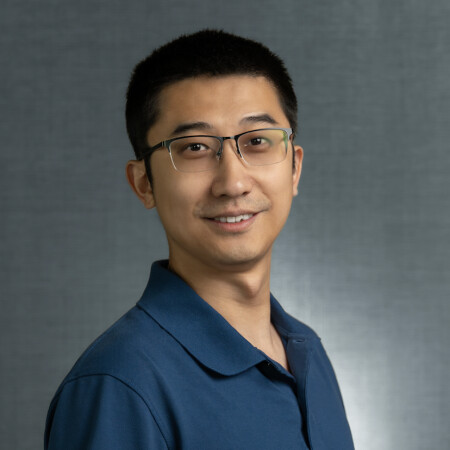
Huy T Tran is an Assistant Professor in the Department of Aerospace Engineering at the University of Illinois at Urbana-Champaign's College of Engineering, with additional appointments at the Applied Research Institute. His research focuses on the intersection of robotics, artificial intelligence, and multi-agent systems, with applications spanning autonomous navigation, critical infrastructure resilience, and intelligent transportation. Dr. Tran earned his Ph.D. in Aerospace Engineering from Georgia Institute of Technology in 2015, following advanced degrees from Georgia Tech and University of Wisconsin-Madison. His academic journey includes research assistant professor positions before achieving his current assistant professor role in 2021. He previously worked as a Senior Multi-Disciplinary Systems Engineer at The MITRE Corporation and served as a Visiting Scholar at the Air Force Institute of Technology. His research interests encompass Autonomy, Reinforcement Learning, Artificial Intelligence, Machine Learning, Robotics, Multiagent Systems, Intelligent Transportation Systems, and Critical Infrastructure Resilience. As director of the Lab for Intelligent Robots and Agents (LIRA), he leads cutting-edge research in autonomous systems that interact with humans and other robots. His work has evolved from foundational resilience modeling in aerospace systems toward increasingly sophisticated AI applications in multi-robot coordination and explainable decision-making. Dr. Tran's publication record demonstrates a clear trajectory toward explainable AI and human-AI collaboration, with recent work focusing on generating explanations for reinforcement learning policies, coordination in ad hoc teams, and neuro-symbolic approaches to robot policy interpretation. His research bridges theoretical advances with practical applications in air traffic control, field robotics, and critical infrastructure management. Best Paper Award: Theoretical (2016 Complex Adaptive Systems Conference) Selected for oral presentation at IROS 2023 Workshop 27% full paper acceptance rate at AAMAS 2022 44% acceptance rate at ICRA 2020 As an educator, Dr. Tran teaches core aerospace courses including Computational Systems Engineering, Aerospace Numerical Methods, and Reinforcement Learning. He has secured significant research funding from NASA's Transformational Tools and Technologies program, ARL A2I2 program, ONR Science of AI program, and DARPA. His current projects span ad hoc teaming in multi-robot systems, collective autonomous air mobility, hierarchical reinforcement learning, and interpretable AI agents.
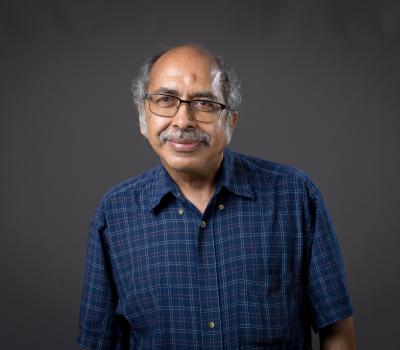
Marco Valtorta is a Professor and Graduate Director in the Department of Computer Science and Engineering at the University of South Carolina’s Molinaroli College of Engineering and Computing. He specializes in Artificial Intelligence, with a focus on normative reasoning under uncertainty, Bayesian networks, causal models, and computational complexity. His work includes developing algorithms for structure learning in graphical models, causal inference, and applications in multiagent systems. Education: Ph.D., Computer Science, Duke University (1987) M.A., Computer Science, Duke University (1984) Laurea, Electrical Engineering, Politecnico di Milano (1980) Research Interests: Dr. Valtorta’s work integrates logical and probabilistic reasoning, with contributions to causal models, chain graphs, and adversarial machine learning. His funded projects include collaborations with the Office of Naval Research (ONR), IARPA, and the U.S. Department of Agriculture (USDA). Notable collaborations include applying Bayesian networks to healthcare and developing frameworks for trustworthiness assessment in AI systems. Grants & Collaborations: Multi-institution IARPA project on Wigmorean/Bayesian networks for argumentation ONR-funded research on Markov properties of directed hypergraphs with Dr. Linyuan Lu Causal analysis for performance modeling of configurable systems His recent publications emphasize causal inference in AI, automated evaluation of text and sentiment analysis systems, and robustness of foundation models. He has pioneered algorithms for learning chain graphs and addressing adversarial attacks in probabilistic models.
Daniel A Levinthal is the Reginald H. Jones Professor of Corporate Strategy and Professor of Management at the Wharton School, University of Pennsylvania. With extensive publications on organizational adaptation and industry evolution in technological contexts, he serves as Editor-in-Chief for Strategy Science and Organization Science. Research Interests Industry evolution Organizational learning Technological competition His 2024 research examines organizational search strategies, showing how cautious exploitation combines slow belief updating with strong explicit exploitation for effective adaptation. Recent work explores how political coalitions drive organizational change, with hierarchical belief influence structures proving more effective than flat designs in certain environments. Earlier studies developed the "Mendelian executive" framework and advanced Carnegie School decision-making theory. Scientific Awards Fellow of Strategic Management Society Fellow of Academy of Management Distinguished Scholar Awards (3 divisions) Irwin Award as Distinguished Educator 4 Honorary Doctorates Levinthal teaches advanced strategy courses (MGMT9000, MGMT9150) and graduate enterprise management (MGMT6110). His research has established foundational insights about organizational capabilities, knowledge aggregation, and strategic inertia.
Ceyhun Eksin is an Associate Professor and the Corrie and Jim Furber '64 Faculty Fellow at the Texas A&M University Industrial & Systems Engineering Department. He is also affiliated with the Electrical & Computer Engineering Department. His research focuses on networked multi-agent systems, integrating game theory, distributed optimization, and control theory to address challenges in autonomous systems, energy systems, and epidemiological modeling. Education: Ph.D. in Electrical and Systems Engineering from the University of Pennsylvania (2015), followed by a postdoctoral fellowship at Georgia Institute of Technology (hosted by Professors Jeff S. Shamma and Joshua S. Weitz). Research interests emphasize the design and analysis of complex systems, including distributed algorithms for autonomous teams, epidemic dynamics influenced by behavioral changes, and optimization in smart grids. His work bridges theoretical foundations with practical applications in cyber-physical systems and social networks. Notable awards include the NSF CAREER Award (2023) and TAMIDS Career Initiation Fellowship (2023). His research has been published in top journals like Proceedings of the National Academy of Sciences and IEEE Transactions . Lab activities center on the NetMaS (Networked Multiagent Systems) Lab, focusing on theoretical and algorithmic innovations for multi-agent systems. Collaborations span academia and industry, addressing real-world challenges in energy, healthcare, and robotics.
Dana S. Nau is a Professor in the Department of Computer Science and a member of the Institute for Systems Research at the University of Maryland. He is renowned for his contributions to automated planning and game theory, including landmark algorithms like SHOP and foundational studies on game-tree pathology and strategic planning in computer bridge. With over 500 refereed publications and an H-index of 61, his work bridges theoretical computer science and practical applications in multiagent systems and evolutionary game theory. His research interests include hierarchical task network (HTN) planning, Bayesian network inference techniques, and the evolution of social norms through evolutionary game theory. Recent work focuses on spatial evolutionary games, surrogate Bayesian models, and strategic communication in multiagent environments. Awards: AAAI Fellow (202?), ACM Fellow (202?) Key Collaborations: Co-authored papers with leaders like Malik Ghallab (LAAS-CNRS), Satyandra K. Gupta (USC), and Vincent Hsiao (Bayesian networks research). Grants/Advising: Supervised students including Sunandita Patra (17+ joint papers) and Ruoxi Li, contributing to HTN planning and reinforcement learning advancements. His labs and research teams actively explore AI planning systems, probabilistic reasoning, and the intersection of game theory with social science phenomena like gossip evolution.
Dr. Haibo He is the Robert Haas Endowed Professor in the Department of Electrical, Computer, and Biomedical Engineering at the University of Rhode Island (URI). As an IEEE Fellow and NSF CAREER awardee, his research focuses on computational intelligence, neural networks, and reinforcement learning with applications to smart grids and microgrid systems. Ph.D. in Electrical Engineering, Ohio University, 2006 M.S. in Electrical Engineering, Huazhong University of Science and Technology, 2002 B.S. in Electrical Engineering, Huazhong University of Science and Technology, 1999 His research interests include: Computational Intelligence Adaptive Dynamic Programming Reinforcement Learning Deep Learning for Power Systems Distributed Control in Microgrids Imbalanced Data Learning Recent research trends from publications (2018-2025) show a focus on: Multi-agent reinforcement learning for energy systems Digital twin frameworks for grid security Event-triggered control mechanisms Finite-time convergence algorithms Cyber-attack resilient control systems Evolutionary computation in power networks Awards: IEEE Fellow (2018) NSF CAREER Award (2017) Dr. He leads the Computational Intelligence and Self-Adaptive Systems (CISA) Laboratory at URI, which conducts fundamental research on computational intelligence methods with applications to power systems, data mining, and neural networks.
Qi Zhang is an Assistant Professor in the Department of Computer Science and Engineering, AI Institute at the Molinaroli College of Engineering and Computing, University of South Carolina. His research focuses on developing safe, reliable, and trustworthy AI systems through advancements in reinforcement learning and decision-making algorithms for uncertain environments. He holds a Ph.D. from the University of Michigan (2020) and a B.E. from Shanghai Jiao Tong University (2015). Research interests include artificial intelligence, reinforcement learning, multi-agent systems, and decision-making under uncertainty. Key themes involve leveraging domain knowledge for robust AI solutions and ensuring ethical, transparent, and risk-aware system designs. His work spans applications in autonomous systems, healthcare, robotics, and materials science. Current projects emphasize improving algorithmic trustworthiness, safety, and adaptability across diverse contexts. He is affiliated with the AI Institute at USC and maintains an active research lab focused on these areas.
Prasad Tadepalli is a Professor in the School of Electrical Engineering and Computer Science at Oregon State University, serving as the AI Graduate Program Director. He is affiliated with the Collaborative Robotics and Intelligent Systems Institute. His expertise spans artificial intelligence, machine learning, reinforcement learning, and automated planning, with impactful contributions to explainable AI and natural language processing. Tadepalli holds a Ph.D. from Rutgers University and M.Tech/B.Tech degrees from Indian institutions. He has authored over 100 papers, organized international conferences, and received awards such as the AAAI Outstanding Paper Award (2013) and ICAPS Best Student Paper (2009). Education: Ph.D. (Rutgers University, 1990), M.Tech (IIT Madras, 1981), B.Tech (Regional Engineering College, 1979) His research focuses on advancing AI through techniques like relational planning, reinforcement learning, and interpretable models. Recent work includes integrating planning and RL for multiagent systems and developing explainable models via tree ensemble compression. His articles highlight contributions to time-series imputation, adversarial attacks on bandits, and chess rating estimation using CNN-LSTM networks. Awards: AAAI Outstanding Paper Award (2013), ICAPS Best Student Paper (2009) Tadepalli emphasizes independent thinking in students and has advised numerous researchers. His work bridges theoretical AI with practical applications, such as robotics and data-driven decision-making.
Dr. Bingzhe Li is an Assistant Professor in Computer Science at UT Dallas' Erik Jonsson School of Engineering. His research at the Lab for Intelligent Storage and Computing (Lab4ISC) focuses on DNA storage systems, machine learning infrastructure, and energy-efficient computing architectures. Awarded the NSF CAREER Award (2025) and recognized for Best Paper nominations at leading conferences. Research spans DNA storage capacity optimization, reinforcement learning for hybrid SSDs, Kubernetes storage optimization, and stochastic computing architectures. Recent publications demonstrate innovations in out-of-core graph processing and blockchain storage systems. Leads multiple NSF/NASA-funded projects on DNA storage and convertible SSDs. Teaches Digital Logic and Computer Architecture courses. Supervises 8 PhD students and 3 master's candidates in storage systems and low-power computing research.
Piotr Gmytrasiewicz is an Associate Professor at the Department of Computer Science, University of Illinois at Chicago (UIC). He leads the Multiagent Systems Group within the Artificial Intelligence Laboratory at UIC. His research focuses on rationality in artificial agents , particularly in environments with multiple interacting agents. Key areas include Interactive Decision-Making Bayesian Modeling for Agent Communication Recursive Belief Frameworks Time Pressure and Computational Trade-offs Evolution of Agent Communication Languages Dynamic Resource Allocation His recent work examines the rationality of insincere communication and methods to discount potentially insincere information. Past projects include modeling emotions in agent design and developing decision-theoretic approaches to game theory. He has secured funding from prestigious institutions such as the National Science Foundation (NSF) , Office of Naval Research (ONR) , and DARPA . Current and past projects emphasize Automated Linguistic Competence Evolution Emergent Communication Protocols Scalable Multiagent Learning Strategic Coordination under Uncertainty He earned his Ph.D. from the University of Michigan, Ann Arbor (1992) and has previously collaborated with the Department of Computer Science and Engineering (CSE) at the University of Texas at Arlington on DARPA-funded research.
Simina Brânzei is an Associate Professor in the Department of Computer Science at Purdue University. She joined Purdue in Spring 2018, after postdoctoral positions at Hebrew University of Jerusalem and the Simons Institute for the Theory of Computing at UC Berkeley. Her research spans theoretical computer science and artificial intelligence, focusing on algorithmic game theory, computational complexity, fair division, and the intersection of dynamical systems with optimization. PhD in Computer Science from Aarhus University (2015), advised by Peter Bro Miltersen Undergraduate and Master's degrees from University of Waterloo Research Interests : Her work addresses algorithmic game theory, fair division, market and auction design, learning dynamics, and computational complexity. She explores how strategic behavior, fairness, and dynamics interact in resource allocation problems, with applications to economics and multiagent systems. Publication Trends : Recent articles examine lower bounds for local search algorithms, fair division protocols, market equilibrium computation, and learning in competitive environments. Her work often bridges theoretical computer science with economic models, emphasizing mathematical rigor and interdisciplinary applications. Scientific Awards : NSF CAREER Award IBM Ph.D. Fellowship Google Anita Borg Memorial Scholarship Advising and Grants : She mentors graduate students in theoretical computer science and algorithmic game theory. Her research is supported by grants from NSF and prior funding from IBM and Google during her PhD.
Juan Bazerque Giusto is a Visiting Assistant Professor at the Department of Electrical and Computer Engineering, University of Pittsburgh, within the Swanson School of Engineering. He holds a B.Sc. in Electrical Engineering from Universidad de la República (Uruguay), and M.Sc. and Ph.D. degrees from the University of Minnesota. His research focuses on machine learning, stochastic optimization, and networked systems, with emphasis on reinforcement learning, swarm robotics, and power systems optimization. Education: B.Sc., Electrical Engineering, Universidad de la República, 2003 M.Sc., Electrical and Computer Engineering, University of Minnesota, 2010 Ph.D., Electrical and Computer Engineering, University of Minnesota, 2013 His work bridges theoretical advancements in optimization and signal processing with practical applications in robotics, energy systems, and wireless networks. Notable contributions include multiagent systems for mobile infrastructure, safe reinforcement learning algorithms, and sparse kernel-based methods for signal recovery. Publications: Over 15 peer-reviewed articles in IEEE Transactions and top conferences, emphasizing interdisciplinary research in reinforcement learning, distributed optimization, and cognitive networks. Recent work explores networked robotics and energy-efficient datacenter management. Awards: University of Minnesota Master Thesis Award (2009-2010) Best Paper Award at ICCRON 2007 Professional Experience: Previously served as Assistant Professor at Universidad de la República (Uruguay) before relocating to the U.S. in 2022.
Dr. Sharon Guni is an Assistant Professor in the Department of Computer Science & Engineering at Texas A&M University, affiliated with the College of Engineering. She directs the PiStar laboratory, focusing on advancing artificial intelligence (AI) theory and its practical applications, particularly in transportation systems and multi-agent coordination. Her research integrates reinforcement learning, combinatorial optimization, and game theory to address real-world challenges such as traffic congestion and autonomous vehicle management. Ph.D. in Information Systems Engineering, Ben-Gurion University (2015) M.S. in Information Systems Engineering, Ben-Gurion University (2012) B.S. in Information Systems Engineering, Ben-Gurion University (2011) Dr. Guni’s research interests span AI, intelligent transportation systems, reinforcement learning, and multiagent systems. Notable contributions include socially optimal traffic tolling mechanisms, conflict-based search algorithms for multi-agent pathfinding, and agent-based models for epidemiological inference. She has received prestigious awards, including the NSF CAREER Award (2023) and the AAAI Outstanding Paper Award (2016). Her lab’s work on self-optimizing traffic signal controllers has been featured in WIRED Magazine and multiple news outlets. Recent projects include socially optimal non-discriminatory policies for continuous-action games and curriculum generation for reinforcement learning. Awards: Bergmann Memorial Research Award (2024), Wilson Memorial Lecture (2025), AIJ Prominent Paper Award (2020) Grants: NSF CAREER Award, Texas A&M grants supporting traffic optimization and AI research PiStar collaborates on interdisciplinary projects, including autonomous driving demonstrations with Houston high schools and pandemic mitigation strategies via agent-based modeling. The lab hosts a dynamic team of graduate students and researchers advancing AI’s societal impact.