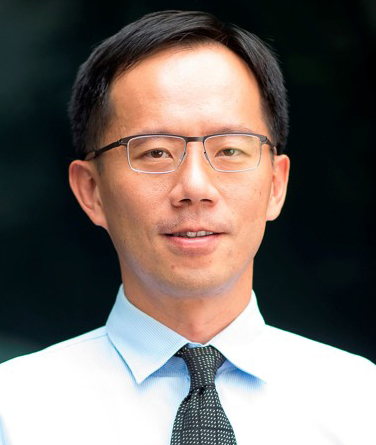
Nicholas Wright serves as the NERSC Chief Architect and Advanced Technologies Group Lead at Lawrence Berkeley National Laboratory's National Energy Research Scientific Computing Center (NERSC) since 2009. He holds a PhD in Chemistry from the University of Durham, United Kingdom. Role: Focuses on evaluating emerging technologies for scientific computing Key Contributions: Chief architect for NERSC-10 procurement (2026), optimized Perlmutter machine architecture His research explores performance analysis of HPC applications and architectural evaluation for future technologies. Recent publications address: GPU frequency optimization using DNN-based models FPGA acceleration for HPC workloads Quantum computing cost scaling Disaggregated memory system evaluation Scientific workflow characterization Scientific awards include: Co-investigator on SDCI HPC Improvement grant (2007-2012) His work bridges computer architecture and energy-efficient computing through rigorous performance modeling and technology evaluation for NERSC's diverse scientific users.
Vinh Nguyen is an Assistant Professor in the Department of Mechanical and Aerospace Engineering at Michigan Technological University, where he directs the Michigan Tech Center for AI and coordinates the NIST-PREP program. His research focuses on advanced manufacturing through Industry 4.0, human-robot-machine interaction, and physics-based/data-driven modeling. He has developed solutions for machining, additive manufacturing, metal forming, and robotic assembly to promote smart and sustainable manufacturing. Prior to joining Michigan Tech in 2022, he was a National Research Council Postdoctoral Fellow at NIST (2020–2022). Dr. Nguyen earned his PhD (2020), MS in Mechanical Engineering (2017), and MS in Electrical & Computer Engineering (2017) from Georgia Institute of Technology. He received dual bachelor’s degrees in Electrical and Mechanical Engineering from Rensselaer Polytechnic Institute (2014). His research portfolio spans Advanced Manufacturing Industry 4.0 and 5.0 Human-Robot Interaction Physics-Based/Data-Driven Modeling Industrial Automation based on his lab’s interdisciplinary focus on human-centric, resilient solutions. His recent publications address trends in Machine Learning for Manufacturing Autonomous Vehicle Sensors Hybrid Additive/Subtractive Manufacturing Augmented/Mixed Reality Interfaces Industrial Robot Diagnostics Material-Specific Machining with keywords spanning Robotics, Data Science, and Industrial Engineering.
Farooq Azam is a Research Fellow at the Department of Mechanical Engineering , University College London , focusing on Modelling and Optimisation of Sustainable and Smart Technical Textiles . He works in the Roberts Engineering Building, London, United Kingdom (WC1E 7JE). Research Interests: Architected materials, Metamaterials, Additive manufacturing, Structural Imaging, Structural optimisation, AI/Machine Learning, Applied Mechanics, Mechanics of Materials Email: farooq.azam.20@ucl.ac.uk Recent Research Trends : His work spans additive manufacturing applications in biomedical components, structural optimization of architected materials, turbulence modeling in engines, and machine learning-driven metamaterial design. Key areas include Ti6Al4V scaffolds, hexagonal honeycomb configurations, and carbon microlattices. Scientific Awards : FHEA (Fellowship of the Higher Education Academy), 2024 Teaching : He has taught modules such as Group Manufacturing Challenges (MECH0099) , Micro/Nano Architected Composite Materials (MECH0096) , and Elasticity and Plasticity (MECH0026) at UCL.
Cristina Bazgan is a University Professor at Université Paris-Dauphine, affiliated with LAMSADE (Laboratoire d'Analyse et Modélisation de Systèmes pour l'Aide à la Décision) within PSL University. Her office is located at P 409 with contact number 01 44 05 40 90. She maintains an active research profile with numerous publications spanning graph theory, combinatorial optimization, and multi-objective optimization. Professor Bazgan's research primarily focuses on graph theory and combinatorial optimization , with significant contributions to domination theory, network analysis, approximation algorithms, and multi-objective optimization. Her work bridges theoretical computer science and operations research, addressing fundamental problems in computational complexity while developing practical algorithmic solutions. She has made notable contributions to understanding graph partitions, community detection in networks, and the complexity of various optimization problems. Analysis of her recent publications reveals a strong trend in multi-objective optimization and parameterized complexity . Her work often explores the interface between theoretical computer science and operations research, with applications to network analysis and decision support systems. A significant portion of her research addresses the complexity and approximability of graph-theoretic problems, particularly those related to domination, community structure, and anonymization in networks. Professor Bazgan has co-authored the book Combinatorial Algorithms (2022) with H. Fernau and contributed chapters to authoritative works on combinatorial optimization. While specific scientific awards aren't mentioned in the available information, her extensive publication record in top-tier journals demonstrates significant recognition in her field. She maintains an active collaboration network, frequently working with researchers such as Vanderpooten D., Tuza Z., Chlebíková J., and Herzel A. Her research has practical applications in network security, social network analysis, and decision support systems. The LAMSADE laboratory, where she is based, focuses on decision support systems and operations research, providing an interdisciplinary environment for her theoretical and applied work.
Xiaoli Fern is an Associate Professor in the School of Electrical Engineering and Computer Science at Oregon State University. She holds a Ph.D. in Computer Engineering from Purdue University (2005) and dual degrees (B.S. and M.S.) in Automation and Computer Science from Shanghai Jiao Tong University (2000). Her research focuses on applied machine learning , graph learning , and explainability in AI systems , with applications in microbiome analysis , ecological monitoring , and human-computer interaction . Research Expertise: Unsupervised learning, clustering, correlation analysis, outlier detection, and scientific data mining. Collaborations: Active involvement in the IGERT Ecosystem Informatics program and interdisciplinary projects with ecologists, roboticists, and biologists. Awards: 2011 NSF CAREER Award for early-career excellence in research. Her recent work includes applying deep learning to microbiome data and developing interactive systems that bridge theory with real-world applications in biology and materials science. She mentors students across all academic levels and emphasizes the importance of collaborative, real-world problem-solving in her research lab.
Nadia Figueroa is the Shalini and Rajeev Misra Presidential Assistant Professor in the Mechanical Engineering and Applied Mechanics (MEAM) Department at the University of Pennsylvania . She holds secondary appointments in Computer and Information Science (CIS) and Electrical and Systems Engineering (ESE) , and is a core faculty member at the General Robotics, Automation, Sensing & Perception (GRASP) Laboratory . Before joining Penn, she was a Postdoctoral Associate at MIT's CSAIL under Prof. Julie A. Shah and earned her Ph.D. at EPFL with Prof. Aude Billard. Her academic journey includes research roles at DLR and NYU Abu Dhabi , along with degrees from Monterrey Tech (B.Sc.) and TU Dortmund (M.Sc.) . Education: Ph.D. in Robotics, Control and Intelligent Systems, EPFL (2019) M.Sc. in Automation and Robotics, TU Dortmund B.Sc. in Mechatronics, Monterrey Tech Her research focuses on adaptive intelligence for robots to learn from and interact with humans, emphasizing fluid collaboration in safety-critical applications. Key areas include reactive control algorithms , human-robot co-manipulation , and real-time navigation . Techniques integrate machine learning , control theory , and perception to ensure stability, safety, and robustness in dynamic environments. Recent work trends highlight reactive motion policies for imitation learning, dynamical systems modulation with non-convex obstacles, and EEG-based intent detection for assistive robotics. She also explores soft robotics with MORF systems and SE(3) control for end-effector precision. Her publications reflect interdisciplinary approaches at the intersection of robotics, AI, and human biomechanics . She has taught MEAM-520 Introduction to Robotics at Penn and served as Head Teaching Assistant at EPFL for courses like MICRO-401 Machine Learning Programming . Her Figueroa (Human-Centered) Robotics Lab , established in 2022, collaborates with institutions like MIT and EPFL to advance fluid human-robot autonomy.
CHENG Shih-Fen is an Associate Professor of Computer Science at Singapore Management University (SMU) and a Principal Research Scientist at Amazon. He holds a PhD in Industrial and Operations Engineering from the University of Michigan and a BSE in Mechanical Engineering from National Taiwan University. His research focuses on modeling and optimization of complex systems in urban computing, decision-making, and transportation, with notable contributions to taxi fleet management, ride-hailing systems, and sustainable logistics. Research interests include Artificial Intelligence , Decision Optimization , Machine Learning , and Urban Sustainability . Notable achievements include prestigious awards from CIKM, AAMAS, and INFORMS. He has advised students such as Qian Shao and Pang Jin Tan, who received SMU Presidential Doctoral Fellowships. Key contributions include the Driver Guidance System (DGS) for taxis and patented taxi demand prediction models. Publications span top venues like IJCAI, AAAI, and Transportation Science. He is a Senior Editor of Electronic Commerce Research and Applications and actively contributes to professional communities like INFORMS and AAAI.
Professor Zhenjun Ma is a Professor and Deputy Director of the Sustainable Buildings Research Centre (SBRC) at the University of Wollongong. He holds a PhD from The Hong Kong Polytechnic University and has expertise in renewable energy systems, thermal energy storage, and building energy efficiency. His research focuses on advancing sustainable HVAC solutions, building control optimization, and demand flexibility in energy systems. He has received prestigious awards including the World Society of Sustainable Energy Technologies Innovation Award and Excellence in HVAC&R Research from AIRAH. Education: BEng and MSc from Xian Jiaotong University; PhD from Hong Kong Polytechnic University. Current academic roles include editorial board memberships in journals like Renewable Energy and Energy Conversion and Management , and leadership in initiatives like the NSW Decarbonisation Innovation Hub. Research Interests: Renewable energy integration in buildings, thermal storage technologies, data-driven building analytics, and grid-to-building energy systems. Active in over 40 funded projects, including grants from Australia's Department of Industry and the NSW Government. Awards: Invitational Fellowship from Japan Society for the Promotion of Science (2025), Fellow of AIRAH (2021), and multiple best paper awards. Supervises over 30 PhD/Master’s students on topics like energy flexibility optimization and net-zero building systems. Labs/Teams: Leads SBRC’s energy efficiency and sustainability research clusters. Collaborates with industry partners like BlueScope Steel on solar energy solutions.
Mehdi Toloo is a Reader in Business Analytics at the University of Surrey's Surrey Business School. He holds a BSc, MSc, and PhD, and is a docent. Previously, he was a Professor at Technical University of Ostrava (Czech Republic) and Sultan Qaboos University (Oman). His research focuses on Business Analytics, Operations Research, Data Envelopment Analysis (DEA), and Decision Analysis. He has supervised over 40 postgraduate students and contributed to top-tier journals like European Journal of Operational Research and Omega. He is an editor for journals including Computers & Industrial Engineering and Decision Analytics. Recognized globally, he ranks in the top 2% of scientists worldwide in Business Analytics & Operations Research (2020-2024). His research projects include performance evaluation with unclassified factors, economies of scope in network DEA, and selective measures in DEA. He collaborates internationally on projects like robust optimization and supply chain sustainability. His teaching spans undergraduate courses in Operations Research, Mathematics for Business, and Programming, alongside postgraduate modules on Quantitative Methods and Advanced DEA. His work bridges theoretical and applied research, with applications in healthcare, renewable energy, and public policy.
Univ.-Prof. Dr.-Ing. habil. Volker Rodehorst is a full professor of computer vision at Bauhaus-Universität Weimar, holding positions in both the Faculty of Media and Faculty of Civil Engineering. His research focuses on photogrammetric computer vision, image analysis, 3D reconstruction, and structural health monitoring with applications in civil infrastructure inspection and urban modeling. He leads projects like ev.AI.luate and InfraCloud, leveraging AI and UAS technologies for infrastructure assessment. Education: PhD (2003): Technical University of Berlin, Faculty of Civil Engineering & Applied Geosciences Habilitation (2013): TU Berlin, Faculty of Electrical Engineering & Computer Science Computer Science Diploma (1994): TU Berlin Research Interests: UAS-based structural inspection using multi-view stereo and deep learning Crack detection and segmentation in concrete structures Automated building age estimation for energy modeling Flight path planning optimization for complex structures Integration of computer vision into BIM workflows Publications: Recent work emphasizes robust algorithms for crack detection (Omnicrack30k benchmark), UAS flight path optimization, and semantic segmentation challenges in bridge inspections. Key contributions include MVCrackViT and CISOL datasets advancing structural analysis methodologies. Awards: Best Academic Performance Prize (1994) - TU Berlin ISPRS Presidential Citation (2008) for WG III/2 leadership Grants & Labs: Leads Bauhaus' 3D-RealityCapture-ScanLab and coordinates EU projects like AISTEC-PRO. Active in developing modular solutions like smoodPLAN for infrastructure inspection. Teaching: Offers courses in photogrammetric computer vision, geodesy, and parallel systems. Supervises PhD students in structural health monitoring and computer vision.
Lynne Grewe serves as a Professor in the Department of Computer Science at California State University, East Bay, where she maintains active research and teaching responsibilities with current office hours and contact information. Her work bridges theoretical computer science with real-world applications across healthcare, education, and emergency response domains. Her research portfolio centers on three interconnected thrusts: Medical Technology : Development of computer vision systems for stroke detection through facial pattern analysis (StrokeChange), infrared-based disease monitoring, and assistive navigation tools for the visually impaired (Seeing Eye Drone) Educational Innovation : Creation of multimodal systems like ULearn that detect student frustration using deep learning, alongside community college partnerships to broaden participation in computing Sensor Fusion Applications : Integration of multi-modal data for disaster response, infrastructure monitoring, and mobile health platforms using advanced machine learning techniques Publication analysis reveals consistent evolution toward real-time, deployable systems—particularly mobile health applications and educational tools—while maintaining foundational work in sensor fusion. Her 2020-2024 output shows increasing emphasis on healthcare applications (40% of recent work) and educational technology (25%), often combining computer vision with mobile platforms. Grewe demonstrates significant commitment to educational equity through the Faculty in Residence program, collaborating with community colleges to prepare underrepresented students for computing careers. Her Google partnership and focus on practical applications indicate strong industry engagement, though specific grant details aren't documented in source materials. Current projects suggest ongoing expansion into in-situ health monitoring and AI-driven educational support systems.
Dr. Mohammad Naraghi is a Professor in the Department of Mechanical Engineering at Manhattan University, specializing in thermal analysis of rocket engines, sustainable building systems, and radiative heat transfer. His research focuses on rocket thermal evaluation (RTE), solar energy optimization, and crystal growth processes. He holds a PhD from the University of Akron, MS from the University of Wales, and BS from the University of Tehran. Research areas include: Thermal modeling of regeneratively cooled rocket engines Radiative heat transfer in enclosures and aerospace systems Solar energy systems optimization (panel orientation, photovoltaic plants) Energy dynamics of green buildings and data centers CFD analysis of fluid flow and heat transfer in propulsion systems His 30+ years of publications span advanced thermal modeling techniques, including RTE software development and stochastic methods. Key contributions include NASA-recognized rocket engine thermal models and a patented seasonally selective building façade. Grants include NASA-funded rocket thermal research and ARPA/AFOSR crystal growth projects. Awards include ASME Fellow, AIAA Associate Fellow, and multiple NASA/ASEE fellowships. Teaching includes courses on solar energy systems, fluid mechanics, and green building energy dynamics. Advises graduate students in mechanical engineering and contributes to industry partnerships through applied thermal research.
Dr. Srikanthan Ramesh serves as an Assistant Professor in the School of Industrial Engineering and Management within Oklahoma State University's College of Engineering, Architecture and Technology. Since establishing the Advanced Materials and Additive Manufacturing Laboratory in August 2022, he has led interdisciplinary research at the intersection of materials science, physical phenomena, and advanced manufacturing technologies, with applications spanning healthcare, aerospace, and electronics sectors. His educational foundation includes a Ph.D. in Mechanical and Industrial Engineering from Rochester Institute of Technology (2022) and an M.S. in Industrial and Manufacturing Systems Engineering from Iowa State University (2017). This academic background enables his innovative approach to manufacturing science. Dr. Ramesh's research program focuses on biological and micro-scale additive manufacturing (bio-AM), specializing in biomaterial development for tissue engineering and regenerative medicine. His work integrates computational fluid dynamics, machine learning, and real-time process monitoring to achieve precise control over mechanical, biological, and electrical properties of manufactured structures. He develops experimental tools and process frameworks for droplet-based and extrusion-based AM systems, with particular emphasis on wound healing applications and space-compatible microelectronics. Analysis of his 14 publications from 2020-2025 reveals a strong trajectory toward AI-driven manufacturing solutions, with increasing emphasis on multi-objective Bayesian optimization for bioink design, aerosol jet printing process refinement, and bioprinted tissue construct development. His recent work demonstrates sophisticated integration of machine learning with physical manufacturing processes to solve complex biomedical challenges. His scientific recognition includes: Doctoral Dissertation Pitch Competition (Runner-up), IISE, 2021 Best Oral Presentation, Graduate Showcase, Rochester Institute of Technology, 2019 Gilbreth Memorial Fellowship, IISE, 2018-2019 Wakonse College Teaching Fellowship, Iowa State University, 2018-2019 Graduate Research Excellence Award, Iowa State University, 2017 Best Overall Oral Presentation, Nano@IAstate, Iowa State University, 2017 Dr. Ramesh currently leads significant research initiatives including as Principal Investigator for an NSF REU Site on Additive Manufacturing and Cybersecurity ($464,606, 2025-2028) and a NASA EPSCoR Travel Grant for aerosol jet printing in space missions (2024-2025). As Co-PI on an NSF grant for Privacy-aware Collaborative Design in additive biofabrication ($599,981, 2025-2028), he develops frameworks for mass personalization in medical applications while addressing data security challenges. These projects support his lab's mission to advance manufacturing science through rigorous experimentation and computational innovation. The Advanced Materials and Additive Manufacturing Laboratory operates as a collaborative hub where Dr. Ramesh directs research teams in developing novel biomaterials, optimizing printing processes, and creating functional prototypes for wound dressings, liver tissue models, and space-rated microelectronics. The lab's interdisciplinary approach combines expertise in materials characterization, computational modeling, and machine learning to push the boundaries of what's possible in additive manufacturing for critical applications.
Angel Santamaria-Navarro serves as Associate Professor at Polytechnic University of Catalonia (UPC) and Robotics Researcher at the Institute of Robotics and Industrial Informatics (IRI), a CSIC-UPC joint center in Barcelona. His work bridges academic research and real-world deployment in mobile robotics, with current leadership in European TRIFFID (autonomous first-responder systems) and national LENA (lifelong navigation learning) projects spanning urban logistics and emergency response applications. His research centers on Mobile Robotics and Autonomous Systems with emphasis on human-robot collaboration in unstructured environments . Key focus areas include robot navigation in crowded urban settings, manipulation of deformable objects, and deployment of delivery systems like the LogiSmile project piloted across European cities. His work uniquely integrates machine learning with field robotics to solve practical challenges in last-mile logistics and disaster response. Recent publications (2022-2025) reveal a concentrated shift toward real-world robotic deployment , particularly in emergency response (TRIFFID) and urban logistics. Dominant themes include communication-aware multi-robot coordination, probabilistic perception for dynamic environments, and human acceptance studies – reflecting his commitment to transitioning lab innovations to operational field systems through Horizon Europe and national projects. Key recognitions include: 1st place at DARPA Subterranean Challenge, urban circuit (2020) 2nd place at DARPA Subterranean Challenge, tunnel circuit (2019) Beatriu de Pinós research fellowship (2021) Georges Giralt PhD award finalist (2018) R3 accreditation as consolidated researcher (2023) He actively mentors next-generation researchers as supervisor of PhD candidate Hafsa Taher (deep learning for autonomous vehicles) and Master's student Joan Tur Ruiz (object pose tracking). His research portfolio includes €5M+ in competitive funding spanning Horizon Europe projects (TRIFFID, TORNADO), national initiatives (LENA, AUDEL), and industry partnerships like the Vaive Logistics spin-off co-founded in 2023. As core member of UPC's robotics team, he contributed to the NeBula framework that won DARPA's Subterranean Challenge and currently leads development of TRIFFID's autonomous first-responder systems. His work with the LogiSmile consortium demonstrates practical urban deployment of delivery robots across Barcelona, Lisbon, and Milan, while the SOCIAL PIA project pioneers cybernetic avatars for cooperative human-robot teams.
Detlev Marpe is a leading researcher at the Fraunhofer Heinrich Hertz Institute (HHI), serving as Head of the Video Coding & Analytics Department and Head of the Image & Video Coding Group. His work focuses on advancing video compression standards, including HEVC (H.265) and its extensions. He has contributed significantly to tools like entropy coding, transform coding, and scalable video coding. His research emphasizes efficient compression techniques, such as adaptive context models and wavelet-based methods, with applications in multimedia communication and low-delay video encoding. Affiliations: Fraunhofer Institute for Telecommunications HHI, Berlin, Germany Roles: Department Head, Research Group Leader, and Adjunct Lecturer at TU Berlin (2013/14) Research Interests: Video coding standards (HEVC, H.264/AVC), entropy coding (CABAC), wavelet-based compression, scalable video coding (SVC), multiview video coding (MVC), and rate-distortion optimization. His work bridges theoretical advancements with practical implementations, addressing challenges in compression efficiency, scalability, and real-time applications. Publications & Awards: Over 200 publications in top-tier journals and conferences, including IEEE Transactions and SPIE. Notable awards include the Chester Sall Best Paper Award and multiple Best Paper Awards from IEEE journals. His contributions to video coding standards have been adopted in global specifications like MPEG and ITU-T. Grants & Labs: Involved in major research projects on HEVC extensions, 3D video coding, and low-delay applications. Collaborates with industry partners and academic institutions globally. His team at HHI develops reference software and test models for emerging standards.