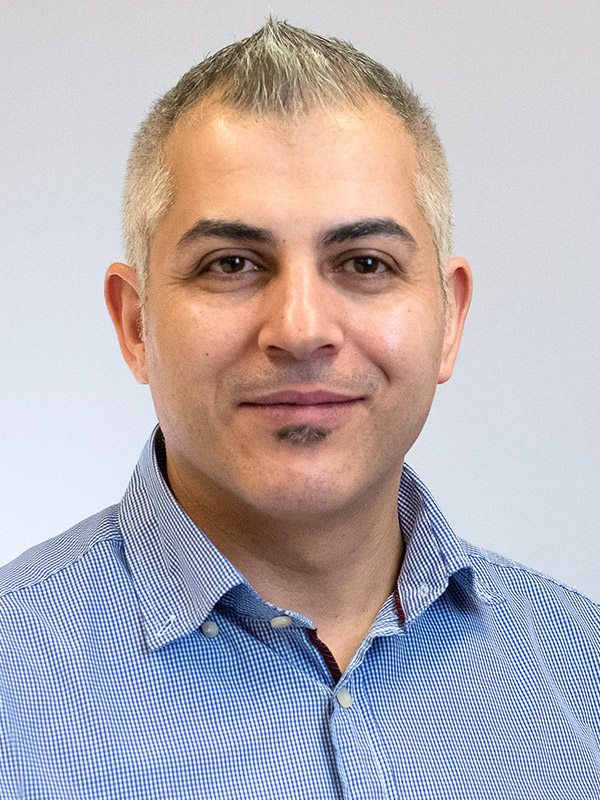
Takayuki ItoView profile
Professor
Dr. Takayuki Ito is Professor at Nagoya Institute of Technology in the Computer Science & Engineering school. He earned his Doctor of Engineering from Nagoya Institute of Technology in 2000. His academic journey includes positions as a JSPS research fellow, associate professor at JAIST, and visiting scholar at prestigious institutions including USC/ISI, Harvard University, and MIT (visited twice). He has served as a board member of IFAAMAS (International Foundation for Autonomous Agents and Multiagent Systems). Dr. Ito's research primarily focuses on multi-agent systems, automated negotiation, argumentation frameworks, and AI-mediated discussion platforms. His work spans theoretical foundations of argumentation semantics to practical applications in sustainable development, urban planning, and online citizen engagement. He has developed the D-Agree platform for facilitating large-scale online discussions, with notable implementations in Afghanistan for municipal policy-making and SDG implementation. His publication record demonstrates significant contributions to understanding how AI can mediate human discussions, with experiments involving thousands of participants in countries like Afghanistan. His research shows how argumentative agents can improve responsiveness in discussions while also potentially polarizing debates by reinforcing initial stances. His work bridges theoretical computer science with practical social applications, particularly in contexts with challenging participation constraints. Board member of IFAAMAS Developer of D-Agree discussion support system Conducted large-scale experiments in Afghanistan with over 1,000 participants Expert in multi-agent negotiation protocols Dr. Ito's research has substantial implications for democratic processes, particularly in contexts where traditional face-to-face meetings are problematic due to security concerns, cultural restrictions, or pandemic conditions. His work demonstrates how AI mediation can overcome barriers to equal participation, especially for women and religious minorities in restrictive societies.