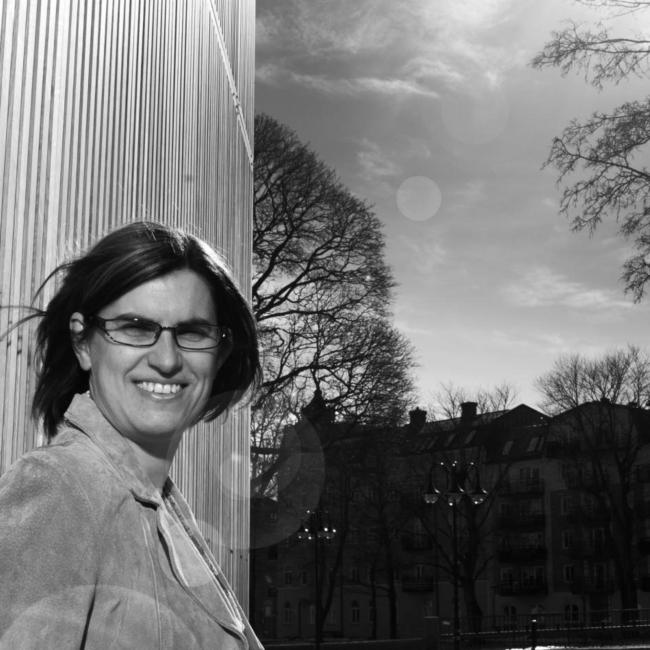
Ellen Moons is a Professor of Physics at Karlstad University, Sweden, specializing in organic and hybrid photovoltaic materials. Her research focuses on thin film morphology, stability, and energy conversion efficiency in solar cells. She leads a group using advanced techniques like AFM-IR, X-ray spectroscopy, and synchrotron-based methods to study material interfaces and degradation mechanisms. Education: PhD from Weizmann Institute of Science (Israel), postdoctoral work at EPFL (Switzerland) and TU Delft (Netherlands). Prior roles include Research Scientist at Cambridge Display Technology (UK) and Research Assistant at University of Cambridge. Research Themes: Self-organization of conjugated polymers in solution-processed thin films Interfacial engineering in perovskite and polymer solar cells Photodegradation mechanisms and material stability under ambient conditions Nanostructure characterization via advanced microscopy/spectroscopy Collaborations: Key partnerships include MAX IV synchrotron (Sweden), Jagiellonian University (Poland), and institutions in China, Spain, and the US. Active in EU projects like OPVStability (MSCA) and PRISMAS (COFUND). Teaching: Functional Materials (CBAD81), Experimental Physics (FYGB06), and data analysis courses (FYGA25).
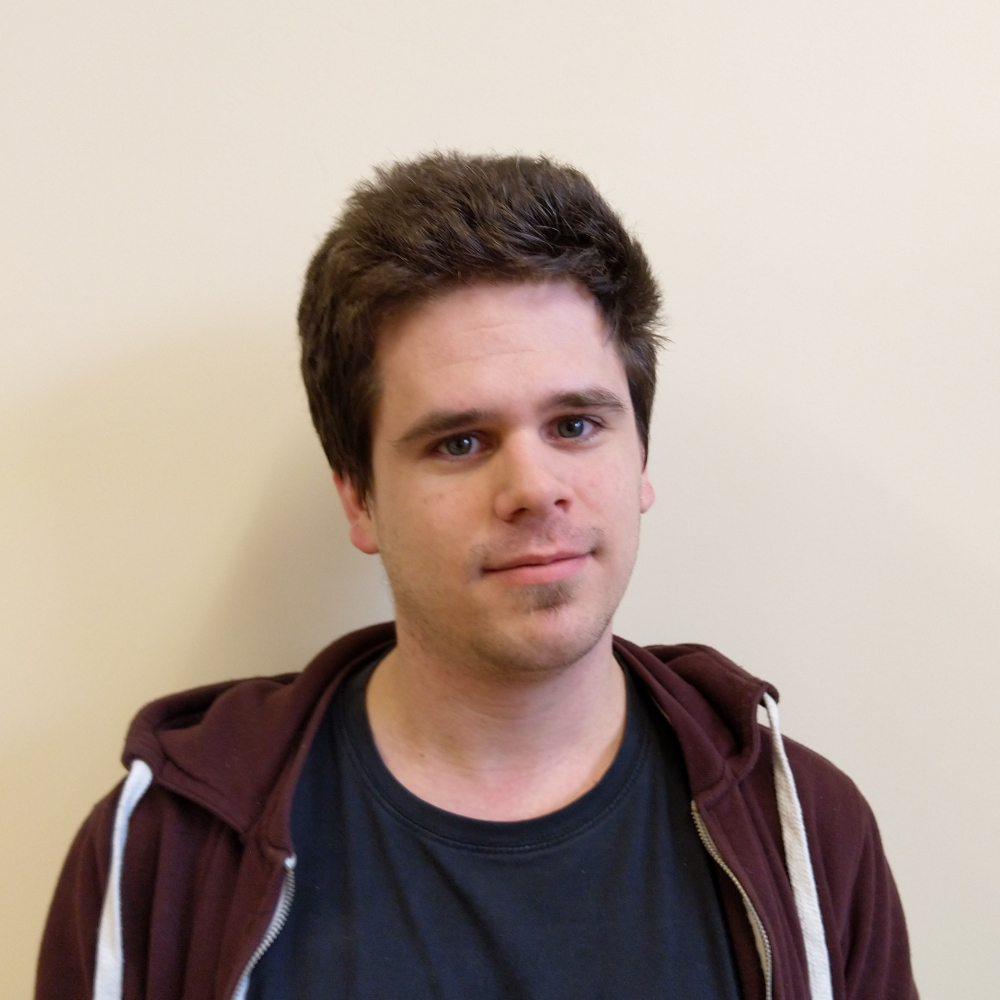
Dr. Falk Tauber is a postdoctoral researcher and coordinator of the liv MatS Demonstrator Project at the University of Freiburg's Plant Biomechanics Group and the Freiburg Center for Interactive Materials and Bioinspired Technologies (FIT). His work focuses on developing bioinspired materials systems, soft robotics, and biomimetic actuators. He coordinates interdisciplinary projects integrating innovations from multiple research areas, collaborating with industrial partners to demonstrate technological feasibility across applications. Under the supervision of Prof. Dr. Thomas Speck, Tauber's research explores plant-inspired mechanisms such as snap-trapping systems, peristaltic pumping, and shape-memory materials. His projects aim to bridge biological principles with engineering solutions for soft robotics, medical devices, and sustainable materials. Key collaborations include work on artificial Venus flytrap actuators, biomimetic valves, and pressure-sensing capsules for gastrointestinal monitoring. Tauber actively contributes to academic discourse through editorials, conference proceedings, and peer-reviewed articles, emphasizing future directions in soft robotics and biohybrid systems. His publications span journals like Bioinspiration & Biomimetics , Science Robotics , and MRS Bulletin , reflecting his expertise in biomaterials and interdisciplinary engineering. He leads the development of demonstrators in the liv MatS cluster, focusing on three series of devices that showcase bioinspired technologies. These projects emphasize practical applications, such as adaptive actuators for industrial use and medical tools inspired by biological systems. His work is funded by the German Research Foundation (DFG) under the Excellence Strategy.
Riccardo Sisto is a Full Professor in the Department of Control and Computer Science (DAUIN) at Politecnico di Torino, where he also leads the NetGroup research group and is a member of the SmartData@PoliTO and Cybersecurity National Laboratory. He has held academic positions continuously since 1991, progressing from Assistant to Full Professor by 2004. Education: PhD in Computer and Systems Engineering, Politecnico di Torino (1992) Graduate in Electronic Engineering, Politecnico di Torino (1987) Riccardo Sisto’s research focuses on formal methods applied to cybersecurity, particularly in formal verification of cryptographic protocols, security automation in cloud and virtualized networks, and secure code generation. His work bridges theoretical formal methods with practical network security applications in SDN/NFV and Kubernetes environments. The recent publications highlight a strong trend toward security automation , formal verification of network and cryptographic protocols , and policy management in virtualized infrastructures . His team develops frameworks like VEREFOO and VERIGRAPH to automate firewall and security function configuration, particularly in cloud-native and multi-cluster environments. Scientific Awards and Honors: ICICS Best Demo Award (2022) IEEE HPSR Best Paper Award Finalist (2014) High Honor Paper Award at IEEE AINA (2004) Fellow of the ACM (2010) Senior Member of the ACM Riccardo Sisto has supervised numerous PhD students and leads multiple competitive research projects funded by the EU (e.g., MIRANDA, VeTeSS) and industry. He serves on editorial boards such as ELECTRONICS and has held leadership roles in international conferences. His research includes both fundamental contributions in formal methods and applied work in industrial collaborations through commercial research projects. He is actively involved in advising PhD students and post-doctoral researchers such as Daniele Bringhenti, Simone Bussa, Francesco Pizzato, and Fulvio Valenza. His lab, NetGroup, focuses on building dependable and secure distributed systems using model-driven and formally verified approaches.
Christopher A Warlick is a Professor and Head of the Department of Urology at the University of Minnesota Medical School. He is a leading expert in prostate and bladder cancer, with a strong focus on cancer screening, prevention, active surveillance, and novel therapeutic strategies including focal and immune-mediated treatments. Research Interests: Prostate Cancer Etiology and Survivorship Bladder Cancer Management Active Surveillance and Risk Stratification Minimally Invasive and Focal Therapies Transurethral Ablation Techniques Immunotherapy for Advanced Prostate Cancer His recent publications reflect a consistent and impactful research trajectory, emphasizing clinical trials, surgical outcomes, and innovative diagnostics. Themes include comparative effectiveness of robotic vs open surgery, microbiome implications in prostate cancer, and AI-driven therapeutic development. His work bridges clinical practice and translational research, with strong industry and multi-institutional collaborations. Scientific Awards and Recognition: No specific awards listed in the provided text. Advising and Grants: Dr. Warlick serves as Principal Investigator on multiple funded research projects, including a Phase II randomized trial (HEAT study), a multicenter ablation pilot, and an AI-designed mini-protein project funded by the U.S. Department of Defense. He collaborates with institutions such as Johns Hopkins University and industry partners including MacroGenics Inc., Francis Medical, Inc., and Photocure Inc. While formal student advisees are not listed, his role as PI indicates mentorship of junior researchers and clinical fellows. Labs and Research Teams: Dr. Warlick leads a multidisciplinary research team focused on urologic oncology, with active projects spanning from early detection to advanced therapeutics. His work is supported by a robust network of clinical collaborators, bioengineers, and data scientists, particularly in the areas of imaging, immunotherapy, and surgical innovation.
Alexandre G. Maia, Ph.D., is an Associate Professor in the Department of Laboratory Medicine and Pathology and Assistant Professor of Pharmacology at Mayo Clinic in Rochester, Minnesota. He serves as Senior Associate Consultant II-Research in the Division of Experimental Pathology and Laboratory Medicine and is the Associate Director of the Epigenomics Program at the Center for Individualized Medicine. Dr. Maia leads the Functional Epigenomics Laboratory, focusing on cutting-edge research in cancer and stem cell biology. Education: Postdoctoral Fellowship in Chromatin Biology, Icahn School of Medicine at Mount Sinai Ph.D. in Molecular Biology, University of Coimbra Predoctoral Research Fellow, University of California at San Francisco (UCSF) B.S. in Aquatic Sciences, ICBAS, University of Porto Undergraduate Studies, University of Rome (La Sapienza) Dr. Maia's research is centered on understanding the epigenomic regulation of cancer stem cells, particularly in ovarian cancer. His work integrates single-cell sequencing technologies such as ATAC-seq and RNA-seq to profile enhancer elements and transcriptional dependencies. He employs advanced model systems including 3D organoids, patient-derived xenografts, and liquid biopsies to study tumor heterogeneity. His lab utilizes CRISPR/Cas9 for functional validation and microfluidic devices for drug combination testing. Bioinformatic analysis of multi-omics data is a key component of his research. The recent publications reflect a strong trend in functional genomics, epigenetics, and personalized cancer therapy. His work spans multiple myeloma, clonal hematopoiesis, post-translational modifications, CAR T cell exhaustion, and personalized drug testing in pancreatic cancer. The recurring themes include single-cell multiomics, enhancer biology, and translational applications in oncology. Scientific Awards and Honors: Career Enhancement Program Award, Breast SPORE, Mayo Clinic (2022–2024) Early-Career Investigator, Ovarian Cancer Academy, U.S. Department of Defense (2021–2025) Regenerative Sciences Curriculum Development Award, Mayo Clinic (2020) Career Enhancement Program Award, Ovarian SPORE, Mayo Clinic (2019–2020) Career Development Award, Department of Laboratory Medicine and Pathology (2018) NYSCF-Druckenmiller Fellowship (2014–2017) Postdoctoral Recognition Award, Icahn School of Medicine (2014) Ph.D. Fellowship, Science and Technology Foundation, Portugal (2003–2007) Dr. Maia has received substantial grant support from prestigious programs including the Department of Defense Breast and Ovarian Cancer SPOREs, and has been recognized with multiple early-career awards. He mentors research trainees and contributes to curriculum development in regenerative sciences. His laboratory actively collaborates across disciplines to advance epigenomic technologies and their clinical applications. Dr. Maia leads the Functional Epigenomics Laboratory and plays a key role in the Epigenomics Program at the Center for Individualized Medicine. His team integrates wet-lab experimentation with computational biology to develop novel approaches for cancer diagnosis and therapy.
Pierre Beaujean is a postdoctoral researcher at the University of Namur , Belgium, affiliated with the ECOBAT (EOS) project and the laboratory of Professor Benoît Champagne. His work bridges quantum chemistry and computational chemistry , focusing on nonlinear optical materials and electrochemical interfaces for battery research. His research spans theoretical methods like Density Functional Theory and Coupled Cluster to evaluate hyperpolarizabilities, solvation effects, and molecular switches. Recent projects explore calcium anodes, 3D metal-organic frameworks, and multi-state optical systems, contributing to sustainable energy solutions. Beaujean’s publications analyze two-photon absorption , XPS spectra , and proton-electron conductivity . He is also a science communicator at Zeste de Savoir and manages the university’s chemistry department social media.
Dr. Ioana Andreea Brezestean is a Scientific Researcher III (R2 rank) at the National Institute for Research and Development in Isotopic and Molecular Technologies (Cluj-Napoca, Romania). She holds a PhD in Physics (2022) and Master's degrees in Medical Physics (2013, 2015) from Babeș-Bolyai University . Her work focuses on nanomaterial synthesis , SERS substrate development , and environmental/health monitoring through advanced spectroscopic techniques. Current projects include NanedisSERS (bioinspired 3D nanoplatforms for neurodegenerative disease diagnostics) and AL-DIBI SERS (Alzheimer's biomarker detection using gold nanourchins). Her expertise spans nanoparticle fabrication (silver/gold), microfluidic sensor design , and multi-modal characterization (Raman, FT-Raman, SERS, TERS, microscopy). She contributes to eco-friendly nanocomposite development in projects like ECONANO4AUTO (bio-PA materials with chicken feather derivatives). Key collaborations include SINTEF AS (Norway), University of Medicine and Pharmacy 'Iuliu Hațieganu' , and NANOM MEMS SRL . Her methodology integrates DFT calculations , quantum chemistry modeling , and statistical pattern recognition for pathogen resistance analysis.
Susanta Ghosh is an Assistant Professor in the Department of Mechanical and Aerospace Engineering at Michigan Technological University, where he is also a faculty member of the Center for Data Sciences at the Institute of Computing and Cybersystems. His research integrates Bayesian Machine Learning , Scientific Machine Learning , and Computational Mechanics to address uncertainty quantification in materials design, fracture modeling, and biomedical imaging. Education : Ph.D. and M.S. from Indian Institute of Science (IISc), Bangalore; B.S. from Indian Institute of Engineering Science and Technology, Shibpur. Research Expertise : Bayesian Neural Networks, Uncertainty Quantification, Computational Inverse Problems, Electronic Structure Prediction, and Nonlocal Elasticity. Funding : NSF CAREER Award (2025-2030, $669,490), DOE grants for chiral nanomaterials (2022-2025, $321,941; 2025-2028, $396,528), and NSF EAGER Award (2019-2022, $170,604). Teaching : Undergraduate and graduate courses in mechanics, finite element methods, and applied machine learning. Selected Awards : National Science Foundation (NSF) CAREER Award (2025)
Junaid Shuja is a researcher with significant contributions to Mobile Edge Computing , Cloud Environments , and IoT Systems . Collaborating with scholars like Kashif Bilal , Abdullah Gani , and Ehzaz Mustafa , his work spans computation offloading, resource allocation, and security frameworks. Research Highlights 2017: Analysis of Vector Code Offloading in Heterogeneous Architectures 2021: Survey on Machine Learning for Edge Caching 2023: Reinforcement Learning for Computation Offloading in Vehicular Networks 2024: Blockchain Applications in Land Lease Systems and Employee Transfers 2025: Deep Reinforcement Learning for Resource Optimization His recent work focuses on Deep Learning and Blockchain for latency-sensitive applications in IoT and vehicular networks, published in IEEE Access , Cluster Computing , and Telecommunication Systems . Key co-authors include Faisal Rehman , Abdallah Namoun , and Muhammad Bilal .
Patrice RANNOU is a CNRS Director of Research (DR-CNRS) in Section 11 (Soft Matter) at the University Grenoble Alpes. He leads research in the MIEL Team (Materials, Interfaces, and Electrochemistry) within UMR5279-LEPMI, focusing on multi-scale functional materials for energy and electronics. His work integrates organic/inorganic hybrid materials, self-assembly processes, and advanced characterization techniques to enhance energy storage and conversion systems. Education: M.Sc. in Polymer Chemistry (1993, Institut Textile & Chimique de Lyon), M.Sc. in Polymer Physics (1994, University Montpellier II), Ph.D. in Physics (1998, University Grenoble), and HDR in Chemistry (2013, University Grenoble). Professional roles include Deputy Head of the Observatory for Micro and NanoTechnologies (2013–2018) and co-PI of collaborative projects like Battery2030+ and SOLiD. He has advised 17 postdocs, 13 PhD students, and 10 foreign students. Research Interests: Bio-inspired materials, ion-conducting polymers, liquid crystalline systems, and energy storage technologies. Key areas include thermotropic ionic liquid crystals for batteries, self-assembled protein nanowires, and hierarchical soft materials for photovoltaics. Over 138 publications and 17 patents highlight his contributions to materials science and energy applications. Grants and Collaborations: ANR-funded projects (e.g., BioVolt, MASTERMIND), EU initiatives (Horizon Europe SOLiD), and international partnerships with institutions like Aalto University (Finland) and Sungkyunkwan University (South Korea). Active in organizing conferences like ENGINE Winter School and ICOE. Labs and Teams: MIEL Team at LEPMI, LEPMI/Blue Solutions Joint Lab (Li₂ Lab for energy storage), and collaborations with CEA, CERN, and industry partners.
Gareth Kitchen is a Senior Clinical Lecturer at the University of Manchester and an Honorary Consultant Anaesthetist at Manchester University NHS Foundation Trust. He serves as Chief Investigator for the Protect Airways clinical trial and co-leads the BRC Innovations and Partnerships initiative. His academic roles include leading the Timing of Ventilation research project and contributing to the Centre for Biological Timing. Education: MBChB (University of Manchester, 2007), FRCA (2012), PhD in Circadian Biology (University of Manchester, 2018). His research focuses on pneumonia risk factors, circadian rhythm impacts on immunity, ventilator-associated pneumonia prevention, and wearable health monitoring technologies. Key projects include the Protect Airways trial evaluating advanced endotracheal tubes and the ClinCirc study analyzing circadian rhythms in critical care patients. Research Interests: Pneumonia pathophysiology, perioperative care, circadian immune regulation, translational medicine, and wearable technology applications in healthcare. He has pioneered studies linking circadian gene expression to immune responses using murine models and human blood samples. Key Achievements: Awarded the MRC Clinical Research Training Fellowship (2015) and the Mapleson Medal (2018). His work has contributed to UN Sustainable Development Goals related to good health and well-being (SDG 3). Recent publications address wearable health monitors in cancer care, vital signs accuracy in ICU, and circadian rhythm disruptions in critical illness.
Fidan Mehmeti is a Senior Researcher and Lecturer at the Chair of Communication Networks at the Technical University of Munich (TUM), led by Prof. Wolfgang Kellerer. His expertise spans wireless networks, 5G/6G systems, edge computing, and network security. He holds a PhD from EURECOM/Telecom ParisTech and has held postdoctoral positions at institutions like the University of Waterloo and Penn State University. Education PhD, Institute EURECOM/Telecom ParisTech, 2015 MSc, University of Prishtina (Kosovo), 2009 BSc, University of Prishtina, 2006 Research Interests Fidan's work focuses on resource allocation, mobility management, edge computing, and AI-driven network optimization. He explores challenges like latency guarantees in 6G multi-domain networks and energy-efficient edge orchestration. His research bridges theoretical analysis (e.g., queueing theory) with practical applications in healthcare and autonomous systems. Recent Contributions Recent articles address mMTC traffic management, latency-critical 6G systems, and medical edge computing. He co-authored chapters on 6G architecture and healthcare applications in the upcoming '6G-life' book. Awards & Recognition Best Student Paper Award at IEEE/IFIP NOMS 2025 IEEE Senior Member (2023) Recipient of Best Paper Awards at CNSM 2024 and CCNC 2023 Grants & Projects He leads projects like '6G-ANNA' (BMBF-funded) and '6G-Life', addressing security, sustainability, and healthcare integration. Collaborations with industry partners like Nokia highlight applied research. Teaching Teaches courses on network modeling, optimization, and data networking at TUM. Recent offerings include 'Analysis, Modeling, and Simulation of Communication Networks' and 'Communication Networks Modeling and Optimization'.
Joseph Soryal is an Adjunct Associate Professor of Electrical Engineering at the City College of New York (CCNY) , part of the Grove School of Engineering . He holds additional affiliations with the Computer Science and Cybersecurity departments. His research focuses on advanced telecommunications, cybersecurity, autonomous systems, and wireless network innovations. Dr. Soryal's work spans cutting-edge topics such as secure virtual reality environments, autonomous vehicle communication protocols, and satellite-ground network integration. His recent publications emphasize solutions for network security in 5G/6G environments, AI-driven fraud detection, and infrastructure resilience against cyberattacks. Notable research includes developing adaptive beamforming techniques for signal propagation and secure cellular network architectures. His technical contributions address challenges in drone communication systems, holographic data transmission, and emergency response technologies. His work frequently intersects with emerging technologies like reconfigurable intelligent surfaces, smart city infrastructure, and hybrid network architectures for edge computing. While no specific awards or grants are listed, his publications indicate active collaboration with industry on real-world applications of cybersecurity and network optimization. He teaches advanced courses in telecommunications and cybersecurity at CCNY.
Liyun Ma is a Research Fellow at the University of Oxford , affiliated with the Department of Physiology, Anatomy and Genetics (DPAG). She is part of the Stevens Group , focusing on interdisciplinary research that bridges physical and life sciences. Research Interests Wearable Electronics for Healthcare Applications Functional Biocompatible Materials Biomedical Intelligent Devices Multi-Functional Fiber-based Sensor Arrays Flexible Electronics for Biosensing and Therapeutics Wireless Fiber (Yarn) Sensors Energy Harvesting Devices Self-Powered Sensor Systems Scientific Awards Marie Skłodowska-Curie Fellow
Abhishek Bhattacharjee is the A. Bartlett Giamatti Professor of Computer Science at Yale University. His work spans computer architecture, operating systems, and brain-computer interfaces (BCIs), with groundbreaking contributions to memory address translation and neurotechnology. He leads a research group developing full-stack systems like HALO and SCALO for brain-machine integration. Education : Ph.D., Princeton University; B.Eng., McGill University His research focuses on: Memory address translation optimizations Brain-computer interface architectures Virtual memory systems Heterogeneous memory management Low-power accelerators for neural interfaces Recent publications emphasize scalable memory systems for BCIs, TLB behavior analysis, and fiduciary AI integration with neurotechnology. His work has been adopted by AMD, NVIDIA, RISC-V, and Linux kernel. Scientific Awards & Honors : ACM SIGARCH Maurice Wilkes Award, 2023 Best Paper Award, ISCA '23 Distinguished Paper Award, ASPLOS '23 NSF CAREER Award, 2013 Yale Dylan Hixon Prize for Teaching, 2025 He has advised students now at NVIDIA, AMD, and Huawei, and teaches courses like Computer Architecture and Systems Programming . His group collaborates with Princeton Neuroscience Institute and industry leaders in AI/memory systems.