Sean Buchanan is an Associate Professor and The Associates Fellow in Business Administration at the Asper School of Business, University of Manitoba. His research focuses on organizational responses to contentious social issues in politically polarized environments. He holds a PhD from the Schulich School of Business at York University. Research interests include social and environmental issues in business, political polarization, and qualitative methods. His work examines how organizations navigate stakeholder alignment in activism, institutional dynamics, and regulatory frameworks. Recent studies explore topics like corporate activism, sustainability governance, and stigma deflection in the sharing economy. Teaching includes Business and Society (GMGT 1010) and Seminar in Management and Capitalism (GMGT 4210). His publications span top journals like Academy of Management Review and Organization Science , addressing themes such as institutional theory, power dynamics, and crisis management. No scientific awards or grants are explicitly listed, though his extensive publication record reflects scholarly contributions to business and organizational studies.
Suchi Rajendran is an Assistant Professor with a joint appointment in the Department of Industrial and Systems Engineering and the Department of Marketing at the University of Missouri, Trulaske College of Business. She is also the Director of Undergraduate Studies in ISE and actively leads research in prescriptive analytics, operations research, and data-driven decision-making across healthcare, transportation, and business systems. Education: PhD in Industrial Engineering, Pennsylvania State University Her research focuses on applying advanced analytics to solve complex real-world problems. Key areas include optimizing healthcare delivery systems, supply chain and logistics (notably blood supply chains and port operations), marketing data analytics, and emerging transportation systems such as air taxis and electric vehicle infrastructure. She leverages predictive and prescriptive artificial intelligence to forecast demand and recommend optimal operational strategies. Her recent work, highlighted in university news up to 2025, demonstrates a strong trend toward interdisciplinary, AI-powered solutions in logistics, sustainability, and public service. She frequently collaborates with industry partners like Case New Holland and Schneider Electric, and has secured funding from agencies such as the Alaska Department of Transportation and the National Science Foundation. Scientific Awards and Recognitions: Richard Wallace Faculty Incentive Grant Bob Bloss Faculty Enhancement Grant Winemiller Excellence Award in Data Analytics NSF CHOT Scholar (Penn State) Service Enterprise Engineering Fellow DAAD-WISE Fellowship (Germany) Lean Six Sigma Black Belt Dr. Rajendran is actively involved in mentoring students, having advised honors-winning graduate and undergraduate researchers. She leads an NSF-funded Research Experiences for Undergraduates (REU) program that brings 10 students annually to Mizzou to work on AI-enabled operations engineering. Her grants support hands-on, interdisciplinary research that prepares the next generation of engineers and data scientists. She is affiliated with cutting-edge research initiatives involving simulation modeling, digital communication platforms, and AI integration in industrial systems. Her lab and team focus on developing practical, scalable solutions for logistics, healthcare, and sustainable transportation, often through collaborative, real-world projects with public and private stakeholders.
Dr. Anna Sidis is a Senior Lecturer at the University of Wollongong's School of Psychology within the Faculty of the Arts, Social Sciences and Humanities. With over 20 years of clinical experience as a Clinical Psychologist specializing in youth mental health, she holds dual appointments as both Senior Lecturer and Deputy Director of Postgraduate Psychology Programs (since January 2024). She serves as Chair of the Social Sciences Human Research Ethics Committee, demonstrating significant institutional leadership. Her educational background includes a Doctorate of Clinical Psychology (2001-2004) and Bachelor of Arts (Hons) from the University of Sydney. Her teaching portfolio spans undergraduate and postgraduate programs covering Family Therapy, Narrative Therapy, Psychosis assessment, Suicide Prevention, Grief counseling, and Critical Psychology. Dr. Sidis' research focuses on dialogical and community approaches to mental health care, with particular expertise in co-production methodologies, qualitative research, and critical psychology. Her work addresses critical areas including youth mental health, early psychosis intervention, suicide prevention, bereavement support (especially cancer-related grief), and service user involvement in care design. Analysis of her 22 publications reveals consistent emphasis on qualitative methodologies, therapist-client interaction dynamics, and innovative service delivery models like Open Dialogue. Her funded research includes projects examining barriers to mental health access for youth with co-morbid substance use, dialogical therapy implementation ('Always opening and never closing' grant), and community-based suicide prevention initiatives. She actively supervises five higher degree research students working on topics ranging from virtual reality exposure therapy to sports-based suicide prevention. Barriers to access and engagement of young people with co-morbid substance use (2022-2024) 'Always opening and never closing' dialogical therapy study (2022) Innovation and Evaluation Grant for youth mental health access (2022) Dr. Sidis maintains active clinical research networks through her role as Deputy Director of Postgraduate Programs and Ethics Committee leadership, while her 15 most recent publications demonstrate growing international impact with citations across multiple platforms including Wikipedia references and social media engagement.
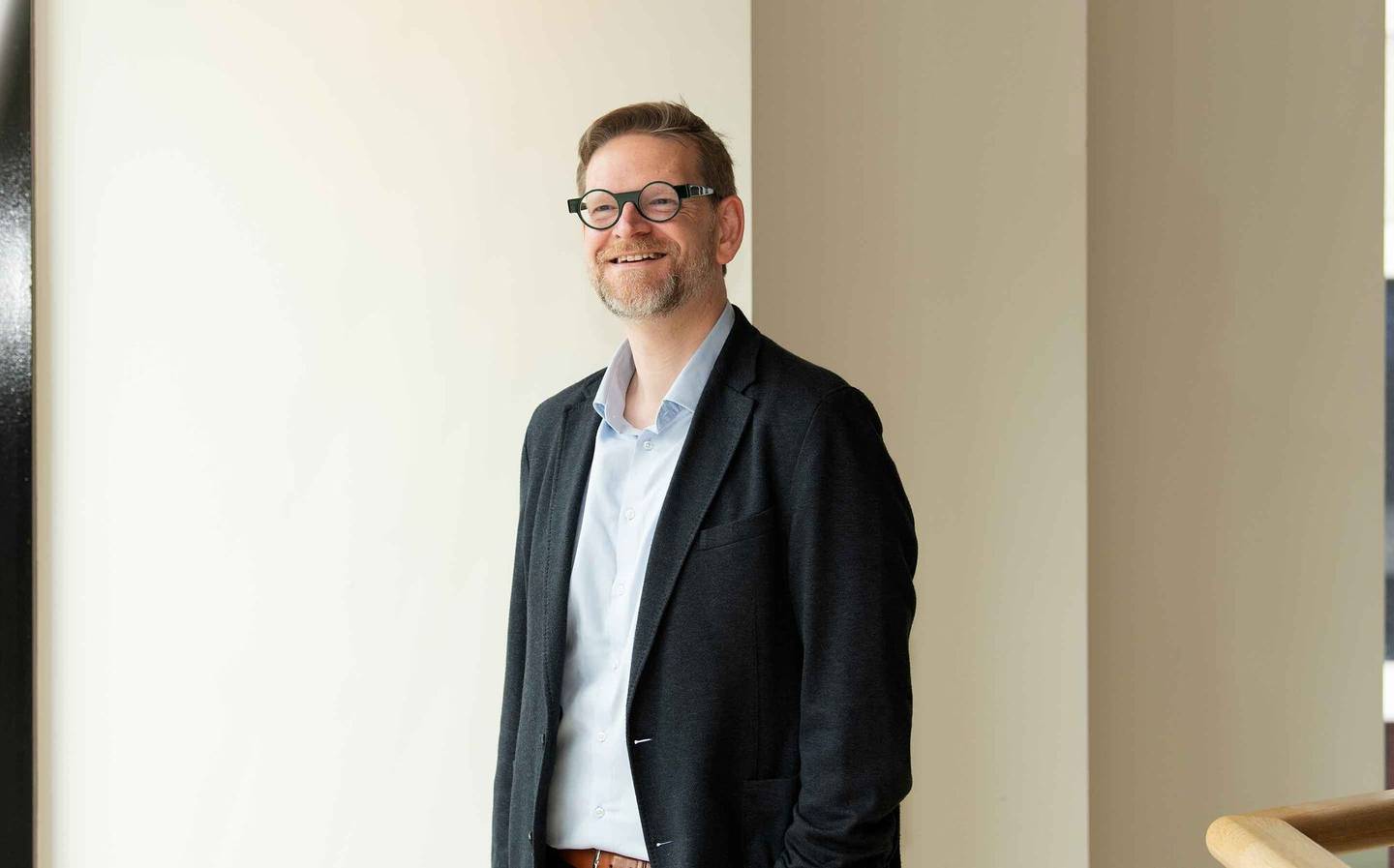
Stijn Viaene is a Full Professor at KU Leuven and Partner at Vlerick Business School, specializing in digital transformation, IT management, and business process innovation. He holds a Doctorate in Information Systems Management from KU Leuven and serves as Programme Director of Take The Lead. His research focuses on leveraging technology (big data, AI, blockchain) for enterprise digitalization, with a strong emphasis on leadership, agility, and business-IT alignment. He is the author of Digital Transformation Know How: Connecting digital transformation, agility and leadership and teaches across MBA, Executive Development, and Digital Leadership programs. Recent work explores AI-driven leadership, blockchain platforms for sustainability, and intra-organizational labor platforms. He also serves as Jury President for the Data News Awards and Board Member at Herita vzw. Education: Doctor in Information Systems Management (KU Leuven). Research interests include digital innovation ecosystems, process management, and governance frameworks for digital value creation. His articles address topics such as ambidextrous ERP systems, paradox management in transformations, and open innovation in public administration. Advising & Grants: Involved in multiple industry-public sector collaborations. Notable projects include blockchain-based water trade platforms and frameworks for sustainable digital ecosystems. His work bridges academic research with practical business applications through case-based teaching and action design research methodologies. Labs/Teams: Active in Vlerick’s Digital Transformation and IT Management research groups, contributing to initiatives like the Digital Leadership programme and strategic consulting for global organizations.
Philipp Tuertscher serves as Full Professor of Collaborative Innovation at Vrije Universiteit Amsterdam's School of Business and Economics, where he leads research within the Knowledge, Information and Innovation department and the KIN Center for Digital Innovation since 2013. His work bridges organizational theory with digital innovation practices across scientific, corporate, and community settings. Education: PhD in Management, University of St. Gallen (awarded 2009; research period 2003-2007) Tuertscher's research investigates how collaborative innovation emerges through social practices and organizational mechanisms. His fingerprint reveals dominant expertise in Open Innovation (spanning Computer Science and Social Sciences), Innovation Processes, and Digital Product Platforms, with significant contributions to understanding knowledge integration in complex systems like CERN and community-driven innovation in Wikipedia/Linux ecosystems. Recent work increasingly addresses sustainability challenges through crowdsourcing and multi-stakeholder problem-solving. His publication trajectory demonstrates consistent focus on collaborative innovation architectures, showing evolution from foundational studies of scientific collaborations (2014) to contemporary examinations of digital platform ecosystems (2021) and sustainable impact scaling (2020-2023). The work integrates management theory with practical applications in technology-intensive environments. Scientific Awards: Distinguished Winner of the Award for Responsible Research in Management (2022) JMS Best Paper Award (2020) AOM Best Paper Award (2020) SBE Education Award (2021) Professor Tuertscher actively mentors doctoral researchers including Diriker and Porter, and leads major initiatives like The Impact Lab: SBE Future of Learning Challenge. His funded projects include the €750,000 NWO Open Competition OPEN-QUAL grant (2022) focused on innovation management. He maintains strong international collaborations evidenced by co-authored work with institutions like Pennsylvania State University. As a core member of the KIN Center for Digital Innovation, he contributes to interdisciplinary teams advancing digital transformation research, with recent activities targeting data commons for biodiversity and climate impact initiatives through relational infrastructures.
Stefan Kuhlmann is a Professor and Academic Director of the Netherlands Graduate School of Science, Technology and Modern Culture (WTMC) at the University of Twente. He holds expertise in science, technology, and innovation governance studies with over 3817 citations. Previously, he held leadership roles at the Fraunhofer Institute for Systems Innovation Research and was a Professor at Utrecht University. Education: He earned a PhD and Habilitation in Political Science from the University of Kassel. His career spans roles including Deputy Director at Fraunhofer ISI, Head of Department for Technology & Innovation Strategies, and President of the European Forum for Studies of Policies for Research and Innovation (Eu-SPRI). Research Interests : Science, Technology, and Innovation (STI) Governance Responsible Research and Innovation (RRI) Science Diplomacy Innovation Policy Design Sustainability Transitions Evaluation Mechanisms in Public Research Awards : Recipient of the Emerald Citation of Excellence (2014) for impactful research contributions. Key Contributions : Co-editor of leading journals like Research Policy (2005-2020) Co-authored influential handbooks including Handbook on Science and Public Policy (2019) Pioneered frameworks for Transformative Innovation Policies and Responsible Research and Innovation Grants & Activities : Active in EU-funded projects (e.g., Res-AGorA, S4D4C) addressing Grand Challenges like climate action and science diplomacy. Organized major conferences like the Eu-SPRI Annual Conference series. Labs & Teams : Leads WTMC's initiatives in transdisciplinary education and transformation governance. Collaborates widely across Europe and emerging economies.
Maria Roszkowska-Menkes serves as Professor at the Louvain School of Management (LSM), Université catholique de Louvain (UCLouvain), Belgium. She is actively affiliated with the Louvain Research Institute in Management and Organizations (LouRIM), conducting research at the intersection of corporate governance, sustainability reporting, and institutional theory. Her institutional base operates within the College of Deans at Place des Doyens 1, Louvain-la-Neuve, where she contributes to LSM's mission of advancing management scholarship through critical organizational analysis. Her research program centers on Corporate Social Responsibility (CSR) evolution, Environmental, Social, and Governance (ESG) disclosure mechanisms, and non-financial reporting frameworks. She investigates how cultural contexts and regulatory environments shape corporate sustainability practices, with particular expertise in German and Polish business ecosystems. Her work employs institutional theory to analyze decoupling phenomena in sustainability reporting, cross-cultural variations in ESG implementation, and the effectiveness of European non-financial reporting directives. Current projects examine institutional investor influences on disclosure quality and the translation of sustainability rhetoric into operational practices. Analysis of her recent publications reveals a methodological emphasis on comparative institutional analysis, with increasing focus on the implementation gaps between regulatory requirements and corporate practices. Her scholarship demonstrates consistent engagement with critical questions about greenwashing mechanisms, cultural contingencies in CSR adoption, and the political economy of sustainability reporting. The trajectory shows deepening exploration of how varieties of capitalism frameworks explain divergent corporate responses to global sustainability challenges. Maria Roszkowska-Menkes operates within the Louvain Research Institute in Management and Organizations (LouRIM), a multidisciplinary hub fostering research on contemporary organizational challenges. This institute provides the collaborative environment for her investigations into governance-sustainability linkages, supporting both theoretical development and policy-relevant scholarship through its network of European management scholars.
G. James Lemoine is an Associate Professor in the Department of Organization and Human Resources at the School of Management, University at Buffalo. His research focuses on leadership (especially servant leadership, ethical leadership, and moral identity frameworks), creativity, and organizational behavior methodologies. He teaches courses in Organizational Behavior and Leadership. Education: PhD in Management (Georgia Institute of Technology) BS in Business Administration (Louisiana State University) His research interests span leadership ethics, creativity catalysts, and shared leadership networks. Notable contributions include frameworks linking servant leadership to stakeholder benefits and analyzing gender differences in creative performance. Recent work explores political skills in organizational change and VUCA (volatility, uncertainty, complexity, ambiguity) management. Selected Awards: SUNY Chancellor's Award for Excellence in Teaching (2021) Best Dissertation-Based Paper Award (Academy of Management, 2016) Fredric M. Jablin Doctoral Dissertation Award (ILA, 2016) His research has been published in journals like Academy of Management Annals, Journal of Applied Psychology, and Organizational Research Methods. He maintains active roles in professional organizations including the Academy of Management and Greenleaf Center for Servant Leadership. Lemoine advises on servant leadership effectiveness, leadership ethics, and multi-team empowerment spillover effects. His work has practical implications for improving organizational performance through morally-grounded leadership practices.
Steven Gray is a full professor in the Department of Community Sustainability at Michigan State University (MSU). He holds additional appointments at the National Institute of Standards and Technology and is a fellow at the Collective Intelligence Unit at the IT University of Copenhagen. His research focuses on socio-environmental modeling, knowledge diversity, and collective intelligence for sustainability, with over 100 peer-reviewed publications and a leading role in editing Environmental Modeling with Stakeholders: Methods, Theories and Applications . Gray’s work is supported by grants from the National Science Foundation, NOAA, USDA, and international bodies like the Belmont Forum. His lab develops the Mental Modeler software, applied globally in environmental planning contexts such as marine spatial planning, citizen science projects, coastal hazard mitigation, and agricultural conservation. Key projects include Collaborative Modeling of Mangroves and Seawalls (NOAA, 2023–2025) and Integrating Perspective-taking and Systems Thinking (NSF, 2021–2024). Research interests emphasize participatory modeling, systems thinking, and leveraging stakeholder knowledge for environmental decision-making. Notable contributions include advancing frameworks for assessing cognitive diversity in stakeholder groups and analyzing the role of collective intelligence in conservation. Gray’s lab also addresses urban food systems, disaster resilience, and climate-smart agriculture through interdisciplinary collaborations. Academic achievements include being named a fellow at the Collective Intelligence Unit and leading MSU’s Human-Environment Interactions Lab. Current projects focus on coastal resilience, fisheries management, and participatory approaches to complex environmental challenges.
Jered B. Carr is a Professor in the Department of Public Policy, Management, and Analytics at the University of Illinois Chicago (UIC), where he co-directs the Networks & Governance Laboratory (NGL). He served as Head of the department from 2014 to 2023 and previously held leadership roles as Co-Editor and Managing Editor of the Urban Affairs Review (2014–2022). His expertise spans intergovernmental management, metropolitan governance networks, and local government administration. Education: Carr earned his PhD in Public Administration from Florida State University's Askew School of Public Administration and Policy in 2000. His research focuses on understanding how informal and formal networks within and between governments improve public service delivery and policy outcomes. Current projects examine relational ties in shared service agreements and the evolution of multilayer governance networks. Research Interests: Carr investigates intergovernmental collaboration, metropolitan governance structures, and the performance of public service networks. His work bridges theoretical frameworks with applied policy analysis, emphasizing practical solutions for complex urban challenges. The NGL lab’s research often addresses 'wicked problems' requiring cross-jurisdictional cooperation. Key Contributions: His 2017 Donald C. Stone Scholar Award recognized outstanding research on intergovernmental relations. Recent publications explore contractual dynamics in interlocal agreements, fiscal challenges in urban governance, and the effectiveness of collaborative networks. Carr’s work consistently highlights the importance of relational contracting and institutional mechanisms in fostering successful public partnerships. Grants & Advising: While specific grants are not detailed, his role as department head and editorial leadership indicates significant contributions to academic infrastructure. Advising details are not provided in the text. Labs & Initiatives: The Networks & Governance Lab (NGL) is central to his work, focusing on global-local networks addressing public service challenges. The lab’s interdisciplinary approach integrates empirical research with policy recommendations for improving governance systems.
Sun Cole Seeberg Dyremose is a PhD Fellow at Aalborg University's Department of Sustainability and Planning within the Faculty of IT and Design. He contributes to the Centre for Blue Governance (AAU BLUE) with research focused on marine and maritime sustainability. His institutional affiliation includes active participation in the PERMAGOV research project through 2026. Education: M.Sc. Geography, Aalborg University (2021) Bachelor of Geography, Aalborg University (2019) His research centers on Energy Island development in North/Baltic Seas, analyzing policy frameworks for offshore wind deployment and decarbonization strategies. He examines collaborative governance models through human geography lenses, investigating local community impacts during green transitions. His work integrates place theory with marine spatial planning to address governance challenges in EU Green Deal implementation. Dyremose's publication portfolio demonstrates expertise in energy transition governance, with recent articles analyzing political dimensions of North Sea Energy Islands and diagnostic tools for multi-layer marine governance. His research consistently connects technical infrastructure development with socio-political implementation challenges. Research Activities: Active participant in PERMAGOV project (2023-2026) on marine governance performance Contributor to EU policy development frameworks supporting Green Deal objectives Organizer of stakeholder workshops on marine governance (2024) Member of PLAN Junior Researchers Network
Hannele Wallenius serves as a Senior Advisor in the Department of Industrial Engineering and Management within Aalto University's School of Science, holding the academic rank of Researcher. She maintains an active dual role in research and teaching, evidenced by her dedicated research profile, peer-reviewed publications spanning 2009-2022, and multiple teaching accolades from the Department of Industrial Engineering and Management. Her research program centers on Multiple Criteria Decision Making (MCDM), Decision Support Systems, and Operations Research, with specialized expertise in behavioral dimensions of decision processes. Key contributions include bibliometric mapping of global MCDM research communities, empirical analyses of crowdfunding campaign success factors, and theoretical advancements in multi-attribute reverse auctions. Her work consistently bridges methodological rigor with real-world applications, particularly in online marketplaces and sustainable development contexts, often incorporating behavioral insights to enhance traditional operations research models. Analysis of her publication trajectory reveals evolving focus from foundational bibliometric studies (2009-2012) toward applied problem-solving in financial technology and global challenges (2015-2022). Recent work demonstrates increased emphasis on how decision sciences can address complex societal issues, as seen in her 2022 article examining MCDM's role in solving world problems. Collaborative patterns show consistent partnership with Jyrki Wallenius across 9 of 10 indexed publications, indicating a robust research alliance. Wallenius' teaching excellence has been formally recognized through: Student Union Teaching Award, Aalto University, School of Science (2010) Teacher of the Year, Prodeko (2015, 2014, 2009, 2005, 2004, 2001) While specific student advising details and grant funding are not documented in source materials, her prolific publication record and teaching awards indicate substantial mentorship impact. No laboratory affiliations or dedicated research teams are mentioned, though her departmental role suggests integration within Industrial Engineering and Management research ecosystems. Current contact information (email: hannele.wallenius@aalto.fi; phone: +358503878109) confirms ongoing institutional engagement.
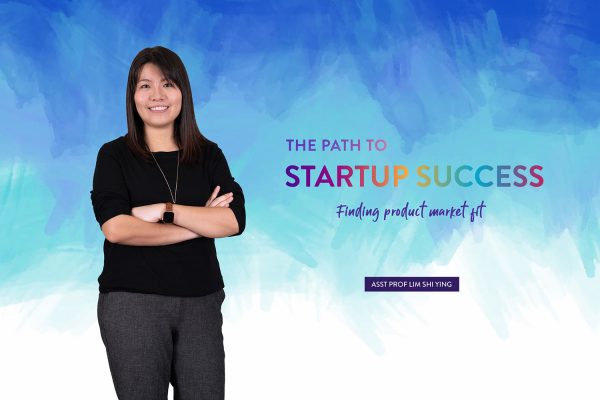
Dr. LIM Shi Ying is an Assistant Professor in the Department of Information Systems and Analytics at the National University of Singapore (NUS School of Computing). She holds a Ph.D. in Information Systems from The University of Texas at Austin, an M.P.H. in Health Management from Yale University, and a B.A. in Molecular & Cell Biology (Immunology) and Economics from UC Berkeley. Her research focuses on digital entrepreneurship, healthcare IT, and computational social science, emphasizing strategic reorientations in nascent ventures and digital artifact impacts. She has been recognized with teaching awards and nominations for best papers at ICIS and HICSS. Education: Ph.D. (UT Austin), M.P.H. (Yale), B.A. (UC Berkeley) Affiliations: NUS School of Computing, McCombs School of Business (UT Austin), Yale School of Public Health Her research explores how digital tools and platforms enable creative problem-solving in uncertain markets, particularly in healthcare and digital ecosystems. Notable projects include analyzing startup trajectories to product-market fit and investigating institutional barriers in digital health innovation. Collaborations span industries including hospitals, pharmaceuticals, and the WHO. Publications highlight themes like generativity in user innovation (e.g., IKEA hacks), platform versioning impacts, and telemedicine coordination. Awards include teaching excellence and multiple best paper nominations for work on resource mobilization and digital health ventures.
Konstantinos Zachos is a Research Fellow and Chief Technology Officer at the Centre for Creativity enabled by AI (Bayes Business School, City, University of London). His work focuses on integrating Artificial Intelligence with Human-Computer Interaction to develop Digital Creativity Tools that enhance innovation across sectors like journalism, manufacturing, social care, and elite sports training. He co-leads the JECT.AI spin-out and the QUEST research project. Expertise : AI for Creativity, Software Engineering, Requirements Engineering, Service Discovery Collaborations : Co-developed tools with Neil Maiden, James Lockerbie, and teams at City, University of London and Miele GmbH His recent publications highlight Generative AI applications in opportunity discovery, with empirical evaluations in newsrooms and manufacturing environments. Key themes include: Creative process modeling Cross-domain AI integration Interactive systems for collaborative innovation Requirements surfacing in evolving systems Konstantinos maintains IEEE membership and actively bridges technical innovation with Human-Centered Design principles.
Dr. Carly Tindall-Biggins serves as the Associate Director of Clinical Training for the School Psychology Department at The Chicago School's College of Professional Psychology in Chicago, Illinois. As a Nationally Certified School Psychologist (NCSP) licensed in Illinois, she plays a key leadership role in clinical training while maintaining active research and teaching responsibilities. Education: BA, University of Iowa, Iowa City, Iowa (2012) MA, The Ohio State University, Columbus, Ohio (2013) MEd, Loyola University Chicago, Chicago, Illinois (2016) PhD in School Psychology, Loyola University Chicago, Chicago, Illinois (2020) Dr. Tindall-Biggins' research focuses on critical issues in educational psychology, particularly examining factors related to the school-to-prison pipeline and supporting youth involved in the juvenile justice system. Her doctoral dissertation utilized youth participatory action research to examine youth empowerment processes. She has extensive experience teaching courses in research methodology, systems change, neurodiversity, and social-emotional assessment and intervention. Her current research projects address school psychologists' experiences in post-pandemic educational environments, including burnout and professional boundary setting. Analysis of Dr. Tindall-Biggins' scholarly output reveals a consistent focus on educational equity, particularly regarding marginalized youth populations and disciplinary practices that contribute to the school-to-prison pipeline. Her recent work increasingly addresses mental health challenges in educational settings, with a growing emphasis on professional wellbeing among school psychologists following the pandemic. Professional Memberships: Illinois School Psychologists Association National Association of School Psychologists American Psychological Association Dr. Tindall-Biggins has extensive clinical experience, having previously worked as a school psychologist in a suburban high school where she engaged in collaborative problem-solving, multi-tiered systems of support, crisis response and intervention, and comprehensive case study evaluations. Her professional expertise spans social-emotional assessment and intervention, behavioral assessment and intervention, Multi-Tiered Systems of Support (MTSS), systems change, and supervision. She has presented her research at numerous national conferences, particularly the National Association of School Psychologists Annual Convention.