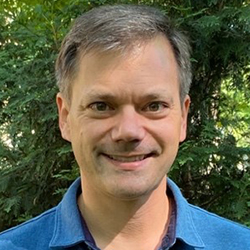
Mehdi Kabir is an Assistant Professor of Mechanical Engineering at Alfred University, affiliated with the Engineering Laboratories . His work focuses on advanced thermal management, additive manufacturing, and sustainable energy systems. Research Interests: Multi-Scale Multi-Phase Heat Transfer Thermal Management for High-Heat Flux Electronics and Space Applications Additive Manufacturing (DMLS, SLM, SLS techniques) Smart Coatings and Ultra-High-Temperature Materials Solar-Thermal and Geothermal Energy Systems Electrochemical Energy Storage (LIBs) No publications or awards are explicitly listed in the provided text. He is part of the Engineering Laboratories at Alfred University.
Matthew J. Hall is a Professor in the Department of Mechanical Engineering at the University of Texas at Austin , where he also holds the Louis T. Yule Fellowship in Engineering . He has been a faculty member since 1991 and is affiliated with the Cockrell School of Engineering . His research spans engine combustion processes , thermal fluids systems , engine controls , optical diagnostics , battery safety , and alternative fuels . He is particularly known for his work on cold-start emissions , spark ignition , engine friction reduction , and thermoelectric energy recovery . He teaches courses in Thermodynamics , including modeling of power cycles and HVAC systems , and has published over 150 technical articles. His recent work includes innovations in ammonia combustion , biomass gasification , and advanced engine diagnostics . Scientific Awards & Honors: Fellow of the Society of Automotive Engineers (SAE) Louis T. Yule Fellowship in Engineering Associate Editor, SAE International Journal of Engines Research Impact & Leadership: Prof. Hall leads multidisciplinary efforts in combustion science , energy systems , and sustainable propulsion . His lab has contributed to reducing engine friction by up to 40%, improving fuel efficiency at idle, and advancing the use of ammonia as a low-carbon fuel. He also explores thermoelectric generators for extending drone flight range and improving vehicle energy recovery systems.
Prof. Patrick Jenny is a Full Professor at the Department of Mechanical and Process Engineering and Head of the Institute of Fluid Dynamics at ETH Zurich. His research focuses on computational fluid dynamics (CFD), numerical methods for turbulent and multiphase flows, and reservoir simulation. He has held positions at ChevronTexaco and Cornell University, and received the National Latsis Prize 2005. PhD in CFD from ETH Zurich (1997) Postdoctoral work at Cornell University (1997–1999) Senior Researcher at ChevronTexaco (1999–2003) Research interests include: turbulent reactive flows, PDF modeling, multi-scale reservoir simulation, and data assimilation in engineering systems. He teaches courses on fluid dynamics, turbulence, and computational methods. Over 100 peer-reviewed publications span topics like fracture modeling, LES/RANS coupling, and particle-laden flows. His work bridges academia and industry, addressing challenges in energy systems, environmental engineering, and numerical algorithms. Winner: National Latsis Prize 2005 Led over 20 PhD projects and collaborates with institutions globally. His lab develops open-source tools for CFD and energy systems analysis.
Pedro Jorge Martins Coelho is a Professor in the Mechanical Engineering Department at Instituto Superior Técnico, University of Lisbon, Portugal. His academic career spans several decades with a focus on advanced thermal sciences and computational methods. His research has significantly contributed to the understanding of radiative heat transfer phenomena in complex systems. Dr. Coelho's educational background includes a Ph.D. in Mechanical Engineering, which has provided the foundation for his extensive research in thermal sciences. His work demonstrates a strong theoretical foundation combined with practical applications across various engineering domains. His primary research interests encompass radiative heat transfer, turbulence-radiation interaction, combustion modeling, and numerical methods for thermal systems. Recent work has expanded into biomedical applications of thermal radiation, particularly in laser-tissue interactions for cancer detection and treatment. His publications reveal a consistent focus on developing and refining computational methods for solving complex heat transfer problems, with particular emphasis on the radiative transfer equation in various media and geometries. Analysis of his recent publications shows a clear evolution toward more complex and interdisciplinary applications, including biomedical thermal applications, advanced turbulence modeling, and thermal management of electrical systems. His work consistently bridges fundamental theoretical developments with practical engineering applications, particularly in combustion systems, energy recovery, and thermal management. Dr. Coelho has served on editorial boards for prestigious journals including Heat Transfer Research, Computational Thermal Sciences, and International Journal of Energy for a Clean Environment, demonstrating his standing in the thermal sciences community. His research collaborations span numerous institutions and researchers worldwide, as evidenced by his extensive publication record with various co-authors across different countries. He has also been involved in conference organization, serving as Associate Editor for major international heat transfer conferences.
Amrita Basak serves as an Associate Professor in the Department of Mechanical Engineering within the College of Engineering at Pennsylvania State University. Her research focuses on advancing metal additive manufacturing technologies, particularly for gas turbine applications. She maintains her laboratory in 233 Reber Building at University Park, PA. Her primary research interests center on laser-based additive manufacturing processes including Laser Powder Bed Fusion (L-PBF) and Laser Directed Energy Deposition (LDED). Specific expertise spans nickel-based superalloys, melt pool dynamics, microstructure-property relationships, fatigue behavior of additively manufactured components, and AI-driven process optimization. Her work addresses critical challenges in thermal distortion control, surface roughness effects, and high-temperature performance of turbine components. Analysis of her recent publications reveals strong emphasis on integrating machine learning with experimental methods to optimize additive manufacturing processes. Key trends include Gaussian process regression for melt pool modeling, Bayesian optimization for thermal management, reinforcement learning for parameter control, and multi-fidelity modeling approaches. Her research bridges fundamental materials science with practical engineering applications in aerospace and energy sectors. Scientific Awards: NSF CAREER Award (2024) for gas turbine research DARPA Young Faculty Award (2022) for multi-laser additive manufacturing Materials Research Institute Roy Award (2023) Professor Basak actively mentors graduate students including R. Pal, N. Menon, and A. Kushwaha who appear as first authors on multiple publications. Her research is supported by significant grants including NSF CAREER funding, Office of Naval Research grants (2024), and DARPA funding. Current projects include 'On-Demand 3D Printing of Food-Grade Biopolymer-Encapsulated Ferrate(VI) for Individualized and Equitable Access to Drinking Water' and metal additive manufacturing research for gas turbine hot section components.
Boris Kaus is a Full Professor and Chair of Geophysics and Geodynamics at the Institute of Geosciences, Johannes Gutenberg University Mainz, Germany. His research focuses on understanding geological processes from grain scale to planetary scale using mathematical and numerical models. Funded by the German Research Foundation, European Research Council, and BMBF, his work spans lithospheric deformation, melt migration, fold-and-thrust belts, and high-performance computing applications in geosciences. His research interests center on geodynamic modeling of lithospheric processes, including subduction zones, mantle convection, and crustal deformation. Kaus develops novel numerical approaches to simulate complex geological phenomena, with emphasis on coupling between erosion, lithosphere dynamics, and mantle flow. His group creates specialized software for high-performance computing systems to tackle multi-scale geophysical problems. His scientific awards include the Paul Niggli Medal, EGU Arne Richter Award, multiple ERC grants (Starting, Proof-of-Concept, Consolidator), and the Carl Friedrich Gauss Lecturer honor. He has received recognition for editorial contributions including G-Cubed's Excellence in Refereeing award. ERC Consolidator Grant MAGMA (2018-2023) ERC Proof of Concept Grant SALTED (2016-2017) ERC Starting Grant MODEL (2010-2015) John von Neumann Excellence Project for HPC ETH Medal for Ph.D. thesis Kaus actively supervises graduate students and leads research projects funded by major European and German agencies. His group develops open-source software like GeophysicalModelGenerator.jl and maintains strong collaborations with international institutions including ETH Zürich and USC. Current projects focus on magma dynamics, lithospheric shear localization, and the development of advanced numerical methods for geodynamic simulations. The research group operates within the Geodynamics & Geophysics team at JGU Mainz, utilizing high-performance computing resources and collaborating with multiple European research initiatives including IMPRS and FORTHEM networks. Their laboratory specializes in numerical modeling of Earth systems with applications to tectonics, volcanology, and crustal evolution.
Dr. Youngchul Ra is an Associate Professor in the Department of Mechanical and Aerospace Engineering at Michigan Technological University. He holds a PhD from MIT (1999) and degrees from Seoul National University. His expertise includes computational fluid dynamics (CFD), combustion modeling, chemical kinetics, and alternative fuel research. His work focuses on advanced combustion strategies like Gasoline Compression Ignition (GCI), engine CFD code development, and high-performance computing. Education: PhD in Mechanical Engineering, Massachusetts Institute of Technology (1999) Masters and Bachelors in Mechanical Engineering, Seoul National University Research Interests: Developing multi-component fuel models for real-world applications Optimizing six-stroke GCI engines with advanced valve technologies Reducing emissions via combustion control and injection strategies Parallel computing techniques for large-scale engine simulations Recent work emphasizes oxygenated fuels in GCI engines and parametric studies of combustion efficiency. His CFD models are validated against experimental data for accuracy. His research has led to advancements in low-temperature combustion and emission reduction without explicit awards listed. He collaborates on engine design optimization and fuel formulation projects.
Roland N. Horne is the Thomas Davies Barrow Professor of Earth Sciences at Stanford University and Senior Fellow at the Precourt Institute for Energy. He holds positions in the Department of Energy Science & Engineering and is an Affiliate at the Stanford Woods Institute for the Environment. With degrees from the University of Auckland (BE, PhD, DSc), Horne has established himself as a leading expert in geothermal reservoir engineering and energy production optimization. His research focuses on inverse problems in reservoir modeling, including tracer analysis of fractures, computer-aided well test analysis, production schedule optimization, and automated history matching. Horne has made significant contributions to understanding geothermal reservoir engineering and multiphase flow of boiling fluids through porous materials and fractures. The analysis of his recent publications (2023-2025) reveals a strong emphasis on enhanced geothermal systems (EGS), with particular focus on flexible operations, economic modeling, and advanced characterization techniques. His work increasingly incorporates machine learning approaches for reservoir analysis and has expanded into microbial tracing methods for interwell connectivity assessment. There's also significant attention to US geothermal resource potential and integration into the broader energy transition. Honorary Member of the Society of Petroleum Engineers Member of the US National Academy of Engineering Multiple SPE Distinguished Lecturer appointments (1998, 2009, 2020) John Franklin Carl Award recipient Five Best Paper awards from Geothermal Resources Council Patricius Medal from German Geothermal Society Core Values Award from Women in Geothermal (2023) Horne has supervised 60 PhD and 135 MS students throughout his career. His current teaching includes undergraduate and graduate courses in Fundamentals of Energy Processes, Geothermal Reservoir Engineering, Mass and Energy Transport in Porous Media, and Well Test Analysis. He previously served as President of the International Geothermal Association (2010-2013) and Technical Program Chair for multiple World Geothermal Congress events. Horne maintains active research collaborations worldwide, including with the University of Tokyo (where he was a Fellow of the School of Engineering in 2016) and China University of Petroleum. His current research group focuses on advancing EGS technologies and developing more accurate reservoir characterization methods for geothermal applications.
Prof Nikolaos Nikiforakis is a Professor at the University of Cambridge, leading the Laboratory for Scientific Computing at the Cavendish Laboratory. He holds roles including Director for Academic Programmes of the Centre for Scientific Computing, Course Director of the MPhil in Scientific Computing, and Deputy Director of the EPSRC Centre for Doctoral Training in Computational Methods for Materials Science. He is also a Fellow and Director of Studies in Mathematics at Selwyn College, Cambridge. He directs The Gianna Angelopoulos Programme for Science Technology and Innovation. He holds a BSc in Aeronautical Engineering from the University of Manchester, followed by an MSc in Aerospace Propulsion and a PhD in 'Evolution of Detonation Waves' from Cranfield Institute of Technology. His postdoctoral research at the University of Cambridge’s Department of Chemistry focused on computational models for stratospheric ozone depletion. He later founded the Laboratory of Computational Dynamics at the Department of Applied Mathematics and Theoretical Physics before joining the Cavendish Laboratory in 2008. His research focuses on numerical algorithms and High Performance Computing for multi-physics simulations involving complex systems of nonlinear PDEs. Applications span detonation dynamics, plasma physics, and materials science, with industry collaborations for software development. His work addresses multi-scale, multi-physics problems previously deemed intractable, with practical applications in aerospace, energy, and environmental fields. He leads academic programmes in scientific computing and supervises doctoral research through the EPSRC CDT. His contributions bridge fundamental science and industrial innovation, emphasizing computational methods for materials and fluid dynamics.
Patrick Antolin is an Associate Professor at Northumbria University's Department of Mathematics, Physics and Electrical Engineering. His research focuses on solar atmospheric phenomena, including coronal heating via MHD waves, coronal cooling processes (e.g., coronal rain and prominences), and thermal instabilities. He holds dual PhDs from Kyoto University (2009, numerical simulations) and the University of Oslo (2012, solar observations). Education: BSc Mathematics (2003), Universidad de los Andes, Colombia BSc Physics (2004), Universidad de los Andes, Colombia MSc (2006), Kyoto University, Japan PhD (2009), Kyoto University PhD (2012), University of Oslo Research Interests: Magnetohydrodynamics (MHD) and wave dynamics Numerical modelling (parallel computing) Forward modelling of observational diagnostics Solar observations using space- and ground-based instruments His work emphasizes understanding coronal heating mechanisms, thermal non-equilibrium processes, and the role of magnetic topology in solar phenomena. Key Contributions: Developed models for coronal rain formation via thermal instabilities near magnetic null points Investigated MHD wave-driven heating in coronal loops Advanced techniques for decomposing solar EUV emissions to study plasma components Awards: 2018: The Cool Alter-Ego of the Hot Solar Corona (recognizing contributions to thermal non-equilibrium research) Grants & Activities: Recipient of STFC Ernest Rutherford Fellowship (2016–2019) Collaborator on Solar Orbiter/EUI Consortium since 2020 Organized COSPAR 2021 sessions on solar physics Lab/Team: Leads a research group focusing on solar coronal dynamics, numerical simulations, and multi-wavelength observational analysis.
Ronan Vicquelin is a University Professor (1st Class) at CentraleSupélec, Paris-Saclay University, affiliated with the EM2C Laboratory (CNRS). He serves as Head of the Department of Aeronautics, Space and Transport and co-supervises the High Performance Computing Mésocentre. His academic appointments include previous roles as University Professor (2nd class) and Head of Aerospace programs. Education includes Habilitation (University of Rouen Normandy, 2018), PhD in Energetics (École Centrale Paris, 2010), M.Sc. in Mechanical Engineering & Aerospace (École Centrale Paris, 2006), and Engineering Diploma (École Centrale Paris, 2006). Research focuses on turbulent reacting flows with emphasis on: numerical simulation of combustion systems, LES/DNS methodologies, uncertainty quantification, hydrogen combustion dynamics, conjugate heat transfer, and radiative energy transfer. Current investigations explore flame stabilization mechanisms, multi-physics coupling, and high-performance computing applications for aerospace propulsion systems. Publications predominantly address combustion science, with recent works (2021-2025) emphasizing hydrogen flame dynamics, NOx emission control, advanced numerical methods for reactive flows, and experimental validation of turbulent combustion models. Thermal radiation effects and multi-phase flow interactions constitute emerging themes. Advises multiple PhD candidates with projects funded by ANR, EU programs (ACHIEVE, SOPRANO), and industry partnerships (Safran, Air Liquide). Research grants include PEPR OXY3C, ANR HyMaX, and ANR OXYTEC focusing on zero-emission combustion technologies. Leads experimental and computational research at EM2C Laboratory, coordinating teams working on turbulent combustion diagnostics, high-fidelity simulations, and development of the Mésocentre HPC infrastructure for large-scale CFD.
Gregory J. Wagner is an Associate Professor of Mechanical Engineering and Director of Graduate Studies at Northwestern University's McCormick School of Engineering. His research focuses on developing computational methods for multi-scale and multi-physics problems in additive manufacturing, fluid dynamics, and heat transfer. He leads the Wagner Research Group, which specializes in high-performance computing tools for complex engineering simulations. Education includes a Ph.D., M.S., and B.S. in Mechanical Engineering from Northwestern University and Boston University. His work integrates machine learning with traditional computational methods to model material behavior, microstructure evolution, and process-structure-property relationships in advanced manufacturing. Notable contributions include the GO-MELT framework for thermal simulations and the C-HiDeNN neural network approach for large-scale systems. Research interests span additive manufacturing process modeling, multiphysics coupling, and data-driven approaches for material design. Awards include the Bette and Neison Harris Chair in Teaching Excellence. Publications emphasize thermal modeling, phase change phenomena, and computational fluid dynamics innovations. His lab's work bridges mesoscopic and multiscale modeling, with applications in energy systems, biomedical devices, and environmental engineering. Collaborations focus on experimental validation and industrial-scale simulation challenges.
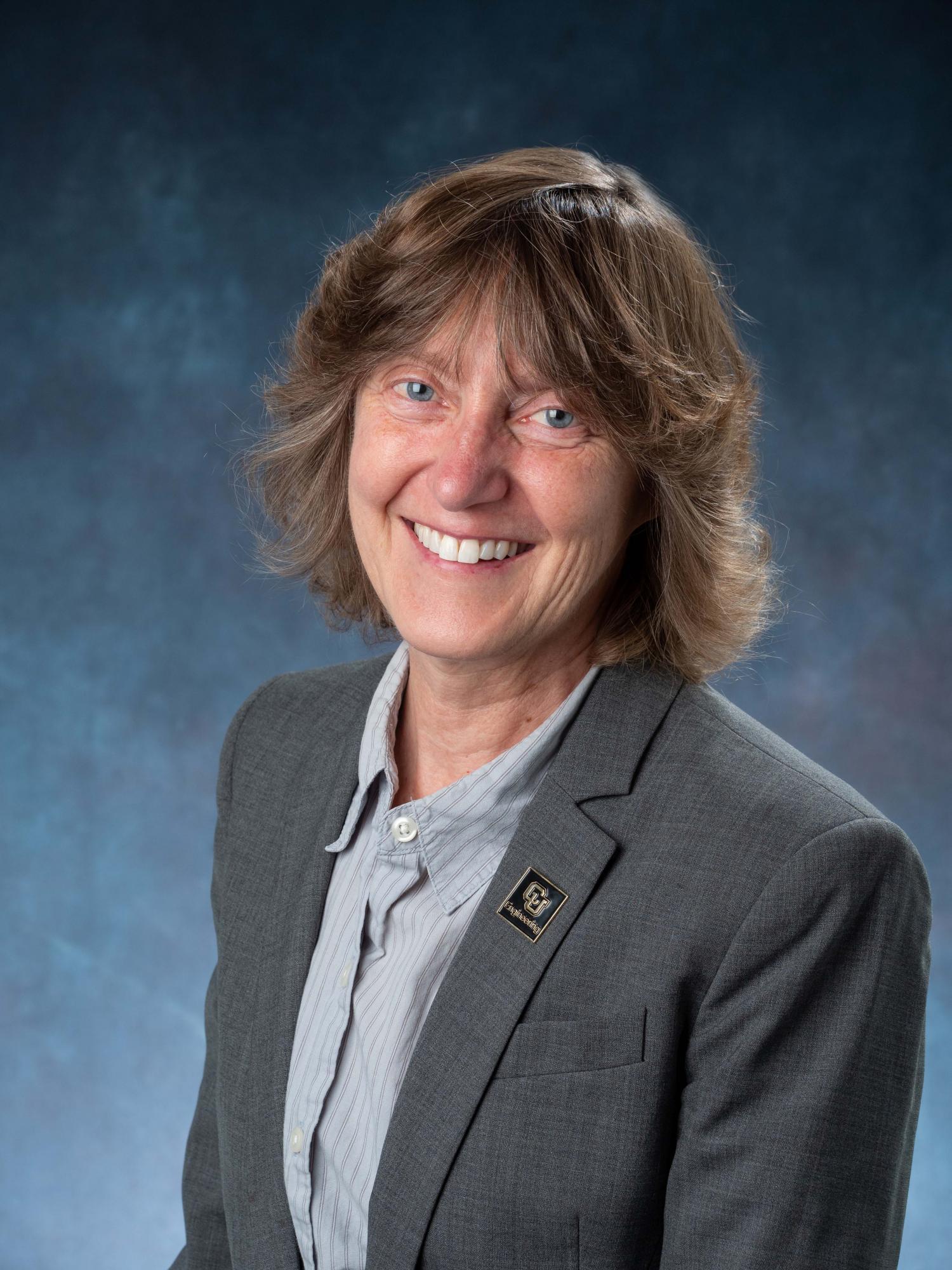
Dr. Hope Michelsen is an Associate Professor in the Department of Mechanical Engineering at the University of Colorado Boulder, specializing in Thermo Fluid Sciences and Air Quality. Her research focuses on carbonaceous particle formation mechanisms, combustion diagnostics, and their environmental impacts. She leads efforts in developing laser/X-ray-based diagnostic tools for studying soot evolution in flames and atmospheric systems. Research Interests include soot inception/growth, black carbon climate effects, and particle synthesis control. She has pioneered studies on resonance-stabilized radicals' role in soot formation and developed novel sampling techniques like jet-entrainment methods. Her work bridges fundamental combustion science with practical applications in air quality and climate mitigation. Awards: Fellow, American Physical Society Fellow, The Optical Society Alameda County Women’s Hall of Fame Inductee Lab facilities include advanced diagnostics at ECME 1B68/ECNW 180. Research collaborations involve multi-scale modeling of emissions and atmospheric transport. Current projects address wildfire soot dynamics and Arctic methane monitoring through inverse modeling techniques.
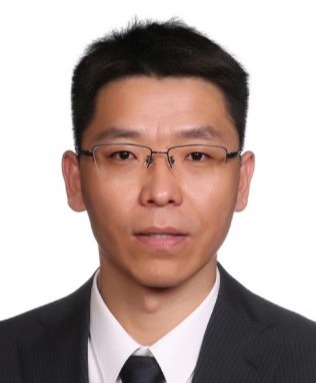
Cao Haishan is an Associate Professor at Tsinghua University, affiliated with the Department of Energy and Power Engineering in the School of Mechanical Engineering. His research focuses on cryogenic cooling systems, high heat flux thermal management, and the physics of amorphous ice formation and phase transitions. He leads a research group supported by the National Natural Science Foundation of China and industry partners including Huawei, Midea, and Lenovo. Ph.D., Mechanical Engineering, University of Twente, 2013 M.Sc., Chemical Engineering, Dalian Institute of Chemical Physics, Chinese Academy of Sciences, 2009 B.Sc., Chemical Engineering, Zhejiang University, 2006 Dr. Cao's research spans three major areas: cryogenic cooling (including micro cryocoolers and sorption systems), high heat flux electronic cooling (especially with non-condensable gases), and the formation and transformation of amorphous water ice. His work combines theoretical modeling, computational simulation, and experimental validation, often at micro and nano scales. He applies principles from thermodynamics, fluid dynamics, and materials science to solve engineering challenges in refrigeration and thermal control. The recent publications reflect a strong trend toward interdisciplinary research, integrating machine learning for heat transfer prediction, computational screening of MOFs for cryogenic switches, and fundamental studies of ice nucleation on various substrates. The articles span journals in physics, engineering, materials, and applied thermal sciences, indicating broad impact across multiple domains. Notable scientific awards include: Gustav and Ingrid Klipping Award (2016) Cryogenics Best Paper Award (2017) Annual Teaching Excellence Award, Tsinghua University (2023) Excellent Supervisor Award, Tsinghua University (2024) Multiple First Prize Advisor awards in national student contests on energy saving Dr. Cao has been principal investigator on several grants, including projects funded by the National Natural Science Foundation of China on amorphous ice lifetime and micro-cryocooling for semiconductor chips. He has also led industry-university collaborations with Huawei, Midea, and Lenovo. He advises graduate students and leads a research team focused on next-generation cooling technologies. He serves on editorial boards for Journal of Refrigeration , Vacuum and Cryogenics , and Energies , and has chaired sessions at major international conferences such as ICEC-ICMC and ACTS. His research group operates within the Institute of Thermophysics at Tsinghua University, leveraging facilities in the Lee Shau Kee Science and Technology Building. The team collaborates with national laboratories and international institutions, particularly maintaining ties with the University of Twente. Current efforts are directed toward ultra-low vibration cooling, efficient separation of non-condensable gases, and extending the stability of amorphous ice for cryobiological applications.
Joe Alexandersen is an Associate Professor in the Department of Mechanical Engineering at the University of Southern Denmark (SDU), affiliated with the Institute of Mechanical and Electrical Engineering. His research spans structural optimization, heat transfer, fluid dynamics, and high-performance computing, with applications in heat sink design, microfluidic devices, and additive manufacturing. Research Interests Topology and shape optimization Conjugate heat transfer Navier-Stokes flow modeling Finite element methods High-performance computing Scientific Awards 2022 Fluids 2020 Best Paper Award 2017 DTU Young Researcher Award 2015 ISSMO/Springer Prize for Young Scientist Key Projects HiHeaT: Topology optimization for high heat flux components (2024–2027) Structural Analysis of Large Modular Vessels (2025–2027)