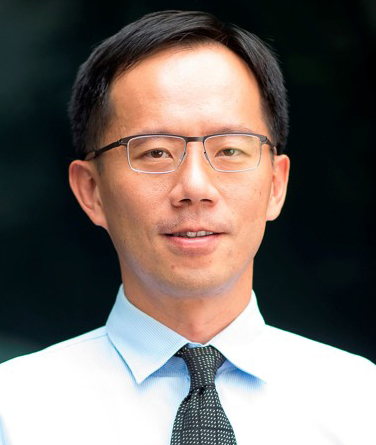
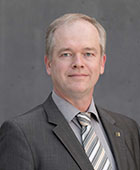
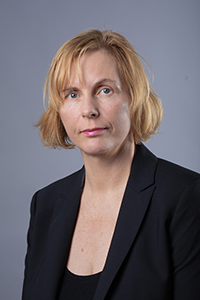
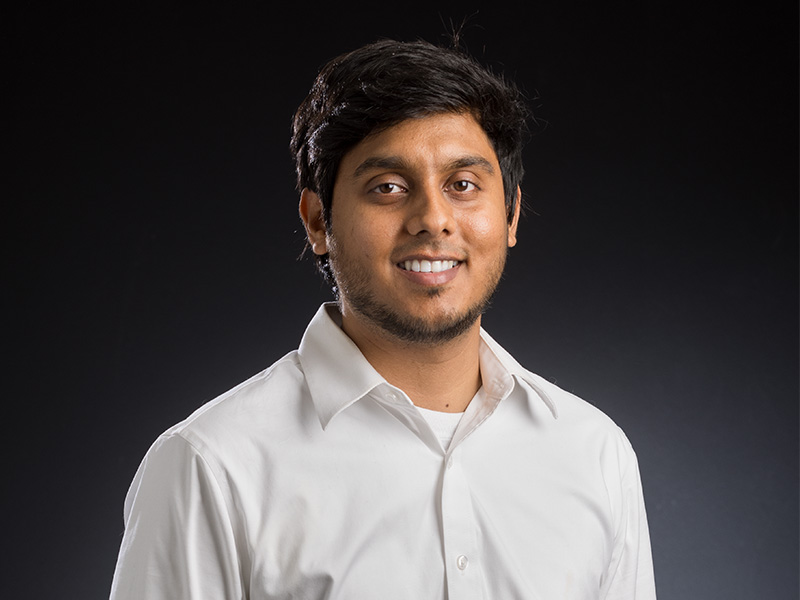
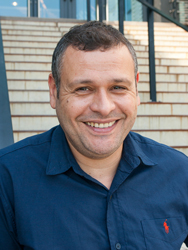
CHENG Shih-Fen is an Associate Professor of Computer Science at Singapore Management University (SMU) and a Principal Research Scientist at Amazon. He holds a PhD in Industrial and Operations Engineering from the University of Michigan and a BSE in Mechanical Engineering from National Taiwan University. His research focuses on modeling and optimization of complex systems in urban computing, decision-making, and transportation, with notable contributions to taxi fleet management, ride-hailing systems, and sustainable logistics. Research interests include Artificial Intelligence , Decision Optimization , Machine Learning , and Urban Sustainability . Notable achievements include prestigious awards from CIKM, AAMAS, and INFORMS. He has advised students such as Qian Shao and Pang Jin Tan, who received SMU Presidential Doctoral Fellowships. Key contributions include the Driver Guidance System (DGS) for taxis and patented taxi demand prediction models. Publications span top venues like IJCAI, AAAI, and Transportation Science. He is a Senior Editor of Electronic Commerce Research and Applications and actively contributes to professional communities like INFORMS and AAAI.
Professor Zhenjun Ma is a Professor and Deputy Director of the Sustainable Buildings Research Centre (SBRC) at the University of Wollongong. He holds a PhD from The Hong Kong Polytechnic University and has expertise in renewable energy systems, thermal energy storage, and building energy efficiency. His research focuses on advancing sustainable HVAC solutions, building control optimization, and demand flexibility in energy systems. He has received prestigious awards including the World Society of Sustainable Energy Technologies Innovation Award and Excellence in HVAC&R Research from AIRAH. Education: BEng and MSc from Xian Jiaotong University; PhD from Hong Kong Polytechnic University. Current academic roles include editorial board memberships in journals like Renewable Energy and Energy Conversion and Management , and leadership in initiatives like the NSW Decarbonisation Innovation Hub. Research Interests: Renewable energy integration in buildings, thermal storage technologies, data-driven building analytics, and grid-to-building energy systems. Active in over 40 funded projects, including grants from Australia's Department of Industry and the NSW Government. Awards: Invitational Fellowship from Japan Society for the Promotion of Science (2025), Fellow of AIRAH (2021), and multiple best paper awards. Supervises over 30 PhD/Master’s students on topics like energy flexibility optimization and net-zero building systems. Labs/Teams: Leads SBRC’s energy efficiency and sustainability research clusters. Collaborates with industry partners like BlueScope Steel on solar energy solutions.
Univ.-Prof. Dr.-Ing. habil. Volker Rodehorst is a full professor of computer vision at Bauhaus-Universität Weimar, holding positions in both the Faculty of Media and Faculty of Civil Engineering. His research focuses on photogrammetric computer vision, image analysis, 3D reconstruction, and structural health monitoring with applications in civil infrastructure inspection and urban modeling. He leads projects like ev.AI.luate and InfraCloud, leveraging AI and UAS technologies for infrastructure assessment. Education: PhD (2003): Technical University of Berlin, Faculty of Civil Engineering & Applied Geosciences Habilitation (2013): TU Berlin, Faculty of Electrical Engineering & Computer Science Computer Science Diploma (1994): TU Berlin Research Interests: UAS-based structural inspection using multi-view stereo and deep learning Crack detection and segmentation in concrete structures Automated building age estimation for energy modeling Flight path planning optimization for complex structures Integration of computer vision into BIM workflows Publications: Recent work emphasizes robust algorithms for crack detection (Omnicrack30k benchmark), UAS flight path optimization, and semantic segmentation challenges in bridge inspections. Key contributions include MVCrackViT and CISOL datasets advancing structural analysis methodologies. Awards: Best Academic Performance Prize (1994) - TU Berlin ISPRS Presidential Citation (2008) for WG III/2 leadership Grants & Labs: Leads Bauhaus' 3D-RealityCapture-ScanLab and coordinates EU projects like AISTEC-PRO. Active in developing modular solutions like smoodPLAN for infrastructure inspection. Teaching: Offers courses in photogrammetric computer vision, geodesy, and parallel systems. Supervises PhD students in structural health monitoring and computer vision.
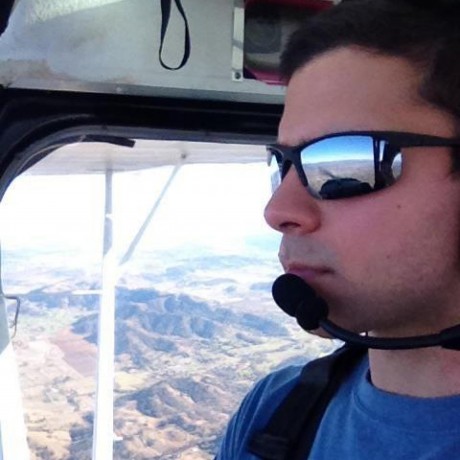
Lynne Grewe serves as a Professor in the Department of Computer Science at California State University, East Bay, where she maintains active research and teaching responsibilities with current office hours and contact information. Her work bridges theoretical computer science with real-world applications across healthcare, education, and emergency response domains. Her research portfolio centers on three interconnected thrusts: Medical Technology : Development of computer vision systems for stroke detection through facial pattern analysis (StrokeChange), infrared-based disease monitoring, and assistive navigation tools for the visually impaired (Seeing Eye Drone) Educational Innovation : Creation of multimodal systems like ULearn that detect student frustration using deep learning, alongside community college partnerships to broaden participation in computing Sensor Fusion Applications : Integration of multi-modal data for disaster response, infrastructure monitoring, and mobile health platforms using advanced machine learning techniques Publication analysis reveals consistent evolution toward real-time, deployable systems—particularly mobile health applications and educational tools—while maintaining foundational work in sensor fusion. Her 2020-2024 output shows increasing emphasis on healthcare applications (40% of recent work) and educational technology (25%), often combining computer vision with mobile platforms. Grewe demonstrates significant commitment to educational equity through the Faculty in Residence program, collaborating with community colleges to prepare underrepresented students for computing careers. Her Google partnership and focus on practical applications indicate strong industry engagement, though specific grant details aren't documented in source materials. Current projects suggest ongoing expansion into in-situ health monitoring and AI-driven educational support systems.
Dr. Mohammad Naraghi is a Professor in the Department of Mechanical Engineering at Manhattan University, specializing in thermal analysis of rocket engines, sustainable building systems, and radiative heat transfer. His research focuses on rocket thermal evaluation (RTE), solar energy optimization, and crystal growth processes. He holds a PhD from the University of Akron, MS from the University of Wales, and BS from the University of Tehran. Research areas include: Thermal modeling of regeneratively cooled rocket engines Radiative heat transfer in enclosures and aerospace systems Solar energy systems optimization (panel orientation, photovoltaic plants) Energy dynamics of green buildings and data centers CFD analysis of fluid flow and heat transfer in propulsion systems His 30+ years of publications span advanced thermal modeling techniques, including RTE software development and stochastic methods. Key contributions include NASA-recognized rocket engine thermal models and a patented seasonally selective building façade. Grants include NASA-funded rocket thermal research and ARPA/AFOSR crystal growth projects. Awards include ASME Fellow, AIAA Associate Fellow, and multiple NASA/ASEE fellowships. Teaching includes courses on solar energy systems, fluid mechanics, and green building energy dynamics. Advises graduate students in mechanical engineering and contributes to industry partnerships through applied thermal research.
Professor Cormac J. Sreenan is a full professor in Computer Science at University College Cork (UCC), leading the Mobile & Internet Systems Lab (MISL) since 1999. He previously served as Head of School (2019-2021) and Head of Department (2015-2018 and 2000-2004). His research focuses on wireless sensor networks, multimedia networking, IoT, and adaptive video streaming. He has published over 200 peer-reviewed papers and holds 9 patents. He is a Science Foundation Ireland Principal Investigator and a Fellow of both the British Computer Society (2005) and the Irish Academy of Engineering (2022). Education: PhD from the University of Cambridge Computer Laboratory Member of Christ's College, Cambridge Research Interests: Wireless sensor networks and fault-tolerant designs Next-generation computer networks and IoT infrastructure Adaptive video streaming and QoE optimization Network security and technology transfer Grants & Collaborations: Principal Investigator on SFI grants including the €1M ENABLE project Collaborations with Irish companies and international agencies Experience in technical due diligence and expert witness roles Labs & Teams: Directs the Mobile & Internet Systems Lab (MISL), a multidisciplinary research group focused on mobile and multimedia network systems.
Dr. Srikanthan Ramesh serves as an Assistant Professor in the School of Industrial Engineering and Management within Oklahoma State University's College of Engineering, Architecture and Technology. Since establishing the Advanced Materials and Additive Manufacturing Laboratory in August 2022, he has led interdisciplinary research at the intersection of materials science, physical phenomena, and advanced manufacturing technologies, with applications spanning healthcare, aerospace, and electronics sectors. His educational foundation includes a Ph.D. in Mechanical and Industrial Engineering from Rochester Institute of Technology (2022) and an M.S. in Industrial and Manufacturing Systems Engineering from Iowa State University (2017). This academic background enables his innovative approach to manufacturing science. Dr. Ramesh's research program focuses on biological and micro-scale additive manufacturing (bio-AM), specializing in biomaterial development for tissue engineering and regenerative medicine. His work integrates computational fluid dynamics, machine learning, and real-time process monitoring to achieve precise control over mechanical, biological, and electrical properties of manufactured structures. He develops experimental tools and process frameworks for droplet-based and extrusion-based AM systems, with particular emphasis on wound healing applications and space-compatible microelectronics. Analysis of his 14 publications from 2020-2025 reveals a strong trajectory toward AI-driven manufacturing solutions, with increasing emphasis on multi-objective Bayesian optimization for bioink design, aerosol jet printing process refinement, and bioprinted tissue construct development. His recent work demonstrates sophisticated integration of machine learning with physical manufacturing processes to solve complex biomedical challenges. His scientific recognition includes: Doctoral Dissertation Pitch Competition (Runner-up), IISE, 2021 Best Oral Presentation, Graduate Showcase, Rochester Institute of Technology, 2019 Gilbreth Memorial Fellowship, IISE, 2018-2019 Wakonse College Teaching Fellowship, Iowa State University, 2018-2019 Graduate Research Excellence Award, Iowa State University, 2017 Best Overall Oral Presentation, Nano@IAstate, Iowa State University, 2017 Dr. Ramesh currently leads significant research initiatives including as Principal Investigator for an NSF REU Site on Additive Manufacturing and Cybersecurity ($464,606, 2025-2028) and a NASA EPSCoR Travel Grant for aerosol jet printing in space missions (2024-2025). As Co-PI on an NSF grant for Privacy-aware Collaborative Design in additive biofabrication ($599,981, 2025-2028), he develops frameworks for mass personalization in medical applications while addressing data security challenges. These projects support his lab's mission to advance manufacturing science through rigorous experimentation and computational innovation. The Advanced Materials and Additive Manufacturing Laboratory operates as a collaborative hub where Dr. Ramesh directs research teams in developing novel biomaterials, optimizing printing processes, and creating functional prototypes for wound dressings, liver tissue models, and space-rated microelectronics. The lab's interdisciplinary approach combines expertise in materials characterization, computational modeling, and machine learning to push the boundaries of what's possible in additive manufacturing for critical applications.
Adlen KSENTINI is a Professor at EURECOM's Communication Systems department, specializing in advanced networking technologies. His research focuses on Mobile and Wireless Networks, Software Defined Networking (SDN), Mobile Edge Computing (MEC), Network Function Virtualization (NFV), and Content Delivery Networks (CDN), with an emphasis on performance evaluation and network virtualization. He has contributed to projects like AC3 and 6G-BRICKS, exploring cloud-edge continuum integration and 6G infrastructure. Key research interests include virtualized mobile core networks, carrier cloud systems, and AI-driven network management. He has received Best Paper Awards at IEEE WCNC 2018 and IWCMC 2016 for works on network slicing and LTE modeling accuracy. His work often integrates machine learning for optimization, sustainability, and security in 5G/6G networks. Distinctions: Two Best Paper Awards Labs/Teams: Involved in EU-funded projects like AC3 and 6G-BRICKS Grants: Not explicitly listed, but active in collaborative research initiatives
Torbjörn Larsson is a Professor in the Department of Mathematics at Linköping University, affiliated with the Division of Applied Mathematics (TIMA). His work bridges theoretical and applied optimization with significant impact in healthcare, logistics, and finance. His research interests include Mathematical Optimization , Operations Research , Brachytherapy Treatment Planning , Vehicle Routing , and Portfolio Optimization . He develops advanced algorithms such as Lagrangian heuristics, metaheuristics, and feasible direction methods to solve complex decision problems. The recent publications indicate a strong focus on developing bounding techniques and heuristic frameworks for discrete and multi-objective optimization, with applications ranging from radiation therapy to transportation logistics. His work emphasizes both theoretical rigor and practical implementation. Scientific Contributions: Development of novel optimization methods for brachytherapy treatment planning Advancement of Lagrangian and metaheuristic frameworks Application of optimization in finance (portfolio selection) and scheduling He collaborates extensively on research projects involving mathematical modeling and algorithm design. While specific advising roles are not listed, his co-authorship with junior researchers suggests mentorship activity. He has contributed to projects on decision support systems for scheduling and large-scale optimization in finance. Laboratories and Research Groups: Applied Mathematics (TIMA), Department of Mathematics, Linköping University Research environment focused on optimization and its applications in medicine and logistics
Dr Zeke Ahern is a Research Fellow in Transport Engineering and Planning at Queensland University of Technology (QUT), affiliated with the School of Civil & Environmental Engineering. He holds a PhD from QUT. His research focuses on transportation safety, crash frequency modeling, and optimization of public transit systems. Dr Ahern’s work emphasizes multi-objective frameworks for analyzing crash data, improving safety infrastructure, and enhancing urban mobility through advanced statistical and computational methods. He has collaborated on projects involving raised safety platforms, parking payment behavior, and integrated bus route design. His publications reflect contributions to transportation engineering, traffic safety, and data-driven decision-making in civil infrastructure. Research Interests: Dr Ahern’s primary areas include crash frequency modeling, transportation safety infrastructure evaluation, and the application of optimization algorithms (e.g., simulated annealing, metaheuristics) to transportation problems. He develops tools like the Metacountregressor Python package to assist in analyzing count data models, bridging software engineering and transportation research. Publications highlight trends in data-driven safety analysis and infrastructure optimization. His work spans both theoretical advancements (e.g., hypothesis testing for crash models) and practical applications (e.g., raised platform effectiveness reviews). Recent efforts emphasize integrating multiple objectives into transportation planning, such as balancing safety, efficiency, and cost-effectiveness.
Abbas Roozbahani is an Associate Professor in the Department of Building and Environmental Technology at the Faculty of Science and Technology, Norwegian University of Life Sciences (NMBU). His academic expertise lies in Water Infrastructure Engineering, where he contributes to research, teaching, and project leadership in sustainable urban water systems. His research interests include: Sustainable water management Urban water transport systems (drinking water, wastewater, stormwater) Risk assessment of water infrastructure Simulation and optimization of water systems Hydroinformatics and artificial intelligence Asset management for urban water infrastructure The analysis of his recent publications (2022–2025) reveals a strong focus on integrating advanced computational methods—such as Bayesian Networks, Fault Tree Analysis, machine learning (e.g., LSTM), and multi-criteria decision-making (MCDM)—into water resources management. His work frequently addresses urban stormwater optimization, drought and climate change risk assessment, groundwater forecasting, and the water-food-energy nexus, demonstrating a consistent trend toward data-driven, risk-informed, and sustainable solutions for complex water systems. Dr. Roozbahani teaches graduate-level courses including: THT301 - Asset Management for Urban Water Infrastructure THT302 - Analysis and Design of Water Distribution Networks THT261 - Introduction to Water and Wastewater Systems (co-instructor) THT313 - Water Management in Changing Conditions (co-instructor) THT390 - Preparations for the Master's Thesis (co-instructor) He has supervised multiple MSc and PhD students and led projects funded by academic and private institutions. His collaborative research spans international institutions, with frequent co-authorship on topics related to risk modeling, AI in hydrology, and sustainable infrastructure planning.
Assoc. Prof. Dr. Umut Asan is an active faculty member in the Department of Industrial Engineering at Istanbul Technical University (ITU), Faculty of Management. He holds the academic rank of Associate Professor and has been affiliated with ITU since 1999, progressing from Research Assistant to his current role. He earned his PhD from Technische Universität Berlin and holds a Master’s and Bachelor’s from ITU in Engineering Management and Industrial Engineering, respectively. PhD: Technische Universität Berlin (2003–2009) MSc: Istanbul Technical University, Engineering Management (1999–2001) BSc: Istanbul Technical University, Industrial Engineering (1995–1999) Dr. Asan's research lies at the intersection of decision science and industrial systems, with a strong emphasis on Multi-Criteria Decision Making (MCDM) , Fuzzy Cognitive Mapping , Scenario Planning , and Digital Twins . His work applies advanced modeling techniques such as Bayesian networks and fuzzy logic to solve complex problems in supply chain resilience, urban mobility, technology adoption, and organizational behavior. His recent publications (2023–2025) reveal a consistent trend toward integrating artificial intelligence and data-driven methods into decision support systems. Topics include electric vehicle adoption in urban logistics, digital twin frameworks for manufacturing, risk analysis in forestry and rail systems, and consumer behavior in digital platforms. These works demonstrate interdisciplinary applications across engineering, business, and social sciences, often using fuzzy and probabilistic models to handle uncertainty. Dr. Asan is actively involved in research leadership, having served as Vice Dean (2018–2023) and currently supervising numerous graduate theses. He is the principal investigator of funded projects, including BAP grants on qualitative cross-impact analysis and consumer cognitive models. Principal Investigator, "A New Approach to Qualitative Cross-Impact Analysis" (BAP Project, 2016–2020) Principal Investigator, "A New Approach to Consumer Causal Chain Models" (BAP Project, 2022–2024) He is a member of several international academic societies, including the International Society on MCDM, ENBIS, and EURO, reflecting his active engagement in the global operations research community. His research has been published in journals such as IEEE Access, European Journal of Forest Engineering, and Decision Science Letters, with a growing citation impact (Scopus h-index: 13). Dr. Asan advises a large cohort of graduate students, both at the Master’s and PhD levels, in areas ranging from risk modeling to digital transformation. His lab or research group focuses on decision support systems and cognitive modeling, supervising theses on FMEA, Bayesian networks, and digital twins. Future work appears to be directed toward enhancing predictive capabilities in industrial and societal systems through hybrid AI models.
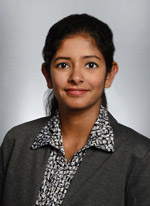
Suchi Rajendran is an Assistant Professor with a joint appointment in the Department of Industrial and Systems Engineering and the Department of Marketing at the University of Missouri, Trulaske College of Business. She is also the Director of Undergraduate Studies in ISE and actively leads research in prescriptive analytics, operations research, and data-driven decision-making across healthcare, transportation, and business systems. Education: PhD in Industrial Engineering, Pennsylvania State University Her research focuses on applying advanced analytics to solve complex real-world problems. Key areas include optimizing healthcare delivery systems, supply chain and logistics (notably blood supply chains and port operations), marketing data analytics, and emerging transportation systems such as air taxis and electric vehicle infrastructure. She leverages predictive and prescriptive artificial intelligence to forecast demand and recommend optimal operational strategies. Her recent work, highlighted in university news up to 2025, demonstrates a strong trend toward interdisciplinary, AI-powered solutions in logistics, sustainability, and public service. She frequently collaborates with industry partners like Case New Holland and Schneider Electric, and has secured funding from agencies such as the Alaska Department of Transportation and the National Science Foundation. Scientific Awards and Recognitions: Richard Wallace Faculty Incentive Grant Bob Bloss Faculty Enhancement Grant Winemiller Excellence Award in Data Analytics NSF CHOT Scholar (Penn State) Service Enterprise Engineering Fellow DAAD-WISE Fellowship (Germany) Lean Six Sigma Black Belt Dr. Rajendran is actively involved in mentoring students, having advised honors-winning graduate and undergraduate researchers. She leads an NSF-funded Research Experiences for Undergraduates (REU) program that brings 10 students annually to Mizzou to work on AI-enabled operations engineering. Her grants support hands-on, interdisciplinary research that prepares the next generation of engineers and data scientists. She is affiliated with cutting-edge research initiatives involving simulation modeling, digital communication platforms, and AI integration in industrial systems. Her lab and team focus on developing practical, scalable solutions for logistics, healthcare, and sustainable transportation, often through collaborative, real-world projects with public and private stakeholders.
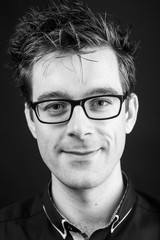
Wouter M. Koolen-Wijkstra is a Professor of Mathematical Machine Learning at the University of Twente (Statistics group) and a Scientific Staff Member at Centrum Wiskunde & Informatica (CWI), Amsterdam, in the Machine Learning department. His research bridges theoretical machine learning, game theory, and statistics, with active projects on multi-armed bandits, online learning, and safe inference methodologies. He co-leads INRIA-CWI associate teams (6PAC and 4TUNE) and is an ELLIS Scholar. His work emphasizes provable guarantees in learning algorithms, including: Regret minimization under risk-averse scenarios Multi-scale adaptation in online decision-making Game-theoretic equilibria computation Anytime-valid statistical inference via e-processes Recent publications demonstrate a focus on robust learning frameworks , particularly in bandit problems, hypothesis testing, and Nash equilibrium characterization, often leveraging information-theoretic and optimization principles. Awards include: Veni Grant (2015) for 'Learning at the Intrinsic Task Pace' QUT Vice-Chancellor's Fellowship (2013) for multitask learning Rubicon Grant (2010) for game-theoretic online learning ELLIS Scholar recognition He teaches graduate courses on Machine Learning Theory and Graphical Models at CWI. Current grants include collaborations with INRIA (4TUNE and 6PAC teams) and industry partnerships (e.g., PPS Booking.COM).
Reza Zadeh is a Computational Mathematics professor at Stanford University's School of Engineering and Founder & CEO of Matroid . He previously served as a Technical Advisory Board member for Databricks and leads the Spark Tutorial at Stanford. Research Interests: Specializing in Machine Learning and Distributed Computing , his work bridges theoretical mathematics with practical implementations in big data systems. Key focus areas include Optimization of Apache Spark 3D Convolutional Neural Networks Discrete Mathematics and Graph Theory Medical Imaging Applications Academic Contributions: His publications reveal trends across multiple disciplines: Adapting machine learning for medical diagnostics (2019-2022) Advancing distributed computing frameworks (2014-2016) Developing mathematical foundations for social networks (2009-2013) Creating scalable optimization algorithms (2014-2016) Scientific Awards: Best Paper Award runner-up at KDD 2016 Academic Leadership: He has taught SMACC Consulting and designed courses including CME 323: Distributed Algorithms and Optimization (2015-2024) and CME 305: Discrete Mathematics and Algorithms (2010-2017). His lectures cover graph theory, approximation algorithms, and spectral sparsification. Labs & Teams: Organized Spark Summit workshops and leads Scaled Machine Learning Conference . Collaborates with Stanford's ICME computational consulting services.