Andrew Russell is a Lecturer at the School of Film, Media and Creative Technologies, University of Portsmouth. His research focuses on cross-cultural representation in global cinema, particularly examining Western portrayals of Southeast Asia and the evolution of transnational film genres. PhD in Film Studies (University of Portsmouth, 2021) Research Interests include: Postcolonial media analysis Japanese cinema and Takashi Miike's filmography Representation of Thailand in Hollywood Critical race theory in entertainment media Slow cinema movement Recent publications analyze: Exoticization patterns in contemporary screen media Racial stereotyping in WWE's entertainment model Intercultural dynamics in transnational filmmaking Temporal aesthetics in global cinema trends Active in academic service through journal peer-reviewing for Transnational Screens and conference participation in film genre studies. His doctoral thesis explored the duality of Thailand's cinematic representation in both Western and local film traditions.
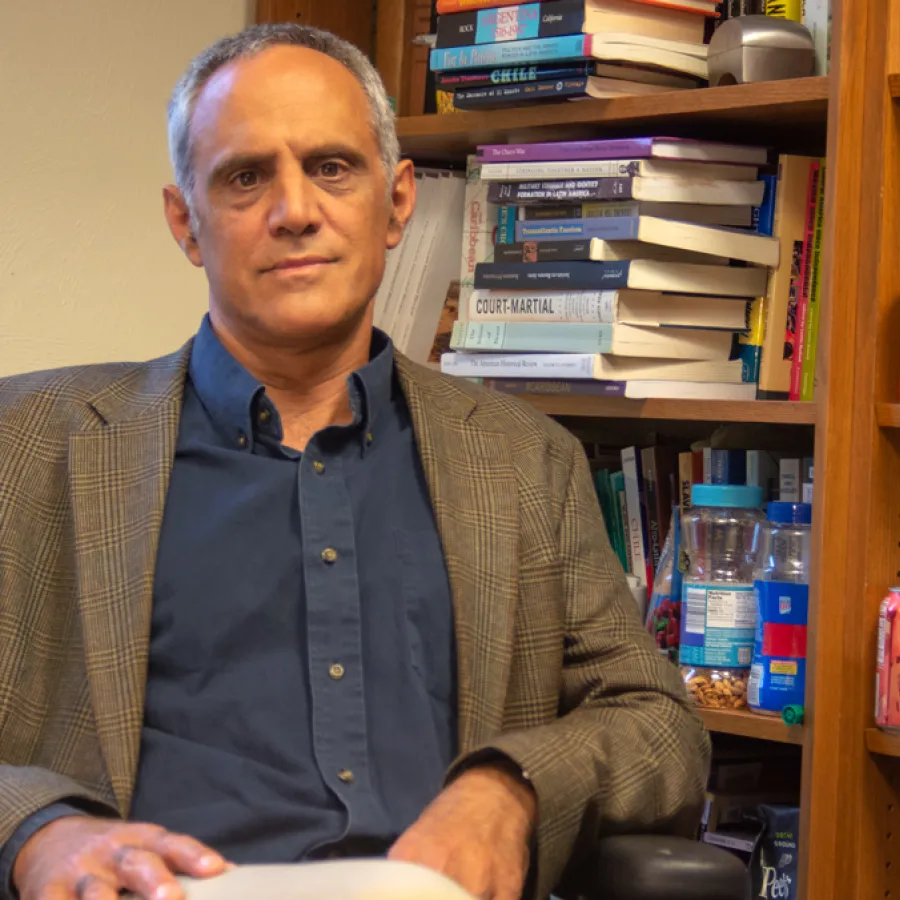
Jonathan Ablard is a Professor of History in the School of Humanities and Sciences at Ithaca College, specializing in Latin American and Caribbean history. His office is located in Muller Faculty Center 403, Ithaca, NY, and he teaches courses spanning public health, revolution and counterrevolution, literature and dictatorship, conspiracy theories, and commodities. Ablard emphasizes that understanding the United States requires knowledge of Latin America and the Caribbean, and advocates for viewing these regions within broader global narratives. His research focuses on Latin American historical intersections with public health, military institutions, psychiatric practices, and conspiracy theories. Ablard's work reveals how power structures shape societal narratives, particularly through studies of Argentine military conscription, obesity history, and psychiatric reform. He consistently examines marginalized perspectives within authoritarian contexts and challenges the omission of Latin American history in standard curricula. Ablard's publication trends demonstrate an evolving concentration on conspiracy theory historiography since 2020, building on earlier foundational work in psychiatric and military history. His recent scholarship connects historical rumor circuits to contemporary disinformation patterns, using Argentina as a critical case study. The multidisciplinary nature of his work bridges medical history, political science, and cultural studies while maintaining a distinctly Latin American framework.
Dr. Suzanne Beech serves as Senior Lecturer in Human (Economic) Geography at Ulster University's Faculty Of Life & Health Sciences, School of Geography & Environmental Sciences. With Senior Fellow status from the Higher Education Academy (2024), she leads Geography programs as Course Director while pioneering blended learning approaches that predated pandemic requirements. PhD from Queen's University Belfast (2013) Bachelor's from Queen's University Belfast (2009) Her research operates at the intersection of human geography, sociology, and education with focus on: international student mobility , migration studies , Brexit border impacts , and transnational youth identities . Current work with AHRC grant (£372,287) examines post-Brexit citizenship for 16-24 year-olds along the Irish border using participatory filmmaking methods. Recent publications appear in: Transactions of the Institute of British Geographers Urban Studies Journal of Ethnic and Migration Studies Scientific Recognition: Senior Fellow, Higher Education Academy (2024) Top Cited Article in Area (2023) ESRC Peer Review College membership (2024) As Active Learning Champion, she supervises: Betty Healy (First Supervisor) Odhran Fox (First Supervisor) Nicola Watson (First Supervisor)
Patrick Miller is a Professor in the School of Biology at University of St Andrews , with affiliations to the Scottish Oceans Institute , Sea Mammal Research Unit , and Institute of Behavioural and Neural Sciences . He leads research on the communication and behavioral ecology of marine mammals , focusing on how anthropogenic activities like naval sonar impact cetacean behavior and physiology. His work utilizes advanced tools such as hydrophone arrays and animal-attached tags to study species including sperm whales , northern bottlenose whales , and humpback whales . Research Interests include: Behavioral Ecology of marine mammals Bioacoustics and echolocation studies Impact of Underwater Noise on cetaceans Physiological Adaptation to marine environments Conservation Biology of endangered species Marine Technology development Article Trends show expertise in acoustic disturbance , foraging strategies , and whale vocalizations , with recent studies on sonar effects, dive capabilities, and behavioral responses to environmental stressors. Scientific Awards include the Kobe Award (2013) . Advisory Roles involve collaborations with institutions like the University of Tokyo (visiting professor) and European Commission (Marie Curie Fellowship). Projects include 3S3 Behavioral Response Studies (2015–2016) and Off-Range Beaked Whale Studies (ORBS) (2016–2017). Media Contributions highlight his work on whale conservation and naval sonar impacts .
Christine von Renesse is a Professor in the Department of Mathematics at Westfield State University. She specializes in inquiry-based learning and integrates interdisciplinary connections (e.g., games, music, dance, arts) into her teaching, particularly in Mathematics for Liberal Arts courses. As a passionate advocate for STEM education reform, she co-leads the NE-COMMIT initiative and facilitates professional development workshops for K-12 and higher education faculty. Her work extends to graduate program coordination and institutional committees like Writing Across the Curriculum (WAC). Education: PhD in Mathematics (2007), University of Massachusetts Amherst M.Ed in Mathematics (2002), Technical University, Berlin Diplom in Mathematics (2001), Technical University, Berlin Her research focuses on enhancing mathematical understanding through open inquiry, with a strong emphasis on curiosity-driven pedagogy and accessibility. She has authored numerous publications on inquiry-based teaching, including collaborations on the COMMIT Network and the Discovering the Art of Mathematics project. Her NSF-funded work bridges faculty collaboration and STEM education transformation, supported by her leadership roles in initiatives like STEM-ACT. Prof. von Renesse actively contributes to academic service as a PRIMUS board member, graduate advisor, and coordinator of mathematics education programs. Her interdisciplinary approach spans from salsa dancing to proof-writing, aiming to make mathematics engaging and relevant across diverse fields.
Gaurav Nanda serves as an Assistant Professor in the School of Engineering Technology at Purdue University, where he leads research at the intersection of artificial intelligence and human-centered systems. His work develops intelligent decision support frameworks applicable across critical domains including occupational safety, smart manufacturing infrastructure, healthcare analytics, and educational technology. Education Background Ph.D. in Industrial Engineering, Purdue University Dual Degree: B.Tech. and M.Tech. in Agricultural and Food Engineering (Major) with Electrical Engineering Minor, Indian Institute of Technology Kharagpur His research program integrates applied machine learning and natural language processing to solve complex problems in safety analytics (injury surveillance systems), Industry 4.0 (IoT-enabled manufacturing), healthcare (breast cancer prediction models), and STEM education (MOOC feedback analysis). Current projects emphasize human-AI collaboration, with growing focus on ethical AI implementation and social justice integration in engineering contexts. The INDESS Research Group he directs develops systems that balance algorithmic precision with human factors considerations. Recent publications (2023-2025) demonstrate accelerating adoption of large language models and vision-language systems across application domains, particularly in safety analytics and educational technology. Key trends include human-in-the-loop validation frameworks, explainable AI interfaces, and multimodal data integration (eye-tracking, text, sensor data). His work increasingly addresses fairness considerations in AI deployment, especially regarding diversity in engineering education and workplace safety systems. Dr. Nanda actively mentors the next generation of engineers through the INDESS Research Group , advising Ph.D. candidates Madhumathi Ponnusamy and Shuning Yin, while previously supervising Master's graduates including Srushti Vichare and Meet Suthar. His research receives support through Purdue-affiliated institutes including ICON (Control/Optimization Networks), RDE (Digital Enterprise), and FWL (Future Work/Learning). He maintains active service roles as Editorial Board Member for the International Journal of Industrial Ergonomics and as reviewer for leading publications including IEEE Transactions on Learning Technologies and Safety Science. The research group maintains strong industry connections through the Purdue School of Engineering Technology, with projects spanning manufacturing automation, healthcare informatics, and educational technology platforms. Current initiatives focus on real-time anomaly detection systems, ethical AI frameworks for safety-critical applications, and inclusive curriculum development for engineering education.
Aditya Sarkar is Associate Professor of South Asian History at the University of Warwick, Faculty of Arts, Department of History. He previously held a postdoctoral position at the University of Göttingen and earned his PhD from SOAS, University of London. His academic career spans over a decade of research and teaching in modern South Asian history. PhD in History, SOAS, University of London (2005–2009) M.Phil in History, Jawaharlal Nehru University, Delhi (2004–2005) M.A. in Modern History, Jawaharlal Nehru University, Delhi (2002–2004) B.A. in History, Delhi University (1999–2002) His research centers on labour history, industrial struggles, the social history of the bubonic plague in colonial India, intellectual history, and the politics of the left and right in contemporary India . He examines how colonial law shaped industrial relations, how pandemics redefined labor regimes, and how ideological currents influence political mobilization. His work bridges historical inquiry with urgent contemporary debates on inequality, democracy, and justice. The 15 most recent publications reflect a consistent engagement with labor, disease, colonial governance, and political ideology . His articles trace the evolution of urban-industrial labor in India, analyze the intersection of plague and worker resistance in Bombay, and critique authoritarian populism. He frequently draws historical parallels, such as between the bubonic plague and the COVID-19 pandemic, to illuminate enduring patterns of state power and social struggle. Pandemics, Labor Relations And Political Regimes: The Bubonic Plague And COVID-19 Crises in India (2023) Roundtable: The politics of class, past and present (2022) Pandemic and Labour Relations: Then And Now (2020) The Emergence of a "Modern" Urban-Industrial Workforce in India, 1860-1914 (2021) Labour History And The Case Against Colonialism (2019) Aditya Sarkar has received no explicitly mentioned scientific awards or fellowships in the provided text. His scholarly contributions are recognized through publications in respected journals and a monograph with Oxford University Press. He teaches a range of undergraduate and postgraduate modules including Gandhi and Indian Nationalism , Twentieth Century India , Historiography , and India and the Problem of Postcolonial Democracy . He has not publicly listed any PhD or master’s students he advises. His public intellectual work includes opinion pieces on anti-corruption movements, JNU protests, and nuclear policy, demonstrating a commitment to public history and political critique. He is actively engaged in public discourse through talks and online publications, including a notable talk on pandemic and labor relations. His collaborations include scholars such as Pepijn Brandon and Kavita Krishnan. There is no mention of a formal research lab or team, but his work is deeply collaborative and interdisciplinary.
Dr. Wesley O'Brien is a Senior Lecturer in Physical Education and Coaching Science at University College Cork (UCC), serving as Programme Director for the B.Ed. in Physical Education, Sports Studies and Arts Degree within the School of Education. With over fourteen years of teaching experience, he has lectured at institutions including The University of Bolton, Dublin City University and Munster Technological University before joining UCC in 2014. His educational background includes: PhD in youth physical activity promotion from Dublin City University (2013) Bachelor of Education in Sports Studies and Physical Education (First Class Honors) from UCC (2010) Dr. O'Brien's research focuses on physical literacy, physical education, wellbeing, motor competence, and physical activity among children, adolescents and adults. His work explores evidence-based approaches for youth physical activity promotion through physical education environments, whole school physical literacy initiatives, motor competence development, intervention implementation, measurement techniques, sedentary behavior, and wellbeing promotion across educational settings. His research has been presented at numerous international conferences and published in leading journals including Sports Medicine, Physical Education and Sport Pedagogy, and the British Journal of Sports Medicine. His recent publications demonstrate a strong focus on physical literacy assessment and intervention, with particular attention to the FLAME (Fundamental and Functional Literacy for Activity and Movement Efficiency) program, Y-PATH interventions, and the measurement of motor competence. His work spans multiple contexts including school settings, community sports programs, and cross-border collaborations across Ireland. Much of his research employs mixed-methods approaches to understand both the quantitative and qualitative aspects of physical activity promotion. Dr. O'Brien has received numerous scientific awards including the FIEP Europe Thulin Award (2021), the Ellen Griffin Scholar at UNC Greensboro (2017), and multiple College Scholar awards from UCC. His 2024 awards include recognition as a Deakin University Catalyst Visiting Scholar and Auckland University of Technology Catalyst Visiting Scholar. As a Principal Investigator, Dr. O'Brien leads several significant research projects including Project FLAME, Gaelic for Girls, Gaelic4Mothers&Others, and State of Mind Ireland. He has secured substantial research funding from diverse sources including ERASMUS, the Irish Research Council, and various institutional funds. His research portfolio demonstrates strong collaboration across institutions including Dublin City University and the Irish Heart Foundation on the Y-PATH PE4Me programme. Outside his academic work, Dr. O'Brien is actively involved in UCC GAA club, having served as conditioning and skills coach for various teams. Notably, he coached the UCC senior hurling team to win the Fitzgibbon Cup All-Ireland Championship in 2019 and the Cork Minor hurling team to win the All-Ireland Championship in 2021. He has also coached the Cork Senior Camogie team to multiple All-Ireland Senior Camogie Championships.
Patrick Christie is a Professor at the University of Washington's School of Marine and Environmental Affairs (SMEA) with a joint appointment in the Jackson School of International Studies. His research focuses at the intersection of environmental justice, sustainability science, and marine conservation, emphasizing Indigenous leadership in environmental recovery across the Salish Sea and Great Lakes regions. His research interests center on justice-centered environmental governance, with particular focus on Indigenous-led environmental recovery , petroleum infrastructure resistance movements , and tribal rights in marine resource management . Christie employs participatory action research and digital storytelling methods, working closely with communities like the Tulalip Tribes and Puyallup Chief Leschi Schools to develop collaborative approaches that integrate local, Indigenous, and scientific knowledge systems. His work challenges technocratic approaches to conservation by centering social justice and equity. Christie's recent publications reveal a strong trend toward transdisciplinary collaboration and decolonizing conservation practices , with increasing emphasis on Indigenous knowledge systems, social justice frameworks, and participatory governance models. His work spans marine protected areas, climate adaptation, and coastal community resilience, with significant focus on the Philippines, Indonesia, and North American Indigenous communities. Pew Fellowship in Marine Conservation Christie actively mentors students through SMEA capstone projects and co-teaches specialized courses like Environmental Justice and Political Ecology Field Course and Environmental Justice, Social Movements, and Collaboration in the Time of Climate Change . His research is supported by collaborations with organizations including Future Earth, Painel Mar (Brazil), and tribal governments. He has provided technical advice to the UN Food and Agricultural Organization, World Bank, and USAID. Christie leads projects using participatory research methods to engage tribal communities in environmental recovery efforts, including work with the Tulalip Tribes on coastal squeeze issues and with Winona LaDuke on sustainable agriculture alternatives to petroleum-based economies. He co-hosts workshops exploring human dimensions of environmental change and is developing learning networks to foster collaborative ocean governance.
Jan-Magnus Enelo serves as a Senior Lecturer in Sociology at Örebro University's School of Humanities, Education and Social Sciences. His academic work spans sociological theory, quantitative methodology, and interdisciplinary research on social stratification and cultural dynamics. His research focuses on social class structures , political sociology , and culture's influence on values and political behavior , with particular emphasis on honour-based violence and culture of honour phenomena. Enelo examines how socioeconomic conditions shape fundamental values that subsequently influence political opinions and party affiliations, while his violence studies explore how honour cultures emerge, manifest, and persist in Swedish society. As principal investigator for the HVS: Honour, Violence and Society project (2017-2020), he led quantitative studies on honour-related violence across Sweden's major metropolitan areas. His publications reveal critical intersections between gender, migration background, and social isolation in violence vulnerability. Senior Lecturer in Sociology since 2012 (following doctoral completion) Active researcher in CVS - Centre for Violence Studies Member of HeVoS (Honor, Violence and Society) research group Contributor to Work, Family and Intimate Relations research collective Enelo's teaching portfolio centers on sociological theory and quantitative methods, with additional instruction in social work and media/communication studies. His methodological expertise informs both his empirical research on political consumption fields and his analyses of honour-based oppression mechanisms.
Daniel Malet Calvo is an anthropologist and historian specializing in urban studies and ethnography. He currently works as an Associate Researcher at the Center for Research and Studies in Sociology (CIES-Iscte) at Iscte - University Institute of Lisbon, where he is affiliated with the Migrations, Mobility and Ethnicity research group. Since 2013, he has served as a Visiting Professor in the PhD program in Urban Studies (Iscte-iul/FCSH-UNL), and since 2017, he has been a Visiting Assistant Professor at Iscte-iul's School of Sociology and Public Policy, teaching courses including 'Fieldwork Methods' and 'Observational Research Laboratory' in the Department of Sociology. Dr. Malet Calvo earned his PhD in Anthropology from the University of Barcelona in 2011, along with a Bachelor's Degree in History and a Degree in Social and Cultural Anthropology from the same institution. His research spans four interconnected themes: International students and student migration , examining youth cultures, social class, and lifestyle mobility Urban transformations , analyzing gentrification of nightlife, heritage commodification, touristification, and social movements Anthropology of infrastructures , studying everyday mobility, urban planning, and public space Ethnic and racial minorities , exploring identity formation and everyday resistance in urban contexts His interdisciplinary work bridges sociology, anthropology, and urban studies, with particular attention to how global processes manifest in local urban settings, especially in Lisbon. Dr. Malet Calvo's publication record demonstrates consistent scholarly output in high-impact journals across urban studies, migration research, and anthropology. His work reveals how international student mobility intersects with tourism and housing markets to reshape urban landscapes, with particular focus on Southern European contexts. His research shows a clear evolution from early work on Erasmus student experiences toward broader analyses of urban transformations, pandemic impacts on mobility, and the complex relationships between tourism, studentification, and gentrification. As an academic advisor, Dr. Malet Calvo currently supervises two doctoral students (Priscilla Silva Santos and Bianca Lyrio Matheus Aguiar Pinho) working on migration and urban space topics, and has successfully guided two master's students to completion (Rita Melo Gago and Alice Michel Dit Ferrer). His advising reflects his research interests in migration, urban transformations, and youth cultures. Dr. Malet Calvo is deeply embedded in the CIES-Iscte research center, contributing to collaborative projects examining urban transformations in Lisbon and comparative urban studies across European contexts. His work often involves ethnographic methods combined with spatial analysis to understand the complex interplay between mobility, urban change, and social inequality.
Raju J Das is a Professor at York University's Faculty of Environmental and Urban Change, affiliated with graduate programs in Geography, Social and Political Thought, Environmental Studies, Development Studies, and Communication and Culture. His research bridges Marxist political economy with contemporary issues including neoliberal industrialization in India, class struggle, and the political dimensions of climate change and public health. Das earned a PhD in Geography from The Ohio State University, an MA in Urban Studies from the University of Akron, an MA in Geography from the University of Delhi, and a BA (Honours) in Geography from Utkal University. He serves on editorial boards of journals like Science & Society , Class, Race and Corporate Power , and the Dialectical Anthropology advisory board. His scholarly work examines geographical uneven development, the ruralization/urbanization of capital, and the interplay between neoliberal state policies and class power. Recent projects funded by SSHRC Insight Grant (2016-2022) analyze industrialization patterns in India's rural periphery, focusing on land acquisition conflicts and the dialectics of capitalist expansion. Das teaches radical political economy at the graduate level and undergraduate courses on global economy, international development, and state-civil society relations. He is a Faculty Fellow at York's Dahdaleh Institute for Global Health, integrating his critique of capitalism with health equity concerns.
Joseph Valacich is a Professor in the Department of Management Information Systems at the University of Arizona's Eller College of Management. As the Muzzy Endowed Chair, he combines academic research with entrepreneurial ventures, notably co-founding Neuro-ID (acquired by Experian in 2024) and developing patented technologies for behavioral analytics. PhD in Management Information Systems, University of Arizona MBA, University of Montana BS in Computer Science, University of Montana His research focuses on human-computer interaction , specializing in behavioral biometrics for fraud detection, emotional inference through input devices, and tech entrepreneurship. He has pioneered methods to analyze keystroke dynamics, mouse movements, and user behavior patterns for cybersecurity and user experience optimization. Recent publications in top journals like MIS Quarterly and Information Systems Research explore deception detection, product choice behavior, and conversational agent effectiveness. Work trends show increasing application of behavioral analytics to financial fraud and organizational security. Senior Member, National Academy of Inventors (2020) AIS Fellow (2009) University of Arizona Distinguished Innovation & Entrepreneurship Award (2024) Neuro-ID recognized as Tech Launch Arizona's I-Squared Startup of the Year (2020) As an educational innovator, he has co-authored leading computing textbooks and contributed to online education frameworks. His lab's technologies have been commercialized through Neuro-ID, demonstrating significant real-world impact in fraud detection and user experience optimization.
Professor George Ghinea is a distinguished academic in the Department of Computer Science at Brunel University London's College of Engineering, Design and Physical Sciences. With over 350 publications and 33 successfully supervised PhD students, he leads cutting-edge research at the intersection of computer science, media studies, and psychology. His educational background includes a PhD from the University of Reading (1999) where he pioneered the Quality of Perception (QoP) metric - a precursor to today's widely adopted Quality of Experience (QoE) concept. He holds multiple degrees with distinction from the University of the Witwatersrand in South Africa, including BSc, BSc (Hons), and MSc in Computer Science. Professor Ghinea's research focuses on perceptual multimedia quality and human-centered e-systems, with particular emphasis on mulsemedia (multiple sensorial media) - his own conceptual framework extending multimedia to engage non-traditional senses. His work spans eye-tracking applications, telemedicine, multi-modal interaction, and ubiquitous computing. Current research explores mulsemedia integration in autonomous vehicles, security-enhanced systems, and accessibility solutions. His publications reveal strong trends in multisensory computing (42% of recent works), telemedicine applications (28%), accessibility research (18%), and network optimization (12%). The work consistently bridges theoretical frameworks with practical implementations, often incorporating physiological data and user perception metrics. Distinguished Visiting Fellow of the Royal Academy of Engineering (2018) SPARC DUO-India 2020 Fellowship Programme recipient Principal Investigator for multiple EU Horizon 2020 projects Research featured in major media including BBC, Forbes, and Daily Telegraph Professor Ghinea has secured substantial research funding through projects like the EU H2020 NEWTON initiative, Royal Academy of Engineering partnerships, and multiple Newton Fund collaborations. His supervision portfolio includes 33 PhD completions with diverse research spanning security behavior in Ghana, physiological QoE in VR, smart city adoption in Oman, and sustainable digital transformation in Qatar. He leads the IMUSY research group focusing on mulsemedia systems and human perception. His laboratory work centers on the IMUSY research group where they develop mulsemedia applications integrating thermal, wind, and olfactory devices for enhanced user experiences. Current team projects include mulsemedia in autonomous vehicles (MulsEAV), physiological data for QoE assessment, and smart city adoption studies.
Professor Mitch Duncan is a Professor of Public Health in the School of Medicine and Public Health at the University of Newcastle, Australia. His research focuses on understanding how patterns of physical activity and sleep influence health outcomes, and developing digital technology interventions to help people be more physically active and sleep better. Professor Duncan's work is supported by a prestigious NHMRC Career Development Fellowship, and he has published over 170 papers while securing more than $9 million worth of research funding. Professor Duncan earned his PhD from the University of Central Queensland, a Bachelor of Health & Human Performance (Honors) in Human Movement Science from the University of Central Queensland, and a Master of Medical Statistics from the University of Newcastle. His educational background has provided a strong foundation for his interdisciplinary research approach that bridges physical activity, sleep science, and digital health interventions. Professor Duncan's research centers on two key areas: (1) understanding how physical activity and sleep work together to influence health outcomes, and (2) developing and testing interventions to improve these behaviors. His unique approach focuses on the combination of these two behaviors rather than examining them separately. Much of his intervention work uses technologies such as mobile devices and the internet to deliver the interventions, including the development of a smartphone app that has been used by over 20,000 people internationally through the 'Balanced' intervention program. Analysis of his recent publications reveals a strong trend toward multi-behavioral interventions that address both physical activity and sleep simultaneously, often leveraging mobile and web-based platforms to deliver personalized interventions at scale. Professor Duncan has received several prestigious awards for his research, including: National Heart Foundation Queensland Researcher of the Year Australian Institute of Policy & Science Queensland Young Tall Poppy Award He also holds a competitive NHMRC Career Development Fellowship, which supports his ongoing research into physical activity and sleep behaviors. Professor Duncan has been highly successful in securing research funding, with more than $9 million in grants from major organizations including the National Health and Medical Research Council (NHMRC), Australian Research Council (ARC), National Heart Foundation, and Queensland Government. His research program has involved mentoring numerous students and early-career researchers. Professor Duncan serves on the Editorial Boards of the Journal of Physical Activity and Health and the Journal of Activity, Sedentary and Sleep Behaviors, contributing to the scholarly community in his field. Professor Duncan leads the development and implementation of evidence-based digital interventions like the 'Balanced' program, which has reached over 20,000 users internationally. His work often involves collaborations with researchers across multiple institutions and disciplines, reflecting the interdisciplinary nature of his research on physical activity, sleep, and health. Current projects include investigations into the impact of breaking up prolonged sitting on sleep architecture, app-based interventions for shift workers, and multi-behavioral approaches to improving postnatal mental health.