Robert SilvermanView profile
Professor
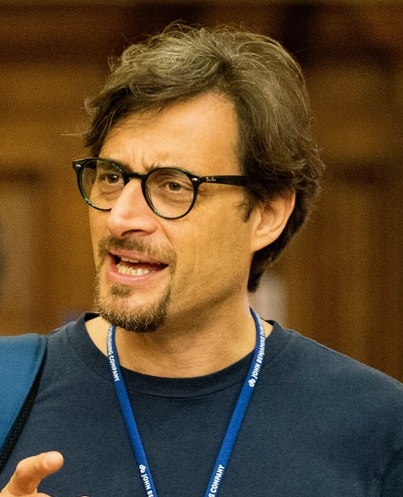
Robert Silverman is a Professor in the Department of Urban and Regional Planning at the University at Buffalo, School of Architecture and Planning. He has been a key academic figure since joining in 2003, with a strong research focus on community development, affordable housing, education policy, and shrinking cities. His work emphasizes equity, inclusion, and community-based planning in urban contexts. His educational background includes a Ph.D. in Urban Studies from the University of Wisconsin–Milwaukee, an M.P.A. in Public Administration, and a B.S. in Political Science, both from Arizona State University. Dr. Silverman's research explores the intersections of housing, race, and urban policy, particularly in shrinking cities like Buffalo, Detroit, and Cleveland. He investigates community resistance to redevelopment, equitable housing siting, and the role of public participation in urban revitalization. His qualitative methodology is central to understanding grassroots perspectives and institutional dynamics. His recent publications reveal a consistent trend toward analyzing spatial equity, housing justice, social inclusion, and policy implementation in urban environments. Themes include the impact of cannabis legalization on underserved communities, neighborhood walkability, and the challenges of fair housing policy in racially segregated markets. Outstanding Reviewer Award, Urban Education (2014–2015) Article of the Year Award, Leadership and Policy in Schools (2014) Emerald Literati Network Commended Article Award (2012) Scott Greer Award for Postgraduate Achievement (2009) Community Development Society Outstanding Program Award (2008) Outstanding Graduate, Arizona State University (1992) Dr. Silverman actively mentors students and contributes to academic service, having advised on numerous community development projects and served on editorial boards for journals such as Critical Sociology and Community Development . He has received research support through professional networks and institutional affiliations, though specific grant details are not listed. His public engagement includes roles with the Partnership for the Public Good and the Housing Opportunities Made Equal initiative. He is involved in research initiatives focused on shrinking cities, equitable development, and community-based planning. His work with the Partnership for the Public Good underscores his commitment to applied research and policy advocacy in Buffalo and beyond.