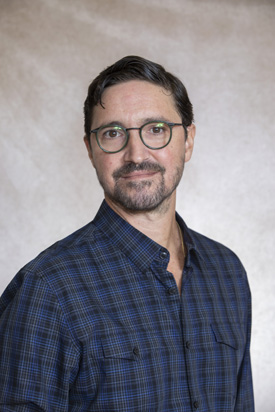
Claire Bowern is Professor of Linguistics at Yale University specializing in historical linguistics, language documentation, and Australian Indigenous languages. Her research employs computational phylogenetics to study language evolution and supports language revitalization through digital archives and fieldwork methodologies. Recent publications address: Phylogenetic signal in lexical evolution across language families Digital infrastructure for endangered language documentation (FLEx software analysis) Decolonizing linguistics pedagogy and research practices Her work consistently integrates linguistic, anthropological, and computational approaches to analyze language diversity and change. She contributes to global databases including Grambank and D-PLACE, examining links between linguistic, cultural, and environmental patterns.
Jonathan David Bobaljik is a leading linguist whose research spans formal syntax, phonology, and the documentation of endangered languages, particularly Itelmen. He is actively involved in multiple international research collaborations and regularly presents at major linguistic conferences across Europe and North America. His work is published in top journals such as Natural Language and Linguistic Theory and Language . His research interests lie at the intersection of theoretical and descriptive linguistics. He investigates universal patterns in morphology and syntax, including suppletion, vowel harmony, ergativity, and control structures, often using data from understudied languages like Itelmen. His work combines rigorous formal analysis with deep empirical grounding in language documentation. The recent publications reflect a strong trend toward integrating typological diversity with formal theory. Key areas include morphosyntactic universals (e.g., suppletion in pronouns), information structure in verb-final languages, and the phonology of ejective consonants. There is also a growing emphasis on sociolinguistic and community-based aspects, as seen in collaborative work on language revitalization and the social life of the Itelmen language. He has received recognition through numerous scholarly publications and invited talks, though specific awards are not listed in the provided text. His collaborative projects suggest active grant involvement, particularly in language documentation and cross-linguistic typology. Bobaljik plays a central role in the Itelmen documentation and revitalization project, contributing to the creation of a dictionary app, the publication of historical manuscripts, and public exhibits on Siberian Indigenous knowledge. He collaborates with a team including David Koester, Chikako Ono, Tatiana Degai, and Maria Pupynina.
Martin Haspelmath is a Senior Research Scientist at the Department of Linguistic and Cultural Evolution at the Max Planck Institute for Evolutionary Anthropology (MPI-EVA), Leipzig, and an honorary (adjunct) professor at Leipzig University. His research focuses on comparative linguistics, language universals, and typology, particularly in syntactic and morphological systems. He co-edited the World Atlas of Language Structures (2005/2013) and co-founded Language Science Press . Education: PhD in Linguistics, Freie Universität Berlin (1990–1993) MA in Linguistics, University of Cologne and University at Buffalo (1985–1989) Undergraduate studies in Linguistics, University of Vienna (1983–1985) Research Interests: Haspelmath investigates global grammatical diversity, form-function correspondences, and universals in syntax, morphology, and lexical systems. His work emphasizes comparative concepts for cross-linguistic analysis and critiques traditional grammatical categories. Grants & Projects: ERC project leader at Leipzig University (2015–2020) Co-creator of Grambank , an open-access database of grammatical structures Leading initiatives for open-access publication and linguistic data sharing Labs/Teams: Active in the MPI's Department of Linguistic and Cultural Evolution, collaborating on projects like APICS (Atlas of Pidgin and Creole Language Structures) and ValPal (Valency Patterns Leipzig).
Mark Baker is a Professor of Linguistics and Cognitive Science at Rutgers University. His work focuses on comparative syntax, linguistic universals, semantic roles, and the study of Amerindian and African languages. He holds the title of Distinguished Professor and maintains an office in Scott Hall. As of 2021, his office hours were by appointment due to sabbatical leave. His research interests include syntactic diversity, its limits, and patterns across languages. Notable themes in his work involve logophoric pronouns, switch-reference mechanisms, and the relationship between case systems and agreement structures. He has contributed to discussions on language typology, formal syntax, and the cognitive foundations of linguistic structures. Baker teaches advanced syntax courses and has published extensively on topics ranging from Panoan languages to theoretical models in generative grammar. His recent articles explore syntactic variation, morphosyntactic alignment, and interdisciplinary connections between linguistics and cognitive science. He serves on editorial boards and has reviewed for journals such as Journal of East Asian Linguistics and Yearbook of Corpus Linguistics and Pragmatics . His work bridges formal linguistic theory with empirical cross-linguistic analysis, emphasizing the interplay between universal grammatical principles and lineage-specific traits.
Prof. Robert Fuchs holds the Frommann Professorship of Applied English Linguistics at the University of Bonn, leading the Chair of Bonn Applied English Linguistics (BAEL) within the Department of English, American and Celtic Studies. His research focuses on World Englishes, corpus linguistics, sociolinguistics, and the impact of artificial intelligence on linguistic analysis. He actively supervises PhD students in topics aligned with his research group's interests, emphasizing empirical work and data science. Recent research explores language change in varieties like Hong Kong English, Trinidadian prosody, and intensifier usage across cultures. Fuchs frequently presents at international conferences, including ISLE, ICAME, and Sociolinguistics Symposium, and publishes extensively in journals like World Englishes and Language and Speech . His teaching includes advanced courses on corpus linguistics and language in culture, with a focus on climate change discourse analysis. He maintains an active academic presence through ResearchGate, Academia.edu, and LinkedIn. Research Interests: Fuchs investigates sociolinguistic variation, AI applications in linguistics, and the structural features of postcolonial Englishes. His work addresses topics such as vowel mergers in Hong Kong English, lexical stress perception in Indian English, and the role of gender in language use. He also explores diachronic changes in aspects like stative progressives and the perfect-past alternation across Asian Englishes. Advising & Grants: Fuchs oversees PhD student recruitment through research associate positions and self-funded scholarships, prioritizing applicants with strong empirical and analytical skills. His funded projects include studies on pandemic discourse (DisCOVIndUK) and linguistic trends in Caribbean English. His lab, BAEL, collaborates internationally, with ongoing work on Trinidadian prosody and Northeast Indian linguistic ecology. Labs/Teams: The Bonn Applied English Linguistics (BAEL) group, part of the University of Bonn's IAAK institute, focuses on cutting-edge research in global Englishes and computational linguistics, hosting international workshops and fostering interdisciplinary collaboration.
Judith Maxwell is Professor of Anthropology at Tulane University, specializing in linguistic anthropology with primary focus on Mayan languages (Kaqchikel, Chuj, Nahuatl) and discourse analysis. Her work bridges theoretical linguistics and applied language revitalization, particularly through the Tunica-Biloxi language project since 2010. Education PhD in Anthropology, University of Chicago (1982) Research Focus : Maxwell investigates discourse structures in Mayan languages regarding artistry canon, cultural constructs, coherence mechanisms, and societal relationships. Her colonial manuscript analysis explores language change in Kaqchikel/Nahuatl, while contemporary work examines bilingual education, language shift, and gender performance across English and Indigenous varieties. She pioneered the revival of Tunica language through community-academic collaboration. Publication Trends : Recent works (2014-2024) demonstrate consistent focus on Mayan language documentation ( Kaqchikel chronicles , Chuj Narratives ), revitalization pedagogy ( Maja'il Kaqchikel ), and sociopolitical dimensions of language ( Mayan Languages and Guatemala Law ). Key themes include decolonizing methodologies, Indigenous knowledge systems, and practical applications for endangered language communities. Advising & Grants : Maxwell leads the Tunica-Biloxi Language Revitalization Project training Tulane students in documentation techniques. Her collaborative model integrates tribal knowledge with academic research, securing sustained community engagement despite specific grant details being unreported. Research Teams : Directs the Tunica-Biloxi collaborative team comprising Tulane students, tribal scholars, and native speakers, developing e-learning tools like the Q'anil Kaqchikel lessons filmed in Guatemala with native instructors.
Maria Moruz serves as a Researcher at the Department of Social Sciences and Humanities, Alexandru Ioan Cuza University of Iasi, a position she has held since February 2009. Her academic profile centers on Romanian linguistic research with strong interdisciplinary connections to biblical studies and computational methods. She earned her PhD from Alexandru Ioan Cuza University of Iasi in December 2009 with a dissertation analyzing phraseological units in parallel bilingual corpora, establishing her foundational expertise in comparative linguistics. Maria Moruz's research program integrates traditional philological scholarship with modern computational techniques . Her primary domains include Romanian linguistics , phraseology , and computational linguistics , with significant contributions to Biblical philology through critical editions of historical texts. She examines national specificity in phraseological units while developing linguistic resources for Romanian language processing , bridging historical textual analysis with contemporary NLP applications. Her publication trajectory reveals distinct thematic phases: early computational linguistics work (2004-2012) on Romanian lexical resources and question-answering systems evolved into specialized biblical philology research (2014-present) within the Monumenta linguae Dacoromanorum project. Recent publications focus on Romanian lexicography and biblical marginalia, demonstrating sustained engagement with both digital humanities methodologies and historical textual criticism. Maria Moruz has secured significant research funding as Project Director for a CNCSIS TD grant and served as a POSDRU postdoctoral researcher. Her collaborative work includes membership in the international "Widespread Idioms in Europe and Beyond" project and leadership in multiple Romanian linguistics initiatives. Project Director: CNCSIS TD grant POSDRU Postdoctoral Researcher Collaborator: "Widespread Idioms in Europe and Beyond" project Co-organizer: International Symposium "Explorations in the Romanian and European Biblical Tradition" Founding Member: Romanian Association of Biblical Philology and Hermeneutics She maintains active scholarly infrastructure through editorial work on the Monumenta linguae Dacoromanorum series and organization of specialized symposia, fostering interdisciplinary dialogue between computational linguists, philologists, and biblical scholars.
Jeffrey Heath is a Professor of Linguistics at the University of Michigan, with a dry-line appointment in Near Eastern Studies. His research focuses on language documentation, historical linguistics, morphology, and the study of African languages. He has conducted extensive fieldwork in Mali, Morocco, Australia, and other regions, particularly on Dogon, Songhay, and Berber languages. Heath holds a Ph.D. from the University of Chicago (1976) and a B.A. from Harvard University (1971). His work includes over 20 books and numerous articles on linguistic typology, language contact, and morphological evolution. He has received significant grants from the National Science Foundation, Guggenheim Foundation, and Fulbright Program. His research emphasizes functional morphosyntax and the role of prosody in linguistic systems. Education: Ph.D. (University of Chicago, 1976), M.A. (1973), A.B. (Harvard, 1971) Affiliations: Department of Linguistics, Near Eastern Studies (UMich) Key Projects: Dogon Language Documentation Project, Tamashek (Tuareg) studies, Songhay grammar series Heath’s research interests span morphology, tonosyntax, and the historical development of African languages. His fieldwork in Mali has produced detailed grammars of Dogon languages, while his work on Moroccan Arabic explores language contact and borrowing. He has also contributed to the documentation of Songhay and Gur languages in West Africa. Grants and awards highlight his commitment to endangered language preservation, including NEH and NSF funding for Dogon and Songhay projects. His contributions to linguistic typology and historical morphology have influenced debates on morpheme renewal and syntactic change.
Carmel O’Shannessy is a Senior Lecturer at the Australian National University’s School of Literature, Languages and Linguistics and an affiliate of the ARC Centre of Excellence for the Dynamics of Language (CoEDL) . Her work focuses on language contact, mixed languages, and child language acquisition, particularly in Indigenous Australian communities. Education: PhD in Linguistics (University of Sydney, Australia; Max Planck Institute for Psycholinguistics, The Netherlands, 2007) She has documented the development of Light Warlpiri , a new mixed language, since its emergence. Her research explores how children and adults contribute to contact-induced language change, with fieldwork in Central Australia since 1996. Key projects include her ARC Future Fellowship grant for tracking Indigenous children’s language development. Recent publications span topics like typology of Australian contact languages, child-directed speech modifications in Warlpiri, and sociolinguistic dynamics of youth language varieties. Her work appears in journals such as Journal of Pidgin and Creole Languages and Languages , as well as edited volumes like The Oxford Guide to Australian Languages . Scientific Awards: ARC Future Fellowship She has mentored students including Francois-Xavier Faucounau , Annie Kwai , and Zobule . Her interdisciplinary approach combines linguistic analysis, digital tools (e.g., the Little Kids Learning Languages app), and community collaboration. Labs/Teams: ARC Centre of Excellence for the Dynamics of Language (CoEDL)
Dr. habil. Peter Arkadiev is a prominent linguist specializing in morphology, syntax, and typology, with a focus on Baltic, Slavic, and Northwest Caucasian languages. He holds a research position at the University of Potsdam, Institute of Slavistics, funded by the German Research Foundation (DFG) since December 2024. Previously, he held roles including Visiting Professor at the University of Mainz, Senior Fellow at the Freiburg Institute for Advanced Studies, and Marie Curie Senior Fellow. His academic credentials include a Habilitation in typological linguistics (2019) and a PhD from the Russian State University for the Humanities (2006). Research Interests: - Language Typology and Cross-Linguistic Comparison - Areal Linguistics and Language Contact - Case Systems and Argument Structure - Tense-Aspect-Actionality - Morphological Complexity and Polysynthesis - Baltic, Slavic, and Northwest Caucasian Languages Awards: Member of Academia Europaea (2023), Professor of the Russian Academy of Sciences (2022), Marie Curie Senior Fellowship (2023–2024), and multiple DFG-funded projects. His work bridges theoretical linguistics with empirical fieldwork, particularly in the North Caucasus. Publications span over 30 peer-reviewed articles and edited volumes, focusing on topics like prefixal perfectivization, applicative constructions, and morphological borrowing. Current research includes the DFG-funded project 'Typology and Diachrony of Ambifixation' (2024–2027).
Clay Beckner is an Associate Professor in Applied Linguistics at the University of Warwick. His research focuses on experimental psycholinguistics, morphosyntax, mechanisms of language change, iterated learning, and complex systems from a usage-based perspective. He holds a Ph.D. from the University of New Mexico (2013), where his thesis explored dynamic mental lexicon through experiments on multi-word 'prefabs'. From 2013-2018, he worked at the New Zealand Institute of Language, Brain & Behaviour, studying interspeaker alignment, iterated learning, and human-machine interaction. Recent work examines non-Māori speakers' implicit knowledge of Māori sound patterns through experimental studies in New Zealand. His research interests include the interplay between language usage and structure across lifespans, diachronic processes, and social influences on linguistic systems. Key contributions address lexical representation, morphological variation, and the role of ambient exposure in language knowledge. He has collaborated extensively on projects involving iterated learning tasks, human-robot interaction, and cross-linguistic attractor dynamics. Award details: No specific awards mentioned in the text. Grants and advising: No explicit grant details provided. No listed advisees/students. His work often involves interdisciplinary teams, including studies with robots and cross-cultural language experiments. Labs/Teams: Affiliated with the University of Warwick's Applied Linguistics program and previously the New Zealand Institute of Language, Brain & Behaviour.
Will Oxford is an Associate Professor in the Department of Linguistics at the University of Manitoba. He holds a PhD in Linguistics from the University of Toronto. His research focuses on theoretical and descriptive syntax and morphology, particularly in Algonquian languages, with an emphasis on agreement systems, morphosyntactic alignment, and historical linguistics. He has conducted fieldwork on Innu, Ojibwe, Cree, Oji-Cree, Kapampangan, and Ilocano. He is collaborating on preparing the late David Pentland's Proto-Algonquian dictionary for publication and co-authoring a forthcoming book The Algonquian Inverse (Oxford University Press, 2024). Research interests include direct-inverse systems, agreement hierarchies, grammatical relations, inflectional morphology, language description, and phonology. He has held a SSHRC Insight Development Grant (2016-19) for research on structure and change in Algonquian agreement systems. He teaches at the University of Manitoba and has held an invited teaching position at MIT (2022-23). Key publications include analyses of inverse agreement in Algonquian languages, person hierarchy interactions, and morphological processes like fission and impoverishment. His work spans syntactic theory, historical linguistics, and language documentation, with particular attention to comparative analyses across Algonquian languages.
Giuseppina Silvestri is a Lecturer in the Department of Linguistics at the University of California, Los Angeles (UCLA). Her academic affiliation is within the College of Letters and Science. She holds a Ph.D. from the University of Pisa (2013). Her primary research focuses on comparative and historical Indo-European linguistics, particularly in the domains of Italo-Romance and Greek varieties in southern Italy. Key areas include morphosyntactic variation, theoretical syntax (parametric approach), glotto-genetics, and interfaces between phonology-syntax and syntax-semantics. Her work explores language contact phenomena, such as the structural convergence between Greek and Romance dialects in regions like Calabria and Salento. She investigates topics like complementizer systems, aspectual morphology, infinitival vs. finite constructions, and grammaticalization processes. Notable studies address the role of contact in shaping morphosyntactic features such as perfective aspect, negative imperatives, and possessive constructions in endangered Italo-Greek varieties. Silvestri’s research also delves into phonology-syntax interactions, such as propagation phenomena and word-final schwa licensing in southern Italian dialects. Her contributions highlight syntactic microvariation and parameter hierarchies in Italo-Romance, with a focus on features like differential object marking, participle agreement, and adverb agreement. Her work bridges empirical dialectology with formal syntactic theory, offering insights into syntactic phylogeny and the historical reality of biolinguistic diversity.
Magnus Levin is a Professor at the Department of Languages, Faculty of Arts and Humanities, Linnaeus University. His primary teaching role is within the Non-fiction Translation Master Programme, and he is actively involved in interdisciplinary research initiatives such as the Linnaeus University Centre for Data Intensive Sciences & Applications (DISA) and the Linnaeus University English-German-Swedish Corpus (LEGS). His research spans two core areas: (1) language change and variation in English grammar and phraseology, including studies on tense formation, progressive aspect, collective noun agreement, and phraseological patterns like echoic binomials; and (2) corpus-based translation analysis , focusing on light verb constructions, complex modifiers, and punctuation across English, German, and Swedish. He has pioneered the use of virtual reality for corpus visualization and real-time social media data analysis through the Nordic Tweet Stream project. Recent publications highlight his expertise in cross-linguistic complexity (2024), acronym translation (2021), non-fiction translation (2019), and discourse markers in digital contexts (2016-2021). His work often intersects with Nordic English variation Multilingual corpus design Translation of phraseological units Language change in real-time data Levin collaborates extensively with researchers like Johan Ström Herold, Mirja Laitinen, and Joseph Tyrkkö, contributing to scientific publications in venues such as Languages in Contrast , World Englishes , and Corpus Linguistics and Changing Society . He has also co-edited volumes on contrastive linguistics and sports language analysis.
Manuel Otero is an Associate Professor in the Department of English at Eastern Connecticut State University. He specializes in historical linguistics and the documentation of endangered languages, particularly focusing on languages spoken by marginalized communities in western Ethiopia and Sudanese refugees in the U.S. Dr. Otero earned his PhD in Linguistics from the University of Oregon. His research emphasizes the phonology, morphology, and syntax of Ethiopian Komo, with a focus on vowel harmony systems, directional verb morphology, and historical reconstruction of the Koman language family. He also explores typological aspects of Chacoan languages like Nivaĉle and Pilagá. His publications span acoustic phonetics, morphosyntactic analysis, and language documentation. Recent work includes studies on associated motion, deictic direction, and exchoative aspect in Koman languages. His teaching focuses on introductory linguistics and writing courses, aiming to highlight the beauty and complexity of human language. Research grants and lab affiliations are not explicitly mentioned, but his work directly engages with community-based language preservation efforts. He advises no listed students but actively contributes to endangered language documentation through fieldwork and academic collaborations.