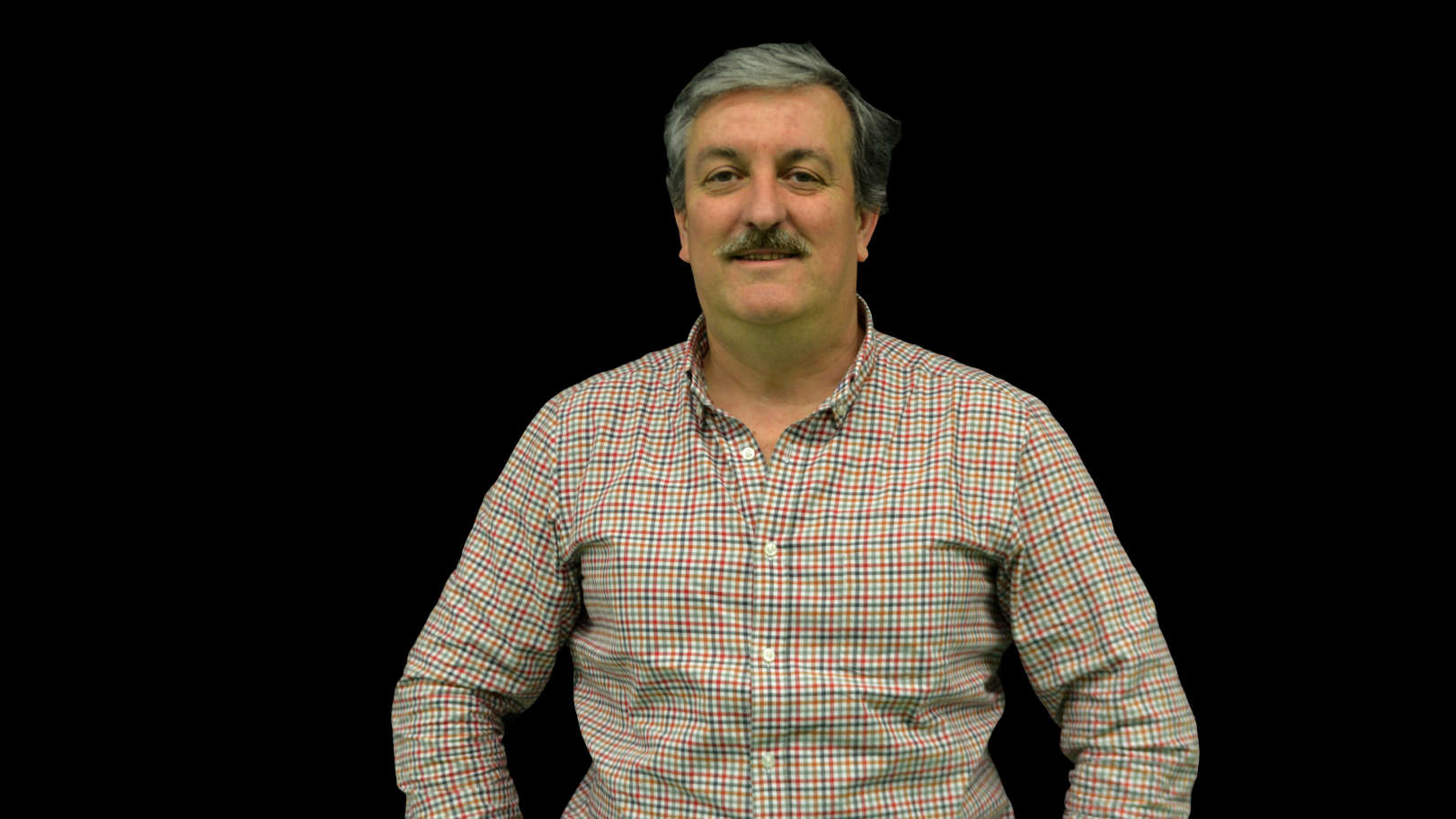
Yushu An is Lecturer at ETH Zurich's Institute of Construction & Infrastructure Management. Researches optimization of rail maintenance processes using extended reality and digital twin technologies. Work develops hybrid programming methods for robotic systems and knowledge-based engineering approaches for manufacturing. Combines virtual simulation with physical systems to improve maintenance efficiency and system design. Contributes to robotic welding automation and generative design of production systems. Background includes mechatronic engineering with expertise in manufacturing system architecture and configuration design. Collaborates on industrial applications of digital twins in infrastructure management.
Dr. Ajay Shankar is a Post-Doc Research Fellow in the Department of Computer Science and Technology at the University of Cambridge. His primary research focuses on control, planning, and automation for robotic systems and teams, with a strong emphasis on multi-robot systems, autonomous control, and machine learning applications in robotics. He is affiliated with the Mobile Systems, Robotics and Automation research theme within the department. His work integrates robotics, machine learning, and systems engineering to address challenges in multi-agent coordination, trajectory optimization, and real-time control. Key projects include the development of the Cambridge RoboMaster platform and studies on dynamics-aware trajectory planning using diffusion models. He also explores downwash modeling for multirotor flight in dense environments and heterogeneous multi-robot reinforcement learning frameworks. Dr. Shankar's contributions span academic conferences and journals, with recent publications focusing on aerial robotics, autonomous systems, and multi-agent learning. His research has practical applications in environmental monitoring (e.g., UAS profiling during LAPSE-RATE campaigns) and agile robotics systems design. Department: Computer Science and Technology University: University of Cambridge Affiliations: Cambridge Ring Initiative, Accelerate Programme for Scientific Discovery
Young Chang is an Assistant Professor in the Department of Agricultural and Biosystems Engineering at South Dakota State University. He holds a Ph.D. in Agricultural Biotechnology from Seoul National University. His academic journey includes postdoctoral research at UC Davis, North Dakota State University, and Nova Scotia Agricultural College, alongside roles at Samsung Electronics' Living System Laboratory. He founded the Bio-systems Automation and Robotics Lab at Dalhousie University, Canada. His research focuses on precision agriculture automation, cost-effective sensor systems, and agricultural robotics. He actively collaborates on projects like cybersecurity in smart agriculture (Cyber-Ag-Law, $249k) and edge computing for agroecosystems (SDAES, $125k). Education: Ph.D./M.S./B.S. in Food Engineering (Seoul National University) Key Labs: Bio-systems Automation and Robotics Lab (Dalhousie), Raven Precision Ag Center (SDSU) Grants: Over $1M in funded projects including USDA grants and industry partnerships Research interests span precision agriculture automation, drone/UAV systems, and IoT-driven livestock management. His work integrates machine learning (e.g., YOLOv4 for strawberry counting) and FPGA-based real-time image processing. Recent articles emphasize cybersecurity for agricultural data and phenotypic trait analysis in soybeans. Awards include NSERC Discovery Grants and Mitacs Accelerate funding. Patents: Variable rate sprayer systems and kimchi ripening control Teaching: Courses on precision agriculture tech (AST-426) and farm machinery diagnostics (PRAG-304)
Dr. Giulia Franchi is an Associate Professor of Computer Science at Salisbury University, where she leads research in robotics, artificial intelligence, and computer vision. Her work spans applications in environmental monitoring, precision agriculture, and assistive technology. She co-founded and directs the Real Robotics Lab, fostering innovation through interdisciplinary projects like the SU Robotics Team’s VEX World Championship qualification in 2023. Education: PhD in Robotics Engineering, University of Rome (2016) MS in Robotics Engineering, University of Rome (2011) BS in Control and Automation Engineering, University of Rome (2008) Research Interests: Dr. Franchi specializes in robotic design, grasping systems, and unmanned aerial vehicles (UAVs). Her lab explores cutting-edge technologies such as 3D-printed robotic components and drone-based environmental surveillance. Recent projects include coral reef restoration using 3D-printed molds and agricultural robotics for precision farming. Awards & Recognition: Her contributions have been recognized through publications in top-tier journals and professional accolades, though specific award names are not detailed in the provided texts. Labs & Teams: The Real Robotics Lab serves as a hub for student innovation, hosting projects like the RoboPoppet (a modular robotic platform) and drone systems for ecological monitoring. Dr. Franchi actively mentors students through competitions and collaborative research initiatives.
Heinrich Jaeger is the William J. Friedman and Alicia Townsend Professor of Physics at the University of Chicago, affiliated with the James Franck Institute. He holds a PhD from the University of Minnesota and has held academic positions in the Netherlands and Chicago since 1991. His research focuses on soft condensed matter, granular materials, and robotics, with notable contributions to jamming transitions and self-assembly. Education: PhD in Physics, University of Minnesota, 1987 Undergraduate studies, University of Kiel, Germany Research Interests: Far-from-equilibrium phenomena in granular matter and dense suspensions Design of smart materials via particle shape and acoustic levitation Robotics leveraging jamming transitions (e.g., JAMoEBA, universal grippers) Nanoparticle self-assembly for ultrathin membranes Awards: David and Lucille Packard Fellowship (Science & Engineering) Alfred P. Sloan Fellowship Quantrell Award for Excellence in Teaching Labs/Teams: Jaeger Lab at the James Franck Institute Collaborations with IIT (Spenko/Srivastava groups), Argonne National Lab (Lin), and PME (Rowan/de Pablo)
Mahnaz Bahremandi Tolou is a Higher Degree by Research Scholar pursuing a PhD in Architecture at the University of Queensland's School of Architecture, Design and Planning. Her research focuses on self-shaping material systems for large-scale curved shell assemblies, an interdisciplinary project blending architecture, civil engineering, and material computation. She holds a Master’s degree from Tabriz Art University, Iran (2018). Education: PhD Candidate in Architecture, University of Queensland (current) Master’s Degree in Architecture, Tabriz Art University, Iran (2018) Research Interests: Computational Design, Digital Fabrication, Lightweight Modular Structures, Material Programming, and Robotic Construction. Her work emphasizes innovative manufacturing techniques and sustainable architectural solutions. Research Trends in Publications: Her publications highlight advancements in self-shaping materials, parametric design, and structural innovation, with a focus on integrating historical patterns with modern fabrication methods. Recent work explores kinetic mechanisms and deployable structures. Advising & Supervision: Principal supervisor is Dr. Dan Luo. No advisees listed. Professional Background: Over five years of professional experience as an architect, including roles as senior designer and facade designer. Co-founded a technological academy in architecture, and contributed to cutting-edge architectural research.
Patrick Currier is a Professor and Chair of Mechanical Engineering at the College of Engineering, Embry-Riddle Aeronautical University. His research focuses on robotics & automation, unmanned systems, advanced vehicle systems, and hybrid-electric propulsion. He has led projects such as the QinetiQ Raider II GUSS and Caterpillar Autonomous Mining, and advises the Robotics Association at Embry-Riddle (RAER) and the EcoEagles team in EcoCAR2. His work bridges theoretical and applied engineering, with recent contributions to hybrid propulsion systems, autonomous navigation, and aerospace technology. Notable achievements include the 2011 Best Paper Award from the ISTVS conference and leading the development of the ERAU Maritime RobotX Challenge platform. His research trends emphasize innovation in hybrid systems, autonomous robotics, and aerospace applications, reflected in over 50 publications. He has secured grants, including the Robotic Tool Kit (RTK) Logistics Automation grant (2019), and actively engages in interdisciplinary projects like solar sail CubeSat development and battery failure analysis.
Prof. Dr.-Ing. Hans Gerber is a faculty member at Berlin University of Applied Sciences, holding the position of Professor in Mechanical Engineering, Process and Environmental Engineering within Faculty VIII. His academic roles include former Vice President (2011–2019) and Dean of Faculty VIII (2010–2011). He has been actively involved in marine technology research for decades, focusing on deep-sea exploration, subsea robotics, and geophysical observatories. Gerber leads projects such as MODUS (a heavy-duty ROV) and GEOSTAR, contributing to advancements in abyssal research infrastructure. His work integrates engineering, environmental science, and biotechnology, addressing challenges in oceanography, seismic networks, and deep-sea mining. Research interests span marine research technology, geophysics, and robotics, with notable contributions to seafloor observatories (e.g., ESONET, GEOSTAR) and biotechnological exploration (BIODEEP). Over 40 peer-reviewed publications and conference papers highlight his expertise in deep-sea intervention systems and technological innovation. Gerber collaborates internationally with institutions like the Italian Institute of Geophysics, Alfred Wegener Institute, and EU projects like NEAREST and ORION. Media coverage includes features in Nature , ARTE, and WDR, emphasizing his work's societal and scientific impact. Grants include EU-funded initiatives (e.g., ESONET, ORION) and industry partnerships. His teaching focuses on mechanical engineering and applied sciences, with modules available via Moodle. Consultations are held via Zoom or in-person at Haus Beuth, Room A1b by appointment.
Jonas Kuckling is a postdoctoral researcher at the Department of Computer and Information Science, University of Konstanz, and a fellow at the Zukunftskolleg. His research focuses on artificial life and swarm robotics, particularly open-endedness in embodied collectives, integrating disciplines including biology, chemistry, physics, computer science, philosophy, and art. Dr. Kuckling obtained his doctoral degree in April 2023 from the Artificial Intelligence research laboratory (IRIDIA) at the Université Libre de Bruxelles, Belgium. His doctoral work established foundations for his current investigations into emergent collective behaviors in robotic systems. His primary research interests center on artificial life and swarm robotics, with emphasis on open-ended evolution in embodied collectives. He explores how interdisciplinary approaches can generate autonomous systems capable of continuous novelty without external direction, bridging computational models with biological principles of self-organization and adaptation. This work addresses fundamental challenges in scalability, robustness, and emergent complexity in multi-robot systems. Analysis of his recent publications reveals a concentrated focus on automatic modular design of robot swarm control software, particularly through behavior trees and optimization techniques like simulated annealing. His work progresses from theoretical frameworks (e.g., manifestos on off-line design) to practical implementations (AutoMoDe tools), with increasing integration of learning, communication, and edge computing in large-scale swarm deployments. No scientific awards are documented in available sources. Dr. Kuckling currently leads an interdisciplinary research project at the Zukunftskolleg, collaborating with experts in complex systems, artificial life, AI, and robotics to advance open-endedness in embodied collectives. No information is available regarding student advising or specific grant funding beyond his fellowship appointment.
Zhenyu Zhang is a Lecturer in the School of Surveying and Built Environment at the University of Southern Queensland. His qualifications include a DipGIS from Massey University, BSc from Charles Sturt University (CSU), MEng from Tsinghua University, MTech from RMIT University, and a PhD from Monash University. His research focuses on advanced manufacturing processes, particularly chemical mechanical polishing (CMP), environmental modeling using remote sensing, and machine learning applications in construction safety and material science. Key areas of expertise include atomic-scale surface finishing of metals and ceramics, development of green CMP systems, LiDAR-based environmental monitoring, and water quality modeling. His work integrates interdisciplinary approaches, combining material science, environmental engineering, and computational methods. Over 56,323 views and 16,395 downloads of his outputs highlight significant academic impact. Recent projects include novel abrasive materials for precision polishing, AI-driven safety protocols in construction, and coupled hydrological modeling for watershed management. His research emphasizes sustainable practices, with contributions to both theoretical frameworks (e.g., reviews on polishing mechanisms) and applied technologies (e.g., membrane-free batteries).
Antonio LORIA is a Senior Researcher (DR1) at the CNRS, affiliated with the Laboratoire des Signaux et Systèmes (L2S) at CentraleSupélec in France. His primary research discipline is Automation, focusing on control systems, robotics, and nonlinear dynamics. He holds a DEA and PhD from UTC, France, and has held CNRS positions since 1999, advancing through ranks to his current role. LORIA’s work emphasizes multi-agent systems, networked control, and formation control, with applications in robotics and autonomous systems. Education: Born in Mexico (1969), he studied Electronic Systems Engineering at ITESM, Mexico, followed by a DEA (1993) and PhD (1996) in Automation from UTC. Postdoctoral studies at the University of Twente (Netherlands), NTNU (Norway), and UC Santa Barbara (USA). Research Interests: Automation, robotics, nonlinear control, stability theory, and consensus algorithms. His recent work includes strict Lyapunov function design, robust formation control, and adaptive estimation for hybrid systems. Publications: Over 100 journal and conference articles on topics like consensus algorithms, multi-agent systems, and nonlinear control. Recent work (2024–2025) includes studies on bipartite formation control, hybrid networks, and robust adaptive estimation. Grants & Leadership: Led or participated in projects funded by the EU, ANR, and CNRS. Served on evaluation committees for French and international research agencies (ANR, MINES, ANID, UEFISCDI). Associate editor for journals like IEEE Trans. on Automatic Control and Automatica . Students & Mentoring: Supervised 14 PhD students and 4 postdocs, many now in academia or industry roles. His advisees hold positions at CentraleSupélec, CNRS, and universities in Mexico, the Netherlands, and elsewhere. Labs & Groups: Active member of L2S research teams such as MODESTY (Modeling for Control), COMEDY (Dynamic Systems), and SYCOMORE (Robust Control). Involved in transverse research axes like Energy and Future Industry.
Santiago Martinez de la Casa Diaz is an Associate Professor in the Systems Engineering and Automation Department at the University Carlos III of Madrid , affiliated with the Robotics Lab . He specializes in robotics, with a focus on humanoid robots, control systems, and sensor integration. His work spans areas like soft robotics, reinforcement learning, and autonomous systems for tunnel inspection and service applications. His research interests include the design and control of humanoid robots (e.g., TEO and BADGER), sensor fusion, and applications in healthcare and industrial automation. He has published extensively on topics like actuator control, bimanual manipulation, and fractional-order systems. He leads projects such as SIROCO (robotic orthosis) and ROBOSUB (subsurface robotics), and collaborates on initiatives like iRoboCity2030 for smart city robotics. His work integrates AI, mechatronics, and biomechanics to advance humanoid robotics capabilities and real-world applications.
Dr. Zhidong Xiao serves as Principal Academic (Associate Professor) at Bournemouth University's National Centre for Computer Animation within the Faculty of Media and Communication. With over ten years of leadership experience including roles as Programme Leader, Head of Education, and Deputy Head of Department, he drives academic strategy and research innovation in computer animation and digital media. His work bridges technical excellence with creative industry applications through extensive collaborations across the UK and China. Dr. Xiao's educational foundation includes a PhD in Computer Graphics (2010) and postgraduate certificates in Education Practice (2010) and Research Degree Supervision (2011) from Bournemouth University, complemented by a BEng (Hons) in Thermodynamics from Taiyuan University of Technology, China (1994). PhD in Computer Graphics, Bournemouth University (2010) PGCE in Education Practice, Bournemouth University (2010) PGCE in Research Degree Supervision, Bournemouth University (2011) BEng (Hons) in Thermodynamics, Taiyuan University of Technology (1994) His research spans Computer Graphics, Motion Capture, Artificial Intelligence, and Virtual Reality with focus on physics-based simulation, sign language recognition, and motion synthesis. Recent work integrates partial differential equations with machine learning to solve animation challenges in facial realism, deformation simulation, and 3D reconstruction. His interdisciplinary approach connects computer science with creative industries, healthcare applications, and educational technology while advancing core techniques in neural rendering and motion analysis. Analysis of his 15 most recent publications reveals consistent innovation in physics-based animation techniques (40%), motion capture processing (25%), and neural approaches to 3D reconstruction (35%). Key trends include the fusion of analytical physics models with deep learning architectures, development of efficient real-time simulation methods, and expansion into accessibility applications through sign language recognition systems. Scientific recognitions include: Fellow of British Computer Society (2023) Fellow of Higher Education Academy (2011) Best Poster Award at Pacific Graphics 2014 He maintains active peer review roles for EPSRC, ESRC, IEEE Transactions on Multimedia, and ACM SIGGRAPH conferences. Dr. Xiao has supervised seven PhD students to completion while currently guiding Alexandra Sergeeva Alexdottir's research on Phantom Touch phenomena. His grant portfolio demonstrates strong industry-academia collaboration: Principal Investigator Capturing and representing sign language (British Council, 2025) VE Communication Programme (Erasmus+, 2020) Co-Investigator Rehabilitation Enhancement via Motion Capture (BU Fusion Fund, 2013) Cross-Channel Film Lab (Interreg, 2012) Digital Beijing Opera Project (2010) As a core member of Bournemouth's Computer Graphics and Visualisation Research Group and Centre for Digital Entertainment, he leads initiatives in motion capture technology through AccessMocap Studio. His international outreach includes invited lectures across China on computer animation education and visual effects techniques, strengthening global partnerships in creative technology development.
António Paulo Moreira is a Full Professor at the Department of Electrical and Computer Engineering, Faculty of Engineering, University of Porto. He serves as Research Coordinator of CRIIS - Centre for Industrial Robotics and Intelligent Systems and Head of the iiLab – Industry and Innovation Laboratory at INESC TEC. His research focuses on Robotics, Automation, and Control, emphasizing industrial applications and technology transfer. He has led 25 scientific projects, generating 40 industry partnerships and 18 prototypes, co-owning 2 patents. He advises on robotics and automation projects, contributing to two spin-off companies. Education: BSc (1986), MSc (1991), PhD (1998), and Aggregation (2017) in Electrical and Computer Engineering from FEUP. Research Interests: Industrial Robotics, Automation Systems, Control Theory, and their practical implementation in agriculture and manufacturing. Recent work includes robotic arm integration for quadruped robots, AR marker tracking, and recommendation systems for industrial data. Notable Projects: 18 industry contracts, 2 patents, and leadership in national robotics competitions (e.g., Robot@Factory 4.0).
Dr. Frank Ghansah is a Lecturer in Quantity Surveying at the Division of Construction, Property and Surveying, affiliated with the Digital x Data Research Centre since October 2023. He holds a PhD in Real Estate and Construction from the University of Hong Kong and advanced degrees from Kwame Nkrumah University of Science and Technology, actively supervising PhD students in sustainable construction research. His educational background includes: PhD in Real Estate and Construction, University of Hong Kong (2020-2023) MPhil in Project Management, Kwame Nkrumah University of Science and Technology BSc in Quantity Surveying and Construction Economics (First Class Honours), Kwame Nkrumah University of Science and Technology Dr. Ghansah's research centers on digital transformation for sustainable construction, with emphasis on BIM, digital twins, and AI applications to advance quality assurance, circular economy principles, and modular building methods. His work addresses critical challenges in low-carbon construction, smart building technologies, and supply chain resilience, particularly in developing contexts like Ghana. Analysis of his 43 publications (2020-2025) reveals dominant trends in pandemic-impacted construction logistics, digital twin implementations for carbon management, and circular procurement frameworks. His research bridges digital innovation with practical sustainability outcomes, showing increasing focus on AI-driven solutions and developing-world applications since 2023. Dr. Ghansah actively mentors PhD candidates and has secured major research funding including a HKD 5.31 million Collaborative Research Fund project on modular construction optimization and a RMB 5 million Theme-based Research Fund for digitalization initiatives. His peer-review activities span top journals like Engineering, Construction and Architectural Management and Smart and Sustainable Built Environment. As a core member of the Digital x Data Research Centre, he leads international collaborations on human-robot construction teams, circular economy frameworks, and offsite manufacturing. His current projects integrate Ghanaian case studies with global supply chain innovations to develop context-specific digital construction solutions for emerging economies.