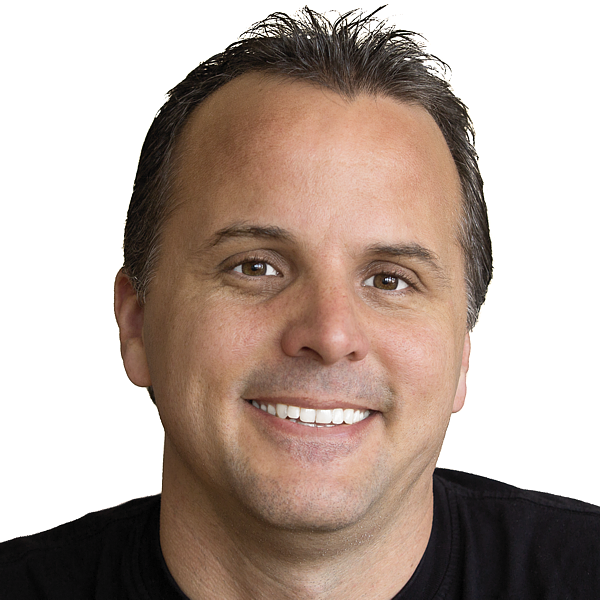
Richard St-DenisView profile
Associate Professor
Richard St-Denis is an Associate Professor in the Department of Computer Science at the University of Sherbrooke, Quebec, Canada. His academic work focuses on theoretical and applied aspects of discrete event systems, supervisory control theory, and formal methods in software engineering. With a career spanning several decades, he has established himself as a significant contributor to the field of controller synthesis and formal specification methods. St-Denis's research interests center around discrete event systems and supervisory control theory, with particular emphasis on the development of formal methods for system specification and controller synthesis. His work bridges theoretical computer science and practical applications in industrial control systems. He has made substantial contributions to extending statecharts with process algebra operators, developing entity-based black-box specification methods (EB3), and creating automated measurement techniques for software size. His recent work has focused on solver-aided programming languages like αRby, ProB, and Rosette, exploring their applications in supervisory control theory. Analysis of St-Denis's publication record reveals a consistent evolution from foundational work in discrete event systems and controller synthesis toward more modern applications involving solver-aided programming and formal verification techniques. His research shows a clear progression from theoretical foundations to practical implementations, with increasing emphasis on automated reasoning and formal verification in recent years. The interdisciplinary nature of his work connects computer science, control theory, and software engineering, demonstrating how formal methods can be applied to solve complex problems in system design and verification. St-Denis has been involved in the MELODIES (Modeling Environment for LOgical DIScrete Event Systems) project, which provides a prototyping environment for novices in the field of discrete event systems. This educational tool demonstrates his commitment to making complex theoretical concepts accessible to new researchers and practitioners. His work on Strongly Connected Components modules, State-based control theory implementations, and N-inference observability models showcases his dedication to both theoretical advancement and practical implementation of control systems concepts.