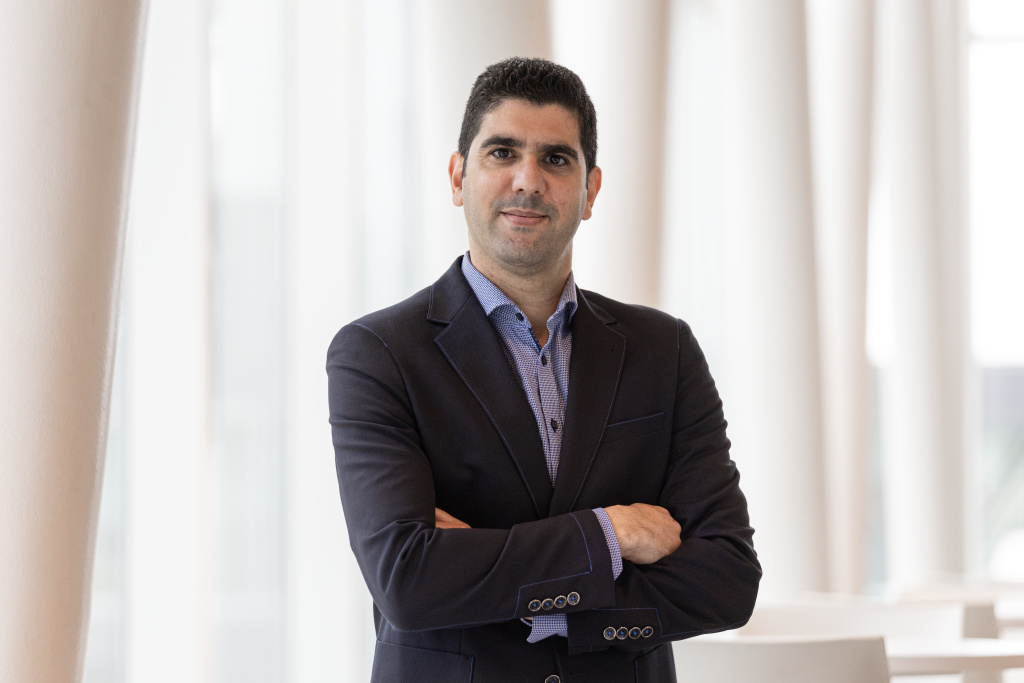
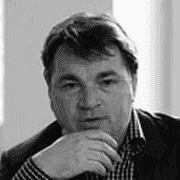
Aaron Shugar is a Professor and current Bader Chair in Art Conservation at Queen’s University. With a background in archaeometallurgy and conservation science, he specializes in non-destructive analysis techniques for cultural heritage, including X-ray fluorescence (XRF), Raman spectroscopy, and hyperspectral imaging. His work bridges art history, material degradation, and technological innovation. Honours H.B.A. in Anthropology and Law & Society from York University M.S. in Archaeological Materials from the University of Sheffield Ph.D. in Archaeometallurgy from University College London His research focuses on historic artist’s pigments , ancient metallurgy , and technical history of artifacts , with particular interest in degradation pathways and manufacturing processes. Recent publications highlight trends in AI integration with XRF analysis and preservation of modern materials in art conservation. Bader Chair in Art Conservation Mellon Foundation Professor in Conservation Science Aaron co-directed the Archaeometallurgy Laboratory at Lehigh University, served as a guest scientist at NIST, and remains a research associate at the Smithsonian Institution. He actively contributes to TEFAF’s Scientific Vetting Committee and acts as a forensic materials expert for the Court of Arbitration for Art.
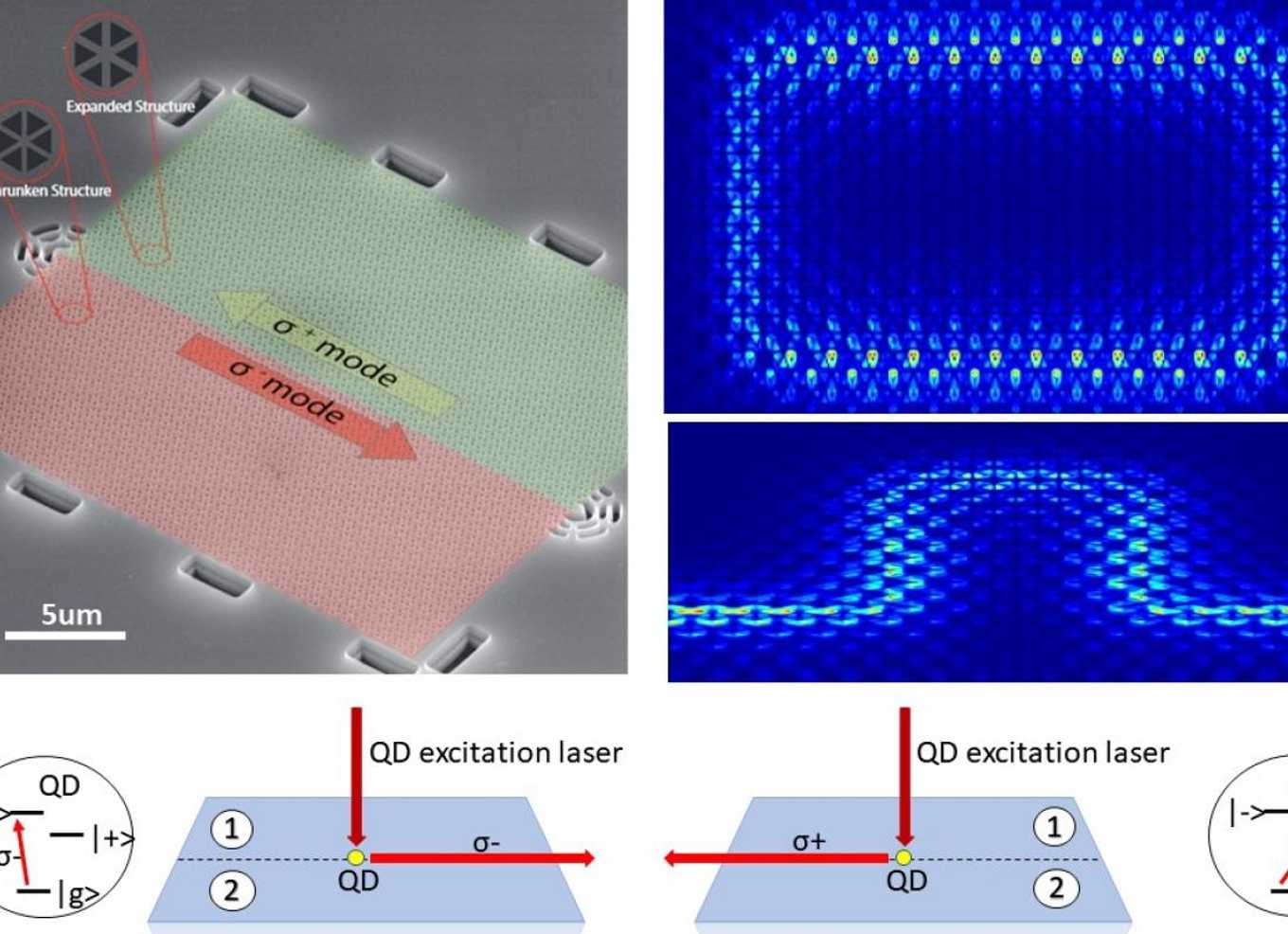
Edo Waks is the Herbert Rabin Distinguished Professor of Electrical and Computer Engineering at the University of Maryland (UMD), and Associate Director of the Quantum Technology Center (QTC). He holds affiliations with the Joint Quantum Institute (JQI), the Institute for Research in Electronics and Applied Physics (IREAP), and the Brain and Behavior Institute. His research focuses on quantum photonics, including topological photonics, quantum confined emitters, and low-energy opto-electronics. Waks leads projects such as a $1M NSF-funded initiative to develop quantum interconnects for ion trap quantum computers. He has pioneered work on photonic crystal-based quantum information processing and solid-state quantum emitters. Education: B.S. and M.S. in Electrical Engineering from Johns Hopkins University (1995–1996), Ph.D. in Electrical Engineering from Stanford University (2003). Postdoctoral research at Stanford under Professors Yoshihisa Yamamoto and Jelena Vuckovic. Research interests include applications of photonic crystals to quantum computing and sensing, with key contributions in cavity quantum electrodynamics (QED), quantum dot photonics, and topological photonic systems. His lab develops scalable quantum devices and hybrid systems integrating trapped ions with photonic chips. Awards include the Presidential Early Career Award for Scientists and Engineers, NSF Career Award, and APS Fellow. His work has been published in Nature Photonics , Physical Review Letters , and Optica . Grants and collaborations include leadership in multi-institutional NSF projects and the Center for Integration of Modern Optoelectronic Materials on Demand (IMOD). His lab focuses on quantum networks, low-power optoelectronics, and topological photonics applications. Labs and Teams: Quantum Photonics Lab (JQI/IREAP), Quantum Technology Center, and collaborations with MIT, University of Arizona, and others in quantum networking initiatives.
Hebatalla Taha is an Associate Senior Lecturer at Lund University's Centre for Advanced Middle Eastern Studies (CMES) and Department of Political Science. She also participates in the MECW: The Middle East in the Contemporary World research network. Her research focuses on the intersections of political economy, technology, and war in the modern Middle East, particularly Palestine/Israel and Egypt. Her doctoral work analyzed the role of Palestinians in Israeli capitalism through everyday encounters in unconventional sites of contestation like high-tech firms and shopping centers. Her recent research explores nuclear histories and technologies in the Middle East, with publications appearing in prestigious journals including Third World Quarterly , International Affairs , and Global Affairs . Her work examines nuclear imaginaries in Egypt, atomic aesthetics, and the intersections of gender and nuclear discourse. Her research output shows a strong trend toward nuclear politics in the Middle East, with numerous publications examining Egyptian nuclear history, atomic culture, and nuclear policy across the region. She frequently collaborates with the Nuclear Knowledges research collective at Sciences Po. International Affairs Early Career Prize (2022) Dr. Taha actively contributes to academic discourse through conference presentations and workshop organization, including the Swemena Annual Conference and CMES Reading Course on the Israel-Palestina Conflict. She is involved in significant research projects including SWEMENA (Swedish Middle East and North Africa Network) and MECW 2.0. She maintains an affiliation as an Affiliated Scholar at the Center for International Studies (CERI) at Sciences Po, where she collaborates with the Nuclear Knowledges research collective.
Magnus Rodell is a Lecturer in the history of ideas at Södertörn University, Department of History and Contemporary Studies. He has taught courses ranging from early Christian philosophy to contemporary cultural theory, including roles at the international Master's program EuroCulture (2002-2009) and the Teacher Training Program with intercultural focus. Education: PhD in History of Ideas from Uppsala University (2002) Research Focus: Monumental culture, collective memory, material culture, nation-building, and border studies through historical and contemporary lenses Notable Contributions: Analysis of spatial turn in cultural studies, media's role in commemorative practices, and border-making processes His work bridges historical analysis with modern cultural representations, particularly examining how physical monuments and media interact in shaping national identity and memory.
Gerd Althoff is a distinguished Professor of Medieval History at the University of Münster, where he has served as Director of the Institute for Early Medieval Studies since 1997. He is actively involved in the Cluster of Excellence "Religion and Politics in Pre-Modern Cultures," leading research projects on religious categories of historical interpretation and the role of the Church in political decision-making. Previously, he held professorships at the universities of Bonn (1995) and Gießen (1990), establishing himself as a leading authority in medieval studies across German academia. Althoff's academic journey began with his Abitur at Amtsgymnasium Ibbenbüren in 1963, followed by studies in History and German Studies at the universities of Münster and Heidelberg (1965-1970). He earned his PhD from the University of Münster in 1974, served as an Assistant Lecturer at the University of Freiburg/Breisgau (1974-1980), and completed his postdoctoral lecture qualification (Habilitation) at the same institution in 1981. His academic career spans over five decades, marked by significant contributions to medieval historiography. Professor Althoff's research focuses on the intricate dynamics of medieval power structures, particularly examining how rituals, symbolic communication, and conflict resolution shaped political authority in the Middle Ages. His work explores the interplay between religious and secular power, with special attention to the Ottonian and Salian periods of German history. He investigates how medieval societies conceptualized divine justice, royal authority, and the mechanisms of trust-building that maintained social cohesion. His approach combines meticulous archival research with theoretical frameworks from sociology and communication studies, offering fresh perspectives on medieval political culture. Althoff's extensive publication record reveals a consistent focus on how power was negotiated, displayed, and maintained through ritualized practices in medieval Europe. His recent works demonstrate growing interest in the religious dimensions of historical interpretation, particularly how medieval thinkers understood divine intervention in worldly affairs. The recurring themes across his scholarship include the fluid boundaries between church and state, the performative aspects of political authority, and the evolving structures of medieval governance. His comparative approach, examining both German and broader European contexts, has significantly advanced our understanding of medieval political culture. Research Prize of the University of Münster (2005) Throughout his career, Professor Althoff has supervised numerous doctoral students whose work reflects his diverse research interests, from political rituals to religious authority in medieval Europe. His leadership extends to major collaborative research initiatives, including serving as Spokesperson for the Cluster of Excellence "Religion and Politics in Pre-Modern Cultures" (2007-2011) and as co-initiator and speaker of Collaborative Research Centre 496 "Symbolic Communication and Social Value Systems from the Middle Ages to the French Revolution" (1997-2003). His international recognition is evidenced by invitations as Visiting Professor at prestigious institutions including the École des Hautes Études en Sciences Sociales in Paris (1998) and the University of California, Berkeley (1995). As Director of the Institute for Early Medieval Studies at the University of Münster, Althoff has fostered a vibrant research environment focused on interdisciplinary approaches to medieval studies. His institute has been instrumental in advancing the field through graduate programs including "Written Culture and Society in the Middle Ages" and "Social Symbolism in the Middle Ages." The collaborative research culture he has cultivated continues to produce significant scholarship on medieval political, religious, and social structures.
Flavio Bezerra Costa serves as an Assistant Professor in the Department of Electrical and Computer Engineering at Michigan Technological University's College of Engineering. His research focuses on critical areas of modern power systems, including smart grid technologies, renewable energy integration, power system protection, and advanced applications of signal processing and artificial intelligence in electrical power networks. Dr. Costa's research interests span a comprehensive range of power system topics with particular emphasis on Smart Grid technologies, Integration of Renewable Energy Systems, Power System Protection, Control, and Monitoring, Power Quality analysis, Power Systems and Power Electronics, AC/DC Microgrids, High-Voltage Direct Current (HVDC) Electric Power Transmission Systems, and the application of Signal Processing and Artificial Intelligence (including Machine Learning) in power systems. His work bridges traditional power engineering with modern computational techniques to address contemporary grid challenges. Analysis of Dr. Costa's recent publications reveals a consistent focus on wavelet transform applications for power system protection and monitoring, particularly in the areas of fault detection, classification, and location. His research demonstrates strong integration of machine learning techniques with traditional power system protection methods, with significant contributions to transformer protection, transmission line fault analysis, and microgrid stability. The work shows an evolving trajectory from fundamental wavelet-based protection techniques toward more sophisticated AI-enhanced approaches for modern power grid challenges. Dr. Costa maintains an active research program with numerous publications in top-tier IEEE journals and conferences, demonstrating his significant contributions to the field of power systems engineering and protection.
Andrew Soderberg serves as an Associate Professor in the Management and Human Resources Department at the College of Business, University of Wisconsin Oshkosh. He holds a Ph.D. from the University of Utah (2016) and a BS from Brigham Young University (2005), bringing over a decade of academic expertise to his role. His research spans critical domains in organizational behavior and business ethics, with particular emphasis on: Workplace ethics and moral decision-making processes Leadership dynamics and trust formation Political ideology's impact on organizational perceptions Artificial intelligence ethics in human resources Sexual harassment training effectiveness Work-life balance and parental status implications Soderberg's publication trajectory reveals a sophisticated evolution toward examining ethical tensions in modern workplaces. His recent work demonstrates increasing focus on AI ethics, political polarization in organizations, and psychological reactance to leadership failures. Methodologically, he employs mixed-methods approaches to dissect complex interactions between status perceptions, moral reasoning, and organizational outcomes, with notable contributions to understanding how e-training design influences harassment prevention and how political identity shapes workplace status hierarchies. His scientific recognition includes: Dean's Excellence Award, College of Business (2024) College of Business Outstanding Faculty Award (2023) Dean's Excellence Award (2022) Management Department Teaching Award (2022, 2019) As an educator, Soderberg has pioneered innovative classroom methodologies including the 'Court of Theories' debate exercise for motivation theory instruction and the 'FOG' framework for team communication training. His research collaborations span multiple institutions, addressing pressing organizational challenges from sexual harassment prevention to ethical AI implementation. While specific grant details aren't provided, his publication record indicates sustained funding for research on workplace ethics, leadership dynamics, and political ideology in organizations.
Christiane Kruse is a Professor of Art History and Visual Cultures at the Muthesius University of Art and Design Kiel since 2011. She serves as the Managing Director of the Institute for Art, Design, Media (IKDM) since 2014 and previously held the Equal Opportunities Officer role until 2020. Education: Doctorate (Dr. phil.) at LMU Munich (1994) Habilitation at University of Konstanz (2002) with Venia Legendi Studies in Art History, Modern German Literature, and Medieval Studies (1983–1989) Research Interests span art history, visual cultures, image anthropology, media theory, and cultural studies. Her work explores the intersection of art, technology, and identity, with a focus on iconoclasm, gender representation, and sustainability in design. She investigates how visual media shape historical memory and contemporary discourse. Recent Publications address topics like contemporary iconoclasm, eco-art practices, and the role of masks in global visual cultures. Her edited works trace historical dialogues between art and science, religious imagery, and interdisciplinary approaches to image-making. Scientific Awards: Research Fellowship from Herzog August Library Wolfenbüttel (2007) Fellow at the Wissenschaftskolleg zu Berlin (2010–2011) Other Roles include Visiting Professorships at Humboldt University Berlin (2013/14) and University of Karlsruhe (2004/05), Acting Professorships at TU Dresden and Braunschweig University of Fine Arts, and contributions to curatorial projects like documenta 13.
Tojana Račiūnaitė is a senior researcher and director of the Institute of Art Research at Vilnius Academy of Arts (VAA), where she has worked since 1996. Her research focuses on visual culture in the Grand Duchy of Lithuania (16–18th century), sacral art history , iconography , and anthropology of the image . She earned her PhD in art criticism from VAA in 1999 with a thesis on Baroque art and architecture of the Discalced Carmelites . Education: PhD in Art Criticism (VAA, 1999); MA in Art History and Theory (VAA, 1990) Academic Roles: Senior Researcher at VAA Institute of Art Research; Director (2008–present) Her work bridges iconological analysis and visual anthropology , examining the interplay between image and text in historical and modern contexts. She has curated exhibitions like Vaclovas Ratas. Beyond the Equator (2021) and co-authored guidebooks on Lithuanian Baroque art . Her recent research projects include Mimetic and Symbolic Representations of Jonas Karolis Chodkevičius (2021–present), funded by the Lithuanian Academy of Sciences. Her publications—spanning monographs like Atvaizdo gyvastis (2014) and articles in Acta Academiae Artium Vilnensis —explore themes such as miraculous Marian images , relic iconography , and visual pragmatics . She received the 2019 Lithuanian Academy of Sciences Award for her contributions to understanding religious art heritage in the Grand Duchy of Lithuania. Scientific Awards: 2019: Science Award from Lithuanian Academy of Sciences Memberships: Lithuanian Association of Art Historians (1995–present) International Association of Art Critics (AICA, 1996–present) Račiūnaitė has lectured at VAA since 1990 on topics including Lithuanian art history , 17–19th-century Western art , and visual-textual analysis . Her methodological approach integrates art history with anthropology , emphasizing the symbolic and mimetic functions of images across cultural contexts.
Professor Hubert Faustmann is a historian and political scientist at the University of Nicosia , holding the Department of Politics and Governance since 1999. He also serves as the director of the Friedrich-Ebert-Stiftung Cyprus office since 2011, leading seminars and expert reports on Cypriot history and politics. PhD in History (University of Mannheim, 1999) Master’s degrees in Ancient/Modern History, Political Science, and German Language (University of Mannheim, 1994-1995) His research spans British colonial Cyprus , post-independence Cypriot politics , Hydrocarbon politics in the Eastern Mediterranean , and state-society dynamics focusing on Clientelism. He co-edits The Cyprus Review and contributes to the Political Data Yearbook . His recent work examines Cyprus’ role in World War I, British colonial policies, and reunification efforts since 1974. Notable publications include Cyprus and the First World War (2025), Divide and Quit? (1999), and co-edited volumes on EU integration and the Annan Plan. He also authors the FES Cyprus Newsletter , analyzing political, social, and economic developments across Cyprus.
Luisa Signorelli serves as Senior Tutor in the Department of English Language and Literature at University College London, teaching undergraduate and postgraduate courses across English literature, narrative studies, and early modern literature. Her instructional responsibilities include leading seminars for modules like Critical Commentary and Analysis, Narrative Texts, and Shakespeare's London summer school, with teaching activities scheduled through 2025. Her research centers on British and Irish literature with specialized focus on Shakespearean studies (particularly Ophelia's representation) and eighteenth-century literary anthologies, while extending into communication and media studies through analysis of popular culture and digital humanities. Current projects examine gendered virtue ethics in historical contexts and Western cultural hegemony in contemporary media narratives. Signorelli's publications reveal a methodological bridge between traditional literary scholarship and modern cultural critique, consistently interrogating canon formation and recontextualization processes across historical periods. Her work demonstrates particular expertise in tracing the evolution of literary figures through anthologization practices and analyzing video game narratives as cultural artifacts. Her scholarly recognition includes: Postgraduate Bursary from Society for Theatre Research (2025) Associate Fellow of the Higher Education Academy (2024) Funds for Women Graduates (2024) Postgraduate Bursary from British Society for Eighteenth-Century Studies (2024) Caroline Spurgeon Academic Award (2023) Honourary Life Member of Rete Italiana degli Allievi delle Scuole di Studi Superiori Italiane (2022) Through roles as seminar leader and conference coordinator for events like 'Close Reading in the Digital Age' (2024), Signorelli mentors students across multiple degree programs while advancing interdisciplinary approaches to literary studies. Her teaching portfolio demonstrates sustained engagement with canonical texts from Paradise Lost to The Mill on the Floss, contextualized through contemporary theoretical frameworks.
Timothy Menzies is a full Professor in the Department of Computer Science at North Carolina State University's College of Engineering. He serves as the director of the Irrational Research lab (mad scientists r'us) and holds editorial positions as editor-in-chief of the Automated Software Engineering journal and associate editor for IEEE Transactions on Software Engineering. With over 300 publications and more than 24,000 citations, Menzies is a globally recognized leader in software engineering research. Menzies' research focuses on developing computer systems that make optimal decisions with minimal data, specializing in artificial intelligence, intelligent agents, data sciences, analytics, and software engineering. His pioneering work in data-driven, explainable, and minimal AI for software systems has redefined defect prediction, effort estimation, and multi-objective optimization. He is particularly known for his contributions to empirical software engineering, emphasizing transparency and reproducibility. As the co-creator of the PROMISE repository, he helped establish modern empirical software engineering by demonstrating that small, interpretable AI models can outperform larger, more complex ones. Menzies' recent publications reveal several key trends in his research: a growing emphasis on ethical considerations in AI deployment, particularly in sensitive domains like legal systems; continued innovation in software analytics with a focus on hyperparameter optimization tailored specifically for software engineering tasks; exploration of causal relationships in software analytics; and development of techniques that work effectively with limited data, including landscape analysis, surrogate learning, and active learning approaches. Mining Software Repositories Foundational Contribution Award (2017) Carol Miller Graduate Lecturer Award (2016) IBM Faculty Award (2016, 2017) ACM Fellow (2025) ASE Fellow (2024) IEEE Fellow Professor Menzies has advised 24 Ph.D. students throughout his career, with recent completions including Andre Motta (April 2025) and Xueqi Yang (October 2024). His research has secured over $19 million in funding from prestigious agencies including NSF, DARPA, and NASA, as well as industry partners like Meta, Microsoft, and IBM. Current grants focus on improving machine learning model efficiency, adapting empirical software engineering methods to computational science, vulnerability detection, and software analytics at scale using transfer learning across 10,000+ GitHub projects. Menzies has developed innovative approaches to help developers navigate the challenges of AI implementation while maintaining ethical standards and practical effectiveness. As director of the Irrational Research lab, Menzies leads a team focused on creating AI tools that are not only intelligent but also fair, transparent, and trustworthy. The lab's work emphasizes practical applications of AI in software engineering while addressing the human factors involved in developer-AI collaboration. Current projects include developing methods for better fuzzing with L3harris, improving vulnerability detection through smart pruning techniques, and creating AI platforms for workforce empowerment through credential gap diagnostics.
Waël Jaafar is a Professor in the Department of Software Engineering and IT at École de technologie supérieure (ETS), a constituent school of the Université du Québec system in Montreal, Canada. His research spans multiple critical domains in modern communications and computing infrastructure, with a particular focus on next-generation wireless networks and intelligent systems. Dr. Jaafar holds a B.Eng. from Sup'Com Tunisie, and both M.Sc.A. and Ph.D. degrees from Polytechnique Montréal. His academic background provides a strong foundation for his interdisciplinary research that bridges theoretical concepts with practical engineering solutions. His research interests center around wireless communications systems, with particular emphasis on 5G/6G networks, UAV communications, space telecommunications, and machine learning applications for networking. He has developed significant expertise in federated learning techniques for distributed networks, cybersecurity applications for next-generation mobile systems, and edge computing architectures. His work frequently explores the intersection of communication theory, artificial intelligence, and network security, with applications ranging from industrial IoT to public safety communications. Analysis of his recent publications reveals a strong trend toward integrating artificial intelligence with wireless networking infrastructure, particularly focusing on UAV-assisted communications, federated learning approaches for distributed networks, and security enhancements for 5G/6G systems. His research demonstrates increasing emphasis on practical implementation challenges including energy efficiency, communication overhead reduction, and reliability in non-ideal network conditions. As an academic supervisor, Dr. Jaafar actively mentors numerous graduate students across various projects. He currently supervises doctoral candidates working on blockchain-enhanced security for 5G networks, green network slice orchestration, and federated learning approaches for Open RAN architecture. His master's students are engaged in diverse topics including LiDAR-based power line monitoring, multimodal behavioral authentication, and 5G/6G security using AI techniques. Dr. Jaafar is affiliated with two prominent research laboratories at ETS: LASI (Computer System Architecture Research Laboratory) and LACIME (Communications and Microelectronic Integration Laboratory). At LASI, he contributes to research in AI-based systems engineering, resource orchestration in edge/cloud environments, and intelligent network design. Through LACIME, he engages with broader communications research spanning from microelectronic components to complex communication systems, with particular focus on wireless networks and signal processing applications.
Jakob Vogel serves as a Full Professor at the Centre for History (CHSP) of Sciences Po, Paris, where he maintains permanent faculty status. He previously directed the Centre Marc Bloch (a Franco-German research institute in Berlin) from 2018 to 2023, significantly advancing transnational academic collaboration between France and Germany. His research program critically examines Europe's cultural, economic, and social development through multiple lenses: the history of knowledge systems, nation-state formation, military institutions, and colonial legacies. Vogel's work particularly emphasizes transnational intellectual exchanges and the construction of European identities, blending methodological approaches from cultural history, sociology of knowledge, and political history to analyze long-term historical processes. Vogel's recent publications (2019-2023) demonstrate consistent thematic coherence across European intellectual history. Key trajectories include investigations into academic freedom under political pressure, the evolution of European identity from antiquity to modernity, historical quality standards in production/consumption, transnational knowledge circulation among state experts, and minority experiences in Mediterranean societies. His interdisciplinary methodology bridges historical analysis with insights from political science and sociology. Scientific Awards: No major scientific awards listed in the provided information. Advising and Grants: Information regarding student supervision, doctoral advising, or research grant funding is not specified in the source material. Labs and Teams: No dedicated research laboratories or structured research teams are referenced; Vogel's collaborative work appears centered through the Centre for History and Centre Marc Bloch institutional frameworks.
Karl Heinz Schneider serves as an Associate Professor at the Historical Seminar within the Faculty of Philosophy at Leibniz University Hannover. His academic career includes significant administrative roles such as Dean of Studies of the Faculty of Philosophy (2007-2010) and Scientific Director of the Center for Teacher Education (2010-2012). With an office in Building 1146, Space B221 at Im Moore 21, 30167 Hanover, he maintains active engagement in both teaching and research activities at the university. Dr. Schneider's educational journey began with studies in history and German at Hanover, where he completed his state examination in 1977. He earned his doctorate in 1981 and achieved habilitation in 1997 for modern and contemporary history with special emphasis on regional history. His early career included work in adult education from 1981-1991, followed by research positions including a project on "Schaumburg in Industrialization" (1991-1994) and appointment as Research Associate for Applied Regional History at the University of Hanover since 1994. Professor Schneider's research spans multiple interconnected fields of historical inquiry. His primary focus lies in agricultural history of the late 18th through 20th centuries, with particular attention to regional industrialization processes in central Lower Saxony. He has made significant contributions to gender history, especially regarding women's roles in rural settings, and maintains active interest in transport history with emphasis on railway development. His innovative approach includes examining the use of internet technologies for historical research methodologies. His work consistently demonstrates how regional history intersects with broader national and international historical narratives. Analysis of his recent scholarly output reveals a consistent focus on regional German history, particularly concerning Lower Saxony and Schaumburg. His publications demonstrate expertise in agrarian reforms, village development patterns, and industrialization processes at the regional level. The temporal scope of his work ranges from the 18th century through contemporary history, with particular strength in late 19th and 20th century developments. His methodological approach combines traditional archival research with innovative perspectives on gender, migration, and regional economic development. Schneider maintains active membership in numerous scholarly organizations that reflect his diverse research interests: Historical Commission for Lower Saxony and Bremen Working Group for Economic and Social History Working Group on the History of Lower Saxony (since 1945) Historical Working Group for Schaumburg Working Group for Agricultural History History Department of the Lower Saxony Homeland Association Regional History Working Group at the University of Hanover Working group "Village and Rural Areas" at the University of Hanover Throughout his career, Professor Schneider has demonstrated commitment to both academic scholarship and practical historical education. His early work in adult education for local historians in Lower Saxony established foundations for his later academic career. He has supervised numerous research projects on regional history and contributed significantly to teacher education through his directorship of the Center for Teacher Education. His scholarly approach bridges academic research with practical applications in historical education and regional development initiatives. Professor Schneider's research activities are closely connected to several collaborative initiatives at Leibniz University Hannover. His work with the Regional History Working Group and the "Village and Rural Areas" working group demonstrates his commitment to interdisciplinary research approaches. These teams bring together historians, geographers, and social scientists to examine regional development patterns from multiple perspectives. His involvement with the Working Group for Agricultural History connects his research to broader scholarly conversations about rural transformation across Europe.