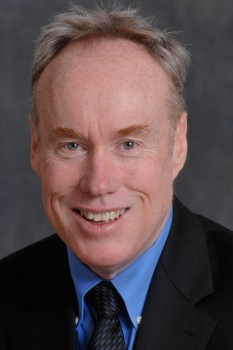
Brian D. Taylor is a Professor of Urban Planning and Public Policy at UCLA’s Luskin School of Public Affairs, and a Research Fellow at the Institute of Transportation Studies. His academic roles include Director of the UCLA Institute of Transportation Studies and former leadership of the Lewis Center for Regional Policy Studies. Education: PhD in Urban Planning (UCLA), MCP in City and Regional Planning (UC Berkeley), MS in Civil Engineering (UC Berkeley), and BA in Geography (UCLA). Research focuses on transportation equity, finance, policy, and behavior. Key areas include post-pandemic travel trends, transit ridership decline, transportation pricing, and the socio-political dimensions of urban mobility. Recent work explores falling public transit use, pandemic-induced activity changes, and equity impacts of new mobility systems. Publications highlight studies such as The Drive for Dollars (Oxford Press, 2023), analyzing freeway financing and urban transformation, and influential papers on congestion economics and transit fiscal challenges. Over 50 students advised, many now leading academics and practitioners. Awards include the YPT Excellence in Innovation Award (2021) and recognition as a Top 10 Transportation Thought Leader (2016). Teaching includes courses on transportation economics, land-use integration, and shared mobility policy. Administrative leadership roles span institutes and transportation centers across California.
Jishen Zhao is an Assistant Professor in the Department of Computer Science and Engineering at the University of California, San Diego (Jacobs School of Engineering). His research focuses on computer architecture, non-volatile memory systems, and deep learning acceleration. Dr. Zhao has published extensively in top venues including ISCA, MICRO, ASPLOS, and IEEE Transactions. He collaborates with researchers at UCSD and beyond to advance systems for emerging applications in AI and autonomous vehicles. Dr. Zhao's primary research areas include persistent memory systems, hardware/software co-design for deep learning, and safety-critical computing. He develops techniques for crash consistency, memory disaggregation, and efficient neural network deployment. His work on autonomous vehicles addresses scenario generation and perception-aware system design. Recent projects explore LLM applications for software engineering and hardware verification. Analysis of Dr. Zhao's 2024-2025 publications reveals a strong shift toward AI-integrated systems research. He applies large language models to tasks like RTL verification and software issue localization while continuing to innovate in memory systems for serverless computing. There is growing emphasis on safety-critical systems for autonomous vehicles and energy-efficient neural network training using novel hardware architectures. Information about Dr. Zhao's scientific awards, advising activities, grants, and laboratory facilities was not available in the provided documentation.
Dr. Alister Smith is a Reader (Associate Professor) in Geotechnics at Loughborough University, where he directs the £1M National Engineered Slope Simulator (NESS) – the world’s first climate-controlled facility testing clay slope deterioration. His £6.7M research portfolio addresses geotechnical infrastructure resilience under climate change. Innovations include acoustic emission (AE) landslide early warning systems deployed across five continents, with the Community Slope SAFE project recognized in REF2021. Current work includes the RAINDROP doctoral training cluster on infrastructure prognosis and the £4.9M EPSRC ACHILLES programme on climate impacts. Awards: Philip Leverhulme Prize, ICE Thomas Telford Premium (twice), and Hawley Award for Engineering Innovation. He serves on the Lilly Fellows Program Board and edits for the International Journal of Christianity and Education.
Professor Joanna Bullard is a leading academic in Physical Geography at Loughborough University, specializing in aeolian processes, climate-landscape interactions, and dust dynamics. She holds adjunct roles at Griffith University, Australia, and has served in key leadership positions including Associate Dean (Teaching) and President of the International Society for Aeolian Research. Her work integrates field observations, remote sensing, and experimental methods to study dust emissions, microplastic transport, and environmental change in polar and arid regions. Bullard has received prestigious awards such as the EGU Ralph Alger Bagnold Medal (2021) and the Philip Leverhulme Prize (2004). Education: PhD from University of Sheffield Her research focuses on Arctic ecosystems, high-latitude dust pathways, and the geomorphic impacts of climate change. Recent work explores microplastic degradation via wind abrasion and the biogeochemical role of dust in Greenland’s lakes. Bullard’s teaching innovations include augmented reality tools for geomorphology education and crowd-sourced meteorological data projects. Awards: EGU Bagnold Medal, British Society for Geomorphology Fellowship, HEA Principal Fellowship Publications emphasize dust-climate feedbacks, aeolian sediment dynamics, and interdisciplinary methodologies. She leads international collaborations on dust cycle modeling and Arctic environmental monitoring.
Prof. Dr.-Ing. Thomas Zwick is a full professor and director of the Institute of High Frequency Engineering and Electronics (IHE) at the Karlsruhe Institute of Technology (KIT). He holds a Dipl.-Ing. (M.S.E.E.) and Dr.-Ing. (Ph.D.E.E.) from the University of Karlsruhe. His career includes roles at IBM Research (2001–2004), Siemens AG (2004–2007 managing automotive radar teams), and KIT since 2007. He leads research in high-frequency technologies, antennas, radar systems, and wireless communications. Research interests include radio wave propagation, antenna design, automotive radar architectures, and millimeter-wave systems. He has authored/co-authored over 400 papers, 20 patents, and received IEEE Fellow status (2018), honorary doctorate from Budapest University (2022), and membership in the Heidelberg Academy and acatech. His work emphasizes integrating sensing and communication systems, 3D-printed RF components, and high-frequency measurement techniques. Teaching focuses on high-frequency engineering, electronic circuits, and radar systems. He oversees the IHE’s laboratories, including the Microwave Engineering Lab and Student Innovation Lab. Recent work explores sub-THz communication, RIS-aided ISAC systems, and beamforming for reduced EMF exposure in urban scenarios.
K. Rajibul Islam is an Associate Professor at the University of Waterloo, affiliated with the Institute for Quantum Computing (IQC) and the Department of Physics and Astronomy. He holds a joint appointment with the Perimeter Institute for Theoretical Physics and co-founded Open Quantum Design and Lightflow Optics Inc. His research focuses on quantum information processing, quantum simulation, and trapped ion systems, with applications in quantum computing and entanglement studies. Education: Ph.D. in Physics (2012, University of Maryland), M.Sc. in Physics (2007, Tata Institute of Fundamental Research), B.Sc. in Physics (2005, Jadavpur University). Postdoctoral research at Harvard University (2012–2015) and MIT (2015–2016). Research Interests : Quantum simulation of spin models, quantum computing with trapped ions, entanglement measurement, frustrated spin systems, and quantum materials. His lab, QITI (Quantum Information with Trapped Ions), develops scalable quantum simulators and open-access quantum computers like 'QuantumIon.' Awards : Fellow of the American Physical Society (2024), VAIBHAV Fellowship (2024), Excellence in Teaching Award (2024), Early Researcher Award (2019), and Distinguished PhD Dissertation Award (2012–13). Teaching : Courses include PHYS 701 (Graduate Quantum Physics), PHYS 234 (Quantum Physics I), PHYS 393 (Physical Optics), and PHYS 256 (Geometrical and Physical Optics). He emphasizes outreach via initiatives like Bigyan.org.in , a Bengali-language science platform. Lab and Collaborations : Active in developing trapped-ion quantum hardware, including ion trap designs, optical addressing systems, and holographic control methods. Collaborates on quantum algorithms, machine learning for quantum systems, and experimental quantum thermodynamics.
Dr. Hanbo Shim is an Assistant Professor in the Department of Management at The University of Texas at Arlington, College of Business. He holds a PhD in Industrial Relations and Human Resources from Rutgers University and a BA in Mathematics and Economics from the University of Illinois at Urbana-Champaign. His research and teaching focus on Human Resource Management, Organizational Behavior, and HR Analytics. PhD, Industrial Relations and Human Resources, Rutgers University (2022) MS, Industrial Relations and Human Resources, Rutgers University (2019) MA, Human Resource Management, Rutgers University (2016) BA, Mathematics and Economics, University of Illinois (2012) Dr. Shim's research explores the temporal dynamics of employee performance, compensation systems, emotional intelligence, and social networks in organizations. He uses longitudinal analysis, multilevel modeling, meta-analysis, and computer simulation to examine how individual and interpersonal factors influence organizational outcomes. His work bridges HR analytics with behavioral science. His recent publications span topics such as green HRM, pay policy dynamics, emotional intelligence, and HR analytics education. These works reflect a strong interdisciplinary approach integrating psychology, sustainability, data science, and strategic management. His research has been presented at leading conferences including the Academy of Management and European Reward Management Conference. Award highlights include: Ralph Alexander Best Dissertation Award (2024) Innovative Teaching Award, Academy of Management HR Division (2022) Best Student Convention Paper Award (2020) Best Doctoral Conference Paper Award, Samsung Economic Research Institute (2020) Dr. Shim actively advises students through capstone and honors projects and serves on PhD and graduate studies committees. He has collaborated with SL Corporation on HR analytics and developed open-source educational materials. His service includes editorial board membership for Compensation & Benefits Review and ad hoc reviewing for top journals. He is also engaged in professional development workshops and public speaking, including for the Society for Human Resource Management at UTA. His lab and research activities emphasize simulation-based methods and real-world HR analytics applications.
Esteban G. Tabak is a Professor of Mathematics at the Courant Institute of Mathematical Sciences, New York University. He holds a Ph.D. in Mathematics from MIT (1992) and a Hydraulic Engineer degree from the University of Buenos Aires (1988). His research spans fluid dynamics, data science, and optimization, with notable contributions to optimal transport theory, atmospheric and ocean modeling, and machine learning methodologies. He leads the Research and Training Group in Mathematical Modeling and Simulation at NYU. Research Interests include Data Analysis, Optimal Transport, Applied Mathematics, and Physics, particularly in fluid dynamics and geophysical flows. His work bridges theoretical advancements with practical applications, such as sea ice dynamics, internal waves, and turbulence modeling. Publications highlight innovations in density estimation, constrained optimization, and energy spectrum analysis of oceanic internal waves. Collaborations span disciplines, including biomedical applications (e.g., heart transplant diagnostics) and climate science. His methodologies, such as dual ascent algorithms and prototypal analysis, emphasize data-driven solutions to complex systems. Teaching includes courses on partial differential equations, fluid dynamics, and mathematical modeling. His work has been supported by grants addressing stratified flows, internal wave energy spectra, and turbulent mixing.
Mike Grimble is a Research Professor in the Department of Electronic and Electrical Engineering at the University of Strathclyde, Faculty of Engineering. His work is centered on advanced control systems with applications across automotive, aerospace, marine, and industrial domains. He is actively involved in theoretical and applied research, particularly in nonlinear and robust control methodologies. Research Interests: Theory and application of nonlinear and robust control for multivariable systems Adaptive control and estimation methods Benchmarking and performance assessment of control systems Condition monitoring and industrial applications Real-time control and embedded systems His recent publications highlight a strong trend in applying predictive and adaptive control techniques to electric vehicles, battery systems, underwater robotics, and industrial machinery. These works emphasize real-time implementation, energy optimization, and robustness—critical for modern sustainable and autonomous systems. Scientific Recognition and Activities: Invited speaker on the benefits and challenges of advanced control in industrial applications (2013) Contributor to UN Sustainable Development Goals, particularly in sustainable industry and innovation Active research output with over 158 publications, including journals, conferences, and book chapters Research Leadership and Funding: Principal Investigator on multiple EPSRC and RSE-funded projects Co-investigator in interdisciplinary initiatives such as the Medical Devices Doctoral Training Centre Organizer of international workshops on hybrid and predictive control Labs and Research Teams: He is associated with the Industrial Control Centre at the University of Strathclyde, a leading hub for control engineering research. His collaborations span departments and institutions, involving real-time LabVIEW implementations, hardware demonstrations, and partnerships with industry players like National Instruments and Quanser Inc.
Steven W. Popper is a Professor of Policy Analysis at the RAND School of Public Policy and an Adjunct Senior Economist at the RAND Corporation. He also serves as Distinguished Professor of Decision Sciences at Tecnológico de Monterrey’s School of Government and Public Transformation, reflecting his international academic engagement. His work bridges economics, science and technology policy, and strategic decision-making under uncertainty. Research Interests: Popper's expertise lies in decision-making under deep uncertainty (DMDU), robust decision making (RDM), assumption-based planning, and science, technology, and innovation policy. He has made seminal contributions to long-term policy analysis, particularly through his co-authorship of Shaping the Next One Hundred Years (2003). His research addresses complex systems in economic development, international relations, and environmental planning. Publication Trends: His recent work applies RDM methodologies to diverse domains such as U.S.-China economic competition, Israeli defense and energy policy, transportation planning, and future technologies. His publications often involve scenario analysis, foresight, and adaptive strategies for policy resilience in uncertain futures. Scientific Awards and Leadership: Founding officer and current Finance Chair, Society for Decision Making under Deep Uncertainty Past Chair, Industrial Science and Technology Section, American Association for the Advancement of Science Consultant to the World Bank, OECD, and multiple national governments Advising and Grants: While specific advisees are not listed, Popper has led numerous high-impact research projects funded by U.S. federal agencies and international bodies. His role as Associate Director of the Science and Technology Policy Institute (1996–2001) involved providing analytic support to the White House Office of Science and Technology Policy, indicating extensive grant-funded research leadership. Labs and Teams: Popper is affiliated with RAND’s research teams focused on policy analysis, innovation, and strategic foresight. He collaborates with interdisciplinary teams applying modeling and simulation tools to public policy challenges, particularly through the Robust Decision Making framework.
Hanbyul Joo is an Assistant Professor in the Department of Computer Science and Engineering at Seoul National University (SNU). Prior to joining SNU, he was a Research Scientist at Facebook AI Research (FAIR) in Menlo Park. He completed his Ph.D. in the Robotics Institute at Carnegie Mellon University, working with Yaser Sheikh, and received his M.S. in Electrical Engineering and B.S. in Computer Science from KAIST, Korea. Dr. Joo's educational journey began at KAIST, where he earned both his Bachelor's and Master's degrees. He then pursued his Ph.D. at Carnegie Mellon University's Robotics Institute, completing his dissertation titled "Sensing, Measuring, and Modeling Social Signals in Nonverbal Communication." His doctoral work focused on developing the Panoptic Studio, a unique sensing system with over 500 synchronized cameras for capturing social interactions. Dr. Joo's research primarily focuses on endowing machines and robots with the ability to perceive and understand human behaviors in 3D . His goal is to build "social Artificial Intelligence" that can interact with humans using social signals (body languages). He pursues this direction using data-driven methods where data is collected by measuring the wide spectrum of social signals transmitted during interpersonal social interaction. His research spans computer vision, machine learning, computer graphics, and robotics , with particular emphasis on 3D human pose estimation, human-object interaction, and social signal processing. His recent publications demonstrate a clear trend toward leveraging diffusion models for 3D reconstruction and generation tasks, with a focus on human-centric applications. His work bridges the gap between 2D image understanding and 3D scene reconstruction, often utilizing pre-trained models to overcome data limitations. The research consistently addresses fundamental challenges in understanding human behavior, interaction with objects, and social dynamics in 3D space. Dr. Joo is a recipient of several prestigious awards including the Samsung Scholarship and the CVPR Best Student Paper Award in 2018 . His paper "Total Capture: A 3D Deformation Model for Tracking Faces, Hands, and Bodies" received this honor at CVPR 2018. His research has been widely recognized in top computer vision and AI conferences, with multiple oral presentations at venues like CVPR, ICCV, and ECCV. Dr. Joo actively mentors a large group of students, with approximately 15 current students working toward MS/PhD degrees under his supervision. His lab, the SNU VCLab, focuses on cutting-edge research in computer vision and graphics. He has secured significant research funding through his work, though specific grant details aren't provided on his website. Dr. Joo frequently serves as an area chair for major conferences including CVPR, ICCV, and NeurIPS, demonstrating his standing in the academic community. Dr. Joo leads the SNU VCLab, which has developed several notable datasets and tools including SNU ParaHome, FrankMocap, and the CMU Panoptic Studio Dataset. His lab maintains strong industry connections, with students interning at leading companies like Meta. The lab's research focuses on building the infrastructure and algorithms needed for social AI, with an emphasis on practical applications that can be deployed in real-world settings.
Jihyun Lee is an Assistant Professor in the Department of Mechanical and Manufacturing Engineering at the Schulich School of Engineering, University of Calgary. She was awarded the Anna Boyksen Fellowship by the Technical University of Munich Institute for Advanced Study (TUM-IAS) in 2021, hosted by Prof. Michael Zäh. Doctorate in Mechanical Engineering from University of Michigan-Ann Arbor (2016) Prior post at Korea Institute of Machinery and Materials (2016-2019) Her research focuses on mechatronics, robotics, manufacturing automation, and control systems , with applications in machine tools, additive manufacturing, and precision measurement. She integrates artificial intelligence and optimization to enhance industrial automation. Recent publications highlight work on vibration control , sensor fusion , and flexible manufacturing systems . Her team explores dynamic modeling , nanocomposite sensors , and human-in-the-loop robotics for industrial and marine applications. 2020 Remote Teaching Award, Schulich Engineering 2020 Early Achievement Award, Association of Korean-Canadian Scientists and Engineers 2018 Best Achievement Award, KIMM She supervises doctoral and master’s students at the University of Calgary, emphasizing hands-on experience and MATLAB/Python simulation skills in her lab. Her work bridges quantum logic and industrial robotics through interdisciplinary collaborations.
James R. Fienup is the Robert E. Hopkins Professor of Optics at the University of Rochester's Institute of Optics, with additional appointments as Distinguished Scientist at the Laboratory for Laser Energetics, Professor at the Center for Visual Science, Professor of Electrical and Computer Engineering, and Affiliated Faculty at the Goergen Institute for Data Science and Artificial Intelligence. His office is located at Wilmot 410, 275 Hutchison Rd., Rochester, NY. Education PhD in Applied Physics from Stanford University (1975) MS in Applied Physics from Stanford University (1972) BA in Physics & Mathematics (magna cum laude) from Holy Cross College (1970) Research Focus Professor Fienup's research specializes in imaging science , with emphasis on phase retrieval algorithms, unconventional imaging techniques, and wavefront sensing. His work spans computational methods for image reconstruction, sparse-aperture systems, and synthetic-aperture imaging. Recent innovations include applying machine learning to wavefront control and developing advanced digital holography techniques for 3D imaging through atmospheric turbulence. Publication Trends His recent articles (2018-2024) demonstrate a strong focus on computational imaging techniques, particularly phase retrieval algorithms applied to optical metrology and wavefront correction. Key themes include multi-plane digital holography, coronagraphic wavefront control for astronomical applications, machine learning-enhanced sensing, and novel approaches for segmented-aperture systems. His work consistently bridges theoretical optics with practical instrumentation challenges. Awards and Honors Lifetime Achievement Award, Hajim School of Engineering (2019) Emmett N. Leith Medal, Optical Society of America (2013) National Academy of Engineering Member (2012) Distinguished Visiting Scientist, JPL (2009) Fellow of OSA and SPIE International Prize in Optics (1983) Rudolf Kingslake Medal (1979) NSF Graduate Fellow (1970-1972) Professional Activities Professor Fienup has served as Editor-in-Chief of the Journal of the Optical Society of America A (1998-2003) and held editorial roles at Applied Optics and Optics Letters . He consults for NASA (James Webb Space Telescope, Hubble), national laboratories, and aerospace companies, and holds five patents in optical systems design.
Sujan Pal is a Hydroclimate Scientist at Argonne National Laboratory , focusing on hydrometeorology, hydroclimatology, and land-atmosphere interactions through numerical modeling and field experiments. He serves as an associate mentor for multiple observational systems in the Atmospheric Radiation Measurement (ARM) user facility and monitors environmental data at Argonne Testbed for Multiscale Observational Science (ATMOS). Ph.D., University of Illinois at Urbana-Champaign (2017-2021) M.S., The University of Arizona (2015-2017) B.E., Jadavpur University (2010-2014) His research spans hydrometeorological modeling, urban climate impacts, and machine learning applications in environmental science. He leads high-resolution flood simulations and contributes to the DOE-funded CROCUS project studying urban climate change in Chicago. Recent publications highlight his work on convection-permitting climate modeling, extreme rainfall dynamics, and flood risk assessment across South America, the U.S. Northeast, and Argentina. His methodologies integrate field data with advanced computational tools. ARM Service Award 2025 Argonne Commercialization Excellence Award 2024 Argonne IMPACT Awards (2024, 2023, 2022) He actively collaborates with national user facilities and contributes to spatiotemporal modeling of water-related hazards as an Associate Editor for Frontiers in Water .
Ahmed Hammad is an Associate Professor in the Department of Civil and Environmental Engineering at the University of Alberta's Faculty of Engineering, where he also serves as Director of Academic Integrity, ENG WIL, Co-op and Career Connections. With 25 years of industry experience as a Project Planning & Control Manager on global mega-projects (including Oil Sands, LNG, and Infrastructure across Canada, UAE, Australia, and Egypt), he brings extensive practical expertise to academia. Education: Doctorate of Philosophy, Construction Engineering & Management, University of Alberta (2009) Master of Science, Construction Engineering & Management, University of Alberta (1999) Master of Engineering, Construction Engineering and Management, Cairo University (1996) Bachelor of Science, Civil Engineering, Mansoura University (1989) Research Focus: Dr. Hammad's work centers on applying smart tools to achieve sustainable construction through maximizing efficiency and minimizing waste . His research employs Machine Learning , Multi-Criteria Decision Making , Knowledge-Based Decision Support Systems , and digital twin technologies to optimize project planning, resource allocation, and sustainable material selection. He investigates the integration of BIM and Augmented Reality to enhance construction processes while reducing environmental impact. Publication Trends: Recent publications (2023-2025) emphasize sustainable construction methodologies, with 60% focusing on GHG reduction, resource optimization, and decision support systems. Key themes include machine learning for labor estimation, TOPSIS/MCDM for sustainable material selection, and digital twins for production planning, reflecting his NSERC-funded projects on KBDSS and construction-oriented digital twins. Scientific Recognition: Best Paper Award at 8th International Conference on Industrial Engineering and Operations Management (2018) Best Paper Award at HBRC Green Smart Sustainable Buildings Conference (2024) Research Leadership: Dr. Hammad secures major industry-academic partnerships, including NSERC Mission Alliance Grants ($1.2M+) with 16 industry partners for GHG reduction projects and NSERC Alliance Grants with 9 partners for digital twin development. His completed projects include collaborations with the City of Edmonton and Alberta Ministry of Infrastructure on resource allocation models. Research Ecosystem: As leader of the Sustainable Construction Research Group (SCRG), he fosters industry-academia collaboration through regular workshops with construction firms and government agencies, focusing on translating research into practical tools for sustainable project delivery.