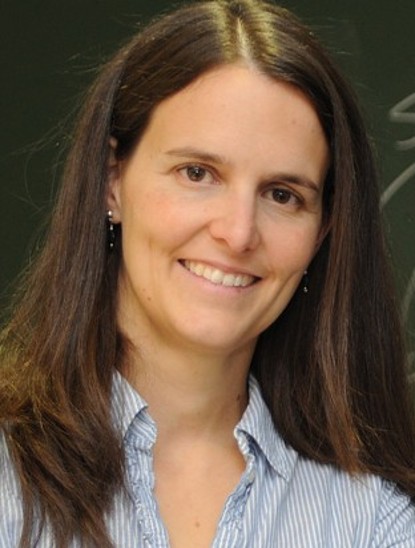
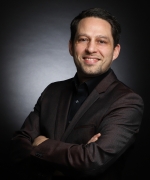
Prof. Dr.-Ing. Achim Kampker is a faculty member at RWTH Aachen University , serving as the Chair of Production Engineering of E-Mobility Components and Head of Battery Technology & Life Cycle . He is affiliated with the Production Engineering Laboratory (PEM) at Bohr 12, Aachen (52072). Kampker specializes in production engineering, battery technology, and electric mobility, with a focus on sustainable manufacturing systems, fuel cell applications, and life cycle assessment of energy storage solutions. His work integrates Industry 4.0 principles into factory planning and production data science. His research themes include: Battery manufacturing optimization, recycling, and supply chain resilience Electric motor design and thermal management systems Simulation-based process control and defect detection in production Data-driven approaches to second-life battery applications Recent publications analyze fuel cell truck economics, solid-state battery modeling, sodium-ion recycling challenges, and AI applications in battery production. He has contributed to standardization efforts in battery manufacturing and explores dynamic capability frameworks for electric mobility solutions. Contact: a.kampker@pem.rwth-aachen.de
Dr. Anas Abdelrazeq serves as Chief Engineer at the Chair of Intelligence in Quality Sensing , RWTH Aachen University. His work focuses on AI integration in manufacturing, machine vision technologies, and quality management innovation. Current research spans generative AI , reinforcement learning , and data quality optimization Key projects include AI-driven product development and MetaVision industrial metaverse studies Recent publications address: Smart measurement strategies through machine learning Generative AI for non-destructive testing Curiosity-driven AI for job shop scheduling Machine vision applications in SMEs He contributes to the Cluster of Excellence Internet of Production and leads initiatives in 3D metrology and AI in Manufacturing as part of RWTH AI Week. The chair actively engages in developing digital process platforms for future construction sites and industrial applications.
Professor Peter Roßbach is an academic at the Frankfurt School of Finance & Management , specializing in General Business Administration with emphasis on Applied Business Informatics and Information Technology. His career spans over three decades in academia and banking IT research. Diploma in Economics from Philipps University Marburg (1985) Doctorate in Business Administration (1990) Habilitation in Business Informatics (1998) His research focuses on Database Technologies , Machine Learning , IT Security , and Blockchain , with over 30 publications addressing financial technology, cybersecurity, and data analytics. Recent work explores algorithmic interpretability, blockchain security, and human factors in cybersecurity. Key publication trends include: Machine Learning applications in banking (2017-2020) Blockchain implications for financial systems (2016-2018) IT Security in online banking (2012-2015) Crowdfunding and fintech innovations (2013) Regulatory compliance in banking (2014) Roßbach is actively involved in academic societies: Deutscher Hochschulverband , VHB , and WKWI . He teaches courses in Digital Business Security , Analytics , and Business Modeling , with office hours available by appointment.
Alex Magnuson serves as a Junior Research Affiliate at the Leibniz Institute for Economic Research (IWH) since August 2023 and is a doctoral candidate at Harvard Business School. He completed his undergraduate education at Dartmouth College. Research Focus: International Trade: Examining formation mechanisms of multinational export networks using big data Urban Economics: Analyzing spatial economic dynamics in metropolitan contexts Computational Economics: Developing data-driven models for global trade systems As a member of IWH's Center for Firm and Productivity Dynamics, Magnuson investigates firm-level productivity patterns and their implications for international trade structures through interdisciplinary methodologies combining economic theory and data science.
Nathalie Bredella is a Professor of Architectural Theory at the Institute for History and Theory of Architecture , Leibniz University Hannover. Her academic career spans institutions including TU Berlin, Cooper Union, ETH Zurich, Bauhaus-University Weimar, and Leuphana University Lüneburg. She has held visiting professorships at the Berlin University of the Arts (UdK), Karlsruhe Institute of Technology (KIT), Technical University of Munich (TUM), and a guest lecturer at ETH Zurich. Doctorate in Architectural Theory from Leibniz University Hannover Habilitation at ETH Zurich’s Department of Architecture Her research intertwines architectural theory , media studies , and computational design , with a focus on gender theory , digital tools , and material cultures . Recent publications like The Architectural Imagination at the Digital Turn (2022) highlight her analysis of digital technology's transformation of architectural practice. Her 2017 work on Building Information Modeling (BIM) underscores her expertise in computational workflows. Analysis of her 15 most recent articles (2013–2024) reveals recurring themes: media-architecture integration , algorithmic design , gendered digital spaces , material agency , sensory environments , and historical computing practices . These include interviews, journal papers, and book chapters published across Springer , Birkhäuser , and transcript Verlag platforms. Scientific recognition includes: Research Fellow at Bauhaus University’s IKKM (2017) Research Fellow at Leuphana University’s MECS (2013) While no direct information about students is provided, her editorial leadership in works like Utopia Computer: The 'New' in Architecture? (2023) and Infrastrukturen des Urbanen (2013) reflects a deep engagement with academic discourse.
Prof. Dr. Jürgen Seitz is a full Professor and Head of the Business Information Systems programme at the Baden-Württemberg Cooperative State University (DHBW) in Heidenheim, Germany. Since April 2001 he has shaped the university’s applied informatics curriculum and serves as data-protection liaison and German Informatics Society (GI) trustee. Internationally, he is Associate Editor for several journals and chairs tracks at conferences such as WHICEB and Bled eConference. Education 1988–1991 Diplom-Betriebswirt (BA), Berufsakademie Stuttgart (now DHBW) – focus on data processing 1992–1996 Diplom-Ökonom, University of Hohenheim – economics 1998 Dr. rer. pol., Europa-Universität Viadrina – dissertation on the impact of IT on banking structures Research Interests Seitz’s research integrates business informatics with pressing societal challenges. Key themes include: e-Finance & FinTech: cryptocurrency literacy, blockchain sustainability, digital payment futures e-Health & Health Telematics: barrier-free e-kiosk design, telematics infrastructure for electronic health cards, pandemic digital health solutions Data Management & Analytics: heterogeneous data-warehouse integration, big-data approaches to agriculture, water-quality prediction, renewable-energy forecasting IT Management & Modeling: business-model evaluation, Industry 4.0 architectures, enterprise system integration Publication Trends Across more than 150 peer-reviewed works (1998–2024), Seitz demonstrates a shift from foundational studies in e-commerce and digital watermarking to cutting-edge applications of AI, blockchain, and data analytics in finance, health, and sustainability. Recent articles emphasize machine-learning techniques (k-means, ARIMA, PCA) applied to global agriculture, renewable-energy growth, and gendered cryptocurrency adoption, reflecting a commitment to data-driven, cross-disciplinary impact. Editorial & Scientific Service Associate Editor: International Journal of Networking and Virtual Organisations (IJNVO) , Journal of Cases on Information Technology (JCIT) , International Journal of Cases on Electronic Commerce (IJCEC) Editorial Board Member: International Journal of Global Sourcing and Management (IJGSM) , Journal of Digital Marketing (JDM) , Journal of Internet Banking and Commerce (JIBC) , among others Conference Chair/Co-Chair: WHICEB (Wuhan International Conference on E-Business), Bled eConference eHealth Track Technical Programme Committee Member: IEEE ICDMAI, IEEE IEMCON, IEEE UEMCON, CCWC External examiner & guest lecturer in China, India, USA, Australia, Malaysia, Jordan, Poland, UK, Belarus Advising & Collaborative Networks While individual student names are not disclosed, Seitz mentors within the DHBW cooperative-education model and supervises industry-linked capstone projects. He is a key liaison for German industry partners and international universities, facilitating funded research on FinTech adoption, e-health feasibility, and sustainable IT architectures. His leadership of the Business Informatics programme positions him to coordinate grants and consortia across Europe and Asia. Laboratories & Teams At DHBW Heidenheim, Seitz steers the Business Informatics Lab —a hub for applied R&D projects with corporate partners such as Landesbank Baden-Württemberg and health-sector IT providers. The lab focuses on prototyping blockchain-based e-prescription systems, evaluating FinTech business models, and deploying predictive-maintenance analytics in automotive supply chains. Interdisciplinary student teams work under his guidance to translate academic insights into market-ready solutions.
Dr Kumarashvari Subramaniam is a Senior Lecturer at the Faculty of Business, British University Vietnam (BUV), appointed in 2023. Previously she served as Senior Lecturer and Programme Leader at Prince Mohammad Bin Fahd University (Saudi Arabia), Lecturer at Effat University (Saudi Arabia) and INTI International University (Malaysia). Education PhD in Marketing – Multimedia University, Malaysia (2020) Master of International Marketing Management – Robert Gordon University, UK Postgraduate Studies in Management – Robert Gordon University, UK (1999) Bachelor of Business Administration – Robert Gordon University, UK Research Interests Dr Ash’s research focuses on digital marketing and customer experience analytics . She explores how interactive technologies shape consumer loyalty and brand engagement, with a growing emphasis on halal marketing , sustainable entrepreneurship and social-media-driven communication strategies . Her work often involves cross-cultural studies comparing Asian markets. Publication Trends Since 2021 she has published across journals and conferences in the broad domains of digital marketing, hospitality marketing, and sustainable consumer behaviour. The articles reveal a trajectory from social-media marketing transformations to empirical studies on luxury-hotel purchase intention and cross-national consumer acceptance of organic and digital agricultural products. Research Grants & Funding Preliminary Study on Modelling Repurchase Intention of Halal Cosmetics (2022) Development of Sustainable Livelihood Enterprise Programme for B40 Group During COVID-19 Conferences & Presentations Dr Ash has presented at ICGSTM 2023, ICIT 2022, British High Commission round-tables, and INTI International University workshops, disseminating findings on multichannel marketing, sustainable mobility and social entrepreneurship.
Dr. Sarah Schönbrodt-Stitt is a Researcher at the Chair of Remote Sensing , part of the Institute of Geography and Geology under the Faculty of Philosophy at the University of Würzburg . She actively contributes to projects like WASCAL-DE-Coop (West Africa climate adaptation), MedWater (Mediterranean water security), and Central Asian Waters (CAWa), with expertise in soil erosion, climate change impacts, and remote sensing for environmental monitoring. Education includes a PhD in Geography from the University of Tübingen (2008–2014), focusing on soil erosion in the Three Gorges Dam area, and a diploma in Geography (main) with minors in Geology and Environmental Economics from Universities of Greifswald and Göttingen (2001–2007). Her work spans field research, data analysis, and international collaboration, including internships in Namibia, Tunisia, and Germany. Research Interests center on sustainable land and water management , integrating remote sensing and GIS for ecological modeling in dynamic regions. Key areas include soil degradation , climate change adaptation , disaster risk reduction , and project coordination . Her recent publications focus on soil moisture mapping , cropland classification , and transboundary water governance in regions like the Aral Sea and Mediterranean agroforestry systems. Scientific Trends from her 15 most recent articles show a strong emphasis on remote sensing applications for soil moisture estimation , land degradation , and water resource management . She leverages Sentinel-1/Sentinel-2 data , Cosmic-Ray Neutron Probes , and machine learning to address challenges in Central Asia , West Africa , and Mediterranean ecosystems . Grants & Collaborations include funding from the German Federal Ministry of Education and Research (BMBF) for WASCAL-DE-Coop and MedWater, and the Federal Foreign Office for CAWa. She collaborates with institutions like the Institute for Advanced Sustainability Studies (IASS), Geoforschungszentrum (GFZ), and Potsdam Institute for Climate Impact Research (PIK).
Tim White is a Leverhulme Early Career Fellow at Queen Mary, University of London, affiliated with the John F. Kennedy Institute and the Department of Sociology. He earned his PhD in Sociology from the London School of Economics in 2023 and has worked at the Free University of Berlin and Cardiff University. Research Focus: Housing, land, property, and power dynamics in financialized urban systems Interdisciplinary Approach: Urban studies, economic sociology, critical political economy His recent work explores the digital transformation of housing systems, linking ownership structures and financial strategies to everyday social experiences. He analyzes inequality, wealth distribution, and the political economy of land, with publications in journals like Economy and Society and Digital Geography and Society . Key projects include studies on co-living, tiny houses, and algorithmic rent extraction. Scientific awards include the Leverhulme Early Career Fellowship. His publications reflect trends at the intersection of technology, housing, and capital accumulation.
Prof. Dr. Philipp Kügler is a Professor at the Computational Science Hub and Acting Director of the Institute of Applied Mathematics and Statistics at the University of Natural Resources and Life Sciences, Vienna. His research focuses on mathematical modeling of complex biological systems, particularly in cardiac and neuronal dynamics. His recent publications highlight studies on: Noise-induced arrhythmias in cardiomyocyte models Proarrhythmic effects of herbal products Stochastic bursting patterns in neuron models These works demonstrate his expertise at the intersection of applied mathematics and biomedical research.
Herbert Schiller is a Director of the Research Unit for Precision Regenerative Medicine (PRM) at Helmholtz Munich and a Professor for Systems Biology of the Airways and Lungs at the Medical Faculty of Ludwig Maximilian University (LMU) Munich. Previously, he served as Deputy Director of the Institute of Lung Health and Immunity (LHI) and held adjunct faculty positions at the Institute of Lung Health in Giessen, Germany. M.Sc. in Biology and Genetics (University of Vienna, 2004-2008) Ph.D. in Molecular Immunology (Medical University of Vienna, 2008) Postdoctoral training at Max Planck Institute of Biochemistry (2009-2015) His research focuses on extending human healthspan by studying genetic and environmental drivers of chronic lung disease and aging through experimental systems biology and AI-driven approaches. Key areas include: Pulmonary systems biology Regenerative medicine and stem cell biology Extracellular matrix and mechanobiology Single-cell genomics Biology of aging and autoimmune diseases His work emphasizes cross-disciplinary methods like human lung organotypic models and mass spectrometry proteomics. Research trends include lung fibrosis mechanisms, integrin-mediated mechanosensing, and AI applications in chronic disease modeling. Scientific distinctions include: W2 Professorship at LMU Munich Dick Heinegard European Young Investigator Award Helmholtz Young Investigator award German Respiratory Society (DGP) research prize EMBO long term fellowship He has secured research grants from the German Research Foundation (DFG), Chan Zuckerberg Initiative (CZI), and the European Commission. His lab employs cutting-edge single-cell RNA-seq, proteomics, and ex vivo tissue perturbation techniques to elucidate lung disease mechanisms.
Prof. Dr. Michael Martin is a Professor at the Professorship of Data Management , Faculty of Computer Science , Chemnitz University of Technology . His work focuses on Knowledge Graphs , Large Language Models (LLMs) , and Semantic Web Technologies , with specific emphasis on RDF/SPARQL optimization , geospatial data integration , and dataset versioning . Keywords: Knowledge Graphs, Semantic Web, LLMs, GeoSPARQL, Dataset Versioning Collaboration: Co-authors include Lars-Peter Meyer, Claus Stadler, Sara Todorovikj, and Claus Stadler Research Trends Recent publications demonstrate his leadership in LLM-KG-Bench benchmarking frameworks and CoyPu knowledge graph projects for resilience research. His work bridges Apache Spark with semantic technologies for scalable knowledge graph construction and develops domain-specific ontologies for industries like steel and copper manufacturing. Projects & Tools Martin's team created open-source platforms such as: Quit Store for distributed RDF dataset management CubeViz.js for statistical data visualization Structured Feedback protocol for decentralized data governance
Jiabin Wu is a researcher at the Chair of Computing in Civil and Building Engineering, Technical University of Munich (TUM), specializing in Building Information Modeling (BIM) and AI-driven solutions for building design compliance. His work focuses on automating regulatory adherence in early design stages through computational innovation, with contact via j.wu@tum.de and +49 (89) 289-23147. His research centers on automated code compliance checking, design adaptation, and BIM conflict resolution using artificial intelligence techniques. Key methodologies include reinforcement learning for conflict resolution, graph-based semantic enrichment, and parametric modeling to enhance IFC (Industry Foundation Classes) models. This work addresses critical gaps in construction informatics by enabling self-healing building designs that dynamically adapt to regulatory requirements while preserving design intent. Analysis of Wu's 2022-2025 publications reveals a cohesive trajectory toward intelligent BIM ecosystems. Core themes include the 'Design Healing' framework for automated compliance, spatial logic integration in IFC models, and machine learning applications for conflict resolution. His research bridges civil engineering with computer science, emphasizing practical implementations that reduce manual review cycles and improve design efficiency in architectural workflows. Wu actively mentors graduate students, supervising theses on BIM-based issue resolution, circulation design optimization, and egress compliance. He contributes to TUM's educational mission through teaching 'BIM.fundamentals' in summer semesters 2022 and 2023, focusing on scalable assessment methods for large student cohorts. His academic service extends to developing pedagogical frameworks that integrate industry standards with computational thinking. As part of TUM's research infrastructure, Wu collaborates within the BIM-Lab and specialized groups including Information Management and Digital Twinning. His work leverages the university's Robotic Fabrication Lab resources and aligns with cross-departmental initiatives in spatial computing, advancing the integration of physical construction processes with digital model evolution.
Prof. Almudena Arcones is a Professor in Theoretical Astrophysics at the Technical University of Darmstadt, Germany. She leads an active research group focused on understanding the cosmic origin of heavy elements. Her work bridges nuclear physics and astrophysics, investigating extreme environments like neutron star mergers and supernovae as cosmic laboratories for element formation. Prof. Arcones' research centers on the r-process (rapid neutron capture process) that creates approximately half of all elements heavier than iron. Her group investigates where and when heavy elements are synthesized in the universe and how these elements are produced. This work connects nuclear physics challenges in describing exotic nuclei with astrophysical challenges in identifying high-neutron-density environments in cosmic explosions. Her recent publications reveal a strong focus on r-process nucleosynthesis in neutron star mergers and core-collapse supernovae. The research integrates multimessenger astronomy (gravitational waves and electromagnetic counterparts), advanced simulations of astrophysical environments, nuclear experiments with exotic nuclei, and observations of elemental abundances in ancient stars. Key themes include nuclear physics uncertainties, neutrino-driven winds, and chemical evolution of r-process elements. Prof. Arcones has secured substantial research funding from prestigious sources including: European Research Council (ERC) Helmholtz Association of German Research Centres GSI Helmholtz Center for Heavy-Ion Research Collaborative Research Center 1245 Research Cluster ELEMENTS Federal Ministry for Education and Research Her research group develops computational tools like the WinNet nuclear reaction network to model nucleosynthesis in extreme astrophysical environments. They combine long-time supernova simulations with detailed microphysics, nucleosynthesis calculations, and observational data to determine the cosmic contributions to heavy element synthesis.
Dr. Fabio Valdés is a researcher at FernUniversität in Hagen's Faculty of Mathematics and Computer Science, specializing in spatial databases and trajectory data analysis. He teaches core modules including Softwaresysteme, Databases and Security on the Internet, and Data Mining while leading advanced research in metric space indexing and pattern recognition. His research focuses on symbolic trajectories , efficient pattern matching for time-dependent data, and metric space indexing . Key contributions include the N-tree index structure for trajectory similarity search and frameworks for spatio-textual trajectory mining. His work bridges theoretical foundations with industrial applications in aircraft tracking, wildlife monitoring, and industrial image processing systems. Analysis of his 15 most recent publications reveals an evolution from foundational symbolic trajectory models (2013-2017) to advanced indexing structures (2020-2025). Current work integrates machine learning for neural network interpretability and energy price forecasting, maintaining strong ties to ACM SIGSPATIAL and IEEE venues while expanding into AI-driven applications. Best Demo Award at DASFAA 2013 Dr. Valdés has supervised over 40 Master's and Bachelor's theses since 2013, covering machine learning, reinforcement learning, and data engineering across finance, autonomous systems, and medical applications. His students have developed solutions for investment decision systems, autonomous agricultural robots, and medical NER systems while addressing industrial challenges in packaging machinery optimization and cockpit staffing.