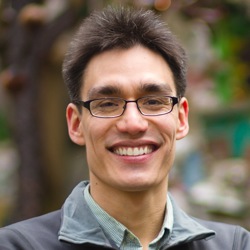
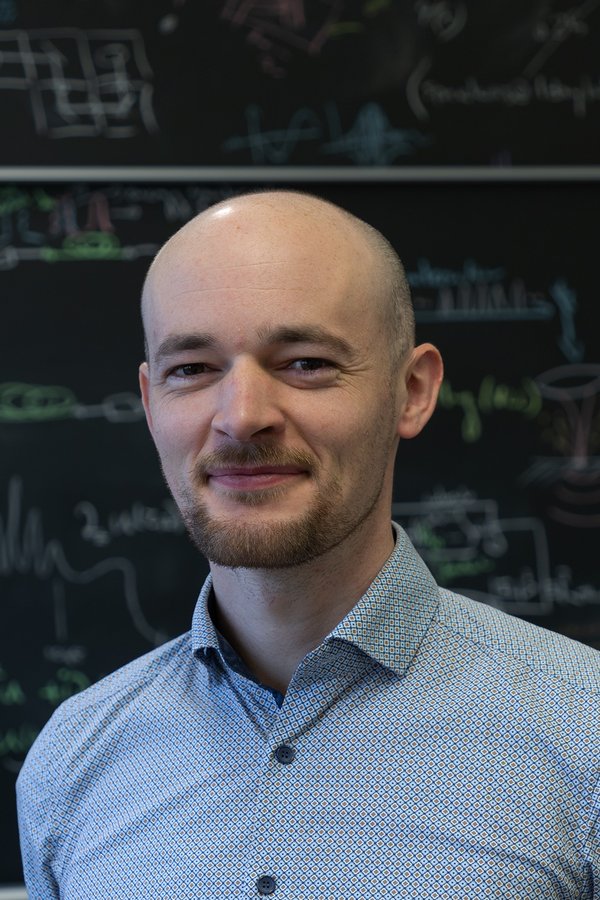
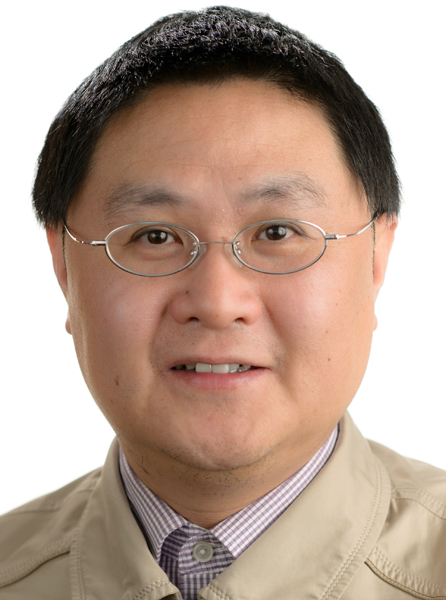
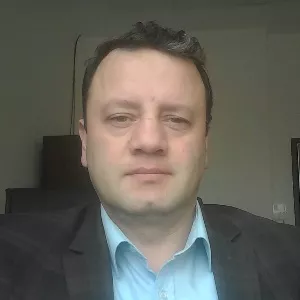
Paul J. Kennedy is a Professor at the University of Technology Sydney's Centre for Artificial Intelligence. He holds a PhD from the same institution (1999). His research focuses on machine learning applications in healthcare, bioinformatics, medical imaging, and data mining. Key areas include developing algorithms for genomic data analysis, healthcare pathway modeling, and edge-cloud frameworks for omics data. Education: PhD in Artificial Intelligence (1999, UTS). Research interests span machine learning, health informatics, and data compression. Notable work includes studies on administrative health records, lung nodule detection, and virtual reality-based cancer cohort analysis. He has co-authored over 100 publications across journals like BMC Bioinformatics, IEEE Transactions, and Artificial Intelligence in Medicine. Advising: Collaborates extensively with students/researchers but no explicit student list provided. Grants and labs: Active in interdisciplinary projects involving medical and computational teams, though specific grants are not detailed here.
Joseph Devietti is an Associate Professor in the Department of Computer & Information Science at the University of Pennsylvania. His research focuses on improving programmability and performance of multiprocessor systems through architectural and programming model innovations. He actively advises PhD students and has supervised numerous graduates now employed at leading tech companies and academic institutions. Education: PhD (2012), MS (2009) in Computer Science and Engineering from University of Washington; BSE (2006) in Computer Science and BA (2006) in English from University of Pennsylvania. Employment: Associate Professor (2020–present), Assistant Professor (2013–2020) at University of Pennsylvania; Principal Scientist & Co-founder at Cloudseal, Inc. (2018–2020). Devietti’s research spans computer architecture, parallel programming, and deterministic execution. Key areas include cache/memory optimization (prefetching, false sharing repair), GPU programming models (race detection, block-size independence), and hardware-software co-design for concurrency safety. His recent work addresses dynamic runtime prefetch tuning (RPG 2 ), online code layout optimization (OCOLOS), and intelligent BTB prefetching (Twig) for data center applications. His publications from 2024–2017 reveal trends in instruction/cache optimization (2024–2020), GPU determinism (2018–2017), and race detection (2018–2016). Awards include the 2024 Penn Engineering Ford Motor Company Award, Radhia Cousot Best Paper (2018), and IEEE Micro Top Picks recognition (2023, 2009, 2008). Scientific Awards : 2024 Penn Engineering Ford Motor Company Award Radhia Cousot Young Researcher Best Paper Award (SAS 2018) IEEE Micro Top Picks (2023, 2009, 2008) Intel Early Career Faculty Honor Program (2013) Intel Ph.D. Fellowship (2011) Advising : Supervised 15+ PhD/Master’s students with placements at Google, Microsoft, Amazon, NYU, and the United States Naval Academy. Collaborations : Works with industry leaders (NVIDIA, Facebook) and academic institutions (University of Washington, Penn).
Dr. Stephan Rave is a Researcher in the Institute for Analysis and Numerics at the University of Münster. He is affiliated with the Applied Mathematics Münster cluster and serves as an Investigator in Mathematics Münster. His work focuses on numerical analysis, scientific computing, and machine learning, with a strong emphasis on model reduction techniques for complex systems. Education : PhD in Mathematics (2012), University of Münster, thesis on finitely summable K-homology. Master's and Bachelor's degrees in Mathematics from the University of Münster. Research Interests : Dr. Rave specializes in model order reduction (MOR) methods, including reduced basis techniques, localized orthogonal decomposition (LOD), and nonlinear approximation strategies. His work addresses challenges in multiscale modeling, domain decomposition, and parametrized partial differential equations. He also develops open-source software tools like pyMOR for MOR and contributes to initiatives like the MaRDI (Mathematical Research Data Initiative) to enhance interoperability in scientific computing. Projects : Key initiatives include the MaRDI project (2021–2026), EXC 2044 Cluster of Excellence (Geometry-based modeling), and MULTIBAT (lithium-ion battery simulation). His research bridges theoretical developments with practical applications in battery modeling, electrochemistry, and computational fluid dynamics. Grants & Awards : Funded by DFG, the German Federal Ministry of Research, and internal university grants, his work addresses strategic areas like sustainable research software and energy storage systems. He leads projects on distributed model reduction and communication-avoiding algorithms. Teaching : Dr. Rave teaches advanced numerical methods courses, including Model Order Reduction, Numerical Methods for PDEs, and Python-based computational labs. He co-organizes seminars and workshops on MOR and scientific software engineering.
Paul Repgen is a Researcher in the Department of Nonlinearity Engineering at Ruhr University Bochum's Faculty of Electrical Engineering and Information Technology. His research focuses on ultrafast laser systems, fiber optics, and nonlinear amplification techniques, with a particular emphasis on high-repetition-rate pulse generation and environmental stability of laser systems. He collaborates closely with Prof. Dr. Ömer Ilday and contributes to advancing applications in industrial laser technology and photonics. His work integrates theoretical and experimental approaches to optimize laser performance, including harmonic mode-locking mechanisms and pulse stabilization strategies inspired by Brownian particle dynamics. Key contributions include record GHz repetition rate systems in burst mode and high-energy pulse generation through controlled Kerr nonlinearity. Paul Repgen's research has led to innovations in all-fiber laser oscillators, Mamyshev-based regenerators, and thulium-doped fiber systems, demonstrating exceptional stability and power scalability. His articles reflect a strong focus on advancing ultrafast laser technology for applications in materials processing, telecommunications, and fundamental optics research.
Professor Dong Xu is a Tenured Professor in the Department of Computer Science at the University of Hong Kong (HKU), part of the School of Computing and Data Science. He holds a B.Eng. and Ph.D. from the University of Science and Technology of China (USTC). His career includes tenured roles at Nanyang Technological University and the University of Sydney, alongside postdoctoral research at Columbia University. His research focuses on Artificial Intelligence, Computer Vision, Multimedia, and Machine Learning , with applications in autonomous driving, AR/VR, medical image analysis, and video surveillance. Xu has authored over 150 papers in top journals and conferences, including CVPR, ICCV, and IEEE Transactions. He actively contributes to the academic community as an editorial board member for journals like ACM Computing Surveys and IEEE Transactions, and through leadership roles in conferences such as ACM Multimedia and ICME. Notable awards include Fellowships from IEEE and IAPR, and the IEEE Signal Processing Society Distinguished Lecturer title (2021–2022). Education: B.Eng. (USTC, 2001), Ph.D. (USTC, 2005) Professional Service: Program Coordinator of ACM Multimedia 2024, Guest Editor of over ten special issues.
David E. Breen is a Professor in the Department of Computer Science within the College of Computing & Informatics (CCI) at Drexel University. He leads the Geometric Biomedical Computing Group and is affiliated with the Metadata Research Center and the Center for Biological Discovery from Big Data. His research spans interdisciplinary domains including biomedical image informatics, geometric modeling, textile modeling, and bio-inspired self-organization algorithms. Education: PhD, Computer and Systems Engineering, Rensselaer Polytechnic Institute MS, Computer and Systems Engineering, Rensselaer Polytechnic Institute BA, Physics, Colgate University His research interests focus on computational methods for biomedical applications, including shape and image analysis for cancer diagnosis, 3D reconstruction of biological tissues, and video analysis of animal behavior. He also investigates geometric modeling techniques for textiles and self-organizing systems. His work integrates computer science with biology, medicine, and engineering to solve complex problems in biomedical computing. The recent publications highlight a strong trend in computational modeling of textiles, biomedical image informatics, and AI-driven data analysis. Key themes include geometric modeling of knitted fabrics, deep learning for medical image classification, agent-based modeling of cancer metastasis, and metadata generation for biological image collections. His work bridges fundamental geometric algorithms with practical applications in healthcare and digital archives. Scientific Awards: No specific awards mentioned in the provided text. Breen has advised numerous students and collaborators across multiple domains, particularly in biomedical computing and textile modeling. His research has been supported through affiliations with major centers and collaborations with institutions such as Johns Hopkins University and the Max Planck Institute. He has been involved in projects related to NSF Center for Visual & Decision Informatics and has contributed to over 100 technical publications. He leads the Geometric Biomedical Computing Group , which conducts research at the intersection of biology, medicine, engineering, and computer science. The group develops algorithms and software for geometry-related computing problems in biomedical applications. Collaborations include the Drexel Integrated Laboratory for Cellular Tissue Engineering, Dr. Dan Marenda's Lab, and Dr. Aleister Saunder's Lab in Drexel's Biology Department.
Engin Yener is a Professor at the Department of Civil Engineering, Faculty of Engineering, Iğdır University. His academic career includes roles such as Department Head and Dean's Assistant at both Iğdır University and Bayburt University. He holds a PhD from Atatürk University (2010) in Civil Engineering with a thesis on asphalt mixture workability, and earlier degrees in Civil Engineering from the same institution. Education: PhD: Atatürk University (2004–2010), Thesis: 'A New Workability Method for Asphalt Mixtures' MSc: Atatürk University (2000–2004), Thesis: 'Durability Study of Fly Ash and Silica Fume-Added Road Concrete' BSc: Atatürk University (1996–2000), Thesis: 22222 Research Interests: Focuses on geopolymer materials, concrete durability, asphalt binder properties, and sustainable construction materials. His work includes optimizing pumice-based geopolymers, evaluating freeze-thaw damage mechanisms in pavements, and improving asphalt mixture performance through aggregate analysis. Grants & Projects: Leads research projects on geopolymers for transportation infrastructure and alternative cement binders. Recent projects include 'Development of Geopolymer Concrete for Water Structures' (2021) and 'Use of Perlite in Acid-Resistant Concrete' (2019). Courses Taught: Special Topics in Civil Engineering, Advanced Pavement Technology, Asphalt Materials, and Transportation Engineering fundamentals at both undergraduate and graduate levels.
Ozgur Yilmaz is a Professor in the Department of Mathematics at the University of British Columbia (UBC). He is the Director of the Pacific Institute for the Mathematical Sciences (PIMS) and has held roles such as Interim Deputy Director at PIMS and Deputy Director at the Banff International Research Station (BIRS). His research focuses on applied harmonic analysis, signal processing, compressed sensing, and seismic signal processing. Education: PhD in Applied and Computational Mathematics from Princeton University (2001), B.Sc. in Mathematics and Electrical Engineering from Boğaziçi University (1997). Research Interests: Mathematical problems in analog-to-digital conversion, blind source separation, sparse approximations, compressed sensing, and their applications in seismic exploration. He has contributed to advancements in sigma-delta quantization, low-rank matrix recovery, and compressed sensing algorithms. Funding: Recipient of NSERC Discovery Grants, UBC Data Science Institute grants, and leadership in collaborative research groups (CRGs) on high-dimensional data analysis and applied harmonic analysis. His work bridges theoretical mathematics with practical applications in signal processing and AI-driven medical imaging. Students and Postdocs: Supervised numerous PhD and MSc students in areas like compressed sensing, seismic data reconstruction, and machine learning. Current advisees include Aaron Berk and Xiaowei Li. Former students hold positions at academic institutions and tech companies. Labs and Collaborations: Affiliated with UBC’s Data Science Institute (DSI), Centre for Artificial Intelligence Decision-making and Action (CAIDA), and the Institute of Applied Mathematics (IAM). Collaborates on projects integrating AI with scientific discovery, such as retinal biomarker identification using deep learning.
Kurt Keutzer is a Professor in the Department of Electrical Engineering and Computer Science at the University of California, Berkeley, and a key member of the Berkeley AI Research Lab (BAIR). He holds a Ph.D. in Computer Science from Indiana University (1984) and was previously Chief Technical Officer at Synopsys, Inc. His research focuses on systems issues in deep learning, particularly for computer vision, speech recognition, NLP, and finance. He has published over 250 refereed articles and six books, and is a highly cited author in hardware and design automation. Keutzer has received multiple IEEE Fellowships, DAC awards, and best paper accolades at conferences like Embedded Vision Workshop and ICPP. Educations: 1984, PhD, Computer Science, Indiana University Kurt Keutzer's research interests span Artificial Intelligence , Computer Architecture , and Scientific Computing , with a focus on computational efficiency in AI systems. His work explores hardware-aware neural architecture search, domain adaptation, and quantization techniques to optimize models from edge to cloud. Recent publications highlight advancements in vision transformers , LLM inference efficiency , and autonomous driving . He also contributes to multimodal AI and self-supervised learning frameworks. Scientific Awards: Institute of Electrical & Electronics Engineers (IEEE) Fellow (1996) DAC's Most Influential Paper Award (2023) Top Ten Cited Author and Paper at DAC Best Paper Awards at Embedded Vision Workshop and ICPP Kurt Keutzer has advised numerous Ph.D. and Master’s students, including Forrest Iandola (co-founder of DeepScale), Sheng Shen, and Michael Murphy. His research teams have pioneered hardware-efficient deep learning solutions like SqueezeNet and FireCaffe. Current projects include optimizing large language models (LLMs) for edge deployment and advancing 3D reconstruction for autonomous vehicles. He is also involved in diffusion models , sparse attention mechanisms , and multi-agent coordination for complex tasks.
Daniel Roy is a Full Professor at the University of Toronto, holding cross-appointments in the Department of Statistical Sciences, Computer Science, Electrical and Computer Engineering, and the Department of Computer and Mathematical Sciences at UTSC. He is also a Canada CIFAR AI Chair and Research Director at the Vector Institute, reflecting his leadership in AI and machine learning research. His educational background includes a PhD, MEng, and BSc in Computer Science from MIT, where his doctoral work earned the MIT EECS Sprowls Award. Prior to joining Toronto, he was a Newton International Fellow at the Royal Society and a Research Fellow at Emmanuel College, University of Cambridge. His research centers on foundational principles in machine learning, statistics, and probabilistic reasoning. Key interests include statistical learning theory, Bayesian nonparametrics, probabilistic programming, and information-theoretic generalization. His work bridges theoretical computer science, mathematical logic, and applied probability. His recent publications, appearing in ICML, NeurIPS, COLT, and JMLR, reflect a strong focus on theoretical advances in generalization, online learning, and stochastic optimization. Themes include minimax rates, conditional mutual information, and the role of data in PAC-Bayes bounds. His group has made foundational contributions to probabilistic programming, including work on Church and the computability of conditional probability. NSERC Discovery Accelerator Supplement Ontario Early Researcher Award Google Faculty Research Award Newton International Fellowship MIT EECS Sprowls Award Daniel Roy advises numerous PhD students and postdoctoral researchers, many of whom have gone on to prestigious positions in academia and industry. His group actively collaborates with leading researchers in machine learning and statistics. He is also an Action Editor for the Journal of Machine Learning Research and Transactions of Machine Learning Research, underscoring his role in shaping the field. He leads a vibrant research group focused on theoretical machine learning and probabilistic modeling, and maintains active collaborations with institutions such as MIT, Cambridge, and the Vector Institute. He is also the founder and maintainer of the probabilistic-programming.org wiki, a key resource in the community.
Dr. Sinno Jialin Pan is a leading researcher in machine learning and artificial intelligence at Nanyang Technological University, Singapore. His work focuses on domain adaptation, sentiment analysis, and efficient neural network optimization. Key research areas: Machine Learning, Domain Adaptation, Reinforcement Learning, Sentiment Analysis Recent publications demonstrate expertise in time-series classification (2025) using hierarchical domain adaptation, LLM efficiency (2025) through expert pruning, and graph generation (2024) via spectral diffusion. His work spans both theoretical advancements and practical applications in neural architecture optimization and adversarial learning. Scientific contributions include: 2025: Virtual-label hierarchical domain adaptation 2024: Spectral diffusion for graph generation 2024: Multilingual jailbreak analysis in LLMs Current trends show increasing focus on large language model optimization and robust neural architectures , with applications in fault diagnosis, recommender systems, and misinformation detection.
Sermet DEMİR is an Assistant Professor at the Faculty of Engineering , Department of Mechanical Engineering , Doğuş University. His work focuses on additive manufacturing, orthotic device design, and mechanical property optimization of composite materials. He teaches courses such as Experimental Engineering, Manufacturing Technology, and Computer-Aided Design. Education : BSc and MSc in Mechanical Engineering from Marmara University; PhD in Mechanical Engineering from Marmara University (2018). Research Interests center on biomedical devices, 3D printing, and structural analysis. His publications often employ the Taguchi method, Response Surface Methodology (RSM), and Quality Function Deployment (QFD) for design optimization. Recent works explore triply periodic minimal surface (TPMS) metamaterials, war bow mechanics, and adhesive joint performance. Scientific Awards are not explicitly mentioned in the text. His projects are sponsored by Doğuş University Scientific Research Projects Coordination Unit (grants 2021–22-D1-B02).
Professor Ole-Christoffer Granmo is a distinguished academic at the University of Agder, Norway, where he serves as Professor in the Department of Information and Communication Technology. He is the Founding Director of the Centre for Artificial Intelligence Research (CAIR) at the University of Agder, leading cutting-edge research in artificial intelligence and machine learning. Dr. Granmo obtained his master's degree in 1999 and his PhD in 2004, both from the University of Oslo. His academic journey has been marked by significant contributions to the field of AI, most notably the creation of the Tsetlin machine in 2018, for which he received the AI research paper of the decade award from the Norwegian Artificial Intelligence Consortium (NORA) in 2022. Professor Granmo's research primarily focuses on logical and causal world modeling across multiple modalities including images, sound, and natural language. His work spans logical auto-encoding, convolution, regression, transformer architectures, and reinforcement learning, all with the overarching goal of creating ultra-low-power artificial general intelligence through transparent logical learning and reasoning. His publications reveal a strong emphasis on interpretable AI systems, hardware implementations, and applications across diverse domains including cybersecurity, healthcare, social media analysis, and bioinformatics. AI Research Paper of the Decade (2022) - Norwegian Artificial Intelligence Consortium (NORA) Eight paper awards in machine learning Professor Granmo has coordinated over seven research projects and mentored 55+ master's students and nine PhD students. His leadership extends to co-founding the Norwegian Artificial Intelligence Consortium (NORA) and establishing two companies: Anzyz Technologies AS and Tsense Intelligent Healthcare AS. As an advisor at Literal Labs, he actively bridges academic research with practical industry applications, demonstrating his commitment to translating theoretical innovations into real-world solutions that address complex challenges across multiple sectors.
Valery Sheverev is an Industry Professor in the Department of Applied Physics at New York University's Tandon School of Engineering. He specializes in plasma physics, optics, and spectroscopy with applications spanning from environmental monitoring to pharmaceutical diagnostics. Education: PhD in Physics (Plasma Physics and Chemistry) from Saint-Petersburg State University, 1985 B.S./M.S. in Physics (Optics and Spectroscopy) from Saint-Petersburg State University, 1979 Research Focus: Dr. Sheverev's research encompasses several interconnected domains including optics and spectroscopy , particularly in the context of glow discharge plasma and its diverse applications. His work on micro-optical sensing has led to innovative sensor technologies, while his investigations into plasma aerodynamics bridge fundamental physics with practical aerospace applications. Additionally, his expertise in lighting technology and diagnostics of multiphase flows serves critical needs in pharmaceutical applications and environmental monitoring systems. Publications & Innovation: Over the past decade, Dr. Sheverev has published extensively in peer-reviewed journals, with his research appearing in prestigious venues such as Journal of Applied Physics , Physical Review E , and Analytical Chemistry . His work demonstrates a consistent focus on advancing understanding in plasma physics applications, particularly in atmospheric glow discharge phenomena, acoustic-plasma interactions, and novel diagnostic techniques. The temporal distribution of his publications (2002-2010) reveals sustained productivity in plasma spectroscopy, micro-optical sensors, and environmental gas analysis. Patents & Commercial Impact: Dr. Sheverev holds multiple US patents that translate his research into practical technologies: Gas Detection and Identification Apparatus (Patent No. 7,408,360, 2008) Micro-optical wall shear stress sensor (Patent No. 7,701,586, 2010) Shear stress measurement apparatus (Patent No. 7,770,463, 2010) Load cell system for measuring forces based on optical spectra shifts (Patent No. 8,276,463, 2011) Contact Information: Email: sheverev@nyu.edu Phone: 646.997.3576 Office: 2MTC, Room 1002, NYU Tandon School of Engineering
Hannah Blum serves as the Alain H. Peyrot Associate Professor in Structural Engineering within the Department of Civil and Environmental Engineering at the University of Wisconsin-Madison. Her research program focuses on infrastructure resilience, next-generation structural design methodologies, and advanced visualization techniques including extended reality applications, supported by funding from federal agencies, industry associations, and private companies. Her academic credentials include a PhD in Civil Engineering from the University of Sydney (2017), complemented by MS (2012) and BS (2010) degrees in Civil Engineering from Johns Hopkins University. Dr. Blum's research program spans critical domains in structural engineering with particular emphasis on steel systems. Key focus areas include: Steel, cold-formed steel, and stainless-steel structural systems Steel deck and joist system behavior Structural stability and reliability analysis Virtual and augmented reality applications in structural steel fabrication Data-driven approaches to structural engineering problems Analysis of her 15 most recent publications (2023-2025) reveals a concentrated research trajectory centered on data-driven design methodologies, advanced material systems (particularly stainless steel and high-strength alloys), and immersive technology integration. Notable trends include machine learning applications for buckling prediction, experimental validation of novel structural systems, and mixed-reality solutions for fabrication processes. Her distinguished recognition includes: University of Wisconsin-Madison Chancellor’s Teaching Innovation Award (2024) College of Engineering Harvey Spangler Award for Innovative Teaching (2023) American Institute of Steel Construction Terry Peshia Early Career Faculty Award (2023) Structural Stability Research Council McGuire Award for Junior Researchers (2022) Structural Stability Research Council Yoon Duk Kim Young Researcher Award (2021) Dr. Blum actively mentors graduate students through CIV ENGR 790 (Master's Research) and 890 (Pre-Dissertator's Research) courses while securing diverse research funding streams. Her professional service includes active participation in steel design standards committees for structural, cold-formed, and stainless-steel systems through organizations like the Structural Stability Research Council. Her experimental and computational research requires specialized facilities for structural testing and digital visualization, though specific laboratory names are not documented in the provided materials. Current projects demonstrate strong industry collaboration, particularly with steel manufacturing and construction technology firms.