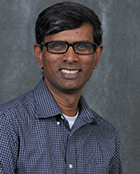
Rajeev Alur is a Professor in the Department of Computer and Information Science at the University of Pennsylvania's School of Engineering and Applied Science, where he leads research in formal modeling and algorithmic analysis of computer systems. His seminal contributions include timed automata for real-time systems, hybrid automata for discrete-continuous interactions, and visibly pushdown automata for hierarchical data like XML. These models are foundational in verification theory and practice, spanning disciplines from software engineering to cyber-physical systems. His work emphasizes rigorous mathematical frameworks to ensure reliability in complex computational environments. Research trends highlight enduring focus on automata-based verification, with applications evolving from embedded systems to modern data-processing architectures. Key subfields include temporal logic, model checking, concurrency theory, and formal semantics for programming languages.
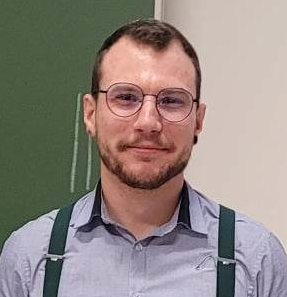
Daniel Strüber is an Associate Professor in Software Engineering at the joint Interaction Design and Software Engineering Division of Chalmers University of Technology and the University of Gothenburg, Sweden. He is also affiliated with the Department of Software Science at Radboud University Nijmegen, Netherlands. His research focuses on model-driven engineering, AI engineering, and variability management to enhance software quality, security, and collaborative development across domains like robotics and web systems. Education : Diplom (M.Sc. equivalent) in Computer Science from Philipps University Marburg (2011, with distinction), Ph.D. (summa cum laude) from Philipps University Marburg (2016). His research bridges empirical, formal, and engineering approaches to address developer challenges in ML-enabled systems. Key trends in his work include model-driven methods for ML deployment, variability management in robotics, and empirical studies of tool usability. He has co-edited a Journal of Systems and Software special issue on software product lines. Scientific Awards : Best Reviewer Awards (SoSyM 2025, GPCE 2024), Transformation Tool Contest Awards (2017, 2020), Best Paper Awards (VAMOS 2019, ICMT 2016), and multiple conference nominations. As a supervisor, he guides current Ph.D. students like Vladislav Indykov and Weixing Zhang, while his former advisees include Shayan Ahmadian and Samuel Idowu. Grants include a VR Open Call Grant (2022-2024) for SEMLA and a DFG Individual Fellowship (2019) for EUphORia. His teaching spans courses on Software Engineering for AI Systems and Software Product Lines , often integrated with real-world projects via GiPHouse.
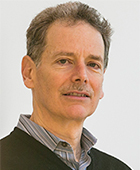
Matthew Hague is a Professor at the Department of Computer Science, Royal Holloway University of London. His research focuses on theoretical and practical aspects of infinite-state verification, with a particular emphasis on higher-order recursion and counter systems. Education: MEng in Computing, Imperial College London DPhil (PhD) in Computer Science, University of Oxford Research Interests: Matthew's work spans infinite-state systems verification , higher-order program analysis , string constraint solving , and pushdown automata . He develops practical tools like Ostrich (for string constraints), C-SHORe (for HORS analysis), TreePed (for CSS optimization), and PDSolver (for pushdown parity games). Scientific Contributions: His recent work includes symbolic Parikh's theorem applications (2024), regex-dependent string constraint solving (2022), collapsible pushdown parity games (2021), and path feasibility analysis with integer data types (2020). These span formal methods, automata theory, and programming language design. Awards & Grants: EPSRC Early Career Fellowship (2013-2018) EPSRC Grant for String Constraint Solving (PI, 2019-2022) Academic Leadership: Matthew has supervised numerous PhD students including Emma Lieu and Jonathan Hoyland, and organized key conferences like BCTCS 2018 and ICALP 2026. He maintains active involvement in program committees for POPL, LICS, and MFCS. Laboratory Tools: He leads development of Ostrich (string constraint solver), PDSolver (pushdown system analysis), and C-SHORe (higher-order verification) tools.
Anders Møller is a Professor at the Department of Computer Science , Aarhus University , Denmark. His career spans roles as an author , committee member , and session chair in conferences like SPLASH, OOPSLA, ECOOP, ISSTA, ICSE, and PLDI. Affiliation: Aarhus University Co-founder: Coana Research Focus : Specializing in static and dynamic program analysis for JavaScript, TypeScript, Java, and Node.js applications, his work addresses: Pointer analysis precision in Java Race condition detection in Node.js Library evolution and semantic patching Soundness improvements in static analyzers Type safety in modern languages Concolic execution for web testing Publication Trends : Recent work (2021–2024) emphasizes security-critical static analysis (taint specifications, Node.js security), soundness optimization (approximate interpretation), and program verification (channel-based communication). Earlier work (2013–2018) includes foundational contributions to JavaScript refactoring , Dart type safety , and AJAX race detection . Scientific Recognition : ISSTA 2019 Distinguished Paper Award Leadership Roles : Active in steering committees for SPLASH, ECOOP, and SIGPLAN, with chairs in OOPSLA, ECOOP, and PLDI program committees.
Dr Anthony J H Simons is a Senior Lecturer in the Department of Computer Science at the University of Sheffield, where he serves as Deputy Director of UG Admissions. He is a member of the Testing research group and has been affiliated with the university since completing his PhD there. His academic journey spans several decades, moving from speech recognition systems to object-oriented programming languages and currently focusing on model-based testing and cloud computing applications. Dr Simons holds an MA in Modern Languages from the University of Cambridge and a PhD in Computer Science from the University of Sheffield. His educational background in both humanities and technical fields has informed his interdisciplinary approach to software engineering research. His primary research interests center around turning formal verification results into practical software engineering benefits. Currently, he investigates Model-Based Testing and Model-Driven Engineering with applications to Cloud Computing. Earlier in his career, he made significant contributions to object-oriented software engineering, including type theory and software development methods. He is the inventor of the JWalk automatic software testing tool for Java and the JAST library for processing XML in Java, and co-author of the OPEN Toolbox of Techniques. His work bridges theoretical computer science with practical software development needs. Analysis of his recent publications reveals a clear trajectory from foundational work in object-oriented type theory to applied research in cloud computing and model-based testing. His scholarship demonstrates consistent focus on formal methods applied to practical software engineering challenges, with increasing emphasis on cloud infrastructure testing and verification in recent years. Dr Simons has secured significant research funding as Principal Investigator, including the Broker@Cloud project (EC-FP7, £323,688, 2012-2015), Future Engineering System (InnovateUK, £199,874, 2016-2019), and Ferromone Trails Concept (Department for Transport, £24,635, 2017). He has supervised numerous undergraduate and masters' projects throughout his career and continues to mentor students despite being semi-retired. He leads the Testing research group at Sheffield and has developed several research projects including CatWalk (a software testing tool for Java), ReMoDeL (a conceptual modeling language), and tools for verifying specifications and generating tests for software services in the cloud. His research has practical applications in cloud service brokerage and quality assurance.
Martin Fabian is a Professor at the Department of Electrical Engineering , Chalmers University . As Head of the Automation research group , he leads research initiatives in automation and discrete event systems. His research focuses on Supervisory control theory Formal verification Cyber-physical systems Robotics Manufacturing automation Recent publications (2024) highlight advancements in timed automata synthesis, smart contract verification, and disturbance-handling controller design. Earlier works (2023-2022) explore compositional algorithms, automated driving safety, and vehicle routing optimization.
Patrick Cousot is a Professor of Computer Science at École Normale Supérieure (ENS) in Paris, France, where he directs educational activities and leads the ENS-CNRS-INRIA joint project team "Abstraction." He has held academic positions at École Polytechnique (1984–1997), University of Metz (1979–1984), New York University (2008), and MIT (2005) as a J. C. Hunsaker Distinguished Visiting Professor. Education: Engineer, École des Mines of Nancy (1971) Doctor Engineer (PhD) in Computer Science, University of Grenoble (1974) Doctor ès Sciences in Mathematics, University of Grenoble (1978) As co-inventor of Abstract Interpretation with Radhia Cousot (1975), he developed a foundational theory for sound approximation of mathematical structures in computer systems. This framework underpins methods for solving undecidable or complex problems across semantics, verification, static analysis, program optimization, and security, with industrial applications in hardware/software safety and security. Scientific honors include: Chevalier in Ordre des Palmes académiques (1990) Chevalier in Ordre National du Mérite (1993) CNRS Silver Medal (1999) Honorary doctorate from Saarland University (2001) Grand Prix de l'Académie des Sciences (2006) Humboldt Research Award (2008) Member of Academia Europaea (2006) His prior roles include Research Scientist at CNRS (1974–1979), where he developed foundational work in static analysis. He also established the LIX research laboratory at École Polytechnique.
Dr. Tom Simcock is a Research Fellow and Research Manager of the Healthy Housing Initiative at the University of Huddersfield's School of Human and Health Sciences. As a Chartered Psychologist and certified Market Research Society member, he specializes in housing policy (particularly private renting), public sector reform, and organizational change. He serves on the Housing Studies Association Board as Secretary and chairs Renting Evidence, a knowledge-exchange platform for housing research. His research spans Welfare reforms like Universal Credit Landlord-tenant dynamics Airbnb's impact on housing stock Renter's conceptualization of 'home' Eviction policy debates Health impacts of cold homes Dr. Simcock's work on housing policy trends includes Private rented sector evolution Sharing economy housing Renter protections Energy efficiency standards Immigration policy impacts Refugee housing pathways Scientific recognition includes Nominated for British Property Federation Rising Star Award (2018) High Court case evidence on 'Right to Rent' checks Regular parliamentary consultation (Welsh Parliament, House of Commons) Media coverage in international outlets His research collaborations include Joseph Rowntree Foundation and Scottish Government projects. Current activities focus on evidence-based policymaking through ORCID and the Healthy Housing Initiative .
Michael Hofbaur is a full Professor at the University of Klagenfurt, where he works in the Institute for Intelligent Systems Technologies within the Faculty of Technical Sciences. His office is located at Lakesidepark Haus B04, Ebene 2, Raum B04.2.206, and he can be contacted at michael.hofbaur@aau.at. Professor Hofbaur has established himself as a leading researcher in robotics with particular expertise in human-robot collaboration, safety systems, and formal verification methods for robotic applications. His research interests focus on the intersection of robotics, safety engineering, and human factors. Professor Hofbaur has made significant contributions to the field of robot safety, particularly in developing methods for safe human-robot collaboration without physical barriers. His work spans multiple dimensions of robotics including kinematic analysis, motion planning, sensor integration, and formal verification techniques to ensure system reliability. He has published extensively on topics such as obstacle avoidance strategies, proximity perception systems, and methods to enhance flexibility in collaborative workspaces while maintaining safety standards. Analysis of his recent publications reveals a clear trend toward integrating formal verification methods with practical robotics applications, particularly focusing on safety-critical aspects of human-robot interaction. His research increasingly incorporates advanced sensing technologies like radar and capacitive proximity sensors to create more intelligent and responsive robotic systems. The work demonstrates a progression from theoretical kinematic analyses toward practical implementations in industrial and collaborative settings, with a consistent emphasis on safety assurance throughout. Professor Hofbaur's research portfolio includes numerous projects related to robotic safety, formal verification, and human-robot collaboration, though specific awards directly attributed to him are not listed in the available materials. His work appears to have significant practical applications in industrial automation and collaborative robotics settings. While specific information about his students and advising activities isn't provided in the available materials, his extensive publication record spanning over two decades suggests he has likely supervised numerous graduate students and postdoctoral researchers. His research activities indicate involvement in both theoretical and applied projects, potentially including collaborations with industry partners given the practical nature of many of his publications. Based on his departmental affiliation and research focus, Professor Hofbaur is likely associated with robotics laboratories at the University of Klagenfurt that specialize in human-robot interaction, safety systems, and formal verification of robotic workflows. These facilities likely include experimental setups for testing collaborative robots, sensor integration systems, and simulation environments for verifying robotic behaviors before physical implementation.
Ido Dagan is a Professor at the Department of Computer Science at Bar-Ilan University , Israel, and founder of the Natural Language Processing (NLP) Lab . He is a Fellow of the Association for Computational Linguistics and served as ACL President (2010) and Executive Committee member (2008–2011), leading the establishment of Transactions of the Association for Computational Linguistics . Dagan’s research focuses on applied semantic processing , including textual entailment , natural semantic representation , multi-text information consolidation , and interactive text summarization . His recent work addresses attributable text generation , summary-source alignment , and cross-sentence argument detection , with applications to fact verification and hallucination detection. Key trends in his publications include cross-document coreference resolution , question-answering systems , semantic parsing , and interactive summarization . Notable collaborative projects involve UI trajectory analysis and long-context QA with Arman Cohan and Jacob Goldberger. Scientific Awards Fellow, Association for Computational Linguistics (ACL) President, ACL (2010) Executive Committee, ACL (2008–2011) Advising & Collaborations Dagan has supervised numerous PhD, MSc, and postdoctoral students since 1997, including Shachar Mirkin and Shmuel Amar . He collaborates with researchers like Ori Ernst , Avi Caciularu , and Aviv Slobodkin , with grants from institutions like IBM Haifa Scientific Center and AT&T Bell Laboratories .
Thomas W. Reps is the J. Barkley Rosser Professor & Rajiv and Ritu Batra Chair in the Computer Sciences Department of the University of Wisconsin-Madison, where he has been a faculty member since 1985. He is also President of GrammaTech, Inc., which he co-founded in 1988 to commercialize research on programming environments. Reps received his Ph.D. in Computer Science from Cornell University in 1982, winning the ACM Doctoral Dissertation Award. His research spans program analysis, abstract interpretation, model checking, programming languages, and computer security. Reps's most influential work includes pioneering program slicing techniques with Susan Horwitz, development of the Cornell Program Synthesizer and Synthesizer Generator with Tim Teitelbaum, and significant contributions to interprocedural dataflow analysis. His recent work extends into quantum computing and advanced program synthesis techniques. The analysis of his publications reveals consistent focus on program analysis techniques, with recent papers exploring quantum circuit verification, abstract transformer synthesis, and program synthesis. His work bridges theoretical foundations with practical applications, often addressing scalability challenges in program analysis. NSF Presidential Young Investigator Award (1986) Packard Fellowship (1988) ACM Fellow (2005) ACM SIGPLAN Programming Languages Achievement Award (2017) Elected foreign member of Academia Europaea (2013) Multiple best paper awards including ETAPS (2004, 2008) Reps has advised numerous students, several of whom have received departmental and national recognition. His work on the Wisconsin Program-Slicing Tool led to commercial products through GrammaTech. He has served on advisory boards for significant projects including Year 2000 remediation for the Department of Defense and F/A-22 avionics software integration.
Manling Li is an Assistant Professor at the Department of Computer Science, Northwestern University. She previously served as a postdoc at Stanford University's Vision and Learning Lab under Prof. Jiajun Wu and received her Ph.D. from the University of Illinois at Urbana-Champaign (advisor: Prof. Heng Ji). Her research spans Language + Vision + Robotics with applications in Embodied AI and AI for Science . Key Research Areas : Knowledgeable Foundation Models, Reasoning & Planning, Compositionality, Multimodal Knowledge Extraction, Factuality & Trustworthiness in AI Leadership Roles : Organizing Committee for ACL 2025, NAACL 2025, EMNLP 2024 Research Trends in her 15 most recent publications show: Advancing Embodied AI through structured reasoning and planning frameworks Developing Vision-Language Models for 3D layout optimization and video understanding Addressing LLM Hallucinations via knowledge shadowing and mechanistic interpretability Creating collaborative agent systems with out-of-sync recovery mechanisms Scientific Recognition : ACL 2024 Outstanding Paper SoCal NLP 2024 Best Paper Microsoft Research Fellowships (PhD & Postdoc) DARPA Riser & EE CS Rising Star Advising Impact : Mentored 19 students in developing the UIUC information extraction system. Currently advising 12 students across PhD, Master's, and undergraduate levels, with particular emphasis on supporting underrepresented groups. Led teams to rank 1st in DARPA AIDA evaluations.
Jolan PHILIPPE is a Lecturer at University of Orléans affiliated with LMV research laboratory, and currently holds a postdoctoral position at Université de Rennes in the DiverSE team under the supervision of Olivier Barais. His research focuses on Infrastructure as Code (IaC) and distributed systems reconfiguration, with particular emphasis on formal methods and model-driven approaches. His primary research interests include: Distributed Systems and Cloud Computing Infrastructure as Code (IaC) and DevOps Model Driven Engineering Formal Methods and Verification Parallel and Distributed Programming Algorithmic Skeletons Dr. PHILIPPE's work demonstrates a strong trajectory from foundational research in parallel programming models (particularly through his work on PySke) to applied research in distributed system reconfiguration. His recent publications show increasing focus on formal approaches to infrastructure management, with significant contributions to languages like Concerto-D and frameworks like Ballet for cross-DevOps reconfiguration. His research bridges theoretical computer science (formal methods, verification) with practical cloud infrastructure concerns. He is actively supervising two PhD candidates: Haitam El Hayani (Taranis project, 2024-2027) - Extending Infrastructure as Code (IaC) languages, focusing on enhancing capabilities and integration with modern cloud deployment practices Olivia Proust (For-Coala project, 2025-2028) - Towards formally verified configuration management languages Dr. PHILIPPE is deeply involved in research coordination: Coordinator of the "Défi GDR GPL" (challenge) ADDYCT (ADaptation DYnamique et ConTinue) for 2026-2030 One of the leaders of the GDR GPL's GT SyLA (Groupe de Travail - Système Logiciel Adaptable) since February 2025 Helped organize the VELVET (Verification and Software Engineering for DevOps and Reconfiguration) days in Nantes, December 2023 His service to the academic community includes: Program Committee Member for DebConf 2025, ICCS 2025, LowCode@MODELS 2025 Publicity Chair and Program Committee Member for UCC 2025 and BDCAT 2025 Reviewer for journals (COLA, SoSyM) and multiple international conferences
C.R. Ramakrishnan is a Professor in the Department of Computer Science at Stony Brook University, specializing in logic programming, programming languages, and formal verification. His research spans theoretical computer science with significant contributions to model checking, concurrent systems analysis, and more recently quantum computing applications. His educational background includes a Ph.D. in Computer Science from Stony Brook University (1995) and dual master's degrees in Computer Science (M.Sc.(Tech)) and Physics (M.Sc.(Hons)) from Birla Institute of Technology and Science, Pilani, India (1987). Ramakrishnan's research interests have evolved from traditional logic programming toward cutting-edge quantum computing applications while maintaining his foundational work in verification systems. His current work focuses on quantum circuit distribution, entanglement management, and statistical-logical knowledge systems. His research methodology often involves encoding system semantics as logical inference rules and formulating analysis problems as inference tasks. His recent publication trend shows a strategic shift toward quantum computing with numerous high-impact papers on quantum network communication, entanglement distribution, and quantum circuit optimization. These works represent an evolution from his earlier focus on logic programming and model checking toward applying similar formal methods to quantum systems. National Science Foundation Faculty Early Career Award (1999-2003) National Science Foundation Postdoctoral Research Associateship (1995-1997) Catacosinos Fellowship for Excellence in Computer Science (1993-1994) His research has been consistently funded by grants from the National Science Foundation (NSF) and the Office of Naval Research (ONR), supporting his work across multiple domains from traditional programming languages to quantum computing. While specific students aren't listed in the provided materials, his teaching includes numerous graduate and undergraduate courses in computer science.
Scott Smolka is a Distinguished Professor in the Department of Computer Science at Stony Brook University, specializing in foundational and applied research at the intersection of formal methods and critical systems engineering. His work bridges theoretical computer science with real-world safety-critical applications, particularly in cyber-physical systems and runtime verification. His academic credentials include a Ph.D. in Computer Science from Brown University (1984), complemented by advanced mathematics training with an M.A. and B.A. from Boston University (1977, 1975). This strong theoretical foundation underpins his contributions to concurrency theory and model checking. Smolka's research focuses on Model Checking , Semantics of Concurrency , and Safety-Critical Systems , with recent expansion into Cyber-Physical Systems Resilience and Runtime Assurance Architectures . His laboratory-developed tools like the Monte Carlo Software Model Checker demonstrate practical applications of formal methods, while the LMC Project advances logic-programming-based verification techniques for complex systems. Analysis of his 2024-2025 publications reveals three dominant trends: (1) Runtime assurance frameworks for multi-agent CPS using barrier certificates, (2) Formal verification techniques for microgrid resilience, and (3) Novel approaches to file system testing through input/output coverage. These works consistently apply temporal logic and model checking to solve emerging challenges in autonomous systems and critical infrastructure. His notable recognitions include: Fellow of the European Association of Theoretical Computer Science (2016) Stony Brook Research Excellence Award (2012) Best Paper at Runtime Verification Conference (2011) University Chancellor's Award for Scholarship (2009) Departmental Service Award for CS@35 leadership (2006) As an educator, Smolka has taught graduate and undergraduate courses spanning operating systems (CSE 306), algorithms (CSE 532), and advanced topics in formal methods (CSE 635, 643). His departmental leadership includes spearheading the CS@35 anniversary event and contributing to Stony Brook's Institute for AI-Driven Discovery and Innovation. Current research initiatives center on the High-Confidence Operating Systems project and Center for Cyber-Security, where he collaborates with interdisciplinary teams on resilient system design.