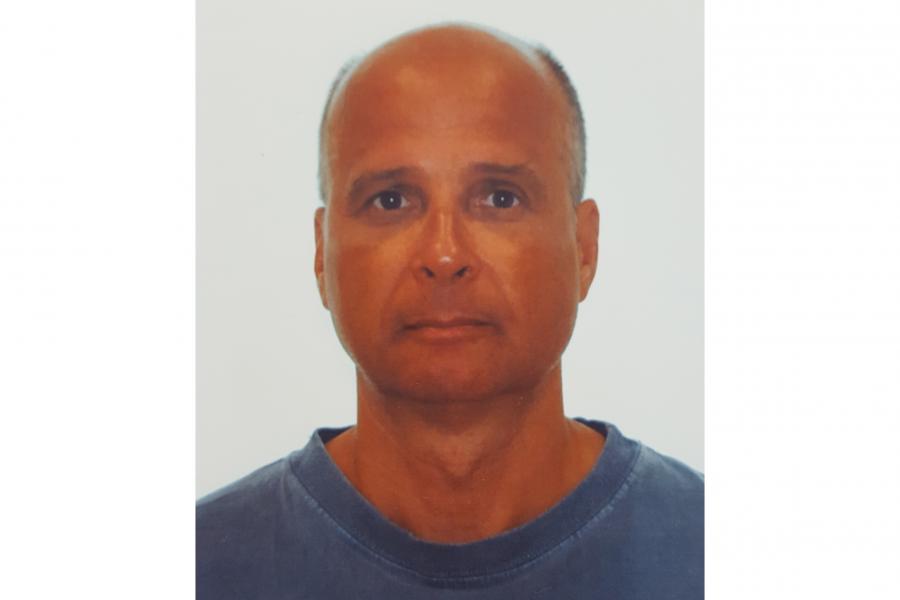
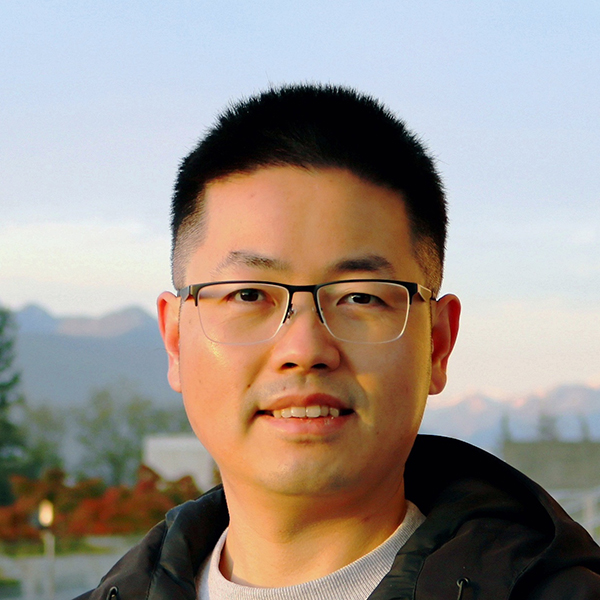
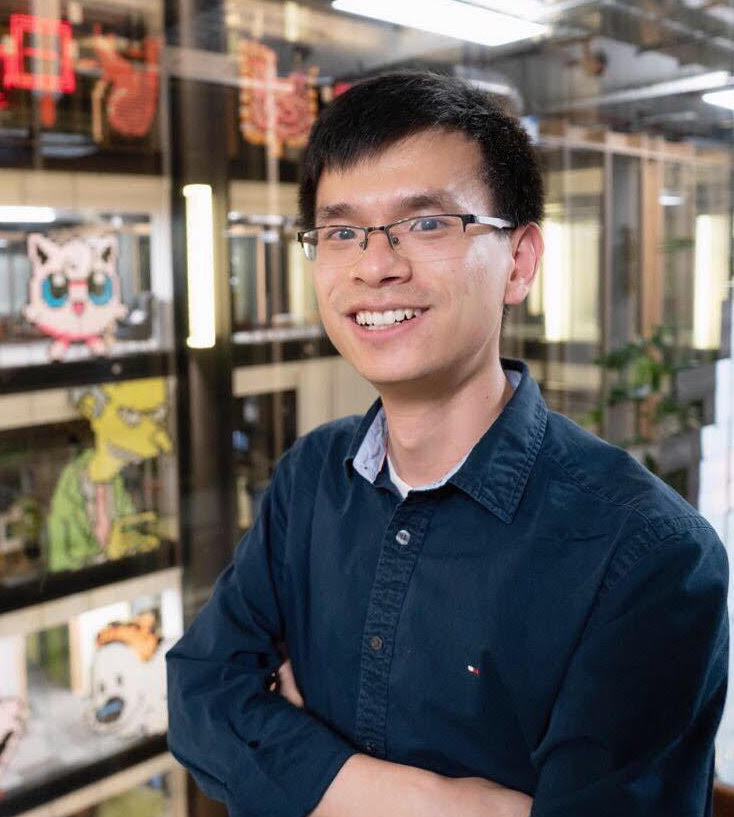
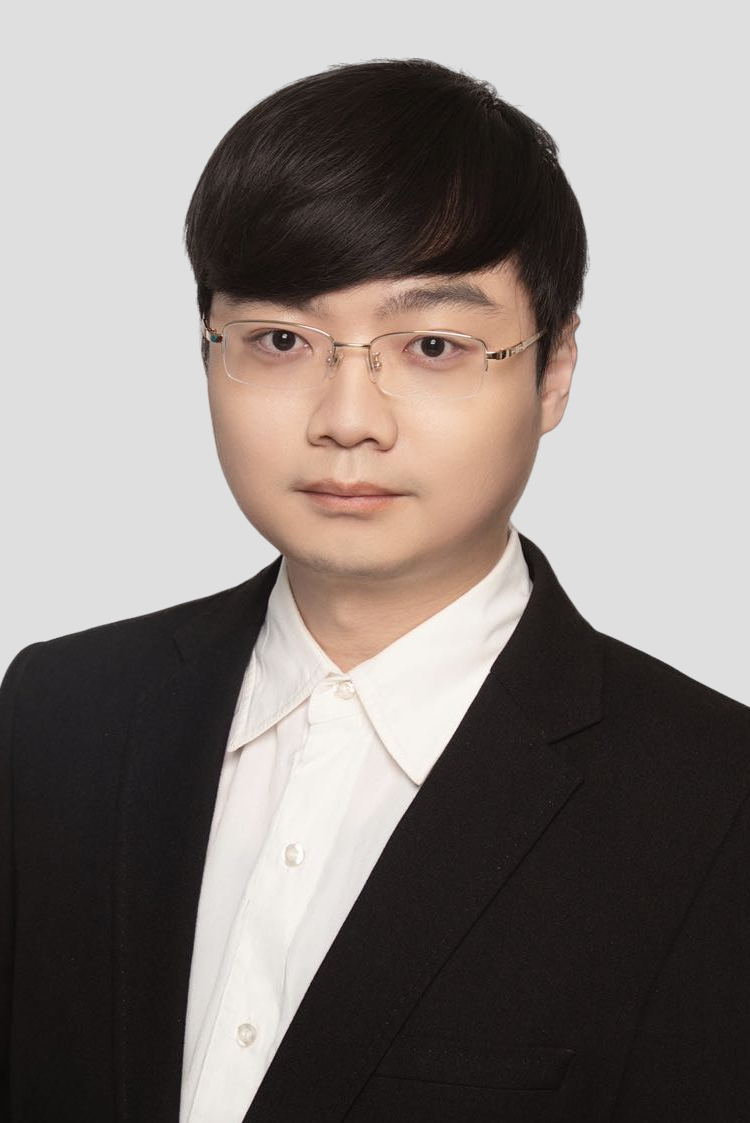
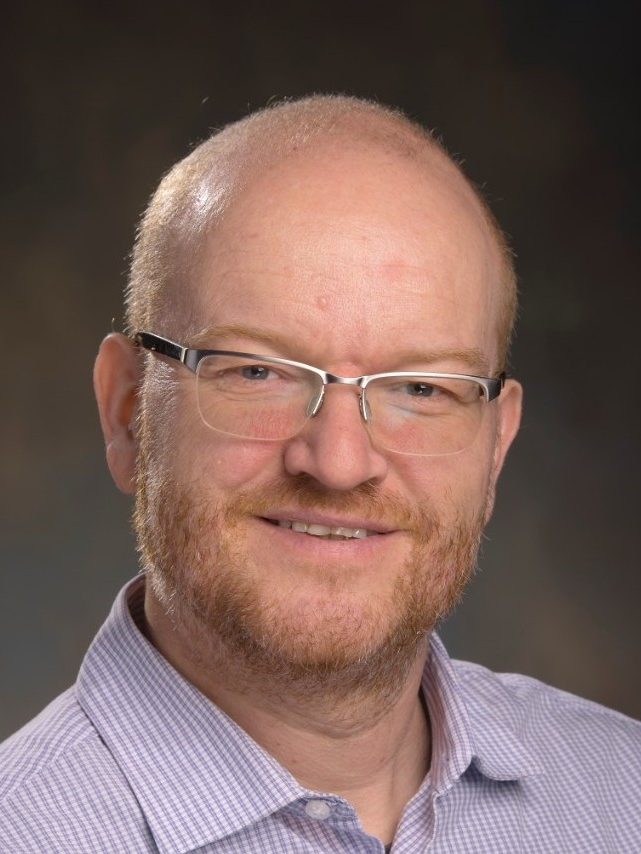
Vassilios Tzerpos is an Associate Professor at the Lassonde School of Engineering, York University, where he has been since 2001. He holds a Ph.D. in Computer Science from the University of Toronto (2001). His research focuses on audio processing for musical applications, deep learning, digital signal processing, machine listening, and software engineering education. He directs the APTLY lab exploring music-technology intersections and leads the LaSSoftE lab developing socially-oriented software solutions. Education: Ph.D. in Computer Science, University of Toronto, 2001 Research Highlights: Dr. Tzerpos' work spans music information retrieval (e.g., automatic music classification), synthetic speech detection using neural networks, and software engineering pedagogy. His recent projects include Music-STAR for audio re-instrumentation and OER-based learning path creation systems. He has pioneered methods in design pattern detection and software clustering evaluation. Grants & Labs: Leads two research groups: APTLY (music-tech) and LaSSoftE (social impact software). Active in developing adaptive cybersecurity solutions against DoS attacks and refining software architecture recovery techniques. Key Themes in Publications: Recent work emphasizes machine learning applications in music technology and cybersecurity, with foundational contributions to software clustering methodologies and design pattern detection algorithms. His work bridges theoretical computer science with practical applications in education and creative industries.
Sarath Chandar is an Associate Professor at Polytechnique Montréal and Core Faculty Member at Mila, the Quebec AI Institute. He holds a Canada CIFAR AI Chair and Canada Research Chair in Lifelong Machine Learning. His research focuses on developing interactive learning algorithms for continual and lifelong learning, with expertise in deep learning, reinforcement learning, and natural language processing. Education: Ph.D. in Computer Science, University of Montreal (advisor: Yoshua Bengio) M.S. in Computer Science, Indian Institute of Technology Madras (advisor: Balaraman Ravindran) Research Themes: Continual Learning and Lifelong Learning Deep Reinforcement Learning Optimization for Deep Networks Natural Language Processing AI for Scientific Discovery Notable Contributions: Founder of the Conference on Lifelong Learning Agents (CoLLAs) Developed Chandar Research Lab (CRL), focusing on adaptive learning algorithms Contributions to model-based reinforcement learning and bias mitigation in AI systems Awards & Grants: Canada CIFAR AI Chair Canada Research Chair Tier 2 MITACS-funded projects on reinforcement learning applications Lab & Collaboration: CRL collaborates with academic/industrial partners (e.g., IBM, Samsung) Hosts annual symposium showcasing research in AI, optimization, and multi-agent systems
Ikjot Saini is a Professor at the University of Windsor’s Faculty of Engineering, co-leading the SHIELD Automotive Cybersecurity Centre of Excellence, Canada’s first organization addressing threats in connected transportation. Her research focuses on automotive cybersecurity, vehicular networks, and privacy-preserving technologies. She has supervised doctoral students Shiva Nejati and Kunj Dhonde, and contributed to courses in the University’s Continuing Education program, specializing in cybersecurity education for professionals. Her work includes pioneering studies on blockchain-based security for connected autonomous vehicles (CAVs), machine learning-driven intrusion detection systems, and privacy-enhancing mechanisms like pseudonym-changing strategies. She has been recognized with the K.W. Michael Siu Award from the APMA Institute for Automotive Cybersecurity (2020). Saini’s research bridges theoretical advancements with real-world applications, ensuring vehicles and infrastructure remain secure against evolving cyber threats. Her contributions span academic publications, industry partnerships, and policy recommendations, positioning her as a leader in vehicular cybersecurity. Ongoing projects emphasize eco-efficiency in cybersecurity solutions and adversarial modeling for privacy evaluation.
Dr. Terje Haukaas is a Professor of Structural & Earthquake Engineering at the University of British Columbia (UBC), Department of Civil Engineering, Faculty of Applied Science. He holds a PhD and Master's from UC Berkeley (2003, 1999) and a bachelor's from the Norwegian University of Science and Technology (1996). His research focuses on probabilistic modeling, structural reliability, and earthquake engineering, with contributions to software development (e.g., FERUM, OpenSees). He teaches courses like Structural Analysis, Nonlinear Analysis, and Reliability & Safety. Education: PhD in Civil Engineering, UC Berkeley, 2003 Master's in Civil Engineering, UC Berkeley, 1999 Bachelor's in Civil Engineering, NTNU, Trondheim, 1996 Engineering Degree (Stavanger University College, 1994) and Technician Degree (Stavanger Technical College, 1992) Research Interests: Probabilistic mechanics and reliability analysis Seismic vulnerability and risk assessment Software tools for finite element analysis (FERUM, OpenSees) Timber engineering and structural optimization Awards & Recognition: UBC Killam Teaching Prize (2016) President of CERRA (2015–2019) Keynote/Semi-plenary speaker at major conferences (ICASP12, COMPDYN 2017) Student Appreciation Awards (Top Professor rankings) Grants & Labs: Recipient of grants supporting seismic risk research Developed computational frameworks for structural analysis
Dr. Ken Ferens is an Assistant Professor in the Department of Electrical and Computer Engineering at the Price Faculty of Engineering, University of Manitoba. He serves as the Computer Engineering Champion in the Centre for Engineering Professional Practice and Engineering Education and directs the Applied Cognitive Intelligence (ACI) Research Group. Dr. Ferens is a senior member of the Institute of Electrical & Electronics Engineers (IEEE), Chair of the EduManCom Chapter of the IEEE, Vice-Chair of the Computer and Computational Intelligence Chapter of the IEEE, and Chair of the Industry, Teaching Assistants, and Student Forums for Engineering Curriculum Review and Improvement. Ph.D. (Computer Engineering), University of Manitoba, 1996 M.Sc. (Computer Engineering), University of Manitoba, 1991 B.Sc. (Electrical Engineering), University of Manitoba, 1989 Dr. Ferens has over 33 years of research experience in computational intelligence, focusing on cognitive machine learning, artificial intelligence, cognitive computational intelligence, chaos theory applications, agent-based models, and various optimization algorithms including simulated annealing, genetic algorithms, artificial neural networks, and particle swarm optimization. His research applies these techniques to develop software and hardware intrusion detection systems for cybersecurity applications. He teaches graduate-level courses on Computer Network Security and Applied Computational Intelligence, providing students with theoretical background and hands-on experience in state-of-the-art security methods. Analysis of Dr. Ferens' recent publications reveals a strong focus on applying cognitive and chaotic computational techniques to cybersecurity challenges, particularly malware detection and network intrusion detection. His work increasingly integrates complexity theory, fractal analysis, and hybrid optimization approaches to enhance security systems' effectiveness. There's a clear progression toward more sophisticated machine learning architectures applied to increasingly complex security scenarios, with growing emphasis on real-world IoT and network security applications. Best Paper Award at IEEE International Conference on Cognitive Informatics and Cognitive Computing (ICCI*CC 2022) Best Paper Award at IEEE International Conference on Cognitive Informatics and Cognitive Computing (ICCI*CC 2015) Best Journal Paper Award for 2013 (Journal of ICT Research and Applications) Best Poster Award at 12th International Conference on e-Health Networking, Application & Services (2010) Best Paper Award at IASTED International Conference on Computer, Electronics, Control, and Communication (1991) Dr. Ferens collaborates with national and international industry partners including the Department of Advanced Information Management, Content Technology Canadian Tire Corporation (CTC), and Magellan Aerospace. His research group has received funding supporting the Cyber-security Research Program, developing practical applications of computational intelligence for security systems. He has supervised numerous graduate students in the Electrical and Computer Engineering department, focusing on research at the intersection of machine learning and cybersecurity. Dr. Ferens leads the Applied Cognitive Intelligence (ACI) Research Group within the Department of Electrical and Computer Engineering, which focuses on applying cognitive, chaotic, and computationally intelligent algorithms to build intrusion detection systems. The group collaborates with industry partners to develop practical security solutions while providing students with hands-on research experience in cutting-edge security technologies. Their work spans both theoretical algorithm development and practical hardware implementation for real-world security applications.
Brian Ingalls is a Professor in the Department of Applied Mathematics and cross-appointed to Biology at the University of Waterloo. His research applies mathematical and control-theoretic approaches to biological systems, including genetic regulatory networks, microbial communities, and cellular metabolism. Institutional Affiliation: Faculty of Mathematics, University of Waterloo Contact: bingalls@uwaterloo.ca His work focuses on systems biology and synthetic biology , particularly sensitivity analysis of biochemical networks, optimal experimental design, and mathematical modeling of cellular processes. Research funding comes from NSERC and CIHR . Notable contributions include the textbook Mathematical Modeling in Systems Biology (MIT Press, 2013) and the Ingalls Quantitative Cell Biology Lab , which investigates intracellular and intercellular network dynamics through computational and experimental methods. Key Collaborations: iGEM Waterloo, Chemical Engineering, and international synthetic biology networks Advising: Mentored 15+ graduate students and postdocs across applied math, biology, and engineering fields
Dr. Sean K. Carey is a Professor in the School of Earth, Environment and Society at McMaster University, where he directs the Watershed Hydrology Group. His research focuses on hydrological and land surface processes in natural and human-impacted environments, with particular expertise in cold regions hydrology and northern environments. Dr. Carey holds a BSc (Hons) from the University of Guelph (1994), an MSc from McMaster University (1996), and a PhD from McMaster University (2000). His educational background established the foundation for his research in northern hydrology and climate change impacts. His research examines climate change processes and surface water hydrology, particularly in subarctic and alpine environments. Key interests include: Hydrological responses to climate change in cold regions Land surface processes in natural and disturbed landscapes Ecohydrological interactions in northern ecosystems Water resource management in mining-affected regions Long-term watershed monitoring and modeling Dr. Carey's extensive publication record focuses on hydrological processes in changing cold regions, with recent work examining permafrost interactions, watershed biogeochemistry, and ecosystem recovery in reclaimed landscapes. His research consistently addresses climate change impacts on northern water resources. He leads the Watershed Hydrology Group, which conducts field-based research across northern Canada including Yukon Territory and Alberta's oil sands region. Current work investigates the effects of climate warming on hydrological cycles and ecosystem functions in vulnerable northern environments.
Dr. Darren Scott is a Professor in the School of Earth, Environment & Society at McMaster University, specializing in Geographic Information Science (GIScience) and teaching courses such as GIS Programming and Data Processing Using Python. He previously served as an Assistant Professor at the University of Louisville’s Department of Geography and Geosciences (1999–2002) and held a Visiting Research Professor position at the Swiss Federal Institute of Technology (Zurich) in 2008. His academic background includes a BA (Honors and Co-op) in Geography from Saint Mary’s University (1991), an MA from the University of Western Ontario (1994), and a PhD from McMaster University (2000). Dr. Scott’s research focuses on transportation systems, aging populations, GIScience innovations, and sustainable infrastructure. He has pioneered work in route choice modeling, transportation demand analysis, and the impact of demographic changes on mobility. In 2008, he established TransLAB, a research lab within his school, which explores advanced transportation topics using GPS and geospatial tools. His projects have been funded by major agencies like NSF, SSHRC, and NSERC, addressing issues ranging from electric vehicle adoption to flood resilience in emergency services. His teaching emphasizes Python programming and advanced GIS applications, reflecting his expertise in geospatial technologies. He has contributed to policy debates on urban sustainability, particularly regarding Canada’s Greenbelt legislation and telework trends during the pandemic. Despite no explicitly mentioned scientific awards, his extensive grant history and scholarly output highlight his impactful contributions to the field. Dr. Scott’s advising and grant activities center on interdisciplinary studies, including the McMaster Monitoring My Mobility Study (MacM3), which tracks mobility patterns of older adults. His work bridges transportation engineering, urban planning, and public health, often leveraging big data and GIS tools to analyze real-world scenarios in cities like Hamilton and Calgary.
Istvan David is an Assistant Professor in the Department of Computing and Software at McMaster University , with research expertise spanning Digital Twins , Model-Driven Engineering , and Sustainability . His work bridges theoretical and applied domains, focusing on smart ecosystems , collaborative modeling , and AI-driven simulation . Key contributions include frameworks for digital twin evolution and interoperability in sustainable systems. Education : BSc, MSc, and PhD in Computer Engineering and Computer Science from Budapest University of Technology and Economics, and University of Antwerp. Research Areas : Digital Twins, Model-Driven Engineering, Reinforcement Learning, Smart Ecosystems, Sustainability, Collaborative Modeling, Cyber-Biophysical Systems, and Software Architecture. Recent Article Trends emphasize AI integration with digital twins, collaborative modeling in industrial contexts, and sustainable systems engineering . His work often combines machine learning with formal modeling to address challenges in technical sustainability and smart agriculture .
Lingyang Chu is an Assistant Professor at McMaster University's Department of Computing and Software, previously serving as a postdoc fellow at Simon Fraser University under Jian Pei. He earned his Ph.D. in Computer Science from the University of Chinese Academy of Sciences. Research interests span data mining , machine learning , and statistics , with focus on trustworthy AI (privacy, interpretability, security, robustness, fairness), federated learning , and graph-based machine learning . His work includes scalable data mining on large graphs and deploying systems like personalized federated learning on Huawei Cloud's Harmony OS devices. Publications emphasize adversarial attacks, medical AI, graph robustness, and federated learning frameworks. His advising record includes 28 mentees across Ph.D., M.Sc., and internship levels. Scientific achievements include Best paper candidate at ICME'13 Best demo award at ICMR'13 Academic service roles include: Program Committee: NeurIPS, SIGKDD, CVPR, ICML, and 12+ other top-tier conferences Journal Reviewer: IEEE TKDE, ACM Transactions on KDD, and 8+ journals Editorial Board: ACM Transactions on KDD (Associate Editor) Grant Reviewer: Hong Kong RGC Labs/teams: Maintained open-source ALID algorithm (VLDB'15) for dominant cluster detection, demonstrating technical leadership in scalable graph mining
Xujie Si is an Assistant Professor in the Department of Computer Science at the University of Toronto. He is also a faculty affiliate at the Vector Institute and an affiliate member at Mila - Quebec AI Institute, holding a Canada CIFAR AI Chair. Previously, he served as an Assistant Professor at McGill University's School of Computer Science. Education: Ph.D., Computer and Information Science, University of Pennsylvania (advised by Mayur Naik) M.S., Computer Science, Vanderbilt University B.E. (with Honors), Nankai University Research Focus: His work bridges AI and program reasoning, emphasizing the integration of statistical and logical methods. Key areas include: Static analysis and verification using deep learning/reinforcement learning Neuro-symbolic systems for urban simulation (e.g., LogiCity) Automated theorem proving via LLMs and symbolic reasoning Program repair and compiler fuzzing Recent Article Trends: Recent work focuses on synergizing LLMs with symbolic reasoning (e.g., Olympiad inequality proving), advancing SAT solving with graph neural networks, and applying neuro-symbolic methods to Euclidean geometry formalization. Awards: Canada CIFAR AI Chair (2023) Lab/Teams: Leads research teams exploring program analysis, neuro-symbolic AI, and formal verification at the University of Toronto and Vector Institute.
Soumaya Cherkaoui is a Full Professor in the Department of Computer Engineering and Software Engineering at Polytechnique Montréal. Previously, she served as a Full Professor at Université de Sherbrooke and held industrial roles as an aerospace project manager. Her research integrates artificial intelligence with telecommunications, focusing on quantum computing, frugal edge intelligence, and applications in connected vehicles and IoT. Current Position: Full Professor, Polytechnique Montréal Prior Academic Role: Full Professor, Université de Sherbrooke Industry Experience: Aerospace Project Manager Research Interests: Convergence of AI and communications, quantum computing for networking, frugal intelligence at the edge, and applications in autonomous vehicles, industrial IoT, and smart grids. She leads government and industry-funded projects, including a $6 million quantum initiative in 2025. Recent Publication Trends: Her 2025–2024 work emphasizes quantum-enhanced anomaly detection (via QGANs), Open RAN slicing with quantum optimization, and reinforcement learning for secure cognitive radio networks. Topics span 5G/6G, vehicular networks, and zero-trust architectures. Scientific Awards: IEEE Communication Society Distinguished Lecturer (2020) ACM Mirela Notare Award (2023) IEEE Bio-Inspired Computing STC Leadership Award (2023) N2Women: Stars in Networking and Communications (2023) Best Paper Awards at IEEE ICC 2017, IEEE LCN 2021, ICCSPA 2024 Advising and Grants: Supervised 3 Master's students in 2024, with research on quantum GANs and federated learning for vehicular networks. Secured grants like the $6 million quantum project (2025) and participated in CFI-QC government funding (2022). Editorial and Leadership: Served as Associate Editor for IEEE, Wiley, and Elsevier journals. Chaired conferences like IEEE LCN 2019 and IEEE ICC2025, and held leadership roles in IEEE Communications Society committees.
Li Yang is an Assistant Professor in the Department of Information Technology , part of the Faculty of Business and Information Technology at Ontario Tech University. His research focuses on applying AI and machine learning to cybersecurity, particularly in intrusion detection and anomaly detection for 5G/6G networks and IoT systems. He holds a PhD in Electrical and Computer Engineering from Western University (2022), and has held roles such as Vice Chair of IEEE Computer Society, London Section (2022–2023). Education: PhD in Electrical and Computer Engineering, Western University (2022) Master of Science, University of Guelph (2018) Bachelor of Engineering, Wuhan University of Science and Technology (2016) Research Interests: His work spans cybersecurity, machine learning, deep learning, AutoML, model optimization, network automation, IoT security, intrusion detection, and adversarial machine learning. He develops frameworks for concept drift adaptation and online learning to enhance cybersecurity measures, with a focus on trustworthy AI and defense strategies against adversarial attacks. Awards: Graduate Student Award for Excellence in Research (2022) Graduate Symposium Award for Best Presentation (2022) Mitacs Accelerate Fellowship (2021) OC2 Lab Industrial Research Excellence Award (2020) Ranked in Stanford/Elsevier's Top 2% Scientists (2024) Grants & Involvement: Li Yang has contributed to conferences like IEEE GlobeCom and IEEE CCECE, and authored patents such as 'Convenient primary-secondary barrels' (2009). His work has garnered thousands of citations and GitHub stars, emphasizing practical applications of AI in cybersecurity.
Douglas Stebila is an Associate Professor in the Department of Combinatorics and Optimization at the University of Waterloo, Faculty of Mathematics. His research focuses on cryptographic protocols, with an emphasis on post-quantum cryptography, TLS protocol security, and key exchange mechanisms. He has contributed to the design and analysis of cryptographic systems resilient to quantum computing threats, including work on hybrid key exchange methods and post-quantum TLS implementations. Stebila is involved in standards projects such as the Open Quantum Safe initiative, aiming to transition existing infrastructure to quantum-resistant algorithms. His recent work addresses security models for cryptographic protocols, including formal verification of key establishment schemes and analysis of real-world protocols like Signal and TLS. His research spans theoretical cryptography, applied protocol analysis, and implementation security. Key contributions include studies on obfuscated key exchange, verifiable decapsulation of post-quantum KEMs, and optimization of TLS handshake efficiency (e.g., TurboTLS). He also explores challenges in cryptographic protocol design, such as preventing double authentication and ensuring resistance against side-channel attacks. His work frequently bridges academic research with practical applications, emphasizing the transition of cryptographic innovations into real-world systems. Stebila collaborates with industry and academic partners on projects like the Open Quantum Safe initiative, which develops libraries for post-quantum cryptography integration. His publications often address security analyses of emerging protocols and their vulnerability to both classical and quantum adversaries. He has co-authored conference proceedings for major venues like CRYPTO and SAC, and contributed to standards documentation for protocols such as TLS and SSH.
Kay C. Wiese is a Professor and Software Systems Chair at the School of Computing Science, Simon Fraser University. His research focuses on computational intelligence and bioinformatics, particularly RNA secondary structure prediction and visualization. He leads the Bioinformatics Research Lab and has contributed to RNA design and gene finding. Wiese holds a PhD in Computer Science from the University of Regina (1999) and degrees in Computer Science and Mathematics from the Universität des Saarlandes (Germany). He has extensive editorial roles, including Associate Editor for the IEEE/ACM Transactions on Computational Biology and Bioinformatics, and has organized major conferences like the IEEE Symposium on Computational Intelligence in Bioinformatics. His teaching interests include Bioinformatics, Computational Biology, and Discrete Mathematics. Wiese has supervised numerous graduate students, including Boris Shabash, Wenbo Jiang, and Andrew Hendriks. His research group developed tools like jViz.RNA for RNA visualization and SARNA-Predict for structure prediction. His work bridges computational methods with biological applications, emphasizing algorithmic innovation and practical software solutions.