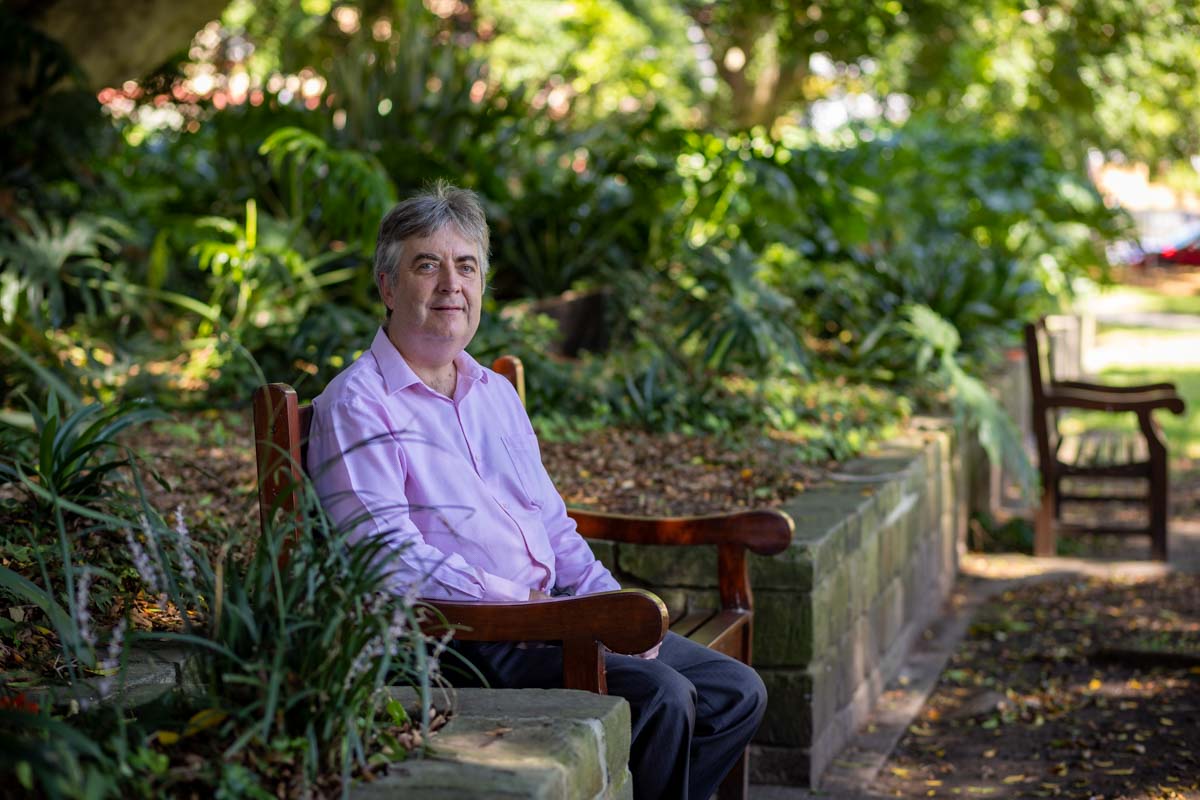
Kris Luyten is a Researcher at Hasselt University 's Expertise Centre for Digital Media in Belgium. He specializes in Human-Computer Interaction , Wearable Technology , and Interactive Systems through extensive collaborations with institutions like ACM, Springer, and interdisciplinary teams. Focus on haptic interfaces , telerobotics , and delay-invariant interaction Contributions to multimodal interface design and predictive usability models His recent work explores AI-Spectra dashboards for model transparency and ViRgilites for VR haptics. Publications span journals like Proc. ACM Hum. Comput. Interact. and conferences such as CHI , EICS , and VRST . While no student advising or awards are explicitly listed, his editorial roles (e.g., PACMHCI editorials) demonstrate leadership in interactive systems research.
Gwen Marchand, Ph.D. is the Associate Vice President for Research and a Professor of Educational Psychology at the University of Nevada, Las Vegas (UNLV) . She formerly served as Associate Dean of Research and Sponsored Projects in the UNLV College of Education and as Director of the UNLV Center for Research, Evaluation, and Assessment . Education: Ph.D. in Systems Science: Psychology, Portland State University, 2008 – emphasis in human development, student motivation & engagement, and quantitative research methods Research Interests: Professor Marchand’s scholarship applies complexity theory and mixed-methods designs to study student motivation and engagement , classroom systems , student mobility , and collaborative team processes . Her interdisciplinary work emphasizes research-practice partnerships and systems-level understanding of educational phenomena. Current focal areas include: Motivational development of school-aged children Social and personal determinants of student engagement Teacher instructional supports for motivation in science classrooms Program evaluation and evidence-based educational innovation Publications & Scholarly Impact: Across 40+ peer-reviewed works since 2004, Marchand’s research spans complex dynamic systems , mixed-methods innovations , motivational theory , and science education reform . Recent outputs (2020-2024) converge on applying systems perspectives to classroom dynamics and translating motivational theory into scalable teacher professional-development programs. Professional Service & Leadership: Program Chair & Treasurer, Division 15 (Educational Psychology), American Psychological Association (APA) Secretary/Treasurer, Complexity Theories in Education SIG, American Educational Research Association (AERA) President, Scholarly Consortium for Innovative Psychology in Education (SCIPIE) Editorial Boards: Journal of Educational Psychology , Contemporary Educational Psychology Guest Co-Editor, special issues on complex systems ( Journal of Experimental Education ) and mixed-methods ( Contemporary Educational Psychology ) Teaching & Mentoring: Marchand regularly teaches graduate courses in advanced research methods , program evaluation , motivation theory , and quantitative analyses . Her interdisciplinary mentorship spans educational psychology, systems science, and STEM education research. Administrative Oversight: Office of Sponsored Programs Office of Clinical Trials Office of Research Integrity Interdisciplinary research development initiatives and strategic planning Funding: Her research has been supported by the National Science Foundation , the National Institute of General Medical Sciences , and numerous state and local agencies, evidencing broad recognition of her expertise and translational impact.
Dr. Burak Çeber is an Assistant Professor at Uskudar University's Faculty of Communication, Department of Advertising. His academic background includes a BSc (2016), MSc (2018), and PhD (2022) from Kocaeli University (Advertising), Kocaeli University (Visual Communication Design and Advertising), and Marmara University (Public Relations) respectively. He supervises graduate theses on AI applications in public relations and teaches courses ranging from digital advertising to integrated marketing communication. PhD in Public Relations (Marmara University, 2022) Current research focuses on AI ethics, generative AI in advertising, and digital transformation His scholarly output includes books like Yapay Zekâyı Sorgulamak: Veri Etiği ve Dijital Reklamcılığın Kesişimi (Nobel Bilimsel, 2024) and applied research on AI-human collaboration in public relations. He leads the university's Digital Education Committee and Web Commission, while coordinating accreditation efforts for academic programs. Recent publications examine: AI's impact on advertising creativity (2025) AI ethics frameworks (2024) Digital PR applications (2024) Generative AI in consumer campaigns (2025) As Laboratory Supervisor (since 2022), he oversees technical implementation of digital tools in academic settings. His teaching portfolio includes specialized courses like Halkla İlişkilerde Yapay Zeka Uygulamaları for undergraduates and Dijital Halkla İlişkiler Uygulamaları for master's students.
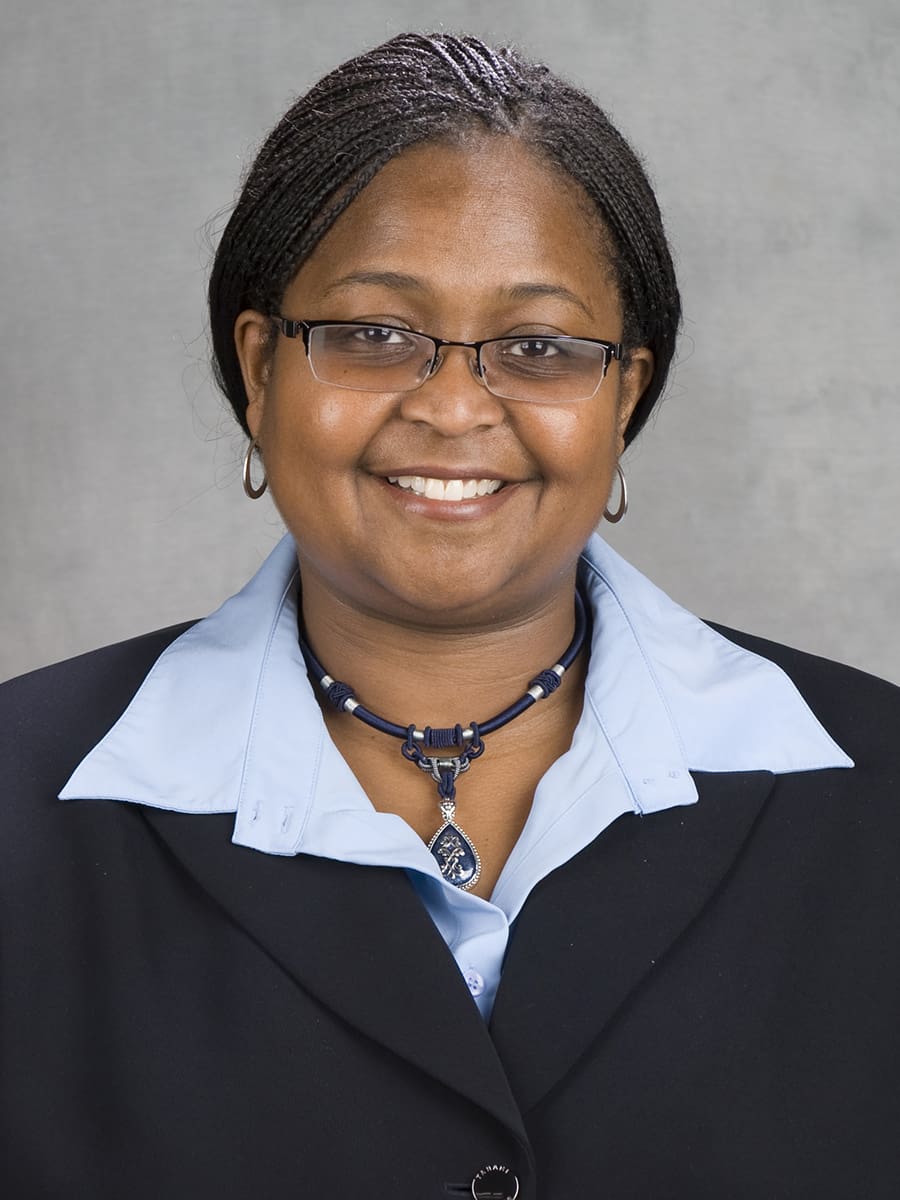
Jacqueline Henderson serves as an Associate Professor in the Mechanical Engineering Department within Bradley University's Caterpillar College of Engineering & Technology. Her research focuses on biomechanics with specialization in upper extremity disorders and mathematical modeling applications. Her educational background includes a Ph.D. in Biomedical Engineering from Wayne State University, an M.S. in Mechanical Engineering from the same institution, and a B.S. in Mechanical Engineering from Prairie View A&M University. Joining Bradley in 2010, she has established herself as a key researcher in skeletal biomechanics. Ph.D., Biomedical Engineering, Wayne State University M.S., Mechanical Engineering, Wayne State University B.S., Mechanical Engineering, Prairie View A & M University Dr. Henderson's research centers on upper extremity biomechanics, particularly investigating carpal tunnel syndrome through mathematical modeling of subsynovial connective tissue shearing. Her work extends to cumulative trauma disorders and rehabilitation biomechanics, with significant collaborations between Bradley University and local medical communities. She employs advanced techniques including speckle-tracking ultrasound and finite element modeling to analyze tendon-nerve interactions in the carpal tunnel. Her publication record demonstrates consistent focus on biomechanical analysis of the carpal tunnel and spinal structures, with recent expansion into neurovascular coupling and Alzheimer's disease mechanisms. Key methodologies include ultrasound assessment, finite element modeling, and quantitative tissue property measurement. Professional recognition includes an NIH National Research Service Award fellowship at Mayo Clinic. She serves as a reviewer for the Journal of Applied Biomechanics and Journal of Clinical Biomechanics, and participates in Bradley University's Affirmative Action Committee. Dr. Henderson actively mentors STEM-interested youth and has developed educational initiatives including ME 101: Introduction to Mechanical Engineering and ME 591: Human Centered Design. Her service extends to K-12 engineering outreach programs in the Detroit Public School system.
Prof. Dr.-Ing. André Nitze is a faculty member at the Brandenburg University of Technology in the Department of Economics . His research focuses on Internet of Things (IoT) , Digital Business Models , Software Architectures , Cloud Computing , Mobile Computing , and Predictive Analytics . He leads research projects on municipal LoRaWAN infrastructure, rural on-demand transport systems, and user-centered digitalization for sustainable development. Area of Expertise: IoT Applications, Software Engineering, Digital Transformation Current Research: Sustainable Municipal LoRaWAN, Rural Mobility Solutions Projects: risKI - KatKomm (2024-2026): Protocol development for disaster communication InNoWest (2023-2027): Subproject leader for digital sustainability OSLO (2023): Rural on-demand transport software architecture Awards: Best Paper Award at ICDS 2024 for work on LoRaWAN infrastructure Education & Supervision: M.Sc. and B.Sc. in Business Informatics Supervised over 15 theses including topics on GIS analysis, sensor networks, and AI applications
Dr. Shaun McCarthy is an Associate Professor and Director of Clinical Legal Research at the University of Newcastle's School of Law and Justice . With an unrestricted practising certificate from the Law Society of NSW, he serves as Program Convenor for the Practical Legal Training Program and has been admitted as a solicitor in both the Supreme Court of NSW and the High Court of Australia. Specializes in clinical legal education and community engagement Co-developer of the 'Know the Law' app for international students Co-founder of the 'Law on the Beach' free legal clinic Lead on the trauma-informed Name.Narrate.Navigate (NNN) program His research focuses on: Clinical Legal Education - Innovating through programs like NNN Access to Justice - For marginalized groups including asylum seekers Disability Law - Particularly swallowing and communication disabilities Youth Justice - Developing trauma-informed interventions Elder Abuse - Creating detection toolkits Digital Health Records - Addressing equity in My Health Record His publications since 2014 demonstrate expertise in: Technology-enabled legal services Health law and human rights Youth violence prevention Digital equity in legal contexts Migration law challenges End-of-life legal documentation Major Awards include: Australian Awards for University Teaching UK Advance HE Fellowship Multiple University of Newcastle Excellence Awards NSW Premier's Public Sector Commendation He has secured over $5 million in grants , including: $720,000 NSW State Government grant for Older Persons Legal Clinic $2.195 million Department of Social Services grant for adolescent support Multiple DFAT-funded international collaboration grants Disability research grants from College of Human and Social Futures
John M. Carroll is a Professor at The Pennsylvania State University , affiliated with the College of Information Sciences and Technology . He co-directs the Collaboration and Innovation Laboratory and leads the Center for Human-Computer Interaction . Secondary appointments span Computer Science and Engineering , Learning, Design and Technology , and Psychology . Education : Mathematics and Information Science (undergraduate), Experimental Psychology (Ph.D.) Research Focus : Human-Computer Interaction (HCI), community informatics, scenario-based design, and minimalist instructional models. Key Projects : Mobile timebanking systems, smart city initiatives, community data analytics, and accessibility technologies for visually impaired users. Scientific Awards include lifetime honors from ACM, IEEE, and AAAS. He has led NSF-funded projects on collaborative sensemaking, educational technology, and disaster response systems. His work bridges social theory, design practice, and computational innovation.
Karl Aberer is a full Professor for Distributed Information Systems at École polytechnique fédérale de Lausanne (EPFL) since 2000. From 2005 to 2012, he led the Swiss National Research Center for Mobile Information and Communication Systems (NCCR-MICS). Currently serving as Vice-President of EPFL responsible for information systems, he contributes to academic leadership while maintaining an active research profile. His research spans Distributed Systems Data Mining Machine Learning Social Computing Web Science Graph Neural Networks with recent work focusing on multimodal learning, federated unlearning, and social media analysis. He serves on the editorial boards of the VLDB Journal ACM Transactions on Autonomous and Adaptive Systems World Wide Web Journal and contributes to PeerJ Computer Science.
Dr. Jakob Henke is a Researcher at the Department of Media and Communication Sciences, Faculty of Philosophy, University of Erfurt. His work focuses on media trust, journalism research, political communication, and digital privacy. Academic Affiliation: University of Erfurt, Faculty of Philosophy Core Research Areas: Media credibility, audience perception, mHealth app privacy, data journalism His recent publications explore dynamics of news trust restoration, privacy decision-making in health apps, and the impact of statistical evidence on media credibility. Presentations include topics on journalistic independence, error tolerance in news, and cognitive effort in digital news consumption. Key trends in his work include: Media Trust & Accountability Digital Privacy & Health Informatics Political Communication & Data Journalism Dr. Henke actively collaborates on interdisciplinary projects, including studies on mHealth adoption and cross-cultural migration reporting. His methodological expertise spans experimental research, panel studies, and audience-focused media analysis.
Dr. Shaobo (Kevin) Li is a Tenured Associate Professor at the School of Business, Southern University of Science and Technology (SUSTech), with secondary appointment in the Department of Information Systems & Management Engineering. He holds a PhD in Business Administration from Nanyang Technological University (2019), Master of Business Administration (University of Virginia, 2014), Master of Finance (West Virginia University, 2012), and Bachelor of Business Administration (Lanzhou University, 2011). National High-Level Youth Talent Program awardee Overseas High-Caliber Personnel in Shenzhen City Recipient of 2018 China Scholarship Council’s Excellent Self-Funded Student Scholarship His research focuses on the intersection of digital economy, social welfare, and technology-driven marketing, employing experimental methods, empirical models, and neuroscience. He serves as Associate Editor for the Journal of Business Research and has published in top UTD-24 journals including Journal of Consumer Research, Information Systems Research, and Production and Operations Management. His work examines platform economics, brand management during crises, and consumer behavior related to AI, sustainability, and health decisions. He has led 10+ research projects (National Natural Science Foundation, Ministry of Science and Technology 2030 Program) and received multiple research awards, including Academy of Marketing Science Best Doctoral Dissertation Proposal Award (2019) and Best Paper Awards at China Marketing Science (2020,2024), China Marketing International Conference (2023), and CMAU Annual Conference (2023,2024). Teaching accolades include SUSTech’s Premier Teaching Award, Top 10 Most Popular Professor among undergraduates, and Nanyang Business School’s Best Graduate Teaching Award (2017). Teaches Financial Marketing (undergraduate) Teaches Frontiers of Management & Research Methods (PhD) Actively recruiting research assistants, postdocs, and joint PhD candidates with Hong Kong Polytechnic University
Chun-Biu Li is an Associate Professor at the Department of Mathematics , Stockholm University , specializing in computational mathematics and statistical physics of biophysical systems. His research bridges information theory, machine learning, and nonequilibrium statistical mechanics to understand complex biological processes. Education: PhD in mathematical & statistical physics from the University of Texas at Austin (supervised by Ilya Prigogine), M.S. in mathematical physics from the University of Utah. Academic Experience: Associate Professor (2016–present) at Stockholm University, Associate Professor (2008–2016) at Hokkaido University, and JST/CREST Researcher (2005–2008) at Kobe University. Research Interests focus on data-driven statistical analyses, nonequilibrium biophysical systems, AI explainability, and fluctuation theorems. His work applies these methods to plant morphogenesis, molecular motor dynamics, and machine learning applications in life sciences. Teaching includes advanced courses on deep learning, reinforcement learning, and statistical methods for life science applications. His Supervision has guided over 30 students in topics ranging from protein mutation modeling to causal inference algorithms. Scientific Awards: Professional Development Award, University of Texas at Austin (2003) Summer Research Fellowship, University of Texas at Austin (2001) National Dean's List for Outstanding College Students (1997) Publications (110+) highlight his contributions to plant morphogenesis, single-molecule analysis, and statistical methods. Recent works examine DNA barcode clustering, rotary motor protein dynamics, and shape-aware data visualization techniques.
Nathir Rawashdeh is an Assistant Professor in the Department of Applied Computing at Michigan Technological University , with an affiliated appointment in Electrical and Computer Engineering . He is a Senior Member of the IEEE and a member of the Institute of Computing and Cybersystems (ICC) and Great Lakes Research Center . Education: Ph.D., Electrical Engineering, University of Kentucky, 2007 MS, Electrical and Computer Engineering, University of Massachusetts, Amherst, 2003 BS, Electrical Engineering, University of Kentucky, 2000 Dr. Rawashdeh's research focuses on unmanned vehicle perception , image analysis , control systems , and mechatronics , with applications in autonomous driving, winter weather adaptation, and industrial automation. His work includes sensor fusion, deep learning, and AI-enhanced manufacturing solutions. Recent publications highlight advancements in winter weather autonomous driving , UV disinfection robotics , and AI-driven industrial inspection systems . His research spans mechatronics curriculum development, industry 4.0 integration, and cross-cultural educational initiatives. Scientific Awards: Senior Member of the IEEE Dr. Rawashdeh has secured over $2 million in funding from organizations including the NSF , Ford Motor Co. , NIST , and the European Commission . His grants support projects like GPU clusters for research, winter weather autonomous driving standards, and UV sterilization robotics. He leads the Mobile Robotics Lab at Michigan Tech, focusing on collaboration and innovation in autonomous systems and mechatronics research.
Kathrin Figl is a Full Professor (Tenured) for Human-centric Information Systems Design at the Department of Information Systems, Production and Logistics Management at the University of Innsbruck. Previously, she held positions as an Assistant Professor at WU Vienna University of Economics and Business and as a research associate at the University of Vienna. Her educational background includes a doctoral degree in Information Systems (2008, with honors, awarded the Dr. Maria Schaumayer Prize) and dual master's degrees in Information Systems (2004) and Psychology (2006), all from the University of Vienna. This interdisciplinary foundation bridges technical and psychological perspectives in her research approach. Professor Figl's research centers on human-centered information systems with particular emphasis on cognitive aspects of digital interaction: Human-AI interaction and algorithmic management systems Digital nudging techniques and online manipulation Eye-tracking methodologies in user research Cognitive biases and heuristics in digital environments Fake news perception and detection mechanisms Webpage prototypicality and its effects on user attitudes Business process modeling as cognitive tools Her publication trajectory demonstrates a sophisticated evolution from foundational work on business process modeling to cutting-edge research on device-specific cognitive effects and misinformation perception. A hallmark of her methodology is the rigorous application of empirical approaches, particularly eye-tracking studies, to investigate how screen design, device type, and interface elements influence human cognition and decision-making across digital platforms. Professor Figl has earned significant recognition for her scholarly contributions: Dr. Maria Schaumayer Prize for doctoral excellence Three Best Paper Awards at major international conferences Excellent Teaching Award from WU Vienna Recognition as a top reviewer for Software & Systems Modeling journal Outstanding service awards as associate editor and track chair She has secured substantial research funding including an FWF Lisa Meitner Programme grant (€145,260) on Web Design Prototypicality and an Austrian Nationalbank Research Grant (€55,000) on Cognitive Effectiveness in Business Process Modeling. While specific advisees aren't documented in the provided materials, her extensive publication record with numerous co-authors indicates active mentorship of graduate researchers. Her work with eye-tracking technology suggests leadership of a specialized laboratory environment for studying human-computer interaction, with established collaborations including the Technical University of Denmark and Queensland University of Technology.
Dr. Christian Büsel is a researcher at the Department of General Psychology I, Institute of Psychology, University of Innsbruck . His work focuses on visual attention mechanisms, including top-down and bottom-up processing, and their relationships with working memory. Email: Christian.Buesel@uibk.ac.at Research Interests: Visual attention, visual search, and the interplay between working memory and intentional visual attention. He employs behavioral experiments, meta-analyses, and mobile eye tracking to study suppression of irrelevant stimuli and contingent capture effects. Methodological Contributions: A key developer of the open-source Experimenters' Tools project, which provides resources for psychological research, including visual angle calculations, color conversions, power analyses, and diffusion modeling. His textbook on empirical-experimental methods is available via Springer. Articles Trends: Recent publications emphasize attentional control, feature-based suppression, and cross-modal cognitive processes (e.g., music reading and auditory discrimination). Technical contributions highlight mobile experimentation frameworks and OpenSesame-based methodologies.
Dr. Julia M. Chyla is a researcher at the Department of Archaeology of the Americas , University of Warsaw, specializing in GIS and digital archaeology . Her work spans multiple continents, focusing on sites in Egypt, Tunisia, and Peru , with an emphasis on non-invasive methodologies and data integration. Current Affiliation : University of Warsaw, Non-Invasive and Digital Archaeology Laboratory Research Focus : GIS applications, isotopic analysis, remote sensing, and digital documentation of archaeological sites Her research explores interdisciplinary collaboration (e.g., visual representation in Tunisian Musti terraces), material provenance studies (e.g., metallurgy at Castillo de Huarmey), and territorial dynamics in pre-Hispanic Peru. She actively promotes the use of mobile GIS for fieldwork and digital preservation of cultural heritage. Recent publications highlight her expertise in digital methodologies , with case studies from Gebelein (Egypt), Pathyris (Egypt), and Andean Peru. She also contributes to educational initiatives like workshops on GIS for archaeologists. Dr. Chyla is involved in the Non-Invasive and Digital Archaeology Laboratory and offers consultations via Google Meets. Her work bridges traditional fieldwork with cutting-edge technology across diverse archaeological contexts.