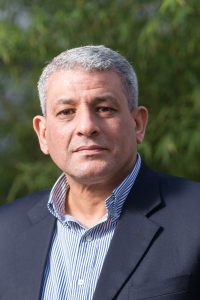
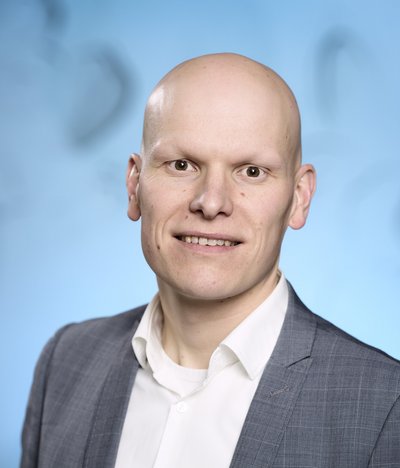
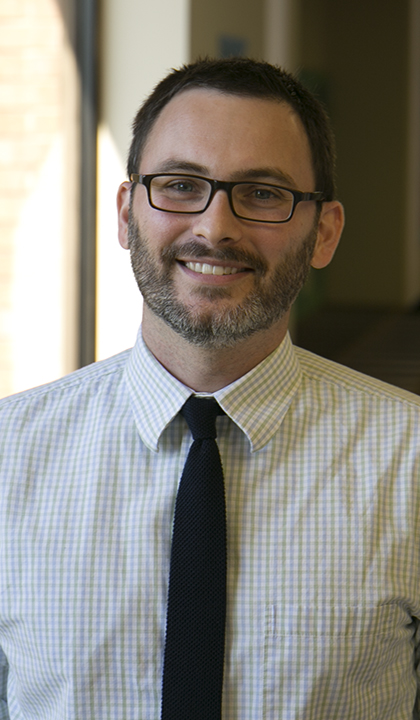
Erniel Bayhon Barrios is a Professor at the Malaysia School of Business, Monash University. Formerly a professor at the University of the Philippines Diliman and a visiting scholar at Karlstad University (Sweden) and the Asian Development Bank Institute (Japan). He holds a PhD in Statistics (1990) from the University of the Philippines Diliman. His research focuses on computational statistics, nonparametric methods, data science, and computational econometrics, with applications in spatiotemporal modeling, time series, and financial markets. He has contributed to high-dimensional data analysis, volatility modeling, and robust statistical techniques. Key projects include the National Mental Health Survey and Well-Being (2019–2021) and building a data-driven organization for the Habib Group (2025–2026). He is an elected member of the International Statistical Institute (2012), associate editor of Communications in Statistical Applications and Methods , and served on the board of the International Association of Statistical Computing (2022–2025). He advises PhD students on topics like stochastic frontier models, data assignment in big data, and high-frequency time series analysis. His work aligns with UN Sustainable Development Goals related to education and economic growth.
Dr. Tarek Sayed is a Professor at the University of British Columbia's Department of Civil Engineering within the Faculty of Applied Science. He specializes in Transportation Engineering, focusing on road safety analysis, traffic operations, and Intelligent Transportation Systems (ITS). He serves as the Director of the Bureau of Intelligent Transportation Systems and Freight Security (BITSAFS-Engineering) and Editor of the Canadian Journal of Civil Engineering . His research addresses three core areas: improving road safety evaluation techniques, enhancing safety through traffic operations and highway design analysis, and advancing ITS technologies. Notable contributions include frameworks for safety-audits of infrastructure projects like the Sea to Sky Highway and methodologies for evaluating transit signal priority systems in Vancouver. He has authored/co-authored over 250 publications and supervised 60 graduate students. Key Roles: Professor, BITSAFS Director, Journal Editor Awards: Tier 1 Canada Research Chair, Wilbur Smith Award, Sandford Fleming Award, Prince Michael International Road Safety Award Consulting: Global projects in traffic safety and ITS for agencies like ICBC, FHWA, and Ashghal His research integrates Bayesian statistical methods, extreme value theory, and machine learning to model traffic conflicts, pedestrian behavior, and safety interventions. Current projects include real-time safety optimization using autonomous vehicle data and analyzing shared space interactions between cyclists and pedestrians. Dr. Sayed chairs national/international committees, including the U.S. Transportation Research Board’s safety data committee. His work bridges academia and practice, influencing policy and infrastructure investment decisions worldwide.
Mohamed Amara is a full-time Professor at the University of Pau and the Pays de l'Adour (UPPA) since 1996, affiliated with the Laboratory of Mathematics and their Applications (CNRS-UMR 5142). He served as its director (1999-2007), Director of the Doctoral School of Exact Sciences (ED211, 2007-2008), and UPPA's Scientific Council Vice-President (2008-2012). He has been UPPA's President since 2012 (re-elected until 2020). Education: Mathematics from University of Algiers (1973), Pierre and Marie Curie University (DEA 1974, Doctorate 1978, State Doctorate 1983) Academic Roles: Research Associate at Ecole Polytechnique (1978-1982), Algerian Electricity and Gas Company (1983-1992), Professor in Algiers (1988-1994), Tunis (1994-1995), and Associate Professor at Paris 6 (1995-1996) His research focuses on numerical simulation of partial differential equations for environmental/energy applications, including mechanics in porous media (petroleum engineering, geoscience), fluid mechanics (aerodynamics, estuarine hydrodynamics), non-Newtonian flows, and wave propagation. Articles highlight expertise in discontinuous Galerkin methods, Helmholtz problems, finite element discretization, and multiphysics systems. He managed 20 doctoral theses and led national mathematics programs at ANR (2007-2011). He chairs the Cocktail association for higher education IT systems and collaborates with INRIA's Magique 3D team (since 2006).
Morteza Fayazi is an Assistant Professor in the Department of Electrical and Computer Engineering at the University of Utah, with an adjunct position in the Kahlert School of Computing. His research focuses on Electronic Design Automation (EDA), applying machine learning to automate analog and mixed-signal circuit design, and developing high-performance computing systems. He holds a B.Sc. from Sharif University of Technology, and M.S.E./Ph.D. degrees from the University of Michigan. His research interests include AI-driven EDA, RF/circuit automation, and energy-efficient processors. Key achievements include the MEDAL lab’s work on terahertz radars, systolic-array processors (e.g., DAP and Versa), and open-source frameworks like FASCINET and Tablext. He has received awards such as the 2024 College of Engineering Dean’s ETR Fund and the 2017 Outstanding Undergraduate Thesis Award. Teaching responsibilities include multiple iterations of the Digital System Design course (ECE/CS 3700). His work spans over 15 peer-reviewed articles in IEEE Transactions, ACM, and top conferences like ICCAD and VLSI-SOC, emphasizing automation, efficiency, and AI integration in hardware design.
Assoc Prof Ying Chen is an Associate Professor at the National University of Singapore , affiliated with the Department of Mathematics, Asian Institute of Digital Finance (as Academic Director of PhD Program in Digital FinTech 2022–2024), Risk Management Institute (2019–2023), Department of Statistics and Data Science (2019–2023), and Department of Economics (2018–2023). She also contributes to NUS Graduate School for Integrative Sciences and Engineering since 2016. Research Interests include: AI forecasting and quantum computing for finance Nonstationary time series and functional data analysis Energy data analytics and precision medicine Network autoregression and spatial-temporal modeling Explainable AI and citation metrics Portfolio liquidation and market-making algorithms Article Trends demonstrate expertise in: Adaptive forecasting for gas flows and electricity prices Blockchain network influence detection Quantum computing applications in finance Functional autoregression with mixed predictors Credit rating fairness and explainability High-resolution implied volatility modeling Scientific Awards include: ISI Elected Member (2016–) International Statistical Institute Council (2023–2027) IASC Scientific Secretary (2017–2019, 2023–2025) Advisory roles for EU FIN-TECH and xAIM projects
Alison J. Mackey is Professor and Chair of the Department of Linguistics at Georgetown University, College of Arts and Sciences. She is a leading scholar in second language acquisition (SLA), with a focus on interaction, feedback, research methodology, and language learning across the lifespan. Her research interests include second language acquisition , task-based language teaching , research methodology , interaction and corrective feedback , and language learning in children and adults . She has published extensively in top-tier journals and book series, shaping methodological standards in the field. Her recent publications reflect a strong trend in methodological rigor , interactionist approaches , and practical applications of SLA research. Themes include data elicitation , stimulated recall , task design , and pragmatic development , spanning both theoretical and classroom-based inquiry. Mildenberg Prize (2012) for The Handbook of Second Language Acquisition American Association for Applied Linguistics Distinguished Scholarship and Service Award International Association of Task-based Language Learning and Teaching Distinguished Achievement Award CHOICE Outstanding Academic Title (2012) Alison Mackey has advised numerous scholars through co-authorship and editorial leadership. She is Editor-in-Chief of Cambridge University Press Annual Review of Applied Linguistics and Editor of the Routledge Second Language Research series, guiding the publication of cutting-edge research. While specific grants are not listed, her editorial work and high citation count (>35,000) reflect significant research impact and funding support. She leads and contributes to major research initiatives such as the IRIS Repository , promoting open-access research instruments in SLA. Her work fosters collaboration across institutions and supports methodological transparency and replication in the field.
Associate Professor Jiwon Kim is a leading researcher in Transport Engineering at the University of Queensland's School of Civil Engineering. She serves as Director of Higher Degree by Research and was a DECRA Fellow from 2019-2022. Holding degrees from Korea University and Northwestern University, she specializes in AI/ML applications for transportation systems. PhD, Northwestern University BS & MS, Korea University Her research focuses on Artificial Intelligence and Machine Learning applications in transportation, including: Deep learning for traffic management Reinforcement learning in mixed traffic environments Multi-agent systems for urban mobility optimization Spatiotemporal trajectory analysis Recent publications demonstrate expertise in: Eco-driving strategies Traffic incident prediction Queue length estimation Crash risk modeling Scientific recognition includes: ARC DECRA Fellowship (2019-2022) She supervises doctoral students in: Transportation data analytics Autonomous vehicle systems Intelligent traffic management Current projects explore real-time traffic monitoring, synthetic mobility data generation, and connected vehicle technologies.
Mikko Valkama is a Professor at the Department of Communications Engineering , part of the Faculty of Information Technology and Communication Sciences at Tampere University . His research focuses on advanced wireless communication systems, positioning technologies, and integrated sensing and communication (ISAC). He holds an Orcid ID ( 0000-0003-0361-0800 ) and can be reached at mikko.valkama@tuni.fi . Research interests span 5G/6G networks , RF antenna design , deep learning for signal processing , and millimeter-wave systems . He leads projects on positioning algorithms (e.g., mmWave SLAM, NLOS mitigation), ISAC architectures, and hardware-efficient transmitter linearization. Notable contributions include works on DECT-2020 NR standards, phase-based localization, and RIS-assisted systems. In 2025 alone, his group published over 30 articles on topics such as: Antenna array design for Ka-band and wideband applications Machine learning for power amplifier predistortion Bistatic radio SLAM and mmWave mapping Covert transmission and physical-layer security His work bridges theoretical advancements with practical implementations, often validated through experimental setups (e.g., TUJI1 dataset for indoor localization). No scientific awards were explicitly listed in the provided texts.
Maarten Hornikx is a Full Professor in Building Acoustics at the Department of the Built Environment , Eindhoven University of Technology. He serves as Vice-Dean of the department, leads the Building Acoustics Chair of Unit Building Physics and Services (BPS), and coordinates the Science of Sound and Music course series since 2013. His research focuses on computational modeling of sound propagation in built environments, with applications in mixed reality platforms and numerical analysis of outdoor/indoor propagation effects like vegetation and meteorological influences. Education : PhD in Applied Acoustics (Chalmers University of Technology, 2009); MSc in Architecture, Building and Planning (2004) Hornikx promotes open research software in acoustics and has received multiple grants, including Marie Curie Individual and Career Integration Grants. His recent publications explore AI-driven diffusion equation modeling, acoustic absorber optimization, and advanced numerical methods like the discontinuous Galerkin technique. He has held international leadership roles, including chairing the Computational Acoustics Technical Committee of the European Acoustics Association and serving as Associate Editor for Acta Acustica . Scientific Awards : Marie Curie Fellowship (2009-2011); Marie Curie Career Integration Grant (2012); 4TU.Built Environment Center Scientific Director (2020-2021); eScience Center Fellow (2022) As a research leader, Hornikx guided the H2020-ITN Acoutect project and conducted sabbaticals at Aalto University, Stockholm University (2018), and Politecnico Torino (2022). His group emphasizes computational acoustics and open-source tools to enhance reproducibility and collaboration.
Guang Tian, Ph.D. , is an Assistant Professor of City and Metropolitan Planning at the University of Utah and a faculty member at the Scientific Computing and Imaging Institute . His research bridges land use-transportation planning , travel behavior , and urban data science , with a focus on sustainability , climate adaptation , and equitable transit-oriented development . He previously founded the Center for Equitable Transit-Oriented Communities at the University of New Orleans as an Associate Professor. Education : Ph.D. in City & Metropolitan Planning (University of Utah, 2016) Professional Affiliations : Faculty, Scientific Computing and Imaging Institute (2025–present) His research leverages machine learning and GIS to analyze VMT reduction , active transportation , and the built environment’s impact on mobility . Key findings include the superior performance of random forest models over traditional methods in predicting mode choice and the role of polycentric urban structures in reducing auto dependency. Scientific Awards : Rising Scholar Award (2024, Association of Collegiate Schools of Planning) Grants include funding from the US Department of Transportation for equitable transit communities and multiple Louisiana Transportation Research Center projects on VMT modeling, rail infrastructure, and truck parking efficiency. His teaching centers on GIS applications in urban planning and transportation analysis.
Justin Wan is a Professor in the Department of Computer Science at the University of Waterloo. His research focuses on scientific computing, medical image processing, computational finance, and machine learning. He holds a Ph.D. from UCLA (1998), an M.A. from UCLA (1995), and a B.Sc. from the Chinese University of Hong Kong (1992). Wan’s work bridges numerical methods, optimization, and deep learning, with applications in financial modeling, medical imaging, and fluid dynamics. His research interests include advanced techniques in scientific computing (e.g., multigrid methods), computer graphics simulation, and medical image enhancement (e.g., CT scan artifact reduction). He has pioneered applications of machine learning to computational finance, including option pricing and hedging using deep neural networks and GANs. His recent work explores denoising diffusion models and multi-agent systems for optimal execution in finance. Publications span topics like volatility surface computation, optimal mass transport for image registration, and parallel solvers for fluid dynamics. His methods address challenges in high-dimensional problems, robust numerical valuation, and scalable algorithms for large datasets. Wan collaborates across disciplines, integrating mathematical rigor with practical engineering solutions.
Jesse J. Helton, Ph.D., is an Associate Professor in the School of Social Work at Saint Louis University, where he has been since 2014. His research focuses on child maltreatment, adverse childhood experiences (ACEs), food insecurity, and disability, with notable work published in JAMA Pediatrics , Child Maltreatment , and Preventative Medicine . He holds editorial roles at the Child Maltreatment journal and serves on the Prevention Committee of the American Professional Society on the Abuse of Children. Dr. Helton’s community partnerships address child abuse prevention, food security, and family violence mitigation in collaboration with statewide and local organizations. Education: Ph.D. in Social Work, University of Illinois; M.A. in Social Work, University of New Hampshire. Research Interests: Dr. Helton’s work explores intersections between childhood trauma, socioeconomic factors, and health outcomes. Key themes include the impact of food insecurity on caregiver-child dynamics, disparities in ACEs among marginalized groups, and policy interventions to reduce maltreatment. His studies often employ mixed-methods approaches, combining quantitative data analysis with qualitative insights from affected communities. Awards: Recipient of the 2020 Association of Jesuit Colleges Leadership Institute award, 2018 Outstanding Young Alumni from Eureka College, and a 2014 Innovative Teaching Fellowship from SLU’s Reinert Center. Teaching: Courses include Principles of Statistics and Data Analysis , Research Methods for Diverse Societies , and Science of Helping . He emphasizes evidence-based practices and culturally responsive pedagogy. Labs/Teams: Collaborates with multidisciplinary teams across universities and NGOs, focusing on translational research to inform child welfare policies and community programs.
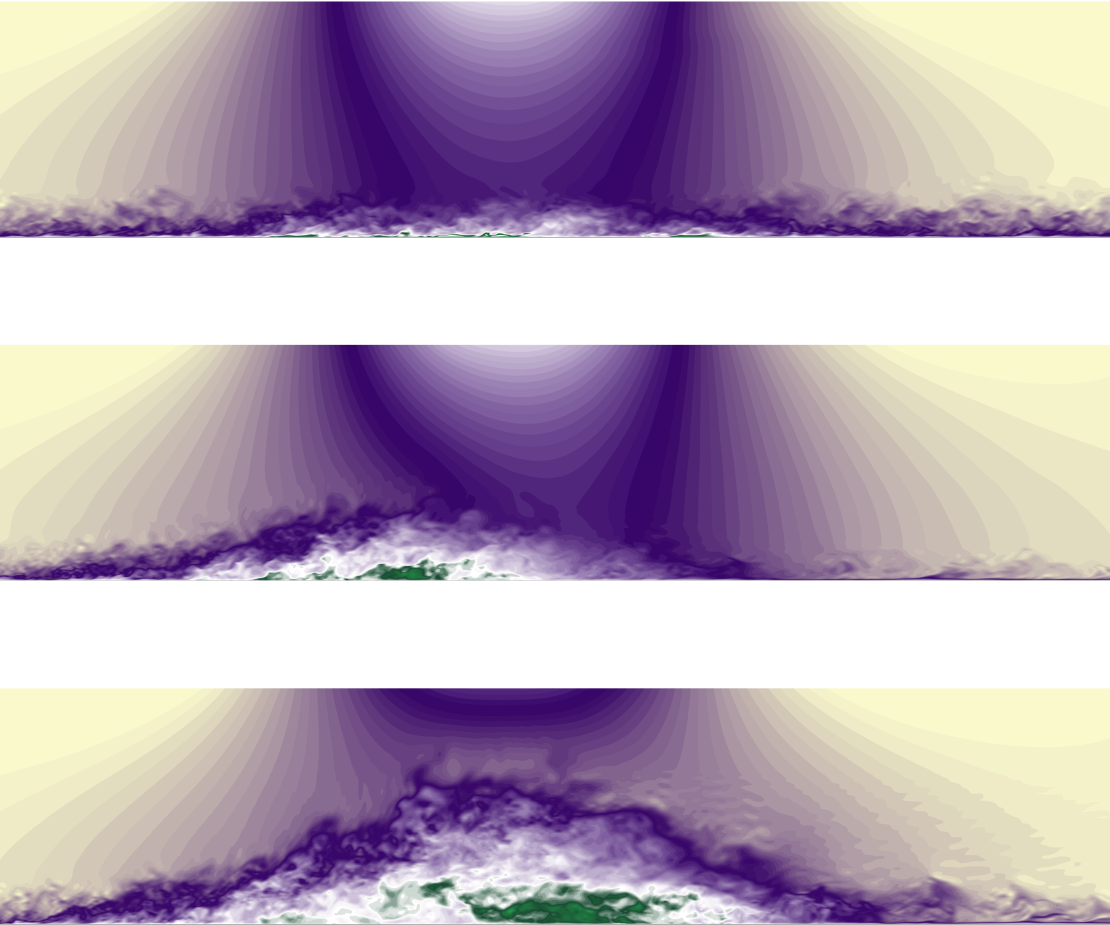
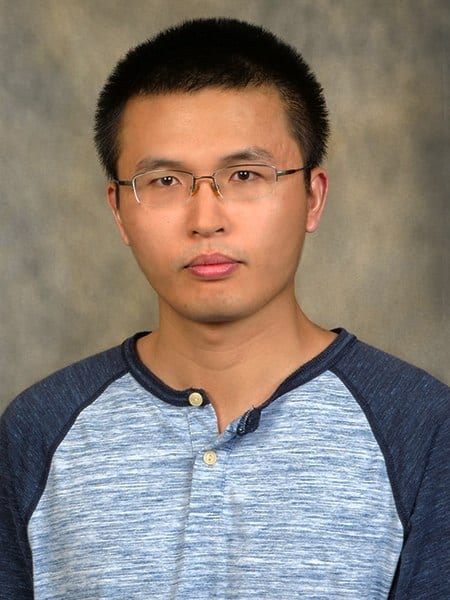
Francesco Ambrogi is an Assistant Professor in the Department of Mechanical and Materials Engineering at Queen's University, where he leads the Fluids, Energy, and Bio-inspired Unsteady Simulations (FEBUS) lab. His research focuses on computational and theoretical studies of turbulent boundary layers under pressure gradients, with applications in unsteady aerodynamics (turbine blades, rotor blades) and biomimicry (swimming/flying animals) for flow control. Dr. Ambrogi received his PhD in Mechanical Engineering from Queen's University in 2024, following a MASc in Energy and Nuclear Engineering from the University of Bologna, Italy (2019), and a BAsc in Mechanical Engineering from the University of Modena and Reggio Emilia, Italy (2015). He previously served as an Adjunct Assistant Professor at Queen's University in 2024 and completed a Postdoctoral Research Fellowship at the University of Waterloo in Mechanical and Mechatronics Engineering. His research program centers on advancing the understanding of turbulent boundary layer physics under unsteady pressure gradients. Dr. Ambrogi's team leverages modern computational tools, particularly large-eddy simulations, to investigate separated turbulent boundary layers and large-scale coherent structures. These structures are pivotal for the transport of mass, momentum, energy, and contaminants in turbulent flows. His work has significant implications for engineering applications such as turbulent mixing, heat diffusion, and contaminant transport in the atmosphere, with direct relevance to turbine blades, rotor blades, and biomimetic systems for flow control. Dr. Ambrogi's recent publications demonstrate a consistent research trajectory focused on unsteady boundary layer separation phenomena, showing increasing sophistication in handling complex unsteady flow physics. His work combines rigorous computational methods with practical applications in aerodynamics and flow control, particularly examining how time-varying freestream conditions affect boundary layer separation and how turbulent kinetic energy is advected in these complex flows. Dr. Ambrogi has secured funding through the Natural Sciences and Engineering Research Council of Canada (NSERC-CRNSG) under the Discovery Grant Program, with computational support provided by the Digital Research Alliance of Canada. His educational initiatives include ARC4CFD, an open-source course designed to bridge the gap between small-scale CFD simulations and large-scale computations on high-performance computing systems. As director of the FEBUS lab at Queen's University, Dr. Ambrogi leads research that combines fundamental fluid dynamics with practical engineering applications. The lab's work spans from theoretical investigations of flow separation mechanisms to the development of computational tools for practical engineering problems in aerospace and bio-inspired systems.
Yukun Li is an Associate Professor in the Department of Mathematics at the University of Central Florida (UCF), part of the College of Sciences. His research focuses on numerical analysis, stochastic partial differential equations, and computational finance. He holds a Ph.D. in Mathematics from the University of Tennessee, Knoxville (2010-2015), followed by postdoctoral roles at Penn State (2015-2016) and The Ohio State University (2016-2019). He has secured grants including NSF REU funding (2023-2026) and led an NSF-funded project on stochastic phase field models (2021-2025). Research interests include: Continuous/Discontinuous Finite Element Methods Numerical Solutions of Stochastic ODEs/PDEs Adaptive Algorithms and Fast Solvers Computational Finance Models Recent publications emphasize stochastic wave equations, phase field models, and financial mathematics. His work spans theoretical analysis and numerical methods for complex systems. Notable recognition includes the 2015 Achievement Award from the University of Tennessee's Mathematics Department. Teaching highlights include advanced graduate courses like Computational Methods for Financial Mathematics and Numerical Linear Algebra, alongside contributions to undergraduate mathematics education. He is proficient in computational tools including MATLAB, Python, FEniCS, and MPI.
Nicolas Riviere is a Professor at INSA Lyon in the Department of Mechanical Engineering, working within the Laboratory of Fluid Mechanics and Acoustics (LMFA - UMR 5509). He is part of the "Fluides complexes et transferts" (Complex Fluids and Transfers) group and the Environment team. His teaching activities primarily focus on fluid mechanics at the Mechanical Engineering Department of INSA Lyon, covering: General balances (mass, momentum, energy) Aerodynamics Compressible flows Numerical simulation of flows Free surface hydraulics Prof. Riviere's research centers on free surface hydrodynamics, with applications to natural and industrial risks. His work takes an experimental approach, utilizing the laboratory's channel facilities, particularly the channel intersection installation. His research spans river floods with compound beds, urban flooding, sanitation networks, torrential flows, and flow-obstacle interactions. He has developed a strong interdisciplinary focus, co-leading the "Baignades en Rivières Urbaines" studio with Oldrich Navratil from University Lyon 2 and the EVS Laboratory. His publication record demonstrates consistent contributions to the fields of fluid mechanics and environmental hydraulics, with recent work focusing on open-channel flows, urban flooding phenomena, vegetation-flow interactions, and experimental techniques for studying complex hydraulic phenomena. His research often bridges theoretical fluid mechanics with practical environmental applications. Prof. Riviere has received recognition for his work in environmental fluid mechanics, with numerous publications in high-impact journals in hydraulic engineering and fluid mechanics. He has supervised multiple PhD students and research projects related to environmental fluid mechanics and has collaborated with various institutions on interdisciplinary research projects addressing water-related challenges. The laboratory where he works, LMFA, provides extensive experimental facilities including wind tunnels, hydrodynamic channels, and advanced measurement techniques such as PIV (Particle Image Velocimetry), LDV (Laser Doppler Velocimetry), and other state-of-the-art instrumentation for fluid flow analysis.