Zoe Lee is a Reader (Associate Professor) in Marketing at Cardiff Business School, Cardiff University , and Programme Director for MSc Strategic & Digital Marketing. She serves as an Associate Editor for the Journal of Strategic Marketing and editorial board member for Journal of Business Research and Journal of Philanthropy & Marketing . Research Interests: Responsible Branding Brand Purpose & Activism Sustainability Communications in Fashion Nonprofit Marketing Strategy Digital Brand Management Recent Publications (2023-2025) examine brand activism in permacrisis, social media banter between brands, disability inclusion in luxury fashion, and sustainability communication strategies. Her work combines empirical studies with systematic literature reviews across Journal of Marketing Management , European Journal of Marketing , and Journal of Business Research . Scientific Awards: Outstanding Article in Nonprofit & Voluntary Sector Quarterly (2018) Nominated for ESLA Awards (2021-2025) for teaching excellence Dean's Award for Citizenship (2017) Supervision: Currently supervising PhD students in corporate brand purpose, sustainability, and brand activism. Actively engaged in grant-funded projects including British Council research on inclusive policies and Hodge Foundation public value internships.
Professor Emily So serves as Deputy Head of the School of Arts and Humanities at the University of Cambridge and directs the Cambridge University Centre for Risk in the Built Environment (CURBE). A chartered civil engineer with extensive field experience, she holds leadership roles in the Open-Oxford-Cambridge AHRC Doctoral Training Partnership and chairs the Faculty EDI Committee. Her research focuses on urban risk and resilience , particularly in earthquake-prone regions. Combining structural engineering with epidemiological approaches, she develops innovative casualty estimation models and engages directly with affected communities worldwide. Her work spans seismic safety, disaster epidemiology, and remote sensing applications for rapid damage assessment. Professor So's publication trends reveal strong emphasis on machine learning for disaster risk modeling , with recent work featuring graph neural networks, deep clustering for urban morphology, and LSTM-based population forecasting. Her research bridges engineering, social sciences, and data science to address resilience in developing nations. 2010 Shah Family Innovation Prize (Earthquake Engineering Research Institute) Fellow of the Institution of Civil Engineers (FICE) Scientific Advisory Group for Emergencies (SAGE) member advising UK government As Director of CURBE, she leads interdisciplinary collaborations with EEFIT, Global Earthquake Model (GEM), World Bank, and USGS. Her field investigations following major earthquakes inform practical solutions for vulnerable communities, notably contributing to the 2017 World Building of the Year design in China. Current work includes sabbatical research for 2025-2026 focused on decolonizing architectural approaches to disaster resilience. Professor So maintains active roles in professional organizations and international disaster response frameworks, with her CURBE team developing methodologies now implemented globally for seismic safety improvements.
Marya Besharov is a Professor of Organisations and Impact at Saïd Business School, University of Oxford, and Academic Director of the Skoll Centre for Social Entrepreneurship. She holds a BA, MA, and PhD from Harvard University, alongside an MBA from Stanford University. Her work focuses on leadership, social impact, and hybrid organizations, advising global entities on balancing social and financial priorities. Education: PhD in Organizational Behavior, Harvard University MA in Sociology, Harvard University BA in Social Studies, Harvard University MBA, Stanford University Research Interests: Dr. Besharov’s research explores how organizations navigate competing goals, particularly in hybrid models like social enterprises. She investigates organizational identity, institutional logics, and leadership frameworks for systemic change. Her findings appear in Administrative Science Quarterly , Harvard Business Review , and Stanford Social Innovation Review . Engagement & Teaching: She leads executive education programs and workshops on leadership and systems change through the Skoll Centre. Her teaching emphasizes contingency-based frameworks for managing organizational complexity. Labs & Initiatives: Academic Director of the Skoll Centre for Social Entrepreneurship, a global hub for social impact education and research.
Dr. Johan P Larsson serves as a Lecturer in Economics and Public Policy within the Department of Land Economy at the University of Cambridge, concurrently holding a Fellowship and Director of Studies position in Land Economy. His academic profile bridges theoretical and empirical research in spatial economic phenomena, with emphasis on policy-relevant investigations of regional competitiveness and urban dynamics. His educational foundation includes: PhD from Jönköping University Dr. Larsson's research program centers on economic geography and regional science, specializing in urban economics and entrepreneurship. He examines how historical industrial structures, neighborhood effects, and policy interventions shape economic integration and innovation ecosystems. Methodologically, he combines quantitative analysis of large-scale datasets with natural experiments (e.g., pandemic-induced remote work) to isolate causal mechanisms in spatial economic processes. His recent publication trajectory (2021-2025) reveals consistent focus on three interconnected domains: evaluation of place-based policies (e.g., City Deals), analysis of the entrepreneurial state's role in innovation, and investigation of immigrant integration dynamics. These works predominantly utilize Scandinavian and English case studies while generating globally applicable theoretical insights, demonstrating methodological sophistication through spatial econometrics and policy counterfactuals. Recognition for his scholarly contributions includes: The JIBS Student Association’s Pedagogical Prize (2017) The Martin Beckmann Award from Regional Science International (2015) Jan Wallander scholar designation (2015) His teaching portfolio spans Microeconomics, Macroeconomics, Urban economics, and Applied statistics, reflecting his interdisciplinary expertise. While doctoral advisees aren't explicitly listed, his Director of Studies role indicates active undergraduate supervision within Cambridge's collegiate system. Current research appears focused on post-pandemic labor geography and mission-oriented innovation policy evaluation, though dedicated laboratories or formal research teams aren't mentioned in available materials.
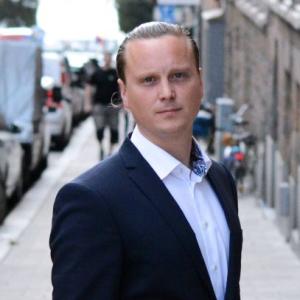
Péter Juhász is a Stipendiary Lecturer at Brasenose College and a Postdoctoral Research Associate in the Department of Physics at the University of Oxford. He holds an MA from the University of Cambridge and a DPhil from the University of Oxford. His research centers on quantum physics, specifically quantum computing and ultracold atomic systems. Juhász investigates Bose-Einstein condensates of dipolar gases, focusing on stability, loss mechanisms, and novel trapping geometries. He employs deep learning for atom cloud analysis and develops experimental protocols for large condensate production. His work combines theoretical modeling with advanced experimental techniques in ultracold physics. He previously served as Viscogliosi Fellow and Policy Adviser at the Permanent Observer Mission of the Holy See to the United Nations. He is President of the Cambridge–Oxford Alumni Club of Hungary and volunteers with the Order of Malta's soup kitchen initiatives.
Carla Edgley is a Professor of Accounting and Finance at Cardiff Business School, Cardiff University. She serves as Co-Director of the Cardiff Interdisciplinary Tax Research Group (CITRG) and is an Associate Editor of Critical Perspectives on Accounting Journal. Her professional affiliations include being a Fellow of the Institute of Chartered Accountants in England and Wales (ICAEW), a member of the Chartered Institute of Taxation Welsh Technical Sub-Committee, and former co-opted ICAEW Council member representing UK academia. Her research focuses on interdisciplinary social studies of accounting, with particular emphasis on diversity/gender studies, taxation, and the materiality concept. Drawing on critical theoretical frameworks including Foucauldian analysis, she examines power dynamics in accounting practices, professional identity formation, and the sociology of materiality as a reporting concept. Her work often bridges accounting with sociology, critical theory, and gender studies. Professor Edgley's recent publications demonstrate a clear trajectory toward critical perspectives on taxation and diversity in the accounting profession. Her work explores how diversity initiatives reshape professional identity and merit concepts within accounting firms, while her tax research investigates knowledge gaps and power dynamics in tax disclosures. The interdisciplinary nature of her scholarship is evident in her collaborations across multiple institutions and disciplines. Her scholarly contributions have been recognized through nominations for teaching excellence awards, including the 2024 Enriching Student Life Award nomination and Cardiff Business School's Teaching Excellence Award in 2013. As an educator, Professor Edgley teaches undergraduate courses in Taxation and Auditing, serving as module co-ordinator for multiple levels. She actively supervises PhD students in areas related to critical tax studies, diversity, inclusion, and professional identity in accounting. Her professional experience includes significant industry roles at PricewaterhouseCoopers and other organizations before transitioning to academia. Her research projects include 'Diversity and career progression in the accounting profession,' 'Ethical leaders of tomorrow' (funded by CPA Ontario), and 'Exploring public feeling in tax reform' (a Civic Mission research project funded by Cardiff University).
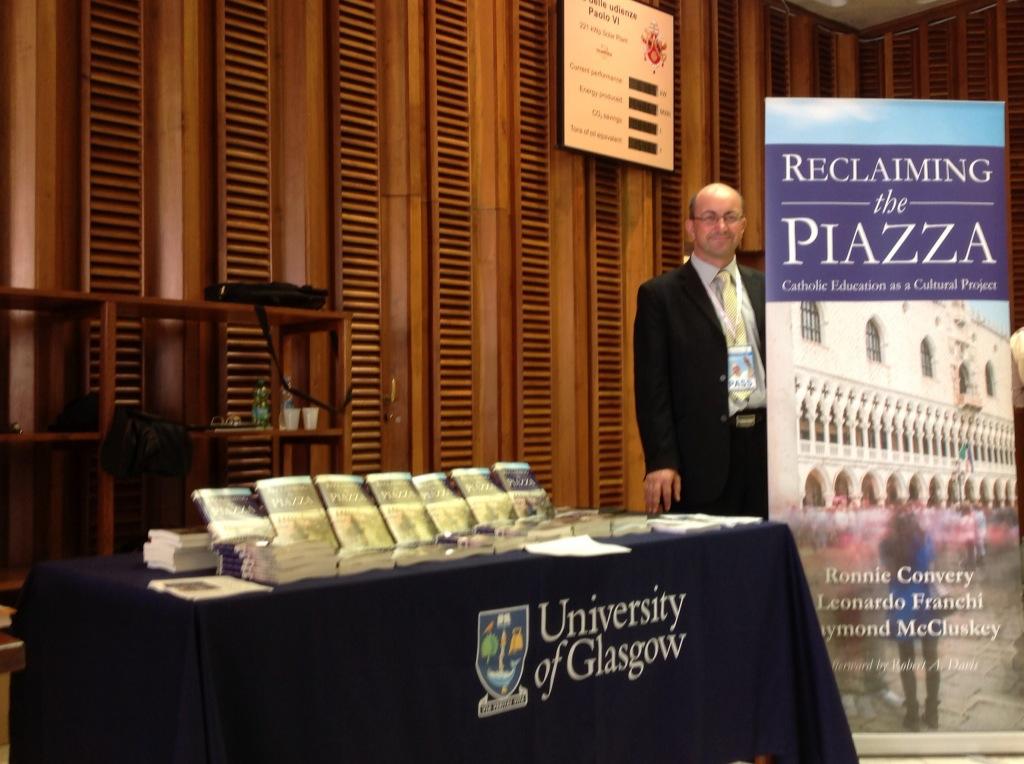
Dr. Leonardo Franchi serves as a Senior Lecturer in Pedagogy, Praxis & Faith at the University of Glasgow's School of Education. He is an internationally recognized scholar in Catholic education, holding significant editorial roles including Series Editor for both Catholic Education Globally - Challenges and Opportunities (Springer) and Education and Integral Human Development (Catholic University of America Press). In September 2024, he was appointed co-convenor of the Scottish Catholic Historical Association and maintains an active role as Executive Member of the Association of Catholic Institutes of Education. Franchi's educational background includes a Master of Arts (Hons), Post Graduate Certificate in Education, Master of Education, Post Graduate Certificate in Academic Practice, and a PhD. His academic journey reflects both theoretical depth and practical teaching experience in educational settings. His research interests center on Catholic education with particular focus on religious education, teacher formation, and the integration of liberal arts in higher education. Franchi has made significant scholarly contributions through the Reclaiming the Piazza series and numerous publications exploring how Catholic educational philosophy can address contemporary challenges while maintaining theological integrity. His work consistently examines the intersection of faith, culture, and educational practice, with increasing attention to character formation, intercultural dialogue, and the application of Catholic social teaching to educational policy. Analysis of his recent publications reveals a consistent trajectory examining Catholic educational identity in pluralistic contexts, with growing emphasis on character formation, teacher professional identity, and the integration of Catholic intellectual tradition with contemporary educational challenges. His 2023-2025 work shows increased focus on Scottish Catholic educational history, the application of papal encyclicals to educational practice, and the role of music and arts in religious formation. Series Editor for Catholic Education Globally - Challenges and Opportunities (Springer) Series Editor for Education and Integral Human Development (Catholic University of America Press) Co-convenor of Scottish Catholic Historical Association (since 2024) Executive Member of Association of Catholic Institutes of Education (since 2016) Academic Adviser to Academic Advisory Forum for Religious Education Reform in England and Wales (2019-2022) Franchi actively supervises doctoral students on diverse topics including professional identity of Catholic school teachers, music and religious education, Jesuit educational charism, and solidarity in Jesuit higher education. His supervision portfolio demonstrates his commitment to both theoretical exploration and practical application in religious educational contexts. He has received grant funding, including £10,000 from Porticus UK to support academics from developing countries attending the ACISE 2018 conference. Franchi also serves on multiple editorial boards including Review of Religious Education, Formation and Theology, and Studia Pedagogica Ignatiana. His professional activities extend to international presentations, with keynotes at institutions including Australian Institute of Theological Education and Radboud University, demonstrating his global influence in Catholic educational discourse. Franchi also serves as Director of Mater Christi Multi Academy Trust in Lancaster and holds a 0.5 FTE position as Professor of Catholic Education at the University of Notre Dame Australia.
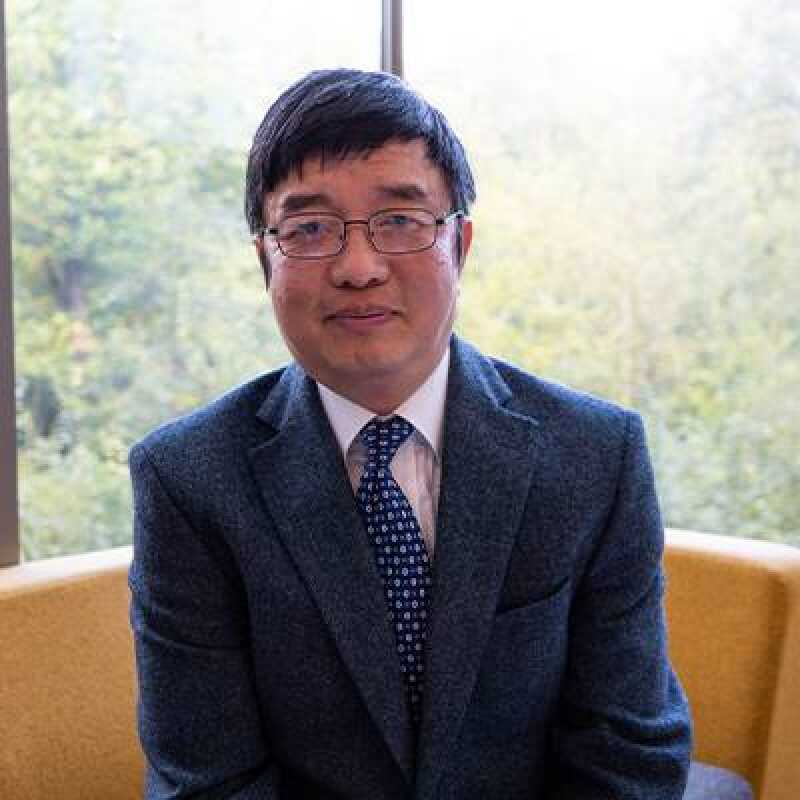
Professor Shaomin Wu is a faculty member at the University of Kent's Kent Business School, where he holds the academic rank of Professor of Business/Applied Statistics. He earned an MSc and PhD in applied statistics and has extensive industry experience, including a five-and-a-half-year stint at a global manufacturer in Shanghai before moving to the UK in 2001. He has held roles as a postdoctoral researcher and lecturer before joining Cranfield University and later the University of Kent. His research focuses on recurrent event data analysis, machine learning, and reliability mathematics, with funding from the EPSRC and ESRC. His research projects include managing risk in warranty servicing policies, smart data analytics for local government, and sustainable supply chain demand forecasting. He teaches modules such as risk analysis, reliability engineering, and machine learning. Currently supervising PhD students in time series forecasting, explainable AI, and recurrent event data analysis, he also serves as a co-chair of international conferences, editorial board member, and external examiner for doctoral degrees. Notably, he ranks among the top 2% of global scientists by Stanford University. His work integrates machine learning with business analytics, resilience engineering, and environmental sustainability. Key contributions include IoT-driven resilience methodologies for smart grids and unmanned systems, as well as frameworks for corporate carbon disclosure and maintenance optimization under uncertainty.
Dr Shu-Ling Lu is an Associate Professor at the University of Reading , serving as Director of the MSc Project Management Programme and a Member of Senate . Her research spans Innovation Management , Quality Control , and Net Zero Transitions in construction, alongside Heritage Building Integration and Gender Dynamics in built environment sectors. Her academic journey includes a PhD , MSc in Construction Engineering , and a Diploma in Architectural Engineering , all from institutions in Taiwan and the UK, complemented by a Postgraduate Certificate in Higher Education Practice from the University of Salford. Research Interests : Innovation in construction, quality management, heritage conservation, net-zero transitions, gender equity, and system dynamics applications. Article Trends : Focus on defects analysis , heritage integration , gender dynamics , system dynamics , and net-zero strategies across 15 recent publications. Scientific Awards : Fellow of the Chartered Institute of Building (FCIOB) Fellow of Higher Education Academy (FHEA) Full member, Association for Project Management (MAPM) BSI Committee Participation (Quality Management Standards) Supervision & Grants : Mentored 7 PhD students and led/co-led projects funded by Natural Environment Research Council (NERC) , EPSRC , and COST , with total grants exceeding £500,000.
Professor Marios C. Angelides is a full-time faculty member at Brunel University London , serving as Professor of Computing and Divisional Lead within the College of Engineering, Design and Physical Sciences . He leads the Creative Computing Research Group under the Institute of Digital Futures and contributes to the Digital Media department at Brunel Design School. BSc (First Class Honours) and PhD in Computing from the London School of Economics (LSE) Chartered Engineer (CEng) and Chartered Fellow of the British Computer Society (FBCS CITP) His research focuses on Creative Computing , specifically applying Machine Learning , Serious Gaming , and Cognitive Modeling to develop Smart IoT Applications . His work spans autonomous drone fleets for environmental monitoring, cybersecurity middleware for Android systems, wearable technology for lifestyle recommendations, and historical analysis of Alan Turing’s legacy in modern AI. Recent publications highlight trends in deploying Machine Learning for: IoT systems optimization Autonomous aerial/underwater vehicle coordination Deepfake detection using Turing’s Imitation Game Energy allocation in CubeSats via gaming mechanics Scientific recognition includes being Deputy Editor of The Computer Journal and runner-up for the 2016 Oxford University Press Wilkes Award . He has supervised PhD students in topics like Smart Android Middleware for Cybersecurity and Wearable Recommendation Systems , with active involvement in editorial boards and international conferences.
Dr. Daniel Read is a Senior Lecturer at the Institute for Sport Business , Loughborough University London. His interdisciplinary research addresses critical integrity issues in sport through qualitative and quantitative methodologies, focusing on athlete welfare, governance, sponsorship, fan behavior, and digital media. PhD in Sport Business (Loughborough University London) MRes in Psychology BSc in Sports Science and Physiology Dan's current projects examine: Athlete welfare (care-seeking behavior, medicine misuse, education) Commercial innovation vs. sporting tradition Digital divide impacts on sport access 21st-century sport governance He collaborates with organizations such as the World Anti-Doping Agency , FIFA , World Rugby , and the Professional Footballers’ Association . His teaching expertise spans research methods, data analytics, sport integrity, and digital media, alongside PhD supervision.
Professor Washington Yotto Ochieng serves as Head of the Department of Civil and Environmental Engineering and Chair Professor in Positioning and Navigation Systems at Imperial College London. He directs the Centre for Active Resilience and Security (CARS) and maintains key affiliations with the Centre for Systems Engineering and Innovation, Centre for Transport Engineering and Modelling, Institute for Molecular Science and Engineering, and Space Lab. His extensive advisory roles include the Science Museum Group Board of Trustees, Royal Institute of Navigation Presidency, and Royal Academy of Engineering Africa Steering Committee. His educational background includes a BSc (First Class) in Engineering from the University of Nairobi and MSc (Distinction) and PhD in Civil Engineering from the University of Nottingham. He received an honorary DSc from Technical University of Kenya in 2023. Ochieng's research pioneers critical infrastructure resilience, user-centric mobility, and positioning/navigation/timing (PNT) systems. He has designed satellite navigation systems (including Europe's EGNOS and GALILEO) for multi-domain applications and advanced Air Traffic Management and Intelligent Transport Systems. His work integrates geomatics, transportation engineering, and sustainable mobility to solve global urban infrastructure challenges, with recent emphasis on decarbonization and AI-driven solutions. His 2024-2025 publications reveal strong trends in sustainable transportation decarbonization, AI-optimized traffic management, and resilient urban positioning systems. Research focuses on hydrogen fuel cell trains, carbon-efficient aviation, and deep reinforcement learning applications for emission reduction, demonstrating interdisciplinary integration of engineering, environmental science, and artificial intelligence to address climate challenges. Fellow of the Royal Academy of Engineering (2013) Harold Spencer-Jones Gold Medal from Royal Institute of Navigation (2019) Doctor of Science (honoris causa) from Technical University of Kenya (2023) Elder of the Order of the Burning Spear (EBS) from Kenya (2023) Commander of the Order of the British Empire (CBE) (2024) Ochieng provides strategic guidance to UK Government bodies (Government Office for Science, Department for Transport, FCDO), European Parliament, and European Court of Auditors. His advisory work shaped the Blackett Review on Satellite-derived Time/Position, UK Space Strategy, and Future of Mobility report. He chairs the Science Museum London Advisory Board and leads FCDO's Sustainable Urban Economic Development program in Africa, with significant grant influence through UK National Physical Laboratory and Department for International Development. He directs the Centre for Active Resilience and Security (CARS) and leads Space Lab initiatives, focusing on mission-critical PNT systems and infrastructure resilience. His teams collaborate with international consortia including RTCM Special Committee 134 and US Institute of Navigation, developing next-generation navigation solutions for safety-critical applications across transport, aviation, and urban environments.
Erisa Karafili is an Associate Professor in Cybersecurity at the University of Southampton. She leads Teaching Methods Innovation at the GCHQ/EPSRC Academic Centre of Excellence for Cyber Security Education (ACE-CSE) and is a Champion in Security by Design at ACE-CSR. A Fellow of the Higher Education Academy, she joined the University in 2020 after roles including a Marie Curie Fellowship at Imperial College London, where she investigated cyber-attack attribution techniques. Her research focuses on formal methods applied to security, IoT threat models, and secure data sharing frameworks. Education: PhD in non-classical logics applied to multi-agent systems security from the University of Verona. Previous positions include PostDoc at Technical University of Denmark and Researcher at Imperial College London. Research Interests: Cyber-attack attribution, IoT security, formal methods in cybersecurity, data privacy, and argumentation-based reasoning for security. Awards: Higher Education Academy Fellowship. Current PhD Students: Betul Gokkaya, Mohammed Homaid Alquliti, Peter Geoffrey Williams, Steve Johnson. Active Projects: Heterogeneous Material Integrated MEMS/NEMS-Photonics Platform for Secure Communication (collaborative with Jize Yan and others).
Professor Sara Bernardini is a leading academic in Artificial Intelligence at the University of Oxford's Department of Computer Science, where she holds a joint appointment as a Tutorial Fellow at Mansfield College. Her research specializes in decision-making for autonomous systems, automated planning, and robotics, with applications in extreme environments like space missions, nuclear decommissioning, and offshore energy. She bridges theoretical AI with real-world challenges through projects funded by Innovate UK, EPSRC, NERC, and the Alan Turing Institute. Her research interests span: Autonomous Systems : Developing agents that support humans in complex cognitive tasks. Automated Planning : Algorithms for goal recognition, pathfinding, and multi-agent coordination. Robotics : Solutions for subterranean exploration, offshore wind farms, and UAV operations. AI Safety : Risk-aware autonomous systems and interpretable decision-making. Bernardini's publications emphasize algorithmic robustness in path planning, multi-agent coordination , and real-world AI deployments . Recent work explores goal legibility in uncertain environments, energy-efficient robotics, and AI education tools. Her 65+ papers in top venues (e.g., AIJ, JAIR, ICAPS) show a trend toward safety-critical applications and human-AI collaboration. Awards & Leadership: ICAPS-2020 Best Paper Honorable Mention Executive Council Member, Association for the Advancement of Artificial Intelligence (AAAI) Program Chair, International Conference on Automated Planning and Scheduling (ICAPS 2024) Associate Editor, Artificial Intelligence Journal She leads interdisciplinary teams for projects like autonomous offshore wind farm maintenance and modular robots for extreme environments. As Principal Scientist at the UK National Oceanography Centre, she advanced marine robotics. She mentors PhD candidates and collaborates globally (e.g., NASA Ames, MIT).
Dr. Minkwan Kim is an Associate Professor at the University of Southampton's Department of Engineering and the Environment. His research focuses on advanced plasma technologies, CubeSat propulsion systems, and aerospace engineering solutions for space exploration and environmental challenges. He currently supervises seven PhD students in the fields of engineering and environmental science. Research Interests: CubeSat Propulsion Systems, Plasma Sterilization, Hypersonic Vehicle Shielding, In-Situ Resource Utilization, and Environmental Plasma Applications. His work combines experimental and computational approaches to address real-world problems such as space debris mitigation and atmospheric protection. Publications highlight innovations in plasma-driven water treatment, hypersonic magnetic shielding, and CubeSat mission design. Collaborations include projects on air sterilization systems and nanosatellite architectures. Dr. Kim has received recognition for an innovative idea addressing pandemic-related challenges through the AHSN Regional Competition (2020). Teaching responsibilities include modules like Advanced Astronautics and Spacecraft Systems Engineering. His supervision record spans diverse topics from plasma reactor design to CubeSat disposal strategies.