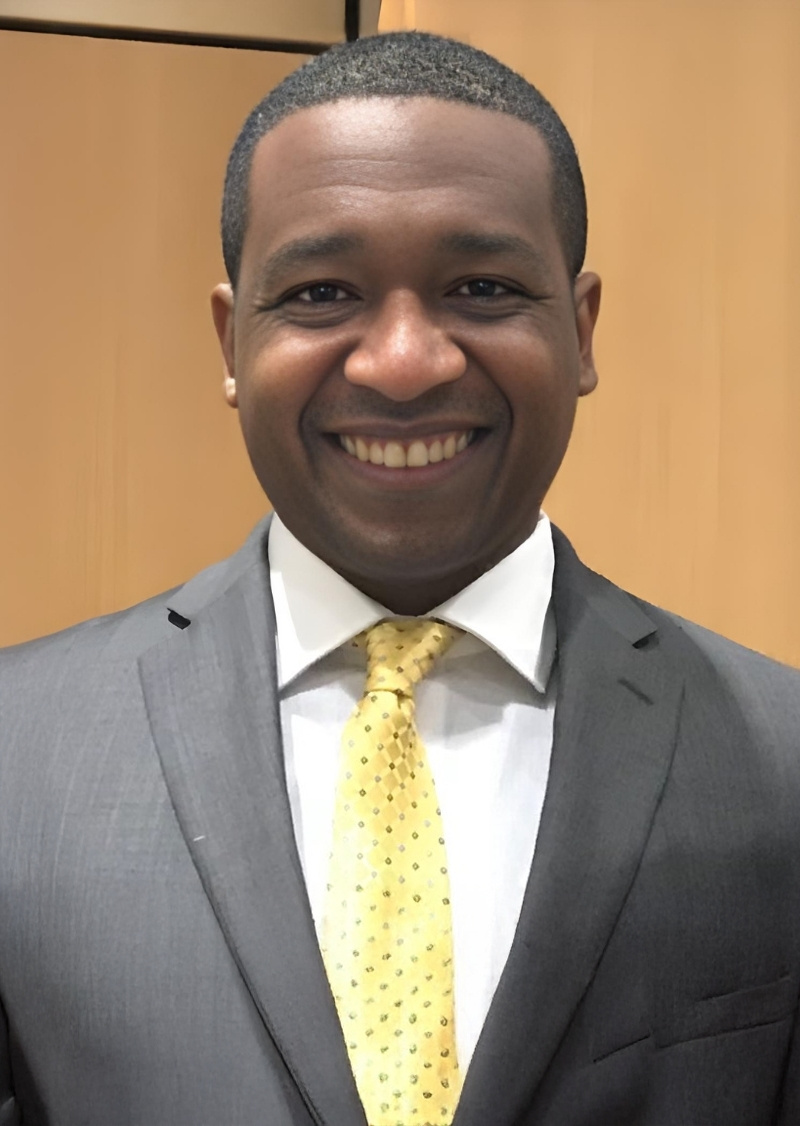
Adam Hollowell is an Adjunct Assistant Professor in the Program in Education at Duke University, where he also serves as Senior Research Associate at the Samuel DuBois Cook Center on Social Equity and Director of the Inequality Studies Minor. His teaching spans ethics, inequality studies, and history across Duke’s Kenan Institute for Ethics, Sanford School of Public Policy, and Department of History. Hollowell holds a Ph.D. from the University of Edinburgh (2009). His research focuses on inequality, higher education, public policy, and ethics, with notable work on pandemic impacts, telemedicine in education, and reproductive health access during crises. In Inequality Studies , Hollowell emphasizes understanding policies to drive social change, as highlighted in recent media coverage. His publications explore topics like student behavior shifts during the pandemic, telemedicine adoption in universities, and James Baldwin’s ethical challenges. He is a finalist for the Judith Deckers Prize (2024). Professionally, Hollowell leads projects such as Bass Connections on college contraception access and Story+ initiatives. His work bridges academia and public engagement, addressing systemic inequities through interdisciplinary approaches.
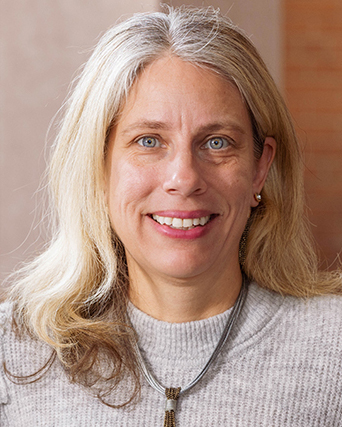
Emily Hannum is a Professor of Sociology and Education at the University of Pennsylvania's College of Arts & Sciences, where she also serves as Associate Dean for Social Sciences. She is affiliated with the Population Studies Center, Center for the Study of Contemporary China, Graduate School of Education, and Penn Development Research Initiative. Education: PhD in Sociology from University of Michigan (1998) Research Focus: Poverty and child welfare, gender and ethnic stratification, sociology of education Projects: Gansu Survey of Children and Families, climate-environment-childhood inequalities in LMICs Workshops: Co-organizer of Penn Education and Inequality Workshop Her research explores childhood poverty in China, demographic impacts on education systems, and climate risks affecting children's welfare. She investigates environmental hazards, educational disparities, and family separation effects across China, India, and low/middle-income countries. Recent publications analyze educational expansion in East Asia, climate crisis impacts on child health, and gender disparities in Latin America. She directs longitudinal studies on rural poverty and collaborates on cross-national projects related to environmental and educational equity. Scientific awards include the Stanley I. Sheerr Term Professorship in Social Sciences.
Amy Bruckman is a Regents’ Professor and Senior Associate Chair in the School of Interactive Computing at Georgia Institute of Technology. As a Fellow of The ACM and member of the SIGCHI Academy , she contributes to social computing research focusing on online collaboration, cross-cultural understanding, and content moderation. Her 2022 book "Should You Believe Wikipedia? Online Communities and the Construction of Knowledge" explores digital knowledge creation. Education: Ph.D. from MIT Media Lab (1997), B.A. in Physics from Harvard (1987) Research Affiliations: GVU Center, IRI People and Technology Her work addresses social computing challenges including: AI ethics in human-AI interaction Algorithmic bias in content moderation Epistemic justice in online communities Comparative platform analysis (Reddit, Discord, TikTok) Grassroots technology movements Recent publications examine: AI support tools for online counseling Community-driven research frameworks Racial bias mitigation in toxic language detection Designing teachable social media experiences Human trafficking intervention ethics Scientific recognition includes: ACM Fellowship SIGCHI Academy membership She has contributed to: Georgia Tech's Computing Education initiatives Research ethics frameworks for Human-Computer Interaction
Gerald L. Neuman is the J. Sinclair Armstrong Professor of International, Foreign, and Comparative Law at Harvard Law School (HLS), where he serves as Director of the Human Rights Program. His expertise spans human rights, constitutional law, immigration law, and international legal frameworks. Previously, he taught at the University of Pennsylvania Law School (1984-1992) and Columbia Law School (1992-2006). Research Interests: Neuman's work focuses on: Human rights in populist and pandemic contexts Transnational constitutionalism Immigration law and extraterritorial constitutional rights Age discrimination as a human rights violation Impeachment's role in human rights protection Indirect discrimination analysis Selected Trends: His recent articles examine pandemic-era immigration policies ( Title 42 ), impeachment mechanisms for human rights violations, and age discrimination frameworks. Publications show consistent engagement with: Constitutional law intersections Comparative legal analysis Administrative law critiques Human rights treaty body applications Scientific Contributions: Neuman's work appears in leading journals like Harvard International Law Journal and Harvard Human Rights Journal . He has organized workshops on indirect discrimination related to: Sexual orientation/gender identity Chronological age Religious practice Disability rights Pandemic policy impacts He has served as a UN expert workshop organizer and contributed to international human rights literature through edited volumes and treaty analysis.
Stephen Billings is an Associate Professor of Finance at the Leeds School of Business, University of Colorado Boulder, where he holds the Global Real Estate Capital Markets Chair position. He serves as the faculty director of the MS in Real Estate program and research director for the CU Real Estate Center. His work spans multiple research centers including the Center for Research on Consumer Financial Decision Making and the Michael A. Klump Center for Real Estate. Billings received his PhD in Economics from the University of Colorado, a MS in urban planning from the University of North Carolina, and a BS in economics from Georgetown University. Prior to joining CU Boulder in 2016, he was faculty at the University of North Carolina Charlotte with appointments in both economics and public policy, where he also served as faculty director for the real estate center. His research focuses on the intersection of housing, schools, neighborhoods and crime, addressing critical policy issues including the impact of public investment in light-rail transit on neighborhoods, school segregation's influence on academic achievement and crime, neighborhood gentrification causes, lead-based paint in low-income housing, and the effects of sea level rise and natural disasters on neighborhood sorting and household finances. Billings employs sophisticated analysis of large micro-datasets with studies based on data and policies in Charlotte, NC and Denver, CO. His work connects urban economics with public policy, demonstrating how neighborhood environments shape individual outcomes across multiple dimensions. Billings' recent publication record demonstrates a consistent focus on neighborhood effects, school choice impacts, crime economics, and housing market dynamics. His work frequently examines the intersection of race, housing, and economic outcomes, with particular attention to policy implications. He has developed innovative methodological approaches to studying residential amenities and neighborhood spillovers, with increasing attention to climate change impacts on housing markets. His research appears in top journals including The Quarterly Journal of Economics, American Economic Review: Insights, and Journal of Urban Economics. As an educator, Billings teaches undergraduate and masters classes in real estate finance and economics, as well as doctoral and masters level courses on cost-benefit analysis and statistical methods. He has extensive consulting experience conducting economic impact studies, including assessments of North Carolina's public higher education system, affordable housing needs in Colorado communities, and the economic effects of marijuana legalization on property markets. His practical policy work complements his academic research, creating a bridge between theoretical insights and real-world applications. Billings leads significant research initiatives through the CU Real Estate Center, where he directs studies examining the impact of business improvement districts and other urban development policies. His work bridges academic research with practical policy applications, making substantial contributions to our understanding of how housing, education, and neighborhood environments shape individual outcomes and community development. His December 2023 memo on the HUD Officer Next Door Program exemplifies his engagement with current housing policy issues.
Anupama Rao is Professor of History and MESAAS (Institute for Comparative Literature and Society) at Columbia University, with affiliations in Women's, Gender and Sexuality Studies and Human Rights. She is based at Barnard College, where she holds office hours and engages in interdisciplinary teaching and research. Her educational background includes a B.A. with honors from the University of Chicago and a Ph.D. from the Interdepartmental Program in Anthropology and History at the University of Michigan. Rao’s research spans South Asian history and anthropology , gender and sexuality studies , caste and race , social theory , comparative urbanism , and colonial genealogies of human rights . She is known for her groundbreaking work on anti-caste thought, particularly the political philosophy of B. R. Ambedkar, and for theorizing caste subalternity in modern India. Her scholarship critically examines the intersections of caste, gender, urban space, and political subjectivity. Her recent and ongoing publications reflect a deep engagement with global racisms, Cold War humanism, and justice futures. Key themes across her articles include Dalit aesthetics, subaltern urbanism, affirmative action, and the transnational dimensions of caste. Her work shows a consistent trend toward interdisciplinary, postcolonial, and decolonial frameworks that challenge Western-centric epistemologies. Fellow-in-Residence, National Humanities Center (2008–2009) Fellow, Center for Advanced Study in the Behavioral Sciences, Stanford (2010–2011) Fellow, REWORK, Humboldt University, Berlin (2014–2015) Global Humanities Institute Awardee, CHCI (2023) Rao has served as Senior Editor of Comparative Studies in South Asia, Africa, and the Middle East (2012–2021), President of the Society for the Advancement of the History of South Asia (SAHSA), and member of the South Asia Council of the Association for Asian Studies. She is Principal Investigator for the Mellon-funded Global Humanities Institute project Global Racisms, Cold War Humanism, and Just Futures (2022–2024) and co-directs Geographies of Injustice at Columbia’s Center for the Study of Social Difference. She has secured major research grants from the ACLS, NEH, SSRC, and Mellon Foundation. She advises and mentors graduate students, though specific names are not listed in the text. Rao directs the Institute for Comparative Literature and Society and convenes the Ambedkar Initiative, fostering interdisciplinary research and public engagement on caste, race, and justice. She leads and participates in multiple research collectives, including the Geographies of Injustice project and the Asian Spatialities initiative. She is deeply involved in institutional leadership through her roles at the Institute for Comparative Literature and Society and the Ambedkar Initiative, both of which serve as hubs for critical humanities research.
Dr. Derek E. Daniels is an Associate Professor and Director of Graduate Studies in the Department of Communication Sciences and Disorders at Wayne State University’s College of Liberal Arts and Sciences. He is a licensed speech-language pathologist specializing in stuttering therapy and psychosocial aspects of stuttering. His research focuses on identity, stigma, intersectionality, and culturally responsive practices, with a particular emphasis on qualitative methods and social justice. He leads Camp Shout Out, a therapeutic camp for children and teens who stutter, and serves as a former President of the Michigan Speech-Language-Hearing Association. Dr. Daniels holds a Ph.D. from Bowling Green State University (2007), an M.A. from the University of Houston (2002), and a B.A. from Grinnell College (1998). His awards include the 2023 Professional of the Year Scholar and Service Award from the National Stuttering Association and the 2025 William T. Simpkins Service Award. He teaches courses such as 'Stuttering' and 'Normal Language Acquisition,' and his work emphasizes reducing stigma through education and advocacy. Dr. Daniels actively participates in professional organizations like the American Speech-Language-Hearing Association and has contributed to over 50 peer-reviewed publications and presentations globally.
Briana S. Last is an Assistant Professor of Clinical Psychology at Stony Brook University, with a PhD from the University of Pennsylvania (2022). Her work focuses on improving mental health equity through policy research, implementation science, and community-based approaches. She examines social determinants of mental health, mental health workforce development, and clinical decision-making in public systems. Dr. Last leads the Mental Healthcare for All Lab, collaborating with governments, agencies, and clinicians to strengthen public mental health systems. Her research emphasizes workforce sustainability, anti-transgender policy impacts, and clinician well-being. She has published in high-impact journals like The Milbank Quarterly and Psychiatric Services . Her interdisciplinary methods combine qualitative and quantitative approaches, including mixed methods and implementation science frameworks. Current projects address workforce retention strategies, telehealth policy implications, and the sociopolitical context of gender-affirming care. Education: PhD in Clinical Psychology, University of Pennsylvania (2022) Labs: Mental Healthcare for All Lab Key Themes: Behavioral health policy, health equity, clinician-patient dynamics, LGBTQ+ mental health
Alan Patten is the Howard Harrison and Gabrielle Snyder Beck Professor of Politics and Chair of Princeton University's Department of Politics. He holds a D.Phil. from Oxford University, with prior academic roles at McGill University and the University of Exeter. His research bridges historical political thought and contemporary political philosophy, focusing on minority rights, language politics, nationalism, and religious freedom. He is the author of Hegel's Idea of Freedom (1999), Equal Recognition: The Moral Foundations of Minority Rights (2014), and co-editor of Language Rights and Political Theory (2003). Patten has served as editor of Philosophy & Public Affairs (2010–2017) and currently directs Princeton's University Center for Human Values. His recent work explores a liberal theory of religious freedom and critiques neocolonial dynamics in cultural trade. Awards include the APSA First Book Prize and the C.B. Macpherson Prize. Education: B.A. (McGill), M.A. (Toronto), M.Phil. & D.Phil. (Oxford, 1996). Teaching includes courses on political theory, democracy, and self-determination. Patten has advised numerous Ph.D. students on topics in political philosophy and intellectual history. Research interests span the moral foundations of minority rights, language policy in multicultural contexts, and the historical development of nationalist thought. His work often combines normative argumentation with historical analysis, addressing contemporary issues like religious exemptions, cultural preservation, and global justice. Awards: APSA First Book Prize in Political Theory (1999) C.B. Macpherson Prize (Canadian Political Science Association, 1999) Service: Chair of the Department of Politics (2018–2024), editorial roles, and academic leadership in interdisciplinary initiatives at Princeton.
Stacey Lantagne is a Professor of Law at Western New England University School of Law , joining in 2022. Her research explores the intersection of digital creativity and intellectual property law, focusing on fanfiction and internet memes. She actively engages with pop culture and fan studies communities as a presenter and guest speaker. Education : B.A. summa cum laude, Boston College (English major, Computer Science minor) J.D. cum laude, Harvard Law School Her work addresses evolving legal challenges in digital communication, trademark expansion, and fair use doctrine. Articles like “Building a Better Mousetrap” and “Mutating Internet Memes” highlight her expertise in copyright law’s adaptation to internet culture. She serves on the Legal Committee of the Organization for Transformative Works , advocating for fan creators. Prior roles include teaching at the University of Mississippi and Loyola University New Orleans, along with intellectual property litigation experience at Goodwin Procter and Drinker Biddle & Reath.
Tasos Kalandrakis is a Professor of Political Science at the University of Rochester, affiliated with the School of Arts & Sciences. He holds a PhD from UCLA (2000). His research focuses on political economy, game theory, legislative policy-making, and bargaining models. He has held academic roles including Associate Professor (Political Science and Economics) since 2010 and Assistant Professor roles at the University of Rochester and Yale University. His work bridges political science and economics, addressing topics like parliamentary systems, electoral competition, and institutional design. Education: PhD in Political Science (UCLA, 2000), MA in Political Science (UCLA, 1998), BA in Economics (AUEB, 1995). Research interests include dynamic legislative processes, strategic voting, and computational methods in political analysis. His recent articles explore equilibrium computation in bargaining models, minority government dynamics, and policy-making under uncertainty. He has advised multiple PhD students and contributed to conferences and journals globally. His teaching spans game theory, political institutions, and computational modeling. Service roles include organizing Wallis conferences, graduate admissions, and serving on search committees. He has held visiting fellowships and presented at institutions worldwide, including Caltech, Princeton, and the London School of Economics.
Jason Brownlee is a Professor in the College of Liberal Arts at the University of Texas at Austin. His research focuses on comparative politics, democracy, and authoritarianism, with a regional emphasis on the Middle East and Southeast Asia. Ph.D., Princeton University Contact: brownlee@austin.utexas.edu Research Interests : Brownlee investigates the persistence of authoritarian regimes, the political economy of repression, and the impact of foreign intervention on domestic politics. His work often analyzes Egypt, Iran, Malaysia, and the Philippines. Key Publications : Authoritarianism in an Age of Democratization (Cambridge, 2007) Democracy Prevention: The Politics of the U.S.-Egyptian Alliance (Cambridge, 2012) The Arab Spring: Pathways of Repression and Reform (Oxford, 2012, co-authored with Tarek Masoud and Andrew Reynolds) Teaching : Brownlee offers courses such as "War/Freedom in South Asia/Middle East" and "Issues & Policies in American Government," delivered both in-person and online.
Jennifer Leeman is a Professor at George Mason University , focusing on the sociopolitics of language, with emphasis on multilingualism, Spanish in the US, and heritage language education. Her interdisciplinary work bridges critical applied linguistics, sociolinguistics, education, Latinx studies, and linguistic anthropology. BA in Spanish, University of Pennsylvania MA in Hispanic Civilization, New York University in Madrid MAT in TESOL & Bilingual Education, Georgetown University PhD in Hispanic Linguistics, Georgetown University Her research examines: Language ideologies and racialization processes in censuses Antiracist pedagogical frameworks for Spanish teaching Multilingual policy analysis across education and governance Critical service-learning in heritage language contexts Recent publications analyze census categorization, language and immigration policies, and critical pedagogy implementation. She received a 2024-25 Fulbright Senior Scholar award for research at the University of Murcia, Spain, and a 2023-24 Residential fellowship at Mason's Center for Humanities Research. Key scientific contributions include: Pioneering the online graduate certificate in Spanish Heritage Language Education (2021) Leadership roles in AAAL, MLA, and Instituto Cervantes’ advisory committees Editorial board memberships across journals like Language Policy and Hispania Her 15 most recent articles (2018-2025) reveal trends in: Language-race-national identity intersections Census-driven ethnoracial classifications Antiracist pedagogy in language classrooms Heritage speaker identity dynamics Monolingual policy critiques Transnational demographic analysis Contact: jleeman@gmu.edu | Office: Horizon Hall 5132
Gerald D. DeMaio serves as an Associate Professor in the Department of Political Science within the Weissman School of Arts and Sciences at the City University of New York (Baruch College). With continuous teaching since the 1970s, he maintains an active role instructing core courses including American Government, Religion and Politics in the United States, and American Conservatism. His educational background includes a Ph.D. and M.A. in Politics from New York University and a B.A. in Government from Manhattan College. His scholarly work centers on the intersection of religion and American politics, particularly examining culture wars, religious prejudice, media framing of religious groups, and church-state relations. DeMaio's research portfolio reveals a consistent focus on religious dimensions of American political behavior since the 1980s, with particular emphasis on anti-Christian fundamentalist sentiment as a political phenomenon. His publications demonstrate methodological diversity spanning quantitative analysis of survey data, historical examination of founding era principles, and critical discourse analysis of media coverage. Selected Honors: Nomination for Best Paper Award, APSA Religion and Politics Section (1999) NEH Summer Stipend (1987) Multiple NEH-funded seminars and institutes (1980-1987) New York State Regents Teaching Fellowship (1970-1972) Karl Holtznecht Memorial Scholarship (1975) His funded research includes two PSC-CUNY grants: 'Church-State Interactions: A Policy History Perspective' (2009-2010) and 'Cultural Depictions of Christian Fundamentalists in the Pre-Religious Right Period' (2007-2008). DeMaio actively contributes to academic service through committee work including the Faculty Senate, Library Liaison, and Departmental Review Committees, while maintaining extensive peer review activities for journals including the Journal of Politics and Political Behavior.
Dr. Deborah J. Johnson is a researcher in the Department of Human Development and Family Studies at Michigan State University, affiliated with the College of Social Sciences. She holds a Ph.D. from Northwestern University, an M.A. from Cornell University, and a B.A. from the University of Chicago. Her work focuses on racial-ethnic socialization, cultural adjustment of immigrant/refugee groups, and resilience among marginalized populations, with particular attention to South Sudanese refugees, Indigenous Australians, and Roma youth. She explores how cultural identity intersects with global contexts, gender, and education to shape developmental outcomes. Key research areas include: Racial-identity development in African American and Latina college women Cultural adaptation of Sudanese refugees and its tridimensional aspects of identity alignment Positive youth development in Indigenous Australian communities through virtual reality initiatives Policy impacts on oppressed ethnic groups' identity reformation Her work has been published in over 50 peer-reviewed articles and books, including Identity Re/Formation among Immigrant Youth and Families (upcoming) and Children and Prejudice (2018). She leads interdisciplinary projects at the intersection of education, mental health, and public policy, emphasizing equity and culturally responsive practices. Dr. Johnson collaborates with institutions like the Child Development Laboratory and Couple & Family Therapy Clinic to translate research into community-focused interventions. Her global projects span North America, Australia, and Eastern Europe, addressing systemic barriers faced by vulnerable populations.