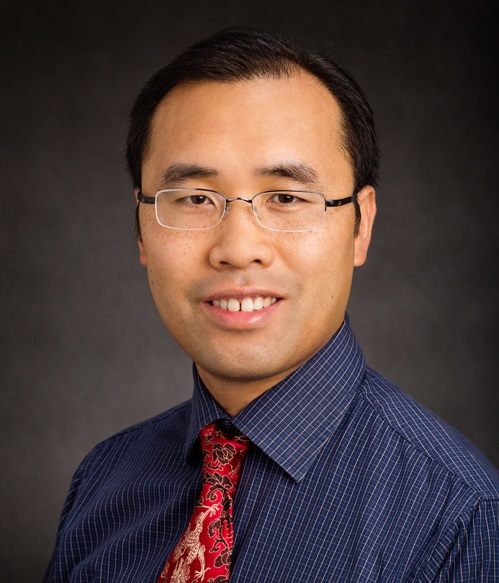
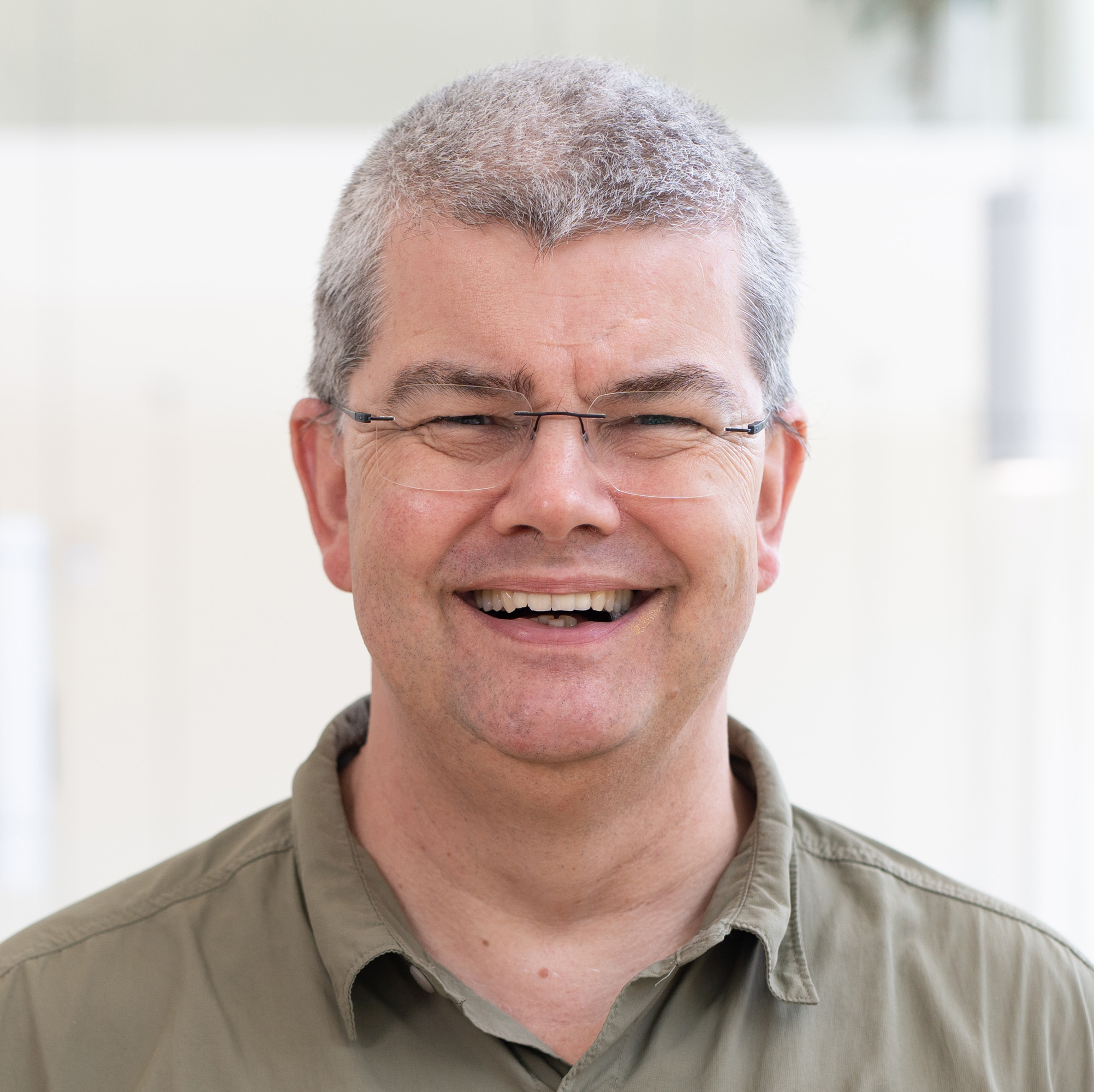
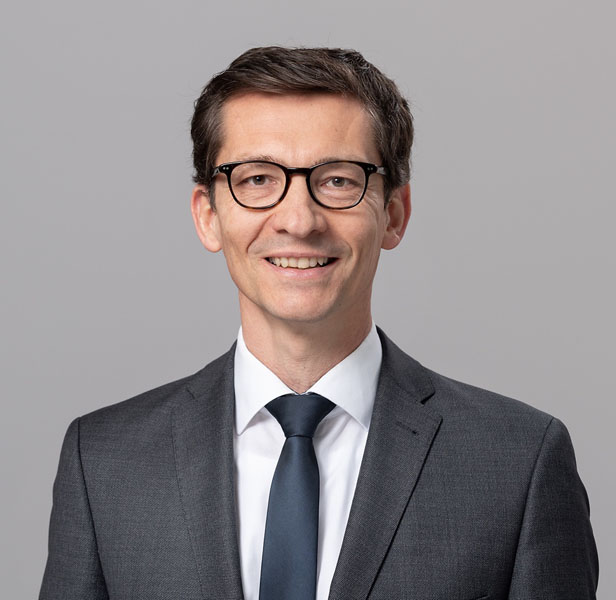
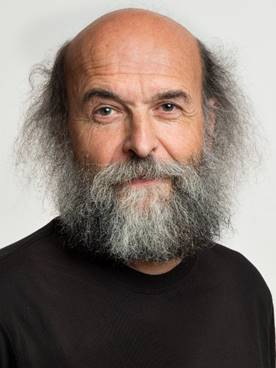
Univ.-Prof. Martin Pinzger is a Professor at the Department of Informatics Systems, Alpen-Adria-Universität Klagenfurt. He serves as Head of Department and Member of the Senate, actively contributing to academic governance. Research Focus: Automating Software Engineering Tasks, Mining Software Repositories, Program Analysis, Software Evolution and Visualization Recent Work: Developing tools for API evolution analysis, cybersecurity AI (CAI), robotics benchmarking (RobotPerf), and dependency validation His research combines empirical studies with tool development for software maintenance and security. Current projects address challenges in REST API breaking changes, cloud security certifications, and robotic system performance evaluation. Publications since 2023 demonstrate continued engagement with topics spanning AI-driven code segmentation, microservice API evolution, and cybersecurity tool development. Key trends include cross-disciplinary applications of NLP to software engineering and security-focused tool creation. Contact: martin.pinzger@aau.at
Andreas Rauber is an Associate Professor in the Department of Data Science at Technical University of Vienna. He serves as Curriculum Coordinator for Bachelor and Master programs in Business Informatics and Data Science, and chairs the Curriculum Commission for Business Informatics. His research focuses on Information Systems Engineering, Logic and Computation, and Visual Computing, addressing challenges in data management, digital preservation, and reproducibility in e-science. He leads projects like OS Trails and FAIR-AI, emphasizing FAIR principles and trustworthy research infrastructures. Rauber has contributed to over 150 publications, including works on data citation frameworks, adversarial ML defenses, and reproducibility in IR. His work bridges technical innovation with policy, exemplified through roles in the EOSC Support Office Austria and RDA Austria initiatives. Key projects include establishing FAIR data practices across universities and advancing digital preservation through repositories like DBRepo. He coordinates international collaborations, such as the EU-funded EOSC-Life and EGI Advanced Computing projects. His teaching spans courses in machine learning, information retrieval, and research methods, fostering next-generation data scientists.
Patric Genfer is a researcher in the Faculty of Computer Science specializing in Software Architecture with a focus on microservice systems. His work combines static code analysis , component modeling , and repository mining to address architectural challenges in distributed systems. Active in microservice architecture and code-model consistency Co-developed detector-based abstraction frameworks for architectural evolution Published in top venues like Empirical Software Engineering and ECSA Recent research includes security tactics in microservice APIs and metric visualization for software portfolios . He received two major awards: the Best Paper Award (2021) and Distinguished Open Artifact Award (2024). Collaborates with experts like Uwe Zdun, Cesare Pautasso, and Wilhelm Hasselbring. Scientific Awards: Best Paper Award (2021) Distinguished Open Artifact Award (2024) Participated in international conferences (ECSA 2024, WICSA 2021) and presented work on data exposure prevention and software quality metrics in microservice environments.
Tao Xie is a Chair Professor at the School of Computer Science, Peking University, and serves as Vice Director of the Key Lab of High Confidence Software Technologies under the Ministry of Education, China. Previously, he held tenured positions at the University of Illinois at Urbana-Champaign and North Carolina State University, advancing from Assistant to Full Professor. His research focuses on software analytics , software security , system software , trustworthy AI , and intelligent software engineering , aiming to enhance software quality and reliability. He has contributed to foundational work in software testing and mining software repositories. Notable honors include: ACM Fellow (2021) AAAS Fellow (2019) IEEE Fellow (2018) NSF CAREER Award (2009) Xie actively serves in academic leadership roles, including Program Co-Chair for ICSE 2021 and Vice Chair of the China Computer Federation Technical Committee on Software Engineering. He also contributes as Co-Editor-in-Chief for the Wiley Journal of Software Testing, Verification and Reliability.
University of Applied Sciences Upper AustriaAustria
Thomas Kern is a Senior Researcher at FH OÖ – University of Applied Sciences Upper Austria, affiliated with multiple research centers including the Linz Center of Excellence Medical Technology/TIMed Center, AIST Bioinformatics Center of Excellence, and NASAN (Nano Structuring and Bio-Analytics). His work focuses on digital transformation in healthcare, biomedical information retrieval, evolutionary algorithms, and software prototyping. Education: Diplom-Ingenieur (FH) in relevant technical and applied sciences disciplines. Thomas Kern's research spans interdisciplinary domains, including evolutionary computation , keyword clustering , protein-protein interaction analysis , and high-resolution medical imaging . His projects often integrate computational methods with clinical applications, particularly in diabetic foot simulation and digital nursing home evaluation. Recent publications highlight trends in multi-objective optimization and web-based biomedical databases . Scientific activities include organizing conferences like Softwarepark Hagenberg IT-Expert Series and participating in committees for digital health initiatives. Notable projects are TC-HiResFoot (diabetic foot imaging), TC-BIOsens (bioanalytics), and Digital Nursing Home (process evaluation). Key collaborations involve institutions such as TIMed Center and NASAN.
Andreas Zeller is a Full Professor of Computer Science at Saarland University and a faculty member at CISPA Helmholtz Center for Information Security in Germany. His research focuses on software engineering, automated debugging, and software testing/analysis, with foundational contributions like Delta Debugging and the SZZ algorithm. He has held academic positions since 2001 and leads projects funded by ERC grants, including the 'Semantics of Software Systems (S3)' initiative. Education: Ph.D. in Computer Science (1997, focused on software versioning). Research interests include mining software repositories, input grammar inference, fuzzing, and open science practices. He has authored influential papers (e.g., 'Mining Software Histories to Guide Software Changes' with over 1,700 citations) and interactive textbooks like The Fuzzing Book and The Debugging Book . Key awards include ACM Fellow (2010), ERC Advanced Grants (2011, 2023), and multiple 10-Year Most Influential Paper Awards. His group at CISPA/Saarland includes PhD students and postdocs working on testing, debugging, and security.
Johann Glock is a PhD candidate and university assistant (Univ.-Ass.) in the Software Engineering Research Group (SERG) at the University of Klagenfurt, Austria. His research is supervised by Prof. Martin Pinzger. He is affiliated with the Department of Informatics Systems and contributes to the Team ICS Eder. His work focuses on software engineering challenges, including developer understanding of code changes, microservice API evolution, and semantic analysis techniques. Education: Holds BSc and MSc degrees (exact institutions unspecified). Research interests span semantic differencing, API evolution strategies, software quality metrics, and developer productivity tools. His recent publications investigate symbolic execution-based methods for code comprehension and empirical studies on microservice architecture challenges. Publications emphasize practical software engineering solutions, with a focus on improving developer workflows and system maintainability. He has contributed to tools like PASDA for semantic code comparison and studies on design patterns' impact on software quality. No scientific awards are explicitly mentioned. Teaching involvement includes software practicum courses and project supervision. Active in the Interactive Systems Research Team (IAS) and contributes to ongoing projects in software engineering and HCI.
Harald Gall is the Dean of the Faculty of Business, Economics, and Informatics at the University of Zurich (UZH), Switzerland, and a Full Professor of Software Engineering in the Department of Informatics at UZH. His academic journey includes roles as Associate Professor at UZH and the Technical University of Vienna, and visiting positions at Microsoft Research and the University of Washington. Education: PhD (Dr. techn.) and MSc (Dipl.-Ing.) in Informatics from the Technical University of Vienna (1986–1994). Research focuses on software engineering, particularly software evolution analysis, mining software repositories, and cloud-based systems. Notable contributions include tools like Evolizer and ChangeDistiller, and foundational work in the Mining Software Repositories field. Awards : Multiple Test of Time Awards, Most Influential Paper Award, Microsoft SEIF Award, and recognition for doctoral research. Editorial roles include IEEE Software and the Journal on Empirical Software Engineering. Leadership in organizations like Informatics Europe and ACM SIGSOFT.
Christian Winkler is a Senior Lecturer at the Institute for Romance Studies and the Institute for Applied Informatics at the University of Klagenfurt (Alpen-Adria-Universität Klagenfurt). He has been actively involved in interdisciplinary research and teaching since 1994, bridging the fields of linguistics and computer science. His academic affiliations include the Faculty of Cultural Sciences (KUWI) and the Faculty of Technical Sciences (TEWI), where he contributes to programs in Romance studies, Anglistics, and computer linguistics. Education: Studied Romanistics, Anglistics, and Linguistics at the University of Klagenfurt. Languages: Fluent in English, Italian, French, Spanish, and Portuguese. Winkler's research is centered on the intersection of natural language and information systems. His primary interests include computational linguistics, natural language processing (NLP), requirements engineering, syntactic theory (especially infinitive constructions in European languages), and the application of linguistic principles to software engineering. He has made significant contributions to the development of linguistic tools for conceptual modeling and text analysis, particularly through the long-running NIBA (Natürlichsprachliche Informationsbedarfsanalyse) project. The 15 most recent publications reflect a strong trend in applying linguistic analysis to software and information systems. Key themes include natural language-based requirements engineering, text summarization, semantic tagging, ontology integration, and enterprise search optimization. These works are predominantly published in the ICSSEA and NLDB conference series, indicating a sustained focus on the practical application of linguistics in computing contexts. Subfields span AI-driven text evaluation, verb phrase similarity, collaborative knowledge repositories, and mobile instructional applications. Scientific Awards: No awards or fellowships are mentioned in the provided text. Christian Winkler has played a significant role in academic advising and research collaboration, particularly through his long-term involvement in major research projects. The NIBA project, ongoing since 1995 and funded by the Klaus Tschira Stiftung and the Austrian National Bank, represents a major collaborative effort in linguistically based requirements engineering. He has also contributed to numerous grants and initiatives in natural language processing and software engineering. While no formal advisees are listed, his co-authorship with students and researchers suggests mentoring and collaborative supervision. Labs and Research Teams: NIBA Project Team: Core member since 1995, focusing on natural language analysis for information systems. ICSSEA Conference Series: Regular participant and contributor, indicating integration into a broader European research network in software and systems engineering. Natural Language and Information Systems (NLIS) Community: Active in program committees, showing leadership in the academic community.
Peter Haber serves as a Senior Lecturer and Head of the Lab for Information Technologies and Digitalisation at Salzburg University of Applied Sciences (FH Salzburg), based at Campus Urstein in Room 429. His institutional role combines academic teaching with leadership in digital technology research, focusing on practical applications in education and business contexts. His research spans Data Science, Blockchain implementation for sharing economy systems, and innovative E-Learning methodologies including sensor-driven environments for natural science education. Key interests include Knowledge Management frameworks, virtual Project Management systems, and Collaborative Learning architectures that integrate tablet-whiteboard interactions and social platforms like Google+. His work consistently bridges technical implementation with pedagogical innovation, emphasizing problem-based learning through pupil-driven projects. Analysis of his publication timeline reveals a clear evolution from educational technology foundations (2010-2014) toward contemporary Data Science and Blockchain applications (2019-2023). Early work established virtual collaboration frameworks and project management certification systems, while recent publications demonstrate increasing specialization in blockchain-mediated sharing economies and advanced data analytics, maintaining consistent focus on practical educational implementations. No scientific awards were documented in the available sources. While specific grant details remain unlisted, his involvement in EU-funded initiatives like the POOL2Business project (Virtual Project Management Certification Training Program) indicates substantial experience with international collaborative research funding. His student advisement appears centered on project-integrated learning, particularly evident in sensor environment deployments for natural science education as described in his 2018 publication. As Lab Head for Information Technologies and Digitalisation, Haber leads research teams developing blockchain mediation systems, data science analytics frameworks, and smart education toolchains. Current lab activities integrate geoHealth monitoring concepts for disaster response with active learning environments, reflecting his dual focus on technical innovation and educational application.
Michael Schröder is a Researcher at TU Wien's Faculty of Informatics, affiliated with the Institute of Software Technology. He holds a BSc and a Dipl.-Ing. (Master's equivalent) in Informatics. His research focuses on software engineering, static analysis, and programming languages, with notable contributions to probabilistic program analysis, security, and empirical studies on developer workflows. Education : Bachelor of Science in Informatics Diplom-Ingenieur (Dipl.-Ing.) in Informatics from TU Wien Research Interests : His work spans static analysis of probabilistic programs, security in software repositories, grammar inference for ad hoc parsers, feature flag dependency analysis in large systems, and empirical studies on command-line tool customization. He has also contributed to medical research in pediatric oncology through a 2019 study on leukemia genetics. Recent Trends in Publications : Recent efforts emphasize language-agnostic static analysis frameworks (2024), lateral movement detection in source code (2023), and grammar inference techniques for parsers (2022). Earlier work includes neural ranking models (2020) and transactional memory systems (2015). Grants & Advising : No explicitly listed grants or student advisement, though recent theses supervised include static grammar inference projects (2025). Labs/Teams : Not explicitly mentioned in available records.
Moritz Staudinger is a PreDoc Researcher at the Data Science department of Technische Universität Wien . His research focuses on reproducibility in machine learning and information retrieval, with particular emphasis on query generation, data citation, and evolving database schemas. Current projects: FAIR-AI (2024–2026) , HumRec (2021–2025) , and DoSSIER (2019–2024) Collaborations: Works with Andreas Hanbury , Andreas Rauber, and others Research interests include large language models for scientific applications, temporal information retrieval, and FAIR data principles. His recent publications examine reproducibility challenges across machine learning, systematic literature reviews, and environmental data management. Supervisions : Mentors students working on topics like data sovereignty, multilingual fact-checking, and quality indicators for data management plans. Collaborates on the DBRepo semantic repository framework.
Magdalena Steinböck is a PreDoc Researcher at Vienna University of Technology (TU Wien), affiliated with the Security and Privacy research group (E192-06). She holds a Dipl.-Ing.in (Master's equivalent) and BSc in technical disciplines. Her research focuses on mobile ecosystem security , particularly cross-platform analysis of iOS and Android systems, including deep link security, local network permissions, and vulnerability mitigation strategies. Current research projects: IoTIO (2020–2025) , W4MP (2023–2027) Active contributor to software repository mining (MSR 2024 conference paper) Her technical work spans mobile application analysis frameworks, security hardening comparisons, and user-centric permission system evaluations. She has published on iOS/Android ecosystem differences and cross-platform app matching methodologies.