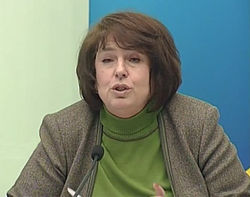
Monika Gabryś-Sławińska is a Professor at the Department of Polish Literary History , part of the Faculty of Languages, Literatures and Cultures at the University of Maria Curie-Skłodowska (UMCS). Her research spans 19th- and 20th-century Polish literature , focusing on Stefan Żeromski , historical journalism , text editing , voice emission , and museology . MA in Polish Philology (1998, UMCS) PhD in Literary Studies (2007, UMCS) Habilitation in Literary Studies (2016, UMCS) Her research interests include political commentary in historical press , media's role in cultural identity , and sociolinguistic trends . She has edited over 29 academic volumes and authored 5 monographs. Scientific awards: Bronze Cross of Merit KEN Medals (Bronze, Silver) 8 Rector's Awards (UMCS) Lublin Mayor's Medal (2019) She has participated in 5 research grants , organized 35 academic conferences , and contributed extensively to Annales UMCS as a scientific editor.
Pawel Kaczmarczyk is affiliated with the University of Warsaw's Migration Research Centre and Faculty of Economic Sciences. He also collaborates with the Institute for the Study of Labor (IZA) in Bonn, Germany. His research focuses on migration economics, labor markets, and public policy impacts of migration. Key areas include Ukrainian migration to Poland, gig economy work conditions, and socioeconomic consequences of refugee influxes. He has contributed to policy analyses on EU mobility frameworks and post-2014 conflict migration trends. Key affiliations: Migration Research Centre (University of Warsaw), Faculty of Economic Sciences (University of Warsaw), IZA Institute of Labor Economics Research emphasizes migration's fiscal impacts, labor market integration, and demographic shifts His work spans Eastern European migration dynamics, refugee integration challenges, and evaluation of migration policies in post-communist contexts. He has addressed contemporary crises such as the Ukraine-Russia conflict's migration repercussions through empirical analyses.
Rev. Dr. hab. Waldemar Żurek, Professor at the John Paul II Catholic University of Lublin, serves at the Center of Ecclesiastical Archives, Libraries and Museums (ABMK) within the Faculty of Theology. His academic career spans decades of dedicated research and publication in church history, particularly focusing on Eastern European Catholicism and the Salesian Order. As an active scholar, he continues to contribute significantly to ecclesiastical documentation and historical research. Professor Żurek's research interests center on ecclesiastical archives, parish documentation, and the history of religious orders, with particular emphasis on the Salesian Order's activities in Poland and Eastern Europe. His work explores the intersection of religious life with historical events, particularly during challenging periods like the communist era in Poland. He has developed expertise in analyzing parish inventories, visitation records, and chronicles to reconstruct religious life and administration across different historical periods. His extensive publication record demonstrates a consistent focus on documenting church history through meticulous examination of primary sources. The most recent works reveal trends toward comprehensive chronicles of religious institutions, detailed parish records analysis, and biographical studies of clergy members. His research spans multiple disciplines including religious studies, historical documentation, and Eastern European studies, with particular attention to regions like Pinsk, Lutsk, and Volhynia that have complex religious histories across changing political borders. Scientific Awards: Gold Medal for Long Service Professor Żurek has supervised numerous diploma theses including master's work on topics such as 'Social activities of Bishop Adolf Piotr Szelążek.' His editorial work includes significant publications like 'Kult Matki Bożej Ostrobramskiej w historii narodu polskiego' (The Cult of Our Lady of the Gate of Dawn in the History of the Polish Nation) and 'Ojciec Profesor Henryk Damian Wojtyska 1933-2009. Pasjonista, historyk Kościoła i dydaktyk' (Father Professor Henryk Damian Wojtyska 1933-2009. Passionist, Church Historian and Educator). He serves on the Scientific Council of the biannual journal 'Archives, Libraries and Church Museums' and is a member of the Theological Society of Józef Bilczewski in Ukraine. His work with the Center of Ecclesiastical Archives, Libraries and Museums represents a significant contribution to preserving and analyzing religious heritage. Through his leadership and scholarship, Professor Żurek has helped establish important methodologies for working with ecclesiastical documentation and has fostered international collaboration in church historical studies, particularly between Polish and Ukrainian scholars.
Prof. Jerzy Bański is a retired Professor and former Head of the Department of Rural Geography and Local Development at the University of Warsaw's Faculty of Geography and Regional Studies. His academic career spans over three decades with a PhD (1996) and post-doctoral degree (2000) in Earth Sciences, specializing in economic and rural geography. He has led 48 research projects and supervised 5 PhD and 43 MSc students at Maria Curie-Skłodowska University in Lublin. His research focuses on land use dynamics, rural development, spatial planning, and socioeconomic processes in Central and Eastern Europe. Notable contributions include analyzing post-socialist agricultural transformations, village decline, and pandemic spatial impacts. He authored 421 publications, including 151 in English, and received the Jan Olaf Chmielewski Science Award (2001) and Honorary Membership in the Bulgarian Scientific Society. Key projects include classifying rural areas for territorial policy, assessing pandemic geography, and evaluating agricultural land ownership changes. His work frequently intersects with policy design, institutional analysis, and interdisciplinary collaboration in academia. Awards: Jan Olaf Chmielewski Science Award (2001), Honorary Membership (Bulgarian Scientific Society) Grants: 48 projects led, including EU and national funding Education: MA (University of Warsaw), postgraduate studies in scientific photography
Dr. Sabina Owsianowska is a Lecturer at the Faculty of Tourism and Recreation , University School of Physical Education in Cracow , Poland. She has been actively involved in teaching Polish and international students since 2006, particularly through the LLP-Erasmus program. MA in Tourism Studies (University School of Physical Education in Cracow, 2001) PhD in Humanities (University School of Physical Education in Cracow, 2005) Her research focuses on tourism anthropology , examining tourism as a cultural and social phenomenon , with special interest in: Socio-cultural dimensions of leisure Gender issues in tourism Media influence on tourism Semiotics of tourist experiences Cultural and heritage tourism Her academic contributions include: Co-editor of Anthropology of Tourism in Central and Eastern Europe (Rowman & Littlefield, 2018) Editorial board member of Folia Turistica journal since 2014 Co-editor of multiple thematic issues in tourism anthropology Dr. Owsianowska has: Published 9 book chapters Contributed to refereed journals and conference proceedings Authored critical reviews of contemporary tourism research Key collaborative projects include work with: Dr. Marek Banaszkiewicz Prof. Nelson Graburn Prof. Maria Della Lucia Dr. Elena Giudici
Grzegorz Berendt is an Associate Professor at the University of Gdańsk, where he is affiliated with the Faculty of History and the Institute of History. His research focuses on Eastern European history, particularly the experiences of Jewish communities in Poland during the 20th century. Key aspects of his work include Polish-Jewish relations during the Holocaust, the extermination of Jews in Polesie, and the policies of the Polish People's Republic toward Jewish populations. Berendt's scholarly output examines themes such as Jewish cultural associations under communist rule, regional histories (e.g., Gdańsk Pomerania), and post-WWII societal transformations. His publications analyze political regimes, diaspora dynamics, and identity preservation, reflecting a consistent emphasis on: Socio-political impacts of totalitarian regimes Jewish organizational resilience State-minority relations in Eastern Europe
Konrad Czernichowski is an Assistant Professor at the Department of World Economy and European Integration, Faculty of Economics, Maria Curie-Skłodowska University in Lublin, Poland. He also serves as a Visiting Professor at the Department of Economics, Mathematics and Statistics, Faculty of Commerce, Jordan University College in Morogoro, Tanzania. His academic career includes positions at the University of Wrocław and extensive research on African economic development. Dr. Czernichowski's research focuses on African economic development , particularly in East Africa and Tanzania. His expertise spans economic integration, banking systems, labor markets, and development challenges in Sub-Saharan Africa. He has conducted extensive research on the East African Community's integration processes, the impact of global crises on African economies, and regional monetary cooperation. His 18 publications demonstrate consistent research output with a focus on practical economic challenges facing African nations. The research shows a clear trajectory from theoretical integration models toward applied policy analysis, particularly regarding the East African Community's development. His work bridges academic research with practical policy implications for developing economies. Member of editorial board, Journal of Economic Integration (2024-2025) Member of board, Polish African Studies Society (since 2021) Member of editorial board, Afryka journal (since 2021) Member of editorial board, Business Education Journal (since 2022) Dr. Czernichowski actively engages with international academic communities through his editorial roles and maintains research connections with African institutions. His work with the 'Maitri' movement center in Lublin (2014-2021) demonstrates practical engagement with development issues. His multilingual abilities (Polish, English, French, German, and Swahili) facilitate direct research engagement across multiple African contexts.
Prof. Dr. hab. Marzena Górecka is a Full Professor at the Department of German-Language Literature and Culture , Faculty of Humanities , John Paul II Catholic University of Lublin . Her academic career includes habilitation (2006), Erasmus teaching assignments at the University of Freiburg (Switzerland), and leadership of the INTERREG III C project Language Bridges (2004-2006). Education: University of Lublin (Humanities), University of Zurich (Germanic Philology), University of Perugia (Italian Studies) Degree: Licentiata Philosophiae (1995), Doctorate in German Medieval Literature (1999) Research Focus: German medieval mysticism (Mechthild von Magdeburg, Hildegard von Bingen), Swiss German-language literature of the 20th century (Meinrad Inglin, Albin Zollinger), and literary translation theory with emphasis on Joseph Ratzinger/Benedict XVI's Opera Omnia . She explores mystical anthropology, cultural boundaries, and the interplay between theology and literature. Recent Trends: Analysis of postmodern literary spirituality, translation challenges of theological texts, and cultural memory in European border regions. Her 2023 publications examine educational crises through religious pedagogy and contemporary social critique in Swiss literature. Key Awards: Feniks National Literary Award (2014, 2013), Ministerial Individual Scholarship (MEiN), Landes&Gyr Foundation Research Stipend (Switzerland) Academic Service: Active in international research (SNSF Berlin evaluation), editorial leadership for Opera Omnia Ratzinger , and conference organization on European values and migration. She serves on the Polish Ministerial Expert Panel for academic promotions.
Prof. Ewa Szostak holds a professorial position at Wrocław University of Economics (UEW), serving as BIPS Program Coordinator. Her work focuses on EU policy analysis, regional development dynamics, innovation economics, and sustainable urban planning. Key research interests include Poland's EU integration trajectory, post-1989 educational reforms, energy transition strategies, and socio-economic challenges posed by aging populations. Her publications span topics such as territorial cohesion, smart specialization strategies, and the impact of migration on transportation networks. Notable works include analyses of Lower Silesia's regional infrastructure, smart city development challenges in Poland, and the decarbonization of inland navigation systems. Methodologically, her research combines policy evaluation with case studies examining institutional effectiveness and spatial planning. Laboratory/Team Affiliations: While specific lab names aren't listed, her role as a professor at UEW implies involvement in the university's economic policy research units. Her work frequently engages with EU-funded regional development projects and policy implementation frameworks.
Ella Marlenivna Libanova is a Ukrainian socio-economist and demographer, serving as Professor at the Department of Statistics and Demography of the Economic Faculty of Taras Shevchenko National University of Kyiv. She is also Director of the M. V. Ptukha Institute of Demography and Social Research of the National Academy of Sciences of Ukraine and Academician-Secretary of the Department of Economics of the National Academy of Sciences of Ukraine. As the first woman in the history of the NASU to be a member of its Presidium, she has made significant contributions to Ukrainian demography and labor economics. Her educational background includes: Graduated from the D. S. Korotchenko Kyiv Institute of National Economy (1971) PhD in Statistics (1977) Doctor of Economics (1992) Doctor of Economics (2021, on Poverty of the Population of Ukraine) Professor Libanova is a leading expert in labor economics and demography, with research focusing on population poverty, human development, demographic crisis in Ukraine, labor market transformations, and socio-economic assessment of life expectancy. Her work has been instrumental in developing methodologies for measuring human development at the regional level, which has been adopted as official methodology by the State Statistics Service of Ukraine for annual calculations. Her research output shows a consistent focus on demographic challenges facing Ukraine, with particular attention to mortality rates, birth rates, and the impact of socio-economic transformations on population dynamics. She has also made significant contributions to understanding poverty, social stratification, and the formation of the middle class in Ukraine. Her scientific awards include: Honored Economist of Ukraine (2002) Order of Princess Olga I, II, and III degrees Honorary Certificate of the Cabinet of Ministers of Ukraine (2003) Award of the National Academy of Sciences of Ukraine named after M.I. Tugan-Baranovsky (2011) All-Ukrainian Award Woman of the III Millennium (2012) Professor Libanova has supervised 2 doctoral students and 14 PhD students in economics. She has been involved in numerous research grants, particularly those related to demographic studies, human development, and socio-economic transformations in Ukraine. She has served as scientific consultant to President Leonid Kuchma (2000-2005) and is currently a member of the Council on Economic Development of Ukraine, a temporary consultative-advisory body of the Cabinet of Ministers of Ukraine since April 2020. She leads the M. V. Ptukha Institute of Demography and Social Research, which conducts comprehensive demographic research on Ukraine's population. She is also actively involved in international collaborations, serving as an expert for the European Commission and World Economic Forum since 2012, and is a member of several international organizations including the International Union for the Scientific Study of Population (IUSSP).
Dr hab. Wojciech Janicki is a full Professor at the Institute of Social and Economic Geography and Spatial Management within the Faculty of Earth Sciences and Spatial Management at Maria Curie-Skłodowska University (UMCS) in Lublin, Poland. He serves as Director of the Institute and Head of the Department of Social and Economic Geography. Current affiliations: Governmental Council on Population (since 2024), Polish Academy of Sciences Committee on Demographic Sciences (since 2019), Polish Geopolitical Society Scientific Council (since 2024) Editorial role: Global Population Perspectives (since 2025) Research interests focus on political geography, demography, and regional development , with particular emphasis on migration studies, national/ethnic minorities, international border conflicts, and global population challenges. His work addresses demographic policy formation, migration management, and the socioeconomic impacts of population shifts in Eastern and Central-Eastern Europe. Recent publications demonstrate interdisciplinary engagement with migration policy implementation (2025), adaptive geofencing technology for transport security (2024), and demographic anxiety analysis through edited volumes (2024). Article trends show consistent focus on EU integration challenges, borderland development, and population policy contradictions. Scientific recognition includes: Governmental Council on Population membership Polish Academy of Sciences demography committee Editorial board of international journal Strategic advisory roles Advising involves directing research on migration legality frameworks, coal region transitions, and spatial management projects. Grants likely relate to EU cohesion policy and cross-border development initiatives given his publication patterns.
Marek Ilnicki is a Lecturer at the University of Gdańsk , affiliated with the Faculty of Social Sciences and specifically the Department of Strategic and Security Studies . His academic focus lies at the intersection of political science, security studies, and maritime law. Fields of Interest : Political Science, Security Studies, Maritime Law, Counterterrorism, International Relations, and Crisis Management. Research Trends in his publications emphasize legal frameworks for state security, maritime governance, terrorism prevention, and international cooperation. His work often addresses Poland's strategic challenges in maritime environments and border security. Contact Information : Email: marca.ilnicki@ug.edu.pl Phone: +48 58 523 41 81
Zbigniew Landowski is an Adjunct Professor at the University of Gdańsk within the Faculty of History , specifically the Division of Methodology of History, History of Historiography and Archival Science . His research focuses on the intersection of Islamic political thought with constitutional practices in the 19th and 20th centuries, the ideology and history of Hizb ut-Tahrir, and the integration of Islam into multicultural societies such as the Balkans, Southeast Asia, and China. Email: zbigniew.landowski@ug.edu.pl Research Interests include: History of Islamic Political Thought Constitutional Integration of Islam Hizb ut-Tahrir Ideology Islam in Multicultural Contexts Historiography of the Balkans, Southeast Asia, and China Recent Publications highlight his exploration of: Medieval Islamic bestiaries and cultural symbolism Polish Orientalist networks in interwar Vilnius and Gdańsk Historical epidemiology of cholera in Tsarist Russia Identity dynamics in Arab literature State-Islam relations in post-Soviet Kazakhstan Sociopolitical transformations in Ottoman-era women's daily life
Dr. Dariusz Wybranowski is a Professor at the University of Szczecin's Institute of Political and Security Studies, where he maintains an office in room 204 and can be reached at phone number 91 444 3273. His academic work focuses on political science and security studies, with particular expertise in contemporary political conflicts, Islamic fundamentalism, and the geopolitics of the Western Balkans. His research interests include: Political conflicts of the 20th and 21st centuries The Islamic world and Muslim fundamentalism Issues of the Western Balkan countries Political ideas and doctrines Professor Wybranowski teaches a range of courses related to his research expertise, including Islamic fundamentalism, Islam and Muslims in Europe, history, police history, political thought, and the history of diplomacy in the 19th and 20th centuries. His scholarly work demonstrates a consistent focus on understanding the interplay between religious ideologies, political conflicts, and security challenges in contemporary international relations. His recent publications reveal a growing emphasis on migration issues, European security challenges, and the evolving nature of Islamic radicalism. Professor Wybranowski has also maintained a longstanding interest in military history, particularly regarding World War II aviation tactics and the political ideologies of fighter pilots. His scholarly contributions span both contemporary political analysis and historical research, with publications covering: The political dynamics of the Western Balkans Islamic fundamentalism and its global manifestations Migration politics in Europe Military history, particularly World War II Political ideologies and their historical development Professor Wybranowski has been actively publishing since the early 2000s, with numerous articles in academic journals and contributions to edited volumes. His work demonstrates a commitment to understanding the complex interplay between historical context, political ideology, and contemporary security challenges.
Piotr Korduba is a Professor at Adam Mickiewicz University in Poznań, serving as Director of the Institute of Art History since 2016 and Head of the Department of the History of Modern Art. His academic leadership includes prior service as Deputy Director of the Institute (2009-2012) and extensive involvement in national cultural institutions. Education: Art History studies at Adam Mickiewicz University (1995-2000) PhD (2004) with dissertation 'The Patrician House of Gdańsk in the Modern Period' Habilitation (2014) based on 'Folk Art for Sale. Society for the Promotion of Folk Industry, Cepelia, Institute of Industrial Design' Professor Korduba's research centers on the history of residential architecture and design, with deep expertise in residential culture, artistic crafts, and German-Polish art-historical relations. His work examines how architectural spaces reflect societal structures across historical periods, particularly focusing on Polish urban environments and cross-border cultural exchanges. He investigates the social dimensions of living spaces from the early modern era to the People's Republic of Poland, emphasizing how design choices manifest cultural identity and political contexts. His publication trajectory (2005-2020) reveals consistent specialization in Polish architectural history, with increasing focus on German-Polish relations and post-war reconstruction. Key thematic clusters include residential architecture in Poznań and Gdańsk, interwar design consultancy, folk art commercialization, and the cultural significance of private spaces. Recent works demonstrate interdisciplinary approaches bridging architecture, social history, and migration studies. Scientific Awards: Józef Łukaszewicz Award, Poznań Rector’s Award of Adam Mickiewicz University National Cooperative Council Award, Warsaw Professor Korduba actively contributes to academic governance and research funding. His project leadership includes the binational 'In the Shadow of Berlin and Warsaw' architectural study (with Universität Hamburg) and the 'Ernst Stewner' photography project (with Herder-Institut Marburg). He has secured prestigious fellowships from Herzog-August Bibliothek, Foundation for Polish Science, DAAD, Lanckoroński Foundation, and Goethe-Institut. Editorial roles include Editor-in-Chief of 'Artium Quaestiones' and service on multiple scientific councils. As Director of the Institute of Art History, he oversees research teams focused on modern art history, architectural heritage, and museum studies. His leadership extends to cultural policy through memberships in the Lehndorff-Gesellschaft Steinort (palace reconstruction in Masuria) and collaborations with Poznań City Hall, Zamek Culture Centre, and national institutions like the Fryderyk Chopin Institute.