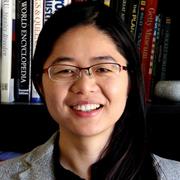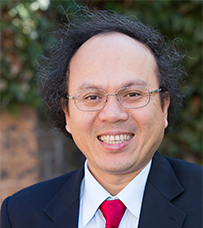
Nam HoangView profile
Associate Professor
Associate Professor Nam Hoang is affiliated with the University of New England (UNE) Business School, part of the Faculty of Science, Agriculture, Business and Law. He holds a PhD in Economics from the University of Colorado at Boulder and has taught at institutions like Purdue University and the University of Economics in Vietnam. His research focuses on econometrics, time-series analysis, panel data modeling, and macroeconomics, with a particular emphasis on applied economics and development issues. He has supervised HDR students in areas such as applied econometrics and development economics. Education : PhD in Economics, University of Colorado at Boulder, USA (2007) MA in Economics, University of Colorado at Boulder, USA (2004) MA in Economics, University of Economics, Ho Chi Minh City, Vietnam (2001) BA in Economics, University of Economics, Ho Chi Minh City, Vietnam (1994) Research Interests : Professor Hoang explores topics such as applied econometrics, macroeconomic issues, international finance, and the impact of globalization on economic growth. His work often addresses policy implications for developing economies, including Vietnam and Australia. Recent studies investigate the middle-income trap, the role of innovation, and sustainable development in agriculture. Professional Roles : Associate Professor, UNE Business School (2019–present) Economic Discipline Leader, UNE Business School (2020–2022) Senior Lecturer, UNE Business School (2015–2019) Lecturer, UNE Business School (2009–2015) Advocacy and Grants : His research has been supported by projects such as the assessment of goat production systems in Laos and Vietnam. He has also contributed to policy discussions on issues like household debt in Australia and the dynamics of population aging on housing markets. Labs/Teams : Professor Hoang collaborates with interdisciplinary teams on projects involving agricultural economics, development policy, and econometric modeling. His work often intersects with institutions like the World Bank and international universities.