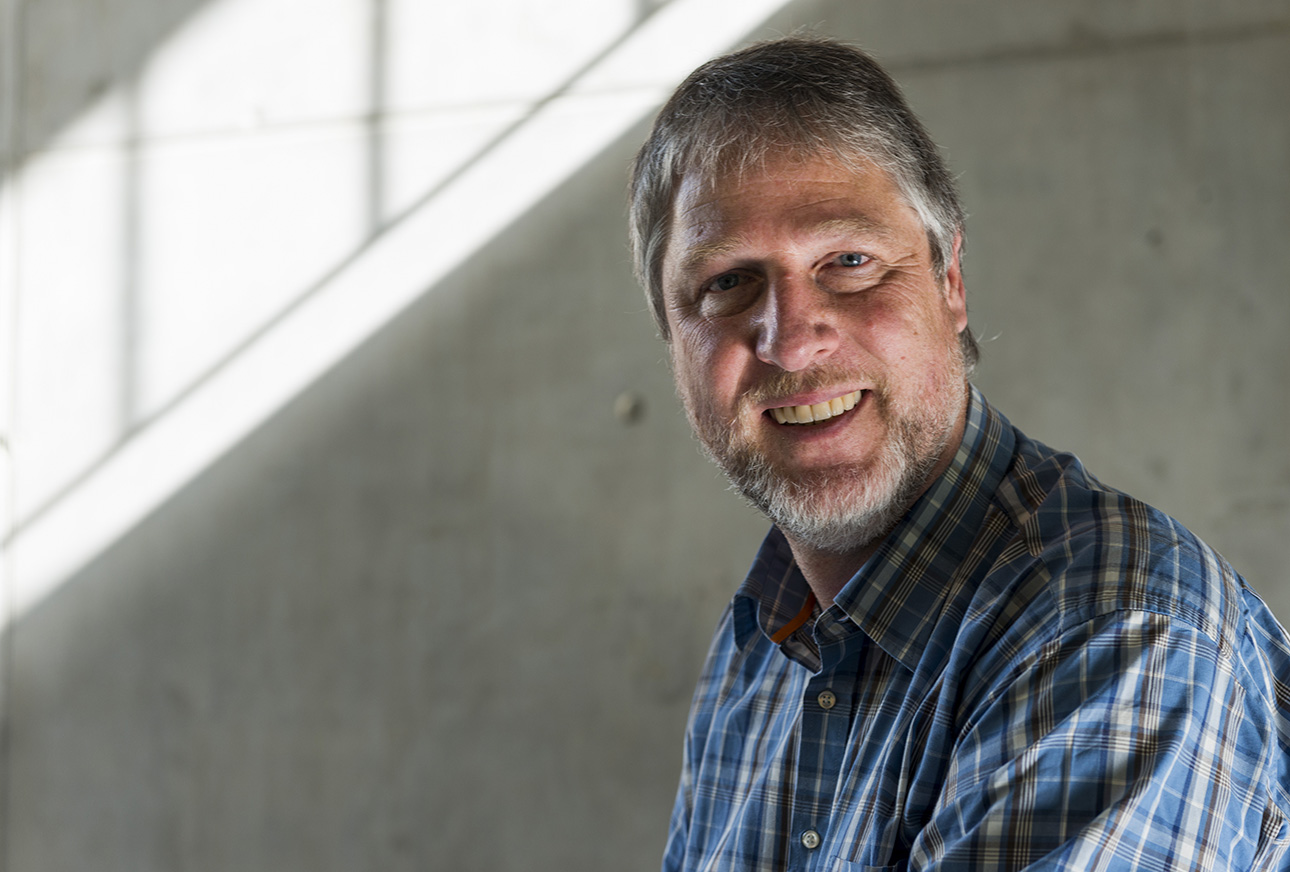
Professor Bernd Möbius is a leading academic in Phonetics and Phonology at the Department of Language Science and Technology, Saarland University. His research bridges phonetic theory with speech technology applications, focusing on text-to-speech systems, prosody modeling, and computational simulations of speech processes. Current research projects: DFG SFB 1102, C1: Information density and phonetic structure predictability DFG SFB 1102, C4: Slavic intercomprehension and surprisal theory (INCOMSLAV) Research Themes: Key areas include text-to-speech synthesis, speech prosody analysis, experimental methods in speech production/perception, information density in phonetics, and cross-linguistic studies of Slavic-Germanic languages. Scientific Contributions: Recent work explores Parkinson-induced dysarthria detection, breath noise acoustics, surprisal-driven speech behaviors, multilingual BERT models for idiomaticity, and perceptual consequences of acoustic adjustments.
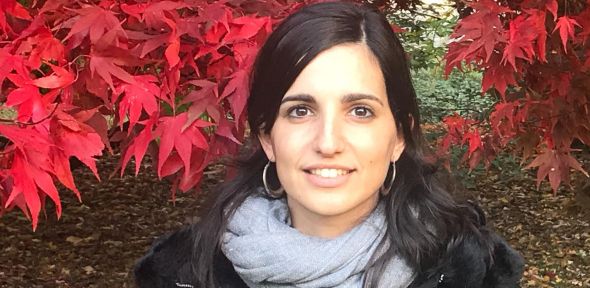
Dr Ares Llop Naya serves as an Affiliated Catalan Lecturer in the Department of Spanish and Portuguese within the Faculty of Modern and Medieval Languages and Linguistics at the University of Cambridge, while holding the Batista i Roca Fellowship at Fitzwilliam College. Her academic profile bridges theoretical linguistics with practical language pedagogy, focusing on Romance language structures and their educational applications. Her research centers on microsyntactic variation in Romance languages, particularly examining negation systems and syntactic phenomena in Catalan and Pyrenean varieties through both diachronic and synchronic lenses. She actively integrates theoretical insights into language teaching methodology, specializing in Catalan and Spanish pedagogy for both native and foreign language contexts. This dual focus manifests in her publications spanning syntactic theory, dialectology, and innovative language teaching approaches that address contemporary classroom challenges. Analysis of her publication trajectory reveals consistent thematic concentration on Romance microvariation, with recent work expanding into pedagogical applications. Her scholarship demonstrates methodological diversity—combining linguistic atlas data, corpus analysis, and classroom research—while maintaining core focus on Catalan syntax and its implications for language acquisition theory. The Pyrenean linguistic corridor remains a persistent geographical anchor across her diachronic and synchronic investigations. Dr Llop Naya's scholarly contributions have been recognized through prestigious awards: Joan Solà International Prize in Catalan Philology for her monograph on Romance negation systems Her teaching portfolio encompasses advanced courses in Romance linguistics, historical syntax, and sociolinguistics, with particular emphasis on translating theoretical frameworks into practical classroom resources. While specific grant funding details aren't publicly documented, her work consistently addresses real-world language education challenges through collaborative projects like the Microvariació.cat initiative. She contributes to the Microvariació.cat project—a digital repository documenting syntactic variation across Catalan dialects—which serves as both research infrastructure and pedagogical resource. This initiative exemplifies her commitment to creating practical applications from theoretical linguistic research while preserving endangered dialectal features of the Romance continuum.
Professor Tania Avgustinova is a Professor of Slavic and Computational Linguistics in the Department of Language Science and Technology at Saarland University. She serves as Principle Investigator for SFB 1102 - Project C4 (INCOMSLAV) and is Head of the Slavic Lab. Her academic career spans several decades with significant contributions to Slavic linguistics, computational approaches to language, and cross-linguistic studies. Her academic qualifications include: Habilitation venia legendi in General Linguistics (2003) PhD in Slavic and Computational Linguistics (1997) Diploma in Slavistics (1987) Professor Avgustinova's research focuses on the intersection of Slavic linguistics and computational methods. She specializes in microsyntax, intercomprehension among Slavic languages, language contact phenomena, and the processing of non-compositional expressions. Her work examines how speakers of one Slavic language can understand related languages without formal instruction, with particular attention to cognitive and linguistic factors. She has developed computational models to analyze linguistic distances and asymmetries between Slavic languages, contributing significantly to understanding receptive multilingualism. Her recent publications reveal a strong focus on experimental approaches to studying cross-linguistic comprehension using web-based platforms, eye-tracking, and speech processing techniques. There's a clear trend toward investigating microsyntactic units and non-compositional expressions across Slavic languages, with applications in language technology and education. Her work bridges theoretical linguistics with practical applications in natural language processing and language learning. Principle Investigator of SFB 1102 Project C4 (INCOMSLAV) Head of Slavic Lab at Saarland University Contributor to Russian National Corpus project Developer of INCOMSLAV platform for measuring linguistic distances As Principle Investigator of SFB 1102 Project C4 (INCOMSLAV), Professor Avgustinova leads research on mutual intelligibility and surprisal in Slavic intercomprehension. She has been instrumental in developing the INCOMSLAV platform for measuring linguistic distances and asymmetries in receptive multilingualism. Her leadership extends to international collaborations, including contributions to the Russian National Corpus project where she provides expertise on grammatical phenomena at the borderline between lexicon and syntax. Professor Avgustinova heads the Slavic Lab at Saarland University, which focuses on applied, experimental, and computational linguistics. The lab conducts research on Russian corpus grammar, word embedding models, sense frequencies, and microsyntax. Her work has established important connections between theoretical linguistics and practical language technology applications, particularly in the Slavic language context.
Richard S. Kayne is a Silver Professor and Professor of Linguistics at New York University's Department of Linguistics, part of the College of Arts & Science. His research focuses on theoretical syntax, comparative syntax, and Romance languages (French/Italian). He has held editorial roles for Oxford Studies in Comparative Syntax since 1989 and chaired the AAAS Linguistics Section (1994–1995). He has been honored with three honorary doctorates from Leiden (1995), Bucharest (2011), and Venice (2015). His work examines syntactic structures through micro-comparative approaches, exploring phenomena like expletive constructions, clitic doubling, and suppletion patterns. Notable contributions include the Antisymmetry of Syntax theory and analyses of hyper-complex inversion in French. Recent publications (2020–2024) address silent elements in syntax, polarity items, and morphological-phonological interfaces. His research integrates formal syntax with empirical data from Romance languages, emphasizing parameter theory and cross-linguistic generalizations. Grants and advising roles are not explicitly detailed in the provided materials, though his extensive publications suggest impactful mentorship in syntax. He is affiliated with NYU's Linguistics Department and contributes to the broader linguistic community through editorial work and international collaborations.
Anne Dagnac is an Associate Professor of French and Romance Linguistics at the University of Toulouse - Jean Jaurès, where she is a member of the CLLE (Cognition, Languages, Language, Ergonomie) research laboratory. Since 2020, she has co-directed the "Langues et Langage" research team within CLLE, one of the three main research teams of the laboratory. Dr. Dagnac specializes in syntax, with particular expertise in French syntax, Picard syntax, and syntactic microvariation. Her research focuses on areas such as elliptical constructions in French, the complementizer domain in Romance languages, and negation in Picard. She has made significant contributions to understanding regional variations in French syntax, particularly in Southern French and Picard dialects. As principal investigator of the ANR-funded SyMiLa project (Syntactic Microvariation in the Romance Languages of France), Dr. Dagnac has developed important resources for studying Gallo-Romance syntax, including the SyMiLa database. Her work bridges theoretical linguistics with empirical dialectology, creating innovative approaches to studying syntactic variation across Romance languages spoken in France. Dr. Dagnac's recent publications demonstrate a clear focus on syntactic microvariation across Gallo-Romance languages, with particular attention to complementizer systems, object marking, and pronoun usage. Her work combines theoretical syntax with experimental and corpus-based methodologies, contributing to our understanding of how syntax varies across regional varieties of French and related Romance languages. From 2014 to 2017, Dr. Dagnac served as head of the Department of Modern Literature, Cinema and Occitan at the University of Toulouse - Jean Jaurès. She was also co-responsible for the "Variation and Structure of Languages" research axis at CLLE from 2015 to 2018. Her leadership in the SyMiLa project has established her as a key figure in the study of Romance syntactic variation. Dr. Dagnac co-directs the "Langues et Langage" research team at CLLE, which focuses on linguistic structures, variation, and usage across Romance languages. The team conducts research on formal description of languages, linguistic resources development, and language teaching methodologies, with particular emphasis on regional languages of France including Occitan and Picard.
Dietrich Klakow is a prominent researcher at Saarland University in Saarbrücken, Germany, with an extensive publication record spanning from 1997 to 2025. His work primarily focuses on natural language processing, speech recognition, and machine learning with significant contributions to multilingual models and African language processing. His research interests span a wide range of topics within computational linguistics and artificial intelligence. Klakow has made substantial contributions to Natural Language Processing , particularly in multilingual contexts and low-resource languages. His work on African language technologies has been particularly impactful, developing resources and models for languages that are often neglected in mainstream NLP research. He has also conducted significant research in speech recognition , transformer models , and computational linguistics , with a focus on practical applications and theoretical foundations. Klakow's recent publications demonstrate a strong focus on large language models, their capabilities, limitations, and applications across diverse linguistic contexts. His work spans both theoretical investigations of model architectures and practical applications addressing real-world challenges in language technology. His collaborative work spans numerous international partnerships, particularly with researchers working on African language technologies and multilingual NLP systems.