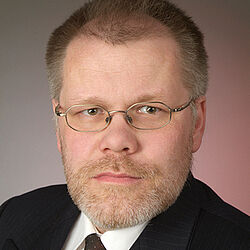
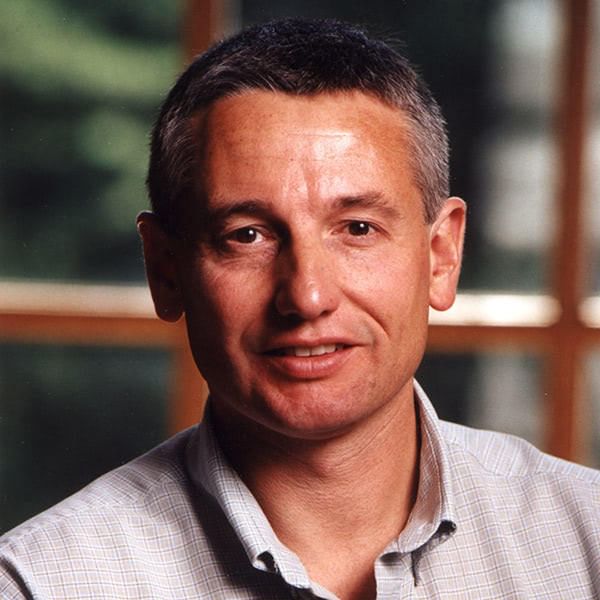
Prof. Jens Altenburg holds the position of Professor of Microprocessor Technology and Embedded Systems at Bingen University of Applied Sciences. His work focuses on robotics, embedded systems, and control engineering. He is affiliated with Department 2, where he contributes to study programs in Computer Science, Electrical Engineering, and related fields. His research interests span robotics, UAVs, and microprocessor-driven automation. Notable publications include works on flight control systems (AONE test bench), image processing for robots, and solar-powered robotics (SOPHOCLES). He has authored technical books on microcontroller programming and mobile robotics, emphasizing practical experimentation and AI integration. While no specific awards are mentioned in the text, his contributions to educational materials and experimental systems highlight his impact in engineering education and applied research.
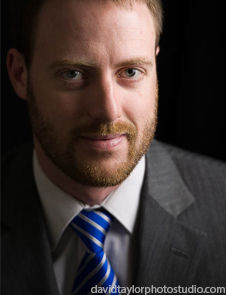
Associate Professor Patrick Dumond holds a Ph.D., M.A.Sc., and B.A.Sc. from the University of Ottawa. He is affiliated with the Department of Mechanical Engineering, Faculty of Engineering. His research focuses on vibration/acoustic system design, inverse eigenvalue methods, biomechanical design, design theory, musical acoustics, and experiential engineering education. He actively contributes to the Centre for Entrepreneurship and Engineering Design (CEED) and advises students in engineering competitions. His work bridges mechanical engineering with biomedical and educational applications, emphasizing practical, hands-on learning. Education: All degrees earned at the University of Ottawa—Ph.D. (2015), M.A.Sc. (uOttawa), B.A.Sc. (uOttawa). Research interests include vibration systems, biomedical prosthetics (e.g., hip joint prostheses), and machine learning for fault diagnosis. He has published extensively on topics like bearing fault detection, data fusion, and educational program design. Professional Involvement: CEED co-development, advising student teams, and advancing multidisciplinary engineering education. Labs/Teams: Core contributor to the Centre for Entrepreneurship and Engineering Design (CEED).
Richard B. Brown is the Dean of the College of Engineering at the University of Utah, a position he has held since 2004. Under his leadership, the College has experienced remarkable growth, with research expenditures increasing from $30 million to $97 million annually and student enrollment more than doubling to over 6,000 students. Brown is also a distinguished professor whose research has significantly advanced miniature technology and sensor development. Dr. Brown earned his bachelor's and master's degrees in electrical engineering from Brigham Young University in 1976, followed by a Ph.D. in electrical engineering from the University of Utah in 1985. After 19 years as a faculty member at the University of Michigan, he returned to Utah as Dean of Engineering. His academic journey reflects a deep commitment to both research excellence and educational innovation. Dr. Brown's research focuses on miniature technology, particularly solid-state chemical sensors and integrated circuits. His pioneering work includes developing miniature ion-selective electrodes, enzymatically- and immunologically-coupled sensors for complex biological molecules, and amperometric sensors for heavy metals and neurochemicals. His research group was first to incorporate both electrical and chemical sensors on silicon brain probes and first to differentiate spoken words from microelectrode arrays on human brains. His work spans high-speed microprocessors to low-power, implantable electronics, with significant commercial applications through multiple startups. Dr. Brown has authored 225 peer-reviewed publications, including one cited over 3,400 times, and holds 21 patents. His research has led to four successful companies: i-SENS (glucose sensors), Sensicore (chemical sensors), Mobius Microsystems (silicon clock generators), and e-SENS (water chemistry sensors). Industry applications include 1.7 million glucometers and 1.4 billion test strips sold annually. Life Fellow of the IEEE Fellow of the National Academy of Inventors Utah Governor's Medal for Excellence in Science and Technology University of Utah's Rosenblatt Prize (2018) Inaugural holder of the H.E. Thomas Presidential Endowed Dean's Chair (2020) As an educator, Dr. Brown has mentored 31 PhD students who have become leaders in their fields. His innovative integrated circuit design curriculum has transformed how this subject is taught worldwide. Under his leadership, diversity in the College has significantly increased, with women students growing from 10% to 20% and Students of Color from 20% to 34% of the student body, with retention rates for these groups exceeding those of their counterparts. His work with industry through departmental advisory boards has led to programs addressing workforce needs, including the Master of Software Development and systems engineering certificate. Dr. Brown has established strong industry connections through industrial advisory boards at both departmental and college levels. This engagement has resulted in programs tailored to industry needs, including a robust electrical power program, the Master of Software Development for career changers, and a systems engineering certificate developed in response to requests from companies like Northrop Grumman, which has 155 current openings for systems engineers. During the pandemic, he led the College in pivoting research to address COVID-19, with over a dozen faculty members focusing on detection, transmission, and prevention.
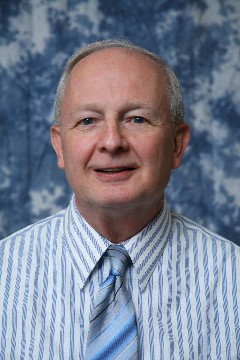
Dr. Richard Molyet is a Senior Lecturer and Undergraduate Director in the Department of Electrical Engineering and Computer Science at the University of Toledo's College of Engineering. After retiring as Associate Professor in 2002, he returned to academia in 2005 as Visiting Professor and transitioned to Associate Lecturer in 2008. Education: Ph.D. in Engineering Science (1981) from University of Toledo His research spans Automatic Control , Robotics , Smart-Grid Systems , and Biomedical Applications . Recent publications focus on deep learning for medical diagnostics and hybrid power network optimization , while earlier work explored repetitive control algorithms and microprocessor-based motion analysis . Scientific Recognition: IEEE Third Millennium Medal (2000) IEEE-USA Professional Achievement Award (2002) University of Toledo Outstanding Teacher Award (2016) Currently advising 3 PhD students and multiple Master’s candidates, Dr. Molyet has served on numerous academic committees since the 1980s. He maintains an active role in IEEE Toledo Section's executive board for 39 years .
Professor Dollas Apostolos serves as a Professor in the School of Electrical and Computer Engineering at the Technical University of Crete (TUC), where he has held leadership roles such as Department Chairman. He directs the Microprocessor and Hardware Laboratory, focusing on reconfigurable computing, embedded systems, and high-performance digital systems. His work emphasizes rapid prototyping and real-world implementation of computational solutions. Education: Ph.D., Computer Science, University of Illinois at Urbana-Champaign (1987) M.Sc., Computer Science, University of Illinois at Urbana-Champaign (1984) B.Sc., Computer Science, University of Illinois at Urbana-Champaign (1982) Research Interests: Reconfigurable computing architectures FPGA-based acceleration for bioinformatics and genomics Embedded systems and real-time processing Hardware-software co-design for high-performance computing His research bridges theoretical innovation with practical applications, such as FPGA implementations for genome assembly and aquaculture monitoring systems. Publications: Recent work highlights FPGA-based solutions for bioinformatics (e.g., genome assembly acceleration), real-time embedded systems (e.g., fish cage net monitoring), and scalable data processing frameworks. His articles often explore the intersection of FPGA technology with computational biology, embedded vision, and distributed systems. Awards and Affiliations: Senior Member, IEEE and IEEE Computer Society Recipient of IEEE Computer Society Golden Core and Meritorious Service Awards Twice honored with the University of Illinois Teaching Excellence Award He is a co-founder of IEEE conferences like FCCM and RSP, reflecting his leadership in the reconfigurable computing community. Teaching and Labs: Teaches courses on computer architecture, logic design, and VLSI design. The Microprocessor and Hardware Lab under his direction drives advancements in FPGA-based systems, with projects ranging from bioinformatics hardware accelerators to embedded vision systems.
Uwe Meyer-Baese is an Associate Professor in the Electrical and Computer Engineering Department at the FAMU-FSU College of Engineering. He holds a Ph.D. (Dr.-Ing. habil) from Darmstadt University of Technology, Germany. His research focuses on Digital Signal Processing with FPGAs, VLSI design, and medical imaging applications. He has authored over 100 publications, 5 books, and holds 3 patents. He has been recognized with awards such as the Humboldt Fellowship (2009) and the FAMU-FSU Teaching Award (2007). Education History: Dr.-Ing. habil (Venia Legendi), Darmstadt University of Technology, Germany, 2003 Ph.D. (Dr. Ing.), Darmstadt University of Technology, Germany, 1995 M.S., Darmstadt University of Technology, Germany, 1989 Research Interests: FPGA-based embedded systems and real-time DSP Low-power VLSI architectures Medical image processing (e.g., breast MRI, brain tumor analysis) Hardware security and intellectual property protection Graph theory applications in biological networks Recent work includes advancements in FPGA implementations for microprocessor systems, brain network controllability studies, and AI-driven medical diagnostics. His lab focuses on bridging hardware design with biomedical applications, emphasizing practical implementations through FPGA platforms. Awards: Max-Kade Award in Neuroengineering (1997) ECE Department Research Award (2005) Humboldt Fellowship (2009) FAMU-FSU Teaching Award (2007) He has advised over 60 master’s theses and contributed to major grants in FPGA-based medical systems. His book Digital Signal Processing with Field Programmable Gate Arrays is a widely used textbook in the field.
Franz Fuchs is a Research Fellow at the Department of Computer Science and Technology (University of Cambridge), working on cutting-edge topics in computer architecture and security. His research focuses on hardware security mechanisms, processor architecture design, and formal verification of microarchitectures. He is affiliated with the Computer Architecture Group and contributes to projects such as the Toooba out-of-order CHERI-RISC-V microprocessor. Fuchs collaborates on developing novel approaches to mitigate transient-execution attacks and improve CPU testing methodologies. His work bridges theoretical computer science principles with practical hardware implementations. He holds a position in the University’s William Gates Building and can be reached at franz.fuchs@cl.cam.ac.uk . His research aligns with the department’s initiatives in secure computing and advanced microprocessor design.
Dr. Andy Ye is an Associate Professor in the Department of Electrical, Computer, and Biomedical Engineering at Ryerson University, where he conducts research and teaches courses in advanced digital systems. Education : PhD (2004), MASc (1999), and BASc (1996) from the University of Toronto Research Interests focus on: Field-programmable gate array (FPGA) architectures Computer-Aided Design (CAD) tools for FPGAs and VLSI Logic synthesis and hardware implementation Digital communication algorithms and computer vision systems Publication Trends demonstrate expertise in FPGA area modeling, motion estimation architectures, and VLSI design optimization across multiple IEEE and ACM venues. Scientific Achievements : Best Paper Award (2016) at International Conference on Field Programmable Logic and Applications Teaching Contributions include graduate-level FPGA design (EE 8219), low-power digital circuits (ELE 734), and fundamental network theory (ELE 302). He maintains active supervision availability for students.
Tarik Graba is a Lecturer at Télécom Paris and a member of the Secure and Safe Hardware (SSH) research team within the Information Processing and Communication Laboratory (LTCI) department. His work focuses on hardware security, embedded systems, and cryptographic implementation. Education: Not explicitly mentioned Current Affiliations: Télécom Paris (Faculty), LTCI, SSH Team His research explores designing secure and reliable integrated systems , with emphasis on managing complexity, power consumption, and flexibility in embedded environments. He contributes to side-channel analysis , lightweight cryptographic algorithms , and hardware-based security mechanisms . The 15 most recent publications highlight his work in lightweight cryptography , hardware security , and embedded system optimization , particularly focusing on RISC-V extensions , side-channel leakage , TRNG circuits , and secure cryptographic processors . Scientific Awards Academic Palms award, Télécom Paris (2021) Tarik Graba collaborates extensively in hardware security research and has advised multiple projects on physical security countermeasures and embedded cryptographic systems . He works with teams like the SSH Laboratory to develop secure hardware architectures.
Arthur F Witulski is a Research Professor of Electrical Engineering at Vanderbilt University's School of Engineering. He specializes in radiation effects on electronic power semiconductor devices and systems, focusing on radiation reliability in aerospace and nuclear environments. His research addresses challenges in satellites, robotics, and high-reliability power electronics. Education: PhD, MS, and BS in Electrical Engineering from the University of Colorado. Research Interests include radiation hardening of power electronics, semiconductor reliability under ionizing environments, and system-level modeling of radiation effects. His work spans energy systems, nano-materials, and risk mitigation strategies for complex engineering projects. Key contributions include developing models for SiC power device failures, Bayesian assurance frameworks for space systems, and methodologies linking component-level testing to system reliability. His recent articles emphasize single-event effects in advanced semiconductors and radiation tolerance in commercial-off-the-shelf (COTS) components. Witulski has pioneered radiation assurance tools for small satellites and robotic systems, emphasizing probabilistic modeling and fault-tolerant designs. His work integrates theoretical physics with practical engineering solutions for harsh radiation environments.
Iain Bate is a Lecturer in Real-Time Systems and Head of the Department of Computer Science at the University of York. His research focuses on scheduling and timing analysis, systems engineering with optimization of design trade-offs, design assurance, component-based engineering, and managing emergent behavior, particularly in critical systems. University of York, Department of Computer Science Research areas: Real-Time Systems, Mixed-Criticality Scheduling, Multi-Core Architecture Departmental Roles: Head of Department, Research Group Lead (Real-Time Systems) His recent research explores cache-aware scheduling, fault tolerance, and resource stress management in multi-core environments. He has contributed to journals like Microprocessors and Microsystems as an editor and collaborated on projects funded by EPSRC and industry partners such as Rolls Royce. He actively supervises PhD students and leads research initiatives related to wireless sensor networks, task allocation, and system certification for critical applications.
Dr. Anthony McGarry is a Senior Teaching Fellow in Biomedical Engineering at the University of Strathclyde's Faculty of Engineering. With over 50 research outputs spanning two decades, his work focuses on prosthetics, orthotics, biomechanics, and rehabilitation engineering. His research has significantly contributed to understanding prosthetic socket design, gait analysis, measurement reliability, and physical activity in amputees. His research interests encompass a wide range of topics including prosthetics and orthotics, biomechanics, gait analysis, CAD/CAM systems, measurement reliability, physical activity in amputees, rehabilitation engineering, lower limb amputation, microprocessor prosthetics, and 3D printing applications. His work often bridges clinical practice with engineering solutions, focusing on improving patient outcomes through technological innovation. Dr. McGarry's recent publications (2023-2025) demonstrate continued innovation in the field, with work on 3D-printed cranial helmets, vision-based motion capture for gait analysis, and service quality assessment in prosthetics and orthotics. His research shows a consistent trend toward improving measurement techniques, enhancing prosthetic design, and understanding patient experiences. His scientific achievements include: Converge Challenge Competition runner up (2024) PCAD Prosthetic CAD shape capture in a weight bearing environment award (2022) FIA Foundation Research Award Dr. McGarry has been actively involved in research projects including the PCAD project (2023-2025) focusing on prosthetic CAD shape capture in weight-bearing environments, and has supervised three research students. His work on the reliability of measurement systems, particularly goniometers and activity monitors, has been widely cited and has influenced clinical practice. His research group at Strathclyde focuses on developing innovative solutions for prosthetic and orthotic challenges, with particular emphasis on measurement systems, CAD/CAM applications, and patient-centered outcomes. Current projects are exploring how weight-bearing environments affect prosthetic socket design and how emerging technologies can improve clinical outcomes.
Armando Fox is a Professor in the Department of Electrical Engineering and Computer Sciences at UC Berkeley, where he co-leads the ASPIRE Lab and directs the Berkeley MOOCLab. His work focuses on integrating online learning research into educational frameworks. He holds a PhD, MS and BS from Berkeley, Illinois, and MIT respectively. Fox's research spans applied statistical machine learning, Software as a Service (SaaS), cloud computing, parallel programming, and innovative online education methods. He pioneered Berkeley's first MOOC on software engineering and co-authored the textbook Engineering Software as a Service . His recent publications demonstrate strong focus on: AI-enhanced education tools and assessment systems Cloud-based learning management architectures Generative AI for collaborative programming education Automated testing frameworks for computer science Significant awards include: NSF CAREER Award ACM Distinguished Member Scientific American 50 top researcher recognition Fox previously contributed to Intel Pentium Pro microprocessor design and founded a mobile computing company based on his dissertation research.
Stephen Taylor is a Professor of Computer Engineering at Dartmouth College's Thayer School of Engineering. His research focuses on cybersecurity, distributed computing, and embedded systems security. He has held leadership roles including DARPA Program Manager and Air Force Research Laboratory IPA. Taylor's work includes foundational contributions to the National Cyber Range and Air Force Cyber Experimentation Environment. Education: BSc in Computer Systems from Essex University (1982), MSc in Computer Science from Columbia University (1985), and PhD in Computer Science from the Weizmann Institute (1989). Research emphasizes resilient operating systems for cloud computing, security mechanisms for embedded systems, and large-scale experimentation infrastructure. Awards include the USAF Exemplary Civilian Service Medal and Secretary of Defense Medal for Public Service. Teaches courses on microprocessors, software design, and cyberspace technology. Advises on multi-disciplinary projects and has authored 4 books and over 25 journal articles. His lab explores hardware-software co-design for cyber resilience and soil-based sustainable computing.
Donald Yeung is a Professor and Associate Chair for Undergraduate Education in the Department of Electrical and Computer Engineering at the University of Maryland , with an additional appointment as Affiliate Professor in the Department of Computer Science . His research focuses on Computer Architecture , particularly in memory systems , 3D integration , energy-efficient processors , and parallel processing . He leads projects like Monolithic 3D Integration of CPU and Main Memory and Approximate Computing . Recent work emphasizes ReRAM-based memory architectures , extreme-scale processor design , and micro-fluidic cooling solutions for 3D CPUs. His teaching includes courses like ENE 646: Computer Architecture and ENE 150: Intermediate Programming Concepts . Key achievements include the Best Paper Award at MULTIPROG-2017 and contributions to IEEE Micro and ACM Transactions . His research spans cache optimization , reuse distance analysis , and directory coherence protocols . Current grants include funding for heterogeneous microprocessor parallelism and low-power system design . Advises graduate students Yinuo Wang and Hung-Yu Yeh, and collaborates with teams like the UMIACS Technical Report Group . His lab focuses on memory-centric computing and scalable multicore systems .