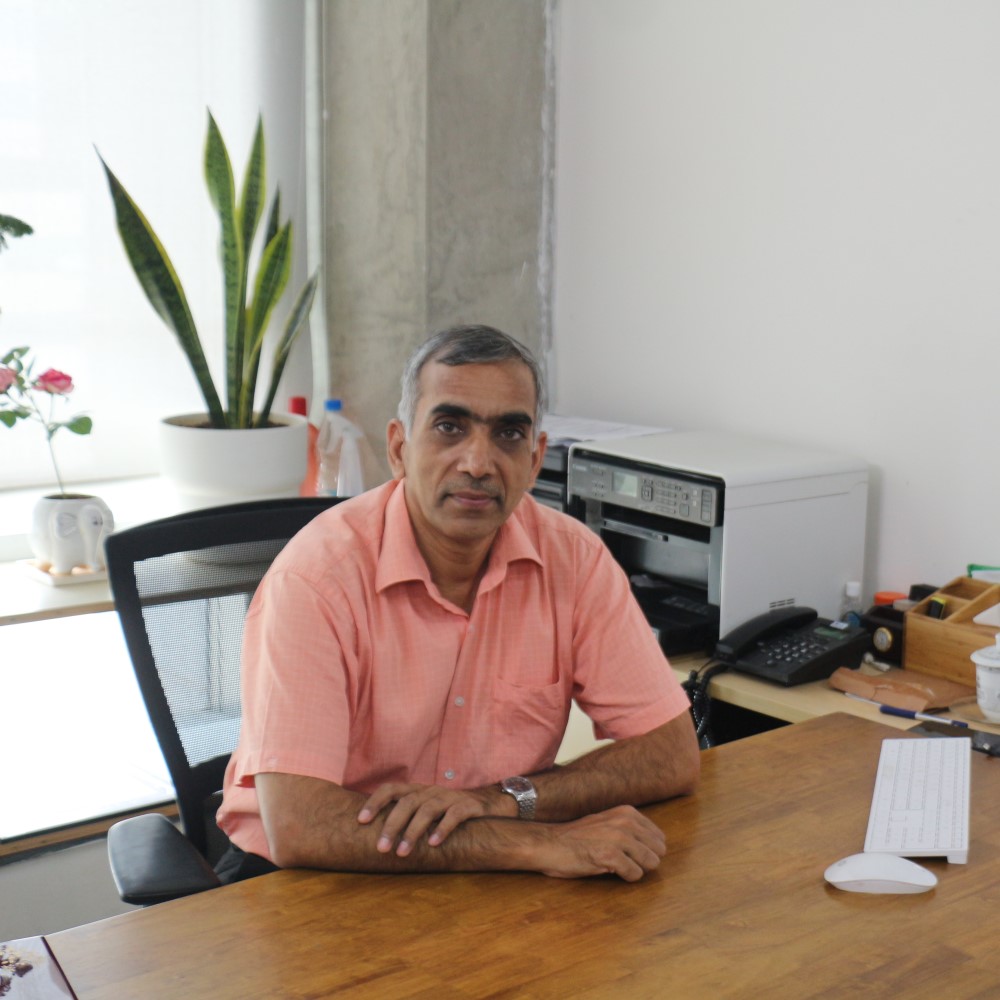
Dr. Ali Siamaki is a faculty member at Fayetteville State University in the Department of Chemistry, Physics & Materials Science. His research focuses on heterogeneous and homogeneous catalysis, metal nanoparticles synthesis, and their application in cross-coupling reactions under microwave and continuous flow conditions. M.S., University of Calgary, Canada Ph.D., McGill University, Canada His research group explores three core areas: preparation of solid-supported metal nanoparticles, their catalytic evaluation in C-C reactions (Suzuki, Heck, Sonogashira), and microwave/flow reaction applications. Students gain expertise in SEM, TEM, FT-IR, and XRD techniques. He teaches courses in organic chemistry, polymer science, and general chemistry. Recent work includes highly cited studies on graphene-supported Pd/Fe3O4 nanoparticles and nickel-palladium bimetallic catalysts for Sonogashira reactions. His team actively presents at conferences like ACS Meetings and Emerging Researcher National Conference in STEM. Scientific Awards Top Cited Article in 2011-2012 Certificate by the Journal of Catalysis Research Students Current: Katherine Coker, MaryKristy Eweama, Harlee Winkleman. Former: Lacey Picinich, Destiny Ivey, Sojeong Folsom, and others.
Professor Hongbo Zhang is a leading academic at Åbo Akademi University , affiliated with the Faculty of Natural Sciences and Engineering and the InFLAMES (Innovation Ecosystem based on the Immune System) flagship program. With over 227 publications and 21 active/completed projects since 2006, his research spans Functional Materials , Drug Delivery , and Clinical Translation . Research Interests: His work focuses on Engineering nanostructures for blood-brain barrier penetration Microfluidics-enabled biomedical devices Antimicrobial resistance solutions Cellulose-based sustainable materials Mitochondrial delivery systems Theranostic hydrogels Scientific Awards: Fellow of the Royal Society of Chemistry (2024) MDPI Pharmaceutics Young Investigator (2020) Chinese Orthopedic Association 1st Prize (2019) Best Oral Drug Formulation (Control Release Society, 2014) 10 Leading Chinese Talents in Europe (2023) Collaborative Network: Actively hosts international researchers and contributes to EU/Nordic-funded projects like NAP4DIVE and Printed Intelligence Infrastructure . His recent publications demonstrate expertise in nanomedicine, biocomposites, and lignin valorization.
Arnaud Bertsch is a Lecturer at the École Polytechnique Fédérale de Lausanne (EPFL) within the School of Engineering (STI) and the Department of Microengineering (IEM). He is affiliated with the Microsystems Laboratory 1 (LMIS1) and has been actively involved in teaching advanced microfabrication techniques and MEMS sensor/actuator practicals. His research spans microfluidics, nanofluidics, biomedical devices, and 3D microfabrication, with a focus on neural probes, drug delivery systems, and cell manipulation technologies. Microfluidic hydrodynamic and dielectrophoretic systems Nanovolcano microelectrode arrays for electrophysiology Thermal control of ionic transport in nanochannels 3D lipid microrobots for drug delivery MEMS-based intraocular pressure sensors Arnaud Bertsch has supervised PhD students including Torres Vila Pol, Zhang Tao, and past advisees like Clémentine Lipp, Nicolas Maïno, and Joan Teixidor. His work bridges fundamental research in nanofluidics with applied biomedical solutions, contributing to fields such as neuroscience, cancer therapy, and implantable medical devices. The articles listed demonstrate expertise in microsystem design, electrochemical sensing, and biofabrication technologies.
Ion Tiginyanu is a prominent materials scientist and academic leader. Currently serving as President of the Academy of Sciences of Moldova since 2019, he previously held roles including Vice-President (2012-2019), and has been Director of the National Center for Materials Study and Testing at Technical University of Moldova since 2001. His academic career includes visiting professorships at the University of Michigan (USA) and Technical University Darmstadt (Germany). He holds a Doctor Honoris Causa from Gheorghe Asachi Technical University and is a Fellow of SPIE. Education: Graduated Moscow Institute of Physics and Engineering (1978), PhD in Semiconductor Physics from Lebedev Institute (1982), Habilitation from Institute of Applied Physics (1991), and became Full Professor in 1993. Research focuses on nanotechnologies, metamaterials, and nanoarchitectures with applications in photonics, electronics, and biomedical engineering. His work produced over 400 publications (H-index 42) and 52 patents. Key achievements include developing novel semiconductor compounds and aero-materials for electromagnetic applications. Grants & Awards: Over 20 major recognitions including National Prize in Science (2004), WIPO 'Outstanding Inventor' (2011), and Honorary Doctorates from Romania/Japan. Labs: Leads the National Center for Materials Study and Testing, and collaborates internationally with institutions like TU Darmstadt and University of Michigan.
Dr. Omar Rifaie Graham is a Lecturer (Assistant Professor) in Chemistry at Queen Mary University of London's School of Physical and Chemical Sciences, joining in September 2023. He leads a research group focused on polymer-based artificial cells to study physicochemical parameters underlying biological phenomena and develop technologies at the Living/Non-Living Interface. Previously, he held postdoctoral positions at Imperial College London and the University of Fribourg, Switzerland. Education: Licenciado in Pharmacy (BSc+MSc), Universidad Complutense de Madrid, Spain (2008–2014) PhD in Chemistry, Adolphe Merkle Institute – University of Fribourg, Switzerland (2014–2018) Research Interests: Development of artificial cells using polymer nanocontainers, stimuli-responsive materials (light, hydromechanical stress), and applications in biotechnology, therapy, and diagnostics. His work includes creating polymersomes with novel functionalities for drug delivery, diagnostics, and synthetic biology. Key Achievements: ACS PMSE Future Faculty Award (2023) Swiss Nanoscience Institute 'Best paper in nanoscience' (2021) Best PhD thesis in Experimental Sciences, University of Fribourg (2019) Co-founded a diagnostics company spun from his PhD research (1M+ USD funding) Grants & Collaborations: Royal Society Grant: £29,907 (2025–2026) National Institute for Health Research Grant: £315,942 (2020–2025) RSC Grant for 'Mimicking colour perception with artificial cells' (2024) Lab/Team: Directs a research group at Queen Mary's Department of Chemistry, collaborating with institutions like Imperial College London and the University of Fribourg. Active in synthetic biology, nanomedicine, and biomimetic materials.
Naomi J. Halas is a University Professor at Rice University, holding appointments in the Department of Electrical and Computer Engineering, Biomedical Engineering, Chemistry, and Physics & Astronomy. She is the Stanley C. Moore Professor in Electrical and Computer Engineering and serves as Director of both the Smalley-Curl Institute and the Laboratory for Nanophotonics. As a University Professor, she holds Rice's highest faculty rank, a distinction awarded to only 10 individuals (and only the second woman) in Rice's 111-year history. Halas is a pioneering researcher in the field of plasmonics, having created the concept of the "tunable plasmon" and invented a family of nanoparticles with resonances spanning the visible and infrared regions of the spectrum. Her research spans fundamental studies of coupled plasmonic systems as well as applications in biomedicine, optoelectronics, machine learning-enabled chemical sensing of environmental toxins, and plasmon-based photocatalysis. She is the author of more than 400 refereed publications, has over 30 issued patents, has presented more than 600 invited talks, and has been cited more than 130,000 times. Her recent publications demonstrate a strong focus on practical applications of plasmonics, particularly in water purification, environmental toxin detection, and cancer treatment. Her work combines nanotechnology with machine learning approaches to create innovative solutions for pressing global challenges in healthcare, environmental sustainability, and energy. The interdisciplinary nature of her research is reflected in publications spanning journals from Nature Water and PNAS to ACS Catalysis. Benjamin Franklin Medal in Chemistry (2025) - For the creation and development of nanoshells for biomedical and chemical applications Mildred Dresselhaus Prize in Nanoscience and Nanomaterials (2024) American Physical Society Frank Isakson Prize for Optical Effects in Solids Willis E. Lamb Award Wood Prize of Optica National Security Science and Engineering Faculty Fellow (Vannevar Bush Fellow) of the U.S. Department of Defense Halas has co-founded two companies based on her research: Nanospectra Biosciences, developing photothermal therapies for prostate cancer (nearing FDA approval), and Syzygy Plasmonics, a deep decarbonization platform. She has advised numerous students who have gone on to successful careers in academia and industry. Her research has been supported by significant grants from NSF, DoD, and other funding agencies. She serves as an advisor to the Mathematical and Physical Sciences Directorate of the National Science Foundation. Halas leads the Laboratory for Nanophotonics at Rice University, where her team focuses on designing new optically active nanostructures, developing nanofabrication strategies, characterizing physical properties of these materials, and prototyping applications of technological and societal interest. Her group is dedicated to producing PhD research scientists with expanded skill sets who can develop solutions beyond traditional disciplinary boundaries.
Jingyi Chen is a Professor in the Department of Chemistry and Biochemistry at the University of Arkansas. She serves as Vice Chair in the College of Arts & Sciences and leads the Chen Research Group focused on rational design and synthesis of functional nanomaterials for energy conversion and human-health applications. PhD, Chemistry & Nanotechnology – University of Washington (2006) MA, Chemistry – State University of New York College at Buffalo (2002) BS, Chemistry – Sun Yat-sen University (1997) Her research spans three major projects: Project I: Developing cost-effective catalysts for fuel cell applications through precise synthesis of copper-based bimetallic nanocrystals. Project II: Surface modification of nanoparticles with polydopamine for bio-related applications like low-friction coatings. Project III: Creating nanoplatforms for targeted drug delivery against antibiotic-resistant infections and cancer. Recent publications focus on nickel phosphide nanoparticles (2024), perovskite oxide oxygen evolution catalysts (2023-2024), and silver nanoparticle antimicrobial mechanisms (2020-2023). Her group has produced 15+ recent publications in journals like ACS Nano , J. Phys. Chem. C , and ACS Infectious Diseases . Award highlights include: Thomson Reuters Top 1% Highly Cited Researcher (2015-2018) Arkansas Research Alliance Fellow (2018) Women’s Giving Circle Award (2014) Ralph E. Powe Junior Faculty Enhancement Award (2011) She has mentored over 20 graduate and undergraduate students , including Ryan Manso (PhD 2022), Isabelle Niyonshuti (PhD 2021), and David Thompson (DOE SCGSR awardee 2022). Her lab (CHBC 304/306/309) employs advanced tools like synthesis setups , electrochemical stations , and laser irradiation systems .
Dario Carugo is an Associate Professor of Biostimulation and Immunological Engineering at University College London (UCL), School of Pharmacy, Department of Pharmaceutics. Previously, he held positions at the University of Oxford (Botnar Research Centre) and University of Southampton. His academic foundation includes a BSc and MSc in Biomedical Engineering from Politecnico di Milano (specializing in Biological Fluid Dynamics & Bio-Machines), and a PhD in Bioengineering Sciences from the University of Southampton. His research spans acoustofluidics , microfluidic drug delivery systems , and biofilm eradication technologies . Key interests include ultrasound-activated drug carriers, mechanistic models for therapeutic physical stimuli, and nano/micro-scale systems for chronic wound treatment, implant infections, and musculoskeletal disorders. His work integrates computational fluid dynamics with experimental models to optimize interventional treatments. Recent publications (2023-2025) reveal a strong trend toward biofilm-targeted therapies using ultrasound-responsive carriers (microbubbles/nanodroplets), oxygen delivery systems for bone healing, and 3D-printed devices for precision drug delivery. Interdisciplinary collaborations span microbiology, urology, and tissue engineering, with emphasis on translating lab innovations to clinical applications for chronic wounds and implant-associated infections. Awards: Italian National Bioengineering Group award IMechE Biomedical Engineering Division award EPSRC Doctoral Prize award FP7 European project funding BBSRC award Junior Research Fellowship at Jesus College, Oxford Carugo teaches Biofluids (Engineering Science) and Micro- & nano-technologies for personalised medicine (MSc Pharmacology), alongside supervising MSc Musculoskeletal Sciences laboratory activities. His Botnar Research Centre lab pioneers vortical flow devices for ultrasound-activated drug delivery and high-speed imaging systems (>1 million fps) to quantify cellular responses to mechanical stimuli.
Professor Guangzhao Mao is the Head of the School of Engineering at the University of Edinburgh and holds the title of Chair Professor of Materials Engineering. She is also an Adjunct Professor at the University of New South Wales (UNSW) Sydney, where she formerly led the School of Chemical Engineering. Her research focuses on nanotechnology and materials engineering, with key areas including electrocrystallization for advanced sensors, nanomedicine for central nervous system (CNS) drug delivery, and innovative material synthesis using liquid metal technologies. Her work bridges engineering and medicine, addressing challenges like drug delivery across the blood-brain barrier and environmental monitoring through gas sensors. Professor Mao’s academic qualifications include a B.Sc. and Ph.D., with her doctoral studies likely in chemical or materials engineering (details unspecified). Her research team has pioneered technologies such as protein-drug nanoconjugates for spinal cord injury treatment and microfluidic assays for drug screening. She has received prestigious awards, including the Fulbright Senior Scholarship and AIChE Fellowship, and has held visiting roles at the Max Planck Institute. Her leadership and innovation have positioned her at the forefront of interdisciplinary research, with contributions to both academic institutions and industry partnerships. Current projects emphasize translating nanomedicines into clinical applications and advancing sustainable catalytic systems through liquid metal-enabled synthesis.
Prem Pal is a Professor in the Department of Physics at the Indian Institute of Technology Hyderabad. His work focuses on MEMS technology, silicon micromachining, and thin film applications in sensors and energy systems. Education : Ph.D. in MEMS from IIT Delhi (2004), M.Tech in Solid State Materials from IIT Delhi (1999) His research spans wet anisotropic etching, microfluidic channels, and advanced MEMS fabrication techniques. He has developed novel processes for Borofloat glass and silicon wafer processing. Key trends in his publications include isotropic/anisotropic wet etching, masking layer behavior, and optimization of etching solutions (e.g., NH4OH, KOH, NaOH) for MEMS devices. His work addresses surface texturization and structural dynamics of microcantilever beams. Laboratory : Prem Pal leads the MEMS & Micro/Nano Systems Laboratory at IIT Hyderabad, advancing microsystem technologies and semiconductor physics applications.
Bjoern Menze is a Professor and Rudolf Mößbauer Tenure Track Chair at the Technical University of Munich (TUM), leading the Image-based Biomedical Modeling Group within the Munich School of Bioengineering. His research focuses on medical image computing, tumor growth modeling, and computational physiology, with applications in clinical neuroimaging and personalized radiotherapy design. He holds a Ph.D. in Computer Science from Heidelberg University and has held positions at ETH Zurich, INRIA Sophia Antipolis, MIT, and Harvard Medical School. His academic journey includes a postdoc at MIT’s CSAIL and Harvard Medical School, followed by roles at ETH Zurich and INRIA. His work bridges biomedical imaging with machine learning, emphasizing model-driven analysis of physiological processes. He has been a visiting professor at Maastricht University and contributes to initiatives like the Center for Translational Cancer Research at TUM. Key research areas include tumor growth modeling, quantitative imaging biomarkers, and integrating mathematical models with clinical data. His awards include the MICCAI Young Scientist Award (2014), Leopoldina Fellowship (2009), and DFG Research Fellowship (2008). He advises on medical AI, leads interdisciplinary projects, and publishes extensively in top journals like Nature Neuroscience and IEEE Transactions on Medical Imaging. His lab’s work spans applications such as glioblastoma radiotherapy optimization, whole-body bone lesion detection, and neural connectivity imaging. Collaborations include institutions like Harvard, MIT, and ETH Zurich. He emphasizes translating computational methods into clinical practice for personalized healthcare solutions.
Dr. Emanuele Marino is a Researcher in the Department of Physics and Chemistry at the University of Palermo , affiliated with the School of Basic and Applied Sciences . His work bridges quantum physics and nanotechnology, focusing on nanocrystal superparticles, photonic materials, and fluctuation-driven assembly processes. Current research areas include quantum dot lasing, Casimir effects, and 3D nanoparticle superlattices Teaches courses like Modern Physics Laboratory (2024, School of Basic and Applied Sciences) and Physics II (Polytechnic School) Recent publications highlight trends in: Tunable photonic properties via nanocrystal emulsion systems Quantum-excitonic coupling in heterostructures Critical Casimir forces for nanoparticle control Dynamic phase transformations in colloidal superlattices Microlaser fabrication and chirality engineering Based in the Emilio Segrè Physics and Chemistry Department , he conducts experimental and theoretical studies from nanoscale fabrication to quantum optical phenomena.
Rod Beresford is a Professor of Engineering at Brown University's School of Engineering, where he has held several leadership positions including Senior Associate Dean for Academic Programs and Associate Provost for Academic Space. He earned his B.S. (1979) and M.S. (1981) in electrical engineering from Yale University and his Ph.D. (1990) from Columbia University. In 2020/21, he served as an IEEE/AAAS Congressional Fellow working on the Senate Energy and Natural Resources Committee. His research focuses on semiconductor nanostructures, including synthesis, modeling, integration with microelectronics, and applications, with a particular emphasis on molecular beam epitaxy. Beresford has published over 80 scientific papers and has worked on molecular beam epitaxial growth of III-V semiconductors since 1987. His current research emphasizes engineering innovations for decarbonization and electrification of the economy. Professor Beresford's scholarly work spans semiconductor materials and devices, quantum structures, nanomaterials, microfluidics, and biosensing. His recent publications demonstrate a strong focus on quantum dot arrays, nanowire electrical properties, and biosensing applications. The research shows evolution from fundamental semiconductor physics toward practical applications in sensing and energy technologies. His honors and awards include: Tau Beta Pi (1978) Sheffield Fellowship (Yale University, 1980–81) Office of Naval Research Fellowship (Columbia University, 1987–90) Sigma Xi (1991) BBV Foundation Chair (Visiting Professor, Polytechnic University of Madrid, 1996) Institute of Electrical and Electronics Engineers, Senior Member (2002) Professor Beresford has been instrumental in Brown's academic infrastructure development, including facilitating the successful development of the Engineering Research Center, an 80,000-sf lab building completed in October 2017. He has served as Academic Director for the Master of Science in Technology Leadership program and has introduced new courses in VLSI Design and Nanoelectronics. His research has been supported by significant grants including: Nanoelectronics Research Initiative / National Science Foundation: "Direct-Write Synthesis of Graphene Devices" (PI, $400,000) National Science Foundation Materials Research Science and Engineering Center: "Micro- and Nano-Mechanics of Electronic and Structural Materials" (co-PI, $9,360,000) Air Force Office of Scientific Research Multidisciplinary University Research Initiative: "Direct Nanoscale Conversion of Biomolecular Signals into Electronic Information" (co-PI, $5,609,969) Professor Beresford leads a research group focused on semiconductor nanostructures and collaborates extensively with colleagues including Jingming Xu, Eric Chason, Brian Sheldon, Alexander Zaslavsky, and David Paine. His laboratory includes molecular-beam epitaxy systems for advanced materials research.
Amit Morey is an Associate Professor in the Department of Poultry Science at Auburn University's College of Agriculture. His research focuses on food safety, poultry meat quality, and advanced sensing technologies. He leads projects involving biosensor development, microbial pathogen detection, and spoilage prediction using machine learning and spectral imaging. His work bridges laboratory innovations with industry applications, addressing challenges in poultry processing, packaging, and supply chain management. Education details are not explicitly listed, but his extensive publications suggest advanced training in food science, microbiology, and engineering. Research interests include antimicrobial biopolymer films, texture analysis of catfish and chicken fillets, and the application of functional ice in seafood preservation. He has pioneered methods for rapid Salmonella detection using microfluidics and fiber optics-based SERS sensors. Notable contributions include developing predictive models for spoilage using near-infrared spectroscopy and exploring cyclic temperature abuse impacts on poultry safety. His interdisciplinary approach integrates artificial intelligence with traditional food science techniques to enhance food safety and reduce waste. While no specific grants or awards are listed, his active publication record (over 100 papers from 2005–2025) indicates sustained research funding. He collaborates on projects addressing global food safety inequities, such as sensor-enabled decision support systems (SENS-D) for vulnerable communities. Lab activities include the Auburn Poultry Science Lab, focusing on meat quality assessment, microbial interventions, and smart packaging solutions. His work has direct industry impact, with applications in poultry processing plants and retail cold chain management.
Nelson Sepulveda Alancastro is a Professor and Interim Chairperson of Electrical and Computer Engineering (ECE) at Michigan State University's College of Engineering, with a joint appointment in Mechanical Engineering (ME). He holds a Ph.D. (2005) and M.S. (2002) from Michigan State University, and a B.S. (2001) from the University of Puerto Rico-Mayaguez. His research integrates micro/nano sensors, smart materials, and energy harvesting, with applications in biomedical devices, environmental monitoring, and MEMS. Research Focus: Dr. Sepulveda's work centers on ferroelectret nanogenerators, vanadium dioxide-based reconfigurable devices, flexible sensors, and machine learning for sensor data analysis. His lab develops self-powered systems for biomechanical monitoring, invasive species detection, and concussion prediction. Awards and Honors: MSU Withrow Teaching Excellence Award (2018) MSU Withrow Diversity Excellence Award (2018) Michigan State University Teacher-Scholar Award (2015) NSF Career Award (2010-2015) IEEE Senior Member (2011) Students and Team: He advises Ph.D. candidates including Ian González-Afanador, Gerardo Morales-Torres, and Henry Dsouza. His Advanced Microsystems Group (AMG) focuses on interdisciplinary projects spanning materials science, MEMS, and embedded systems.