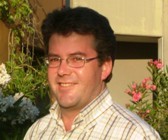
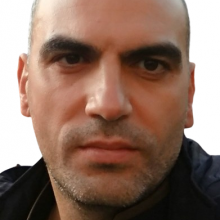
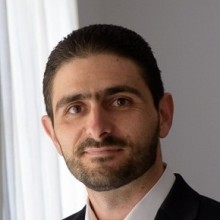
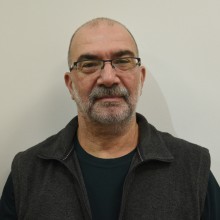
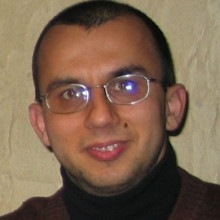
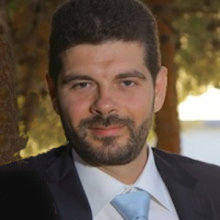
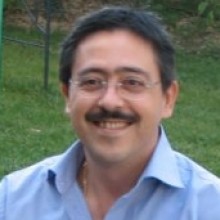
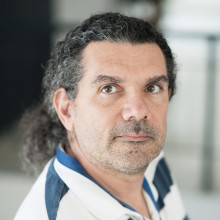
Dr. Sotirios Kontogiannis is a Researcher and Director of the Distributed MicroComputer Systems Laboratory (MCSL) at the Department of Mathematics, University of Ioannina. He holds a PhD in Software Engineering from Democritus University of Thrace (2012), with a focus on load balancing algorithms for distributed systems. His career spans academic and private sector roles, including software development, research in FP7 projects, and technical leadership at TEKMON Geomatics. He currently teaches courses on Database Systems, Parallel Algorithms, and Educational Technologies at the University of Ioannina. Education: 5-year Engineering Diploma (DUTH, 2003), MSc in Microelectronics and Information Systems (DUTH, 2006), PhD in Load Balancing Algorithms (DUTH, 2012). Research Focus: Distributed systems, IoT protocols, sensor networks, big data, and smart agriculture technologies (e.g., beekeeping monitoring systems, wine fermentation frameworks). His work integrates IoT, AI, and edge computing to address challenges in agriculture, accessibility, and environmental monitoring. Notable inventions include patented smart beehive systems and tactile navigation tools for visually impaired individuals.
Matthias Bucher is a Professor at the Department of Electronics and Computer Architecture , School of Electronic & Computer Engineering , Technical University of Crete, Greece. His research focuses on analog/RF integrated circuit design, compact modeling, and semiconductor device physics. Education : PhD (1999) and MSc (1993) in Electrical Engineering from EPFL, Switzerland Research Areas : EKV3 MOSFET compact modeling, RF characterization, nanoscale CMOS, and high-voltage device modeling Courses Taught : Electronics II, Analog CMOS Circuit Design, Special Topics in Analog CMOS Circuit Design His work emphasizes compact modeling for RF and analog circuits, with applications in nanoscale devices and radiation-hardened electronics. Recent publications highlight open-source PDK initiatives, Verilog-A standardization, and noise modeling in advanced transistors. He leads the Electronics Laboratory at TUC and collaborates with microelectronics companies. Bucher is a member of IEEE and the Technical Chamber of Greece, with over 45 publications and two book chapters to his credit.
Dr. Michalis Orfanakis is a Research Fellow at the Institute of Electronic Structure and Laser (IESL) of FORTH, and a PhD candidate in Biophotonics. His primary research focuses on developing spectroscopic and photoacoustic techniques for bio-marker monitoring. Additionally, he serves as a secondary education science teacher, specializing in adapting advanced scientific research into accessible classroom projects. His work bridges academic research and STEM education, earning him multiple European accolades. Education: MSc in Microelectronics and Optoelectronics from the Physics Department, University of Crete. Current PhD candidate at the Laboratory for Biophotonics and Molecular Imaging (LBMI), IESL-FORTH. Research Interests: Development of advanced optical techniques for biomedical applications. Integration of cutting-edge science into school curricula through projects like the Optical CT Scanner and Optical Tweezers setups. Notable Projects: Optical CT Scanner using Lego and Arduino for demonstrating tomography principles in schools. Optical Tweezers setup to teach fundamental physics concepts. Awards: European STEM Teacher Award (2017, 2019). Science on Stage Europe 1st Prize (2019, 2017). Science on Stage Greece 1st Prize (2018, 2016). Advising & Grants: While no formal advisees are listed, his educational projects have received institutional support. His research at LBMI likely involves collaborative grants, though specifics are not detailed. Labs & Teams: Member of the Laboratory for Biophotonics and Molecular Imaging (LBMI) at IESL-FORTH, contributing to interdisciplinary bio-imaging projects.
Costas Psychalinos is a Professor at the Department of Physics, University of Patras. He has served as Head of the Physics Department and as Chair of the IEEE Greece Section Circuits and Systems/Solid-State Circuits Joint Chapter. His research focuses on CMOS analog integrated circuits, including fractional-order circuits, analog filters, and low-power signal processing systems. Education: B.Sc. in Physics, University of Patras (1986) Ph.D. in Electronics, University of Patras (1991) Research Interests: Development of CMOS-based analog integrated circuits, with expertise in fractional-order systems, analog filter design, and low-voltage/low-power amplifiers. His work bridges analog electronics with advanced signal processing applications. Leadership Roles: Head of Physics Department, University of Patras (current) Chair, IEEE Greece Section Circuits and Systems/Solid-State Circuits Joint Chapter Editorial Roles: Editorial Board, Nature Scientific Reports Area Editor, International Journal of Electronics and Communications (AEU) Editor-in-Chief, Circuit and Signal Processing Section, MDPI Electronics Journal Associate Editor, Circuits, Systems, and Signal Processing Journal Editorial Board, International Journal of Circuit Theory and Applications Editorial Board, Analog Integrated Circuits and Signal Processing Journal Editorial Board, Microelectronics Journal Editorial Board, MDPI Fractal and Fractional Journal Editorial Board, MDPI Journal of Low-Power Electronics and Applications Member, Nonlinear Circuits and Systems Technical Committee (IEEE CAS Society) Scientific Recognition: Top 2% global researcher in Electrical and Electronics Engineering (Stanford-Elsevier, 2020–present) IEEE Senior Member
Adam Adikimenakis is a Research Fellow affiliated with both the University of Crete's Physics Department and the Microelectronics Research Group (MRG) at FORTH-IESL. He holds a PhD in Physics from the University of Crete where he also completed his BSc and MSc degrees. His research focuses on III-Nitride semiconductor materials grown via molecular beam epitaxy, with applications in electronic and optoelectronic devices. Current investigations include wide bandgap semiconductor heterostructures, quantum technologies, and nanostructure design for advanced semiconductor systems.
Dr. Konstantinidis George is a Research Professor and Research Director at the Microelectronics Research Group of the Institute of Electronic Structure and Laser (IESL) at FORTH, Greece. He specializes in high-frequency electronics, semiconductor heterostructures, and advanced sensor technologies. His career spans over three decades at FORTH, where he has held progressively senior roles since 1988. Education: Ph.D. in Solid State Electronics (1988), University of Salford, UK M.Sc. in Solid State Electronics (1985), University of Salford, UK B.Sc. in Applied Physics (1982), University of Salford, UK Research Interests: His work focuses on III-nitride and III-arsenide-based devices, including high-power/high-frequency transistors (FETs, HEMTs), THz diodes, quantum technologies (GaN qubits), and MEMS-based sensors. He explores 2D materials, nanowire transistors, and spin wave computing, with applications in photovoltaics, biosensing, and energy harvesting. Awards: Recipient of the Tudor Tanasescu Prize (2003) Key contributor to EU Descartes Prize-winning projects (2005, 2002) Leadership roles in national and international scientific councils Projects & Grants: European Innovative GaN Advanced Microwave Integration 3D Heterogeneous Integration for RF Power Transceivers Quantum Computing Hardware Technologies Labs/Teams: Leads the Microelectronics Research Group at IESL, collaborating on advanced packaging, 3D system integration, and smart nanoelectronics platforms.
Dr. Nikolopoulos Georgios is a Principal Researcher at the Institute of Electronic Structure & Laser (IESL/FORTH) since 2014. He holds a PhD in Physics from the University of Crete (2001), an MSc in Microelectronics-Optoelectronics (University of Crete), and a Physics Diploma from the University of Patras (1996). His career includes roles as a Research Associate at TU Darmstadt (2003-2006) and a Max-Planck Research Fellow (1997-1999). His research focuses on quantum communication, quantum cryptography, and quantum optics, with contributions to topics such as quantum key distribution, boson sampling, and physical unclonable functions. He has participated in major projects like the SECOQC quantum cryptography initiative and the SFB CROSSING security framework as a Mercator Fellow (2019, 2022). Key research interests include quantum security protocols, cryptographic algorithms leveraging quantum phenomena, and the theoretical foundations of quantum information processing. His work bridges quantum theory and practical applications in secure communication systems. Notable awards include the Mercator Fellowship for contributions to cryptography-based security solutions. His publications span quantum authentication, state transfer in spin chains, and optical network design, reflecting his interdisciplinary approach to advancing quantum technologies.
Dr. Vassilis Papadakis is an Assistant Professor in the Department of Biomedical Engineering at the School of Engineering, University of West Attica. He has over 20 years of experience in research and education, with affiliations at the Foundation for Research and Technology – Hellas (FORTH), the University of Crete, the Technical University of Delft, and the Hellenic Mediterranean University. His work bridges applied physics, biomedical optics, and imaging technologies. Education: Ph.D., Department of Biology, School of Science and Technology, University of Crete Ph.D., Department of Ophthalmology, Vardinoyanion Eye Institute of Crete, School of Medicine, University of Crete B.Sc., Department of Physics (Microelectronics), University of Crete His research focuses on in-vivo optical diagnostics , spectral imaging , Raman and FTIR spectroscopy , and computer vision for material characterization. He develops optoelectronic systems for non-destructive evaluation in biomedicine, aerospace, and cultural heritage. His expertise includes reflection/absorption imaging, fluorescence, interferometry, and cavity ring-down spectroscopy. The available publication highlights his interdisciplinary work in cultural heritage , specifically on spectral image registration of paintings, indicating strong trends in image processing , multispectral analysis , and non-invasive diagnostics . Scientific Awards: No awards explicitly mentioned. Advising and Grants: While no formal list of advisees or grants is provided, Dr. Papadakis has supervised research through his leadership of the Bio NDT Lab and extensive publication record. His dual PhDs and postdoctoral work at FORTH suggest sustained grant-supported research in imaging and diagnostics. Labs and Teams: He founded and led the Bio NDT Lab, focusing on non-destructive testing using optical methods. His work is associated with IMBB-FORTH and IESL-FORTH, indicating long-term collaboration in advanced biophotonics and imaging research teams.
George Souliotis is an Associate Professor at the Department of Electrical and Computer Engineering, University of Peloponnese, where he has been a faculty member since 2019. With over twenty years of professional and research experience in analog integrated circuit design, he has worked for multinational microelectronic companies and continues to serve as a consultant to companies in Greece and abroad. His expertise spans multiple domains of electronic circuit design including high-speed interfaces, RF circuits, and biomedical applications. Dr. Souliotis received his B.Sc. in Physics from the University of Ioannina in 1993, followed by M.Sc. and Ph.D. degrees in Electronics from the University of Patras in 1998 and 2003, respectively. Prior to his current position, he served as a Lecturer at the Department of Electrical Engineering, TEI of Western Greece (2015-2019), and as an Adjunct Lecturer there from 2002 to 2015. He was also a specialized technical and teaching laboratory staff member at the Department of Physics, University of Patras from 2005 to 2015. His research focuses on analog and mixed signal integrated circuit design , with particular expertise in high-speed serial interfaces (USB2, USB3, BLE, M-PHY), RF circuits operating up to 80 GHz, and low-power design. Dr. Souliotis has made significant contributions to circuits for communication protocols, precision analog design, and biomedical instrumentation. He has published over 60 papers in prestigious journals and conferences and holds two patents in the field, demonstrating consistent research productivity through 2024. Analysis of his recent publications reveals three dominant research streams: high-precision comparators and data converters, power-efficient DC-DC solutions, and biomedical interface circuits. His work consistently addresses challenges in speed, accuracy, and power consumption across diverse applications from consumer electronics to medical devices. The integration of traditional analog design with modern communication protocols represents a unifying theme across his research portfolio. Senior Member of IEEE Two patents in analog circuit design Dr. Souliotis serves as a reviewer for more than 10 international journals and conferences, contributing to scholarly discourse in his field. His industry consulting work demonstrates the practical applicability of his research, while his role in the ECSA Laboratory supports both undergraduate and graduate education in hardware design. His collaborations span academic and industrial partners in Greece and internationally. As a core member of the ECSA Laboratory (Electronics Circuits, Systems and Applications) at the University of Peloponnese, Dr. Souliotis contributes to research in FPGA and ASIC design, analog/mixed signal circuits, RF design, and digital systems for security applications. The laboratory provides essential infrastructure for advancing research in integrated circuit design while training students in state-of-the-art techniques across the analog-digital spectrum.
Yannis Papananos is a Professor at the National Technical University of Athens (NTUA) in the Department of Electrical and Computer Engineering, where he heads the Microelectronic Circuit Design Group. He holds a Diploma (1983) and Ph.D. (1988) in Electrical Engineering from NTUA, and an M.S.E.E. from Columbia University (1984). His academic career includes roles as Lecturer (1991–1995), Assistant Professor (1995–2000), Associate Professor (2000–2004), and full Professor since 2004. Research Interests: Professor Papananos specializes in analog & RF integrated circuit design, CAD for IC design, and silicon RF IC applications. His work spans wireless communication systems, microelectronics technology, and solid-state circuits, with emphasis on practical implementations for telecommunications. Publications & Projects: He has authored/co-authored over 60 technical papers and two books: Radio-Frequency Microelectronic Circuits for Telecommunication Applications (Kluwer Academic) and Design of Active Analog Filters (Greek edition). He has led multiple ESPRIT, IST, and nationally-funded research projects, collaborating with industry leaders like Siemens, Toshiba, and Hewlett-Packard. Teaching & Advising: At NTUA, he teaches courses including Electronics I/II, Analog VLSI Design, RF IC Design, and Sensors Technology. He has supervised numerous Ph.D. candidates and diploma theses. Professional Activities: Senior IEEE Member; Technical Committee member for IEEE ICECS; educational advisor for Hewlett-Packard; consultant for microelectronics firms across Europe, the US, and Japan.
Prof. Nikos Pelekanos is a Full Professor at the Materials Science & Technology Department of the University of Crete. He holds dual affiliations with FORTH-IESL's Microelectronics Research Group and has held senior roles at institutions including CEA-Grenoble and France-Telecom. His research focuses on quantum photonics, advanced photovoltaics, and 2D material applications. Educational Background: Ph.D. in Physics (1991), Brown University M.Sc. in Physics (1987), Brown University B.Sc. in Physics (1985), University of Athens Research Interests: Explores quantum dot-based photonics, room-temperature polariton phenomena, perovskite solar cell innovations, and optoelectronic applications of 2D materials. Current projects include III-V nanowire solar cell development and high-temperature single-photon sources. Awards: 2014 LANEF Excellence Chair for nanowire solar cell research 2011 Solar Innovation Award for III-V nanowire photovoltaics 1993 Humboldt Fellowship (Germany) 1991 French Ministry Scholarship Professional Experience: Over 30 years of international research spanning France (CEA-Grenoble), Germany (Max Planck Institute), and Greece. Active in FORTH-IESL's semiconductor research since 2001. Served as Associate Professor (2003-2009) before achieving full professorship in 2009.
Dr. Deligeorgis George is a Principal Researcher (Grade B) at the Institute of Electronic Structure and Computer Technology (IESL) of the Foundation for Research and Technology Hellas (FORTH) since 2015. He concurrently holds an Adjunct Professor position in the Physics Department of the University of Crete. His research expertise spans 2D materials, high-frequency electronics, and carbon nanotube-based devices. He earned his PhD in Physics from the University of Crete in 2008, followed by postdoctoral research at FORTH and LAAS-CNRS in France (2010–2014). His work focuses on semiconductor lasers, graphene applications, and polariton optoelectronics. He leads FORTH’s 2D materials activities and the High Frequency Measurement Facility, contributing to EU and national projects in photonics and RF device fabrication. Education: PhD in Physics (University of Crete, 2008); M.Sc. in Microelectronics/Optoelectronics (University of Crete, 2002); B.Sc. in Physics (University of Athens, 2000). Research interests include nano-electronics fabrication, microwave antennas, and nanophotonics. He has published over 60 peer-reviewed articles and co-founded Greece’s Graphene Center. His awards include IEEE membership and roles in international journals as a reviewer. His grants and projects involve EU-funded initiatives in metamaterials and RF phase shifters. He advises on nanotechnology commercialization via Micro & Nano, a tech company, and holds leadership roles in collaborative research groups.
Olga Kokkinaki is a Post-doctoral researcher at the Institute of Electronic Structure and Laser (IESL) of the Foundation for Research and Technology - Hellas (FORTH) since 2009, specializing in laser diagnostics for industrial, environmental, and cultural heritage applications. Her academic qualifications include: PhD in Physical Chemistry, University of Crete, Greece (2009) MSc in Optoelectronics-Microelectronics, University of Crete, Greece (2004) BSc in Physics, University of Crete, Greece (2002) Her research centers on advanced laser spectroscopy methodologies, with primary expertise in Laser-Induced Breakdown Spectroscopy (LIBS) and Laser-Induced Fluorescence (LIF) for material analysis. She develops optimization protocols for industrial environmental monitoring and designs LIF schemes to evaluate laser cleaning processes on artworks. Additional focus areas include Pump-Probe laser techniques, remote sensing, laser ablation mechanisms in molecular solids, and comparative LIBS-Mass Spectrometry studies for cultural heritage conservation. Publication analysis reveals consistent specialization in heritage science applications, particularly in developing reliable identification protocols for historical materials through time-resolved spectroscopic techniques. Her work bridges analytical chemistry, material science, and conservation practice with strong industrial applicability. No scientific awards or honors are documented in the provided materials. Information regarding student supervision or research grant leadership is not specified in the source text. Dr. Kokkinaki operates within IESL-FORTH's Diagnostic Methodologies and Instrumentation research group, contributing to photonics-based heritage science initiatives through collaborative projects focused on laser-material interaction analysis and conservation technology development.
Dr. Philippos Farmakis is an Assistant Professor at the Department of Electrical and Computer Engineering , Democritus University of Thrace , Greece. He has held academic positions since 2012 and continues active research in microelectronics, photovoltaics, and energy storage technologies. PhD (2000) and Master's (1997) in Physics from Grenoble INP, France BSc in Physics (1996) from Aristotle University of Thessaloniki His research interests focus on: Microtechnology & Nanotechnology Thin film deposition for photovoltaics Advanced lithium-ion battery materials 2D materials engineering Chemical sensor development He has led multiple research programs funded by the European Space Agency and General Secretariat for Research and Technology, including projects on: Safe high-energy lithium-ion cells (SHELION) Space exploration batteries Low-temperature solid electrolytes Scientific contributions include: Best Paper Awards at SEST 2022 and MEDPOWER 2020 conferences NASA Letter of Appreciation Recognition in global scientist rankings As a faculty member, he teaches courses in: Physics and Materials Science Microelectronic Technology Large Area Microelectronics He works in the Microtechnology and Nanotechnology Laboratory , specializing in thin-film technologies for energy and sensing applications.
Prof. Miltiadis Grammatikakis is a Professor of Programming Languages at the Department of Computer Science, Technological Educational Institute of Crete. His academic journey includes MSc (1985) and PhD (1991) in Computer Science from the University of Oklahoma, USA. He has held academic and research roles across institutions such as Technische Universität Lyon, Universities of Hildesheim and Oldenburg, and collaborated with organizations like FORTH, ST Microelectronics, and Xilinx. His research focuses on embedded systems, real-time systems, parallel architectures, system security, and network-on-chip (NoC) design. Notable contributions include the OCCN open-source NoC design tool (Gold Trophy Award winner) and the STNoC framework. He has authored over 80 peer-reviewed articles and two books, including a landmark text on parallel systems recognized by IEEE. Prof. Grammatikakis coordinates multiple EU and national projects (22 EU programs: H2020, FP7, etc.) and has pioneered open-source initiatives in real-time embedded systems. His awards include the IEEE Network Editor's Choice Award and listings in Marquis Who's Who and IBC. He teaches 'Operating Systems' and 'System Software,' and co-leads graduate courses in embedded systems and multi-core architectures. Key Projects: IPSIM library, STNoC design, OCCN open source framework, NoC Firewall hardware. Grants: 22 EU programs (incl. H2020, FP7), 4 national grants (DAAD, Archimedes). Labs/Teams: Programming Languages Lab (TNMS-A), Open Source Community Projects (6 coordinated).