Fortunato NeriView profile
Professor
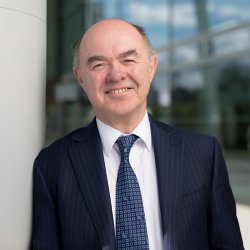
Fortunato Neri is a Full Professor of Experimental Physics at the University of Messina, Italy, where he has been a faculty member since 2005. He is affiliated with the Department of Mathematical and Computer Sciences, Physical Sciences and Earth Sciences (MIFT) at the University of Messina, located at Viale F. Stagno d'Alcontres, 31 - 98166 Messina, ITALY. His academic career spans over four decades, beginning with his Physics degree earned summa cum laude (110/110) from the University of Messina in 1979, followed by positions as University Researcher (1983-1992) and Associate Professor of Solid State Physics (1992-2005). Professor Neri's research focuses on experimental studies and development of technological applications in solid state physics, with particular emphasis on thin film deposition techniques, synthesis of nanostructured materials, and spectroscopic diagnostics. His current research activities include the synthesis and diagnostics of nanostructured materials in colloidal form and thin layers, as well as optical and electronic spectroscopy characterization of nanostructured compounds. With over 200 publications in international scientific journals and an h-index of 34 (as of 2023), his work demonstrates significant impact in the field with over 4000 citations. His recent publications (2023-2025) reveal a strong focus on laser-material interactions, nanomaterials for biomedical applications, and advanced characterization techniques. The research spans multiple disciplines including semiconductor device analysis, cancer diagnostics, environmental sensing, optical engineering, and wound healing applications, demonstrating the interdisciplinary nature of his work that bridges physics, materials science, and biomedical engineering. 2022 Editorial Board Member of the journal Materials (MDPI) Professor Neri has served as advisor to numerous doctoral students and graduate theses on experimental research topics concerning the preparation, characterization, and applications of thin-film and nanostructured compounds. His research has been supported by multiple grants including a three-year industrial research project funded by MIUR (2006-2010) on thin carbon layers for anti-erosion coatings, a project funded by STMicroelectronics (2006-2007) on chemical-physical analysis by XPS spectroscopy, and the MEDNETNA project (2011-2014). He heads four research laboratories at the MIFT Department: the Microanalysis Laboratory (featuring SEM, STEM and microanalysis capabilities), the Thin Film Laboratory (with X-ray Photoelectron Spectroscopy & Imaging), the Nanomaterials Laboratory (specializing in laser ablation techniques in liquids, ultrasonic spraying, and electrospinning), and the Electronics and Chemistry Laboratory (supporting the MNS Micro and Nano Systems group). These facilities support his research in nanomaterials synthesis and characterization and serve as critical resources for the university's research community.