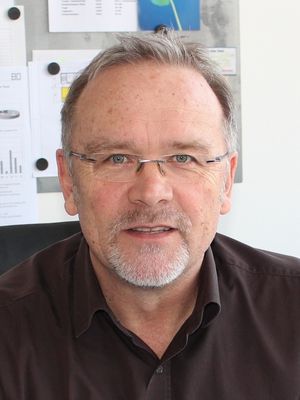
Pilar Domingo Calap is an Associate Professor at the Universitat de València, affiliated with the Faculty of Biological Sciences and the Department of Genetics. Her research focuses on bacteriophage biology, viral evolution, and combating antibiotic resistance through phage therapy. She has contributed to understanding phage-host interactions, bacterial resistance mechanisms, and innovative applications of phage-based technologies in environmental and biomedical contexts. Recent publications highlight her work on phage depolymerases, capsule-specific targeting strategies, and synergies between phage therapy and nanotechnology. Her research group (EnBiVir) explores bacteriophages' applications in global health, while collaborations with EVOSALUD emphasize experimental evolution and epidemiology. She has developed tools like CleanBar for single-cell omics and DepoScope for enzyme annotation, demonstrating expertise in computational approaches to virology. Her studies span clinical applications (e.g., cystic fibrosis lung rejection, prosthetic joint infections) and environmental interventions (e.g., Salmonella control in broiler farms, Xylella fastidiosa mitigation).
Dr. Uta Passow is a Professor and Canada Research Chair Tier 1 in Biological Oceanographic Processes at the Memorial University of Newfoundland . She leads the AEON Laboratory (Anthropogenic Effects on the Oceanography of Newfoundland) at the Ocean Sciences Centre, focusing on ocean-climate interactions and pollutant impacts. Specializes in Biological Carbon Pump dynamics under climate change Investigates oil spill and microplastic pollution mechanisms Conducts lab and field research in Labrador Sea and Gulf of Mexico Her lab AEON Laboratory explores: Marine snow aggregation and fragmentation Microplastic transport pathways Oil biodegradation in freshwater and marine ecosystems Scientific contributions include: Fellow of The Royal Society of Canada Lead researcher in Transforming Climate Action and Multi-Partner Research Initiative projects Collaborations with Nunatsiavut communities and Fisheries and Oceans Canada Recent publications address oil-marine snow interactions , microplastic sedimentation , and storm impacts on carbon flux . Her work informs ocean policy and spill response strategies.
Professor Simon Pollard OBE DIC PhD DSc FREng FHEA is a Professor of Environmental Risk Management at Cranfield University's School of Water, Energy and Environment. With over 20 years of service at Cranfield, he has held numerous leadership positions including Pro-Vice Chancellor for the School of Water, Energy and Environment (2014-2021) and Pro-Vice-Chancellor International (2018-2024). He has served on the University's Executive for a decade and chaired key committees including Cranfield's Board for Energy and Environment, Health and Safety Committee, and International Committee. As an environmental engineer, Professor Pollard earned his PhD from Imperial College and his DSc from Cranfield University. His academic journey has positioned him as a leading authority in environmental risk governance, with significant contributions to government guidelines on environmental risk and leadership of risk centers for EPSRC and NERC. Professor Pollard's research focuses on environmental risk governance, preventative risk management, and regulatory design, with recent work exploring risk governance in the international water sector. His scholarship directly addresses the green economy, seeking to reconcile society's concerns about pollution with organizational responsibilities for safe management. His work spans carbon and climate risk, environmental policy, corporate sustainability, waste management, and resource efficiency. His extensive publication record demonstrates expertise across environmental engineering, risk assessment methodologies, water utility management, and sustainable waste practices, consistently bridging theoretical frameworks with practical applications. Professor Pollard has been honored with several prestigious awards including: Order of the British Empire (OBE) in 2020 Fellowship of the Royal Academy of Engineering (FREng) Fellowship of the Higher Education Academy (FHEA) Professor Pollard has served in numerous advisory capacities beyond academia, including membership on the Government's Interdepartmental Liaison Group on Risk Assessment, the joint engineering institutions' Hazards Forum, and BBSRC's Beringer Panel. As editor of Science of the Total Environment for 16 years, he has significantly influenced environmental research publication standards. His international engagement includes visiting professorships at the University of South Australia, Jiangsu University, and most recently, the University of Salerno (2024). Professor Pollard has led significant initiatives in responsible internationalization, resetting Cranfield's approach to academic partnerships amid changing geopolitical climates and renewing the university's approach to knowledge diplomacy. His work has directly influenced UUKi's commitment to international postgraduate education.
Ayşe Nur Şavkan serves as Assistant Professor in the Department of Horticulture at Kırşehir Ahi Evran University's Faculty of Agriculture since 2025, following her tenure as Lecturer (2020-2025) at the same institution. Her academic foundation includes a PhD (2018-2023), MSc (2015-2018), and BSc (2011-2015) in Horticulture from Selçuk University, establishing her expertise in vegetable crop improvement. Her educational qualifications: PhD in Horticulture, Selçuk University (2018-2023) MSc in Horticulture, Selçuk University (2015-2018) BSc in Horticulture, Selçuk University (2011-2015) Dr. Şavkan's research integrates molecular biotechnology with traditional breeding to enhance vegetable crops' resilience. She specializes in developing stress-tolerant genotypes through molecular marker-assisted selection, with particular emphasis on salinity and cold tolerance in peppers and squash. Her work bridges laboratory techniques with field applications to address climate-related agricultural challenges, focusing on both morphological characterization and physiological mechanisms of stress adaptation. Analysis of her 14 publications (2020-2025) reveals consistent thematic progression in vegetable breeding. Early work established foundational knowledge in dihaploidization techniques for squash, while recent studies demonstrate sophisticated integration of machine learning for germination analysis and molecular screening for dual virus resistance in peppers. Her research trajectory shows increasing methodological complexity—from basic morphological characterization to multi-omics approaches—while maintaining focus on practical crop improvement for Turkish agriculture. Dr. Şavkan has not received documented scientific awards to date. Her research leadership is evidenced through principal investigatorship of a current Kırşehir Ahi Evran University project (2025-2026) investigating low-temperature pepper germination using machine learning. As co-investigator, she has contributed to nine additional projects including TÜBİTAK-funded initiatives on salt-tolerant pepper development and virus-resistant vegetable breeding, demonstrating sustained research productivity. She operates within a robust collaborative network centered at Kırşehir Ahi Evran University, with particularly strong partnerships with Önder Türkmen (13 joint publications) and Ayşe Çandar (7 collaborations). This interdisciplinary team combines expertise in molecular biology, plant physiology, and field horticulture to address complex agricultural challenges through integrated research approaches.
Dr Luke Johnson is a Lecturer/Assistant Professor in Biochemistry and Microbiology at University College Dublin’s School of Biomolecular and Biomedical Science (SBBS) and a Conway Institute Fellow. He leads an interdisciplinary research group that couples enzyme engineering with chemoenzymatic synthesis to create terpene natural products and semiochemicals for sustainable agriculture and human-health applications. Education: BSc – University of Sheffield PhD – University of Sheffield (Structural enzymology of phosphoryl-transfer enzymes) Research Interests: Johnson’s programme centres on four inter-linked themes: (i) discovery and biosynthetic logic of terpene natural products, (ii) engineering terpene synthases and accessory enzymes for altered product profiles, (iii) developing modular chemoenzymatic cascades that convert inexpensive prenol precursors into complex terpenoids, and (iv) leveraging these technologies to produce insect pheromones and semiochemicals that replace broad-spectrum insecticides within Integrated Pest Management strategies. Recent work focuses on scaling microbial fermentation of Solanum habrochaites -derived terpene semiochemicals to control hemipteran pests, an effort supported by BBSRC IAA and NetZero Innovation Institute funding. Scientific Awards & Grants: Entrepreneur Lead, BBSRC ICURe Explore – CounTERPart Semiochemicals (2023) BBSRC Innovation-to-Commercialisation grant – “Advancing high-value terpenoidal semiochemicals for crop protection” (2023-2024) NetZero Innovation Institute Seedcorn – “In-situ biocatalytic production of terpene semiochemicals” (2022) Research Team & Infrastructure: Johnson’s laboratory is embedded within SBBS and the Conway Institute at UCD, providing access to state-of-the-art facilities in structural biology, high-resolution NMR, and microbial fermentation. While no doctoral students are currently listed, active collaborations span Cardiff University, industrial partners in agri-tech, and translational programmes funded by BBSRC and Innovate UK.
James D. Kelly is a University Distinguished Professor in the Department of Plant, Soil and Microbial Sciences at Michigan State University (MSU), with a 40-year career in dry bean breeding and genetics. His work focuses on developing high-yielding, disease-resistant bean cultivars using molecular markers and international collaborations through the Legume Innovation Lab. He has trained numerous graduate students, including global researchers like Rwanda's Minister of Agriculture Gerardine Mukeshimana. Education : B.S. and B.Agr. (Hons.) from Queen's University of Belfast (1968-1969); M.S. and Ph.D. in Plant Breeding & Genetics from the University of Wisconsin (1971-1974) His research spans symbiotic nitrogen fixation, drought tolerance, canning quality, and disease resistance in Phaseolus vulgaris . Recent publications highlight QTL mapping, transcriptome analysis, and cultivar registrations like 'Cayenne' and 'Red Cedar'. Scientific recognition includes the University Distinguished Professor title. His lab collaborates globally, impacting food security in East Africa, and he plans to retire soon while maintaining ongoing breeding innovation.
Vanessa Magnanimo is a Full Professor at the MESA+ Institute, University of Twente, specializing in the micromechanics of granular materials and clays using advanced Discrete Element Method (DEM) simulations . Her research bridges micro- and macro-scale behavior of soils, focusing on computational modeling , small-strain stiffness , and material stabilization . She has led 107 research outputs and 2 datasets , including studies on wet granular systems , bio-cemented soils , and vegetated soil mechanics . Recent work includes 2025 publications on coarse-grained DEM and mixing indices in industrial processes. Notable activities include keynote talks at international events (2018–2020), visiting researcher appointments at institutions like 3SR Laboratory (2017) and Politecnico di Bari (2020), and editorial contributions. Her research spans geotechnical engineering , powder technology , and multi-scale modeling , with applications in soil stabilization , industrial powder handling , and eco-mechanical systems .
Alexander Gitlin, MD, PhD , is an Assistant Member in the Immunology Program of the Sloan Kettering Institute at Memorial Sloan Kettering Cancer Center , and an Adjunct Assistant Professor (by joint appointment) at the Weill Cornell Graduate School of Medical Sciences . He directs the Gitlin Lab, which investigates how inflammatory cell signaling controls the magnitude and quality of innate immune responses in health and disease. Education & Training AB, Chemistry & Physics – Harvard University, 2009 PhD, Immunology – The Rockefeller University, 2016 (mentor: Michel Nussenzweig) MD – Weill Cornell Medicine, 2017 Residency, Clinical Pathology – Stanford University, 2017-2019 Post-doctoral training – Genentech, Inc. (Vishva Dixit laboratory), 2019-2022 Research Focus The Gitlin Lab combines genome-editing , proteomics , advanced imaging , and in-vivo models to dissect molecular circuits that balance cell survival and death during innate immune activation. By studying genes mutated in inherited autoinflammatory diseases, the group aims to uncover new therapeutic targets for immunodeficiency, auto-inflammation and cancer. Representative Publications Trend Across 25 peer-reviewed articles (2011-2025), Gitlin’s work moves from foundational studies on germinal-center B cell selection to recent high-impact papers that mechanistically link ubiquitin signaling, caspase activity and Toll-like receptor pathways. These studies collectively illuminate how post-translational modifications tune inflammatory intensity. Scientific Awards & Honors Pershing Square Sohn Cancer Prize – 2025 NIH Director’s DP5 Early Independence Award – 2022-2027 Josie Robertson Investigator – 2022-2027 Burroughs Wellcome Fund Career Award for Medical Scientists – 2022 NIAID K08 Mentored Clinical Scientist Award – 2021 Harold M. Weintraub Graduate Student Award – 2016 Training & Mentorship Gitlin currently mentors four PhD students (Kanno, Londoner, Morrison, Pacini) drawn from the Tri-Institutional and Gerstner Sloan Kettering programs. The lab hosts research fellows, technicians, and rotating students, and maintains active recruitment for fully-funded post-doctoral positions. Lab & Institutional Affiliations The Gitlin Lab is physically housed within the Immunology Program at the Sloan Kettering Institute, with access to core facilities for CRISPR editing, single-cell genomics, high-resolution imaging and mouse models. The group is additionally affiliated with the Gerstner Sloan Kettering Graduate School of Biomedical Sciences and the Weill Cornell Immunology & Microbial Pathogenesis PhD program .
Chun-Jun (CJ) Guo is an Associate Professor at Weill Cornell Medicine's Jill Roberts Institute for Research in Inflammatory Bowel Disease, Department of Medicine. His research focuses on developing genetic tools for human microbiota and investigating molecular mechanisms of host-microbe interactions related to IBD and metabolic diseases. Education: B.Sc. in Pharmacy, Fudan University (2009) Ph.D. in Pharmacy, University of Southern California (2015) Research Interests: Dr. Guo's lab integrates bioinformatics, microbial genetics, metabolomics, and chemical biology to study how microbiota-derived molecules influence host immunity and disease. Key areas include CRISPR-based microbiota engineering, bile acid metabolism, and therapeutic reprogramming of host-microbe interactions. Publications: Recent work highlights microbiota-driven bile acid modifications in cancer, probiotic cross-feeding strategies for metabolic diseases, and serotonin's role in neonatal immune tolerance. His tools for genetic manipulation of nonmodel gut microbes enable mechanistic studies in vivo. Scientific Awards: 2023 Scialog Award 2022 Kenneth Rainin Foundation Innovator Award 2020 Noster & Science Microbiome Runner-Up Prize 2020 AGA-Allergan Pilot Award in IBD 2019 NIH New Innovator Award Labs & Teams: The Guo Group develops CRISPR-Cas9 systems for Clostridiales and other gut bacteria, investigates microbiota metabolites in preclinical mouse models, and collaborates on translational studies linking microbial genetics to immune/metabolic diseases.
Kristel Bernaerts is a Professor at KU Leuven's Faculty of Engineering Sciences within the Department of Chemical Engineering, leading research in Chemical and Biochemical Reactor Technology and Safety (CREaS). She serves as Program Director for POC Safety Engineering and holds multiple leadership roles including membership in the Faculty Council of Engineering Sciences and the Committee for Prevention and Protection at Work. Faculty of Engineering Sciences Chemical and Biochemical Reactor Technology and Safety (CREaS) iSi Health - KU Leuven Institute for Physics-based Modeling Her research focuses on microbial biotechnology with emphasis on oral microbiome engineering, biofilm dynamics, and chemical process safety. Key areas include probiotic delivery systems for periodontal treatment, microbial reactor optimization, and safety engineering for biological products. She develops innovative technologies like slow-release devices for oral probiotics and electrospinning-based encapsulation methods. Recent publications reveal strong trends in oral biofilm modulation (65% of 2023-2025 works), microbial community engineering (25%), and safety/risk analysis (10%). Her work bridges fundamental microbial ecology with clinical applications, particularly in periodontitis treatment and probiotic delivery. As an active supervisor, she mentors PhD candidates including Loverdou, N. and Bäcker, L.E. across interdisciplinary projects spanning chemical engineering, dentistry, and synthetic biology. Her current €15M+ research portfolio includes: EU-funded MICROTUNe platform for bioprocess optimization (2024-2030) Probiotic dry toothpaste development (2024-2027) Wood-eating beetle microbiome valorization (2023-2027) AI-driven antivirulent protein design (2024-2028) She leads the POC Safety Engineering program and contributes to chemical engineering education through courses on process safety, reactor engineering, and analytical chemistry.
Professor Lennart Randau is a leading researcher in the field of Genetics at Philipps University of Marburg, affiliated with the Faculty of Biology. His work is conducted in conjunction with the Max Planck Institute for Terrestrial Microbiology in Marburg, Germany, where he investigates molecular mechanisms underlying CRISPR-Cas systems and related biotechnological applications. Research focus on CRISPR-Cas evolution and inhibition mechanisms Investigates structural and functional diversity of prokaryotic defense systems Active in developing genome engineering tools from microbial systems His recent publications highlight CRISPR-Cas transitions from natural immunity to synthetic biology applications, with particular emphasis on anti-CRISPR proteins and transposon-associated gene integration mechanisms. Professor Randau's laboratory employs interdisciplinary approaches combining molecular biology, biochemistry, structural biology, and genomics to unravel the complexities of microbial genetic defense systems and their potential applications in biotechnology.
Thomas Scholten is Professor of Soil Science and Geomorphology at the Department of Geoscience, Faculty of Science, Eberhard Karls University Tübingen. He has been director of the Institute of Geography at Tübingen University since 2006 and has held various leadership roles including President of the German Soil Science Society (2012-2015) and council member of the European Society for Soil Conservation since 2004. In 2016, he was elected as a member of German National Academy of Science and Engineering (acatech). Since 2017, he has been co-speaker of the Collaborative Research Center (SFB 1070) 'ResourceCultures' and since 2019, he has been a principal investigator in the Cluster of Excellence 'Machine Learning - New Perspectives for Science' at Tübingen University. Chair of Soil Science and Geomorphology (full professor) at Eberhard Karls University Tübingen (2005-present) Director of the Institute of Geography at Tübingen University (2006-present) Co-speaker of the Collaborative Research Center (SFB 1070) 'ResourceCultures' (2017-present) Principal Investigator in the Cluster of Excellence 'Machine Learning' (2019-present) Professor Scholten's research focuses on soil science, environment, geomorphology, geoecology, soil erosion, and machine learning applications in soil science. His fieldwork spans Europe, Africa, and Asia with major projects in South Africa, Swaziland, Sudan, Israel, China, Nepal, Switzerland, and Germany. He has published extensively with 9 books, 228 refereed papers, and 378 conference papers to his name. His recent publications reveal a strong integration of traditional soil science with cutting-edge machine learning techniques, particularly in digital soil mapping, soil erosion prediction, and resource management. The research spans multiple continents and addresses critical environmental challenges through interdisciplinary approaches combining soil science, remote sensing, and computational methods. Member of German National Academy of Science and Engineering (acatech) (2016-present) President of the German Soil Science Society (DBG) (2012-2015) Council member of the European Society for Soil Conservation (ESSC) (since 2004) Editorial board member of Journal of Plant Nutrition and Soil Science, Pedosphere Professor Scholten has received research grants from over 15 institutions, primarily the European Union (EU), the German Research Foundation (DFG), and the German Federal Ministry of Education and Research (BMBF). He serves as a referee for numerous international journals and has advised on scientific policy through various advisory boards and committees. His work has significant implications for sustainable land management and climate change adaptation strategies globally. He leads the Soil Science and Geomorphology work group at the University of Tübingen, with research activities spanning field studies, laboratory analyses, and computational modeling. His team collaborates with researchers across disciplines including geography, ecology, computer science, and archaeology to address complex environmental challenges through the ResourceCultures Collaborative Research Center and other international projects.
Katharine Suding serves as a Professor in the Department of Ecology and Evolutionary Biology at the University of Colorado Boulder, leading the Suding Lab focused on plant community ecology at the intersection of ecosystem, landscape, and population biology. Her work integrates long-term monitoring, modeling, and experimental approaches across diverse ecosystems—from alpine tundra to grasslands—with conservation groups, government agencies, and land managers to develop evidence-based solutions for restoration, species invasion, and environmental change. Her educational background includes a PhD from the University of Michigan (1999) and a BS from Williams College (1994). Key research interests center on plant-soil feedbacks, functional traits, species effects on ecosystem processes, and non-linear/threshold dynamics in ecological systems. Her work emphasizes usable science that addresses biodiversity conservation, human well-being, and management opportunities through frameworks like cross-scale facilitation and adaptive capacity for restoration. Recent publications reveal strong trends in integrating remote sensing with causal inference for biodiversity monitoring, redefining restoration intervention continua beyond active-passive dichotomies, and exploring climate change impacts on alpine phenology and soil communities. Her research consistently bridges theoretical ecology with practical applications, particularly in grassland and tundra restoration under global change. Scientific recognition includes: Bower Award and Prize for Achievement in Science (Franklin Institute, 2025) Eminent Ecologist (Journal of Ecology, 2023) Highly Cited Researcher (Web of Science, 2016-2019) MacArthur Award (Ecological Society of America, 2018) Fellow of AAAS and ESA Dr. Suding actively mentors 26 degree-seeking students (current and alumni), including PhD candidates in grassland restoration and MS students in conservation biology. Her lab secures significant grants for projects like alpine climate resilience and invasive species management, emphasizing collaborative frameworks with stakeholders. The Suding Lab maintains a strong commitment to inclusive science through field safety protocols, peer mentorship, and equitable opportunity strategies, operating from CU Boulder's Sustainability, Energy and Environment Community building. The lab fosters interdisciplinary teams studying critical transitions in ecological systems, with current projects spanning from Colorado grasslands to tropical restoration. Future work focuses on scaling restoration science through remote sensing integration and developing adaptive capacity metrics for climate-vulnerable ecosystems.
Prof. Dr.-Ing. Bernd Nolting is a faculty member at the Bochum University of Applied Sciences , where he has served since 1996 as Professor of Urban Water Management. He was Dean of the Department of Civil and Environmental Engineering from 1999–2005. His career spans international projects in Germany (Düsseldorf, Regensburg, etc.), India, Palestine, China, Russia, Romania, and Bulgaria. Education: Dipl.-Ing. in Civil Engineering (specializing in Urban Water Management, Hydrology, Hydraulic Engineering) from Technical University of Hanover Doctorate: Ruhr University Bochum His research focuses on wastewater drainage systems , sewer network calculations , rainwater infiltration , and water-sensitive urban planning . He specializes in addressing urban flash floods , rehabilitation of water supply networks , and hydraulic optimization of drainage systems . Publications from 1988–2009 reveal expertise in membrane bioreactors , nutrient removal (nitrogen, phosphorus), stormwater management , and cost-effective wastewater solutions . Key themes include biological and chemical treatment interactions , filtration systems , and sustainable urban infrastructure .
Ken D. Tape is a Professor of Ecology at the University of Alaska Fairbanks, affiliated with the Geophysical Institute. His research focuses on climate change impacts on Arctic ecosystems, emphasizing interconnections between snow, vegetation, permafrost, hydrology, wildlife, and human communities. Founded Arctic Beaver Observation Network (A-BON) (2020), coordinating circumarctic beaver research Developed repeat photography projects documenting landscape change in Alaska Principal Investigator (PI) and Co-PI for 10+ grants from NASA, NSF, USGS, DOE , and IASC His work synthesizes satellite remote sensing , field measurements, and historical data to analyze: Beaver colonization in tundra regions (2018–present) Shrub expansion and carbon dynamics (2008–2020) Hydrological changes in permafrost landscapes (2014–2022) Wildlife-vegetation interactions (2000–2017) Recent publications analyze beaver-engineered Arctic wetlands , shrub-root trait relationships , and permafrost destabilization , with methodological innovations in ground-penetrating radar and pressure transducer monitoring .