Garrett Benisch is a Lecturer at Pratt Institute's School of Continuing & Professional Studies, with expertise spanning sustainable design, material innovation, and social impact projects. His work bridges industrial design with ecological responsibility. Co-founder of Sum Studio Project Manager for Research at Pratt Institute Research Accelerator Adjunct Professor in Communications Design department Garrett's research focuses on: Material innovation using waste streams (biosolids, algae, fruit peels) Environmental sustainability through design solutions Community development in East Africa Interdisciplinary approaches combining art, science, and social activism Low-tool manufacturing techniques Temporal installations exploring ecological processes His notable projects include the award-winning Sum Waste pen made from human sewage, algae-based edible straws, and community infrastructure developments in Rwanda and Congo. Garrett emphasizes design as a tool for maintaining positive societal momentum.
Simone Fischer-Hübner is a Professor of Computer Science at Karlstad University, Sweden, serving since June 2000, and holds a Guest Professorship at Chalmers University of Technology since 2022. Her work bridges technical privacy solutions with regulatory frameworks like GDPR, focusing on human-centered approaches to security and identity management. Her academic credentials include a Habilitation degree (1999) and Doctorate (1992) in Computer Science from Hamburg University, plus a Diploma in Computer Science with Law minor (1988) from the same institution. Prior appointments include Assistant Professor at Hamburg University (1992-2000) and Guest Professorships at Stockholm University/KTH and Copenhagen Business School. Her research centers on making privacy controls usable across diverse contexts. Key themes include developing transparency tools for Privacy Impact Assessments, designing intuitive interfaces for identity management, and analyzing cross-cultural privacy preferences in intelligent transportation systems. She emphasizes practical GDPR compliance through user-centered design and investigates how metaphors can explain complex concepts like differential privacy to non-experts. Recent publications reveal a strong trend toward human-AI collaboration in privacy decisions. Her work increasingly addresses VANETs, cloud security, and automated privacy tools while maintaining user agency. There's notable focus on visualizing data risks and adapting privacy frameworks to cultural differences in driver behavior studies. Her scientific recognition includes: Honorary Doctorate from Chalmers University (2020) William Winsborough Award (IFIP WG 11.11, 2016) Multiple Best Paper Awards (ACM SAC 2018, ISD 2017) Google Research Awards (2010, 2012) IFIP Silver Core Award (2001) She leads major EU and national projects including Horizon Europe's TRUMAN (trustworthy AI) and KKS's SIGS-CyberSec graduate school. As scientific coordinator of the EU Marie Skłodowska-Curie ITN Privacy & Us, she shaped pan-European PhD training. Her advisory roles span Sweden's MSB Cyber Security Board, Norway's COINS PhD school, and the PET Symposium board. Through SWITS (Swedish IT Security Network) and Cybernode.se, she drives national cybersecurity education initiatives, including MOOC certification frameworks and GDPR training platforms used across Scandinavia.
Pablo Ricardo Gabriel Dartnell Roy is an Assistant Professor at the University of Chile, affiliated with both the Institute of Advanced Studies in Education and the Department of Mathematical Engineering within the Faculty of Physical Sciences and Mathematics. With a background in Mathematics and Education, his work spans mathematics education, cognitive science, and educational technology. Doctorate from Yale University (1991) Master's degrees from Yale University (1987, 1988) Civil Engineer in Mathematics (1985) His research focuses on mathematical cognition , cognitive biases in education , and educational measurement . Current projects include standardizing the ITeRDEA cognitive screening tool for learning difficulties and analyzing response option placement effects in assessments. His 15 most recent publications (2015-2025) demonstrate expertise in educational psychology, numerical cognition, and machine learning applications. He has received significant recognition through grants like the FONDECYT Postdoctorado and FONDEF IDEA initiatives. His teaching career spanning three decades includes courses in algebra, linear algebra, and thesis supervision at both undergraduate and postgraduate levels. Scientific Contributions : Developed mathematical models for cognitive processes Created automated item review systems Advanced educational gaming frameworks Explored fraction comparison heuristics Established neural synchrony correlates in math learning
Heli Rekula is a Senior University Lecturer of Photography at Aalto University's Department of Art and Media since 2015, following six years as Professor of Photography at Bergen Academy of Art and Design. Her internationally exhibited artistic practice spans over 25 years with significant representation in major venues including the 49th Venice Biennale. Rekula's research interests focus on photographic art, contemporary visual culture, and the intersection of literature and visual media. Her work explores themes of identity, cultural memory, and environmental relationships through photographic and video documentation. She has developed significant expertise in Finnish photographic history, particularly regarding 1990s artistic production, and maintains strong connections with international art institutions across Finland, Norway, Sweden, and beyond. Her recent publications demonstrate consistent artistic output with 25 documented works since 2015, showing particular strength in exhibition-based research, literary-inspired visual projects, and historical photographic documentation. The trajectory reveals deepening engagement with Finnish cultural heritage while maintaining international relevance through exhibitions across Scandinavia and beyond. Ars Fennica Award (2002) for 'In Between Worlds' Finnish State Prize for Photographic Art (2005) Shortlisted for Carnegie Art Award (2012) Finnish Art Society's Literature Award (2014) for 'In Hemingway's Garden' As an academic mentor, Rekula has supervised multiple student exhibitions at prestigious venues including the Pitt Rivers Museum in Oxford, Savonlinna Provincial Museum, and Helsinki's Art Fair Suomi Festival. Her educational activities extend to curriculum development for master's level photography education and collaborative academic talks exploring the relationship between writing and visual art practice. While specific grant information isn't detailed in the provided text, her state-acquired works and ministry-supported exhibitions suggest significant public funding support for her artistic research.
Jesper Enbom serves as Associate Professor in the Department of Culture and Media Studies at Umeå University, Sweden, focusing on media practices within public sector institutions including schools, police, and social services. His research examines organizational communication strategies, surveillance dynamics, and transparency mechanisms in contemporary society. His primary research interests involve surveillance studies—particularly soft surveillance and everyday surveillance practices—and news management in public organizations. Enbom investigates how institutions navigate media relations, reputation management, and digital communication challenges, with emphasis on power dynamics, ethical considerations, and institutional legitimacy. His work bridges theoretical frameworks with practical applications in educational and governmental contexts. Analysis of Enbom's publications reveals consistent thematic focus across two decades, evolving from sport journalism and educational communication toward comprehensive surveillance studies. The 2023 book 'Everyday Life in the Culture of Surveillance' represents a culmination of his work on acceptance/resistance dynamics, while his 2015-2021 research projects demonstrate longitudinal commitment to understanding organizational communication challenges. His scholarship consistently addresses the intersection of digital transformation, institutional practices, and societal impacts. Enbom has secured significant research funding including the 'iAccept: Soft surveillance – between acceptance and resistance' project (2017-2021) examining surveillance dynamics in Swedish contexts, and the 'News management challenges in social services, the police and schools' initiative (2015-2016) comparing communication strategies across public sector organizations. These grants demonstrate his capacity to lead interdisciplinary research addressing contemporary societal challenges through empirical investigation and theoretical development.
Dr. Eva-Maria Konrad is an Assistant Professor at the Institute for German Literature , Humboldt University of Berlin, specializing in Methods of Literary Studies . Her research bridges Literary Theory and Philosophical Inquiry , focusing on Contemporary Literature and the Role of Empathy in Literary Understanding . Research Focus : Fictionality, Empathy, Counterfactual Narratives, and Ethical Engagement in Literature Projects : Member (2018-2023) of DFG network Feeling and Understanding: The Role of Empathy Teaching : Courses on Fate, Contingency, and Chance in Contemporary Literature , Theories of Fictionality , and Unreliable Narration Publications highlight her work on fictional emotions, counterfactual literature, empathy’s role in interpretation, and historical fictionality debates. She co-edits the Journal of Literary Theory and the book series THEOREMA . Her email is eva-maria.konrad@hu-berlin.de . She holds a PhD (2013) and has held research roles at Goethe University Frankfurt and Regensburg.
Conor Clarke (Waitaha, Ngāti Māmoe, Ngāi Tahu; Irish, Welsh) is a Lecturer in Photography at the Ilam School of Fine Arts, University of Canterbury's Faculty of Arts, where he has been employed since July 2019. Based in Ōtautahi–Christchurch, Aotearoa–New Zealand, Clarke is represented by Two Rooms Gallery in Auckland and Jonathan Smart Gallery in Christchurch. Clarke's research engages with the living world, ecology, landscape, and concepts around nature and wildness. He is especially interested in that which is unseen, uncertain, overlooked, or barely perceptible – in remote locations or within industrial and everyday urban settings. Through various lenses and imaging technologies, he explores how the camera mediates our understanding of the non-human world, interrogating the authority of sight and the ethics of image capture. His recent work focuses on the endangered Kaikōura tītī (Hutton's shearwater) as a guiding metaphor for knowledge-gathering and art-making. Clarke's artistic practice spans medium-format camera and color negative film, fully analogue and digital photographic technologies, moving-image, and audio recording. His notable recent exhibitions include 'Site Seeing' at City Gallery Wellington (2025), 'Night Writing' at Two Rooms (2025), 'Paemanu: Awa Toi' at Queensland Art Gallery (2024), and 'Peaks & Troughs' at Jonathan Smart Gallery (2023). His groundbreaking 'As far as the eye can reach' series (2020) was created in collaboration with members of the blind and low vision community in Aotearoa-New Zealand. Best Series, Renaissance Photography Prize, London (2015) IdeasTap Award, Portfolio Review 2015 @ NRW-Forum (2015) Paemanu funding via Manatū Taonga Ministry for Culture and Heritage (2023) Rangi Ruru Girls' School Artist in Residence (2023) Harkness Fund for collaboration with blind + low vision community (2020) Clarke is actively involved in community organizations, serving as a trustee of The Physics Room Charitable Trust, a member of the Rāpaki branch of The Māori Women's Welfare League, and Deputy Chair of The Hutton's Shearwater Charitable Trust. His academic background includes a Master of Fine Arts with first class honors from the University of Canterbury (2021-2025) and a Bachelor of Fine Arts from Elam School of Fine Arts, University of Auckland (2001-2004).
Oliver Wing is an Honorary Research Fellow at the School of Geographical Sciences, University of Bristol. His work focuses on flood risk assessment, hydrology, and climate change impacts. He holds a BSc and PhD, with expertise in large-scale flood modeling, disaster risk management, and environmental policy. Education: BSc and PhD degrees (institutions unspecified). Research interests include flood vulnerability analysis, climate-driven flood dynamics, and the socio-economic implications of extreme weather events. He collaborates with senior academics like Professors Paul Bates and Jeffrey Neal in hydrology research. Dr. Wing’s publications analyze global and regional flood risk patterns, emphasizing spatial equity, climate adaptation, and high-resolution modeling techniques. His work bridges hydrological science with policy, addressing inequities in flood risk distribution and disaster response mechanisms. Recent studies highlight the urgent need for updated flood risk frameworks to account for climate change and urbanization trends. He has contributed to developing stochastic flood models for countries like the USA, Europe, and Southeast Asia. His research integrates satellite data, machine learning, and continental-scale simulations to improve flood prediction accuracy and resilience planning. Notably, his work on Hurricane Harvey’s societal impacts demonstrates interdisciplinary approaches to disaster attribution and policy evaluation. Awards: None explicitly listed in the provided text. Collaborations involve institutions like the University’s Media and PR Team for public engagement. His research outputs emphasize open-access tools for flood risk assessment, including publicly available models and datasets.
Steven Weisberg is an Assistant Professor and Director of the SCANN Lab at the University of Florida, specializing in cognitive neuroscience with a focus on spatial navigation. His work explores individual differences in navigation abilities, aging-related declines, and Alzheimer’s disease impacts. He holds a B.A. in Psychology from the College of William and Mary (2008) and a Ph.D. from Temple University (2014). Postdoctoral training included work at the University of Pennsylvania’s Center for Cognitive Neuroscience under Drs. Anjan Chatterjee and Russell Epstein. His research is supported by grants from NIA, NIMH, and the Florida Department of Health. Research interests span spatial cognition, aging, and neuroimaging, particularly examining how navigation strategies develop and decline. Notable achievements include a Psychonomics Society Fellowship and membership in the Cognitive Neuroscience Society. His SCANN Lab investigates interventions to improve spatial abilities and mitigate cognitive decline. Key Research Themes: Spatial navigation strategies, neuroplasticity, aging-related cognitive changes, Alzheimer’s disease biomarkers. Grants: Multiple external grants including NIA/NIMH funding and state health initiatives. Awards: Psychonomics Society Fellow, Cognitive Neuroscience Society member. Labs/Teams: Spatial Cognition and Navigational Neuroscience (SCANN) Lab at UF.
Frank Mueller is a Professor in Accountability, Organisations & Strategy at Durham University Business School. He holds an MSc and DPhil from Oxford University and a first-class degree from Konstanz University. With 29 years of research experience, he has published 77 works including 25 in ABS 4-rated journals and 17 in ABS 3-rated journals (h-index: 38, i10-index: 60). His research focuses on three interconnected areas: Strategy, Organisation, Leadership & Change Governance, Accountability, and Public/Private Interfaces Financial Crisis and austerity policies Recent publications explore themes like ESG mediation, philanthropic influence in higher education, discursive accountability in social media regulation, and dramaturgical approaches to strategic change. His methodology combines discourse analysis with practice theory and field studies. He has held positions at Newcastle, St Andrews, Leicester, Royal Holloway, Aston, and London Business School.
Michael Brown is a Lecturer in Childcare affiliated with the University of Derby's Provost Learning and Teaching research institute. His work focuses on creativity development in education, interdisciplinary artistic processes, and the intersection of technology with music and human experience. He has contributed to over 20 publications since 2012, exploring topics ranging from creative pedagogy in the Fourth Industrial Revolution to innovative soundscapes using tissue-conducted audio interfaces. His research emphasizes the application of artistic methodologies to project management and education, with notable projects including 'Feel it in my bones' (2017) and 'The business of invention' (2013). Brown collaborates extensively with institutions like the West East Institute and KIE Conference Publications, focusing on creativity dynamics across domains. Despite no listed awards, his work has been cited in multiple academic platforms. His research outputs demonstrate a consistent exploration of creative constraints, multimodal composition, and technology-enhanced learning environments, with over 2,000 total views across platforms.
Adam Dickinson is a Professor in the Department of English Language & Literature at Brock University, where he has established a distinguished career at the intersection of poetry and scientific inquiry. Holding a PhD from the University of Alberta, Dickinson's work spans over two decades and encompasses four critically acclaimed poetry collections and extensive scholarly publications. His research, consistently supported by SSHRC funding, pioneers innovative approaches to ecocriticism through scientific frameworks, with particular focus on metabolic processes and the Anthropocene. Education: PhD, University of Alberta Dickinson's research centers on the dynamic synthesis of poetry and scientific discourse, developing what he terms "Metabolic Poetics" to explore the inscrutable connections between human/nonhuman biological processes and global energy systems. His work integrates biosemiotics, pataphysics, and Anthropocene theory to challenge conventional signification, creating alternative modes of poetic composition that engage directly with chemical and microbial realities. This approach manifests in projects like his chemical self-testing documented in Anatomic , where empirical data becomes literary material. Analysis of Dickinson's recent publications reveals a trajectory deepening into material ecocriticism, with increasing emphasis on bodily permeability, microbial ecologies, and toxic precarity. His work transitions from theoretical frameworks toward immersive, interoceptive practices that document environmental entanglement at molecular levels. This evolution demonstrates a commitment to developing poetic forms capable of registering the complex metabolic exchanges defining the Anthropocene, moving beyond traditional ecopoetics to incorporate empirical scientific engagement. Dickinson's literary contributions have earned significant recognition: Finalist, Governor General’s Award for Poetry (2013) for The Polymers Finalist, Trillium Book Award for Poetry (2014, 2007) for The Polymers and Kingdom, Phylum Shortlisted, Raymond Souster Award (2018) for Anatomic Finalist, CBC Poetry Prize (2016) for a section of Anatomic Finalist, K.M. Hunter Artist Award in Literature Nominee, ReLit Award for Poetry (2014) Finalist, Henry Kreisel Award for Best First Book (Alberta Book Awards) As an educator, Dickinson actively supervises graduate students in poetry and poetics, environmental writing, and science-literature intersections. His SSHRC-funded research enables interdisciplinary collaborations that bridge creative practice with scientific inquiry, facilitating participation in major international literary festivals including Poetry International in Rotterdam, Harbourfront International Festival of Authors in Toronto, and Oslo International Poetry Festival. These projects exemplify his commitment to expanding poetic practice through rigorous engagement with scientific methodologies.
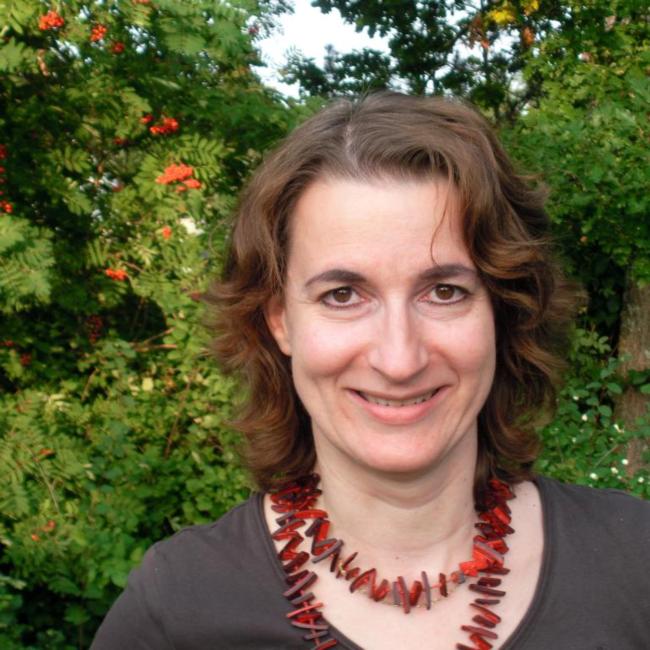
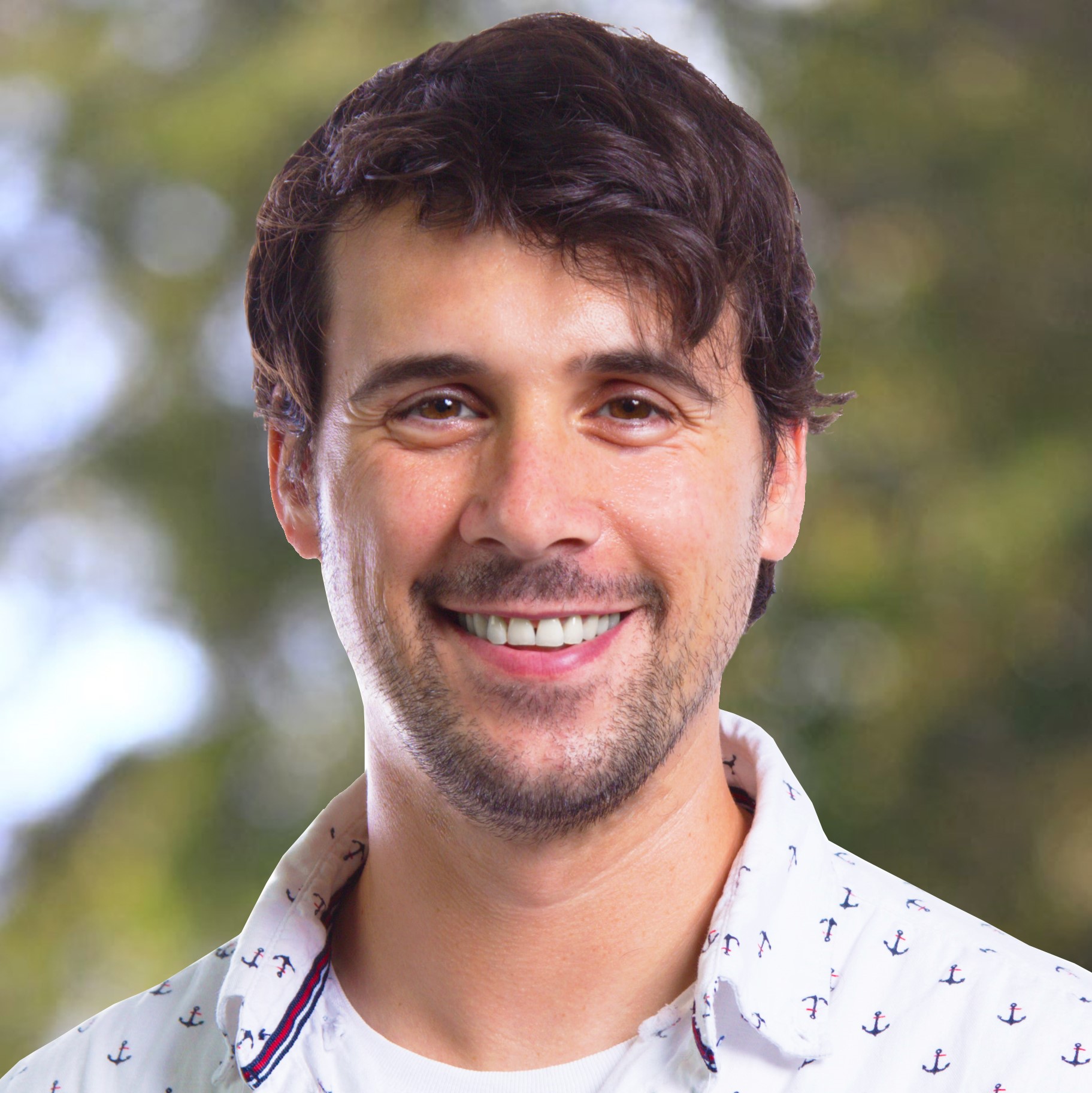
Rebecca 'Becky' Cobb, PhD, LMFT is an Associate Clinical Professor in the Couples and Family Therapy Program at Seattle University's College of Arts & Sciences. She holds dual credentials as an AAMFT Approved Supervisor and AAMFT Clinical Fellow. Her teaching philosophy emphasizes systemic perspectives, combining didactic methods with cooperative learning. She supervises using solution-focused approaches and integrates evidence-based practices with foundational systemic theories. Professional interests include creative online therapy interventions, trauma work, and teletherapy innovations. Research focuses on digital therapeutic modalities, multifaith therapeutic frameworks, and clinician resilience. Notable work includes developing virtual altar-making for grief work, teletherapy poetry interventions, and migration narrative mapping techniques. Received AAMFT's Clinical Fellow designation Author of The Therapist’s Notebook for Systemic Teletherapy Pioneered Stacking the Deck family systems game intervention Teaching portfolio includes courses on systemic theory, teletherapy ethics, and trauma-informed practice. Active in developing self-care assessment tools specifically for teletherapists. Engages in interdisciplinary research at the intersection of Buddhism and narrative therapy. Office located on the First Hill campus with contact at cobbr@seattleu.edu.
Cherie Sampson is a Professor at the School of Visual Studies within the University of Missouri. With over 30 years of experience as an interdisciplinary artist, she merges environmental performance, installation, video art, and dance to explore themes of nature, temporality, and human vulnerability. Her recent work focuses on hereditary breast cancer narratives through the "every.single.one" performance project. MFA in Intermedia & Video Art, University of Iowa (1997) BFA, Maharishi International University (1986) Sampson's research spans: Art-science intersections in integrative oncology Slow movement vocabulary in boreal landscapes Cultural reinterpretation of classical Indian dance Video art exploring genetic risk and healing Site-specific installations in international locations Her 2018-2024 works reflect cancer advocacy and environmental consciousness, combining personal experience with universal themes. Key trends include: Use of arctic and boreal environments as metaphor Integration of traditional dance with experimental forms Documentation of healing processes through art Collaboration with composers and cultural institutions Scientific & Artistic Honors: Puffin Foundation Grant Two Fulbright Fellowships Finnish Cultural Foundation Grant Arts & Humanities Research Fellowship (2022-24) Jane Chambers Award Finalist (2023) As a patient advocate, Sampson collaborates with organizations like the Society for Integrative Oncology , FACING OUR RISK EMPOWERED (FORCE) , and the Congressionally Directed Medical Research Program . Her works have been permanently collected by Pori Art Museum and featured at international festivals including Currents New Media and Movies by Movers. Current projects include the February 2025 debut of "every.single.one" at Columbia Entertainment Company Theater, with post-show discussions involving medical researchers and cancer survivors.
Andrea Efthymiou is an Associate Professor and Director of the Writing Center at Queens College, CUNY. She holds a dual role in teaching and administrative leadership, focusing on advanced writing courses that emphasize collaboration and advocacy. Her research explores writing tutor labor dynamics, staff education strategies, and innovative practices for supporting undergraduate researchers. Notable projects include a collaborative collection on interfaith dialogue in writing centers and studies on adoption rhetoric. Her teaching portfolio includes courses on collaborative writing practices and civic advocacy writing, equipping students with skills to analyze community advocacy organizations and engage in ethical rhetorical practices. Efthymiou’s work consistently bridges theory and practice, emphasizing equity, mentorship, and interdisciplinary collaboration. Recent publications (2021–2024) highlight themes of writing center labor, faith/secularism intersections, and lifelong writing practices. While no formal awards are listed, her prolific scholarly output reflects sustained contributions to writing studies. Advising and grant details are not specified in available texts, though her leadership roles suggest active involvement in program development and institutional initiatives.




/0x39:1000x1211/prod01/channel_34/media/seattle-university/directory/faculty-amp-staff-directory/images/artsci/Rebecca-Cobb_c8X10_.jpg)