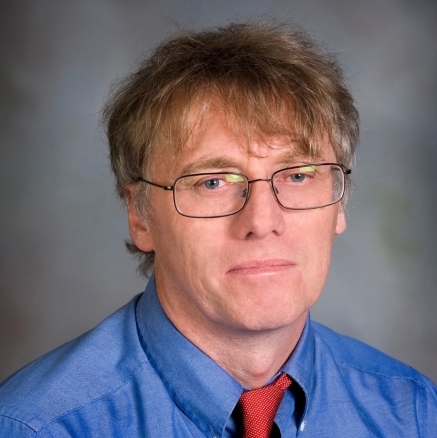
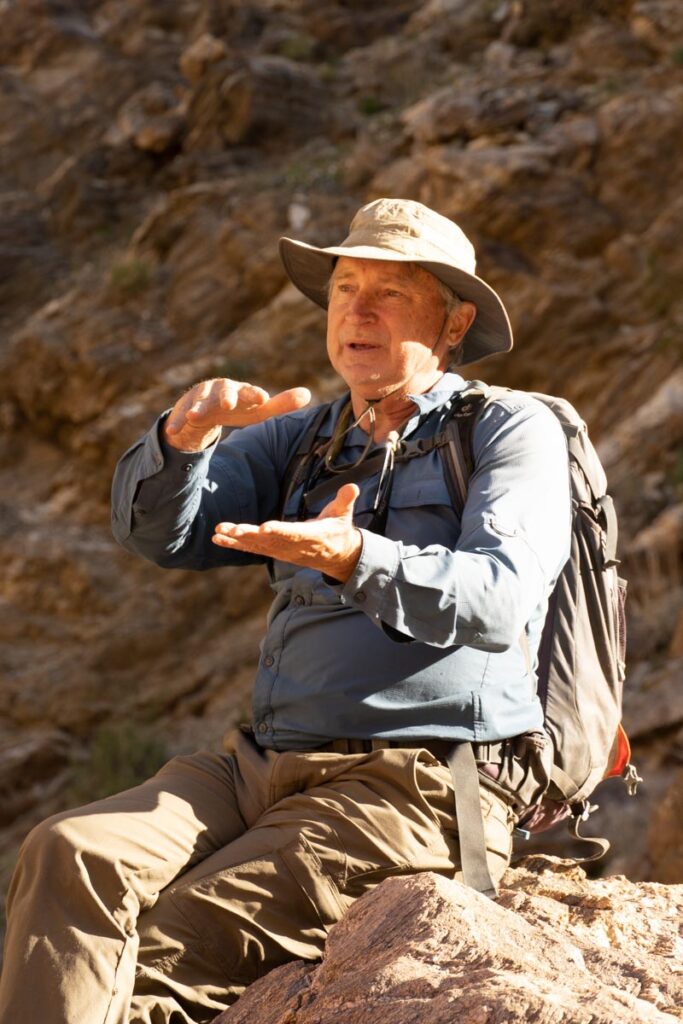
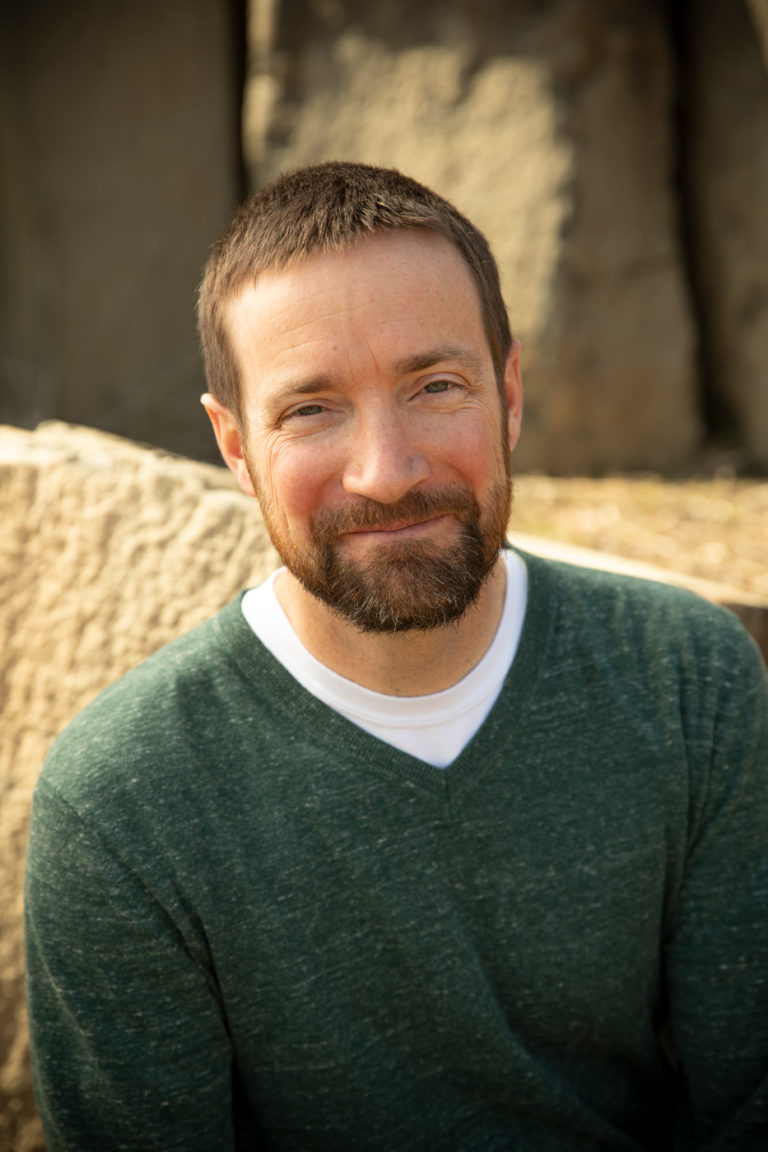
Mihai Ducea is a full Professor of Geology at the University of Arizona since 2009, with courtesy appointments at the University of Bucharest (2011–2015). He received his PhD in Geology from Caltech (1999) after a postdoc at Florida International University (1999–2000). Research Interests: Tectonics and petrology of orogenic regions, crustal thickness evolution via geochemical proxies, subduction zone dynamics, magmatic arc architecture, delamination processes, and thermal evolution of plateaus. Lab Facilities: Oversees trace elemental geochemical and radiogenic isotopic labs (ICP-MS, TIMS) for analyzing magmatic and metamorphic rocks. Scientific Contributions: Published over 400 works with 135,289 reads and 17,435 citations (h=33, i10=69). Key areas: quantifying magmatic fluxes, tracking crustal recycling, and regional studies in Western N. American Cordillera, Andes, Pamirs, Carpathians, and Tibet.
Prof. Dr. Lutz Hecht serves as Senior Research Scientist at the Museum of Natural History Berlin (Museum für Naturkunde) and Adjunct Professor for Impact Petrology at Freie Universität Berlin. His academic career spans over two decades, beginning with his habilitation in petrology and geochemistry at Technische Universität München in 2001. He has maintained continuous research activity at the Museum für Naturkunde since 2001 while holding academic appointments at Berlin universities. Dr. Hecht's research focuses on the petrology, geochemistry and alteration of impactites and micrometeorites, with particular expertise in chemical and mechanical interactions between projectiles and target rocks during impact events. His work extends to fluid-rock interactions related to mineral deposit formation across multiple continents including Europe, Canada, Australia, and South Africa. He has led significant research on urban micrometeorites collected from Berlin rooftops, demonstrating innovative approaches to extraterrestrial material collection. His extensive publication record (over 50 papers since 1994) reveals consistent contributions to understanding impact cratering processes, with recent work focusing on the Chicxulub impact structure, Ries crater, and meteorite analysis. His research combines field studies, laboratory analyses, and experimental work to investigate shock metamorphism, impact melt formation, and geochemical signatures of impact events across geological time. As Coordinator of geochemical and microanalytical facilities and Head of the SEM and electron microprobe laboratory at the Museum of Natural History Berlin, Dr. Hecht oversees critical analytical resources that support planetary science research. He also serves as Deputy Geo.X coordinator, facilitating interdisciplinary research collaborations between Berlin's geological institutions. His laboratory expertise in electron microscopy and microanalysis has been instrumental in advancing the field of impact petrology.
Kristina G. Dunkel serves as an Associate Professor in the Department of Geosciences at the University of Oslo, specializing in crustal processes within the Section for Crustal Processes. Her research focuses on microstructural evolution and deformation mechanisms in Earth's lower crust, with particular emphasis on earthquake processes and fluid-rock interactions in deep crustal environments. Education: BSc in Geosciences, University of Münster, Germany (2008-2011) MSc in Geosciences, University of Münster, Germany (2011-2013) PhD in Geosciences, University of Oslo (2013-2017) Her research program integrates detailed microstructural analysis with experimental petrology to investigate earthquake mechanics in the lower crust. Key interests include pseudotachylyte formation as seismic records, dehydration embrittlement processes, and fluid-driven metamorphism in granulite and ultramafic systems. Her fieldwork primarily focuses on Norwegian ophiolite complexes including Lofoten and Leka, where she examines pristine microstructures preserved in deep crustal rocks. Teaching responsibilities encompass Mineralogy (GEO2110), Petrology and Geochemistry (GEO2150), and Petrography and Microstructures (GEO4810), emphasizing hands-on laboratory techniques for microstructural analysis. Analysis of her publication record reveals consistent thematic focus on the intersection of seismology and petrology, with increasing attention to fluid-mediated processes in the lower crust since 2017. Her work demonstrates methodological diversity, combining field observations, microstructural characterization, and experimental approaches to address fundamental questions about crustal strength and earthquake nucleation. Dr. Dunkel actively participates in multiple collaborative research initiatives including Break-Through Rocks (ERC), CO2Basalt, CONTINENT (investigating earthquake conditions in the lower crust), NATSORB, and REACTivity under confinement projects. She maintains strong affiliations with the CO2 Storage research group and the NJORD Centre for Studies of the Physics of the Earth, where her expertise in crustal deformation contributes to understanding subsurface processes relevant to carbon sequestration and geothermal energy.
Eric Salomon is a Researcher at the Friedrich-Alexander-Universität Erlangen-Nürnberg in the Department of Geography and Earth Sciences , affiliated with the Chair of Geology (Prof. Dr. Stollhofen). His work focuses on sedimentology, structural geology, and diagenesis with emphasis on fluid flow dynamics in rift basins, particularly in Namibia and Greenland. Key Research Areas: Sedimentology, Structural Geology, Diagenesis, Tectonics, Fluid Flow in Sedimentary Basins Recent Work: Studies on calcite vein formation in porous sandstones, heterogeneous compaction in aeolian reservoirs, and fault-controlled fluid circulation in rift systems. Collaborations: International partnerships including research institutions in Norway, Denmark, and Turkey. His current research addresses diagenetic processes in the Huab Basin (Namibia) and NE Greenland rift systems, including projects funded by the DFG (e.g., "Compaction-dominated diagenesis in Namibia").
Grégoire Eugene Philippe Messager is an Associate Professor (part-time) at the Department of Geosciences, University of Oslo , with his primary affiliation at Equinor. He contributes to the Section for Study of Sedimentary Basins , focusing on the interplay between structural geology and basin evolution. Research Themes : Salt tectonics, igneous intrusion-fluid interactions, diagenesis, and tectono-sedimentary processes in rift and orogenic basins. Key Regions : Andean foothills (Argentina), Central High Atlas (Morocco), Santos Basin (Brazil), and the North Sea. His recent publications highlight advancements in understanding: Salt-related basin architecture during continental break-up (2025) Structural controls on bitumen seeps in Neuquén Basin (2024) Quaternary fault activity in the Andes (2024) Vaca Muerta Formation's fluid history (2021) Technical Expertise : Integrates fieldwork, geochronology (U-Pb dating), and analogue modeling to study basin deformation and diagenetic evolution.
Dr. Cristina Persano is a Professor of Geosciences at the School of Geographical & Earth Sciences , University of Glasgow. Her research focuses on tectonic and landscape evolution using advanced thermochronometric techniques. Key research areas: Geochronology, Thermochronometry, Tectonics, Landscape Evolution, Paleoclimate Her recent work explores exhumation processes in Tibet, South Africa, and the Carpathians, alongside Holocene sea-level changes via Scottish speleothems. She supervises PhD students Kang Xie and Chang Zhong. Selected publications analyze: • Tibetan Plateau topographic development (2024) • Passive margin dynamics in South Africa (2017) • Cosmogenic nuclide applications (2015)
Christian Teyssier is a Professor in the Department of Earth and Environmental Sciences at the University of Minnesota, College of Science and Engineering. His research focuses on tectonic processes, combining structural geology, metamorphic petrology, and advanced analytical techniques. Contact: teyssier@umn.edu Office: 344-01 John T. Tate Hall, 116 Church Street SE, Minneapolis, MN 55455 Research Interests include subduction, collision, crustal thickening, partial melting of crust, orogenic collapse, and the development of continental and oceanic core complexes. His group employs geochemical and geochronological methods, numerical simulations, microstructural analysis via electron backscatter diffraction, and rock/mineral experiments. Current fieldwork spans the North American Cordillera, Alpine belt (Aegean/Anatolia), Norwegian Caledonides, and the Variscan belt of western Europe. Projects emphasize hydration of oceanic lithosphere, partially molten crust flow, and exhumation of high-pressure rocks in subduction zones.
Dr. Aaron Yoshinobu is a Professor in the Department of Geosciences at Texas Tech University (TTU), specializing in Structural Geology and Tectonics. His research focuses on magma migration, tectonic evolution of arcs, and crustal deformation, with fieldwork in the U.S. Cordillera, Norway, and the Southern High Plains. He collaborates with petrologists, geochemists, and geochronologists to integrate diverse datasets. His unique interests include the intersection of geology with literature, particularly Robinson Jeffers’ poetry and stone masonry, and he advocates for soccer and trail ultramarathons. Education: Ph.D. in Geology from the University of Southern California (1999). Teaching includes advanced structural geology, sedimentary field methods, and tectonics. Current projects involve NSF-funded studies on Jurassic marginal basins (GALMAR) and Southern High Plains geomorphology. He advises numerous graduate and undergraduate students on field-based and analytical projects. Awards: None explicitly listed, though his work has received international recognition through publications in journals like Geology and Journal of Structural Geology . Grants include ongoing NSF funding (2021–2024). His research extends to planetary geology, including icy satellites and Enceladus’ tectonics. Labs/Teams: Active in TTU’s Structural Geology & Tectonics group, with collaborations spanning academia and the Robinson Jeffers Tor House Foundation. His work bridges geology with art, literature, and physical endurance, reflecting a holistic view of Earth science.
Richard D. Law is a Professor of Geology at Virginia Tech's College of Science, Department of Geosciences. With a career spanning decades, his research focuses on structural geology and tectonics, emphasizing deformation mechanisms, crystallographic preferred orientation in rocks, and the interplay between strain, thermal evolution, and tectonic processes across multiple orogenic belts. His work integrates multi-scale analysis—from crystal lattice to mountain belts—across regions including the Himalaya, Caledonides, Armorican Massif, and Brooks Range. Key themes involve deformation thermometry, quartz fabric development, and tectonic significance of shear zones. Education : PhD (1981, Chelsea College, London University), MSc (1977, Imperial College, London University), BSc (1975, Kingston University) Recent publications address advanced electron tomography, quartz deformation mechanisms, and orogenic collapse dynamics. He has co-edited major geological memoirs and supervised numerous graduate students, including Andy Parsons (2017 John Ramsay Medal awardee for G-Cubed publication).
Alvar Braathen is a Professor of structural geology at the Department of Geosciences, University of Oslo (UiO), since 2013. His academic background includes a Master's and PhD from the University of Tromsø, followed by roles at the Geological Survey of Norway (NGU), the University of Bergen’s UNI CIPR Center of Excellence, and the University Centre in Svalbard (UNIS). His research focuses on tectonic studies and fluid flow dynamics in sedimentary basins and basement rocks, with an emphasis on CO₂ storage integrity, fault seal analysis, and geological risk assessment. Key academic contributions include projects like the Longyearbyen CO₂ Lab and involvement in initiatives such as the Norwegian CCS Research Centre (NCCS) and the VISTA Centre for CO₂ Storage in Volcanic-Sedimentary Systems (VICCO). He teaches courses including GEL2130 (Structural Geology) and GEO4230 (Basin Formation and Sequence Stratigraphy). His work integrates field-based studies, seismic analysis, and experimental methods to address challenges in carbon sequestration and subsurface fluid dynamics. Research interests span structural geology, sedimentary basin evolution, and the geomechanical behavior of fault zones. Recent projects emphasize Arctic geoscience and the application of tectono-sedimentary analysis to CO₂ storage site evaluation in the North Sea and Barents regions. Collaborative efforts include international studies on fault displacement analysis, basin fill dynamics, and the geologic storage potential of carbonate-siliciclastic systems.
Michael L. Wells is a Professor of Geology at the University of Nevada, Las Vegas (UNLV), affiliated with the Department of Geology. His research focuses on integrated tectonics, structural geology, and thermochronology, with specialties in metamorphic core complexes, Cordilleran orogeny, and Sevier-Laramide tectonics. He holds a Ph.D. (1991) and M.S. (1988) from Cornell University, and a B.S. (1981) from UC Santa Cruz. Dr. Wells leads NSF-funded projects on Cordilleran metamorphic core complexes (2016–2019) and Sevier fold-thrust belt thermochronology (2011–2016). He teaches undergraduate courses like Structural Geology (GEOL 341) and graduate courses such as Strain and Microstructural Analysis (GEOL 746). His work combines field studies, geochronology, and petrology to unravel tectonic histories. Key research themes include Jurassic-Cretaceous deformation in the Funeral Mountains, exhumation histories of thrust sheets (e.g., Willard Thrust), and the interplay between contractional and extensional tectonics. His recent publications emphasize monazite petrochronology, elastic geobarometry, and structural analysis of fold-thrust belts. Grants include collaborative NSF projects totaling over $1M, and his work is published in top journals like Geological Society of America Bulletin and Tectonics . He advises graduate students on field-based structural and geochronological studies, emphasizing Western U.S. Cordilleran geology.
Chad J Pritchard is a Professor in the Department of Geosciences at Eastern Washington University. He specializes in groundwater hydrology, structural geology, and drone mapping. Pritchard is actively involved in community outreach through projects like the floodexplorer.org initiative, co-authoring Washington Rocks! , and developing the EWU Unmanned Aerial Systems (UAS) Drone Program, which launched a certificate program in 2020. His research focuses on Proterozoic tectonics, regional geology of the Inland Northwest, and contamination dynamics such as PFAS in groundwater systems. Education: PhD in Geology (not explicitly stated in text but inferred from title). His work integrates field studies, geochronology (e.g., U-Pb dating), and geochemical analysis to address tectonic, hydrological, and environmental challenges. Notable projects include subsurface deformation modeling in Spokane, paleontology studies in the Metaline Formation, and megaflood geomorphology investigations. Research interests span structural geology, Quaternary geology, and community-based applied geoscience. He emphasizes interdisciplinary collaboration, as seen in his work with the USGS-EWU Mineral Separation Lab and field camps focused on practical community projects. Grants and advising: Supervised student research including Stacy Warren’s 2022 project. Projects often involve EWU collaborations on regional geology, groundwater modeling, and drone applications. His work aligns with university initiatives like the Geology Field Camp’s pandemic-safe applied projects. Labs/Teams: Director of the EWU UAS Drone Program and involved in the EWU Hydrogeology Team. Active in local partnerships for geological mapping (e.g., Willow Lake Natural Area studies).
Dr. Rebecca Kühn is a Researcher at the Martin Luther University Halle-Wittenberg's Institute of Geosciences and Geography, Department of Geodynamics. She holds a PhD from the Georg-August-Universität Göttingen (2014–2019) and a Master's in Geosciences from the same institution (2010–2013). Her research focuses on geodynamics, sedimentology, tectonophysics, structural geology, geochemistry, and marine geology. She has conducted studies on clay mineralogy, serpentinite deformation, and subduction zone dynamics. Her work includes experimental petrology, geochemical analysis, and tectonic processes in oceanic environments. She previously worked as a PostDoc at GEOMAR Helmholtz Centre for Ocean Research, Kiel (2017–2019). Education: PhD in Geosciences, Georg-August-Universität Göttingen (2014–2019) Master of Science in Geosciences, Georg-August-Universität Göttingen (2010–2013) Bachelor of Science in Geosciences, Universität Bremen (2007–2010) Recent Research Trends: Dr. Kühn's publications emphasize clay mineral behavior in sedimentary processes, serpentinized mantle dynamics, and structural analysis of metamorphic rocks. Her work bridges field observations with experimental data, addressing subduction zone mechanics and tectonic strain in shales and serpentinites. Labs/Teams: Affiliated with the Department of Geodynamics at MLU Halle, focusing on geodynamic processes and structural geology.
Dr. Sharon Carr is a Professor in the Department of Earth Sciences at Carleton University, affiliated with the Ottawa-Carleton Geoscience Centre. She leads the Carr Lab, focusing on interdisciplinary tectonic research. Her research interests include the tectonic evolution of orogenic belts, Cordilleran and Grenville tectonics, U-Pb geochronology, extensional fault systems, metamorphic core complexes, and granites/shear zones. Methodologically, she integrates structural analysis, petrology, and geochronology to address tectonic problems. No specific awards or grants are listed in the provided text. She can be contacted via sharon.carr@carleton.ca at Herzberg Laboratories, Carleton University.
Matthew Loocke is an Assistant Professor of Research in the Department of Geology & Geophysics at Louisiana State University (LSU), serving as Director of the Chevron Geomaterials Characterization Laboratory. His research focuses on igneous and metamorphic petrology, mantle dynamics, and analytical techniques like electron/x-ray microbeam analysis. He holds a PhD in Solid Earth Processes from Cardiff University (2016) and has extensive experience in oceanic lithosphere studies, subduction zone processes, and planetary materials analysis. Loocke specializes in linking field geology with advanced analytical methods, including remote sensing and geochemical modeling. Education: PhD, Solid Earth Processes (2016), Cardiff University MSc, Geological Sciences (2013), University of Houston BSc, Geology with Honors (2011), University of Houston Research Interests: Mantle Petrology: Study of abyssal peridotites and subduction zone systems. Basaltic Petrogenesis: Crustal accretion at mid-ocean ridges and subduction zones. Planetary Geology: Characterization of lunar and Martian materials. Advanced Analytical Techniques: Development of X-ray and electron-based methods for geochemical analysis. Geoarchaeology: Applying geologic tools to archaeological questions. His work often integrates field data with lab-based microanalysis, emphasizing the application of cutting-edge instrumentation such as the Chevron Geomaterials Lab at LSU. Research Contributions: Loocke’s recent studies explore melt-rock interaction in oceanic peridotites, lunar basalt crystal cargoes, and the role of axial melt lenses in crustal accretion. His QACD software method revolutionizes quantitative elemental mapping in geologic materials. Labs/Teams: Leads the Chevron Geomaterials Lab and Shared Instrumentation Facility (SIF) at LSU, providing access to EPMA, SEM, XRF, and ICP-MS instrumentation for collaborative research.