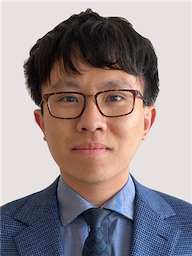
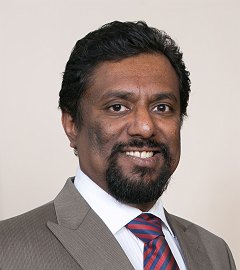
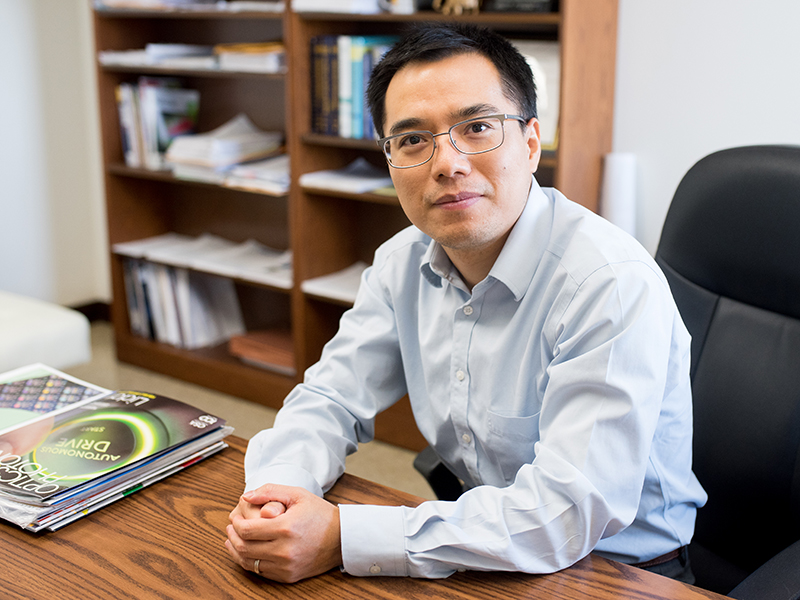
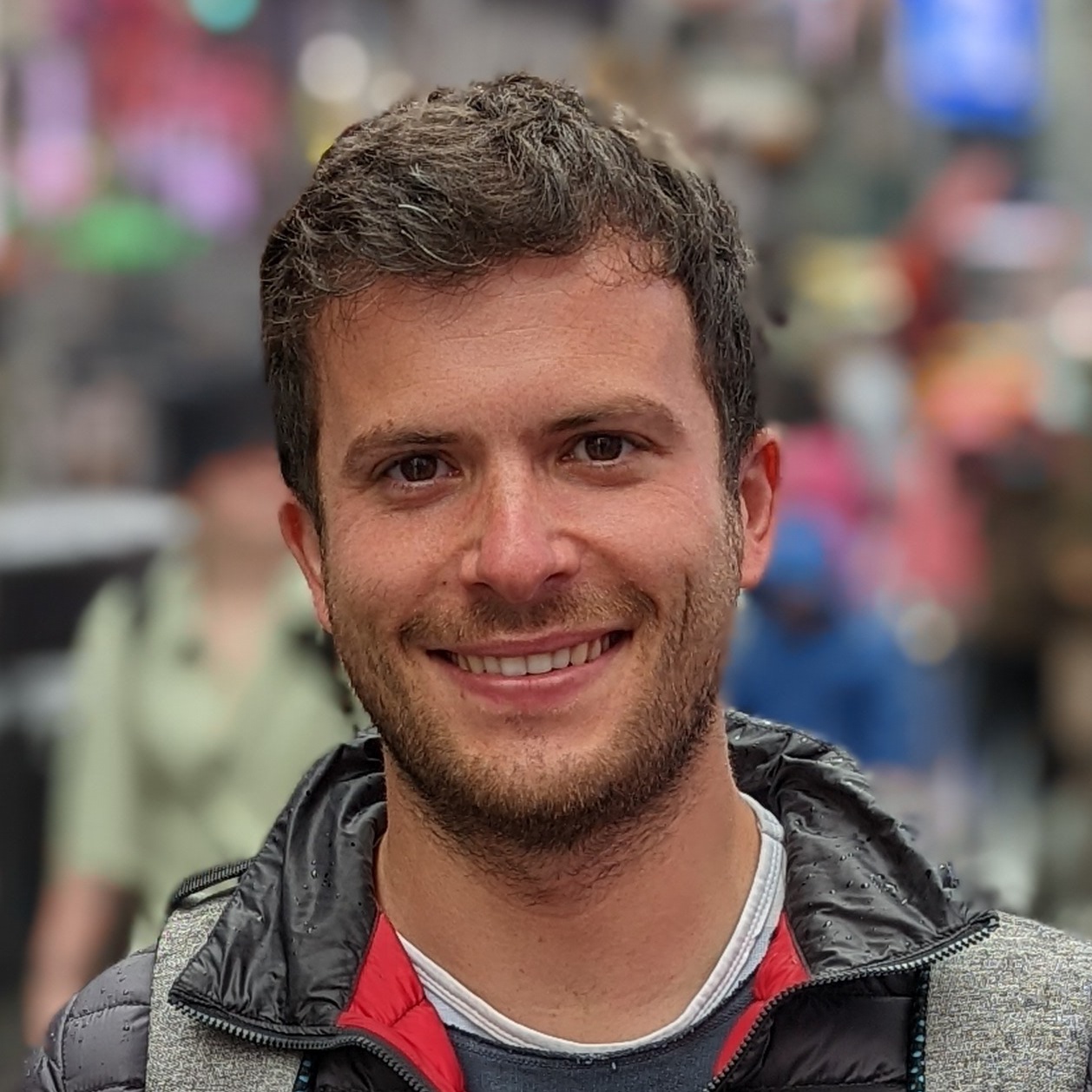
Michael Rosander , Professor at Linköping University , specializes in Work and Organizational Psychology at the Department of Behavioural Sciences and Learning (IBL) and Division of Psychology (PSY) . His research explores organizational and social work environments, focusing on workplace bullying, discrimination, and their psychological impacts. Recent work examines psychosocial safety, bystander effects, and gender dynamics in Swedish workplaces. Project leader for Swedish Research Council (Forte) initiatives (2019–2024, 2024–2026) Collaborates with Stefan Blomberg, Ståle Einarsen, and Dieter Salin Research extends to crowds, leadership interplay, and PBL group dynamics Publications span longitudinal studies, psychometric tools, and cross-disciplinary analyses of workplace health. Current projects emphasize nationwide data collection and organizational interventions.
Han Zhao is an Assistant Professor in the Department of Computer Science at the University of Illinois Urbana-Champaign (UIUC), affiliated with the Department of Electrical and Computer Engineering. He is also an Amazon Scholar at Amazon AI and Search Science. Prior to UIUC, he was a machine learning researcher at D.E. Shaw & Co. Zhao holds a Ph.D. from Carnegie Mellon University's Machine Learning Department, an MMath from the University of Waterloo, and a BEng from Tsinghua University's Computer Science Department. His research focuses on trustworthy machine learning, emphasizing transfer learning (domain adaptation, generalization, multitask/meta-learning), algorithmic fairness, and probabilistic circuits. Applications span natural language processing, signal processing, and quantitative finance. He aims to develop robust, fair, and interpretable ML systems. Recent work includes advancements in domain adaptation theory, multi-task learning optimization, and fair classification post-processing. He advises numerous PhD and master’s students across CS and ECE, co-advising some with colleagues like Hari Sundaram and Ilan Shomorony. Courses taught include CS 442 (Trustworthy ML) and CS 446 (Machine Learning). Key contributions include the MDAN framework for multi-source domain adaptation and theoretical analyses of invariant representation learning. His work balances foundational theory with practical applications, addressing challenges like hyperparameter sensitivity and scalable influence functions.
Professor Stephanie Watson OAM is a corneal surgeon and academic at the University of Sydney, leading the Corneal Research Group and serving as Head of the Corneal Unit at Sydney Eye Hospital. She holds leadership roles in Sydney Nano as co-Deputy Director for Industry, Innovation, and Commercialisation, and chairs key professional organizations including the Australian Vision Research Committee and the Asia Pacific Ophthalmic Trauma Society. Her clinical practice focuses on corneal and cataract surgery, with appointments at Sydney Eye Hospital, Sydney Children’s Hospital, and Prince of Wales Hospital. She is a RANZCO trainer and actively contributes to policy advocacy through roles in ARVO and other global bodies. Her research spans corneal therapies, keratoconus treatment via corneal cross-linking, dry eye disease management, and nanotechnology applications in ophthalmology. She leads the Save Sight Keratoconus and Dry Eye Registries, analyzing real-world patient outcomes and informing clinical guidelines. Her work bridges basic science (e.g., stem cell therapies) and clinical innovation (e.g., chitosan-based surgical adhesives), with notable contributions to antimicrobial resistance strategies in ocular infections and ocular trauma epidemiology. Professor Watson has been recognized with an Order of Australia Medal (OAM), the 2019 NSW Premier’s Prize for Science & Engineering, and global accolades including being named among the top 100 female ophthalmologists. Her research has driven advancements in corneal cross-linking techniques, dry eye quality-of-life metrics, and nanoparticle drug delivery systems. She actively engages in public education through media appearances, patient webinars (e.g., KeraClub series), and policy advocacy to address ocular health disparities. Her grants include projects on breast cancer chemotherapy’s ocular impact, AI-driven diagnosis of infectious keratitis, and high-throughput nanoparticle synthesis systems. She collaborates with industry partners like Brandon Capital and the Sydney Nano Institute, translating research into clinical solutions. Her leadership in international trauma registries (e.g., IGATES) advances global understanding of ocular injury patterns and preventive strategies.
Dr Paul Kelly is a Lecturer in Physical Activity for Health at the University of Edinburgh's Moray House School of Education and Sport, based at the Physical Activity for Health Research Centre (PAHRC). He holds a PhD from the University of Oxford, focusing on travel behavior measurement validity. His research evaluates initiatives to increase physical activity, with a focus on walking and cycling interventions, including the impact of 20mph speed limits in Edinburgh and Belfast. He also specializes in improving physical activity assessment methods through valid and reliable measures. Current research includes evaluating urban transport policies, systematic reviews of large cohort studies, and exploring mental health benefits of physical activity. Collaborations involve institutions like the University of Bristol and Cambridge, with a focus on interdisciplinary public health approaches. His publications highlight the cardiovascular and mental health benefits of active travel, while addressing potential risks like air pollution exposure. Teaching spans physical activity epidemiology, measurement methodologies, and health promotion strategies. Key projects include the Edinburgh-Belfast 20mph speed limit evaluation and the IOC Olympian Health Cohort study. His work emphasizes pragmatic evaluation and translating research into policy, such as the Health Economic Assessment Tool (HEAT) for walking/cycling.
Nathan Sturtevant is a Professor at the University of Alberta's Department of Computing Science, an Amii Fellow, and Canada CIFAR Chair. His research spans heuristic and combinatorial search problems, with applications in game AI and pathfinding algorithms. He collaborates with the games industry to implement his research in commercial products. Dr. Sturtevant's research explores search algorithms for single and multiple agents, covering areas such as bidirectional search, meta-learning for game theory, procedural content generation, and multi-agent pathfinding. His work integrates machine learning techniques with classical search algorithms to solve complex problems in game environments. Recent publications demonstrate innovations in search optimization, including novel frameworks for suboptimal bidirectional search, new puzzle difficulty metrics, and applications of transformer models to card game planning. His FarmQuest player telemetry dataset provides resources for studying player behavior in farming simulations.
Professor Saman Amarasinghe is a full Professor in the Department of Electrical Engineering and Computer Science (EECS) at the Massachusetts Institute of Technology (MIT), and Principal Investigator at MIT's Computer Science and Artificial Intelligence Laboratory (CSAIL). He leads the Commit compiler research group, which focuses on programming languages and compilers that maximize application performance on modern computing platforms. His work spans multiple academic departments and research centers, with strong affiliations to both MIT's School of Engineering and CSAIL. Professor Amarasinghe's research interests center around high-performance domain-specific languages and compiler technology . His work combines language design with sophisticated compilation techniques to deliver unprecedented performance for targeted application domains. His research spans multiple areas including image processing (Halide), sparse tensor algebra (TACO), graph analytics (GraphIt), stream computations (StreamIt), and bioinformatics (Seq). A significant thread throughout his work is the application of machine learning for compiler optimizations, from Meta optimization in 2003 to the OpenTuner autotuner framework. Analysis of Professor Amarasinghe's recent publications reveals a strong focus on sparse computing , compiler vectorization , and domain-specific language implementation . His work consistently bridges theoretical compiler concepts with practical performance gains across diverse application domains. The progression from earlier work on StreamIt and Halide to more recent projects like GraphIt and TACO shows an evolution toward more specialized, high-performance DSLs targeting specific computational patterns. His 2020-2025 publications particularly emphasize sparse tensor operations, GPU acceleration, and machine learning integration with compiler technology. ACM Fellow (2019) Professor Amarasinghe has made significant contributions to academic entrepreneurship and student development. He founded Determina, Inc. (acquired by VMware) based on security research from his MIT lab and co-founded Lanka Internet Services, Ltd., Sri Lanka's first ISP. As faculty director of MIT Global Startup Labs, his programs across 17 countries have helped create over 20 successful startups. His teaching includes the popular Performance Engineering of Software Systems (6.172) course with Professor Charles Leiserson, as well as innovative project-based courses like the Open Source Software Project Lab and Bring Your Own Software Project Lab. His educational approach emphasizes hands-on experience with compiler and language design concepts. Professor Amarasinghe leads the Commit compiler research group at MIT CSAIL, which has produced numerous influential domain-specific languages and compilers including Halide, TACO, Simit, StreamIt, and GraphIt. The lab maintains strong industry connections through projects like OpenTuner and Determina, and collaborates with researchers worldwide on compiler technology. The group's work spans both theoretical compiler research and practical implementation, with a consistent focus on bridging the performance gap between high-level programming abstractions and hardware capabilities.
Chris Spencer is a Wellcome Trust Career Development Fellow at the Nuffield Department of Medicine, University of Oxford. His research focuses on statistical genetics, with emphasis on African population genetics, malaria susceptibility (via the MalariaGEN consortium), and stratified medicine applications in hepatitis C (STOP-HCV consortium). He develops methodologies to analyze genetic determinants of host-parasite interactions and their role in disease prevention and treatment. His work explores infectious disease impacts on human immune physiology through natural selection, aiming to translate genetic insights into clinical strategies. Recent studies include structural variation in malaria resistance genes and polymorphisms linked to pneumococcal bacteremia in Kenyan children. His computational tools, such as FINEMAP, advance variable selection in genome-wide association studies. Publications span malaria genetics, viral resistance, and population admixture, reflecting a multidisciplinary approach to genomic medicine. Collaborations with global consortia highlight his commitment to addressing global health challenges through genetics.
Yuebing Zheng is a Professor of Mechanical Engineering & Materials Science and Engineering at the University of Texas at Austin, holding the Cullen Trust for Higher Education Endowed Professorship. He leads a research group innovating optical nanotechnologies for applications in health, energy, and manufacturing. His work focuses on light-matter interactions, optically active materials, and interdisciplinary training. Key roles include Graduate Advisor for the Materials Science Program and past leadership as Associate/Assistant Professor since 2013. Education: PhD in Engineering Science and Mechanics (2010), Penn State University Postdoctoral Researcher (2010-2013), UCLA (Chemistry and Biochemistry) MSc in Physics (2003), National University of Singapore BSc in Physics (2001), Nankai University Research Interests: Optical manipulation technologies (e.g., optothermal tweezers) Nanophotonics and metamaterials Machine learning for materials discovery Biomedical applications (e.g., cell analysis, chiral sensing) Clean energy systems Recent Article Trends: Focus on AI-driven materials design, optothermal microrobotics, and advanced optical systems for energy and biomedical applications. Key innovations include photonic batteries, graphene moiré systems, and steerable active particle swarms. Awards: 2025 SPIE Fellow 2024 Optica Fellow 2017 NIH New Innovator Award 2014 Beckman Young Investigator Multiple best paper awards (2019–2023) Advising & Grants: Supervised over 20 PhD students/postdocs. Active grants from NIH, NSF, ONR, NASA, and industry partnerships. Current lab focuses on optical manipulation, metamaterials, and AI-integrated nanotechnology. Labs/Teams: Director of the Zheng Research Group, affiliated with the Texas Materials Institute. Collaborates on projects merging nanoscience with machine learning and biomedical engineering.
Alberto Monge Roffarello is an Assistant Professor (RTDb) at the Department of Control and Computer Engineering (DAUIN), Politecnico di Torino, where he is a member of the e-Lite Research Group. He teaches courses including Human-AI Interaction, Digital Wellbeing, and Web Applications across multiple degree programs such as Computer Science and Systems Engineering, Computer Engineering, and Film and Media Engineering. His research centers on Human-Computer Interaction, with a strong focus on Digital Wellbeing and End-User Development in the Internet of Things . He investigates how users can personalize smart environments through trigger-action programming and how design patterns in digital interfaces—such as Infinite Scroll and Never-Ending Autoplay—exploit psychological vulnerabilities to capture attention. His work aims to empower users with tools for self-control, meaningful interaction, and habit mitigation. The recent publications highlight a consistent trajectory in digital self-control tools , attention-aware design , and semantic recommendation systems for IoT. His research bridges theoretical analysis with practical tools, including conversational agents (HeyTAP), debugging platforms (EUDebug, My IoT Puzzle), and ontologies (EUPont) to lower the barrier for non-technical users. Scientific contributions include: Systematic review of digital self-control tools (TOCHI 2022) Typology of Attention-Capture Damaging Patterns (CHI 2023) Design frameworks for meaningful interactions (AVI 2022) Behavioral interventions for smartphone habits (TiiS 2021) He actively supervises PhD students—Francesca Russo, Robert Everett Schwartz, and Luca Scibetta—on topics ranging from AI for education to digital wellbeing in high-schools. His work is supported by competitive research projects such as EMPATHY - Empathetic Mobility Platform . He has contributed to multiple national and international collaborations, notably with Santa Clara University (USA). Alberto leads and participates in research initiatives within the e-Lite - Intelligent and Interactive Systems group, focusing on intelligent interfaces, user empowerment, and ethical design. His lab develops tools that translate high-level user intentions into executable IoT rules, promote digital literacy, and support conscious technology use.
Kevin K. Lehmann is the William R. Kenan, Jr., Professor of Chemistry at the University of Virginia, within the Department of Chemistry in the College of Arts & Sciences. He is a leading researcher in molecular spectroscopy, with a focus on ultrasensitive detection methods such as cavity ring-down spectroscopy (CRDS) and double-resonance techniques. His educational background includes a B.S. from Cook College, Rutgers University (1977), a Ph.D. from Harvard University (1983), and a Junior Fellowship at the Harvard Society of Fellows. Lehmann's research is centered on advancing trace gas sensing using optical methods, particularly CRDS with high-reflectivity cavities and telecom-grade lasers. His group has pioneered Doppler-free two-photon CRDS and sub-Doppler double-resonance spectroscopy using frequency combs, enabling high-precision measurement of molecular transitions in gases like methane and nitrous oxide. These methods have applications in atmospheric science, planetary exploration (e.g., Mars missions), and combustion diagnostics. He also investigates meta-science questions around the reproducibility of spectroscopic data. The recent publications highlight a strong trend in high-resolution, quantum-limited spectroscopic techniques applied to small polyatomic molecules. There is a clear focus on enhancing selectivity and sensitivity through nonlinear optical effects, cavity enhancement, and advanced detection schemes. Applications span environmental monitoring, astrochemistry, and fundamental molecular physics. Fellow of the Optical Society, 2011 W.R. Kenan Professor of Chemistry, 2009 Earle K. Plyler Award in Molecular Spectroscopy, 2003 Thomas A. Edison Patent Award, 2002 Fellow of the American Physical Society, 1995 Lehmann has advised numerous graduate students and postdoctoral researchers, and his lab has been supported by grants from agencies involved in space exploration, environmental science, and fundamental physics. His work has led to commercial instrumentation through Tiger Optics, Inc. He maintains strong international collaborations, particularly with researchers in Sweden on methane spectroscopy. While specific grant details are not listed, the scope and impact of his research suggest sustained funding from NSF, NASA, and DOE. His laboratory focuses on optical cavity-based sensors and high-resolution spectroscopy setups, integrating frequency combs, narrow-linewidth lasers, and cryogenic pre-concentration systems for trace analysis. The team combines experimental innovation with theoretical modeling to interpret complex spectra and improve measurement fidelity.
Jeff Sadler is an Assistant Professor in the Department of Biosystems & Agricultural Engineering at Oklahoma State University, where he also serves as an Extension Specialist for Water Resources with OSU Extension. He leads the WaDE (Water Data and Education) Lab, focusing on data science and machine learning applications in water resources. Education: PhD in Civil and Environmental Engineering, University of Virginia (2019) MS in Civil Engineering, Brigham Young University (2015) BS in Civil Engineering, Brigham Young University (2013) Research Interests: Jeff’s research lies at the intersection of data science and water resources. He specializes in machine learning, particularly physics-guided and process-aware deep learning, for modeling stream temperature, water quality, flood dynamics, and hydrological forecasting. His work emphasizes real-time decision support, reproducible modeling, and integrating domain knowledge into data-driven systems. Recent Research Trends: His recent publications demonstrate a strong focus on advanced deep learning architectures (e.g., graph neural networks, recurrent models), data assimilation, multi-task learning, and surrogate modeling for environmental systems. Applications center on the Delaware River Basin and coastal Virginia, with implications for climate change adaptation and infrastructure resilience. Scientific Awards: No awards explicitly listed in the provided text. Advising and Grants: Jeff mentors graduate students and supervises master's and doctoral research. He is actively funded through multiple grants from the USDA, NOAA, and USGS, supporting projects in water quality monitoring, rural health, evapotranspiration forecasting, and integrated hydrological modeling. Labs and Teams: He leads the WaDE Lab, which develops data-driven tools for water resource education and management. He has collaborated extensively with researchers from the U.S. Geological Survey, University of Virginia, and other institutions on cyberinfrastructure, reproducible modeling, and environmental machine learning.
Dr. Sabine Graf is a Full Professor at the School of Computing and Information Systems, Athabasca University. She holds a PhD in Computing and Information Systems from Vienna University of Technology (2007) and has been a faculty member since 2009. Her research focuses on user adaptive systems, learning/academic analytics, personalization, and game-based learning, with over $2.3M in external funding and 130+ peer-reviewed publications (cited 8,200+ times). She leads the OMEGA+ educational game project and the User Adaptive Systems (UAS) research cluster. Education: PhD in Computing and Information Systems, Vienna University of Technology, 2007 MSc in Computing and Information Systems, University of Vienna, 2003 Research Interests: Dr. Graf specializes in making learning systems more intelligent through adaptive interfaces, AI-driven recommendations, and data analytics. Her work bridges educational technology, artificial intelligence, and collaborative learning. Recent projects include developing OMEGA+, analyzing student behavior in online courses, and enhancing adaptive learning systems with context-aware features. Grants & Funding: NSERC Discovery Grant ($205,000), 2020 CFI John R. Evans Leaders Fund ($164,573), 2020 AU IDEA Lab Grant ($5,000), 2021 Multiple Mitacs Globalink Internships, NSERC awards, and AU-funded projects. Advising & Team: Dr. Graf has mentored over 30 students, including PhD, MSc, and postdoctoral fellows. Notable advisees include Moustafa Mahmoud (NSERC Scholar) and Mohammad Belghis-Zadeh (3MT Competition winner). The research team collaborates globally, with members from Brazil, Taiwan, Spain, and beyond. Labs & Initiatives: The Academic Analytics Tool (AAT) project and the OMEGA+ game platform are central to her work. The UAS cluster connects researchers worldwide to advance adaptive systems research.
Professor Enda Cummins is a faculty member at University College Dublin (UCD), serving as Professor and Deputy Head of the School of Biosystems and Food Engineering. He also holds roles as Head of Teaching and Learning and Visiting Professor at KU Leuven, Belgium. His research focuses on risk assessment, predictive modeling, food safety, and environmental contamination, with an emphasis on chemicals (e.g., acrylamide, nanoparticles) and pathogens (E. coli, Salmonella). He leads a multidisciplinary team and coordinates the EU-funded H2020 ITN project PROTECT, addressing climate change impacts on food safety. Education: BAgrSc, MEngSc, PhD from UCD. Teaching emphasizes problem-based learning and integrates research innovations. He developed the EU-funded Erasmus+ Predictive Modelling and Risk Assessment program and coordinates the MEngSc in Food Engineering. Grants include projects on antimicrobial resistance, nanoparticle toxicity, and urease inhibitor efficacy. Over 100 peer-reviewed publications and 123 conference papers highlight his work on risk assessment, food safety, and environmental modeling.
Mario Bourgault is a Full Professor in the Department of Mathematics and Industrial Engineering at École Polytechnique de Montréal. He serves as Head of Graduate Programs in Technology Project Management and holds the Pomerleau Industrial Research Chair in Innovation and Construction Project Governance. His research excellence spans Environment, Economy, and Society, with secondary focus on Industry of the Future and Digital Society, and Sustainable Transport and Infrastructures. Department of Mathematics and Industrial Engineering, École Polytechnique de Montréal Pomerleau Industrial Research Chair in Innovation and Construction Project Governance (Chairholder) Member, The Michael D. Penner Institute on ESG issues Member, Interdisciplinary Research Center for the Operationalization of Sustainable Development (CIRODD) Member, Poly-Industries 4.0 Laboratory Member, Research Group on Globalization and Management of Technology (GMT) Member, Risk & Performance Center (CRP) Bourgault's research centers on technological projects management, construction and infrastructure, innovation management, interorganizational collaborations, and epistemology of professional practice. His work bridges industrial engineering with management science and technology, focusing on practical applications in construction innovation and sustainable development. Recent research emphasizes eco-responsible behaviors in construction, wood construction for decarbonization, and occupational safety with emerging technologies like exoskeletons. His publication trends reveal a strong trajectory toward sustainable construction practices, digital transformation in construction (Construction 4.0), project resilience frameworks, and international technology adoption challenges. He has published extensively on integrated project delivery systems, interorganizational collaboration models, and earned value management implementation. His research increasingly addresses environmental sustainability and decarbonization in the construction sector, with multiple 2024-2025 publications on wood construction and eco-responsible behaviors. Mario Bourgault has supervised an extensive number of graduate students throughout his career, including 9 completed PhD theses, 28 completed Master's theses, and currently supervising 2 PhD students, 2 Master's thesis students, and 20 professional Master's students. His teaching portfolio includes courses on technology project processes and configuration, systems engineering management, resource acquisition, integrated project management, multi-project management, major projects and consulting engineering, and international project management. He actively contributes to multiple research teams and laboratories, particularly the Poly-Industries 4.0 Laboratory where he explores digital transformation in construction, and the Risk & Performance Center where he develops project resilience frameworks. His work with the Pomerleau Industrial Research Chair focuses on innovation and governance in construction projects, addressing industry challenges like productivity improvement and housing crisis solutions through industrialization and prefabrication.
Taein Kwon is a postdoctoral research fellow at the Visual Geometry Group (VGG) within the Department of Engineering Science at the University of Oxford, working under Prof. Andrew Zisserman. Previously, he completed his PhD at ETH Zurich under Prof. Marc Pollefeys and earned master's and bachelor's degrees from UCLA and Yonsei University, respectively. His educational background includes: Bachelor's in Electrical Engineering from Yonsei University, Seoul, Korea Master's degree from UCLA PhD from ETH Zurich (defended July 2024) His research spans Egocentric Vision, Action Recognition, Hand-object Interaction, Video Understanding, AR/VR, and Multi-modal Learning, with emphasis on first-person perspective analysis for AI assistants and human-computer interaction. His work integrates 3D reconstruction, pose estimation, and multimodal signals to model complex human activities and physical interactions. Analysis of his 2021-2025 publications reveals a consistent focus on egocentric vision datasets (H2O, HoloAssist, EgoPressure) and novel frameworks for hand-object interaction, action recognition, and gesture understanding. His research demonstrates strong interdisciplinary connections between computer vision, robotics, and human-centered AI, with increasing emphasis on pressure sensing, co-speech gestures, and cross-modal alignment. His scientific recognition includes: CVPR Egovis 2022/2023 Distinguished Paper Award for HoloAssist (July 2024) SNSF Postdoc.Mobility fellowship (May 2024) He actively mentors students on egocentric vision projects, supervising master's theses, semester projects, and collaboration initiatives leading to publications at top conferences. His research is supported by the SNSF fellowship and industry collaborations with Meta Reality Labs and Microsoft Research. As part of Oxford's Visual Geometry Group, he contributes to cutting-edge computer vision research while maintaining strong ties with ETH Zurich's computer vision community through ongoing collaborations and dataset development efforts.