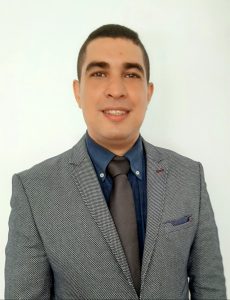
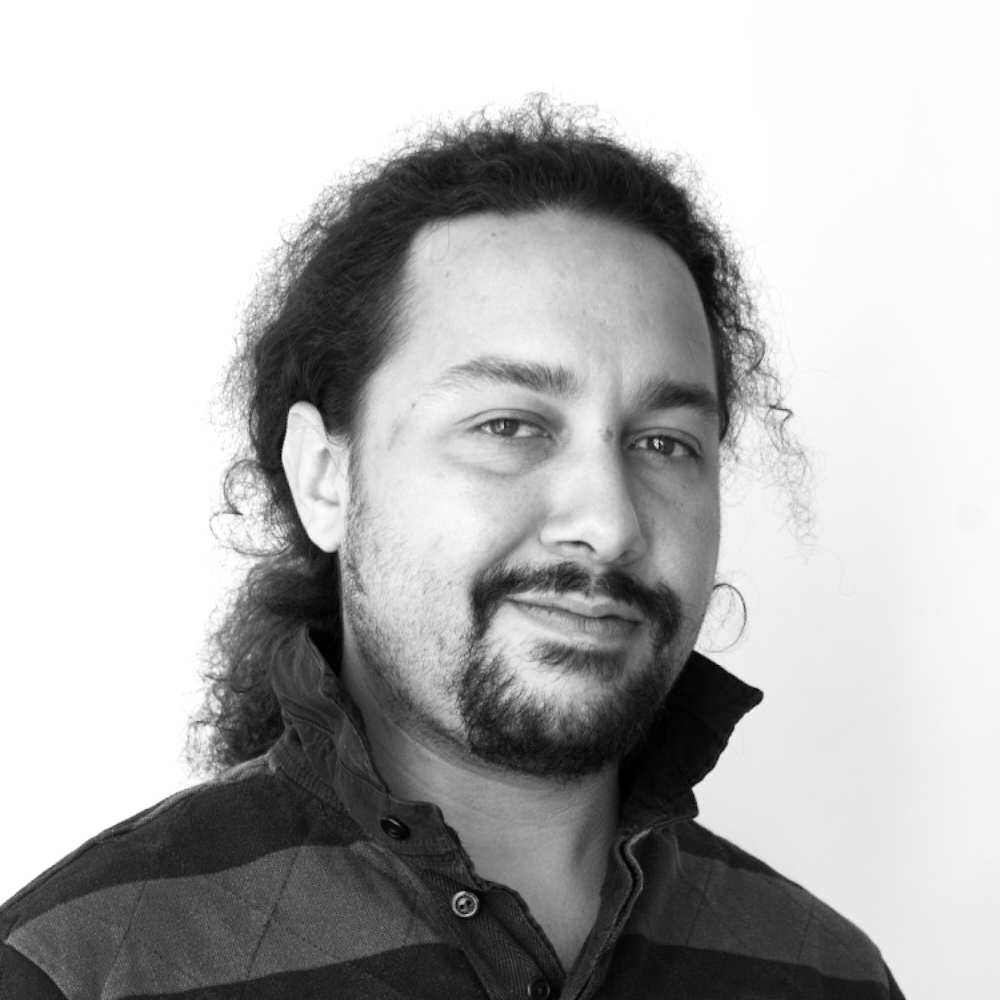
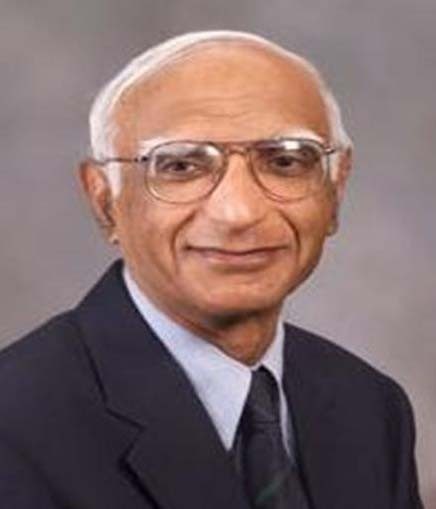
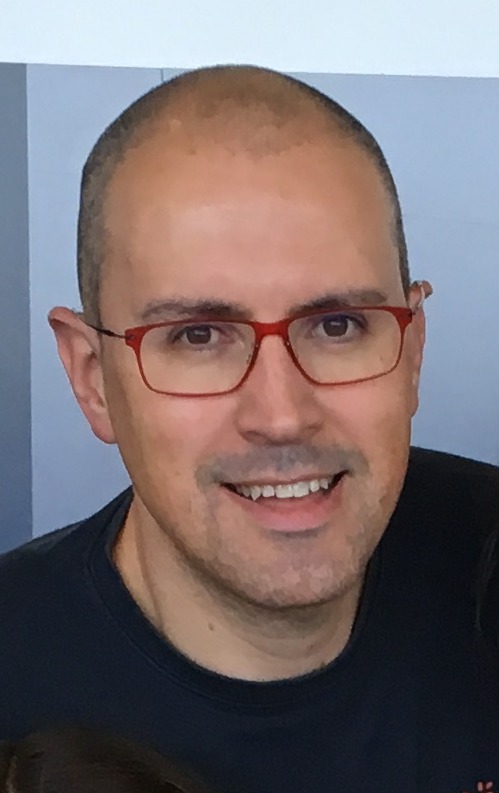
Leitao Chen is an Assistant Professor of Mechanical Engineering at the College of Engineering, Embry-Riddle Aeronautical University. His research focuses on multiscale modeling using the Boltzmann equation, thermal management systems for high-power CPUs and electric vehicle batteries, and low-temperature plasma dynamics. He holds a Ph.D. in Mechanical Engineering and has contributed to over 15 peer-reviewed publications since 2016. Dr. Chen is actively involved in professional organizations such as the American Society of Mechanical Engineers (ASME) and chairs the Heat Transfer in Energy Systems Technical Committee under ASME. Education: B.S., Mechanical Engineering M.S., Power Machinery & Engineering Ph.D., Mechanical Engineering Research Interests: Computational modeling of thermal systems Plasma dynamics and fluid simulations Thermal management for electric vehicles Advanced materials for heat transfer enhancement Multiscale modeling using Boltzmann equations Awards: 2023 Tennessee State University Faculty Excellence Award in Research 2017 Outstanding Reviewer Awards from Computers and Fluids, Physica D, and Renewable Energy Courses Taught: ME 409: Vehicle Aerodynamics ME 413: Preliminary Design for High Performance Vehicles with Laboratory ME 433: Senior Design for High Performance Vehicles with Laboratory
Eloi Martinet is a postdoctoral researcher at the University of Würzburg, affiliated with the Mathematics of Machine Learning team within the Institute of Mathematics. He holds a PhD in Spectral Shape Optimization from LAMA and LJK (2019–2023), an engineering degree from ENSIMAG, and an Agrégation de Mathématiques. His research focuses on variational methods in machine learning, numerical PDEs, and shape optimization using neural networks and graph-based approaches. Education: PhD in Spectral Shape Optimization (2019–2023), LAMA (Chambéry) & LJK (Grenoble) Agrégation de Mathématiques (2020–2021), Institut Fourier (Grenoble) Engineering School in Informatics and Applied Mathematics (2016–2019), ENSIMAG (Grenoble) Research Interests: Shape/topology optimization, numerical methods for PDEs, level set methods, neural networks, and graph-based machine learning. His work explores variational approaches to machine learning and solving PDEs with neural networks. Teaching: Recent roles include lectures on Data Science foundations, Machine Learning on Graphs, and numerical analysis tutorials at JMU and ENSIMAG. Grants & Supervision: Co-supervised MSc internships on phase fields on graphs and PDE spectrum analysis. His research projects include optimizing Neumann eigenvalues on spheres and meshless shape optimization with neural networks. Labs/Teams: Member of the Mathematics of Machine Learning team at the University of Würzburg, collaborating on projects involving FreeFem and Python tools for eigenvalue optimization.
Professor Carl Labergere is a University Professor and Director of the LASMIS Research Unit (Laboratory of Mechanical & Material Engineering) at the University of Technology of Troyes. His research focuses on mechanical engineering and material science, with particular expertise in computational mechanics, material modeling, and manufacturing processes. He maintains an active research program with collaborations across multiple institutions as evidenced by his extensive publication record. Professor Labergere's research interests span several key areas in mechanical engineering and material science. His primary focus is on developing advanced computational models for predicting material behavior, particularly in the context of ductile damage, elastoplasticity, and metal forming processes. He has made significant contributions to the understanding of material failure mechanisms and has developed sophisticated numerical techniques for simulating complex manufacturing processes. His recent work has expanded into emerging areas such as 3D printing materials and nuclear waste containment applications. Analysis of Professor Labergere's recent publications reveals a strong trend toward increasingly complex multi-physics modeling approaches. His work consistently integrates mechanical behavior with thermal, chemical, and damage effects, reflecting the growing complexity of modern material systems. The research spans traditional manufacturing processes like metal forming while also addressing cutting-edge applications in additive manufacturing and nuclear safety. His publications demonstrate a progression from fundamental material modeling toward practical engineering applications that solve real-world industrial problems. Professor Labergere's research program demonstrates strong continuity and evolution over time. His early work focused on foundational aspects of material modeling and finite element methods, while his more recent publications address increasingly complex multi-physics problems with direct industrial applications. The consistent publication record across high-impact journals indicates sustained research productivity and relevance to the mechanical engineering community. As Director of the LASMIS Research Unit, Professor Labergere leads a team focused on mechanical engineering and material science research. The laboratory appears to maintain strong connections with industrial partners, particularly in manufacturing and nuclear sectors, as evidenced by the applied nature of the research topics. The research infrastructure likely includes advanced computational resources for finite element analysis and experimental facilities for material characterization and mechanical testing.
Jeff Ma is an Associate Professor of Mechanical Engineering at Saint Louis University's School of Science and Engineering, Department of Aerospace and Mechanical Engineering. He teaches core Mechanical Engineering courses including Computer Aided Engineering, Machine Design, Materials Science, Manufacturing Processes, Principles of Mechatronics, Engineering Fracture Mechanics, Theories of Plasticity, Finite Element Analysis of Composite Materials with Abaqus, Advanced Manufacturing Technology, and Finite Element Method I and II. Ph.D. in Computational Solid Mechanics, Kansas State University M.Sc. in Mechanical Manufacturing and Automation, Beijing Institute of Technology B.Sc. in Mechanical Design and Manufacturing, Beijing Institute of Technology Dr. Ma's primary research focuses on computational solid mechanics (including Meshless method, Finite Element Method, and Peridynamics), multi-scale modeling of manufacturing processes, and advanced materials processing. His work spans from theoretical computational mechanics to practical applications in machining difficult-to-machine materials like titanium alloys, structural ceramics, superalloys, composites, and biomaterials. He has developed significant expertise in laser-assisted machining, laser peening, and the application of machine learning/AI in manufacturing processes. His research bridges the gap between computational modeling and experimental validation, with strong emphasis on industrial applications. Recent publications reveal a trend toward integrating computational mechanics with emerging technologies. There's a clear focus on 3D printed composites manufacturing and post-processing, vibration-assisted nano machining techniques, and the coupling of different numerical methods (particularly peridynamics with FEM). His work increasingly incorporates machine learning for quality control and process optimization, reflecting the growing trend of Industry 4.0 in manufacturing research. 2022 NAMRC Outstanding Paper Award 2019 ASME Reviewers of the Year Award Saint Louis University Parks College Outstanding Graduate Faculty Award (2014) National Science Foundation (NSF) CMMI Award (2016) President's Research Fund Award, SLU (2012) Dr. Ma serves as Faculty Advisor for the ASME SLU Student Chapter and has been actively involved in numerous research projects funded by NSF and other agencies. He has mentored students in computational mechanics, advanced manufacturing, and materials research. His service includes reviewing proposals for NSF, NASA, and the Nebraska Transportation Center, as well as manuscript reviews for top journals including Engineering Fracture Mechanics and ASME Journal of Manufacturing Science and Engineering. He also serves as an associate editor for SME Journal of Manufacturing Processes. Dr. Ma directs or is associated with several research laboratories at Saint Louis University, including the Manufacturing System Laboratory with conventional and CNC machine tools, the Mechatronics Laboratory with autonomous mobile robots and PLC systems, and the Laser Peening Laboratory which operates in collaboration with the U.S. Air Force Research Laboratory. These facilities support both educational activities and research projects focused on advanced manufacturing technologies.
Jan Sladek is a Professor of Applied Mechanics at Slovak Technical University (2006-2016) and Head of the Department of Mechanics at the Institute for Construction and Architecture, Slovak Academy of Sciences (SAS), Bratislava, Slovakia (2005–present). He has held visiting/research positions at Cornell University, Northwestern University, Shinshu University, University of California (Los Angeles, Irvine), University of London (Queen Mary College), and University of Siegen. Education MSc in Mechanical Engineering (1976), Techn. Univ. of Transport and Telecom., Zilina PhD in Applied Mechanics (1981), Slovak Academy of Sciences DrSc (Doctor of Sciences) in Applied Mechanics (1990), Slovak Academy of Sciences Assoc. Prof. in Civil Engineering (1994), Slovak Technical University Professor in Mechanics (2002), Technical University of Zilina Research Interests include fracture mechanics, computational mechanics, boundary element methods (BEM), meshless methods, and numerical modeling of smart and functionally graded materials. His work focuses on advanced numerical techniques for mechanical analysis and material modeling. Professional Leadership involves directorship roles at the Institute for Construction and Architecture (SAS) and editorial contributions as Associate Editor of one journal and board member of eight others. Scientific Awards & Honors 2012 Highly cited researcher award, Slovak Literary Fund 2010 ICCES Eric Reissner Medal 1985 & 2003 Slovak Academy of Sciences Prize President of Slovak Society for Mechanics (1996-2010) 2002 Member of Learned Society of the Slovak Academy of Sciences
Dr. Jörg Kuhnert serves as Deputy Head of the Department »Transport Operations« at the Fraunhofer Institute for Industrial Mathematics ITWM in Kaiserslautern. His research focuses on grid-free numerical methods in fluid and structural mechanics, mathematical modeling of foams, and parallelization of algorithms. He has contributed to high-impact publications in computational mechanics and geotechnical engineering. Research Interests: Development and application of mesh-free techniques (e.g., Finite Pointset Method) Mathematical modeling of complex materials like foams High-performance computing for engineering simulations Publications: His work spans theoretical advancements and practical applications in soil mechanics, fluid-structure interaction, and numerical methods. Recent contributions emphasize mesh-free approaches for multiphysics problems. No scientific awards or grants are explicitly listed in the provided text. He leads teams within the Transport Operations department at Fraunhofer ITWM.
Eraldo Ribeiro is an Associate Professor of Computer Science at Florida Institute of Technology (FIT), situated in the College of Engineering and Science's Department of Electrical Engineering and Computer Science. He holds a Ph.D. in Computer Vision from the University of York (2001), an M.Sc. in Computer Science from the Federal University of São Carlos (1995), and a B.Sc. in Mathematics from the Catholic University of Salvador (1992). His research focuses on computer vision, pattern recognition, and machine learning, with emphasis on 3-D shape modeling, image registration, human-motion recognition, and non-rigid deformation analysis. Current projects include underwater video mosaicing techniques and spatio-temporal crime pattern modeling. He serves as an associate editor for Machine Vision and Applications and Journal of Signal, Image, and Video Processing . Ribeiro’s recent work spans diverse applications including automated anuran call classification, pollen grain recognition via CNN-RNN hybrid models, and network-centric approaches to image annotation. His lab’s projects address challenges in medical imaging registration, social media analytics, and biofilm adhesion studies. He collaborates on interdisciplinary initiatives such as coral reef texture classification (using SVMs) and data science for urban crime analysis. Ribeiro’s contributions to computer vision education include teaching CSE4001 and CSE5683 courses at FIT.
Beniamin Bogosel is an Assistant Professor at the Department of Applied Mathematics (CMAP) at École Polytechnique, part of the Institut Polytechnique de Paris. His research focuses on calculus of variations, shape optimization, and numerical methods for eigenvalue problems. He has defended his Habilitation à diriger des recherches in May 2024, enabling him to supervise doctoral research. Recent work includes studies on polygonal Faber-Krahn inequalities, Meissner polyhedra volume computations, and Cheeger constant analysis via inner parallel sets. He collaborates widely, including with D. Bucur, Grégoire Allaire, and Vincent Perrollaz. Teaching interests include numerical approximation and optimization, with course materials available online. His research spans additive manufacturing optimization, meshless methods, and geometric partitioning. Research highlights include numerical studies on eigenvalue optimization, Γ-convergence methods for partitions on manifolds, and contributions to optimal packing and Steklov spectrum computations. He actively participates in conferences and workshops, such as the 2024 ICDEA conference and Materials for Society Workshop at École Polytechnique.
Juan Diego Alvarez Roman is an Associate Professor in the Department of Mathematics at Carlos III University of Madrid (UC3M), and Director of the F.Abril Martorell College. His academic role includes leadership in both education and research. Research interests focus on numerical methods and their biomedical applications, particularly inverse problems in cardiac modeling, medical imaging (e.g., optical tomography, microwave screening), and computational techniques like radial basis functions (RBF) and level-set methods. Projects include the LocMoTIC initiative for cardiac arrhythmia localization and collaboration on 3D imaging of biological tissues. Recent work emphasizes RBF-based numerical methods for differential operators and applications in cardiac ischemia localization. His articles span applied mathematics, biomedical engineering, and computational physics. Grants: Principal investigator in LocMoTIC (2010-2013), and collaborator in projects like 'Clustering Automático de Comportamientos de Invertebrados en Libertad' (2021-2025) and 'Imagen óptica 3D ultrarrápida' (2016-2020). Patents: System/method for cardiac electrical activation reconstruction (2014). Teaching: Involved in undergraduate/postgraduate programs at UC3M's Department of Mathematics. Labs/Teams: Member of the Numerical Methods and Applications research group and affiliated with the Gregorio Millán Barbany University Institute for Modelling and Simulation.
Atakan Altınkaynak is an Associate Professor in the Department of Mechanical Engineering at Istanbul Technical University (ITU), affiliated with the College of Engineering. His research focuses on additive manufacturing, finite element analysis, polymer processing, and vibration analysis. Key areas include Fused Deposition Modeling (FDM), fluid-structure interaction, and origami-inspired mechanical systems. Research Interests: Additive Manufacturing (3D Printing Technologies) Finite Element Analysis and Numerical Methods Mechanical Vibration and Dynamic Systems Polymers Extrusion and Material Processing Fluid-Structure Interaction Modeling Awards: Doctoral Finishing Fellowship (2010) İTÜ Bitirme Tasarım Projesi Birincilik Ödülü (2016) Lew Erwin Memorial Scholarship (2007) Advising/Grants: Supervised 23 research works and led 8 projects including: "FDM Yazıcılarda Çoklu Şerit Basımının Sayısal Analizi" (2023-2024) "Polimer-Metal Temas Yüzeylerinde Sürtünme Kaynaklı Gürültünün Sayısal Modellenmesi" (2018-2019) "Filament Beslemeli 3 Boyutlu Yazıcıların Performans Karakteristiğinin Belirlenmesi" (2017-2019) His work bridges computational modeling with experimental validation in advanced manufacturing and mechanical systems.
Abderrachid Hamrani is an Assistant Professor in the Department of Mechanical and Materials Engineering at Florida International University (FIU). His research focuses on interdisciplinary applications of machine learning, additive manufacturing, and material science. He currently holds an office in the MME department and can be contacted via ahamrani@fiu.edu. Research interests include: Machine learning-driven optimization of manufacturing processes (e.g., cold spray, wire arc additive manufacturing) Biomedical imaging applications (e.g., diabetic foot ulcer segmentation, skin color classification) Renewable energy systems (solar photovoltaics, biohydrogen production) Advanced computational modeling techniques (meshless methods, physics-guided simulations) Recent work emphasizes AI integration across manufacturing, healthcare, and agriculture. Over 30 publications span topics from material deposition optimization to environmental sustainability assessments. No formal awards are listed in available materials. Active in guiding graduate research projects but no specific advisees named. Current research involves collaborations on smart robotics, quadruped locomotion, and energy-water nexus studies in MENA regions.
Tamy Boubekeur is a Senior Director and Senior Principal Research Scientist at Adobe Research France, leading Adobe Research France and the Computer Graphics Group at Telecom Paris. He is a part-time Professor in Computer Science at École Polytechnique, Institut Polytechnique de Paris. Previously, he held roles including Full Professor at Telecom Paris (on leave since 2019), Chief Scientist at Allegorithmic, and Founder/Director of the Computer Graphics Group at Telecom Paris. His work bridges academia and industry, focusing on 3D computer graphics, geometry processing, and real-time rendering. Education: HDR (2012), PhD (2007), and MSc (2004) in Computer Science from French universities. Professional experience spans roles at INRIA, TU Berlin, and UBC. He has been involved in significant projects like FEMONUM (medical modeling) and 3DLife (European project). Research interests include 3D shape analysis, rendering techniques, GPU programming, and global illumination. His work emphasizes efficient processing of geometric data, with applications in medical imaging, animation, and real-time visualization. Notable contributions include SQEM for shape approximation and pioneering point-based global illumination techniques. Honors include multiple Best Paper Awards at Eurographics, SIGGRAPH, and Shape Modeling International. He has supervised numerous PhD students, many of whom now hold academic and industry roles. Boubekeur has chaired major conferences (e.g., EGSR 2019) and served on program committees for SIGGRAPH, EUROGRAPHICS, and others.
Dr. Jelena Ninic is an Associate Professor in Digital Engineering at the University of Birmingham's School of Engineering since 2022. Her research focuses on computational methods, AI, and BIM for structural and geotechnical engineering. She holds a PhD in Computational Mechanics (2015, Ruhr University Bochum) and a Marie Curie Fellowship (2016, University of Nottingham). She is an Associate Editor of Tunnelling and Underground Space Technology , UK representative for ISSMGE TC222, and a member of UKACM's Executive Committee. Her work integrates finite element simulations, machine learning, and digital twins for infrastructure lifecycle management. Research interests include process-oriented simulations, digital twins, and risk assessment in tunnelling, construction, and transportation. She has pioneered multi-level BIM parametrization and BIM-to-IGA workflows. Awards include FHEA (2020) and Marie Curie SATBIM Fellowship (2016). Recent articles explore Bayesian optimization for tunnels, meshless methods for buried structures, and sustainability-driven infrastructure resilience. Education: PhD in Computational Mechanics (2015) Dipl.-Ing. in Structural Engineering (2008) Professional Roles: Associate Editor, Tunnelling and Underground Space Technology Core member, ISSMGE TC222 UKACM Executive Committee Grants & Advising: Supervises PhD students in computational mechanics and BIM applications Co-chair of international conferences (e.g., CTTU 2020) Labs/Teams: Develops automated tunnel damage reporting systems and digital twin frameworks Collaborates on global-local optimization for aircraft structures
Romesh Batra is an Affiliate Professor in the Department of Biomedical Engineering and Mechanics at Virginia Tech's College of Engineering. He contributes to research and academic activities with a focus on computational and applied mechanics. Education: Ph.D. in Mechanics and Materials, The Johns Hopkins University, 1972 M.A.Sc. in Mechanical Engineering, University of Waterloo, 1969 B.S. in Mechanical Engineering, Punjabi University, India, 1968 His research interests lie in computational solid mechanics, particularly in solving thermomechanical problems involving large deformations and material nonlinearities using finite element and meshless methods. He also investigates adiabatic shear banding, penetration and impact phenomena, metal forming processes, and the mechanics of smart materials and carbon nanotubes. These areas reflect a deep engagement with advanced computational techniques and material behavior under extreme conditions. There are no publications listed in the provided text, so no trends in recent articles can be analyzed. There are no scientific awards mentioned in the text. There is no information available about students advised or grants received. Similarly, there are no details about specific laboratories or research teams led by Dr. Batra. He is affiliated with Virginia Tech and operates from Norris Hall, Room 333-E, Blacksburg, VA.
Elías Cueto is a Professor at the University of Zaragoza's Mechanical Engineering department and Director of the ESI Group-UZ Chair of the National Strategy on Artificial Intelligence. His work spans computational mechanics, data-driven simulations, and AI integration in engineering. Current affiliations: University of Zaragoza, Aragon Institute of Engineering Research Research Interests include: Meshless and PGD methods Real-time simulation and forming processes Computational surgery and digital twins Scientific machine learning and data assimilation Scientific Awards : Juan C. Simo Prize (2005) ESAFORM Scientific Prize (2006) CETIM Foundation Prize (2007) O. C. Zienkiewicz Award (2012) EAMBES Fellow (2020) IACM Fellow (2022) He leads projects on AI sustainability, physics-informed digital twins, and democratizing numerical simulation. His work combines computational mechanics with cutting-edge AI techniques for real-time engineering applications.