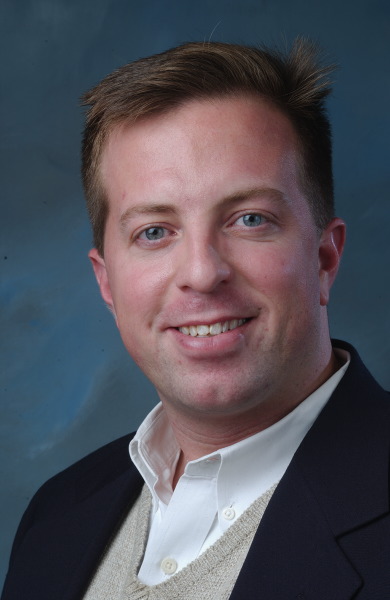
Engseng Ho is a Professor of Cultural Anthropology and former Professor of History at Duke University's Trinity College of Arts & Sciences since 2008. His work focuses on Arab/Muslim diasporas across the Indian Ocean, global transregional dynamics, and historical interactions between empires and local societies. Education: PhD (2000), MA (1990) in Anthropology from University of Chicago; BA (1986) from Stanford University. Research interests include mobility studies, transregional legal frameworks, and the intersection of Islam with imperial and postcolonial contexts. Notable projects involve Inter-Asia collaborations and studies on China-Africa relations, oil economies, and Malay sovereignty. Recent grants include funding from the National Science Foundation for research on refugees, Azerbaijan's oil-driven geopolitics, and a global religion dissertation fellowship program. Teaching spans courses on imperialism, mobility, global culture, and anthropological theory. His expertise spans Africa, India, Indonesia, and Yemen.
Dr. Sara Caputo is a British Academy Postdoctoral Fellow at the Department of History and Philosophy of Science and an Affiliated Lecturer at the Faculty of History, University of Cambridge. She serves as Director of Studies in History, History and Politics, and History and Modern Languages at Magdalene College. Her research spans transnational maritime history, the history of medicine, cartography, and imperial history. Education: PhD in History from the University of Cambridge (Robinson College), MSc in History from the University of Edinburgh, BA (Hons) in History from Cardiff University. Career Highlights: Lumley Junior Research Fellow (2019–2022), Senior Research Fellow (2022–present) at Magdalene College, Scouloudi Fellow (2018–2019), Lewis-AHRC Scholarship (2015–2018), Honorary Vice-Chancellor’s Scholar (2015–2018). Research Focus: Dr. Caputo explores maritime mobilities, knowledge exchange, and the instability of national boundaries in the British and European navies. Her work integrates transnational perspectives into the study of a quintessentially national institution, challenging notions of Britishness and foreignness. She combines qualitative and quantitative methodologies to analyze legal, social, and cultural contexts of naval service and cartographic practices. Notable Articles: Recent publications include studies on British naval medicine, the evolution of ship tracks into surveillance tools, and the transnational dimensions of naval exploration. Her articles span journals like Past & Present , English Historical Review , and Social History of Medicine , with chapters in edited volumes on transport history and postwar naval recruitment. Scientific Awards: Royal Historical Society Whitfield Prize (2024) British Commission for Maritime History Boydell & Brewer Prize (2020) Fachverband Medizingeschichte wissenschaftlichen Förderpreis (2022) International Committee for History of Technology Maurice Daumas Prize (2021) Scottish History Society Rosebery Prize (2020) Teaching and Outreach: Dr. Caputo teaches courses on the Global Eighteenth Century, Union and Disunion in Britain, and Mediterranean history. She actively participates in outreach programs with the Cambridge University Admissions Office and The Brilliant Club, focusing on widening participation in history education.
Harald Fuess is a Professor of Cultural Economic History at the Heidelberg Centre for Transcultural Studies since 2009. He holds a Ph.D. from Harvard University and B.A. from Princeton University , with prior teaching roles at the University of Sheffield, Sophia University, and visiting appointments at Oxford, Duisburg-Essen, Columbia, and Tokyo University. He serves as the Erasmus Coordinator for Asian Studies and as University Scientific Coordinator of the Hexagon Alliance . Education: Princeton University – B.A. Harvard University – M.A., Ph.D. His research spans modern Japanese history , gender dynamics , transcultural economic relations , and Eurasian cultural flows . Publications focus on Japan's legal sovereignty, consumption patterns, and the Meiji Restoration's global impact. Key academic contributions include leadership roles such as President of the European Association for Japanese Studies (2008-2011) and ongoing membership in its Executive Council (since 2000) . He has held administrative positions including Director of the Cluster Graduate School Transcultural Studies (2012-2017) and Speaker for Research Area C "Health and Environment" (2009-2012) . Recent publications analyze topics ranging from historiography of the senses to colonial legal frameworks in East Asia. His work bridges historical analysis with contemporary issues like tourism's economic impact and intellectual property evolution in transnational contexts.
Andrew J Fleck is an Associate Professor in the English and Comparative Literature Department at San José State University, affiliated with the College of Humanities and the Arts. He has been teaching since 2001, specializing in Early Modern British Literature with a focus on Dutch-English cultural relations between 1588-1688. Fleck holds a PhD from Claremont Graduate University (2000). His research explores how Dutch figures influenced English literary and cultural imagination, including studies on John Donne, Thomas Nashe, and early modern drama. He has published widely in journals like Studies in Philology and Journal of British Studies , with a particular emphasis on textual analysis, historical narratives, and cross-cultural exchanges. Fleck’s work spans from examining the role of Dutch language performances in early modern theater to analyzing the representation of national identity in texts like The Shoemaker’s Holiday . His recent publications (2013) include studies on John Donne’s engagement with astronomical themes and global adaptations of Macbeth . He maintains an active presence in academic encyclopedias, contributing entries on Milton’s Dutch connections and Renaissance authors. His scholarship bridges literary analysis with historical context, often highlighting how literature reflects political, religious, and cultural tensions of the period. Fleck’s teaching and research reflect a commitment to interdisciplinary approaches, integrating historical, linguistic, and cultural methodologies.
Thomas Chaney is a Professor of Economics at the University of Southern California (USC), holding the John Elliott Chair in Economics. He is affiliated with Sciences Po’s Department of Economics and leads the ERC Project HTMG. His research focuses on International Trade, Networks, and Finance, with notable contributions to historical trade dynamics and modern financial constraints. Chaney is a CEPR and CESifo Research Fellow, reflecting his academic standing. Research Interests: Chaney’s work bridges historical and contemporary economic phenomena, analyzing trade networks, collateral constraints in corporate finance, and the impact of migration on innovation and urban development. His research often employs innovative methodologies, such as combining archaeological data with economic models to study ancient trade systems. Articles Trends: Recent work examines Bronze Age trade networks, modern corporate investment dynamics, and the role of real estate collateral. His 2024 articles explore ancient trade’s end and contemporary empathy’s economic implications, showcasing interdisciplinary approaches. Earlier papers like Trade, Merchants, and the Lost Cities of the Bronze Age (2019) exemplify his historical focus. Grants & Awards: Chaney leads the ERC-funded HTMG project and holds prestigious fellowships. His work has been published in top journals and spans empirical trade analysis, financial economics, and historical methods. Labs/Teams: Active in USC’s Economics Department and collaborates with global institutions like Sciences Po and the Bank for International Settlements (BIS). His research group integrates economists, historians, and data scientists for interdisciplinary projects.
Jun Uchida is the Asian Cultures and Society Professor and Professor of History at Stanford University, holding dual appointments in the Department of History and the Center for East Asian Studies. His research focuses on modern East Asian history, Japanese colonialism, migration, and diaspora. He has served as Director of the Center for East Asian Studies (2016-2019) and currently leads the Asian Cultures and Society program. Uchida holds a Ph.D. from Harvard University and has held fellowships at institutions including the Weatherhead Center for International Studies and the Social Science Research Council. His current book project traces the transpacific diasporic activities of Ōmi merchants from Shiga Prefecture, examining their roles in Japan’s imperial expansion. Key research areas include Japanese settler colonialism, colonial Korea, and transnational migration patterns. Uchida has authored influential works like Brokers of Empire (2011), which won the John K. Fairbank Prize, and has contributed to journals such as the Journal of Japanese Studies and Past & Present . Education: Ph.D. in History, Harvard University (2001) M.A. in History, University of California, Berkeley (1996) B.A. in History, Cornell University (1995) Uchida’s teaching spans modern Japanese history, colonial studies, and transpacific themes. He advises doctoral candidates and chairs graduate admissions committees. His awards include the NEH Fellowship (2019-2020) and the Stanford Pattee Fellowship (2013-2014). He maintains active roles in professional organizations such as the American Historical Association and the Association for Asian Studies.
Fahad Ahmad Bishara is an Associate Professor at the University of Virginia , specializing in the economic and legal history of the Indian Ocean and Islamic world . His work bridges global capitalism, international law, and historical narratives of mobility. Key Books: A Sea of Debt (Cambridge, 2017) and Monsoon Voyagers (UC Press, forthcoming) Awards: Hurst Prize, Jerry Bentley Prize, Peter Gonville Stein Book Award Research Focus: Explores debt, legal systems, and trade through microhistories of ships and merchant families, with recent interests in narrative scales and conceptualizations of law in global history. Academic Collaborations: Co-authored works with Nandini Chatterjee, Hollian Wint, and others, emphasizing Persianate and Indian Ocean interconnections. Scientific Awards: J. Willard Hurst Prize (Law and Society Association) Jerry Bentley Prize (World History Association) Peter Gonville Stein Book Award (American Society for Legal History)
Steve Worthington is an Adjunct Professor at Swinburne University of Technology's School of Business, Law and Entrepreneurship in Melbourne, Australia. Previously, he held a Professorship in Marketing at Monash University until 2013. His research focuses on financial services distribution via electronic channels, payment systems regulation, and cross-cultural financial practices. He has contributed extensively to academic journals such as the International Journal of Bank Marketing and practitioner outlets like The Financial Times and ANZ's BlueNotes . His work includes analyses of payment card markets in China and Japan, regulatory interventions in Australia's payment system, and expert testimony on financial services marketing disputes. Worthington's research interests span payment systems innovation, consumer behavior in financial contexts, and the intersection of technology with financial services. Notable contributions include studies on cashless society debates, payment fraud dynamics, and the cultural dimensions influencing financial product adoption. He frequently engages with industry conferences and media, offering insights into emerging trends like digital payment adoption and regulatory challenges in the financial sector. His publications highlight interdisciplinary approaches, blending economic policy analysis with marketing strategy. Key themes include the societal implications of cash decline, fairness perceptions in financial services, and the ethical dimensions of payment technologies. Despite no explicit awards listed, his prolific media engagement and advisory roles reflect recognition of his expertise in payment systems and financial markets.
Madeleine Zelin serves as the Dean Lung Professor of Chinese Studies and History East Asia coordinator within Columbia University's Department of East Asian Languages & Cultures, maintaining active office hours and scholarly engagement. Her academic foundation includes: BA: Cornell University (1970) PhD: University of California, Berkeley (1979) Professor Zelin pioneers research in Modern Chinese Legal and Economic History , challenging conventional narratives about imperial China's economic restrictions through rigorous analysis of legal frameworks, merchant institutions, and customary business practices. Her iconoclastic approach reveals unexpected continuities between law, culture, and market dynamics in early modern China, particularly through case studies of industrial communities like Zigong. Her publications demonstrate sustained scholarly evolution from eighteenth-century fiscal systems to twentieth-century bankruptcy reforms, consistently emphasizing China's indigenous economic development models within global comparative contexts. Award recognition includes: Fairbank Prize (American Historical Association) Alan Sharlin Memorial Award (Social Science History Association) Humanities Prize of the International Conference on Asian Studies (ICAS) She actively cultivates next-generation scholarship as co-director of the AAS New Directions Workshop: Economic History of Asia and founding board member of the International Society for Chinese Law and History, while currently finalizing a book on China's earliest company and bankruptcy law reforms.
Molly Greene is a Professor of History and Hellenic Studies at Princeton University. Her work focuses on the Ottoman Empire and the Mediterranean world, with expertise in early modern Christian-Muslim interactions, maritime history, and colonial dynamics. She served on the Executive Committee of the Program in Hellenic Studies from 2011 to 2022. Her research bridges Ottoman administrative systems, ethnic communities, and religious coexistence. Affiliations: Princeton University (current), Center for Hellenic Studies (past committee role) Her research explores themes such as Ottoman governance mechanisms, the role of piracy in Mediterranean trade, and socio-economic relationships between Christian and Muslim populations. Recent work emphasizes the agency of non-state actors and marginalized groups in shaping imperial structures. Greene’s publications include seminal works like A Shared World (2002) and Catholic Pirates and Greek Merchants (2010), which reframe understandings of religious and economic networks in early modern Europe. She has also published in Greek, reflecting her deep engagement with Hellenic cultural history. Teaching: Courses on the Mediterranean’s historical trajectory, Ottoman Empire studies, and early modern global connections. She advises students on topics spanning Ottoman social history, Mediterranean maritime networks, and interfaith historiography. Her research has been supported by grants from the National Endowment for the Humanities and the Andrew W. Mellon Foundation. Greene’s interdisciplinary approach integrates archival research from multiple languages and regions, emphasizing the Mediterranean as a cohesive yet diverse space. She is a leading voice in redefining narratives of early modern empire and cross-cultural interaction.
Prof Andrew Pettegree is the Bishop Wardlaw Professor at the School of History, University of St Andrews. His research focuses on the European Reformation, history of communication, and the history of the book. He leads a research group that completed the Universal Short Title Catalogue, analyzing books published before 1650. Key publications include The Book in the Renaissance and The Invention of News . He has held roles such as Vice-President of the Royal Historical Society and founded monograph series like St Andrews Studies in Reformation History . Education: BA, DPhil, and MA from the University of Oxford. Research interests span Reformation media strategies, Dutch Republic book culture, and early modern print networks. Awards include the Goldsmith Prize and fellowships. He supervises PhD students in Reformation and Book History. Key projects include studies on Luther’s media tactics and the Dutch Golden Age book trade. Grants supported work on medical publishing and the Universal Short Title Catalogue. He leads the St Andrews Reformation Studies Institute and collaborates on global book history initiatives. His work bridges academic research with public engagement, emphasizing the role of print in shaping modern society.
Prof Andrew Peacock holds the Bishop Wardlaw Professorship in the School of History at the University of St Andrews. His research focuses on Islamic and Middle Eastern history, with a particular emphasis on medieval Anatolia, Persian manuscripts, and the cultural exchanges in Southeast Asia and the Indian Ocean. He has supervised PhD students including Hebah Alheem, Ali Shapouran, and Weijie Xu. His recent publications explore Arabic literary culture in 17th-18th century Southeast Asia, Melaka’s historical sources, and the memoirs of Safavid ruler Shah Tahmasp I. Key projects include the ERC-funded 'IslamAnatolia' initiative (2012-2017) and a British Academy grant for studying Arabic language in early modern Southeast Asia. His work often bridges historical analysis with material culture, such as his edited volume on medieval Islamic inscriptions (2023). Prof Peacock’s research also engages with transnational themes, including Ottoman-Darfur diplomacy and the role of urban notables in medieval Anatolia.
Dr. John McAleer is an Associate Professor of History at the University of Southampton. He specializes in British imperial and maritime history, focusing on the 18th and 19th centuries, the East India Company, and the role of islands in empire. His research explores global maritime networks, colonial encounters, and the representation of empire through material culture and museums. He currently teaches courses on British imperialism, maritime history, and museum studies. Previously Curator of Imperial and Maritime History at the National Maritime Museum, McAleer maintains roles with the Hakluyt Society, SS Great Britain Trust, and Bristol Archives. He has held fellowships from the Royal Historical Society and the Royal Asiatic Society. His major publications include works on Atlantic voyages, East India Company history, and the interplay between exploration and collecting practices. McAleer supervises PhD students in imperial history and collaborates on research projects funded by the Arts & Humanities Research Council and the British Academy. He has received awards for teaching excellence and scholarly contributions, including the Caird Medal and Muriel McCarthy Fellowship.
University of Versailles Saint-Quentin-en-YvelinesFrance
Pauline Lemaigre-Gaffier is a Lecturer in Modern History at the University of Versailles Saint-Quentin-en-Yvelines (UVSQ), affiliated with the Institute of Cultural and International Studies (IECI) and the Department of History. She co-leads the VoCriPat project (2023–present) and participates in the DIM PAMIR committee (2022–present) and ANR ACADEC project (2022–present). Her research focuses on European court societies (festivals, ceremonies, urban interactions) Cultural history (material culture, documentary writings) Political history (public finance, administrative practices) Economic history (privileges and businesses) Heritage sciences Her 15 most recent publications explore topics like archival practices in early modern Europe French court administration of the arts economic networks of privileged enterprises royal household logistics spanning 2015–2024, with upcoming works on economic history and heritage sciences in 2025. She has received the Benabou Prize (2012) and was a Thiers Foundation scholarship holder (2009–2010) . Her career includes editorial roles at Entre-Temps (2021–2023) and educational management for the 'Music, Performance, and Heritage' degree (2014–2016). She collaborates with institutions like the Centre de recherche du Château de Versailles and the Heritage Sciences Foundation.
Professor Alan Sangster is Chair in Accounting History at the University of Aberdeen's Business School, where he is actively engaged in research, teaching, and supervision of PhD students. His work centers on the historical evolution of accounting systems, particularly double-entry bookkeeping, and the pedagogical aspects of accounting education. University: University of Aberdeen School: Business School Position: Chair in Accounting History Email: alan.sangster@abdn.ac.uk Alan Sangster holds a BA in Business Studies, MSc in Operational Research, PhD in Accounting Education, and is a Chartered Accountant (CA). His academic journey reflects a deep commitment to understanding the historical roots of modern accounting practices. His research interests encompass Accounting History , Business History , and Accounting Education , with a focus on medieval and Renaissance accounting systems, the work of Luca Pacioli, digital methodologies in historical research, and ethical issues in accounting scholarship. He advocates for rigorous historical methodology and critical reassessment of established narratives. The 15 most recent publications highlight a sustained and influential research trajectory in accounting history, with a strong emphasis on the origins and diffusion of double-entry bookkeeping, digital transformation of archival research, and critical reflections on historiography. His work bridges historical analysis with contemporary pedagogical and ethical concerns in accounting. Professor Sangster has received numerous accolades recognizing his exceptional contributions: 2022: Outstanding Accounting Educator Award (American Accounting Association) 2022: Outstanding Contribution to Accounting & Finance Education Award (British Accounting & Finance Association) 2021: Barbara D. Merino Award for Excellence in Accounting History Publication 2015: Hourglass Award (Academy of Accounting Historians) 2014: Premio Enrique Fernández Peña de Historia de la Contabilidad 2013: Life-Time Achievement Award (British Accounting and Finance Association) He serves as Editor-in-Chief of Accounting Education (Routledge), Deputy Chair of the BAFA Accounting History SIG, and Trustee of The Academy of Accounting Historians. These roles underscore his leadership and influence in shaping the field globally. Although no specific students or grants are mentioned, his active supervision of PhDs and extensive publication record indicate a vibrant research program. He is not associated with any lab or team in the provided text, but his collaborative publications suggest active academic networks.