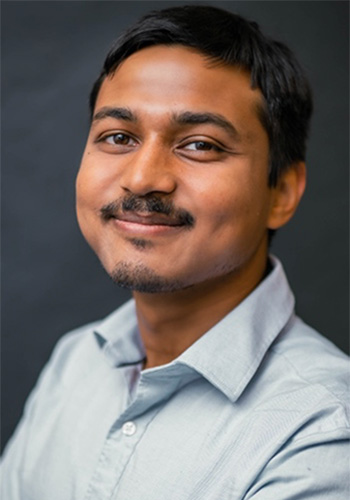
Biresh Kumar Joardar is an Assistant Professor in the Electrical and Computer Engineering Department at the University of Houston's Cullen College of Engineering. He holds a BE from Jadavpur University (2016) and PhD from Washington State University (2020), with postdoctoral training at Duke University as a Computing Innovation Fellow. His research integrates machine learning with hardware design to develop efficient deep learning accelerators, ReRAM-based architectures, and heterogeneous manycore systems. Current projects focus on enhancing reliability, security, and performance of AI hardware through in-memory computing and 3D integration techniques. Research themes include hardware security (e.g., Rowhammer mitigation), fault-tolerant neural network training, and hardware-software co-design for bioinformatics. Recent articles explore energy-efficient architectures for graph neural networks and cross-layer optimization for AI workloads. Awards: Best Paper Award, International Symposium on Networks-on-Chip (NOCS 2019) Joardar leads the Heterogeneous and In-Memory Computing Lab, seeking PhD students with backgrounds in VLSI, computer architecture, or machine learning. His work has been supported by NSF and industry partnerships.
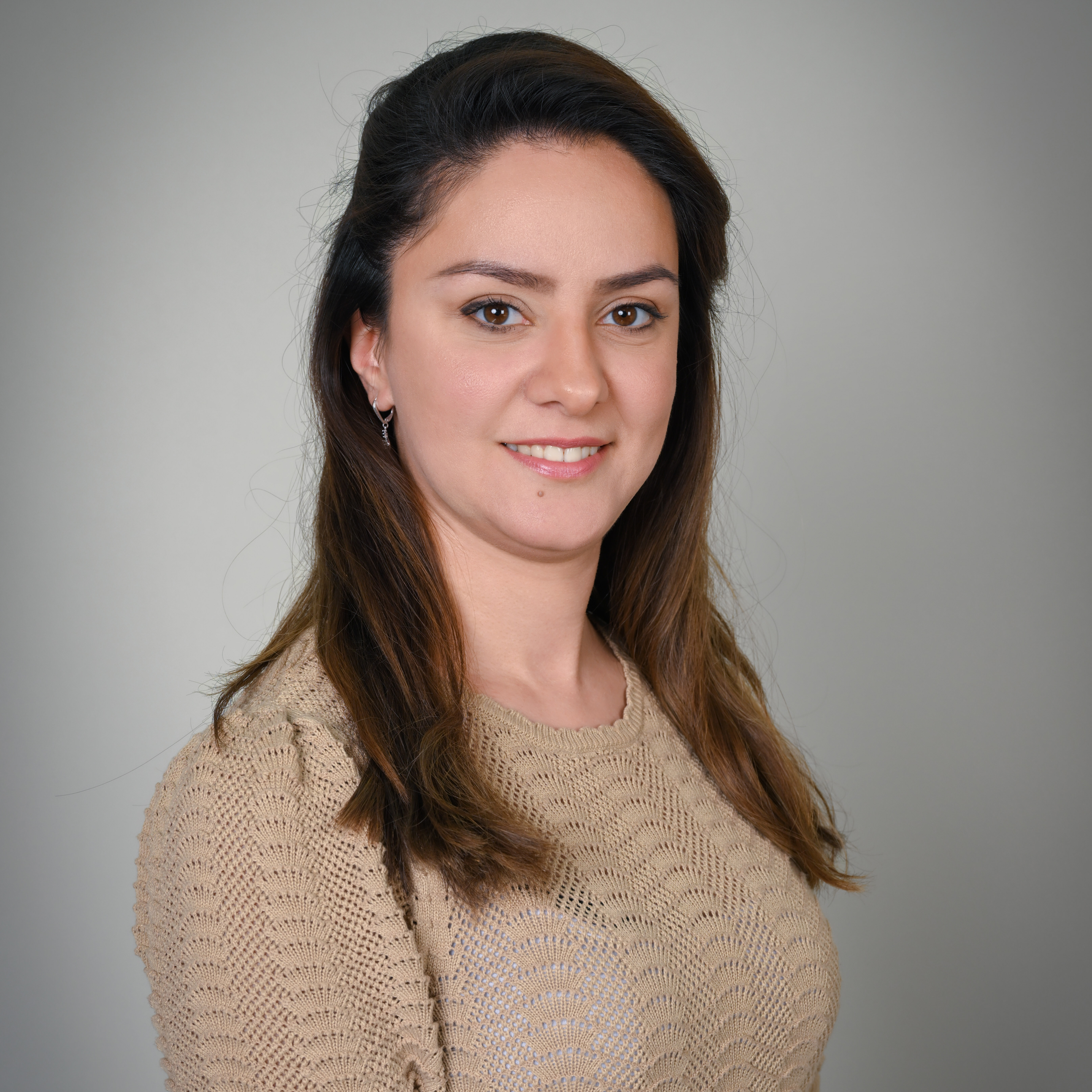
Shiva Jahangiri is an Assistant Professor in the Department of Computer Science and Engineering at Santa Clara University's School of Engineering. His research focuses on Big Data Management Systems, Databases for AI/ML, and Query Optimization. He leads the DBIS Lab, which explores database internals, vectorized data processing, and open-source projects like Apache AsterixDB. Education: Ph.D. in Computer Science from the University of California, Irvine; M.S. in Computer Science (Data Science) from the University of Southern California. Current courses taught include Advanced Programming, Advanced Database Systems, and Introduction to Database Systems. He advises Ph.D. and Master’s students on topics like Vector Databases, Query Scheduling, and Resource Management. Recent research trends involve optimizing group-by/aggregation operators, schema inference for semi-structured data, and memory management in complex join queries. His work bridges theoretical advancements with practical implementations in open-source systems. DBIS Lab activities include student participation in senior design projects, directed research, and volunteer roles. The lab emphasizes industry collaboration for hands-on experience in database systems development.
Jingxian Wang is an NUS Presidential Young Professor and Assistant Professor in the Department of Computer Science at the National University of Singapore's Faculty of Computing. His research builds next-generation wireless systems and satellite networks, with primary focus on integrating AI with wirelessly networked devices from WiFi to satellites. He earned his PhD from Carnegie Mellon University and previously served as a research scientist at Microsoft Research in Redmond, where he led the Smart Surface for 6G and Space initiative. His educational journey includes: PhD, Carnegie Mellon University Wang's research spans Wireless Systems , Satellite Networks , Artificial Intelligence , and Internet of Things , emphasizing AI-augmented wireless systems. His interdisciplinary work bridges robotics , materials science , and AI to develop sustainable sensing methods, robust communication networks, and multimodal AI techniques. Key projects include Multimodal AI for IoT (funded by Microsoft's Accelerate Foundation Models Program) and Satellite IoT Networks. His publication trends reveal accelerating integration of AI into wireless systems, with recent focus on satellite networking, soft robotics actuation, and generative models for IoT. The research consistently targets real-world deployment challenges in battery-free systems and space networks. His scientific contributions have earned prestigious recognition: ACM SIGMOBILE Doctoral Dissertation Award 2023 Communications of the ACM Research Highlights (2021, 2022) ACM SIGMOBILE Research Highlights 2021 Best Paper Awards at IPSN 2021 and UbiComp 2020 Microsoft Research Fellowship 2020 Emerging Rockstar in IEEE Pervasive Computing 2024 Wang actively mentors doctoral students and postdoctoral researchers through his AIoT Group. His grant portfolio includes Microsoft's Accelerate Foundation Models Research Program funding for multimodal AI projects, with ongoing work targeting satellite IoT infrastructure and wireless-powered soft robotics. Future directions emphasize foundation models for space networks and battery-free IoT systems. He leads the AIoT Group, fostering cross-disciplinary collaboration between computer scientists, roboticists, and materials engineers to pioneer wireless sensing and actuation technologies.
Professor Ahmed Hemani is a faculty member at the Division of Electronics and Embedded Systems, KTH Royal Institute of Technology, affiliated with the Digital Futures Faculty. He holds the role of PI for the project 'New Chip Architectures for Industrial Vision' and leads research in reconfigurable computing, memristor-based systems, and hardware acceleration for AI and edge computing. His work bridges theoretical computer science with practical VLSI design and embedded systems development. He actively contributes to cross-disciplinary initiatives at Digital Futures, a joint center with Stockholm University and RISE Research Institutes of Sweden focused on digital innovation. His research emphasizes scalable FPGA/HPC architectures, low-power neuromorphic systems, and optimization techniques for custom silicon solutions. Current projects include a Lego-inspired edge AI framework and memristor-driven MIMO acceleration. Teaching responsibilities span advanced courses in SOC design, digital system verification, and embedded systems. He supervises advanced-level degree projects across computer engineering and ICT innovation specializations, emphasizing hands-on hardware-software co-design methodologies. Recent publications highlight innovations in memristor applications, FPGA-based acceleration, and reconfigurable architectures for neural networks and bioinformatics. His work addresses challenges in dark silicon utilization, energy-efficient computation, and high-performance embedded systems.
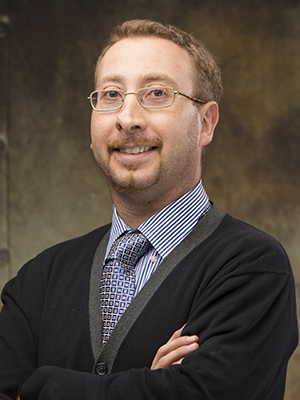
Alexander Dean is an Associate Professor in the Department of Electrical and Computer Engineering at North Carolina State University. His research focuses on embedded systems, leveraging compiler technology, computer architecture, and real-time systems to enhance concurrency and energy efficiency in cost-effective hardware. He has held industrial experience at United Technologies Research Center, working on embedded systems for aerospace, automotive, and building systems. Dr. Dean holds a Ph.D. (2000), M.S. (1993), and B.S. (1991) in Electrical and Computer Engineering from Carnegie Mellon University and the University of Wisconsin at Madison, respectively. His research interests include real-time systems, compiler optimization for concurrency, energy-efficient embedded designs, and memory allocation strategies. He is the recipient of the NSF CAREER Award (2002) and multiple teaching awards, including the NC State Thank a Teacher Award (2011). Dr. Dean teaches courses such as ECE 460/560 (Embedded System Architectures) and ECE 461/561 (Embedded System Design), emphasizing hands-on embedded systems development. His work also involves MCU control of power converters and robust system design methodologies.
Dr. Eric Rotenberg is a Professor in the Department of Electrical and Computer Engineering at North Carolina State University. His research focuses on high-performance, low-power, and reliable processor architectures, with contributions to 3D stacked circuits, heterogeneous multi-core systems, and adaptive microarchitecture design. Education: Ph.D. in Computer Sciences, University of Wisconsin-Madison (1999) M.S. in Computer Sciences, University of Wisconsin-Madison (1996) B.S. in Electrical Engineering, University of Wisconsin-Madison (1991) Research Interests: Computer Architecture and Systems 3D-Stacked Integrated Circuits Heterogeneous Multi-Core Processors Microarchitecture Optimization Energy Efficiency in Processors Key Awards: IEEE Fellow (2015) NSF CAREER Award (2001) NC State Outstanding Teacher Award (2004) 2015 Micro Test-of-Time Award (co-authored) Professional Contributions: Developed the AnyCore adaptive processor framework and the H3 3D-stacked heterogeneous multi-core processor. Explored post-silicon microarchitecture adaptation and slipstream processors for improved performance and fault tolerance.
Dr. Mohammad Naraghi is a Professor and Associate Department Head for Academics in the Department of Aerospace Engineering at Texas A&M University. He leads the Nanostuctured Materials Lab , focusing on advanced nanomaterials for aerospace applications. His work integrates material science principles to develop lightweight, high-performance materials for structural, energy storage, and smart textile systems. Education: Ph.D., Aerospace Engineering (2009), University of Illinois at Urbana-Champaign M.S., Civil Engineering (2004), Sharif University of Technology B.S., Civil Engineering (2004), Sharif University of Technology Research Interests: Graphitic carbon nanomaterials, bio-inspired composites, experimental nanomechanics, and polymer nanofiber processing. His lab explores multifunctional materials for aerospace applications, including self-healing polymers, structural batteries, and sustainable carbon fiber recycling. Publications: Dr. Naraghi has authored over 150 peer-reviewed articles, with recent work focusing on carbon nanomaterial synthesis, self-healing vitrimers, and all-electric aircraft sustainability . His studies bridge nanoscale mechanics and macroscale applications, emphasizing scalability and industrial relevance. Awards: Best Paper Award (2009) for nano viscoelastic composites research Roger A. Strehlow Memorial Award (2009) for outstanding research First Place in Sandia MEMS Design Competition (2007) Advising & Grants: Leads NSF-funded projects on sustainable materials and structural energy storage. Advises graduate students in aerospace and materials engineering. Collaborates with Sandia National Labs and industry partners on advanced composite development. Labs & Facilities: Directs the Nanostuctured Materials Lab, equipped with advanced nanomechanical testing systems, electrospinning setups, and characterization tools for nanoscale materials analysis.
Khanh Nguyen is an Assistant Professor in the Department of Computer Science & Engineering at Texas A&M University, part of the College of Engineering. His research focuses on improving scalability and efficiency in Big Data systems through compiler and runtime innovations, particularly in memory management and distributed computing. Education: Ph.D. in Computer Science, University of California, Los Angeles (2019) M.S. in Computer Science, University of California, Irvine (2015) B.S. in Computer Science, University of California, Irvine (2012) His research interests include programming languages, compiler design, memory management, and Big Data systems. He has developed techniques such as Gerenuk for thin computation over big data, Skyway for distributed heap connectivity, and Yak , a high-performance garbage collector. His work emphasizes resource efficiency and workload scalability, particularly for machine learning and data-parallel applications. Recent publications (2021–2024) highlight advancements in adaptive memory management for warehouse-scale computers, semantics-aware swapping in disaggregated systems, and query-driven distributed tracing. Awards: Google Ph.D. Fellowship (2017) Facebook Ph.D. Fellowship Finalist (2017) His research bridges compiler/runtime systems with large-scale data processing, addressing challenges in distributed systems and far-memory utilization. He collaborates with industry and academic partners to advance practical, scalable solutions for modern data-intensive workloads.
Francesco Bullo is a Distinguished Professor of Mechanical Engineering at the University of California, Santa Barbara (UCSB), affiliated with the College of Engineering. He holds joint appointments in Electrical and Computer Engineering, Computer Science, and the Center for Control, Dynamical Systems, and Computation. His research focuses on distributed control, network systems, and neural networks, with notable contributions to contraction theory and social dynamics analysis. Education: Laurea (1994, University of Padova), PhD (1998, Caltech). Leadership roles: Former IEEE CSS President, SIAG CST Chair. Research interests include biological/artificial neural networks, distributed control of robotic networks, and synchronization in power grids. He authored books like Lectures on Network Systems and Contraction Theory for Dynamical Systems . His work spans 300+ publications, including impactful articles on Hopfield networks, power grid stability, and optimization. Awards include IEEE Fellow, ASME Fellow, and SIAM Fellow. Advising and grants: Mentored over 30 PhD students and led major projects like the NSF MURI on team behavior modeling. Current research includes neural synchronization and AI-driven control. Labs/teams: Directs the UCSB Center for Control, Dynamical Systems, and Computation, and collaborates on interdisciplinary initiatives like the Network Science for Medicine white paper.
Bill Howe is an Associate Professor at the University of Washington's Information School, with adjunct appointments in Computer Science & Engineering and Electrical Engineering. He serves as Founding Program Director and Faculty Chair of the UW Data Science Masters Degree, Founding Associate Director and Senior Data Science Fellow at the UW eScience Institute, Director of the Urbanalytics Lab, and Co-Founding Director of the Center for Responsible AI Systems and Experiences. He also co-founded Urban@UW and created the first Data Science MOOC through Coursera. His research focuses on making data science accessible in public sector applications with emphasis on equity, privacy, and compliance. Current interests include: Algorithmic fairness in urban and social contexts Privacy-preserving synthetic data generation Machine learning for heterogeneous data Database systems and high-performance computing Human-computer interaction for data systems Responsible AI development and deployment Publication analysis reveals strong focus on responsible data science, with recent work emphasizing differential privacy, COVID-19 data equity, urban mobility fairness, and relational data systems. Earlier foundational work established contributions to scientific workflow systems and data pricing models. Awards and Honors: Runner-up Best Paper Award (VLDB 2023) Best Paper Award (SIGMOD 2019) Best Paper Award (VIs 2019) Best Paper Award (InfoVis 2018) He leads the Urbanalytics Lab and advises multiple students including An Yan (fairness in urban mobility), Sean Yang (machine learning embeddings), and Dominik Moritz (visualization systems). His projects span EZLearn for automatic claim validation, privacy-preserving synthetic data, and Myria middleware for polystores.
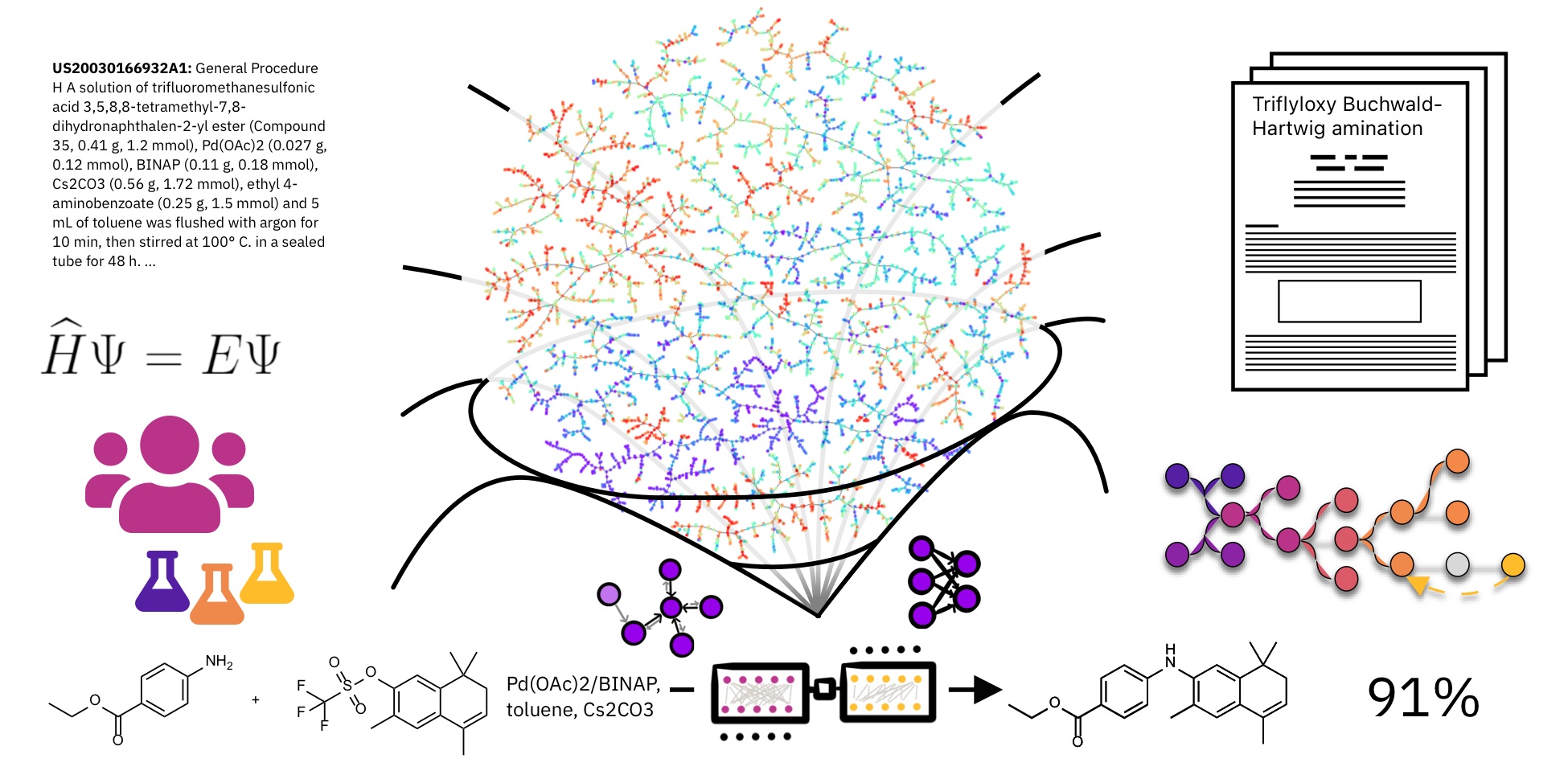
Philippe Schwaller is a Tenure Track Assistant Professor at École Polytechnique Fédérale de Lausanne (EPFL), School of Basic Sciences, within the Institute of Chemical Sciences and Engineering. He leads the Laboratory of Artificial Chemical Intelligence (LIAC), a research group focused on leveraging artificial intelligence to accelerate molecular discovery and sustainable chemistry. He is also a core Principal Investigator of the NCCR Catalysis, a national Swiss research center. His research lies at the intersection of chemistry, materials science, and computer science, with a strong emphasis on developing machine learning models for molecular design and synthesis. LIAC's work is driven by real-world sustainability challenges, aiming to reduce the time and cost of discovering new functional molecules and materials. The recent publications and projects from his lab highlight a strong trend in generative AI for chemistry, including memory-augmented models, hypergraph neural networks, and large language models tailored for scientific discovery. These efforts are complemented by educational initiatives such as the 'AI for Chemistry' course and practical programming resources for chemists. He actively supervises a diverse group of PhD students and contributes to multiple doctoral programs at EPFL, including EDCH and EDPY. His teaching portfolio includes courses on computational chemistry, AI applications in chemistry, and scientific machine learning. Philippe Schwaller is deeply involved in advancing AI-driven scientific discovery through both research and education, positioning his lab at the forefront of artificial chemical intelligence. The lab maintains active open-source contributions on GitHub, fostering collaboration and transparency in scientific AI development.
Baris Kasikci is an Associate Professor in the Paul G. Allen School of Computer Science & Engineering at the University of Washington. Previously (2017-2023), he was a Morris Wellman Assistant Professor in the Electrical Engineering and Computer Science Department at the University of Michigan. His research focuses on building efficient and trustworthy computer systems through innovative combinations of approaches from systems, computer architecture, and programming languages. Dr. Kasikci received his PhD in Computer Science at EPFL and has held research positions at Microsoft Research Cambridge, Google, Intel, and VMware. His work addresses critical challenges in system reliability, security, and performance in increasingly complex software ecosystems. His research interests center on improving the efficiency of datacenter applications and machine learning systems, analyzing and fixing failures, and enhancing hardware security. His lab develops techniques for automated bug detection, formal verification of distributed systems, and building systems support for heterogeneous hardware architectures. Recent projects include Whisper (profile-guided branch misprediction elimination), Huron (taming false sharing), and Agamotto (automatic detection and repair of bugs in persistent memory applications). Analysis of his recent publications shows a strong trend toward optimizing large language model serving, hardware security, and performance optimization for modern heterogeneous architectures. His work bridges traditional systems research with emerging AI infrastructure needs, particularly in efficient LLM serving, security vulnerabilities in modern hardware, and performance optimization for heterogeneous computing environments. NSF CAREER award Microsoft Research Faculty Fellowship Intel Rising Star Award VMware Early Career Faculty Grant Google Faculty Award Roger Needham PhD Award (best PhD thesis in computer systems in Europe) Patrick Denantes Memorial Prize (best PhD thesis at EPFL) Best Paper Award at OSDI'18 Best Paper Award at MICRO'22 Dr. Kasikci has advised numerous PhD students who have gone on to prestigious positions in academia and industry, including Tanvir Ahmed Khan (Assistant Professor at Columbia University), Akshitha Sriraman (Assistant Professor at CMU), and Jiacheng Ma (AMD). His research has been supported by significant grants from NSF, DARPA, Intel, Google, Microsoft, VMware, and Amazon. His lab, the EfesLab, focuses on building tools and techniques that make computer systems more reliable, secure, and efficient. The EfesLab, led by Dr. Kasikci, brings together postdocs, PhD students, and undergraduate researchers to tackle fundamental challenges in systems reliability and performance. The lab has developed numerous influential tools including Whisper, Huron, and Agamotto that address critical performance and reliability issues in modern computing systems. Current research directions include efficient LLM serving, security of emerging hardware technologies, and automated debugging techniques.
Mehrtash Harandi is an Associate Professor in the Department of Electrical and Computer Systems Engineering at Monash University. He joined Monash in 2018 after five years at Canberra Research Laboratory-NICTA working with Prof. Richard Hartley and Prof. Fatih Porikli, and earlier at Queensland Research Laboratory-NICTA with Prof. Brian Lovell. His research focuses on machine learning, computer vision, and geometric learning with applications in medical imaging and diffusion models. Recent Research Trends (2025): 3D Gaussian splatting compression, diffusion transformers for visual correspondence, hyperbolic geometry in hierarchical structures, and robust learning from noisy labels. Scientific Awards: Outstanding Reviewer, CVPR'21 Advising Highlights: Mentored students contributing to papers at ICCV'24, CVPR'25, ICLR'25, and Nature Machine Intelligence. Labs & Teams: Collaborates with Data61-CSIRO, ARC, and US Air Force Research Laboratory.
Lili Qiu is a Professor in the Department of Computer Science at The University of Texas at Austin, where she has been a faculty member since January 2005. She is an active member of the Wireless Networking and Communications Group (WNCG) and has made significant contributions to the field of networking research. Dr. Qiu previously spent 2001-2004 as a researcher at Microsoft Research in Redmond, WA, before joining UT Austin. Dr. Qiu's research spans Internet and wireless networking with a current focus on wireless network management and content distribution in mobile networks. Her work extends into diverse applications including acoustic imaging, metasurface applications, healthcare sensing technologies, and AI systems. She has pioneered research in areas such as acoustic motion tracking, passive RFID sensing, and wireless network optimization. Her research demonstrates a consistent pattern of innovation that bridges theoretical networking concepts with practical real-world applications, particularly in mobile and wireless systems. Her extensive publication record shows a clear evolution from fundamental networking research to increasingly interdisciplinary work that combines wireless systems with healthcare applications, AI, and novel sensing technologies. Recent publications demonstrate growing integration of machine learning techniques with traditional networking problems, as well as expansion into healthcare applications like Parkinson's disease modeling and non-invasive glucose monitoring. ACM Fellow IEEE Fellow National Academy of Inventors (NAI) Fellow ACM Distinguished Scientist NSF CAREER award Google Faculty Research Award Best paper award at ACM MobiSys'18 Best paper award at IEEE ICNP'17 Dr. Qiu has supervised numerous students, including a PhD dissertation that won the SIGMOBILE best dissertation award in 2020. She has served in significant leadership roles including chair of ACM SIGMOBILE, General co-chair for ACM MobiCom 2025, and various conference chair positions for IEEE ICNP, ACM CoNEXT, and other major networking conferences. Her research has been supported by substantial grants from NSF, Google, and other organizations, enabling her to lead cross-disciplinary research teams. As a member of the Wireless Networking and Communications Group at UT Austin, Dr. Qiu leads research efforts that combine networking expertise with innovations in sensing technologies, metasurfaces, and AI systems. Her lab has produced numerous influential results in mobile networking, wireless sensing, and network management, with applications spanning healthcare, consumer electronics, and communication infrastructure.
Kohei Nakajima is an Associate Professor at the Department of Intelligent Mechano-Informatics, Graduate School of Information Science and Technology, The University of Tokyo. He holds concurrent positions at the Department of Creative Informatics and the Next Generation Artificial Intelligence Research Center (AI Center). As an Endowed Chair in Advanced Artificial Intelligence Education, he leads the Physical Intelligence Lab, which focuses on the intersection of soft robotics, nonlinear dynamics, and physical computing. His research interests center on Physical Reservoir Computing (PRC), a paradigm that exploits the natural dynamics of physical systems for computation, with applications in soft robotics, spintronics, and quantum machine learning. Nakajima's work demonstrates how physical systems can inherently process information without traditional digital computation, leveraging phenomena like chaos, bifurcations, and embodied intelligence. Nakajima's publications reveal a strong focus on understanding how physical systems can perform computational tasks. His recent work spans from biological applications (jellyfish cyborgs, ostrich-inspired robotics) to fundamental theoretical advances in reservoir computing. The research demonstrates how physical phenomena can be harnessed for information processing, with implications for energy-efficient computing and novel robotic control paradigms. As the organizer of the Reservoir Computing Seminar, Nakajima has built a vibrant research community exploring the nature of information processing across disciplines. His lab actively recruits graduate students and postdocs, indicating strong research momentum and institutional support for his work in physical intelligence.