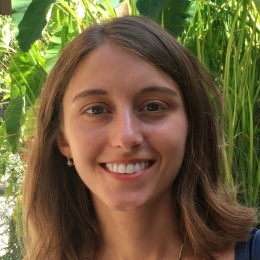
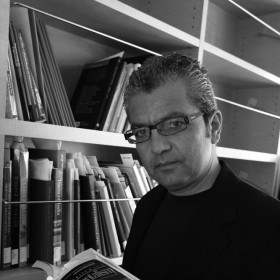
Michele Ripplinger is a Berkeley Lecturer and Ph.D. candidate in English and Medieval Studies at UC Berkeley. Her research focuses on late medieval literature, particularly Chaucer and the reception of classical texts, with emphasis on gender studies, representational ethics, and women’s reading practices. She teaches across historical periods, integrating cultural studies and poetry analysis. Education: Pursuing a Ph.D. in English and Medieval Studies at UC Berkeley (dissertation on Chaucer and the Moralized Ovid). Research Interests: Medieval and early modern classics reception, fictionality, history of reading, women’s/gender/sexuality studies, and intersections between premodern and modern literary thought. Her publications and conference presentations highlight work on Chaucer, Hoccleve, and medieval literary methodologies. She has presented at major venues including the New Chaucer Society Congress and the International Congress on Medieval Studies. No scientific awards are listed. Advising and grants details are not provided. Office hours are by appointment.
Lynn S. Meskill is a Professor at Toulouse Jean-Jaurès University, affiliated with the Center for Anglophone Studies (CAS). Her academic work bridges literature, history of ideas, and translation, with a strong focus on early modern British culture. She teaches Medieval and Early Modern Literature and Translation. Her research interests include: 16th and 17th Century Theatre Stuart and Caroline Court Masque History of the Book History of Ideas Translation Studies Authorship in Early Modernity Ben Jonson and Shakespearean Drama Her publications reveal a deep engagement with themes of authorship, fame, religious symbolism, and cultural representation in Renaissance literature. She frequently explores the intersections of performance, politics, and print culture, particularly in court masques and tragedies. Her work often combines literary analysis with intellectual and cultural history. Her scholarly contributions include a monograph on Ben Jonson and numerous articles in leading journals such as Huntington Library Quarterly and English Studies . She has also contributed chapters to authoritative handbooks and translated significant works in print culture. She has supervised doctoral research and holds an HDR (Habilitation à Diriger des Recherches), qualifying her to direct research in France. While no specific grants are listed, her involvement in structured research axes at CAS suggests active participation in collaborative projects. Lynn S. Meskill is a core member of the Center for Anglophone Studies (CAS), contributing to its seminars, research programs (such as AXIS 1–3), and academic events. The center fosters interdisciplinary research in Anglophone cultures, and she plays a vital role in its scholarly community.
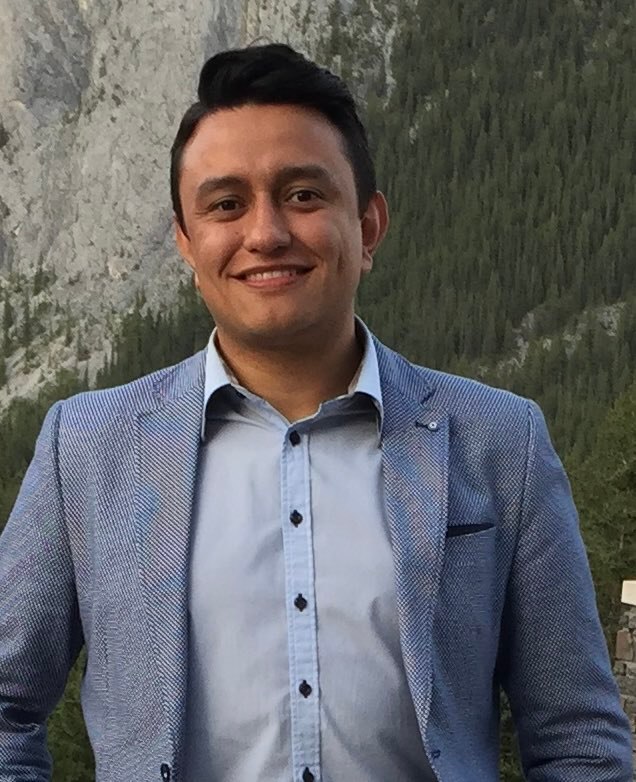
José Eduardo Villalobos Graillet is an Assistant Professor of Spanish at Idaho State University , specializing in Modern Peninsular Literature and Culture with a focus on visual culture (film and television) . He previously held a position as Spanish Instructor at Wilfrid Laurier University in the Department of Languages and Literatures. Research Areas : Spanish Film Studies, Spanish Medieval Literature, Latin American and Caribbean Studies, Teaching Spanish as a Foreign Language, Visual Culture, and Critical Pedagogy. His scholarly work examines film and television adaptations of 'La Celestina' , analyzing censorship dynamics across Francoist Spain, the Democratic Transition, and contemporary Spain. He also contributes to Spanish pedagogy , developing technological tools like Lang-8 for written expression and culturally immersive teaching units on topics such as winter festivals and Caribbean music. His publications span both critical academic analysis and methodological innovations for language instruction. Key Themes in Publications : Adaptation fidelity, political censorship, intercultural pedagogy, and the role of digital platforms in language learning.
Professor Matthew Treherne is a leading scholar in Italian literature at the University of Leeds, where he holds the position of Professor of Italian Literature in the School of Languages, Cultures and Societies within the Faculty of Arts, Humanities and Cultures. He currently serves as Pro-Dean for Research and Innovation, and co-directs the Leeds Centre for Dante Studies. His research bridges medieval and Renaissance literature with contemporary issues such as finance, ecology, and technology. PhD in Italian Literature, University of Cambridge (2007) Diploma in Management Studies, Judge Business School, University of Cambridge (2000) M.Phil in European Literature (Distinction), University of Cambridge (1999) BA in Modern and Medieval Languages (First-class), University of Cambridge (1997) Matthew Treherne's research focuses on Dante and late-medieval religious culture, with a strong emphasis on the liturgical imagination and theological discourse in poetry. He explores how Dante’s work can inform modern debates on the ecological crisis, financialisation, and time. His interdisciplinary approach integrates theology, philosophy, and cultural studies. He leads the project The Cultural Life of Money and Finance , which investigates how the humanities can shape financial futures. His recent publications include Dante’s ‘Commedia’ and the Liturgical Imagination and co-edited volumes on Dante’s theology. His recent scholarly articles and chapters show a consistent engagement with Dante’s theological and poetic structures, Tasso’s religious poetry, and the role of art and liturgy in early modern culture. Themes such as sacramentality, time, vision, and interdisciplinarity recur across his work, reflecting a deep commitment to understanding literature as a living, ethically engaged practice. University Teaching Fellowship Developmental University Teaching Fellowship Faculty of Arts Development Teaching Prize Treherne has supervised numerous PhD students and fosters research-led teaching, notably through projects like Discover Dante and the Leeds Dante Podcast . He has led major research initiatives, including the AHRC-funded Dante and Late Medieval Florence , and collaborates widely across disciplines and institutions. He is also active in public engagement, contributing to BBC Radio 4’s In Our Time and curating podcast series such as Conversations on Dante and Arts and Humanities Futures . He co-leads the Cultural Life of Money and Finance project with Invisible Flock, blending humanities research with creative practice.
James Hankins is Professor of History in the Department of History at Harvard University's Faculty of Arts and Sciences, located at Robinson Hall 206, 35 Quincy Street, Cambridge, MA 02138. A leading scholar in Renaissance intellectual history, his work focuses on the intersection of political thought, philosophy, and classical traditions within 15th-16th century Europe. His research centers on Renaissance political thought, the history of philosophy, and classical tradition reception, with emphasis on Italian humanism and virtue politics. As Founder and General Editor of the I Tatti Renaissance Library (Harvard University Press) and Associate Editor of the Catalogus Translationum et Commentariorum, he has shaped critical editions and scholarly resources. He is currently completing The Virtue Politics of the Italian Humanists and recently launched The Pratrizi Project on Francesco Patrizi's political theory. Publications reveal sustained engagement with Renaissance philosophy through critical editions, monographs, and editorial projects spanning five decades. Key themes include Platonic theology, civic humanism, and classical philosophy recovery, demonstrating methodological rigor in intellectual history and textual scholarship across European Renaissance contexts. He actively participates in the Harvard Colloquium for Intellectual History. Information regarding students, grants, scientific awards, and laboratory affiliations was not provided in source materials.
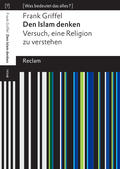
Frank Griffel is the Louis M. Rabinowitz Professor of Religious Studies at Yale University, where he has been teaching since 2000. His academic work is deeply rooted in Islamic intellectual history, focusing on theology, philosophy, and the interplay between reason and revelation. He holds a PhD from the Freie Universität Berlin and previously worked as a research fellow at the Orient Institute in Beirut. University: Yale University Department: Department of Religious Studies Academic Rank: Professor His research expertise lies in classical and post-classical Islamic philosophy, particularly the works of al-Ghazālī, Fakhr al-Dīn al-Rāzī, Avicenna, and Averroes. He has made significant contributions to understanding how philosophical discourse evolved in the Islamic world after the so-called classical period, challenging the notion of decline and highlighting the emergence of new genres such as ḥikma . His scholarship bridges theology and philosophy, examining how Muslim thinkers reconciled Aristotelian and Neoplatonic ideas with Islamic doctrine. Griffel’s most recent major work, The Formation of Post-Classical Philosophy in Islam (2021), redefines the field by demonstrating the continuity and innovation in 12th-century Islamic thought. His earlier book, Al-Ghazali’s Philosophical Theology (2009), is widely regarded as a seminal study. He has also published extensively on topics such as apostasy, virtue ethics, and the reception of philosophical texts, with articles spanning from 2011 to 2025. His work often appears in major academic handbooks and journals, and he has edited and translated key texts into German, Arabic, and Turkish. Islamic Philosophy Islamic Theology (Kalām) Post-Classical Islamic Thought Al-Ghazālī Studies Fakhr al-Dīn al-Rāzī Avicenna and Averroes Griffel has contributed to collaborative volumes such as Shari’a: Islamic Law in the Contemporary Context and Islam and Rationality , and his research engages with both historical and contemporary debates in Islamic thought. He has no listed scientific awards or students in the provided texts, but his influence is evident through citations and scholarly engagement. He maintains an active research profile, with recent publications addressing ambiguity, contradiction, and the popularization of philosophy in medieval Islam. He has held affiliations with the University of Oxford as a Faculty Member in the Faculty of Theology and Religion, indicating a strong international academic presence. His work continues to shape the understanding of Islamic intellectual history, particularly in the West.
Tobias Pettersson is a Senior Lecturer at the Department of Pedagogy: Music, Dance and Drama , University of Gothenburg . His roles include Undergraduate Teaching Coordinator and Education Coordinator for both first/second cycle education and teacher training programs. He works at the intersection of musicology , gender studies , and pedagogical traditions . Current position since 2015 Active in teacher education since the 1990s Doctoral degree in musicology (2004) Research Focus: Analyzes the origins and persistence of musical traditions , gender equality in music life , and education for sustainable development . Led projects at the Centre for Environment and Sustainability (2012-2014) and developed web-based educational toolboxes. Key Contributions: Publications on Beethoven's canonization in Swedish education (2004), gender dynamics in performing arts (2006), and critical analyses of musicological epistemology (2005). His work bridges historical musicology , pedagogical theory , and sustainability education . Contact: Email: tobias.pettersson@gu.se Office: Eklandagatan 86, 41259 Göteborg
Professor Beth Williamson is a leading scholar of medieval culture, holding dual roles as Professor of Medieval Culture and Chair in the History of Art at the University of Bristol's Department of History of Art (Historical Studies), and as Academic Director (Research Impact & Translation Partnerships) within the Faculty of Social Sciences and Law. She earned her B.A. from Oxford University (Oxon), an M.A., and a Ph.D. from the University of London (Lond.). Her research focuses on visual, material, and aural dimensions of medieval religious practice, exploring how sensory experiences shaped devotional life. Key themes include sacred imagery (e.g., the Virgin Lactans and Madonna of Humility), liturgical spaces, and the intersection of art with music, time, and political power. Recent projects include studies of Westminster Abbey’s royal patronage and collaborations in interdisciplinary historical research. Her publications span over three decades, addressing topics from Italian Renaissance altarpieces to Irish medieval sculpture, with a strong emphasis on material culture and devotional practices. Despite her prolific output, no formal awards are listed, though her academic leadership roles reflect her scholarly impact. As a mentor, her supervisory activities are noted in her profile but lack specific student names. Her work bridges academic and public spheres, particularly through her role in translating research into societal impact initiatives. She is affiliated with the University of Bristol’s Senate House and contributes to institutional leadership.
Angelika Malinar, Professor of Indology at the University of Zurich and member of its Gender Studies Department, specializes in Hinduism, Indian philosophy, and Sanskrit literature. Her work spans historical and modern contexts, with a focus on epic texts and Indo-European exchanges. She co-edits the Brill's Encyclopedia of Hinduism and contributes to the University Research Priority Program "Asia and Europe." PhD and habilitation from University of Tübingen Researcher at Tübingen, Berlin, and London Her research integrates Sanskrit epics, philosophical traditions, and modern Hindu identity. Recent publications analyze Mahābhārata theology, ritual practices, and cross-cultural interpretations. She explores how texts like the Bhagavadgītā and Nārāyaṇīya bridge ritualism, aesthetics, and individual authority. Key article trends examine cosmological monotheism , epic decision-making , and colonial reinterpretations . Her editorial roles include interdisciplinary volumes on time, purity, and Indo-European cultural dialogues. As a Senior Lecturer at SOAS and Professor in Zurich, she has led projects on monastic institutions, rasas, and canonical formation. Her work contextualizes Indian philosophy within global frameworks, notably nineteenth-century German Indology.
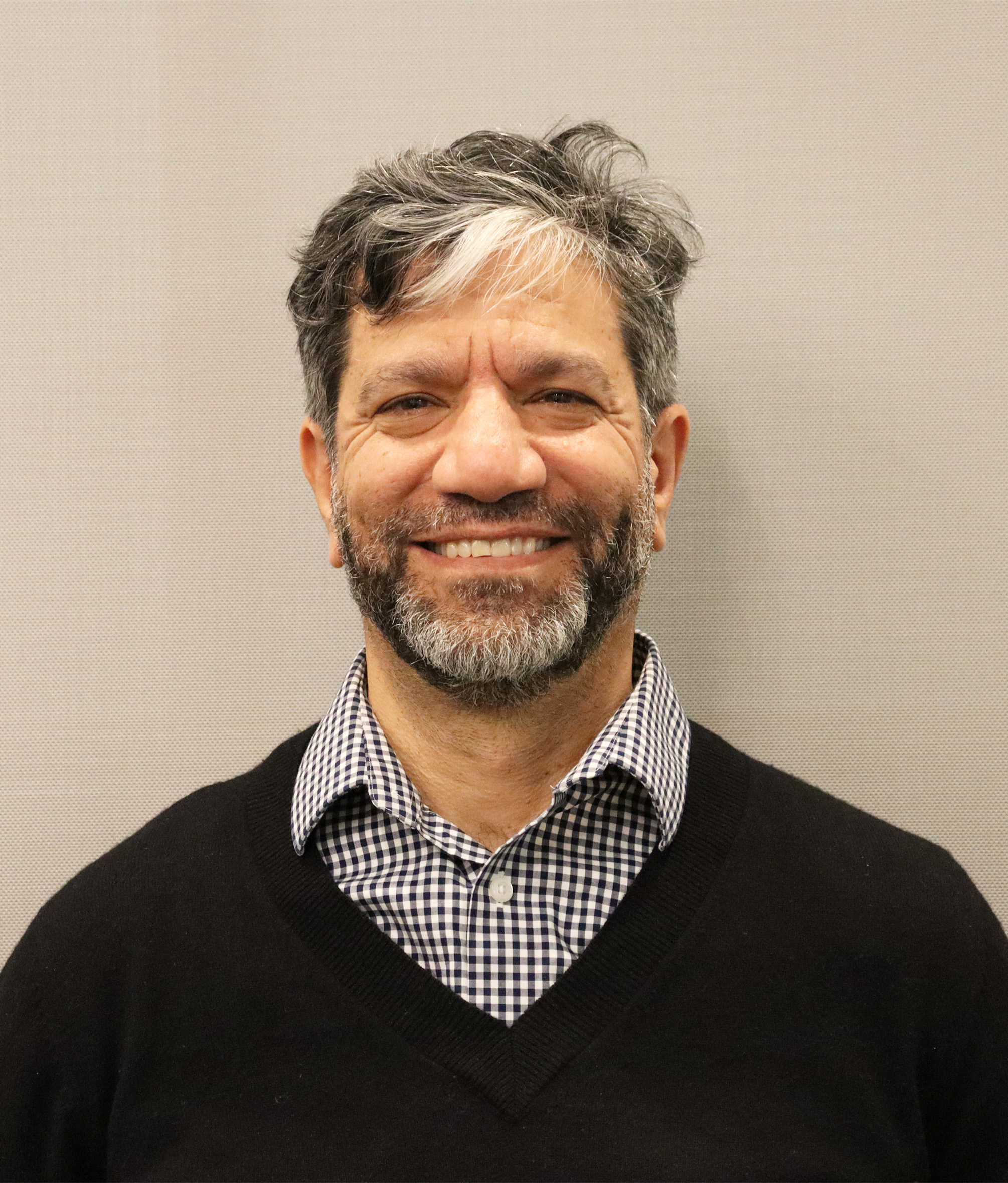
Walid A. Saleh is a Professor of Islamic Studies at the University of Toronto , holding appointments in both the Near and Middle Eastern Civilizations department and the Department for the Study of Religion . His scholarship focuses on the Qur’an , Quranic exegesis (Tafsir), Islamic apocalyptic literature , and Biblical reception in Islam . PhD from Yale University (2001) Recipient of Mellon New Directions Fellowship (2014) and Konrad Adenauer Fellow (2017) Editor of the Routledge Qur’an Series His research analyzes Quranic chronology , manuscript traditions , and Islamic intellectual history . Recent publications examine periodization in Sunni tafsir, late Ottoman book culture, and the reception of al-Bayḍāwī's Anwar al-tanzīl . Articles explore topics from Quranic death narratives to medieval Islamic cosmology . Key article themes: Quranic identity formation , Islamic manuscript studies , exegetical methodology He has edited critical texts like al-Biqa`i's Bible treatise and serves on editorial boards for the Journal of the American Academy of Religion and Journal of Qur'anic Studies . His teaching includes advanced courses in Arabic paleography and Quranic hermeneutics .
Reyhan Durmaz is an Associate Professor of Religious Studies at the University of Pennsylvania, affiliated with the School of Arts & Sciences and multiple interdisciplinary programs. Her research focuses on Syriac Christianity, medieval religious dynamics, and the intersection of Christianity and Islam in late antiquity. She holds a Ph.D. from Brown University (2019) and has received prestigious fellowships such as the Dumbarton Oaks Junior Fellowship and the Charlotte Newcombe Dissertation Fellowship. Her seminal book Stories between Christianity and Islam (2022) examines the transmission of saints' stories between religious traditions, earning Honorable Mention from the Middle East Medievalists. Current projects include a study of rural Christianity in the medieval Middle East through soldier-monk narratives and an analysis of the 19th-century Arabic newspaper Kawkab America . She co-leads the Digital Photograph Archive project Visualizing Countryside , documenting medieval religious sites. Dr. Durmaz teaches courses on global Christianity, material culture, and late antiquity, and serves as co-chair of the Philadelphia Seminar on Christian Origins. Her work bridges historical analysis, textual scholarship, and digital humanities, addressing themes of religious identity, cultural exchange, and marginalized communities.
Costanza Beltrami is a Senior Lecturer at Stockholm University in the Department of Culture and Aesthetics. She is a dedicated art historian with a focus on Gothic art and architecture of the late fifteenth and early sixteenth centuries, particularly in the Spanish region of Castile and its international connections. Her research interests include architectural drawings, collaboration, transculturation, and temporality in architecture. Dr. Beltrami teaches courses on Medieval and Renaissance art and architecture from Cordoba to Florence. Her academic background includes studying Art History at the Courtauld Institute of Art in London and working at the University of Oxford/St Catherine's College before joining Stockholm University. Her research has focused on late-Gothic architecture, including a monumental drawing of a tower from Rouen cathedral and ornament prints as artists' models. She is Reviews Editor for the Journal of the British Archaeological Association and has completed her PhD thesis on Juan Guas (active 1453–1496), the leading architect of late fifteenth-century Spain. She is currently working on a book project about collaboration, artistic identity, and the geographies of exchange in late-Gothic Castile. Her co-edited volume "Art, Travel and Exchange between Iberia and Global Geographies, 11400–1550" challenges traditional narratives about Iberian art history and emphasizes multi-directional cultural exchange. Dr. Beltrami's recent research includes editing a special issue on portable drawings and paper in Medieval and Gothic architecture. Her work explores how architectural practices in Castile demonstrate fascinating questions regarding migrant networks, cultural contact, the meanings of architecture, and the role of art in debates on national identity from the 15th century to the present.
Ali Mousavi is Assistant Professor of Iranian Archaeology in UCLA’s Department of Near Eastern Languages and Cultures and a core faculty member of the Cotsen Institute of Archaeology. A Berkeley PhD and former fellow of the Smithsonian, Maison de l’Orient and Global Heritage Fund, he has directed excavations and UNESCO World-Heritage projects at Pasargadae, Bam, Susa, Sultaniyeh and Turang Tepe and authored prize-winning volumes Ancient Iran from the Air and Persepolis: Discovery and Afterlife of a World Wonder . Education PhD, Near Eastern Studies (Archaeology), University of California, Berkeley (2005) MA, Archaeology, History and Languages of Old World Civilizations, Université Lyon II, France (1997) BA, Archaeology and Art History of Europe and the East Mediterranean, Université Lyon II, France (1996) Research interests span the archaeology and art history of Iran from the Neolithic to the early-20th century, with particular focus on Achaemenid and Sasanian monumental architecture, ancient irrigation (qanats), landscape archaeology, digital heritage, and the modern historiography of Iranian archaeology. His field projects integrate remote sensing, epigraphy, GIS and conservation science to investigate imperial capitals, rock-cut monuments and water-management systems across the Iranian plateau. Across more than 30 peer-reviewed articles and book chapters, Mousavi has re-examined dating criteria for Achaemenid stone monuments, analysed royal inscriptions as visual displays, traced medieval Persian pilgrims’ graffiti at ancient sites, and produced synthetic archaeological surveys of the Sasanian empire and the Central Alborz Iron-Age cultures. The corpus reflects a sustained engagement with primary field data, archival research and critical historiography of 19th- and 20th-century excavations. Selected honours Ehsan Yarshater Book Award (2014) Iranian Ministry of Culture World Book Award (2014) Leon Levy – Shelby White publication grant (2008) UNESCO award for World-Heritage nomination files (2003) Iran Heritage Foundation field-work award (2003) Guitty Azarpay Fellowship, UC Berkeley (2000-2003) IFRI Fellowship, Paris (1998) At UCLA he offers undergraduate courses “Archaeology of Iran” and “Ancient Cities of Iran (4000 BC-AD 1900)” and mentors graduate researchers in the Cotsen Institute. His grants and fellowships from NSF-equivalent European and American agencies underwrite both field seasons and publication of critical archaeological corpora, while his service on Iranian, UNESCO and international heritage boards continues to link scholarly output with heritage-management policy.
Professor Alison G. Salvesen (University of Oxford, Asian and Middle Eastern Studies) is a leading scholar in Early Judaism and Christianity, affiliated with the Oxford Centre for Hebrew and Jewish Studies and Mansfield College. Her work bridges textual criticism, translation history, and reception studies. Current Projects: Hexapla Institute Executive Committee (electronic database of Origen's Old Testament), monograph on Jacob of Edessa (d. 708 CE) Teaching: Septuagint studies, Patristic texts, Textual criticism, Syriac literature Specializing in ancient Hebrew Bible interpretations, she examines Greek (Septuagint), Aramaic (Targums), Syriac (Peshitta), and Latin (Vulgate) traditions. Her research spans rabbinic Judaism and early Christian exegesis. Scientific leadership includes co-editing major reference works and directing the Polonsky Fellowship. Current DPhil students include Joel Bell, Yael Krämer, and Paul Ulishney. Key grants/awards: Polonsky Fellow in Early Judaism and Christianity
Professor Daniel Lee is a faculty member at the University of California, Berkeley, holding a dual appointment in the Department of Political Science and as an affiliated Professor of Law at the UC Berkeley School of Law. His research focuses on political theory, the history of political thought, and jurisprudence, with a particular emphasis on the reception of Roman and canon law in modern political thought. His work examines figures like Jean Bodin and Hugo Grotius, exploring their influence on sovereignty, rights, and international law. He has authored two books: *The Right of Sovereignty* (2021) and *Popular Sovereignty in Early Modern Constitutional Thought* (2016), and is currently working on projects including *Sacrosanct* (under contract with Harvard UP) and *Divisions of Law* (forthcoming with Oxford UP). Lee’s academic credentials include a Ph.D. from Princeton University, and prior teaching positions at the University of Toronto and Columbia University. He has received prestigious awards such as the APSA Leo Strauss Award and the Forkosch Prize. His research intersects with legal science, deontic logic, and the philosophy of social sciences, addressing themes like constitutional theory, republicanism, and democratic foundations. He contributes to interdisciplinary dialogues through his involvement with the Kadish Center for Morality, Law, and Public Affairs. Lee’s scholarly output spans book chapters, edited volumes, and articles in journals like the *European Journal of International Law* and the *History of Political Thought*. His work bridges historical legal thought with contemporary political debates, emphasizing the enduring relevance of early modern legal frameworks in shaping modern political concepts.